Flipboard 2025 World History

There’s a human body part that no other animal has—and evolution still can't explain why it even exists.

Humans share a surprising amount of anatomy with the rest of the animal kingdom. We’ve got the same bones, joints, muscles, and basic internal plumbing. But there’s one tiny, everyday feature that no other species has—not even our evolutionary ancestors—and scientists still shrug when asked why it even exists. Meet the chin: evolution’s biggest unsolved facial mystery.
December 4, 2025 Jesse Singer
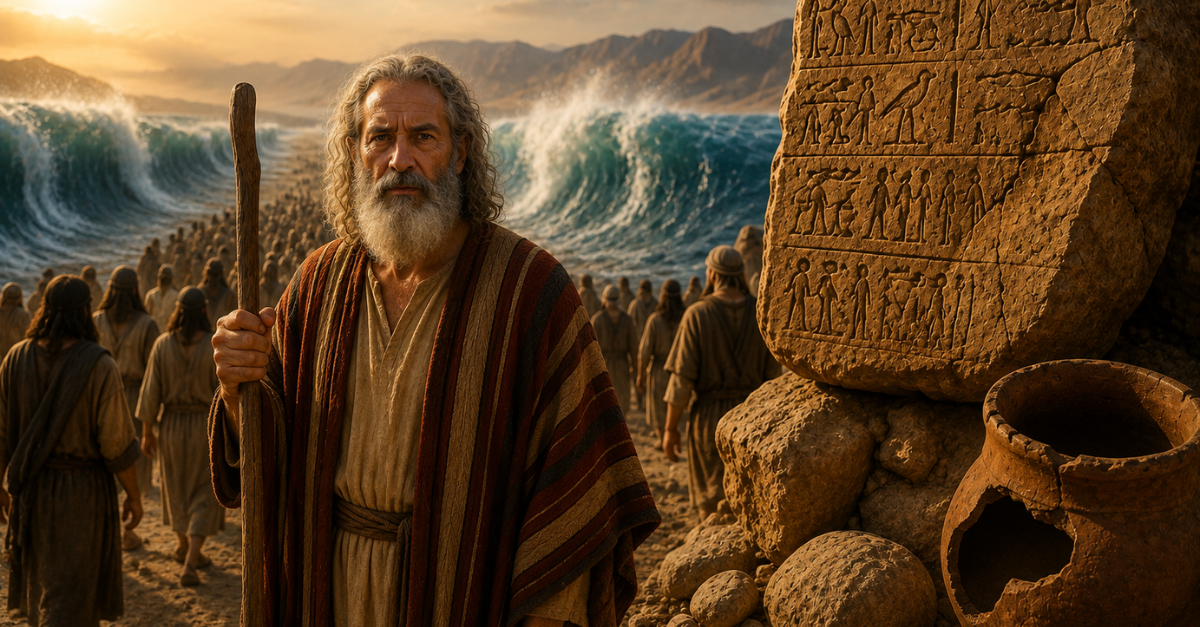
Mosses with ten commandments

Archaeologists and historians can't ignore the strange similarities between the heretic Pharaoh Akhenaten and the biblical Moses.

This debate circles around Moses and Akhenaten as supporters highlight intriguing overlaps and skeptics push back, leaving a narrative shaped by shifting timelines and bold personalities.
December 4, 2025 Miles Brucker
Tomb Of Thutmose Ii Fb

Decades of exploration led archaeologists to Thutmose II’s tomb—the first royal burial uncovered since Tutankhamun.

For decades, archaeologists searched the Valley of the Kings, chasing traces of forgotten pharaohs beneath Egypt’s endless sands. Now, after years of patient survey work, they’ve uncovered something remarkable—the tomb of Thutmose II. This discovery marks the first royal burial found since Tutankhamun’s in 1922, complete with painted ceilings and fragments that once surrounded a king. For history lovers and curious minds alike, this isn’t just another dig — it’s a rare glimpse into Egypt’s golden past.
December 4, 2025 Alex Summers
Egypt’s Aswan Hills

When Egyptian archaeologists opened three 4,000-year-old rock-cut tombs, they found rare artifacts untouched by looters.

In the golden heat of Aswan’s cliffs, a small cloud of dust rose as archaeologists pried open a sealed rock-cut doorway. For 4,000 years, no one had breathed that air. Inside the tombs of Qubbat al-Hawa, the team found what every Egyptologist dreams of—funerary treasures and painted hieroglyphs lying exactly where ancient hands had left them. No thieves. No decay. Just time, waiting to be read.
December 3, 2025 Alex Summers

A pair of jars bought at a thrift store for $25 turned out to be priceless artifacts of an ancient Chinese dynasty.

A thrift-store shopper buys a pair of $25 jars only to discover they are rare Qing Dynasty imperial artifacts worth over $74,000. Explore the extraordinary journey of these forgotten treasures, the history behind their craftsmanship, and how a chance find became one of the most captivating archaeological stories of the year.
December 2, 2025 Jack Hawkins

Things That Originated In Pagan Culture

Turns out there are many hangovers from pagan cultures that we still use today—let’s take a look at some of the most popular.
December 1, 2025 Jillian Kent
A man standing beside the olmec colossal heads

If Ancient People Were So Dumb, How Did They Create These Advanced Artifacts?

A single carved surface or forged edge can feel like a direct handshake across time, charged with skillful intent. Even now, these objects radiate a level of mastery that reshapes how we picture the hands and minds behind them.
December 1, 2025 Miles Brucker

Archaeologists in Giza were finally able to solve the mystery of what lies beneath the Sphinx's massive paws using modern technology.

For centuries, people have wondered what sits below the Great Sphinx’s giant paws. The statue looks calm on the surface, yet the ground beneath it holds questions that archaeology still can’t fully answer. Think of it as Egypt’s oldest cliffhanger carved in stone.
December 1, 2025 Alex Summers
Yellowstone- Fb

America is sitting on a supervolcano with the potential to turn the entire landmass into an ash desert.

What happens when the ground beneath a national park holds enough power to rewrite the country? If a supervolcano snapped awake, ash could smother regions and disrupt everything people rely on.
November 28, 2025 Marlon Wright
Archeologist with Ancient Pyramid

Archaeologists studying mining settlements in Egypt found iron shackles that they say likely points to forced labor.

Gold didn’t simply glitter in ancient Egypt—it carried a cost people rarely acknowledge. Archaeologists working at Ghooza, a remote gold mine in Egypt’s Eastern Desert, uncovered something far colder than treasure: iron ankle shackles built to stop laborers from escaping harsh desert work camps. Discoveries like these force a rethink of what truly fueled Egypt’s wealth. Those gleaming ornaments in museum cases began as ore hacked from blistering canyon walls by workers who had little to no freedom. Stay put, because those shackles reveal more about ancient power than any polished statue ever could.
November 28, 2025 Miles Brucker