
They Even Picked A Date
Most predictions about the end of humanity leave themselves a little breathing room. A century, perhaps. A distant future nobody reading will have to worry about. But in 1960, three researchers put a year on their warning—and then went considerably further.
They named the day: November 13th

This Actually Appeared In Science
On November 4, 1960, the journal Science published a paper by Heinz von Foerster, Patricia M. Mora, and Lawrence W. Amiot. Its title was remarkably direct: “Doomsday: Friday, 13 November, A.D. 2026.” Apparently, announcing the year wasn’t quite enough.
 U of I publicity department, Wikimedia Commons
The Man Behind The Warning
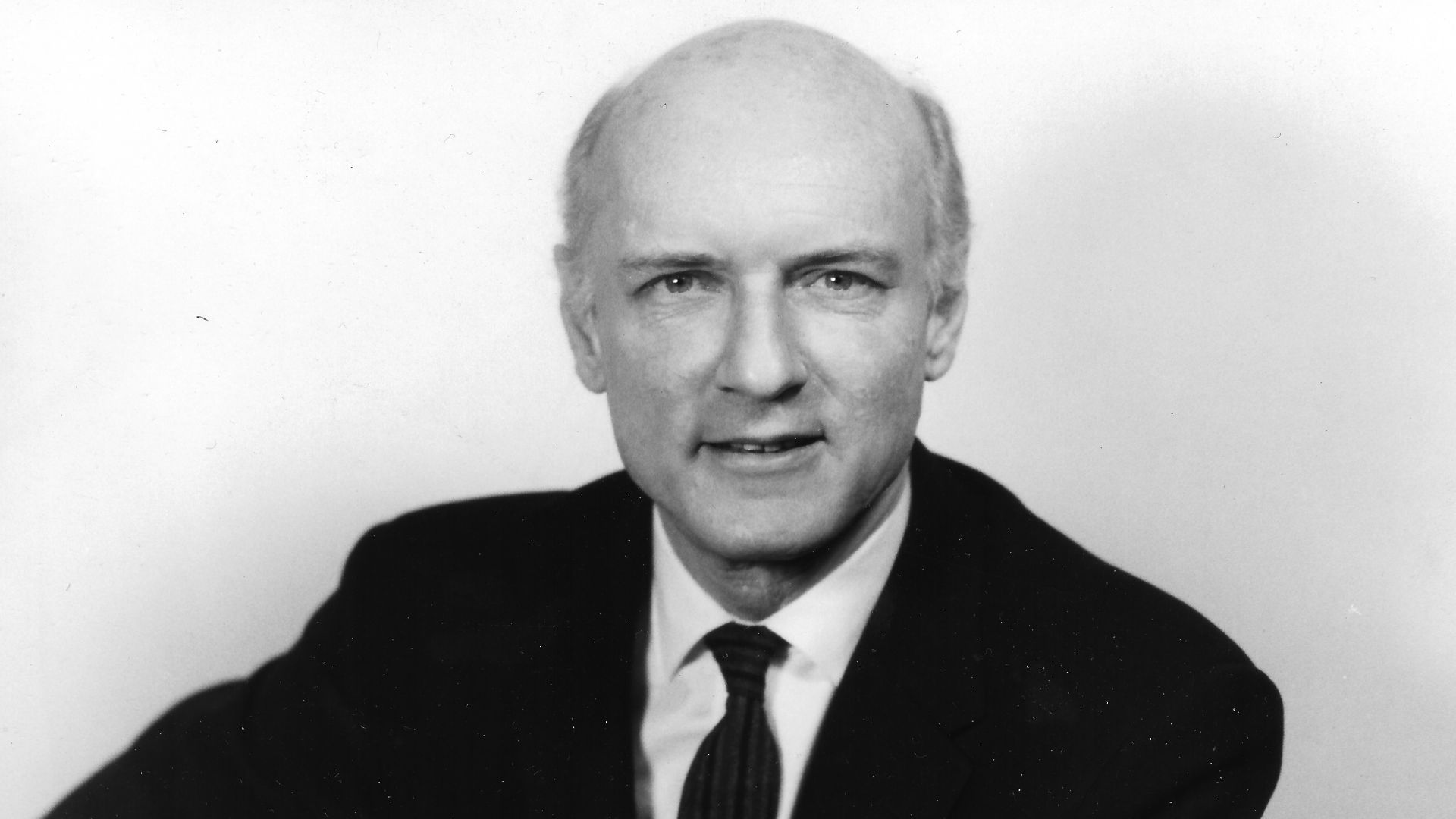
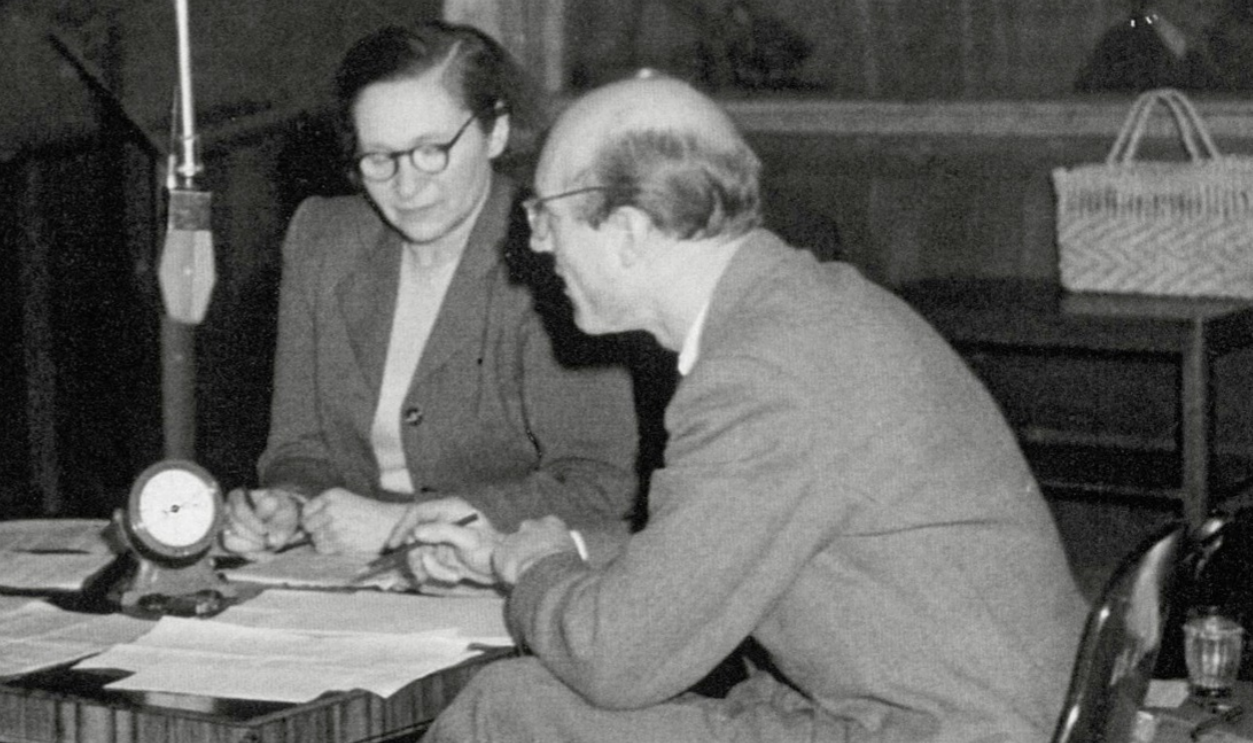
Von Foerster was a physicist at the University of Illinois and a pioneer of cybernetics, a field concerned with communication and control in living things and machines. He also founded the university’s Biological Computer Laboratory. This was someone with a substantial scientific career.
 brandstaetter images, Getty Images
The Threat Was Already Here
The danger they identified was humanity’s own expanding population. Their alarming conclusion grew out of an attempt to understand how human numbers had increased—and what might happen if that pattern continued. In their scenario, our success eventually made life unsustainable.
 William James, Wikimedia Commons
They Looked Back Nearly 2,000 Years
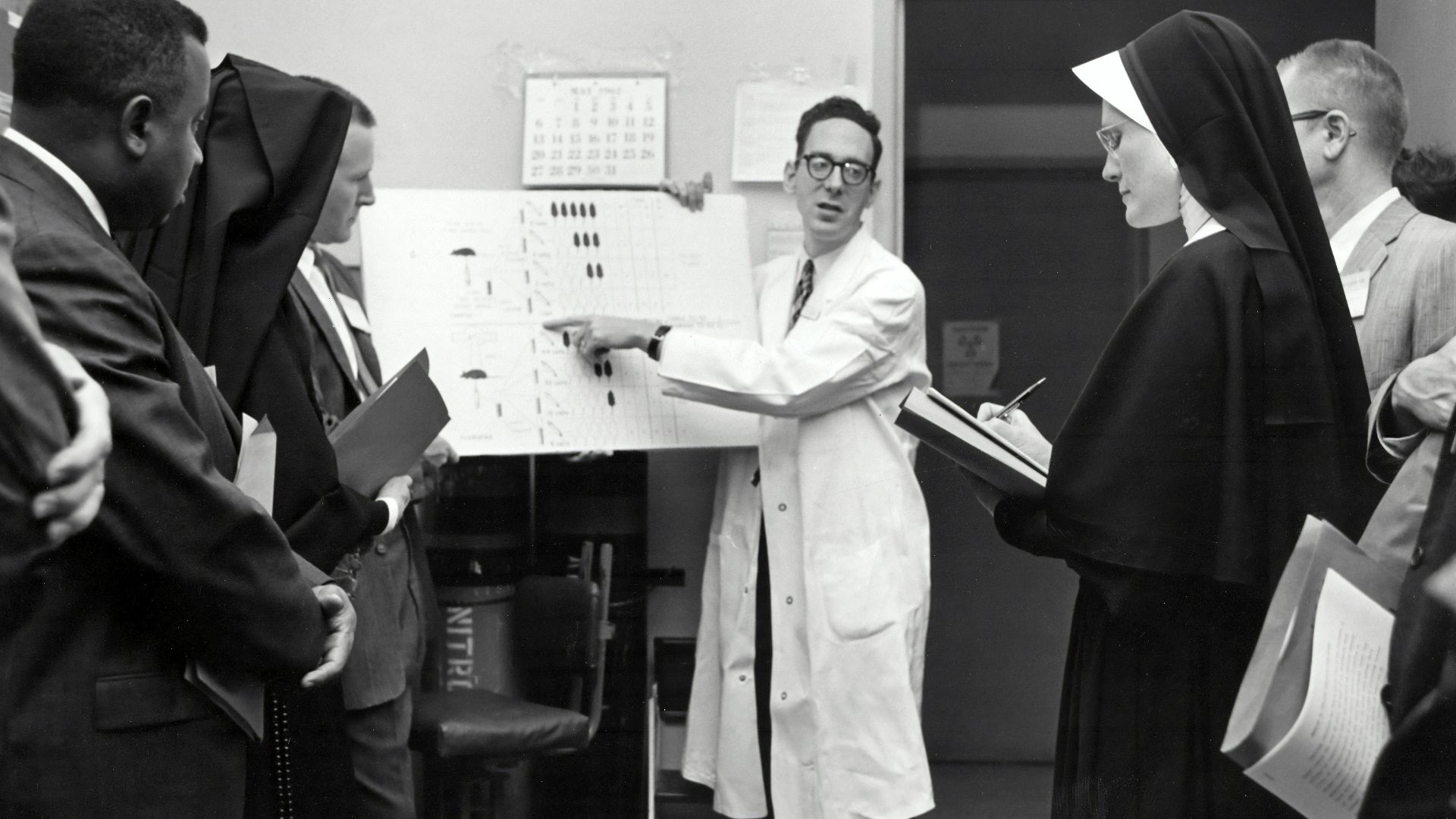
The researchers assembled 24 historical estimates of the world’s population, covering roughly two millennia. These weren’t continuous census records, but they offered a way to investigate humanity’s growth. The researchers found a mathematical pattern that appeared to fit the historical figures closely.
 National Cancer Institute, Unsplash
More People Could Mean More Solutions
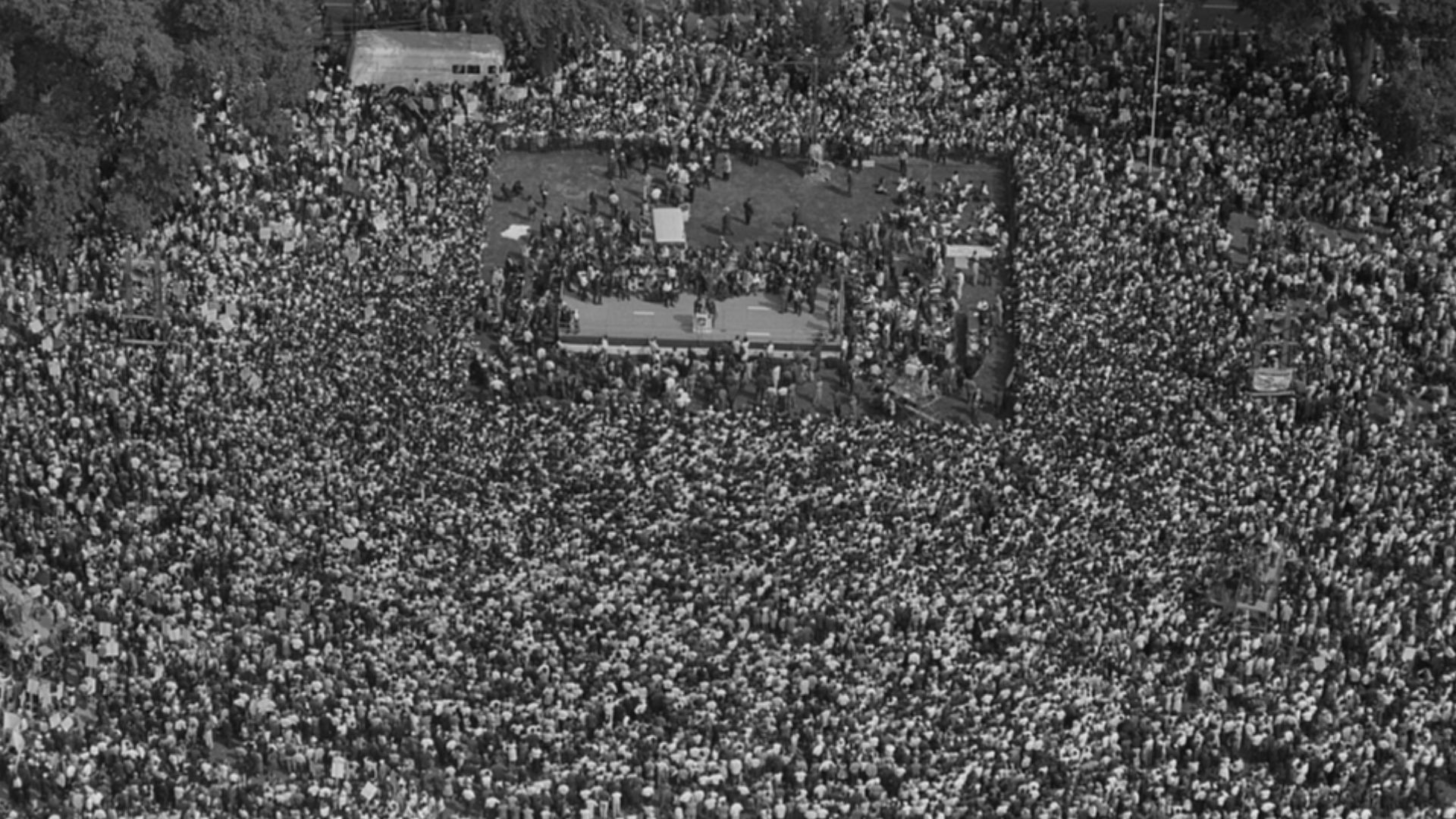
Their argument emphasized humanity’s ability to communicate and cooperate. More people could mean stronger networks, better solutions, and improved living conditions. Those improvements could support still more people. In their model, population growth helped create the conditions for growth to accelerate further.
 Trikosko, Marion S., photographer, Wikimedia Commons
The Curve Kept Getting Steeper
The concern went beyond a population simply increasing every year. Their model described growth accelerating toward a point where the projected population became unlimited. Later researchers have revisited this historical pattern, known as hyperbolic growth, and examined how humanity eventually departed from it.
 Bull Angers plant, Wikimedia Commons
Their Answer Was Infinity
The model’s endpoint was a mathematical singularity: the projected population approached infinity within a finite time. That sounds dramatic because it is. But an equation producing infinitely many people cannot literally describe what a finite planet will experience. Something in the growth pattern has to change.

The Paper Had A Grim Punch Line
The authors gave their argument a startling conclusion. Future generations, they suggested, could overcome food shortages through technology yet face catastrophic crowding instead. They described people being “squeezed to death.” It was an unusually memorable line to encounter in a scientific paper.
 FEB Patrimoine, Wikimedia Commons
One Small Word Changed Everything
The subtitle included an essential condition: “if.” Their endpoint depended on historical growth continuing. Even the fitted date carried uncertainty of roughly five and a half years either way. The warning was conditional, and its calendar deadline sounded more precise than the calculation.
 Unknown authorUnknown author, Wikimedia Commons
They Also Proposed A Way Out
The researchers argued for cutting the birth rate to about half its contemporary level, describing average families with slightly more than two children. Their paper therefore offered a way to change the outcome. Humanity wasn’t simply supposed to watch the calendar run out.
 Los Angeles Times, Wikimedia Commons
The Equation Didn’t Immediately Fade Away
You might expect a paper with that title to become a scientific curiosity and disappear. Instead, historian Alan MacEachern reports that its population forecasts performed surprisingly well through the 1970s and 1980s. The underlying equation gave researchers reasons to keep discussing it.
 75Portlewes, Wikimedia Commons
Eventually, Reality Started Pulling Away
According to MacEachern’s account, the difference became clearer around 1993, when the actual global population began falling behind the forecasts. That wasn’t the year humanity suddenly changed direction. It was when the growing gap became more apparent in his account of the model’s performance.
Humanity Took A Different Turn
The UN describes the historical shift toward longer lives and smaller families as the demographic transition. People can survive longer while having fewer children, changing the forces that drive population growth. That is a major complication for any prediction built around an accelerating population curve.
Families Became Smaller
According to the UN’s 2024 assessment, the global fertility rate was about 2.25 births per woman, down from 3.31 in 1990. That is a substantial change in average family size—and exactly the kind of development a scenario of endlessly accelerating growth cannot ignore.
 Angelo Cozzi (Mondadori Publishers), Wikimedia Commons
Many Countries Are Below Replacement
By 2024, more than half of countries and areas had fertility below 2.1 births per woman, approximately the level needed for long-term replacement in populations with low mortality. That doesn’t mean their populations immediately shrink. Their age structure and migration also affect what happens next.
 U.S. Census Bureau employees, Wikimedia Commons
The Population Can Still Keep Growing
Smaller families don’t instantly stop population growth. When large generations reach adulthood, they can produce substantial numbers of children even while having fewer each. This population momentum helps explain why falling fertility and an increasing global population can happen at the same time.
 Russell Lee, Wikimedia Commons
The Forecast Now Looks Very Different
The UN’s 2024 projections put the global population peak at around 10.3 billion in the mid-2080s, followed by a slight decline to about 10.2 billion in 2100. That remains an enormous population. It is also a very different future from unlimited growth in 2026.
 Seattle Municipal Archives from Seattle, WA, Wikimedia Commons
The World Isn’t Moving Together
A global total hides major differences. Some countries have already passed their population peaks, while others are expected to grow substantially. The same century can bring expanding demand for schools and housing in one place, and a growing need to support older residents somewhere else.
 Schmidt, John Robert, copyright claimant, Wikimedia Commons
Researchers Still Study The Old Pattern
A 2025 paper revisited historical population growth using data extending through 2023. It examined how the population curve departed from the path toward a singularity. The original prediction’s deadline may have lost its force, but the mathematics behind changing growth patterns remains a subject of research.
 Queensland State Archives, Wikimedia Commons
There’s Even A Doomsday Conference
The Complexity Science Hub in Vienna has scheduled a conference for November 12–13, 2026, examining the old prediction, population changes, and the value of doomsday forecasts. If nothing else, the researchers gave future scientists an unusually memorable date for a meeting.
So What Happens On November 13?
There is no scientific basis in this model for expecting humanity to end that day. The deadline depended on a growth pattern that did not continue indefinitely. We have reached the year in the title—but the population followed a different path.
 U.S. Census Bureau employees, Wikimedia Commons
The Date Was The Easy Part To Remember
Sixty-six years later, the deadline still grabs attention. The condition attached to it is easier to overlook. That leaves us with a useful question whenever another prediction names humanity’s final day: What has to keep happening for that calculation to come true?
 Cushing Memorial Library and Archives, Texas A&M, Wikimedia Commons
You Might Also Like: