You Don’t Always Need Scuba Gear To Find A Shipwreck
Most shipwrecks disappear beneath the waves, leaving divers to explore whatever survives. A few ended up somewhere much more convenient. Some were thrown directly onto beaches, others sit in clear shallows, and a handful periodically emerge when tides and storms move the sand around them. From Oregon to Iceland, these wrecks let you get surprisingly close to maritime history while keeping your head above water.
Peter Iredale — Fort Stevens, Oregon
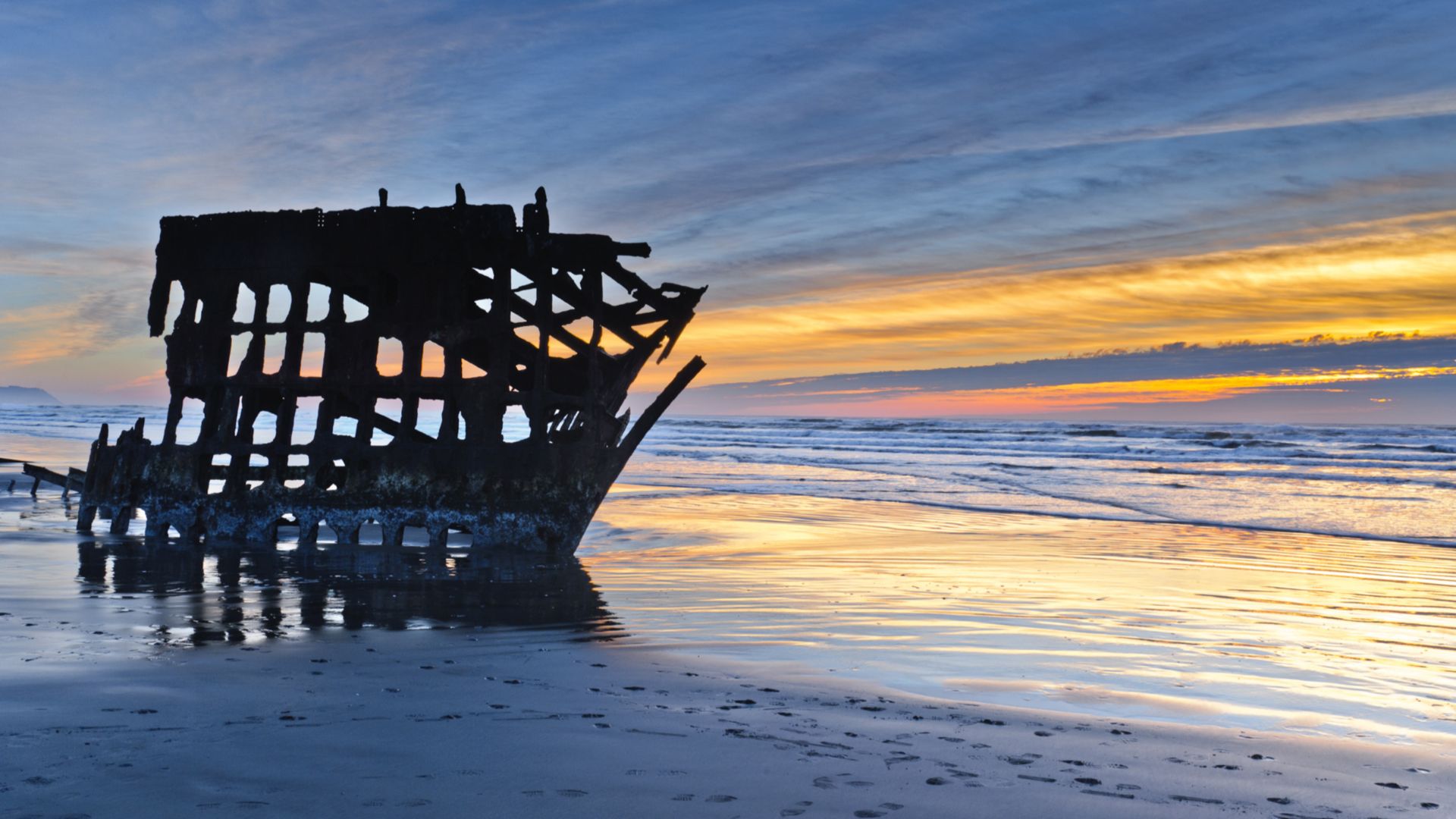
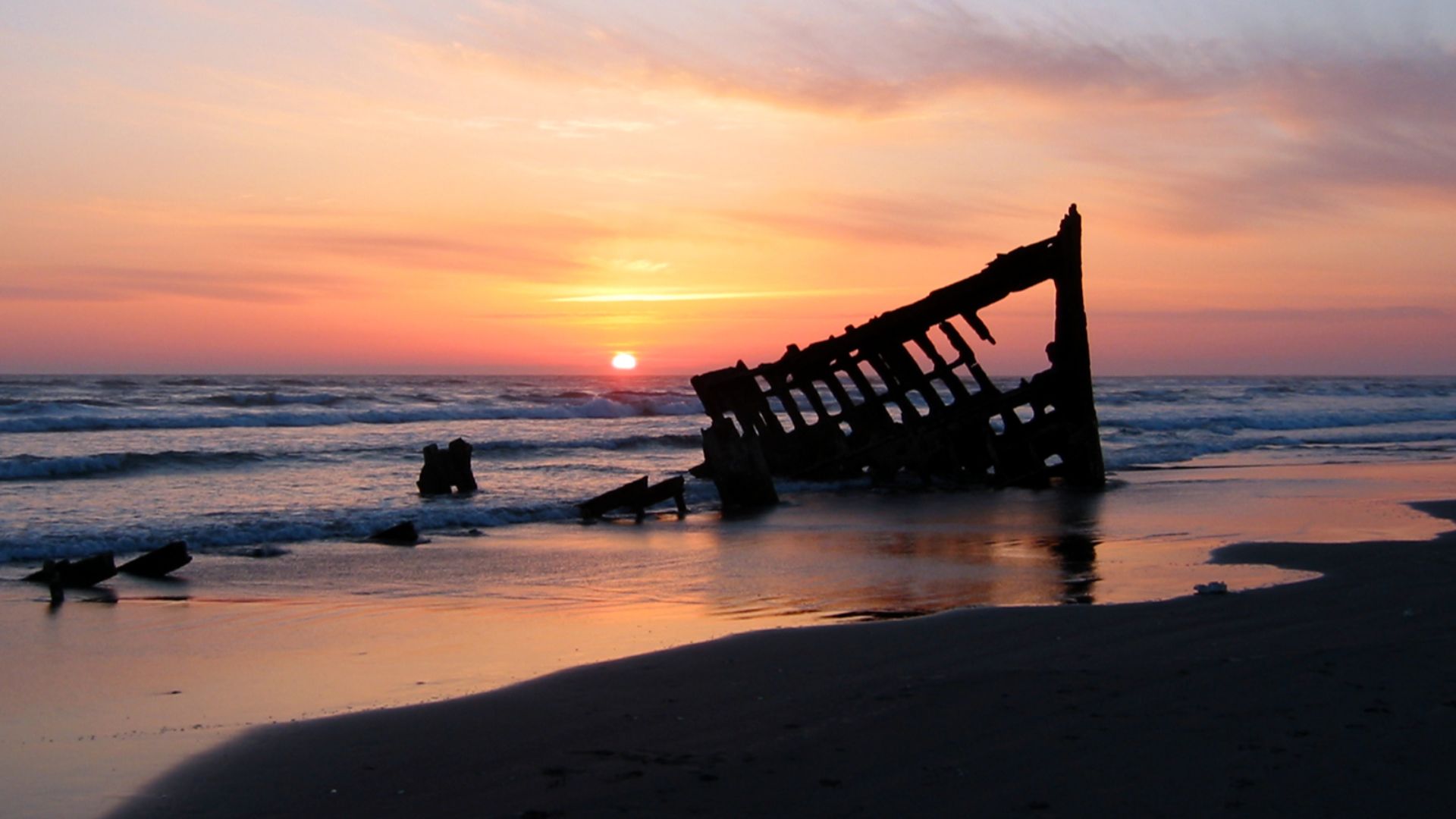
The Peter Iredale has been sitting on an Oregon beach since October 1906, when heavy winds and currents pushed the four-masted steel barque onto Clatsop Spit near the Columbia River. Nobody was seriously hurt, but efforts to refloat the ship failed. More than a century later, its rusting bow and ribs still rise from the sand at Fort Stevens State Park. Low tide is the best time to visit, when you can walk right up to the remains without even getting your feet particularly wet.
 Waqas Mustafeez, Wikimedia Commons
SS Maheno — K’gari, Queensland
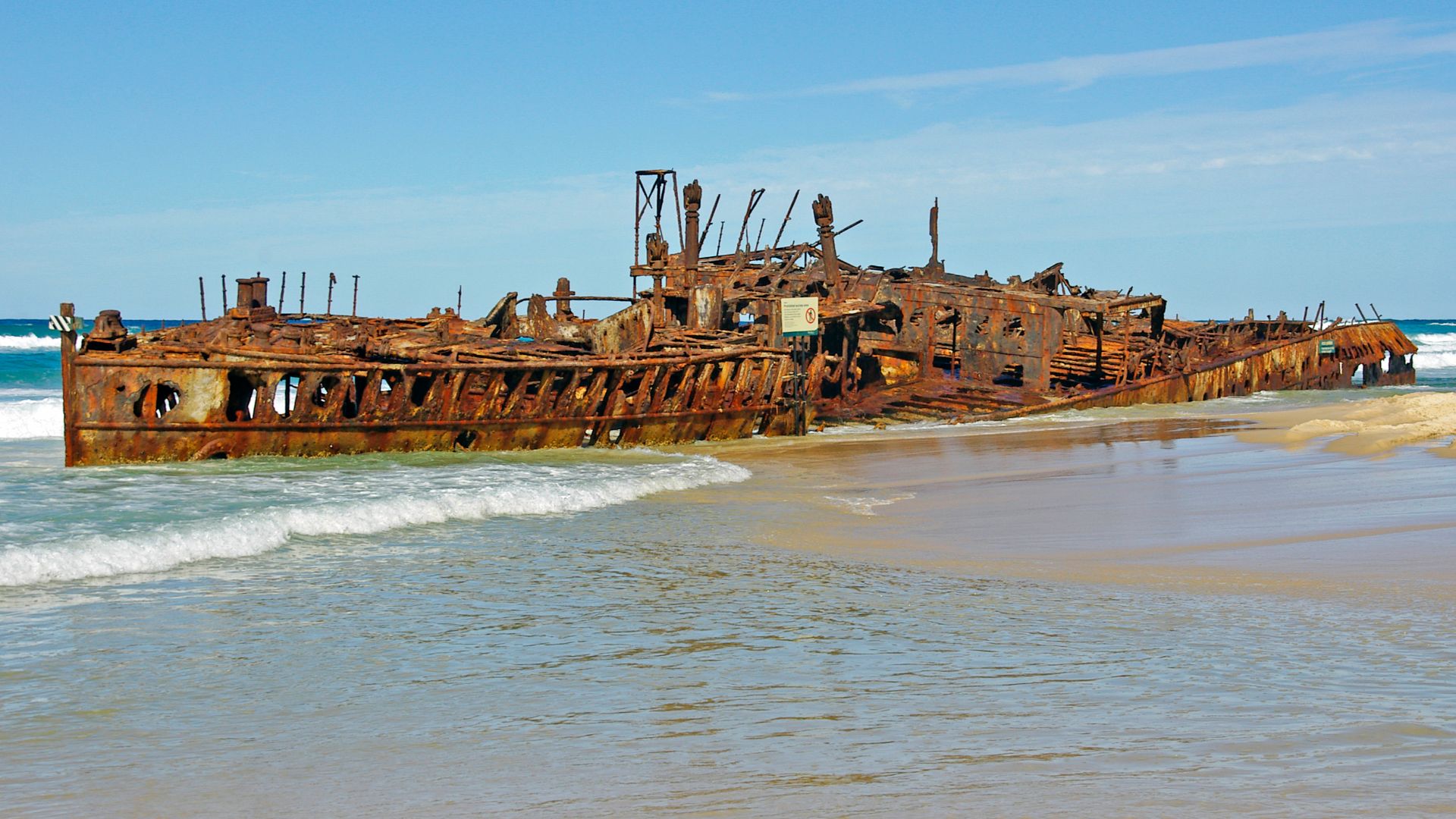
Before becoming one of Australia's most recognizable wrecks, Maheno was a luxury passenger liner and later served as a hospital ship during Word War I. Its final journey was much less glamorous. While being towed toward Japan for scrapping in 1935, a cyclone snapped the towline and sent the ship onto K’gari's 75 Mile Beach. The enormous rusting hull has been sitting there ever since. Visitors can see it directly from the beach, although the badly corroded structure is best admired rather than climbed.
 Alchemist-hp(talk) derivative work: Dontworry, Wikimedia Commons
Eduard Bohlen — Skeleton Coast, Namibia
The Eduard Bohlen looks like someone abandoned a ship in the middle of a desert, and in a sense that's exactly what happened. The German cargo vessel ran aground in heavy fog along Namibia's Skeleton Coast in 1909. Since then, the shoreline has shifted dramatically, leaving the wreck hundreds of meters from the modern ocean. Surrounded by Namib Desert sand instead of waves, it may be one of the strangest-looking shipwrecks anywhere. Reaching it typically requires an organized trip into the remote coastal desert.
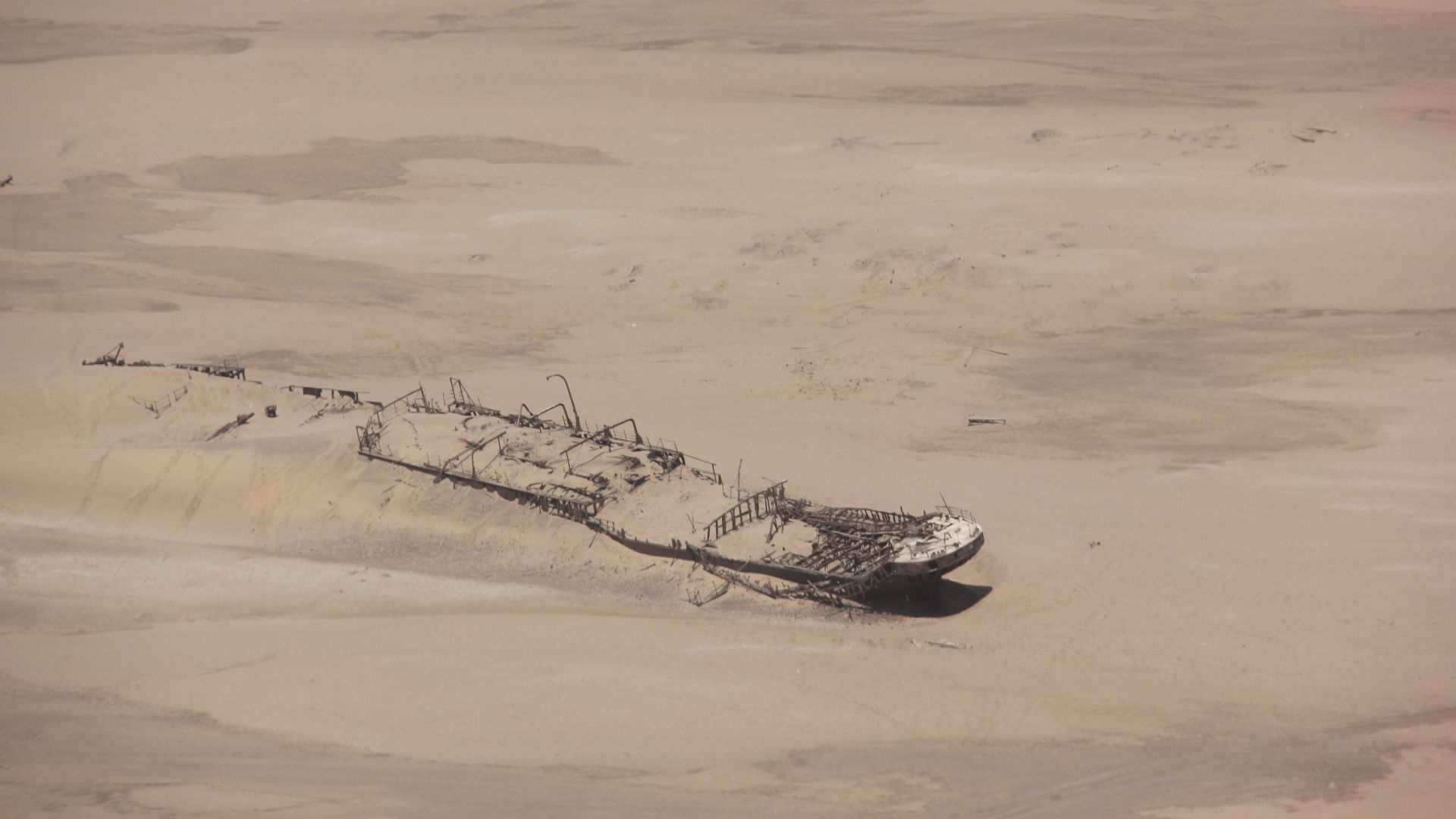 Laika ac from USA, Wikimedia Commons
Amsterdam — Hastings, England
Seeing the Amsterdam requires much better timing. The Dutch East India Company vessel ran aground near Hastings during its maiden voyage in 1749 and quickly sank into soft sand and mud. That accidentally preserved a remarkable portion of the wooden ship and its cargo. Most of the time it's hidden beneath the beach, but exceptionally low spring tides can expose sections of the wreck at Bulverhythe. In 2026, changing sand conditions revealed it again after it had spent roughly two years largely concealed.
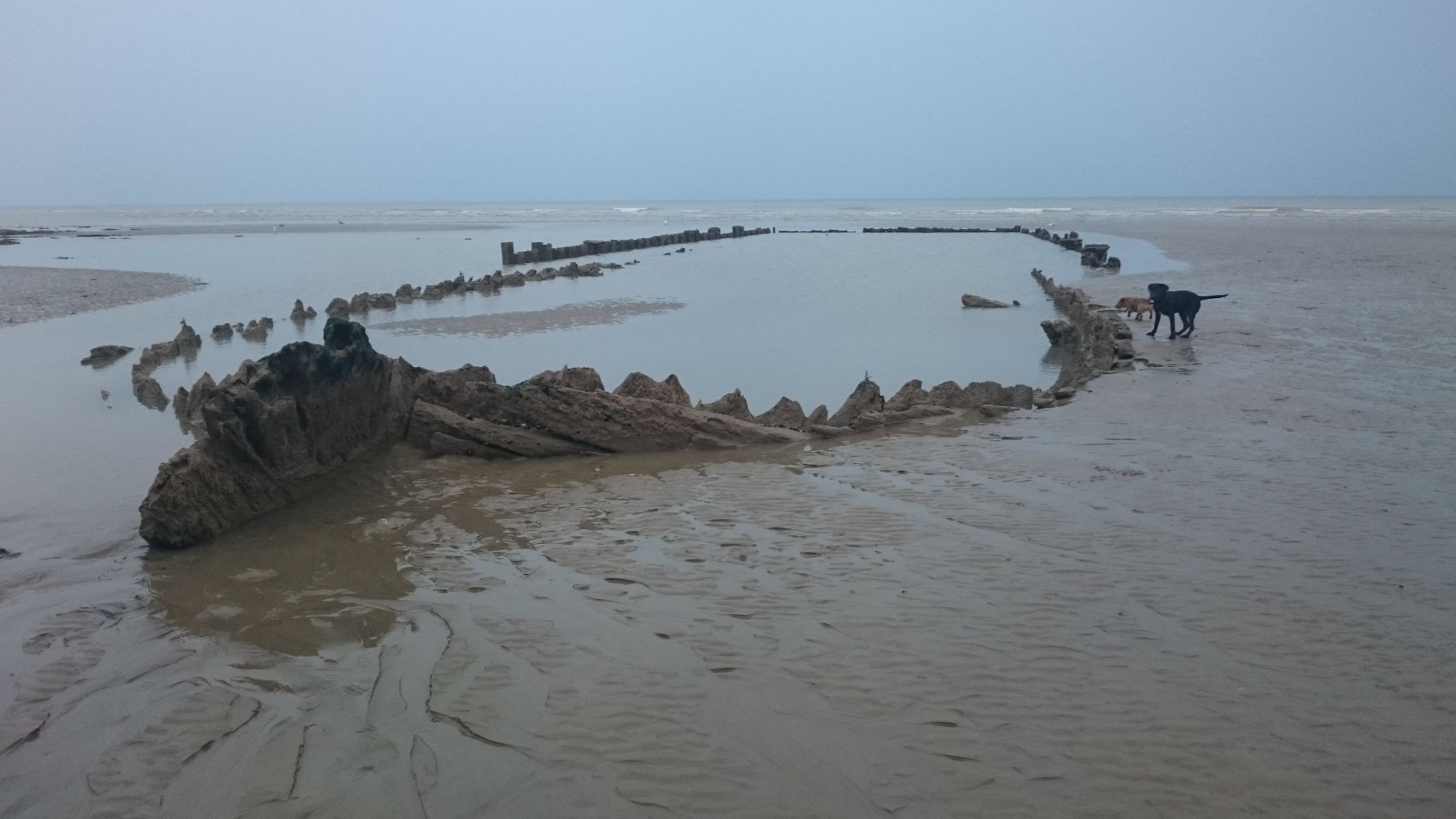 MarshallPearce, Wikimedia Commons
Z2 Georg Thiele — Rombaksfjord, Norway
The remains of Z2 Georg Thiele are a very visible reminder of the 1940 Battles of Narvik. The German destroyer fought British forces during the Second Naval Battle of Narvik on April 13 before suffering heavy damage. Its crew deliberately ran it ashore so they could abandon the ship. Part of the wreck, including its bow, remains at the shoreline near Sildvik. Visitors can reach it on foot via a rough hike, although local tourism officials warn against climbing on the unstable metal.
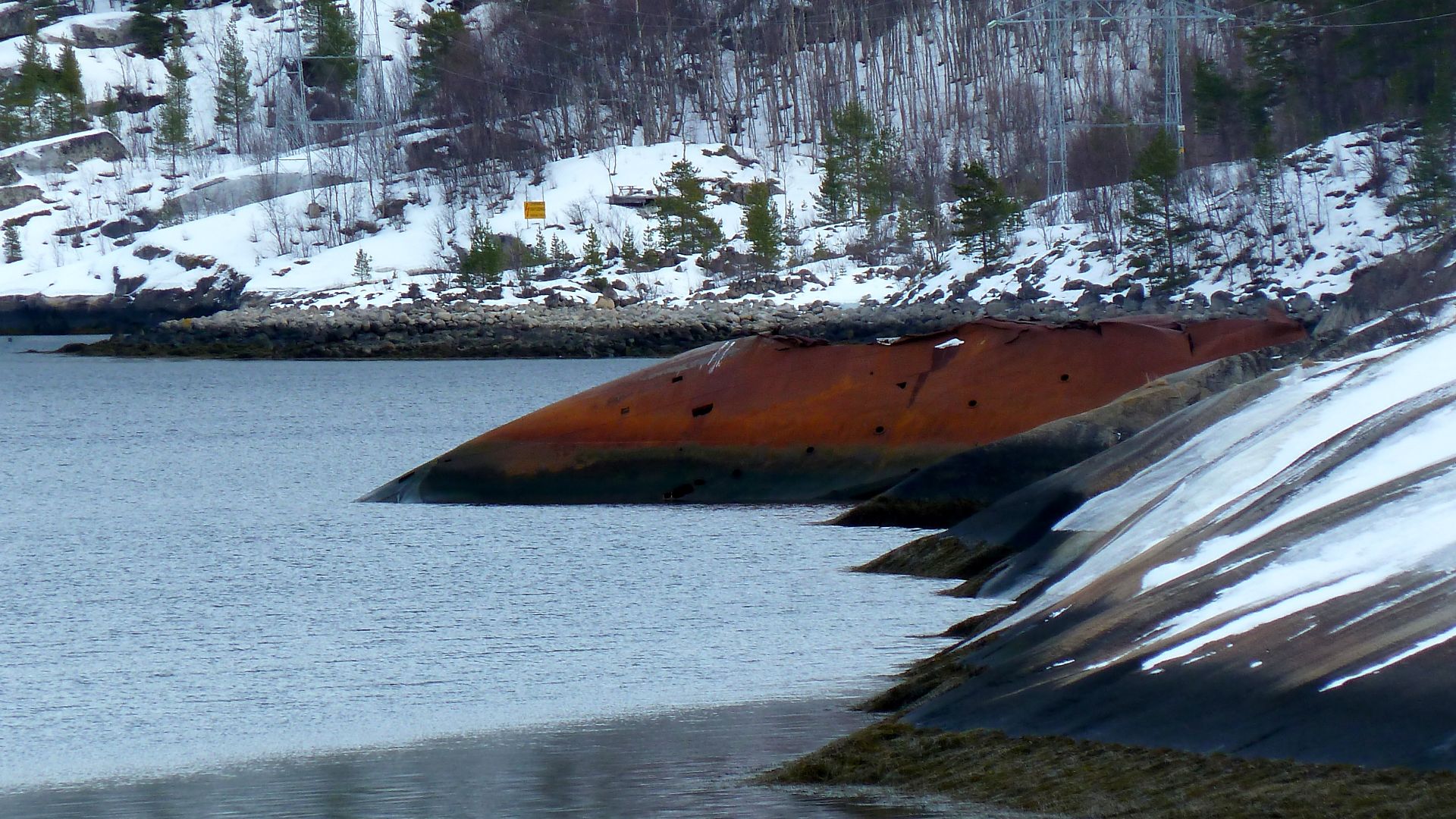
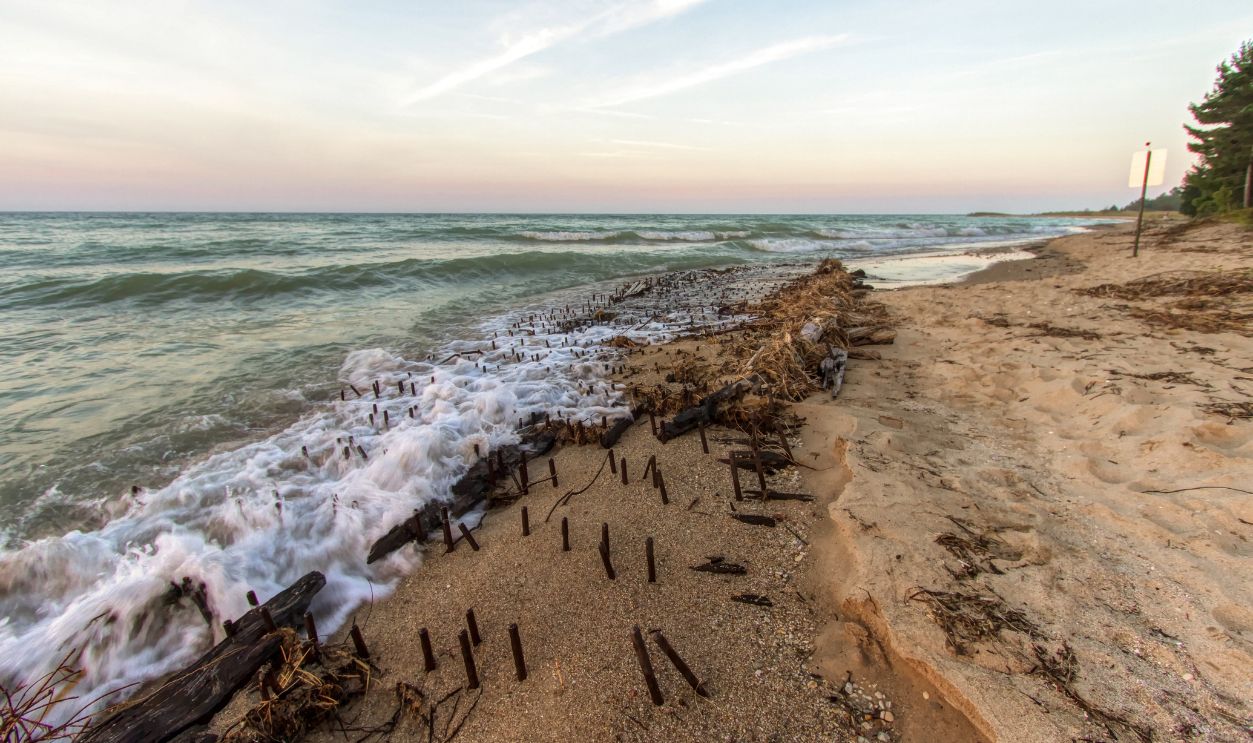
Trinculo — Ninety Mile Beach, Victoria
The iron barque Trinculo was sailing toward Newcastle when bad weather drove it onto Australia's Ninety Mile Beach in 1879. More than 140 years later, pieces of its iron skeleton are still embedded in the sand at Gippsland Lakes Coastal Park. Exactly how much you see depends on shifting sand and tide conditions, which means the wreck can look noticeably different from one visit to another. There's something especially eerie about seeing nineteenth-century ironwork simply sticking out of an otherwise broad, empty beach.
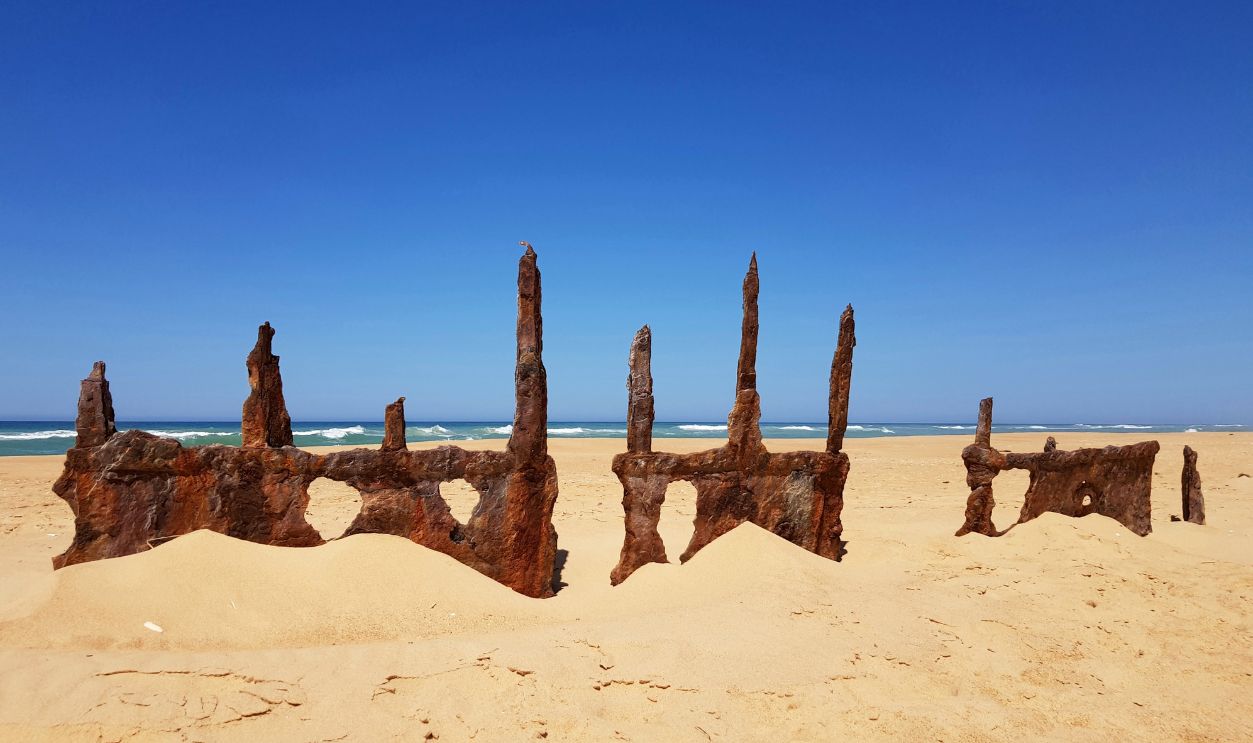 Michelle Jirsensky, Shutterstock
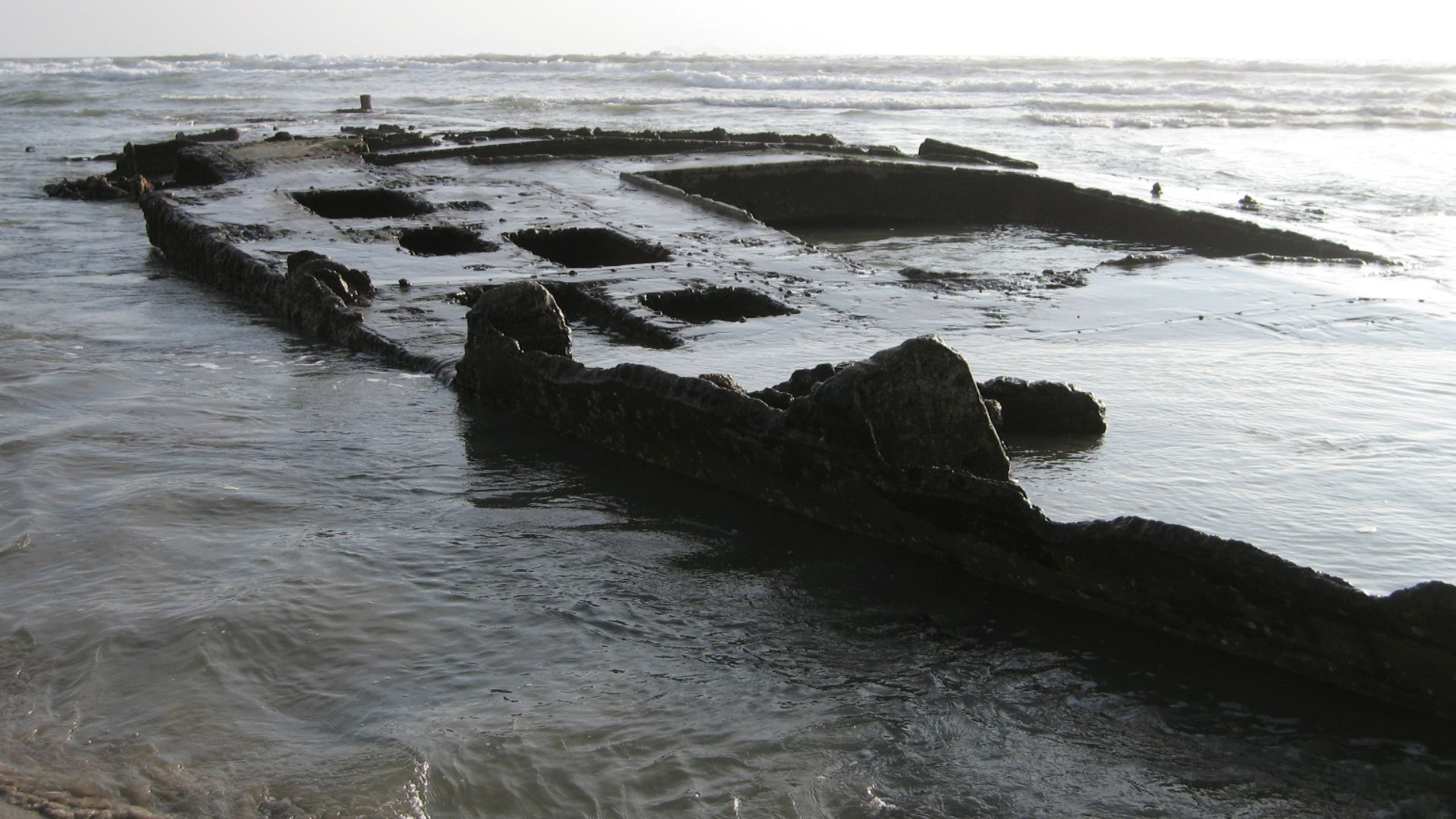
SS Monte Carlo — Coronado, California
The SS Monte Carlo had already lived several lives before ending up on Coronado's beach. Originally built as a tanker, it was later converted into a floating entertainment ship offering gambling and other attractions beyond the reach of California law. A powerful New Year's storm tore it loose and grounded it off Coronado in 1937. Much of the ship is now buried under sand, but low tides and winter erosion can expose large pieces. The City of Coronado specifically warns visitors not to walk on the sharp, unstable wreckage.
 Jamie Lantzy, Wikimedia Commons
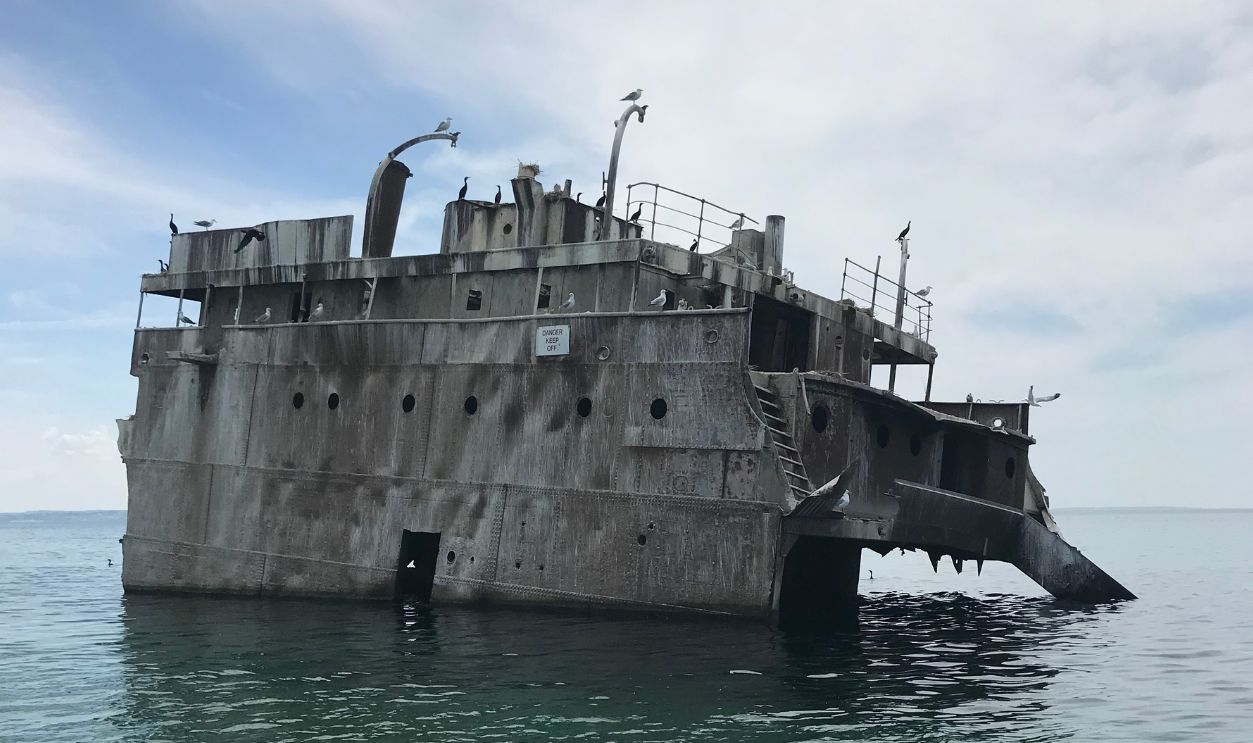
Francisco Morazán — South Manitou Island, Michigan
In November 1960, the Francisco Morazán was trying to make one last trip through the Great Lakes before the St. Lawrence Seaway closed for winter. A snowstorm pushed the freighter off course, and it ran aground just a few hundred yards from South Manitou Island. Everyone aboard was rescued. Today, large portions still stand above Lake Michigan, making it one of the Great Lakes' most obvious wrecks. National Park Service trails lead visitors to shore-based viewpoints where the battered ship can be seen offshore.
Joseph S. Fay — Forty Mile Point, Michigan
A brutal Lake Huron storm broke apart the wooden freighter Joseph S. Fay near Forty Mile Point in 1905. Most of the ship ended up underwater, but a remarkable section of its wooden side was ripped away and deposited on the beach. Roughly 134 feet of hull structure has survived there, giving visitors a rare chance to inspect part of a nineteenth-century Great Lakes freighter without boarding a boat. The wreckage sits near the Forty Mile Point Lighthouse, making this an easy maritime-history stop.
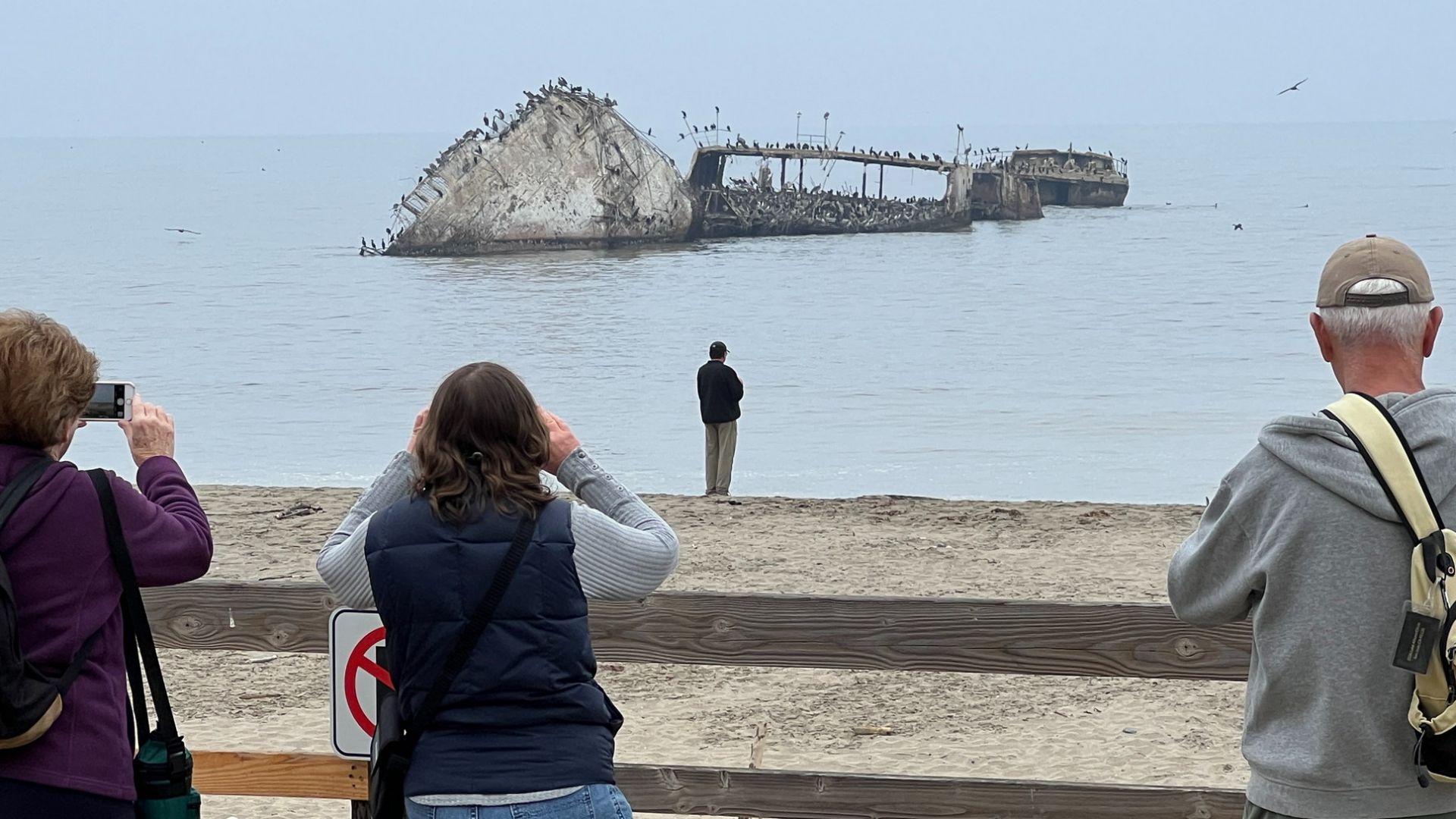
SS Palo Alto — Aptos, California
The SS Palo Alto was built from concrete during the World War I era, but its most memorable career came afterward. It was eventually positioned off Seacliff State Beach and briefly transformed into an amusement destination with dining, dancing, and entertainment. Storms gradually broke the concrete vessel apart, and it's now an enormous crumbling ruin just offshore. The pier that once led toward the ship was badly damaged by storms in 2023, but the wreck itself remains clearly visible from the beach and surrounding bluff.
King Philip — Ocean Beach, San Francisco
The King Philip is for travelers who enjoy a shipwreck with a bit of suspense. The wooden clipper grounded on San Francisco's Ocean Beach in 1878 and was partly salvaged before the remaining hull disappeared beneath shifting sand. It has been hiding and reappearing ever since. Major storms and particularly low tides occasionally uncover recognizable wooden sections. The National Park Service says the remains last made a major appearance in 2011, so don't plan a vacation expecting to see it. Think of it as a very old maritime lottery ticket.
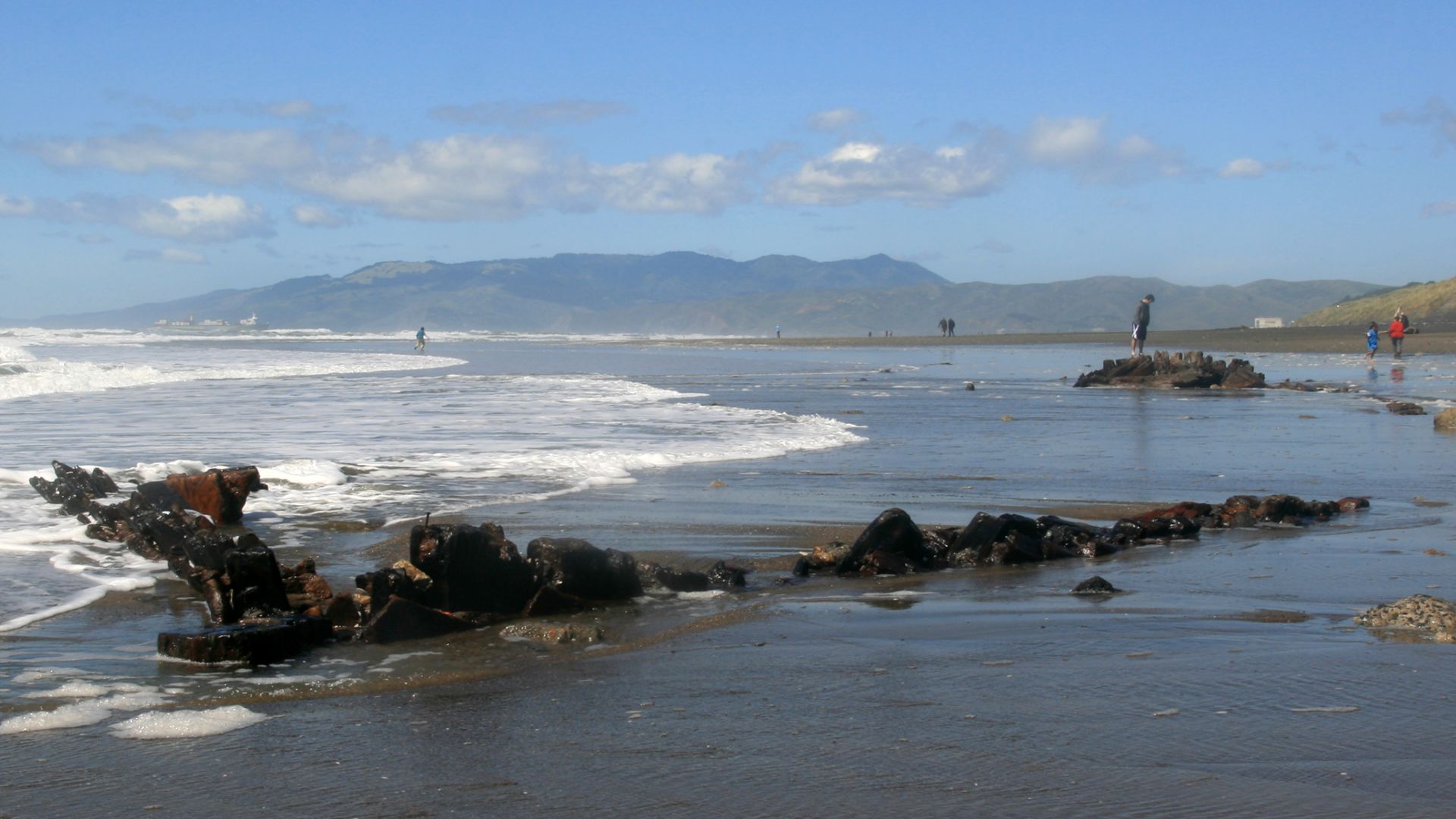 Brocken Inaglory, Wikimedia Commons
Omeo — Coogee Beach, Western Australia
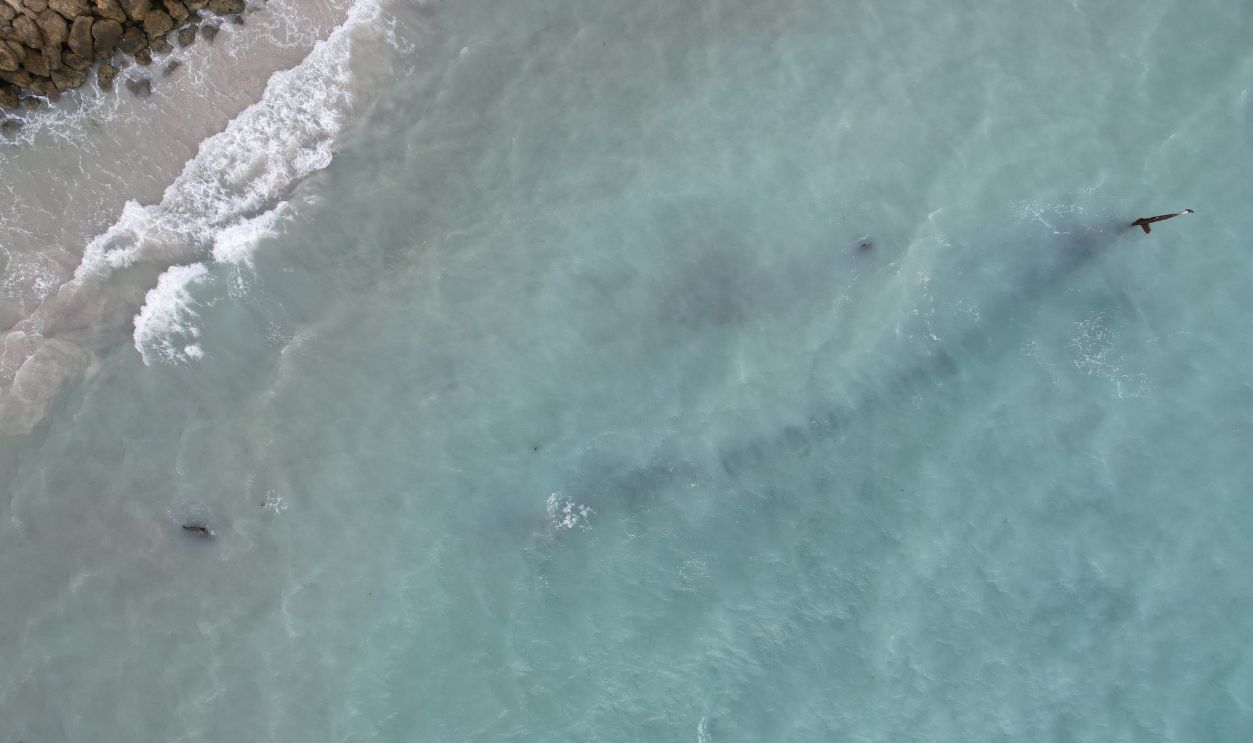
The Omeo had a surprisingly useful career before becoming a popular shallow-water wreck. Built in England in 1858, the iron vessel carried passengers and cargo and helped support major Australian communications projects. After years of service, it broke its moorings and was driven ashore at Coogee Beach in 1905. Today the wreck sits only around 40 meters offshore in shallow water. Most remains are submerged, but parts permanently protrude above the surface, so you can spot it from land without diving.
City Of Adelaide — Magnetic Island, Queensland
The City of Adelaide began life in 1864 as a passenger steamship and later became a sailing vessel and coal-storage hulk. By the 1910s, its working days were over. While being moved near Magnetic Island, the old vessel ended up grounded in shallow Cockle Bay. The remaining hull is now partly filled with mangroves, creating a sight that looks more like a tiny floating island than a ship. It's roughly 300 meters offshore and visible from land, with more revealed around low tide.
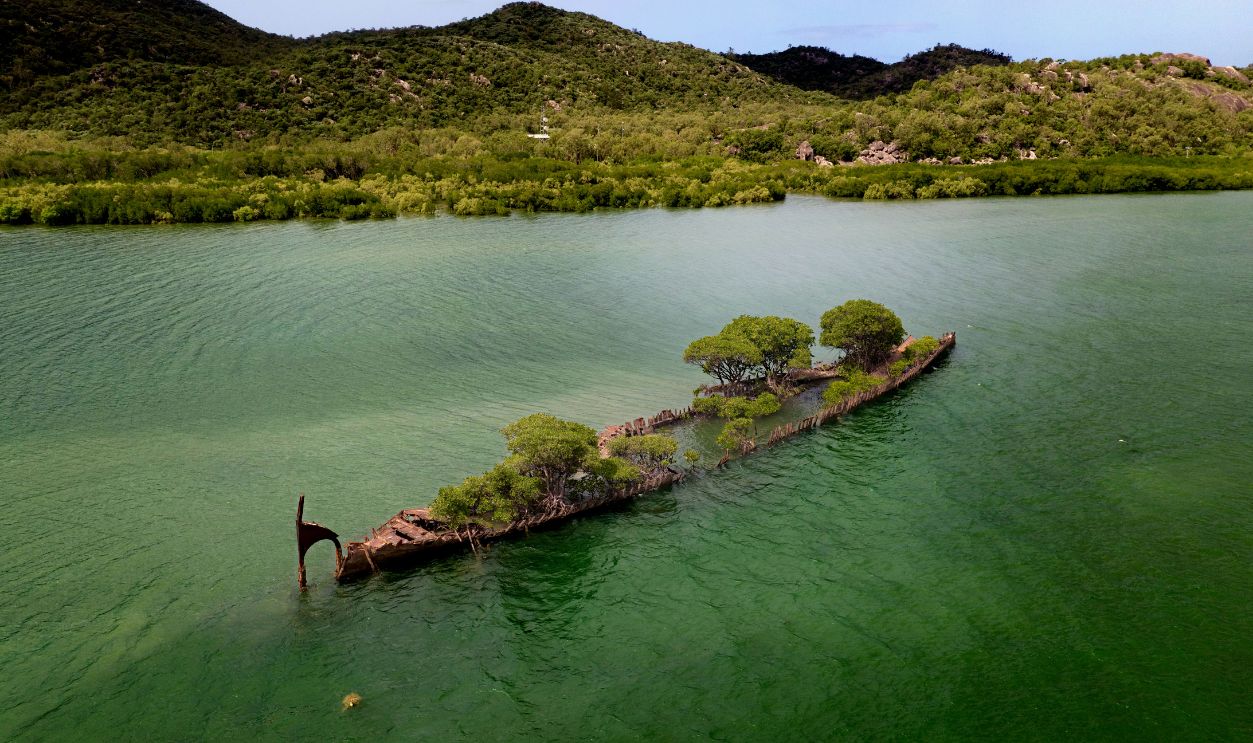 Roadwarrior Photography, Shutterstock
Steam Trawler Sheraton — Hunstanton, England
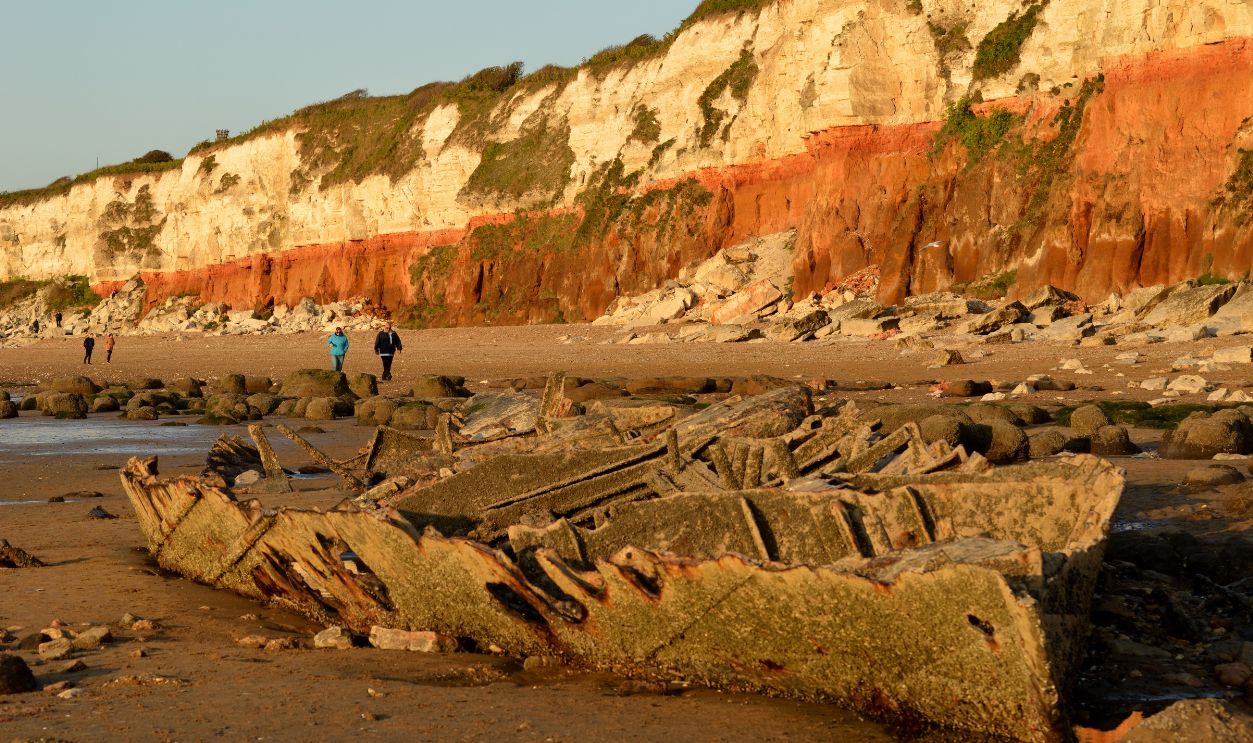
The Sheraton started as a fishing trawler in 1907, but both world wars gave it a more unusual résumé. It performed boom-defense work during WWI, later served as a patrol vessel, and eventually became a target ship. In 1947, it broke loose while being towed and ended up wrecked beneath the cliffs at Hunstanton. A surprisingly substantial section of the metal hull survives. When the tide retreats, visitors can walk along the beach and see the wreck without needing a boat.
Cyrenian — Lion’s Head, Ontario
Lake Huron and Georgian Bay are famous for remarkably clear water, which means some wrecks don't even need to break the surface to be visible. The schooner Cyrenian, formerly known as Prussia, was lost near Lion's Head during the Great Storm of 1913. Its remains sit in shallow water close to the public beach. On a calm, clear day, sections can be seen through the surface from shore, giving visitors a glimpse of underwater archaeology without having to put on scuba equipment.
W.E. Gladstone / Ann Long — Lion’s Head, Ontario
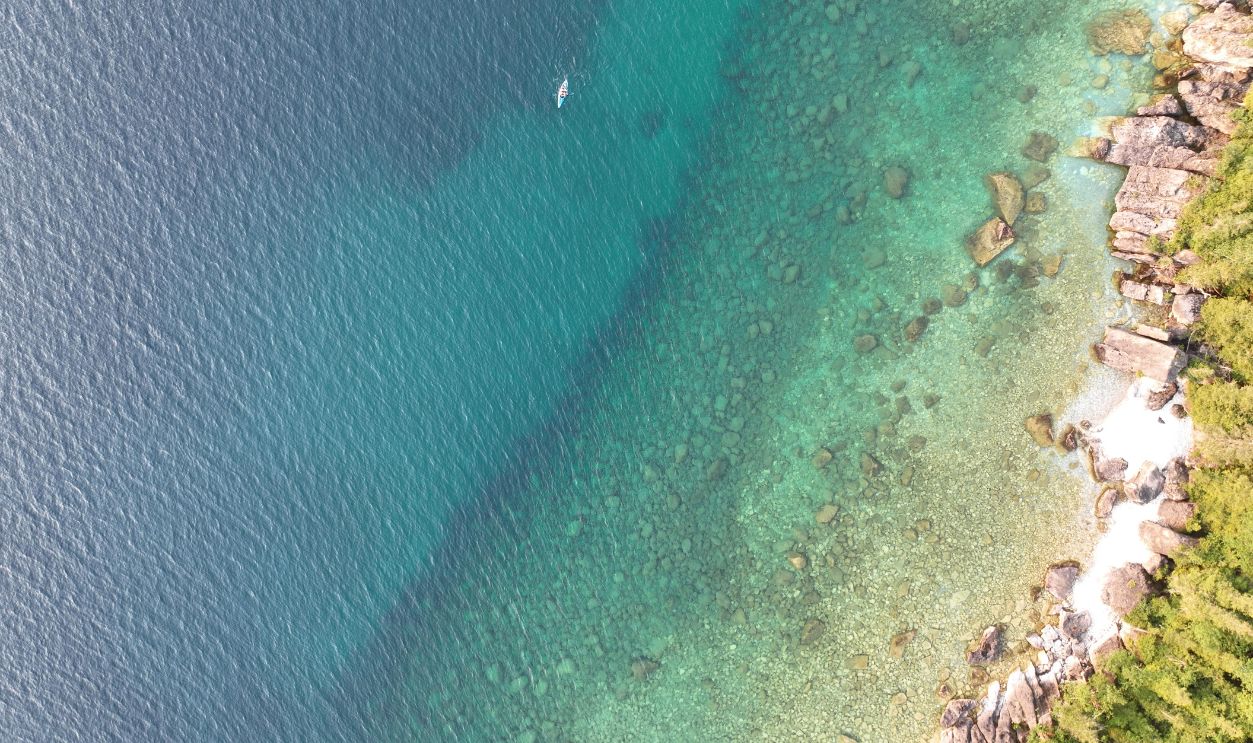
Lion's Head has another shallow wreck close to the Cyrenian. Commonly identified locally with the names W.E. Gladstone or Ann Long, the remains include sections of a wooden vessel and machinery sitting in clear water near shore. It's subtler than some of the giant rusting hulks on this list, so conditions matter enormously. Calm water, bright daylight, and good visibility make the difference between seeing an obvious wreck and wondering what everyone else is staring at.
Bessie A. White — Fire Island, New York
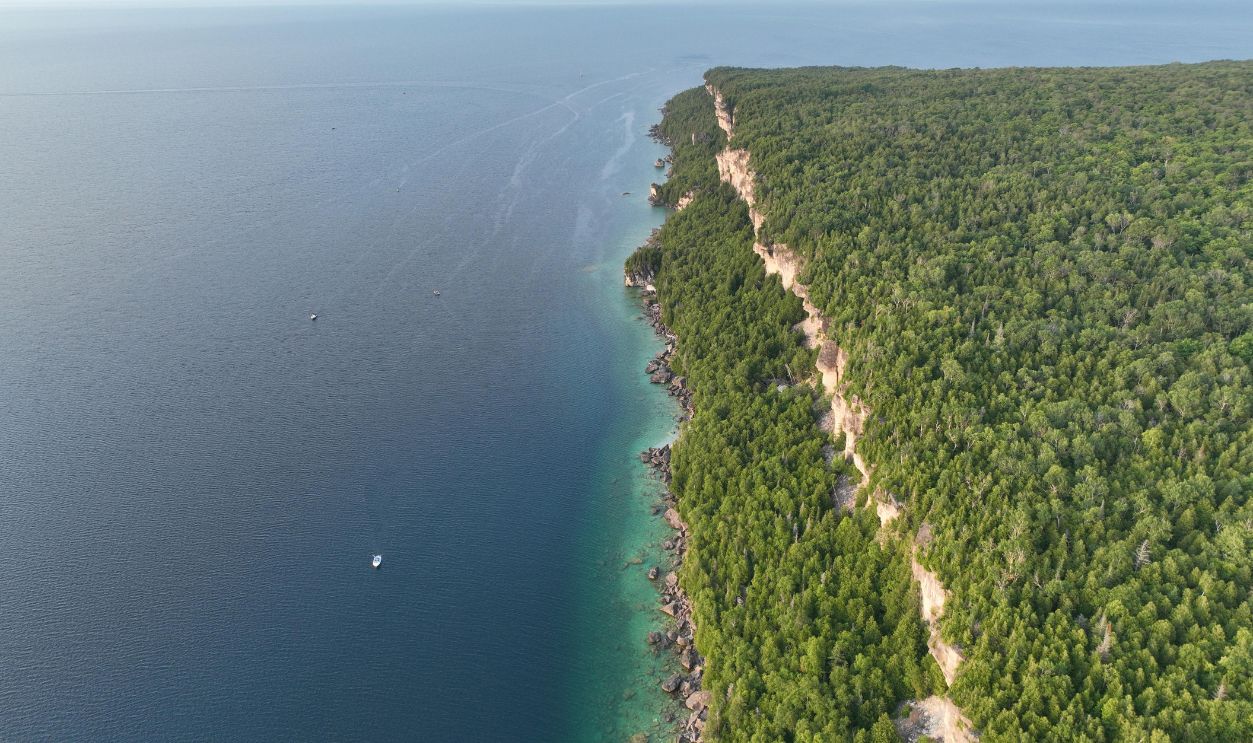
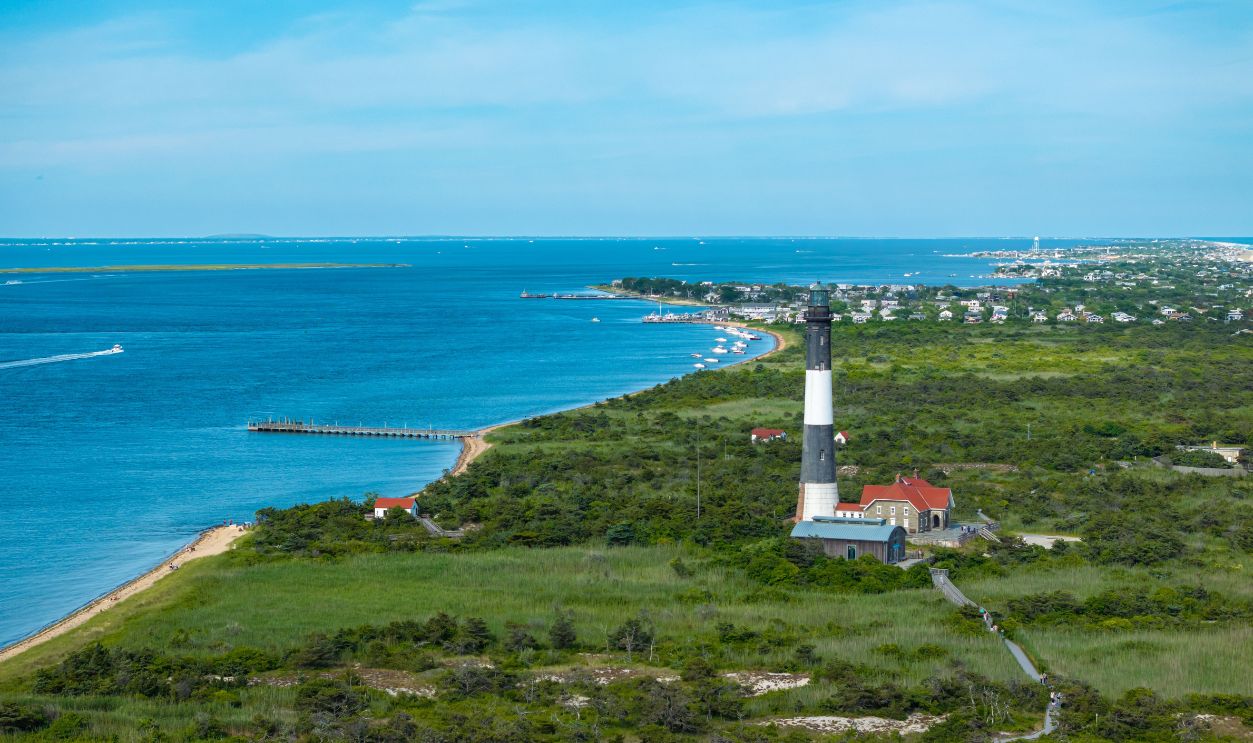
The Bessie A. White has been playing hide-and-seek with Fire Island visitors for more than a century. The Canadian schooner struck a sandbar in February 1922 and was lost, although everyone aboard survived. Its remains were gradually buried by the island's constantly moving sand. Powerful storms sometimes expose large pieces again, including after Hurricane Sandy in 2012 and during later erosion events. The National Park Service warns that there's never a guarantee you'll see it, but that unpredictability is part of what makes the wreck fascinating.
 Wirestock Creators, Shutterstock
SS Atlantus — Cape May, New Jersey
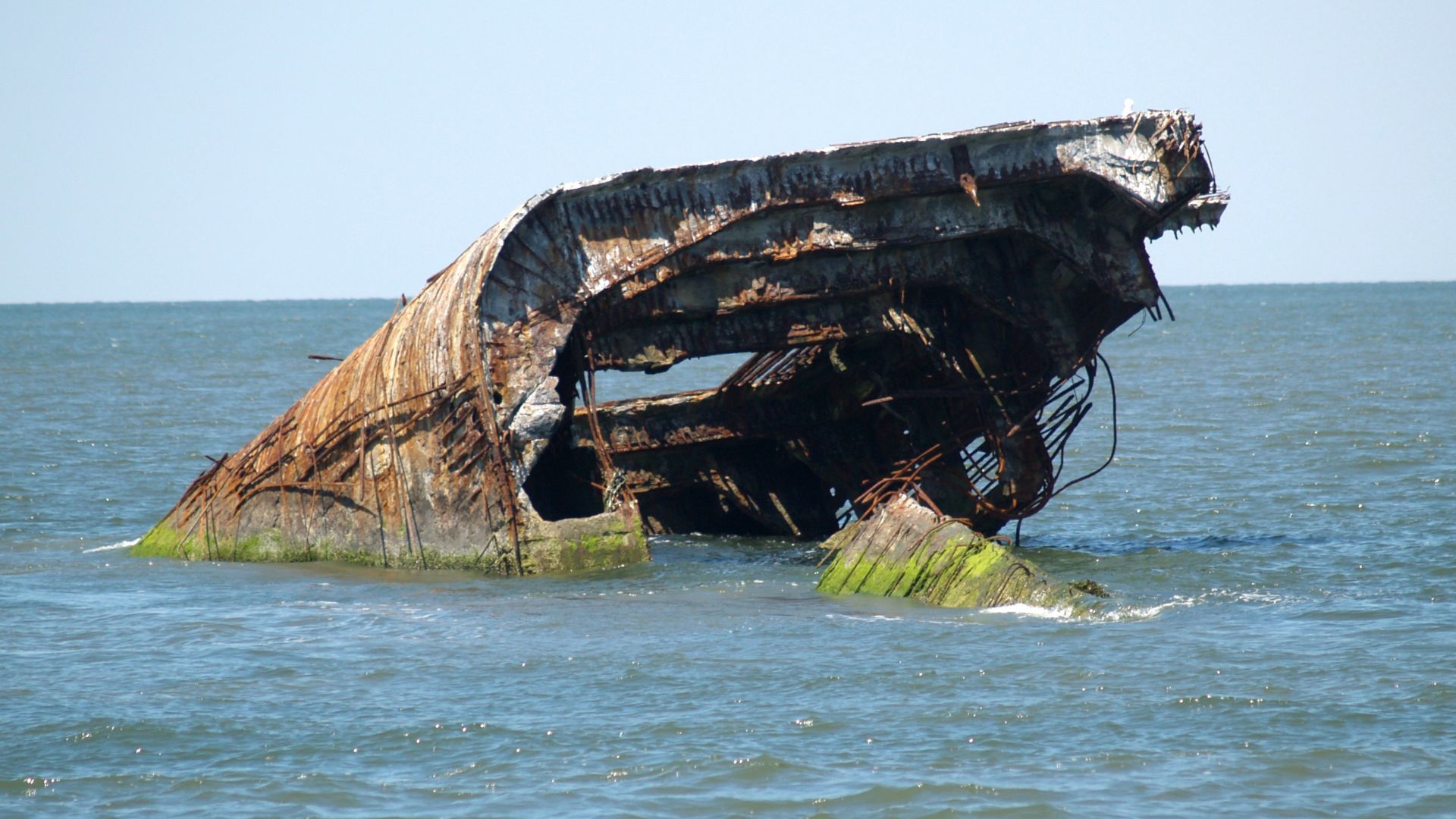
Concrete isn't the first material most people associate with ships, but wartime steel shortages encouraged American builders to experiment with it. Atlantus was one of those vessels. After its working life ended, plans were made to use it as part of a ferry landing near Cape May. A 1926 storm broke the ship loose and grounded it about 150 feet from Sunset Beach. The wreck has deteriorated dramatically since then, but pieces still poke above the water, with visibility changing depending on tide and conditions.
SS Dominator — Palos Verdes, California
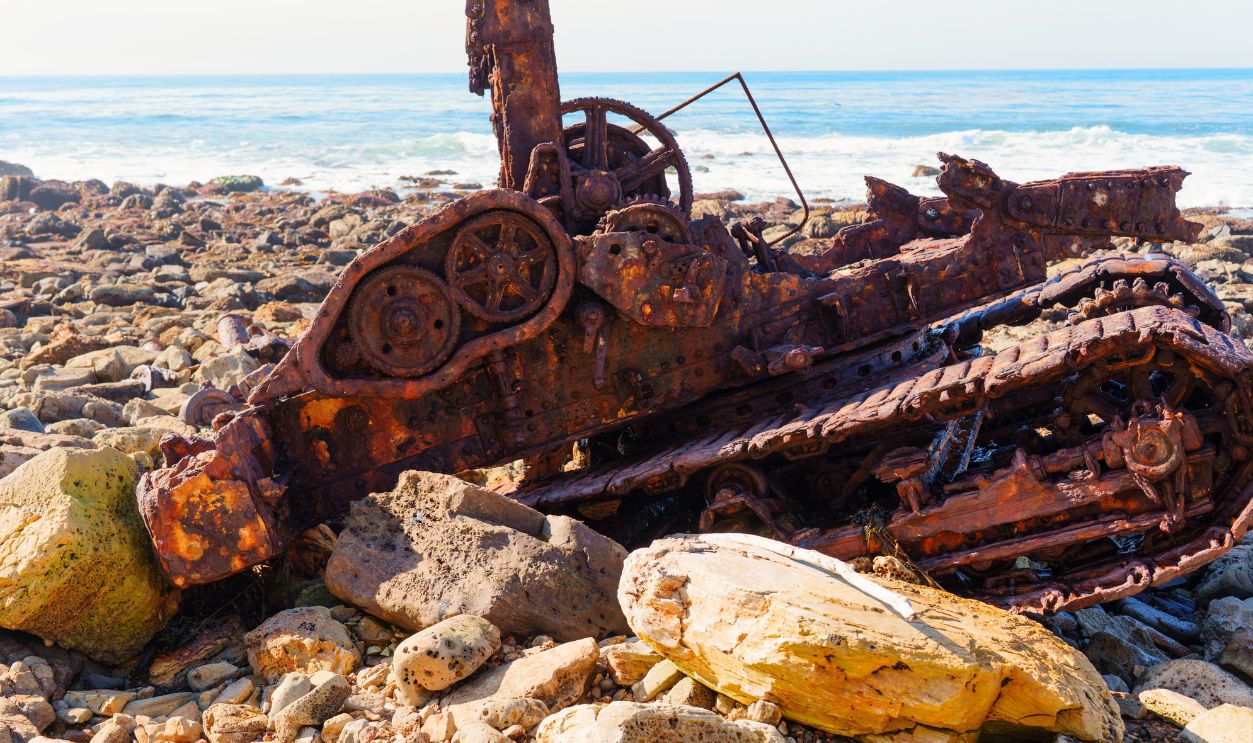
Dense fog brought the Greek freighter Dominator to a disastrous stop on the rocky Palos Verdes Peninsula in 1961. The ship became stranded while carrying wheat and barley, and salvage efforts couldn't save it. Decades of Pacific surf have dismantled most of the hull, but large rusted sections remain scattered along the coast. Getting there is more demanding than visiting a beachside wreck, involving a steep, rough hike. The reward is a shoreline littered with unmistakable pieces of a freighter slowly being reclaimed by the sea.
 Chizhevskaya Ekaterina, Shutterstock
Garðar BA 64 — Westfjords, Iceland
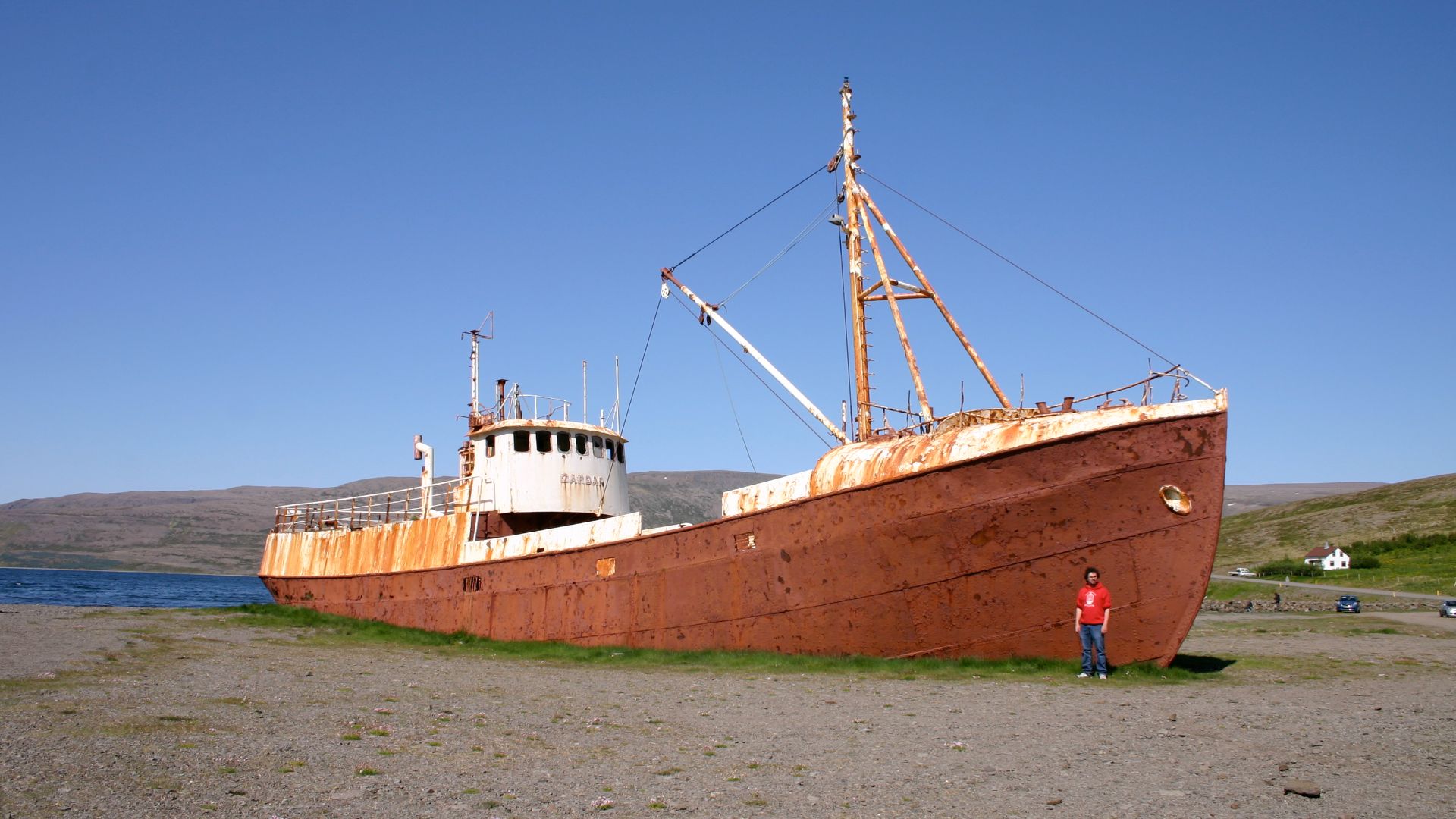
Garðar BA 64 didn't end up here because of a dramatic storm. Launched in 1912, the steel vessel spent decades working in northern waters as a whaler and fishing ship before being retired in 1981. Rather than scrapping it, the owners deliberately beached the vessel in Iceland's Westfjords. Its enormous rusty hull now sits beside Route 612 on the Látrabjarg Peninsula. There's no hiking or tide calculation required. Visitors can simply stop at the designated area and see the old ship from dry land.
 Progresschrome, Wikimedia Commons
Dimitrios — Valtaki Beach, Greece
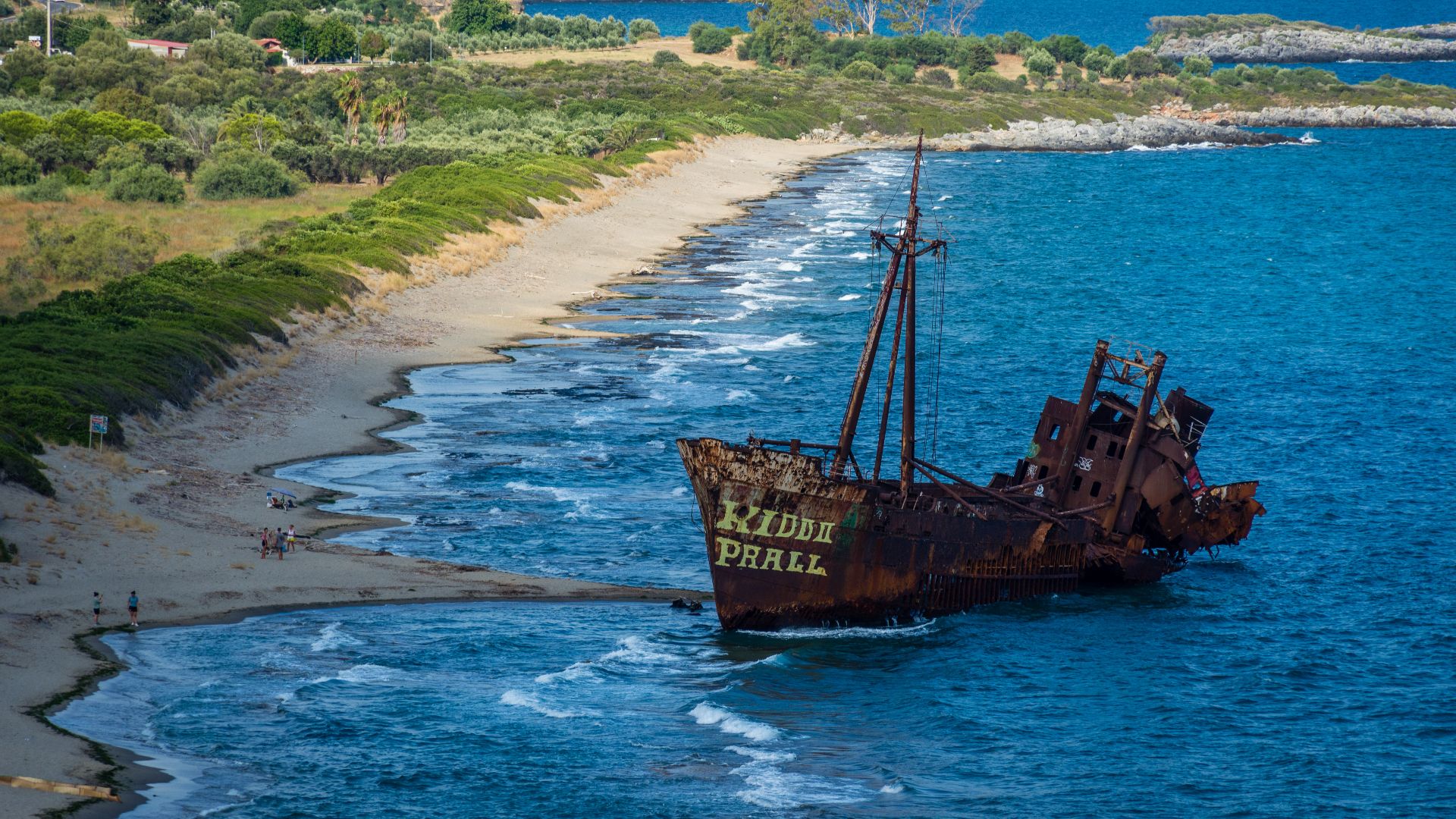
Few beach wrecks look as cinematic as the Dimitrios. The rusting freighter has been stranded at Valtaki Beach near Gythio since the early 1980s, close enough to shore that it dominates the entire landscape. Stories claiming the vessel was involved in nicotine smuggling have become part of local lore, although the real circumstances are less certain. Whatever brought it there, the ship has become one of the region's most recognizable landmarks. Visit Greece now lists Valtaki specifically for the wreck and its unusual scenery.
 GeorgePhoto, Wikimedia Commons
Bád Eddie — Bunbeg, Ireland
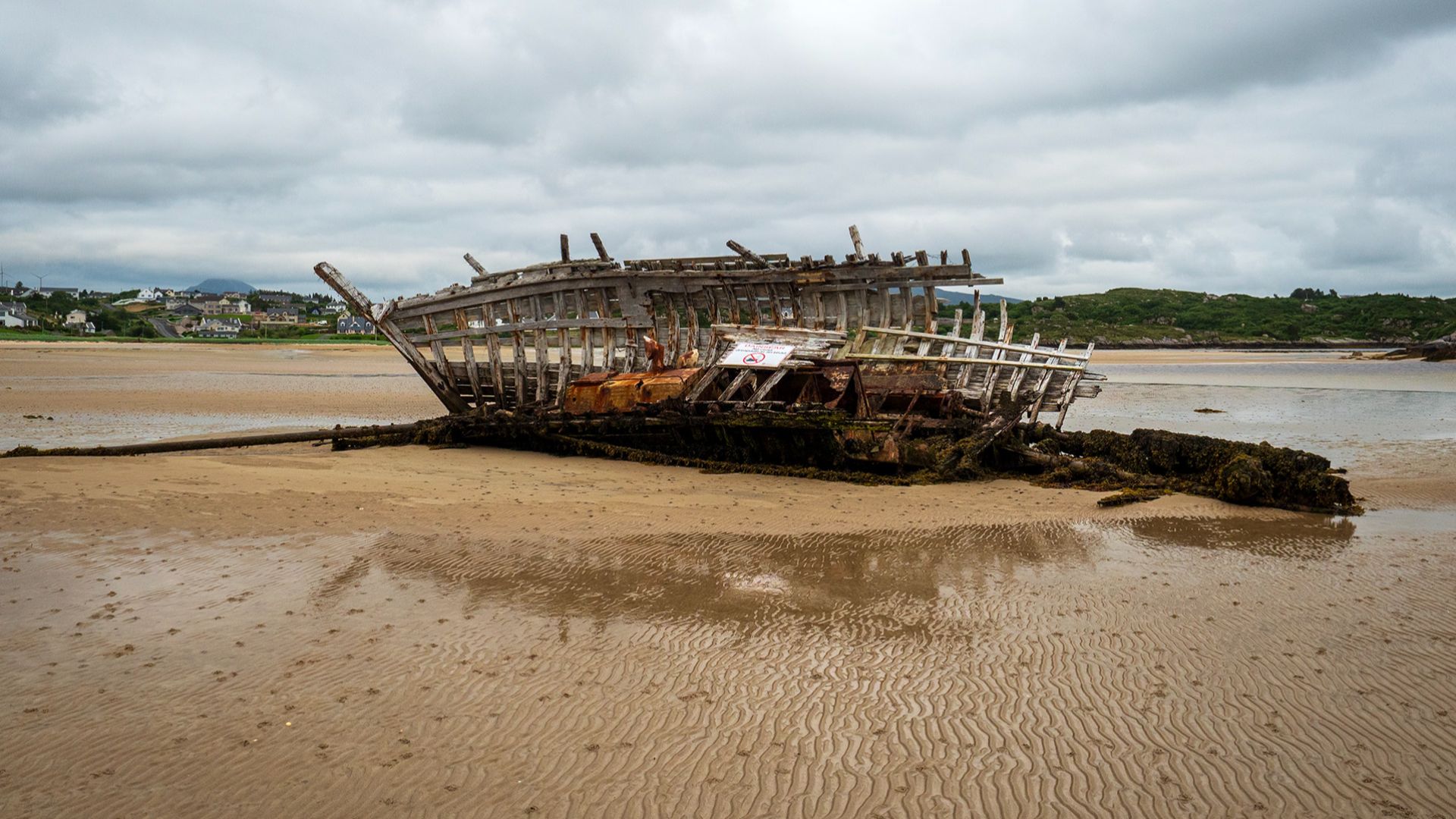
The Donegal wreck usually called Bád Eddie, or Eddie's Boat, has been slowly disappearing since 1977. The fishing boat, also known as Cara na Mara, was brought onto Magheraclogher Beach for repairs that were never completed. Atlantic weather gradually turned it into a skeletal landmark. It became famous through photographs and its appearance in Clannad and Bono's “In a Lifetime” video. The wreck is badly deteriorated, but remains were still attracting visitors in 2026. Low tide gives the best view, and climbing on what's left isn't safe.
 Rossographer , Wikimedia Commons
SS Ayrfield — Homebush Bay, Sydney
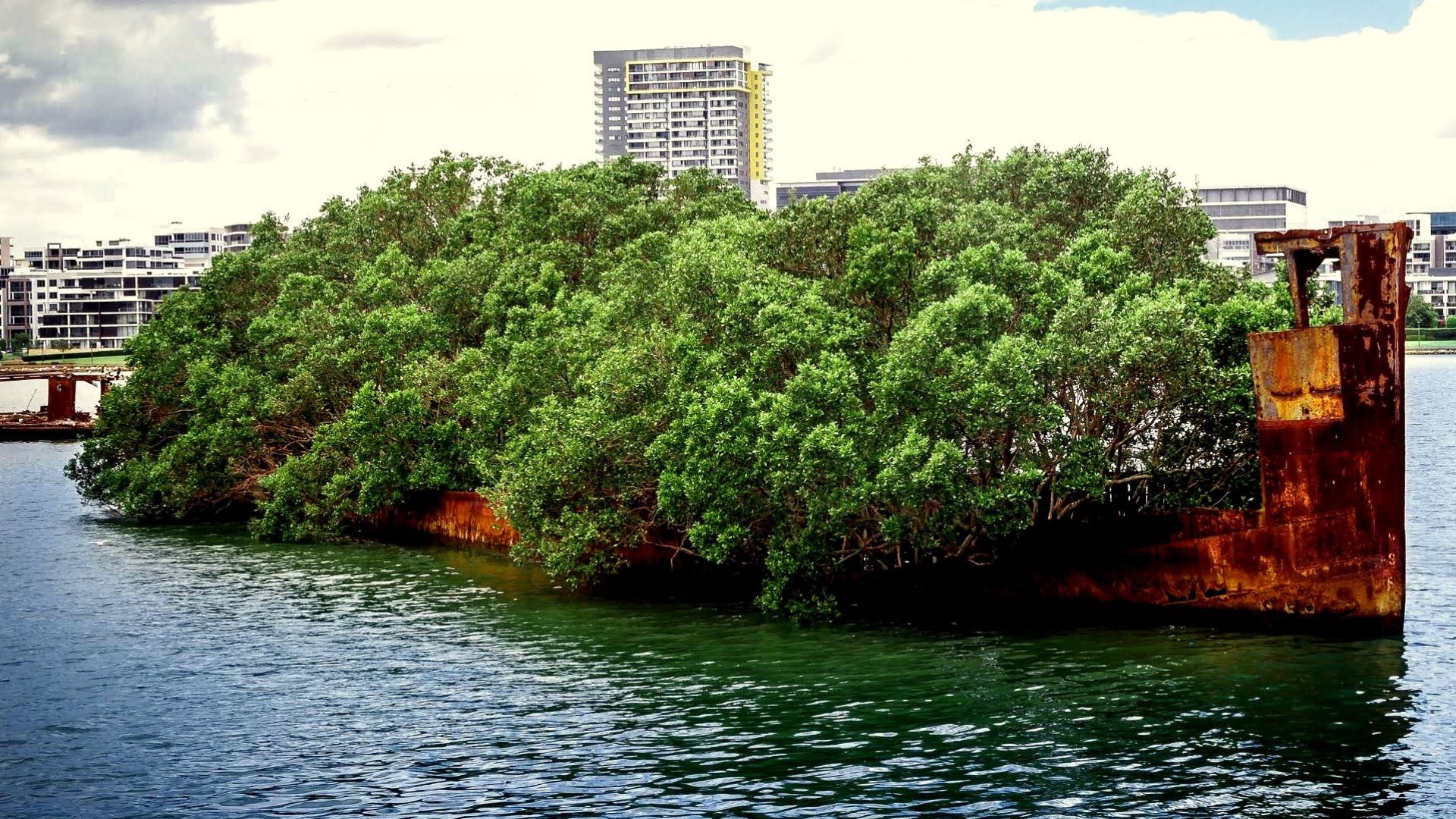
The SS Ayrfield wasn't wrecked by a storm either. Built in 1911 and later used to carry supplies for American forces during World War II, it was sent to Homebush Bay for dismantling after retirement in 1972. The ship-breaking work was never fully completed. Nature took over instead. Mangroves now grow thickly inside the rusting hull, creating Sydney's famous “floating forest". Sydney Olympic Park has a dedicated shipwreck viewing platform, so this is one of the easiest wrecks on the list to photograph from shore.
Macuti — Beira, Mozambique
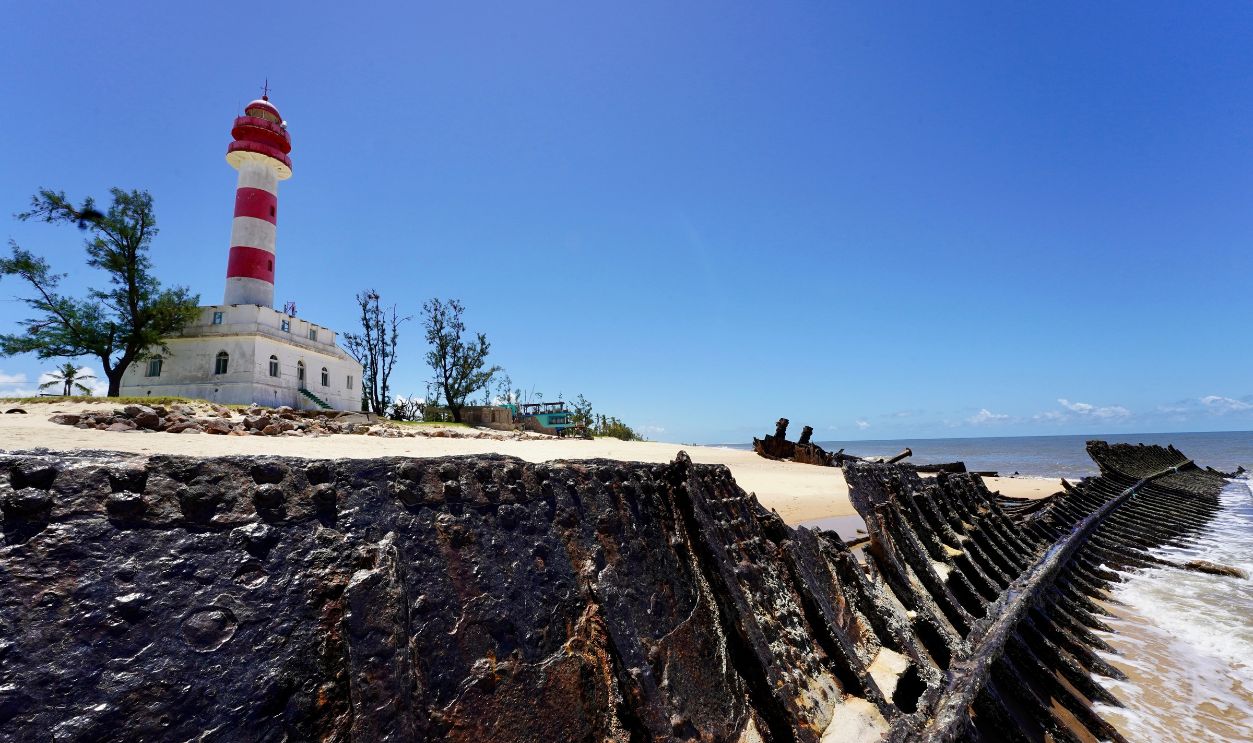
The Macuti sits directly in front of Beira's striped Macuti Lighthouse, creating an almost suspiciously photogenic combination. The old seagoing tug wasn't accidentally wrecked there. It was intentionally grounded in 1985 to act as a breakwater. At high tide, the Indian Ocean hides much of the vessel, leaving rusting sections above the waves. At low tide, substantially more of its skeletal structure becomes exposed on the beach. The currents around Macuti Beach can be strong, so viewing from dry sand is the safer option.
Pisces Star — Carpenter Rocks, South Australia
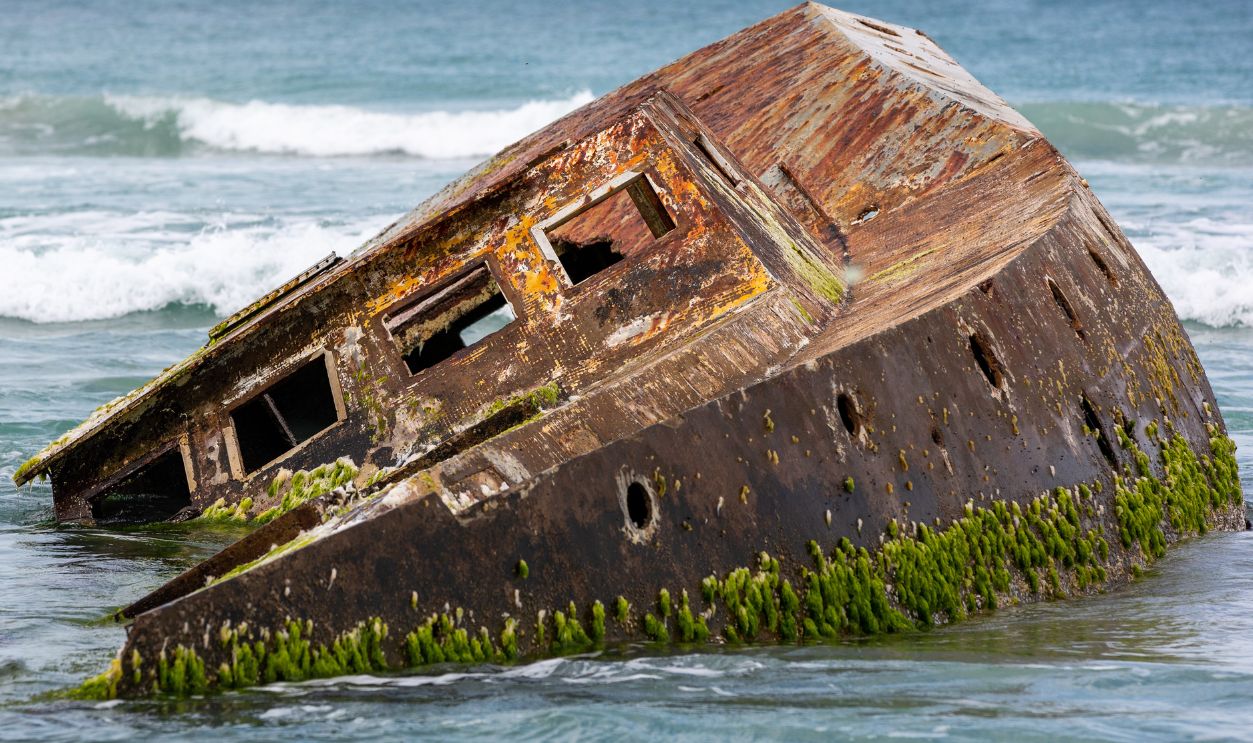
Near Cape Banks Lighthouse, the Pisces Star rests immediately offshore in the rugged waters around Carpenter Rocks. It's a more modern wreck than many entries here and doesn't come with the centuries of history attached to ships like the Amsterdam. What it does have is accessibility. Local tourism officials specifically recommend viewing it at low tide, when the rusting structure is easiest to see from shore. The surrounding turquoise water, rocky coast, and nearby lighthouse also make it a favorite with photographers.
Some Of The Best Shipwrecks Aren’t Really Underwater Anymore
Shipwreck hunting usually brings to mind scuba tanks, sonar, and dark water. These vessels tell a different story. Beaches moved around them, deserts swallowed coastlines, mangroves grew inside their hulls, and storms periodically dug forgotten timbers back out of the sand. Some are easy roadside stops while others require perfect tides or a serious hike. Either way, seeing one from shore is a reminder that the ocean doesn't always get to keep everything it takes.
 Robert Bradshaw (user Robertwb), Wikimedia Commons
You May Also Like:
Ancient Shipwrecks That Were Basically Time Capsules Waiting Underwater
Archaeologists Discovered The “Holy Grail Of Shipwrecks”—And They’re Still Uncovering Its Secrets