An Ancient Road Reborn
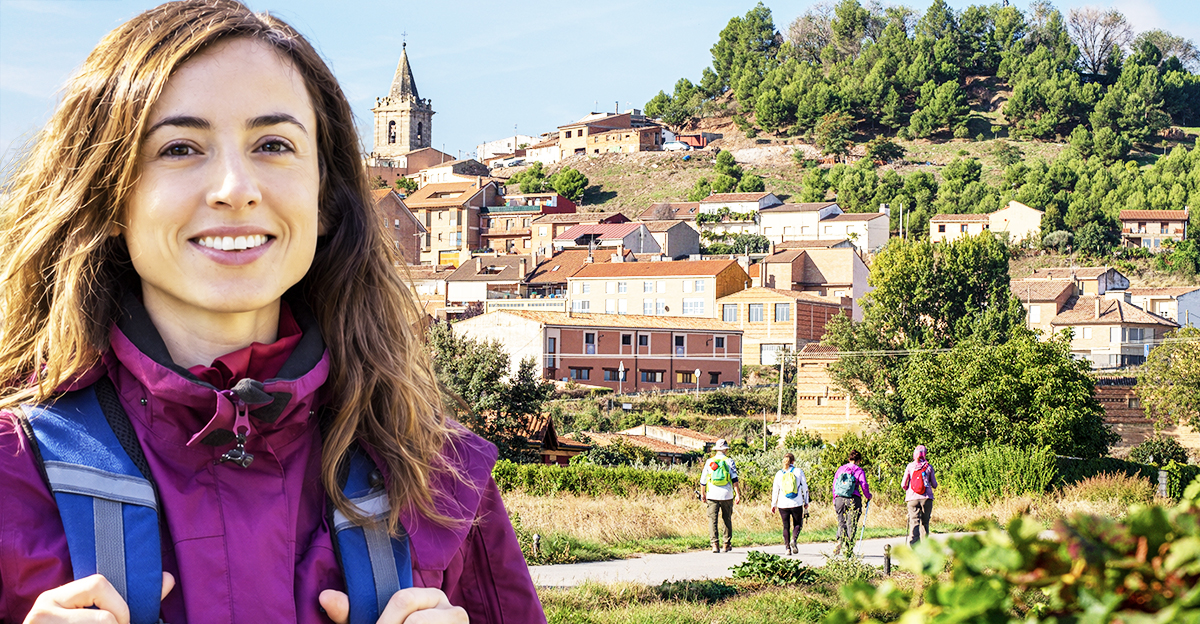
The Camino de Santiago isn't really one trail. It's a network of pilgrimage routes leading to Santiago de Compostela in northwestern Spain, where tradition holds that the remains of the apostle St. James are buried. Pilgrims began traveling there in the Middle Ages, and by the 11th century the Camino had become one of Europe's great pilgrimage traditions.
What surprises many travelers is how recently the Camino became a mass phenomenon again. After centuries of decline, its modern revival accelerated during the 1980s as routes were waymarked, pilgrim hostels appeared and international awareness grew. Pope John Paul II's visits in 1982 and 1989 also raised its profile.
 Summersky; tolobalaguer.com, Shutterstock
The 1990s Changed Everything
The real turning point came with the 1993 Holy Year. Galicia invested heavily in restoring infrastructure and promoting the Camino, helping transform what remained a relatively obscure pilgrimage into an international destination. Recorded pilgrim numbers jumped from fewer than 10,000 in 1992 to roughly 100,000 during 1993.
Books, documentaries and movies subsequently introduced the experience to even larger audiences. Today, people walk for religious reasons, but also for exercise, adventure, reflection or simply the experience of slowly crossing Spain. In 2025, more than 530,000 pilgrims were recorded arriving in Santiago.
There Isn't One Camino
The best-known route is the Camino Francés, or French Way. Spain's tourism authority describes it as just over 900 kilometers long within its route information, crossing northern Spain toward Santiago. Walking a long version from the French-Spanish border normally requires more than a month.
But alternatives abound. The Camino del Norte follows Spain's northern coast for roughly 800 kilometers, while the mountainous Camino Primitivo covers about 300 kilometers and follows sections associated with the earliest pilgrimage route. The increasingly popular Portuguese routes approach Santiago from Portugal, and there are several shorter options.
You Don't Need 30 Days
Here's the important part for vacation planning: you don't have to walk the whole thing.
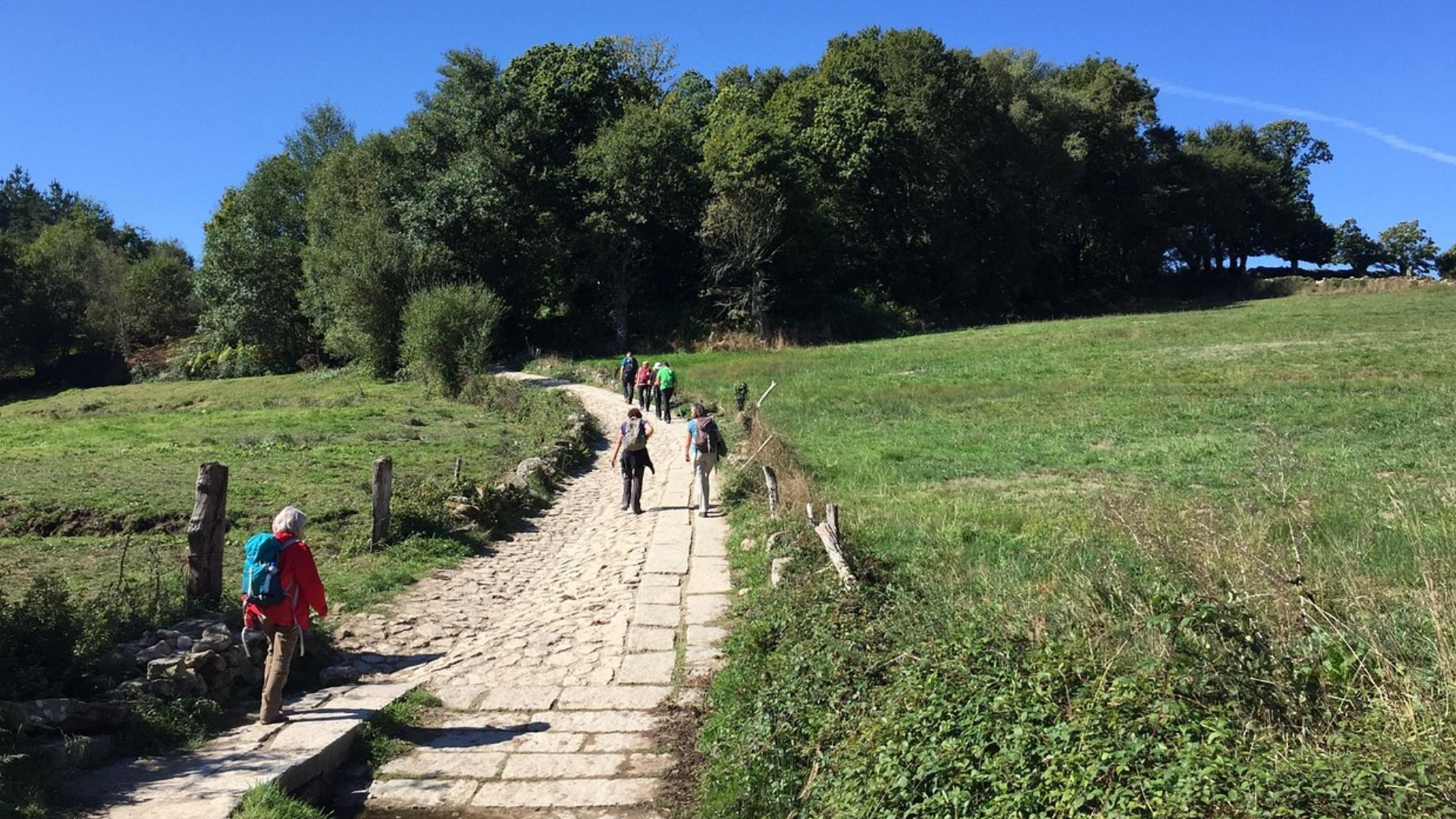
Many travelers tackle only a section, sometimes returning over several years. Spain's tourism authority says spending roughly a week on the Camino is common. If you want the official Compostela pilgrimage certificate, walkers generally need to complete at least 100 continuous kilometers toward Santiago on a recognized route and document the journey using a pilgrim credential.
That makes starting at Sarria on the Camino Francés particularly popular because it provides enough distance to satisfy the walking requirement.
How Fit Should You Be?
You don't have to be an athlete. You should, however, be comfortable walking considerably farther than most people do during an ordinary day.
Typical stages run around 20 to 30 kilometers, although there's no requirement to maintain that pace. Santiago's tourism authorities recommend planning stages according to your physical abilities rather than trying to keep up with faster companions.
For sedentary travelers, preparation should begin well before departure. A sensible approach is gradually increasing walking distances over a couple of months, eventually practicing long walks while carrying the backpack you'll actually use. Your feet, knees and shoulders need training just as much as your cardiovascular system.
Your Shoes Matter More
One of the worst ideas is arriving in Spain with brand-new hiking boots.
Whatever footwear you choose should already be comfortably broken in. Spain's official tourism site recommends training in the shoes you intend to wear. Blisters and foot pain can turn a beautiful 25-kilometer stage into a very long afternoon, so test socks, footwear and backpack before leaving home.
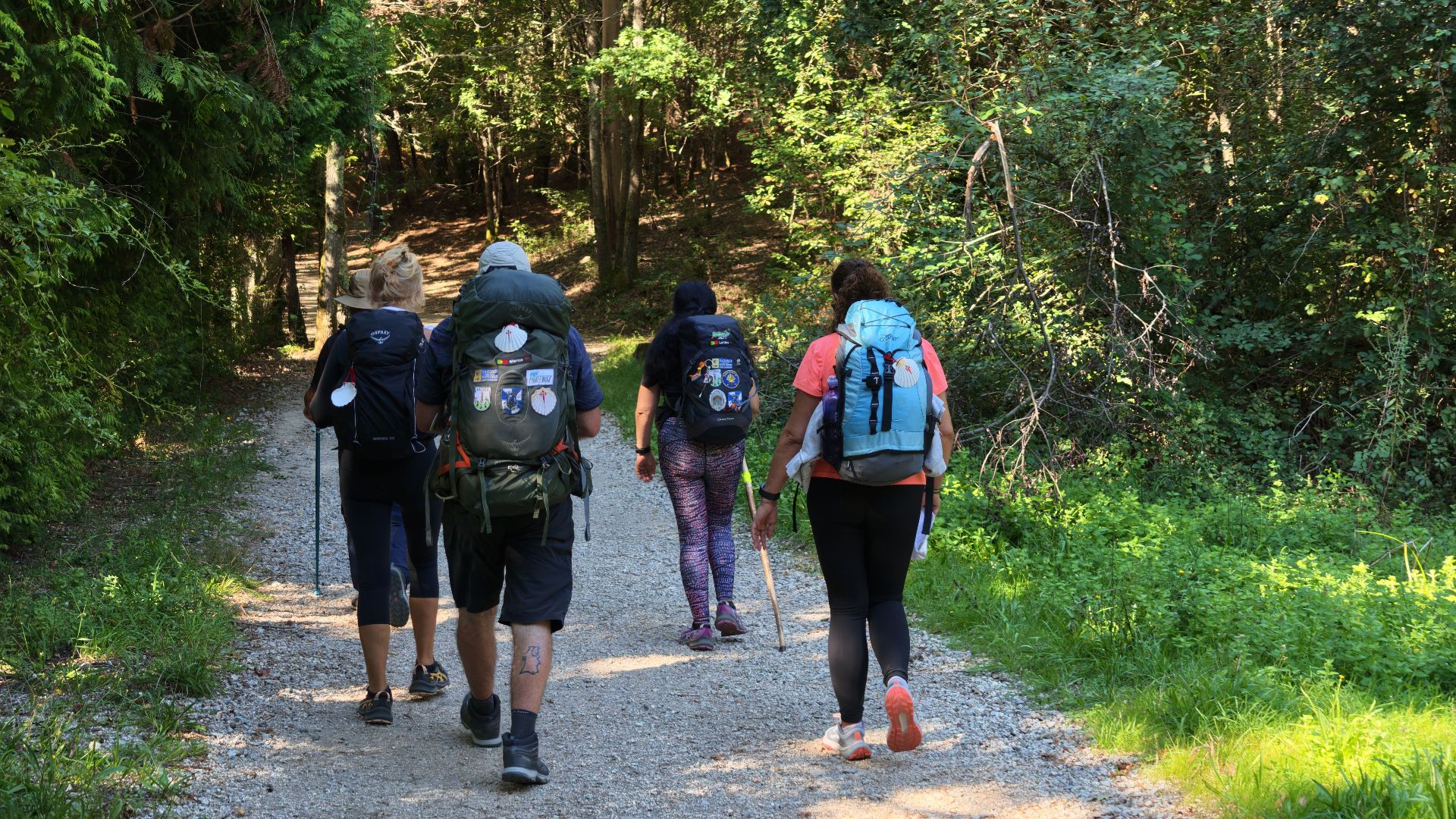
Packing light matters too. Official guidance suggests a backpack of around 35 to 40 liters and recommends keeping its weight below about seven kilograms and ideally no more than 10% of your body weight.
Life Gets Pretty Simple
The Camino has an established infrastructure of albergues, or pilgrim hostels, along with hotels, guesthouses, restaurants and shops. Travelers carry a credencial, essentially a pilgrim passport, collecting stamps along the route. The credential can also provide access to public pilgrim hostels and serves as evidence of the journey when applying for the Compostela in Santiago.
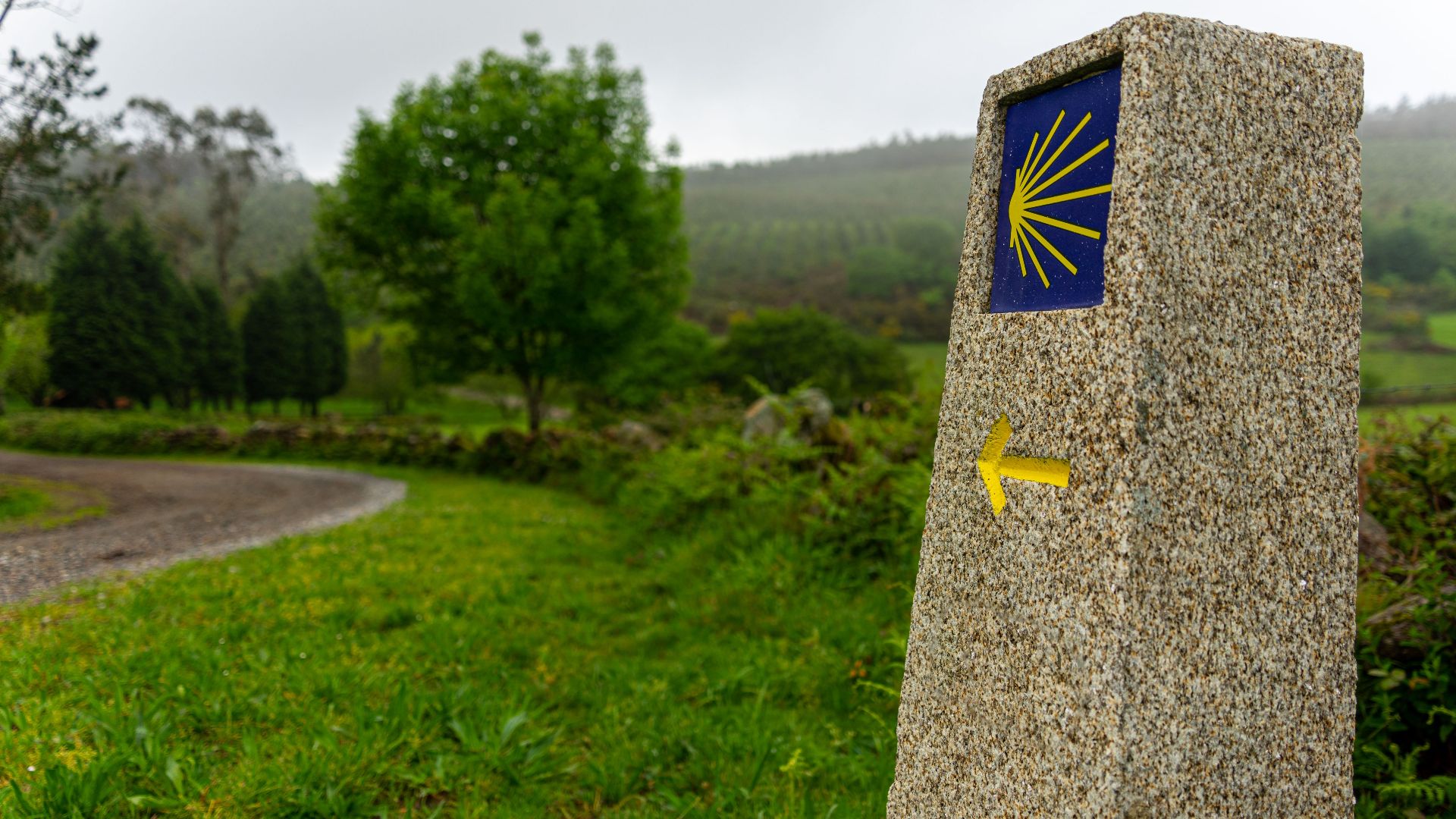
The Camino is also remarkably easy to follow. Yellow arrows and scallop-shell symbols (see image above) mark the route through towns, countryside and forests. Carrying an offline map or guide remains sensible, but getting lost generally isn't the challenge travelers imagine.
Choose Your Season Carefully
The Camino can be walked year-round, but weather changes dramatically depending upon both season and route. Spain's tourism authority particularly recommends spring and September through October, when temperatures tend to be milder. Summer is popular, but midday heat can make exposed stretches uncomfortable.
Northern routes can be wet, while high elevations introduce their own weather complications. Anyone planning a full Camino should therefore research conditions for the specific route rather than simply checking the forecast for Santiago.
Don't Race To Santiago
Perhaps the biggest mistake is treating the Camino as a mileage contest. A traveler capable of covering 30 kilometers today may discover that repeating it tomorrow, and the day after that, is an entirely different proposition.
Build some flexibility into the itinerary. Walk at your own pace, stop when something hurts, drink regularly and don't be afraid to shorten a stage. The Camino has survived for more than a thousand years. There's no particular reason you need to hurry through it.
You May Also Like:
European Destinations That American Travelers Say Are Better Than The Famous Ones