
For years, corporate travel was built around frequency. Employees flew out for client meetings, office visits, project check-ins, training sessions, and quick conversations that supposedly worked better face to face. That model has not disappeared, but a different pattern is becoming more visible. Some companies are questioning whether a steady stream of short trips delivers as much value as fewer, larger gatherings that bring multiple people and objectives together at once.
The shift is partly about money, but it also reflects how work has changed. Hybrid and distributed teams still need opportunities to build relationships, make decisions, learn together, and reinforce company culture. Instead of automatically treating every need for face time as a reason to book another flight, organizations are increasingly asking what can be accomplished if more people gather at the same time. The result is a corporate travel landscape in which the trip itself increasingly has to justify its existence.
The Road Warrior Is Becoming A Road Squad
One of the most striking changes is the rise of group travel. Brex, analyzing travel spending among its customers, reported in 2025 that solo trips had fallen from 70% of trips in 2019 to 35% in 2025. Trips involving at least two travelers accounted for 65% of travel, while itineraries involving 10 or more people represented 15%, up from less than 5% in 2022. That does not prove every company is replacing individual trips with offsites, but it illustrates how much more important coordinated group movement has become.

Hotels are seeing something similar from the accommodation side. Hilton said its properties experienced a surge in group bookings associated with smaller meetings, offsite team gatherings, and incentive travel during 2024, with the company expecting that demand to strengthen in 2025. Its travel research also found that one in four business travelers expected team building to be a reason for traveling. In other words, travel is increasingly being used not simply to get one employee in front of another person, but to assemble teams that no longer spend every week in the same workplace.
At the same time, the old road-warrior model is showing signs of moderation. Deloitte's 2025 Corporate Travel Study found that the share of professionals traveling for work fell from 36% in 2024 to 31% in 2025. Frequent travelers were also showing signs of pulling back, while 16% of budget owners expected their teams to travel less, compared with 9% a year earlier. The picture is therefore not simply "more travel" or "less travel." It is a redistribution of where companies believe being together is worth the expense.
Hybrid Work Changed What A Trip Is For
Hybrid work is central to that calculation because it has remained more durable than many return-to-office headlines suggest. Gallup reported in 2025 that 51% of remote-capable U.S. employees were working on a hybrid basis, while 28% were fully remote and 21% were fully on-site. Those proportions have fluctuated, but the broad pattern has been relatively stable since 2022. That leaves millions of employees working with colleagues they may see only periodically, creating a different reason for corporate travel than the traditional sales call or branch-office visit.
Distributed work solves the problem of where employees need to sit, but it does not eliminate the need for collaboration. Gallup's research involving 2,877 U.S. hybrid workers found that teams benefited when they intentionally identified high-value activities for in-person time, such as collaboration, feedback, and team building. It also found that many hybrid teams still lacked a formal or informal plan for working together effectively. Bringing people together periodically can therefore become part of the operating model rather than an occasional perk.

That helps explain why training and internal connection are becoming more important travel purposes. Deloitte found that nearly half of surveyed business travelers had traveled or expected to travel for training in 2025, while two-thirds of travel managers said spending on training and learning initiatives was growing. Employee training had risen to a level comparable with business development as a driver of travel growth. When companies are rolling out new technologies, reorganizing teams, or asking employees to develop new skills, gathering a larger group at once can make more sense than repeatedly sending individuals across the country.
One Gathering Can Do The Work Of Several Trips
The financial logic is fairly easy to understand. A three-day gathering might be expensive on a per-event basis, particularly once flights, hotels, meals, meeting space, and ground transportation are included. But a well-designed gathering can combine training, strategic planning, leadership communication, project work, networking, and social time in the same trip. Compared with flying different employees to different cities throughout the quarter, consolidation can sometimes turn a large visible expense into a more efficient use of the overall travel budget.
Travel managers are explicitly experimenting with that idea. Cvent's 2025 global survey of more than 1,600 business travel decision-makers found that 26% planned to manage costs by timing business travel to coincide with meetings and events. Among respondents who jointly managed employee travel and meetings or events, 83% said that consolidation had produced cost savings. The report also found that 91% of travel managers surveyed were involved in sourcing hotels and venues for meetings and events, evidence that companies increasingly view individual travel and group gatherings as interconnected programs rather than entirely separate budgets.

Meetings themselves remain a major travel category. Cvent found that 62% of surveyed travel managers said employees traveled for events or conferences, 41% cited internal meetings or office visits, and 37% cited company retreats. Another industry forecast reported by Business Travel News Europe found that nearly half of internal meetings expected for 2025 would take place in hotels, while 34% were expected to occur in another city. These figures help explain why hotels, airlines, and travel-management companies increasingly treat meetings and transient corporate travel as parts of the same ecosystem.
Consolidation can also reduce the disruption caused by constant travel. Frequent one- or two-day trips break up working weeks, create repeated airport days, and can leave employees trying to keep up with ordinary responsibilities while moving between cities. A company that concentrates several objectives into a quarterly or semiannual gathering may still ask employees to spend considerable time away from home, but it can make the purpose clearer. The trade-off becomes fewer departures in exchange for a more intensive period together.
Bigger Gatherings Still Have To Earn Their Keep
None of this means the corporate retreat has received a blank check. Travel costs remain one of the biggest obstacles facing corporate travel programs. Deloitte found that 54% of travel managers surveyed in 2025 listed costs among their three biggest factors restricting travel, up from 48% the previous year. Sustainability commitments were also becoming a greater constraint, cited by 48%, compared with 38% in 2024.
That pressure can cut both ways. A company may decide that one annual gathering involving 100 employees is more valuable than dozens of smaller trips, but it still has to account for the cost, employee time, and environmental impact of getting those 100 people there. Cvent's research showed that company retreats themselves were among the categories some travel managers expected to reduce when budgets tightened. Bigger gatherings are therefore not automatically protected simply because they serve multiple purposes.
There is also a difference between gathering people and using their time well. Research and management guidance on offsites has repeatedly stressed that simply moving a team into a hotel meeting room does not guarantee better collaboration. Effective gatherings need a defined purpose, a realistic agenda, and a plan for translating decisions made in person into work that continues after employees return home. A larger event can multiply the value of travel, but an unfocused one can also multiply its waste.
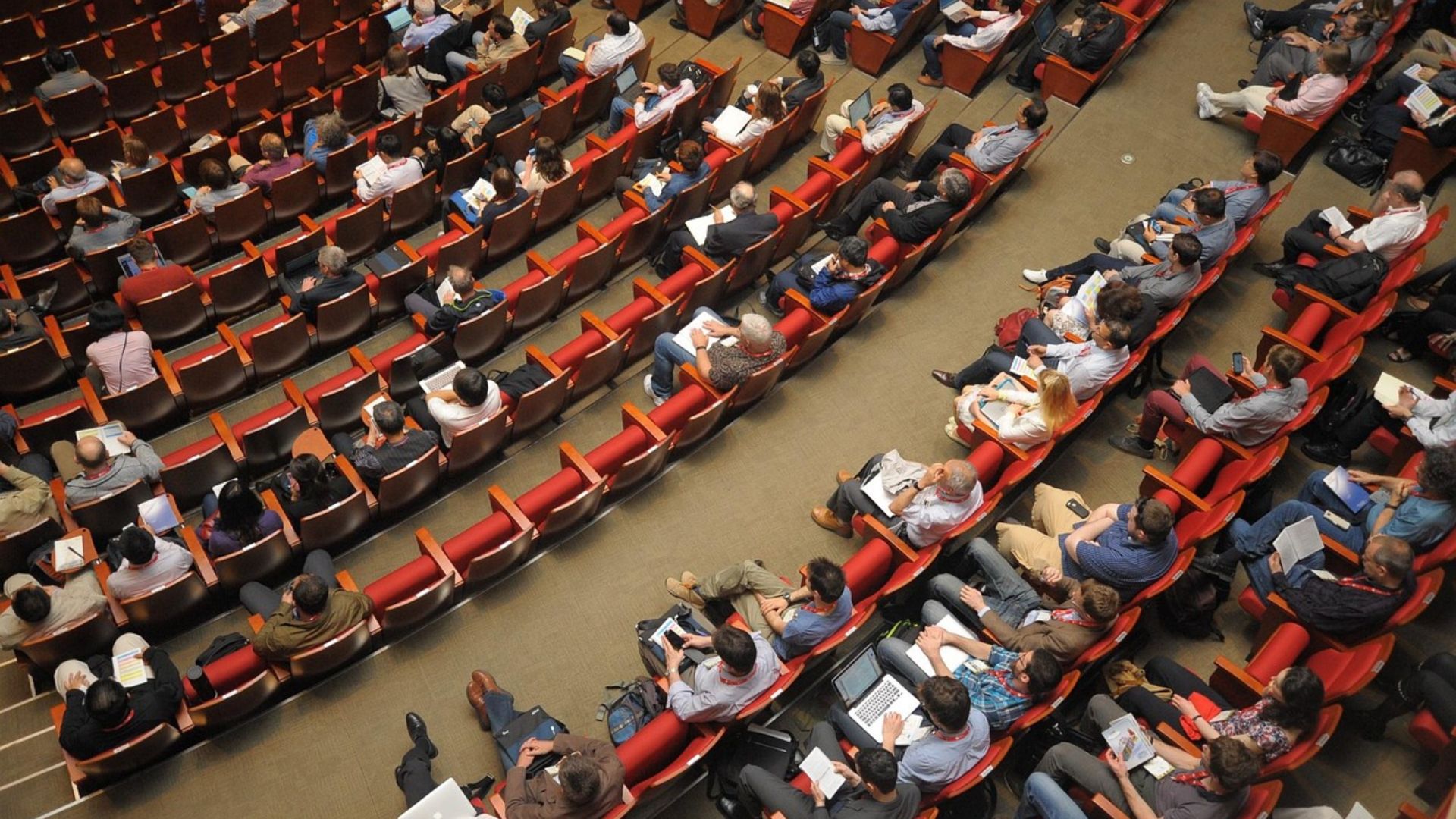
The same applies to social programming. Informal dinners, team activities, and unstructured conversations can help colleagues form relationships that are difficult to reproduce on scheduled video calls. Yet companies need to be careful not to mistake entertainment for organizational improvement. The most defensible gatherings are those in which social connection supports a broader goal such as onboarding, trust building, strategic alignment, learning, or cross-functional cooperation.
The Business Trip Is Becoming A Strategic Event
The emerging model does not signal the death of frequent business travel. Salespeople will still visit major customers, engineers will still travel to project sites, executives will still negotiate deals in person, and conferences will continue drawing large numbers of corporate travelers. Deloitte found that client and partner engagement remained a major reason companies expected travel to grow, while nearly two-thirds of surveyed business travelers expected to attend a conference in 2025.
What is changing is the burden of proof. A routine internal visit that once happened because "we should meet face to face" may now compete against video conferencing, tighter budgets, carbon targets, and the possibility of waiting until a larger gathering. Meanwhile, a three-day team meeting can be easier to defend if it replaces several smaller journeys and accomplishes several things at once. That mindset turns corporate travel from a habitual activity into something closer to a portfolio of investments.
For travelers, that may mean fewer airport runs but more consequential trips. Instead of flying somewhere for one meeting and returning the next evening, employees may increasingly find themselves traveling for several days of workshops, planning sessions, training, and team activities. Those journeys can be more demanding, but they can also feel more purposeful when companies are clear about why everyone has been brought together.
Corporate travel, then, is not simply shrinking or rebounding. It is being reorganized around a basic question that companies are asking more aggressively than before: what is valuable enough to require people to be in the same place? For some employers, the answer appears to be fewer routine trips and bigger moments when the team comes together. The companies that make that model work will be the ones that treat those gatherings not as expensive reunions, but as carefully designed pieces of how the business operates.
You May Also Like:
Could An AI Travel Agent Plan Your Next Work Trip Better Than A Human?
From Expense Accounts To Experiences: What Today’s Business Traveler Actually Values