For generations of office workers, a long commute meant an hour in traffic or an unpleasant ride on a crowded train. The modern supercommuter can operate on an entirely different scale. Some workers now live hundreds or even thousands of miles from the office, turning airport security, boarding passes, hotels, and overnight bags into recurring parts of the workweek.
There is solid evidence that Americans are living farther from their employers than they did before the pandemic. Stanford researchers studying GPS data from the ten largest U.S. urban areas found that the share of commutes covering at least 75 miles rose 32 percent between late 2019 and the comparable period in 2023 and 2024. Separate Stanford research found that the average distance between workers' homes and their employers increased from 15 miles in 2019 to 26 miles in 2023.
That does not mean millions of people are suddenly flying to work. No national data set neatly counts workers whose regular commute involves an airplane, and the term “supercommuter” itself has never had one universally accepted definition. The U.S. Census Bureau has historically distinguished between “extreme commuters,” who travel at least 90 minutes one way, long-distance commuters who cover at least 50 miles, and “mega commuters” who meet both thresholds.
What is clear is that hybrid work has redrawn the boundaries of the labor market. When employees only need to appear in person occasionally, a distance that would be absurd five days a week can become conceivable once or twice a week, or for several concentrated days each month. At the furthest edge of that change sits the flying supercommuter, a business traveler whose destination happens to be their own office.
The Commute Now Starts At The Airport
Long commutes are becoming more visible even before airplanes enter the picture. U.S. Census Bureau data show that 9.3 percent of workers who traveled to work in 2024 had a one-way commute of 60 minutes or longer, up from 8.9 percent in 2023. The average one-way travel time reached 27.2 minutes, while 13.3 percent of workers reported working from home.
The Stanford GPS research offers an even clearer picture of what is happening at the extreme end. Researchers Nick Bloom and Alex Finan examined roughly two million trips into ten large U.S. urban areas and found that trips of 75 miles or more increased from 2.2 percent of the sample before the pandemic to 2.9 percent afterward. That is where their 32 percent increase in “super commutes” comes from, although their analysis covered automobile trips rather than airline journeys.
The flying version is nevertheless easy to find in individual cases. CBS News Atlanta reported in July 2026 on transportation planner Daniel Rodriguez, who had logged more than 150 flights while commuting between Philadelphia and Atlanta over 421 days. Rodriguez told the outlet that after a layoff and lengthy job search, he found work in Atlanta but lacked the savings to relocate, so his employer's hybrid schedule made commuting from Philadelphia an alternative.
Air supercommuting also predates the pandemic. In 2016, the University of Chicago Booth School of Business profiled executives and entrepreneurs who routinely crossed countries and time zones for work. One, Tokyo-based entrepreneur Todd Musgrove, was flying nearly five hours to his office in Metro Manila every two weeks and using a corporate apartment rather than a hotel.
What has changed is the environment around workers like these. Flying to the office was once associated mostly with consultants, multinational executives, specialized assignments, and senior leaders overseeing multiple regions. Hybrid work has opened the possibility to a broader category of employee whose home and regular workplace simply happen to be in different cities.
Hybrid Work Stretched The Map
The biggest reason supercommuting matters is not that airfares suddenly became cheap enough to replace the subway. It is that millions of workers no longer commute every working day. WFH Research estimated that about 26 percent of paid full workdays in the United States were worked from home in July 2026, showing that remote work remains a substantial part of the post-pandemic economy.
Looking across survey waves from September 2025 through August 2026, WFH Research classified about 63 percent of full-time wage and salary employees as fully on-site, roughly 26 percent as hybrid, and about 12 percent as fully remote. Hybrid work is therefore neither the dominant arrangement nor a disappearing pandemic artifact. It occupies a large middle ground in which people regularly switch between home and an employer's premises.

That middle ground changes the calculation around distance. Stanford's research on the geography of American labor markets found that 12 percent of employees hired after March 2020 lived at least 50 miles from their employer in 2023, three times the pre-pandemic share. The increase in distance was particularly pronounced among people in their 30s and 40s, highly paid workers, and employees in finance, information, and professional services.
The important shift is from thinking about commuting distance alone to thinking about distance multiplied by frequency. An 80-mile trip made ten times a week is radically different from the same journey made twice, just as a flight every few weeks is different from a flight every morning. Bloom and Finan explicitly identify reduced commuting frequency as one plausible reason working from home can support longer commutes.
That helps explain why an employee can truthfully describe a home several states away as home while still accepting a job tied to a distant office. Hybrid work gives employers access to a geographically larger talent pool, while workers can potentially keep communities, spouses' careers, children's schools, or housing arrangements that would otherwise have to be abandoned. The workplace has not become irrelevant. Its gravitational pull simply extends farther than it used to.
Why Workers Choose A Boarding Pass
For many supercommuters, the decision begins with a conflict between where they want or need to live and where an attractive job happens to be. Stanford researchers found substantial post-pandemic growth in the distances separating workers and employers, while employees who stayed with the same employer and moved tended, on net, toward areas with cheaper housing and states with lower top tax rates. Those findings describe broad migration patterns rather than the motives of individual air commuters, but they help explain why home and office locations can increasingly diverge.
The Philadelphia-to-Atlanta case illustrates another possibility. Rodriguez did not establish his unusual commute because he had designed a glamorous two-city lifestyle. He told CBS that after a layoff, it took roughly eight months to find another position, and moving immediately was financially difficult. Flying became a way to connect an existing home with a job located hundreds of miles away.
At the other end of the employment spectrum, some companies actively subsidize an executive's long-distance commute. Starbucks provides an unusually well-documented example because the arrangement appears in its Securities and Exchange Commission filings. The company's 2026 proxy statement says CEO Brian Niccol receives commuting air travel, had temporary housing in Seattle while establishing a secondary residence, and has access to an office in the greater Los Angeles area; Starbucks says a security study recommended private aviation for his air travel.
That arrangement is exceptional and should not be confused with the experience of the ordinary hybrid employee buying commercial tickets. Most workers considering a flying commute need to determine who pays for airfare, where they sleep, whether airport transportation is reimbursed, and what happens when the employer schedules an additional office day. An apparently workable arrangement can change quickly if one of those assumptions changes.
There can nevertheless be genuine value on both sides. A worker can accept a role without forcing an immediate family relocation, while the employer can hire someone outside its conventional commuting radius. The trade is straightforward: geographic flexibility is purchased with money, time, logistical complexity, and a much greater dependence on a predictable hybrid schedule.
The Math Has To Survive A Bad Week
The seductive way to calculate a supercommute is to compare one plane ticket with one monthly rent payment. That leaves out much of the real bill. A realistic budget should account for every recurring part of the journey, including transportation to and from both airports, parking, lodging, meals away from home, baggage costs, and any local transportation needed between accommodation and the office.
Frequency matters even more than the price of an individual flight. Someone who travels once, remains near the office for two or three consecutive workdays, and then returns home needs far fewer tickets than someone whose employer scatters mandatory appearances across the week. For that reason, a supercommute can depend as much on scheduling discipline inside the company as it does on airline fares.
The tax treatment can also surprise U.S. workers who assume a flight must be a business expense because it is necessary to reach work. IRS Publication 463 says transportation between a home and a main or regular workplace is generally a personal commuting expense, regardless of how far apart the two are. The IRS generally defines a person's tax home as their regular place of business or post of duty, not necessarily the residence where their family lives, although temporary assignments and qualifying home offices can create different rules.
That makes the distinction between a commute and a business trip particularly important. If an employee lives in City A by choice but has a regular job in City B, simply boarding a plane does not automatically transform the trip into deductible business travel under U.S. federal tax rules. Anyone building a long-term arrangement around reimbursements or deductions should check the specific facts with a qualified tax professional rather than assuming that ordinary business-travel rules apply.
Employer policy deserves the same scrutiny. Workers should know whether the company considers their distant office trips personal commuting or reimbursable travel, whether overnight accommodation is covered, and whether those terms change when attendance requirements change. A written understanding becomes especially valuable when a job has been accepted specifically because hybrid scheduling makes the geography possible.
Then there is the price of disruption. A conventional commuter who encounters congestion may arrive late, but someone depending on an aircraft can find the entire day's plan disrupted if the trip goes wrong. Building margin into the schedule, avoiding the last possible flight before an important meeting, and having a workable remote contingency can be more valuable than squeezing every dollar out of the cheapest itinerary.
Time, Health, And Carbon Still Count
The dollar calculation is only one part of the equation. Stanford's driving data found that the 75-mile-plus supercommutes it studied averaged about two hours and 19 minutes each way. A flight may cover far greater distances much faster, but the relevant number for a worker is still door-to-door time, which includes getting to the airport, security, boarding, ground transportation, and any overnight stay.
Research on commuting more broadly suggests caution about treating that time as free. A study of 29,458 Korean wage workers found that people reporting daily commutes of 60 to 79 minutes or at least 80 minutes had higher adjusted odds of low subjective well-being than workers with shorter commutes. The researchers explicitly noted that their cross-sectional study could not establish causation, and they could not estimate the effects of different commuting modes, so the findings should not be treated as evidence that flying to work causes poor health.
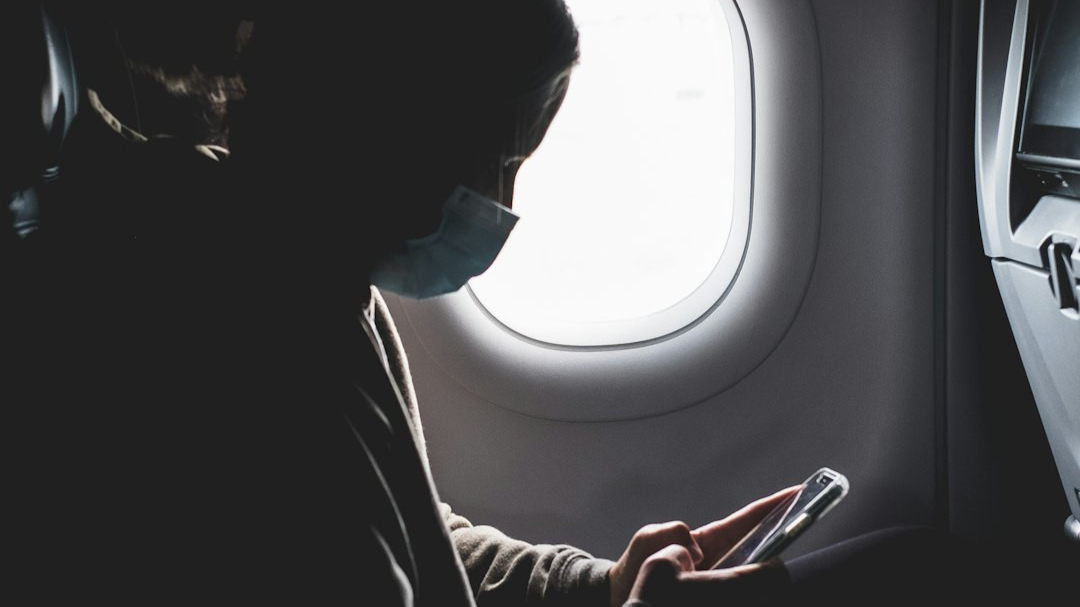
Still, time has to be included in a supercommuter's budget just as seriously as airfare. If a trip consumes most of Sunday evening and Thursday night every week, those hours have been exchanged for the advantages of keeping a distant home. The University of Chicago Booth's interviews with long-distance air commuters also emphasized personal boundaries and the risk of an intense schedule becoming difficult to sustain.
The environmental calculation is harder to ignore when flying becomes repetitive. Aviation produces about 2.5 percent of global carbon dioxide emissions and has contributed a larger share of warming once non-CO2 effects are considered, according to Our World in Data's synthesis of climate research. That does not tell an individual traveler the footprint of a particular commute, since route, aircraft, cabin class, and other factors matter.
For route-specific estimates, the International Civil Aviation Organization provides its Carbon Emissions Calculator, which ICAO describes as the only internationally approved tool for estimating carbon emissions from air travel. A worker comparing two possible home bases can therefore add emissions to the same spreadsheet as money and time rather than treating sustainability as an abstract corporate issue.
There are practical ways to make the schedule less punishing even when the miles cannot be reduced. Concentrating office days can reduce the number of round trips, arriving the night before an important event can reduce the consequences of morning disruptions, and protecting recovery time can stop every trip from spilling into the rest of the week. None eliminates the basic trade-off. They simply make it easier to see whether that trade-off remains acceptable over months rather than weeks.
The Future Is Fewer Commutes, Not No Office
Supercommuting ultimately rests on a paradox created by hybrid work. Employees can live farther from the office precisely because the office still matters enough for them to keep returning to it. If physical attendance had no value, there would be no reason to board the flight; if attendance were required every day, living several hundred miles away would be impractical for all but the most unusual cases.
Research offers some evidence for why employers may want to preserve that middle ground. A randomized controlled trial involving 1,612 Trip.com employees tested a schedule with two work-from-home days each week and found that hybrid work reduced employee quit rates by one-third while showing no evidence of harm to performance ratings or promotion outcomes. The reduction in departures was particularly meaningful among several groups, including employees with longer commutes.
The experiment should not be stretched beyond what it demonstrated. It involved graduate employees at one Chinese technology company, rather than every occupation or national labor market, and it tested a specific three-days-in-office schedule. What it does show is that reducing commuting frequency can deliver measurable retention benefits without automatically producing the performance penalty that critics of hybrid work sometimes anticipate.
For supercommuters, predictability may therefore be the most valuable workplace benefit of all. Knowing that the team gathers on the same consecutive days makes it possible to book transportation intelligently, minimize hotel nights, and avoid repeated journeys. A policy that requires the same number of office days but allows them to shift unpredictably can be dramatically harder to manage from another city.
Companies also have reason to decide what office attendance is actually for. If employees are traveling hundreds of miles only to spend the day on video calls with colleagues elsewhere, the expensive commute is difficult to justify. If the trip concentrates client meetings, planning sessions, training, collaboration, and relationship-building that genuinely benefit from physical proximity, fewer but more purposeful office visits make considerably more sense.
The flying supercommuter is unlikely to become a useful description of the typical office worker, and the available statistics do not support pretending otherwise. What the data do document is a broader transformation: workers are living farther from employer worksites, long-distance commutes have increased, and hybrid work remains firmly embedded in the American labor market. The boarding-pass commute is simply the most dramatic manifestation of that new geography.
For anyone tempted by the arrangement, the central question is not whether a plane can technically connect home and office. Modern aviation settled that question long ago. The better question is whether the job, schedule, family situation, budget, health, and environmental cost make the journey worth repeating after the novelty has disappeared.
You May Also Like:
The Airport Of The Future Is Being Designed Around Travelers Who Never Stop Working
Can Your Boss Make You Share A Hotel Room On A Business Trip?
Why Tuesday-To-Thursday Travel Could Be Losing Its Grip On Corporate America