
Picture a business trip in 2035. You tell an AI assistant that you need to meet a client in Paris, and within seconds it has decided whether the meeting justifies the trip, checked your company’s travel policy, compared air and rail options, calculated the emissions, booked a compliant hotel, arranged local transportation, and blocked recovery time on your calendar. At the airport, a digital identity stored on your phone could handle much of the documentation that once required passports, boarding passes, and repeated identity checks.
Some of that sounds futuristic, but surprisingly little of it requires technology that does not already exist in some form. Corporate travel companies are deploying AI tools that can automate booking and rebooking, airlines and airports are testing digital identity systems, governments are pushing aviation toward sustainable fuels, and European policymakers are pouring new attention into long-distance rail. What remains much harder to predict is exactly how quickly those technologies will spread, how affordable they will become, and how comfortable travelers will be handing more decisions to machines.
What seems considerably safer to say is that business travel itself is not disappearing. The Global Business Travel Association forecast global business travel spending of $1.71 trillion in 2026 and roughly 1.84 billion business trips worldwide. By 2035, the more interesting question may not be whether employees still travel for work, but what companies decide is important enough to put someone on the road.
The Trip Starts Before You Decide To Go
For decades, planning a business trip usually began with a human decision: somebody decided a meeting was worth attending, then figured out how to get there. By 2035, that sequence could be partially reversed. Corporate travel systems may increasingly evaluate the potential trip before an employee ever opens a flight-search page.

That shift is already visible. Deloitte’s 2025 corporate travel research found that 54% of surveyed companies made pre-trip assessments of whether travel was justified, while 58% prioritized trips that could produce specific business outcomes. The percentages had actually declined from the previous year, but the practice itself demonstrates how companies are thinking about travel: not simply as an employee expense, but as an investment that can be evaluated before money is spent.
That logic becomes much easier to apply when AI is involved. A future system could potentially compare the cost of a trip with the size of a potential contract, determine whether several meetings can be combined into one journey, or suggest moving an internal update to video so that the traveler can spend another day meeting customers instead. It could also flag that three employees from different departments are planning separate visits to the same city and suggest coordinating them.
Current travel managers are clearly interested in that kind of automation. In GBTA research published in 2026, 92% of surveyed travel buyers expressed interest in predictive analytics for forecasting travel spending, while 89% were interested in automated disruption management and rebooking. Those tools are still far from universally deployed, but the demand suggests where corporate systems could be heading.
The result may be a business trip that has to earn its place on the calendar. Routine status meetings will still happen, but increasingly capable workplace AI could make some informational meetings easier to handle remotely. Microsoft’s research on AI and work already describes organizations experimenting with AI agents that take on portions of knowledge-work execution while humans retain responsibility for judgment and decisions. If that model keeps spreading, companies may save their travel budgets for the things computers and video calls still struggle to reproduce: trust building, negotiation, hands-on training, complex collaboration, relationship repair, and major events.
Your AI Travel Agent Will Know The Rules
Booking the 2035 business trip may feel less like shopping and more like having a conversation. Instead of clicking through separate airline, hotel, rail, rental-car, expense, and corporate booking systems, travelers may increasingly tell an AI agent where they need to be, when they need to arrive, and what they need to accomplish.
This transition has already begun. Sabre announced a partnership with BizTrip AI in 2026 aimed at developing AI assistants capable of handling complex booking workflows, itinerary management, and corporate policy automation. The company described systems capable of moving beyond recommendations and taking actions such as booking, rebooking, and optimizing trips within company rules. Amex GBT is also marketing agentic AI capabilities alongside integrated travel and expense tools.
By 2035, that technology could make many of today’s travel-policy headaches invisible to the employee. Instead of remembering whether the company allows premium economy on a seven-hour flight, which hotel chains have negotiated rates, or whether a train is required below a certain distance, the software could apply those rules automatically. Travelers might simply receive two or three approved itineraries with the relevant differences explained.
The system could also become more personal without necessarily becoming less corporate. Travel technology company Sabre already offers lodging tools that analyze trip context, hotel attributes, and traveler preferences to recommend accommodations and alternatives. A more mature version could know that one employee prioritizes a quiet room close to the meeting location while another needs a hotel gym and a late check-in.
The real breakthrough may come when those systems respond to problems without waiting for travelers to solve them. Imagine landing to discover that a connecting flight has been cancelled. Instead of opening an airline app, calling the travel management company, and messaging your boss, an authorized agent could evaluate alternatives, reserve an approved flight, adjust the hotel booking, update the meeting organizer, and rebuild the expense estimate.
That degree of automation will create a new challenge, however. GBTA’s April 2026 survey found that data, privacy, and security concerns were the most commonly cited barrier to AI adoption among travel buyers, mentioned by 47% of respondents. The 2035 traveler may spend much less time booking travel, but companies will spend considerably more time deciding what their software is allowed to know and do.
The Airport Could Become Less Of A Bottleneck
The airport experience may undergo one of the most visible transformations. Today, travelers repeatedly prove who they are by presenting passports, boarding passes, visas, and other documents at different stages of the journey. The airline industry is working toward a model in which much of that information can be verified digitally before passengers arrive.
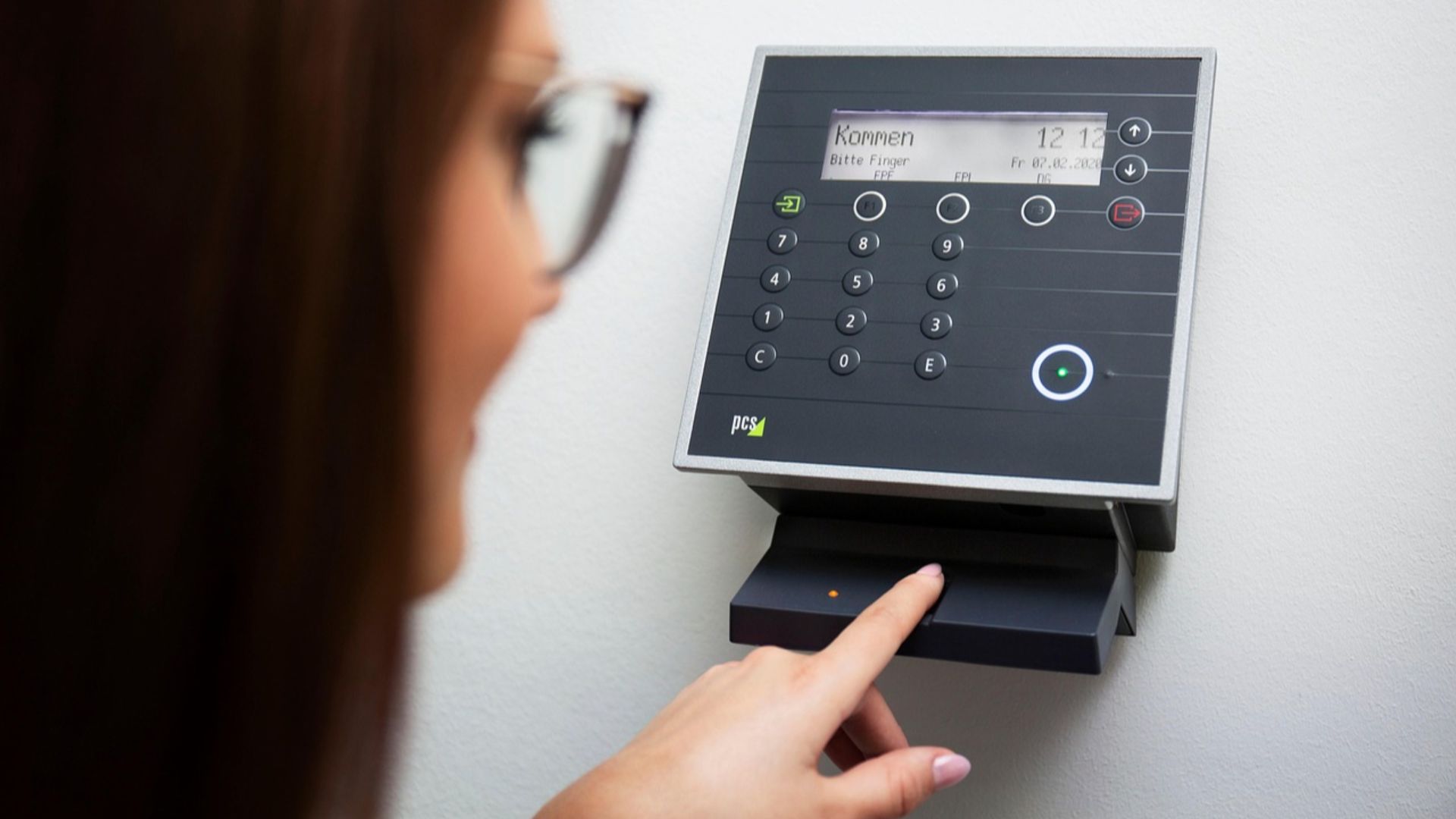
IATA calls its approach One ID. The goal is for travelers to store verified travel credentials in a digital wallet, share the necessary information with airlines or authorities in advance, and use biometric identification at participating airport checkpoints. IATA says more than 50 airlines, more than 40 airports, and more than 25 government entities have been involved in proofs of concept, pilots, or implementations connected with the program.
Passengers also appear increasingly comfortable with the concept. IATA’s 2025 Global Passenger Survey reported growing use of mobile technology, biometrics, and digital identity throughout air travel, although the organization also stressed that cybersecurity and trust remain essential. That tension will matter enormously if digital identity becomes a normal part of the 2035 airport.
For a frequent business traveler, the practical benefit could be significant. International trips might involve fewer document checks and less queuing, especially if immigration eligibility and travel authorization can be verified before departure. Travelers could arrive at some airports already considered “ready to fly,” then move through participating checkpoints using facial recognition or another approved biometric system.
That does not mean passports will vanish everywhere by 2035. Governments will adopt standards at different speeds, privacy laws vary widely, and travelers may continue to have manual alternatives. IATA itself describes One ID as an interoperable vision rather than a guarantee that every airport will use the same system.
For corporate travelers, consistency may matter as much as speed. A truly useful system needs to work when an employee flies from Toronto to Frankfurt, continues by rail to Brussels, stays at a hotel, enters a convention, and returns through another country. The technology is moving toward that kind of interconnected experience, but getting governments and private companies to agree on secure standards may prove harder than building the apps.
Flying Gets Cleaner, But Not Magical
The aircraft carrying business travelers in 2035 will probably look more familiar than science-fiction movies suggest. Conventional jetliners are likely to remain the backbone of long-distance corporate travel. The big changes may occur in what powers them, how efficiently they operate, and how companies account for the carbon associated with each seat.
Sustainable aviation fuel will be central to that effort. IATA estimates that SAF could eventually provide about 65% of the emissions reductions required for aviation to achieve its industry goal of net-zero carbon emissions by 2050. The organization says SAF can substantially reduce lifecycle emissions compared with conventional jet fuel, although reductions depend on the fuel and production pathway.
Production remains tiny compared with the aviation industry’s fuel consumption. IATA expected SAF to represent only about 0.8% of global jet-fuel consumption in 2026. That gap is one reason predicting the 2035 aviation system requires caution.
Governments are nevertheless forcing the market to grow. The European Union’s ReFuelEU Aviation rules require increasing levels of SAF at EU airports, beginning with a 2% requirement in 2025 and rising over subsequent decades. The European Commission says the regulation is intended to increase the use of sustainable fuels while supporting the EU’s broader climate objectives. By 2035, European business travelers should therefore be flying in an aviation market using substantially more alternative fuel than it does today, even if conventional fuel remains part of the mix.
Corporate travel departments are pushing in the same direction. Deloitte found that the share of surveyed travel buyers prioritizing airlines using SAF rose from 33% in 2024 to 43% in 2025. It also found that 48% of travel managers said their organizations were optimizing travel practices to reduce environmental impact.
That could make carbon another standard column beside price and travel time when someone books a trip. The 2035 booking system might show that one itinerary costs $80 more but produces a lower estimated emissions total, then apply the employer’s policy automatically. Some companies may operate formal travel carbon budgets alongside financial budgets.
Aircraft themselves could also become more efficient. NASA is researching electrified aircraft technologies and has studied concepts intended to reduce fuel consumption on future commercial aircraft. Still, nobody can responsibly promise that the typical intercontinental business traveler will be boarding an electric airliner in 2035. For long-distance aviation, cleaner fuel, improved aircraft efficiency, and operational improvements currently offer a more plausible path than a wholesale replacement of large jets.
Rail Could Take A Bigger Piece Of The Trip
One of the biggest changes to the 2035 business trip might not happen in the air at all. In regions with dense cities and strong rail infrastructure, the train could become an increasingly standard corporate alternative to short-haul flying.

Europe is making this shift an explicit policy goal. The European Commission’s passenger rail strategy calls for doubling high-speed rail traffic by 2030 and tripling it by 2050 compared with 2015 levels. It also aims to improve long-distance and cross-border passenger rail services. If those investments succeed, the European business trip of 2035 could involve far more mixed-mode itineraries.
A traveler might fly from North America to Paris, then continue to Brussels or Amsterdam by train rather than connecting to another flight. An AI booking platform could compare the complete journey instead of treating airlines and rail operators as separate worlds. The most useful comparison would not simply be flight time against train time, but door-to-door duration, reliability, emissions, productivity, and total cost.
That matters because business travelers experience transportation differently from vacationers. Two hours on a train with reliable internet and a table may be useful working time, while two hours associated with a short flight can also include security, boarding, taxiing, and travel between airports and city centers. Companies trying to measure productivity alongside cost may therefore become more willing to consider rail even when the scheduled journey itself is somewhat longer.
Air travel will still dominate routes where geography makes rail impractical. The important change is that corporate booking systems may become less focused on finding the cheapest flight and more focused on finding the most useful journey.
There is another possible addition to that transportation mix. The FAA is developing frameworks for advanced air mobility aircraft, including electrically powered vertical-takeoff vehicles often described as air taxis, and NASA is researching how such aircraft could safely operate within existing transportation systems.
By 2035, air taxis could conceivably operate in selected cities or between airports and nearby business districts. That should be treated as a possibility rather than a promise. Aircraft certification, infrastructure, noise, operating economics, public acceptance, and airspace management all have to work before an air taxi becomes as ordinary as calling a rideshare.
Business Trips May Become Longer And More Purposeful
If companies become more selective about travel, the trips they approve may actually become more substantial. Sending an employee across an ocean for a single one-hour internal meeting becomes harder to justify when video conferencing and AI collaboration tools can handle routine information exchange. Sending that employee for four client meetings, a training session, a team workshop, and an industry conference is a different calculation.
Evidence of this shift is already appearing in corporate travel research. Deloitte found that events and training remained important drivers of travel in 2025, with about two-thirds of surveyed travelers saying they had traveled or expected to travel for a live event and 49% saying the same about training. Hilton has also reported growth in smaller meetings, team gatherings, and incentive travel as organizations look for ways to bring distributed employees together.
The classic two-night business trip could therefore face competition from something closer to a concentrated work mission. An employee might travel less often during the year but spend more time at the destination when they do. Companies could bundle training, sales calls, internal meetings, and networking into one journey.

That structure also creates more opportunities to combine business and leisure. Hilton’s research for its 2025 trends report found that 25% of surveyed global travelers expected to travel more for “bleisure,” meaning trips that mix work and personal time. A decade from now, adding a personal day to the end of an international assignment may feel less like bending a corporate rule and more like a standard option clearly handled by company policy.
Employers will still need boundaries. Corporate systems must separate business costs from personal ones, determine when duty-of-care responsibilities begin and end, and explain what happens when an employee changes a flight for leisure reasons. AI may make those calculations easier, but it will not eliminate the need for clear rules.
The hotel could change with this longer, mixed-purpose trip as well. Instead of simply choosing a property within a nightly price cap, an intelligent platform may evaluate proximity to meetings, workspace, fitness facilities, neighborhood, transportation, sustainability information, and the employee’s previous preferences. Attribute-based hotel shopping is already attracting interest from travel managers, with 51% of respondents in GBTA’s 2026 innovation research saying it would improve the hotel booking experience.
The Real Luxury Will Be A Trip That Actually Works
The most meaningful improvement to business travel in 2035 may not be a flying taxi, a biometric gate, or an AI concierge. It may simply be that fewer things go wrong without somebody immediately fixing them.
Today’s trip is fragmented across dozens of systems. The employer has a travel policy, the airline owns the flight reservation, the hotel controls the room, a travel management company may provide support, an expense platform collects receipts, and the traveler often becomes the person responsible for making those pieces cooperate. GBTA’s 2026 research illustrates how incomplete that integration remains: only 12% of surveyed travel buyers said they had a consolidated view of their travel program from a single data source.

That is the problem AI and connected travel platforms may eventually solve. The ideal 2035 trip would function less like a stack of individual reservations and more like one continuously managed journey. A weather disruption in Chicago could trigger a flight change, a later airport pickup, a hotel notification, an updated meeting schedule, and a revised expense estimate without forcing the traveler to coordinate each step.
The employee would still make important decisions. Automated systems would need limits, especially when changing expensive international travel or handling personal information. Human travel advisers would also remain valuable when situations become complicated, sensitive, or genuinely unusual.
But the administrative burden could shrink dramatically. Receipts may be automatically matched to approved expenses. Rebooking could happen before the traveler knows a connection is impossible. Travel managers could see spending, risk, policy compliance, and estimated emissions in the same system.
That future also raises uncomfortable questions about surveillance. A travel platform capable of providing perfect assistance could potentially know where an employee is staying, where they are traveling, what transportation they use, what they spend, and when their schedule changes. Companies adopting these tools will have to decide not only what data technology can collect, but what employers genuinely need to see.
The 2035 Business Trip Will Still Be About People
Business travel has survived telephone calls, email, videoconferencing, remote work, and several generations of collaboration technology because some business activities benefit from people occupying the same physical space. There is little evidence today that companies have decided to abandon that idea entirely. Global business travel remains an enormous market, even as employers become more demanding about cost, sustainability, and measurable value.
By 2035, technology will probably remove more of the mechanical work surrounding the trip. AI could plan it. Digital identity could smooth the airport experience. Corporate systems could monitor cost and emissions. Cleaner aviation fuels, better rail networks, and perhaps new short-distance aircraft could expand the transportation choices available.
Yet those technologies may actually make the purpose of travel more important, not less. If AI can arrange a meeting, summarize it, translate the conversation, prepare the presentation, and handle routine follow-up, employers will have even more reason to ask why someone needs to cross a continent to attend it.
The answer will increasingly have to be something physical presence uniquely delivers. Meeting the person who may sign the contract. Walking a factory floor. Training employees on equipment. Bringing a scattered team together. Repairing a relationship that deteriorated over video calls. Spending two days talking with customers instead of reading another dashboard about them.
That may be the defining business travel trend of 2035. The journey itself becomes smarter and more automated, while the justification for making it becomes more human.
You May Also Like:
From Expense Accounts To Experiences: What Today’s Business Traveler Actually Values
Why Business Travelers Are Paying More Attention To Wellness, Sleep, And Downtime
How AI Is Quietly Changing Corporate Travel Policies
Sources: 1, 2, 3, 4, 5, 6, 7, 8, 9, 10, 11, 12, 13, 14, 15, 16, 17, 18, 19, 20