Airports were once places where business travelers waited for something to happen. They checked in, cleared security, found a seat, and watched the departures board. Today, many passengers expect to answer messages, join video calls, revise presentations, and approve documents before boarding. That expectation is influencing everything from terminal seating to identity checks.
The trend does not mean every airport will become a giant corporate office. Travelers also want quiet, comfort, helpful employees, and opportunities to recover between flights. Airports Council International found that passengers increasingly value both digital convenience and human-centered service. The successful airport of the future will therefore need to support productivity without making constant work feel compulsory.

The Terminal Is Becoming A Second Office
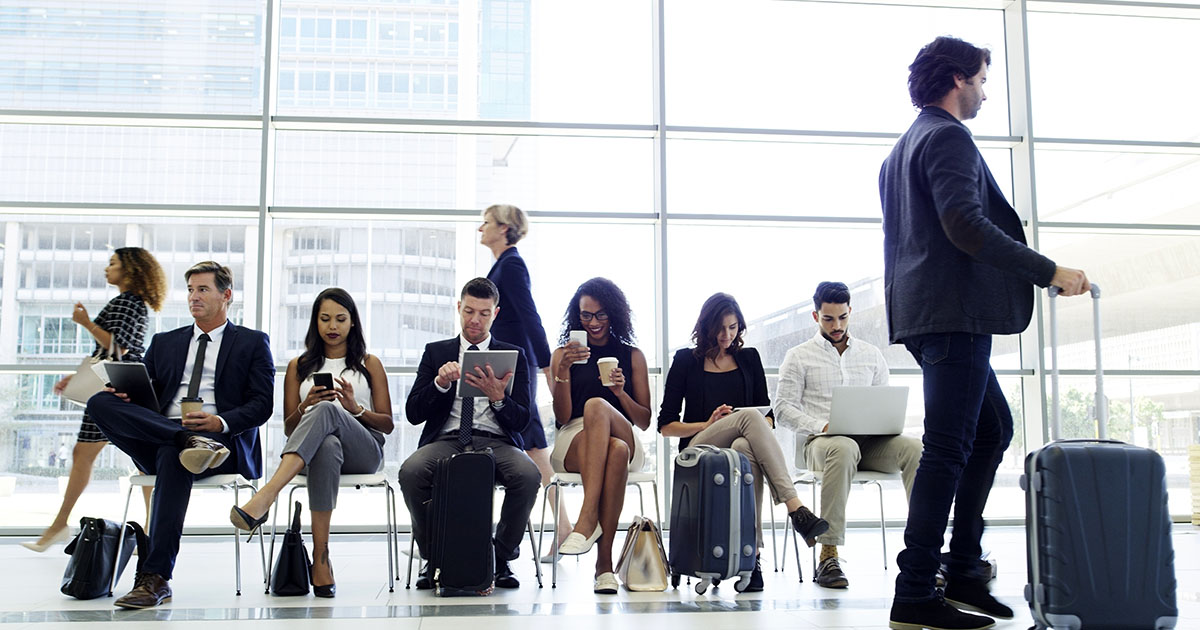
Reliable internet access is now basic infrastructure for a business traveler. A weak connection can prevent someone from downloading a presentation, contacting a client, or responding to an urgent request. Power is equally important because phones and laptops quickly lose their usefulness when every available outlet is occupied. As a result, airports are installing more charging points, work counters, and seating designed for people using several devices.
San Francisco International Airport offers a clear example of this direction. Its business-traveler information highlights free Wi-Fi, workstations, power outlets, power bars, airline lounges, and business services. The airport also offers access to shower facilities, recognizing that professional travel involves more than keeping a laptop charged. Travelers may need to work, change clothes, and prepare for a meeting without visiting a hotel.
This approach is gradually changing the physical shape of terminals. Rows of connected seats still serve a purpose, but they do not meet every passenger’s needs. A person joining a confidential call needs a different environment from someone checking email for ten minutes. Future terminals are likely to contain a wider mixture of shared tables, individual workspaces, sound-controlled rooms, casual seating, and areas where calls are discouraged.
Better workspaces could also spread beyond premium lounges. A traveler should not need elite airline status to find a functioning outlet or a surface large enough for a laptop. If airports treat connectivity as an essential passenger service, general boarding areas will become more useful for everyone. That would benefit freelancers, small-business owners, remote employees, and people traveling for interviews as much as senior executives.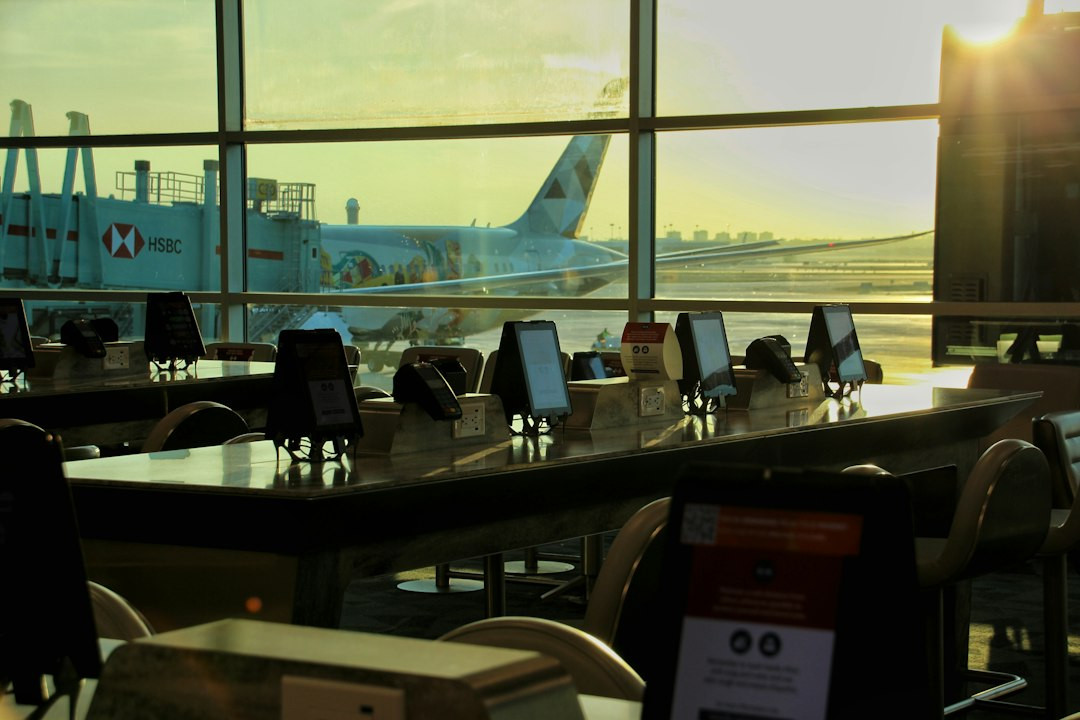 Michael C, Unsplash
Lounges Are Turning Into Full Workplaces
Airport lounges have long promised a more comfortable wait, but many are becoming sophisticated work and recovery environments. The modern lounge may include quiet zones, private rooms, communal worktables, showers, food, and spaces intended for short periods of rest. These features allow a traveler to move between different activities without leaving the airport. A long connection can become a sequence of work, eating, exercise, or sleep instead of several unproductive hours at the gate.
Singapore Changi Airport’s Changi Lounge illustrates how broad that offering can be. The lounge advertises fast Wi-Fi, charging points, workstations, and portable laptop tables. It also has private meeting rooms with presentation facilities, along with showers and nap pods. The combination reflects a practical truth about business travel: productivity depends partly on having somewhere to recover.
Meeting rooms inside airports could become especially valuable as work becomes more geographically flexible. Colleagues traveling through the same city might meet during a connection rather than arranging an additional downtown trip. A salesperson could speak with a local client without leaving the terminal and risking traffic delays. Small rooms equipped for video meetings could also make conversations more private than calls conducted in crowded gate areas.
The danger is that premium work facilities could deepen the gap between travelers. Employees with lounge memberships may enjoy quiet rooms and dependable connectivity, while everyone else competes for a noisy seat near an outlet. Forward-looking airports will need to place useful work infrastructure throughout the terminal, even if premium spaces remain more private or luxurious. Basic productivity should not depend entirely on the class printed on a boarding pass. StartupStockPhotos, Pixabay
Automation Is Giving Travelers More Usable Time
The airport’s future is not only about furniture and Wi-Fi. Digital identity systems, biometric verification, remote check-in, and off-airport bag drop could change how much time travelers spend on administrative tasks. Airports Council International reported in 2025 that willingness to use biometrics had climbed to 72 percent, compared with 57 percent in 2021. Passengers also expressed interest in services that move check-in and baggage processing away from traditional terminal counters.
SITA’s 2025 passenger research reached a similar conclusion. Its survey of 7,500 travelers across 25 countries found that nearly seven in ten were comfortable with biometric scanning. More than 60 percent said they would choose digital checkpoints, while 79 percent were ready to store a digital identity on a phone or in a travel wallet. These figures suggest that many passengers will accept automation when it offers a clear improvement in convenience.
For a business traveler, fewer procedural stops can create more predictable time. Completing identity checks digitally may reduce the need to repeatedly present a passport and boarding pass. Remote bag services could allow someone to arrive at the terminal without joining a traditional check-in line. The time saved might be used to work, eat, rest, or simply reach the gate with less anxiety.
Automation will not remove the need for employees. Technology can fail, travel documents can create complications, and disrupted passengers often require judgment that a kiosk cannot provide. Airports Council International’s research also found relatively modest passenger ratings for empathy and proactive assistance from airport staff. That result suggests the human side of the journey needs investment alongside faster machines.
The most effective system will make routine travel nearly invisible while keeping knowledgeable people available. A frequent traveler with straightforward documents might move through the terminal using a phone and facial recognition. Someone dealing with a cancellation, accessibility request, or unusual itinerary should still be able to find a person quickly. Saving time matters, but so does receiving competent help when the journey stops going according to plan.
Constant Connectivity Comes With Risks
An airport that makes work easier can also encourage unhealthy expectations. If every gate has fast internet and every lounge has a meeting room, employers may begin treating travel time as automatically productive. A delay that once provided an unavoidable pause can become another block of meetings. Travelers may feel pressure to remain responsive even after an early departure, a full working day, and a late arrival.
Employees should therefore distinguish between having the option to work and being expected to work continuously. A productive hour during a layover may be useful, particularly when it reduces the workload waiting at the destination. That does not mean every connection needs to be filled with email. Rest can be a sensible professional decision when fatigue would otherwise affect a meeting or presentation.
Security is another concern. The National Institute of Standards and Technology notes that remote access to nonpublic organizational resources from external networks carries greater risk than access from within an organization’s facilities. Business travelers should follow their employer’s security policies and use approved remote-access tools. Sensitive conversations, confidential screens, and printed documents also require care in crowded terminals.
Private work booths may address some of these problems, but their design will matter. A booth with transparent walls might reduce noise without preventing people from seeing a laptop screen. Poor ventilation could make a small pod uncomfortable during a long call. Airports will need to consider privacy, accessibility, lighting, acoustics, and reservation rules rather than simply placing enclosed boxes near the gates.
Travelers also need control over interruptions. An airport app could help someone reserve a workspace, locate a quiet zone, or identify a gate with available charging. The same app should not bury the passenger in retail alerts while they are trying to work. Useful airport technology should reduce mental clutter instead of creating another stream of notifications.

The Smartest Airports Will Protect Time To Rest
Research from Airports Council International indicates that passengers value clean, quiet, thoughtfully designed spaces because those environments support calm and comfort. That preference complicates the idea that the future terminal should revolve entirely around productivity. Travelers do not always want another desk. Sometimes they need a peaceful seat, a shower, a short nap, or a meal without an open laptop.
Designing for recovery can improve the working journey rather than compete with it. A passenger who sleeps during a long connection may arrive better prepared than one who spends three hours answering routine messages. Quiet areas can also help people manage sensory overload, stress, and travel fatigue. Even travelers who intend to work may appreciate spaces that let them concentrate without announcements, televisions, and surrounding phone calls.
The best future airports will offer choices that can change throughout the journey. A traveler might use a collaborative table before departure, move to a quiet seat after clearing security, and reserve a private room during a connection. If a flight is delayed, that person could switch from working to resting without searching the entire terminal. Flexibility will matter more than assuming every passenger follows the same routine.
Airports should also remember that not all work looks the same. Some travelers need silence for writing, while others need a room for conversation. Healthcare workers, engineers, consultants, and salespeople may handle information with very different privacy requirements. Adaptable spaces will serve these passengers better than a single large business center.
By 2030 and beyond, the airport may feel less like a waiting room and more like a temporary neighborhood. It could contain offices, meeting rooms, restaurants, wellness spaces, automated checkpoints, and quiet places to withdraw from the crowd. Business travelers will be able to accomplish more without leaving the terminal. The real measure of progress, however, will be whether they can also choose to stop.