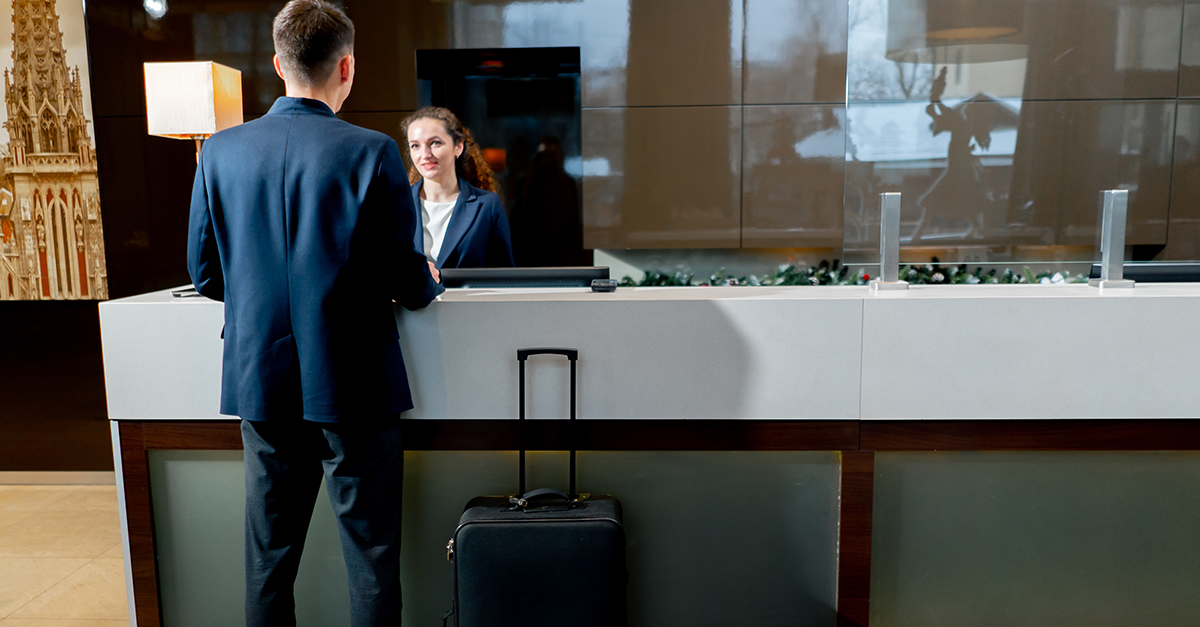
That Corporate Discount Might Not Be The Best Deal
You are booking a hotel for an upcoming business trip, and your company's travel portal offers a room for $220 per night. Out of curiosity, you check the hotel's website and discover what appears to be the same room for $195. Suddenly, that supposedly exclusive corporate discount doesn't look particularly impressive. It raises a reasonable question: Are companies actually getting better hotel deals than employees could find themselves?
Corporate hotel rates have traditionally been promoted as one of the major financial advantages of managed business travel. Companies negotiate directly with hotels, promising a steady stream of guests in exchange for discounted rooms and preferential treatment. The arrangement sounds straightforward, but hotel pricing has become considerably more complicated. Public promotions, loyalty discounts, third-party booking platforms, and constantly changing room rates mean corporate deals do not automatically win every comparison.
Research from the Global Business Travel Association (GBTA) suggests that travel managers are already questioning how well traditional hotel negotiations work. In a 2025 survey conducted with Cvent, 84% of corporate travel programs reported at least sometimes benchmarking negotiated discounts against public rates. That is an important admission from an industry built around the advantages of corporate purchasing power. Even the professionals negotiating these agreements recognize that prices need regular checking.
The answer is not that corporate hotel discounts are worthless or that travelers should always book independently. Negotiated rates can deliver meaningful savings, particularly when companies regularly send employees to the same destinations. However, their value depends on everything from travel dates to cancellation policies and included amenities. Understanding those differences can help explain why the cheapest room on your screen is not necessarily the cheapest business trip.
How Companies Actually Negotiate Hotel Discounts
Large companies frequently negotiate hotel agreements through a formal request for proposal, commonly called an RFP. Hotels compete for corporate business by offering specific rates, discounts, and additional benefits. In return, successful properties gain access to travelers whose employers may generate significant recurring demand. The resulting agreements can make hotel spending more predictable while giving companies greater influence over booking conditions.
Traditionally, many corporate hotel agreements have relied on fixed rates. A business might negotiate a particular nightly price at a preferred hotel for an agreed period, subject to the contract's restrictions. This arrangement provides budget stability because room costs are less exposed to daily price changes. Its weakness becomes apparent when the hotel's publicly available price drops below the negotiated amount.

Dynamic corporate discounts take a different approach. Instead of fixing a nightly price, the hotel offers a negotiated percentage reduction from an agreed reference rate, often its best available rate. As ordinary hotel prices move up or down, the corporate price adjusts accordingly. However, a percentage discount does not guarantee a better deal than every promotional, loyalty, or third-party offer available elsewhere.
These competing approaches are changing how businesses purchase accommodation. GBTA's June 2026 research found that 49% of surveyed hotel programs had increased their use of dynamic discounts, compared with 17% reporting an increase in fixed rates. Companies are increasingly combining fixed prices in frequently visited destinations with dynamic discounts in markets where travel demand is less predictable. The shift reflects a practical reality: No single pricing structure works best for every trip.
Corporate bargaining power also extends beyond an individual employer. Travel management companies can negotiate hotel arrangements using the combined purchasing power of multiple corporate clients. Corporate Travel Management, for example, advertises pre-negotiated savings of up to 15% against best available rates through its global hotel program, with larger discounts available through certain special offers. Those advertised savings are potential benefits rather than guarantees for every reservation.
One additional contractual detail can be particularly valuable during busy periods. Last room availability, commonly abbreviated LRA, generally means an eligible negotiated rate remains accessible when qualifying rooms are still available for sale. Without that protection, hotels may restrict access to corporate rates when demand increases. Companies therefore have to consider not only the discount they negotiated but whether employees can actually use it when necessary.
Why Booking Yourself Can Sometimes Be Cheaper
The biggest weakness of a traditional fixed corporate rate is that hotel prices rarely remain fixed for everyone else. Hotels adjust their public rates in response to demand, availability, local events, and commercial considerations. When demand is weaker, public prices can fall below a rate that was negotiated months earlier. A corporate agreement that looks attractive during a major conference might seem decidedly average during a quieter week.
Hotel loyalty programs add another layer of competition. Marriott Bonvoy offers eligible members exclusive rates when booking through official channels, while Hilton promotes direct-booking prices and member benefits through Hilton Honors. These offers can give individual travelers access to pricing that differs from standard publicly displayed rates. Depending on the property and reservation conditions, a member promotion may compete favorably with a corporate agreement.
Third-party booking websites can also complicate the comparison. Platforms such as Expedia and Booking.com display prices from numerous properties, making competing offers easier to discover. Chase's hotel booking comparison guide notes that third-party platforms may offer competitive pricing through their own commercial arrangements with hotels. It also warns that additional fees and booking conditions can change the actual value of those offers.
That means an employee shopping independently might genuinely discover a lower advertised room price. However, the difference may disappear once taxes, resort or destination fees, breakfast, parking, and cancellation conditions are considered. The lowest displayed nightly rate is not always the lowest total cost. Travelers need to compare equivalent bookings rather than simply choosing whichever website advertises the smallest number.

Availability creates another potential frustration for employees. A corporate booking tool might display the negotiated rate at one preferred property while another suitable hotel offers a cheaper public room nearby. Alternatively, the negotiated rate might be unavailable even though the hotel continues selling rooms through other channels. The existence of a corporate agreement does not guarantee either the lowest possible price or the widest selection.
Travel managers recognize these limitations. GBTA's 2025 research with Radisson Hotel Group found that 62% of surveyed travel managers identified lower prices and greater choice as benefits of hotel content from outside traditional Global Distribution System channels. The same research found that availability and preferred-hotel coverage remained persistent gaps in managed accommodation programs. These findings help explain why some corporate booking platforms are expanding the range of hotels and rates they display.
The Hidden Benefits That Can Make Corporate Rates Worth More
A cheaper advertised room is attractive, but business travelers should examine what they are actually purchasing. Corporate hotel agreements frequently negotiate benefits beyond the nightly price, including breakfast, cancellation flexibility, or other services. These extras can change the economics of a reservation considerably. A room that appears more expensive initially may become competitive once the full stay is considered.
GBTA's 2025 research with Cvent provides useful evidence. Among surveyed hotel professionals, 53% said their companies at least sometimes included complimentary breakfast with fixed corporate rates. Another 50% reported at least sometimes including free cancellation or waived cancellation fees. Those benefits are particularly relevant for employees whose schedules may change because of meetings, client demands, or transportation disruptions.
Cancellation rules deserve special attention because apparently similar reservations can carry very different conditions. A prepaid promotional rate might offer a lower price in exchange for restrictions on refunds or changes. A corporate agreement could permit more flexibility, depending on its negotiated terms. When travel plans change, avoiding a cancellation penalty can be more valuable than saving a modest amount on the original booking.

There is also the question of hotel loyalty rewards. A tempting third-party discount might prevent travelers from earning the points and qualifying nights they would receive through an eligible booking. Hilton explicitly states that Hilton Honors members generally do not earn points, stay credits, or additional member benefits on third-party reservations. Eligible bookings through corporate travel channels may preserve those benefits, although the exact eligibility rules depend on the hotel program and rate.
Support arrangements are another consideration. Hilton advises customers who reserve through third-party websites to contact the booking provider directly when they need to change or cancel their reservation. That additional step may matter when a business trip becomes complicated. Travelers should understand who is responsible for helping them if their reservation needs urgent attention.
Companies also gain advantages that individual employees might not immediately notice. Managed booking systems can consolidate reservation information, support expense reporting, and provide employers with greater visibility into employee travel arrangements. GBTA research identifies risk management and traveler satisfaction as important priorities alongside savings in hotel sourcing decisions. For employers, the overall value of a booking includes more than the room charge.
Location can matter just as much as the advertised discount. GBTA's 2025 research with Radisson found that 82% of surveyed travel managers prioritized hotels near company offices, while 44% considered proximity to client locations. A cheaper property farther away may require additional transportation spending and create logistical complications. Comparing two hotels without accounting for those differences can produce a misleading impression of savings.
How To Tell Whether Your Company's Rate Is Actually Better
For employees who suspect they can find a better hotel deal, the most useful first step is a genuine comparison. Search the same property, travel dates, occupancy, and room category through your company's booking platform and the hotel's official website. Check the hotel's loyalty-member price where eligible, then consider a reputable third-party platform. Most importantly, compare the final payable amount rather than stopping at the initial nightly quote.
Cancellation terms should be checked alongside the price. A fully refundable corporate reservation should not be compared directly with a nonrefundable promotional booking without acknowledging the difference. The same principle applies to included breakfast, parking, internet access, and other relevant benefits. Hilton's own price-match guarantee requires comparable accommodations and booking conditions, illustrating why those details matter when judging competing offers.
Employees should also review their employer's travel policy before booking outside an approved system. A cheaper independent reservation does not necessarily satisfy company requirements for approved properties, payment procedures, or travel reporting. Some employers may allow exceptions when a qualifying lower price is available, while others require reservations through designated channels. Getting approval before purchasing is safer than assuming a lower price will automatically justify reimbursement.
Travel managers have an equally important responsibility to check whether negotiated deals remain competitive. A corporate rate should be measured against the prices employees could actually book for comparable stays, not merely against a hotel's published reference price. Comparing rates across frequent destinations, different booking windows, and high-demand periods can reveal where agreements perform well. It can also expose expensive contracts that no longer reflect market conditions.

Technology is making these comparisons easier for companies. CWT describes hotel rate optimization tools that can monitor bookings and automatically rebook identical stays when lower prices become available. Its platform also analyzes the competitiveness and availability of preferred rates at the point of sale. Such systems demonstrate that negotiated prices need ongoing monitoring rather than unquestioning acceptance.
The hotel industry is moving toward a more flexible approach as a result. GBTA's 2025 Radisson research found that 60% of surveyed travel managers preferred a hybrid arrangement combining fixed and dynamic rates at individual properties. This approach aims to preserve predictable prices where they make sense while allowing companies to benefit from changing market conditions. It also acknowledges that corporate buying power alone cannot guarantee the best rate every night.
For business travelers, the conclusion is straightforward. Corporate hotel rates can provide genuine financial value, especially when they combine competitive prices with flexible terms, useful amenities, and convenient locations. However, there is no reason to assume a company-negotiated price automatically beats every offer available to individual travelers. The smartest booking is the one that provides the best overall value while meeting the employer's travel requirements.
You May Also Like:
The Airport Of The Future Is Being Designed Around Travelers Who Never Stop Working
Could Trains Replace Short-Haul Business Flights?
Could Digital Passports And Biometrics Make Business Travel Almost Frictionless?