
For generations of business travelers, the short-haul flight has been almost automatic. A meeting is several hundred miles away, so you book a plane, leave for the airport, clear security, fly for an hour or two, and make your way back into another city center. Yet that familiar routine is increasingly being challenged by faster trains, crowded airports, corporate sustainability targets, and a growing realization that flight time tells only part of the story.
In parts of Europe, high-speed rail has already taken a substantial share of journeys once made by air, while new investments in North America suggest governments and operators see similar potential there. The question is no longer whether trains can replace some short flights, but where the economics and geography make that switch genuinely useful for people traveling on business.
The Three-Hour Sweet Spot
The strongest case for rail starts with an advantage that airline schedules can obscure: a 70-minute flight rarely consumes only 70 minutes of a traveler’s day. Airports tend to sit away from business districts, while major rail stations are often already downtown, and flying adds check-in, security, boarding, taxiing, and ground transportation to the calculation. That helps explain why a train does not necessarily have to match an aircraft’s speed to compete with it.
An OECD and International Transport Forum analysis found that rail’s share of the combined air-and-rail market rises rapidly once train journeys fall below four hours, and rail can become especially competitive when trips drop below three hours. Those figures come from established high-speed rail corridors rather than every possible city pair, but the underlying principle remains useful. For business travelers, total door-to-door time matters more than the maximum speed reached somewhere between the two cities.
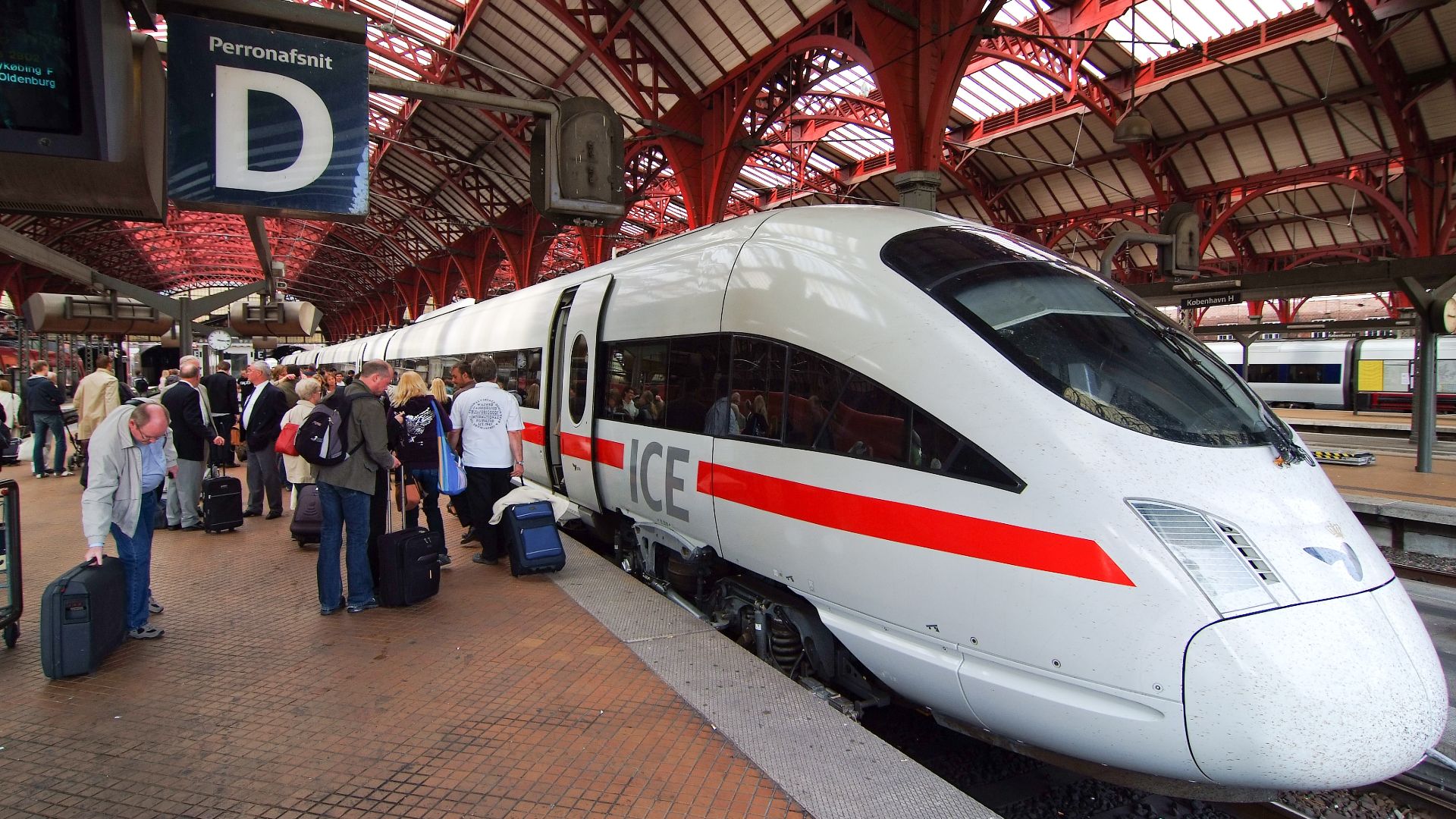
London and Paris offer one of the clearest modern examples of that equation. Eurostar currently advertises a direct London-to-Paris journey of about two hours and 16 minutes, traveling from St Pancras International to the center of Paris. That puts the train squarely inside the range where rail historically performs well against air travel. The same network reaches Amsterdam from London in roughly four hours, depending on the service and direction, pushing closer to the outer edge of the zone where travelers may begin prioritizing speed over the other advantages of rail. Eurostar has also specifically marketed premium products around business needs, including additional space, meals, lounges, and priority access. The attraction is easy to understand when much of the rail journey itself can be used as working time.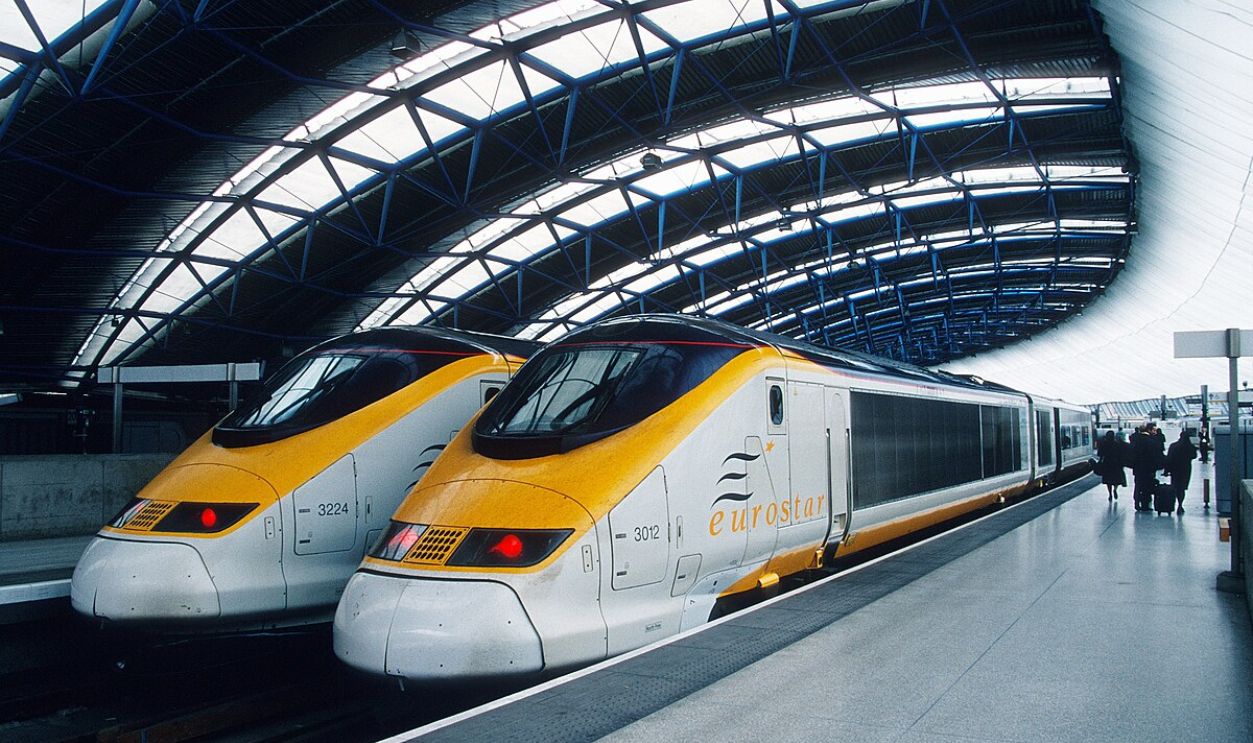 Herbert Ortner, CC BY 3.0, Wikimedia Commons
Europe Has Already Run The Experiment
High-speed rail is hardly a theoretical challenger to aviation in Europe. Decades ago, the introduction of faster Paris-Lyon service sharply shifted travelers toward rail, while the Madrid-Seville AVE achieved a similarly dramatic change after cutting the previous train journey to about two and a half hours. Research reviewed by the OECD showed that much of the traffic gained by those services came from airlines rather than highways. Another OECD study later found that the opening of the Madrid-Barcelona high-speed line in 2008 was followed by a significant reduction in air passengers on that corridor as train ridership increased.
None of those examples means that rail automatically eliminates flying, because fares, schedules, reliability, connections, and individual itineraries still matter. They do show that when fast rail is actually built between major economic centers, travelers can change their behavior on a large scale.
France has gone a step further by turning the rail-versus-air calculation into government policy. A decree that took effect in 2023 prohibited certain domestic air services where a suitable rail alternative could complete the journey in less than two and a half hours, initially affecting routes linking Paris-Orly with cities including Bordeaux, Lyon, and Nantes. The measure is relatively narrow and should not be confused with a general French ban on short-haul flying. Still, it demonstrates how seriously governments are beginning to treat rail as an alternative on specific corridors.
The European Union is also pursuing a broader expansion of fast rail, with its revised transport network requirements calling for important passenger lines on the core and extended core network to support speeds of at least 160 km/h by 2040. A European Commission high-speed rail plan unveiled in 2025 also targets shorter journey times, easier cross-border travel, and better integration between national systems.
The Business Case Goes Beyond Speed
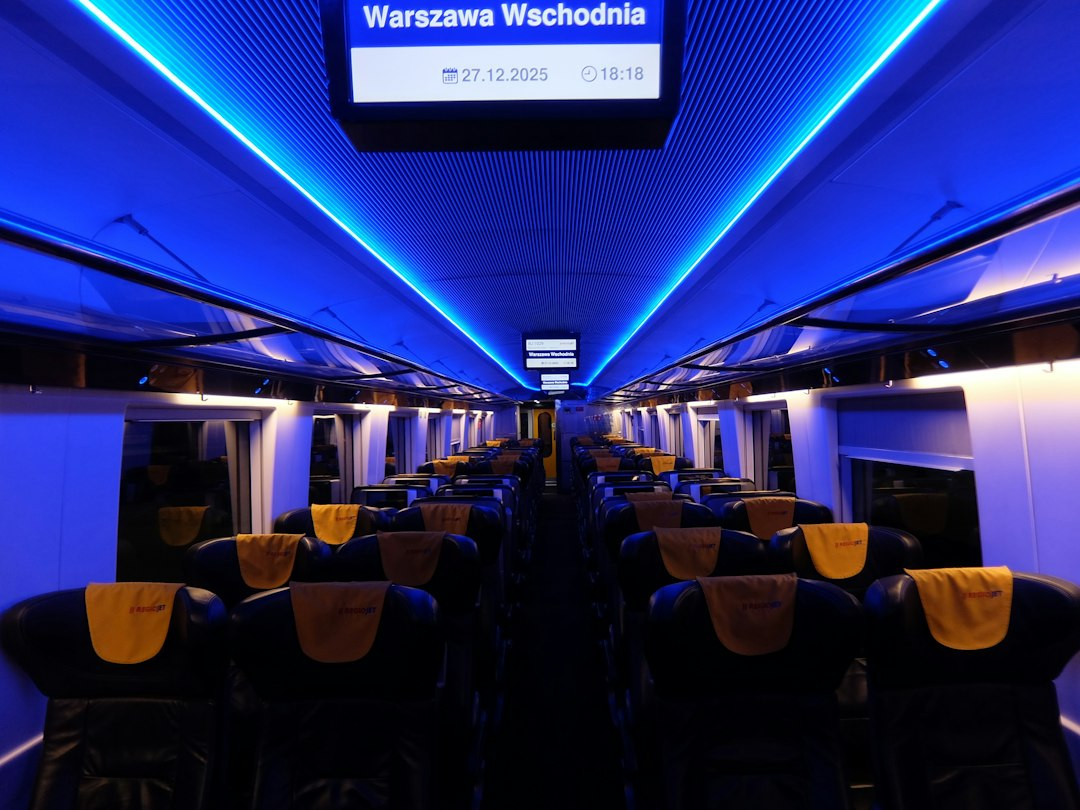
For companies, one of rail’s biggest attractions is that travel time can more easily resemble office time. A passenger can generally open a laptop, keep a phone accessible, move around, and continue working for a much larger portion of a train journey than during the equivalent airport-and-flight process. Operators increasingly design their premium products with that reality in mind.
Amtrak’s NextGen Acela trains, introduced on the Northeast Corridor in August 2025, include high-speed 5G-enabled Wi-Fi, individual power outlets, USB connections, and other features aimed partly at travelers who want to remain productive. By July 2026, Amtrak said 13 of the new trainsets were in service and its weekday NextGen Acela schedule had expanded substantially. Amtrak’s overall Northeast Corridor ridership also reached more than 15 million trips in fiscal 2025, illustrating the scale of the existing rail market between Boston, New York, Washington, and cities in between.
Environmental pressure strengthens the corporate case. The European Environment Agency has concluded that rail is considerably more greenhouse-gas efficient per passenger-kilometer than aviation on average in Europe, although the agency cautions that emissions vary by route, energy source, occupancy, and distance. A more recent European rail environmental report used EEA figures showing average high-speed rail emissions below 20 grams of carbon-dioxide equivalent per passenger-kilometer, compared with roughly 160 grams for air travel in the underlying EU data. That difference has encouraged some companies to introduce travel policies favoring trains where practical, particularly as organizations monitor emissions associated with employee flying.
The climate argument does not mean every train journey has identical environmental performance, and it should not be reduced to a universal percentage saving for every trip. It does mean that shifting an appropriate short-distance journey from air to electric rail can materially reduce the emissions associated with that business trip.
North America Is A More Complicated Test
In the United States, the Northeast Corridor offers the closest equivalent to the European model. NextGen Acela connects Washington, New York, Boston, and intermediate cities, with trains capable of a top speed of 160 mph and stations located in or close to major downtown districts. Amtrak says the new trains provide 27 percent more seats per departure than their predecessors, and nearly 1.5 million passenger trips had been made on NextGen Acela during its first year of operation.
Florida provides another type of test through Brightline, whose Orlando service runs to Miami in roughly three and a half hours on regular stopping services. Brightline also offers hourly departures across much of the day, while its stations and trains include Wi-Fi, charging access, and other amenities that can make rail more appealing to working passengers. Neither corridor proves that America is about to abandon short flights, but both show the importance of frequency and useful city pairs as much as headline train speed.
Canada makes the contrast particularly clear. VIA Rail lists the average Toronto-Montréal train journey at about five hours and 13 minutes, which leaves rail at a disadvantage for many travelers trying to make a same-day business trip. The planned Alto high-speed network is intended to alter that calculation with dedicated, primarily electrified infrastructure linking Toronto, Ottawa, Montréal, Québec City, and intermediate communities. Alto currently projects travel times of roughly three hours between Toronto and Montréal and about two hours between Toronto and Ottawa, placing both journeys much closer to the competitive range demonstrated by established high-speed rail systems.

Construction of the first Montréal-Ottawa segment is expected to begin around 2029 or 2030, and there is not yet an official opening date for the complete system. That makes Alto an illustration of both rail’s promise and its central limitation: replacing flights requires enormous infrastructure investments before travelers ever see a faster timetable.
The Plane Is Not Disappearing
Even Europe still faces obstacles that prevent rail from becoming a seamless substitute for aviation. The European Commission has identified complicated ticketing, differing national technical rules, limited rolling-stock availability, infrastructure bottlenecks, and cross-border coordination as barriers to expanding passenger rail. Its 2025 high-speed rail strategy continued addressing many of the same problems, including plans to improve cross-border booking and passenger protections. Those issues matter greatly to business travelers, who often care as much about frequency and reliability as raw journey time.
A three-hour train that operates only twice a day may be less useful than a slightly longer service departing every hour. Similarly, business travelers connecting onward to another continent may still prefer a short flight into an international airport rather than traveling downtown by train and then back out to an airport.
So, could trains replace short-haul business flights? On the right routes, they already have replaced a meaningful share of them, and future infrastructure could make that true across many more corridors. The strongest candidates are densely traveled city pairs with central stations, frequent departures, dependable service, and rail journey times somewhere around three hours, with some viable competition extending toward four. Europe provides the deepest evidence, while the Northeast Corridor, Brightline, and Canada’s planned Alto network show different stages of the same idea in North America.
Yet trains will not make short flights obsolete everywhere because geography, airport connections, infrastructure costs, and network gaps remain powerful constraints. For the business traveler, the most useful question may therefore be less dramatic than whether trains will “replace” airplanes: on the next 300-mile meeting trip, which option actually gets you from desk to desk with the least wasted time?
Sources1, 2, 3, 4, 5, 6, 7, 8, 9, 10, 11, 12, 13, 14, 15, 16, 17, 18, 19, 20, 21, 22