
For decades, the business trip followed a familiar script. Fly to another city, spend a day or two visiting an office, meeting colleagues or clients, then head home. Those trips are hardly disappearing. The Global Business Travel Association projected worldwide business travel spending would reach $1.57 trillion in 2025. But companies are becoming more selective about why employees get on a plane, and that is helping turn the team offsite into a more important part of corporate travel.
The change is especially visible in distributed companies, where employees may rarely share an office. Instead of paying for a series of short internal visits throughout the year, some businesses are concentrating that travel into larger gatherings designed to accomplish several things at once. Strategy sessions can sit alongside training, project work, leadership meetings and, importantly, the informal conversations that are harder to schedule on Zoom. The result is not the disappearance of business travel. It is a shift toward fewer internal trips that have to justify the time and money required to make them happen.
Hybrid Work Changed The Purpose Of The Trip
Remote work initially looked like an existential threat to corporate travel. If employees could meet online, why keep flying them around the country to sit together in conference rooms? In practice, hybrid work has produced a more complicated result. Digital communication can replace plenty of routine meetings, but employees who no longer work together every day may have greater reason to periodically travel specifically to see one another.
GBTA research illustrates the paradox. In a 2024 survey, 23 percent of travel buyers at organizations with remote or hybrid policies said expenses for employees traveling to company locations for internal meetings had increased somewhat, while another 3 percent reported a significant increase. Forty-one percent said spending was about the same. Hybrid work, in other words, can generate travel as well as eliminate it.
That makes sense when you consider what companies are trying to replace. A distributed employee can spend an entire year talking to a coworker on video without ever sharing a meal, walking between meetings with them or having the unplanned conversation that happens after everyone else leaves the room. Gallup has found communication and collaboration remain significant challenges for managers of hybrid teams, and it recommends using in-person time intentionally for activities such as collaboration and team-building.
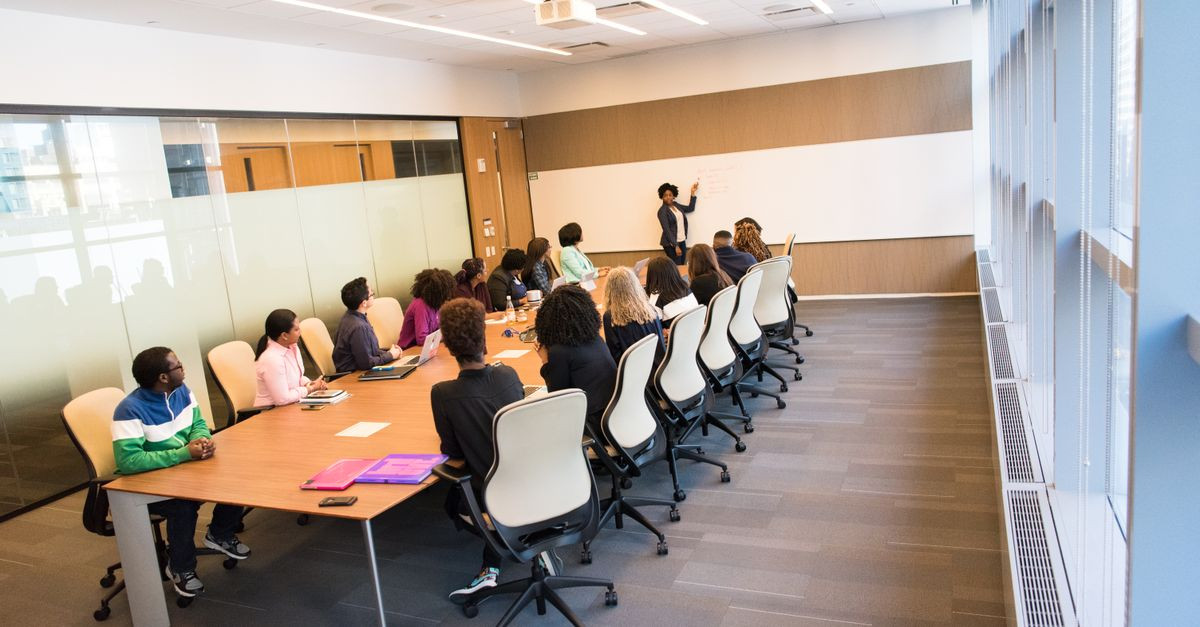
The offsite is increasingly designed to fill that gap. Rather than flying one executive to headquarters for a meeting that could have been a video call, a company can bring an entire team together for several days and build an agenda around work that benefits from physical presence. That changes the fundamental question behind a business trip. It is no longer simply, “Do we need to have this meeting?” It is, “What can we accomplish in person that would be difficult to accomplish apart?”
Every Flight Has To Work Harder
There is another force behind the change: money. Corporate travel remains expensive, and managers are under pressure to demonstrate that trips produce something worthwhile. Deloitte's 2025 Corporate Travel Study found that 54 percent of surveyed travel managers identified cost as one of the main factors limiting business travel. At the same time, three-quarters expected their travel budgets to grow.
Those findings are not as contradictory as they might appear. Companies can spend more overall while becoming considerably choosier about individual trips. Higher airfares, hotel rates and meeting costs mean a bigger budget does not necessarily buy more travel. It can instead encourage companies to concentrate their spending on trips considered most valuable.
Meetings themselves are becoming more expensive. A CWT and GBTA forecast projected that the average global cost per attendee per day for meetings and events would rise 3.7 percent in 2025 and another 2.4 percent in 2026. The same research described a movement toward smaller and more curated events, with companies putting greater emphasis on the experience of the people attending.
That environment favors the multipurpose trip. A three-day offsite might combine annual planning, training, project workshops, leadership presentations and social events. The company still has to pay for flights, hotel rooms, meeting space and meals, so an offsite is certainly not a cheap substitute for Zoom. But it can potentially replace several separate reasons for employees to travel.
That puts pressure on organizers to make the gathering count. GBTA reported in 2026 that 64 percent of surveyed travel buyers considered groups and meetings harder to manage than ordinary transient business travel. Moving dozens or hundreds of people is inherently more complicated than booking a flight for one executive. An offsite earns its place in the travel budget only when what happens after everyone arrives is valuable enough to justify getting them there.
The Corporate Retreat Grew Up
That requirement is also changing what an offsite looks like. The stereotypical corporate retreat was sometimes treated as an employee perk, with a few meetings attached to recreational activities. The modern version is more likely to resemble a concentrated working session with social time woven around it.
Harvard Business Review researchers Madeline Kneeland, Heidi K. Gardner and Adam M. Kleinbaum have argued that carefully designed offsites can help employees develop relationships with colleagues beyond the people they normally work with. Their research emphasizes something remote organizations can struggle to create: networks that stretch across teams rather than remaining inside established groups.

That can be particularly valuable when employees rarely occupy the same physical space. Remote communication makes it easy to schedule a conversation with someone you already know you need. It is less effective at reproducing the accidental introductions, hallway conversations and cross-department encounters that happen when people inhabit the same workplace.
An offsite can manufacture some of that serendipity, but only if companies resist the temptation to schedule every minute. Meals, breaks and informal gatherings can matter precisely because they are less structured. Meanwhile, working sessions can focus on problems that benefit from rapid conversation, disagreement and iteration rather than another sequence of video calls.
There is also a responsibility to remember that a company retreat is still business travel. McKinsey has cautioned organizations to consider accessibility, dietary needs, comfort around alcohol, scheduling and the amount of personal time employees are expected to surrender when planning team events. A glamorous destination does not automatically produce an inclusive or productive gathering. The best offsite may be the one employees remember for what they accomplished rather than the resort where they stayed.
AI Can Plan The Logistics, Not The Relationship
Artificial intelligence adds another twist to the story. At first glance, AI might seem like one more technology capable of reducing corporate travel. If software can summarize meetings, generate presentations and help employees collaborate across time zones, perhaps there is even less reason to meet physically.
The meetings industry is moving in almost the opposite direction. Amex GBT's 2026 Global Meetings and Events Forecast identifies AI as an increasingly important planning tool while simultaneously describing in-person gatherings as firmly established. One-third of meeting professionals surveyed named improving the attendee experience through more memorable events as their top priority for 2026.  CoreDESIGN, Shutterstock
Travel managers are adopting AI more broadly too. In an April 2026 GBTA poll, 41 percent of buyers said their organizations were proactively implementing AI use cases, while another 28 percent were using AI features embedded in existing travel technology. Applications included reporting, forecasting, pricing analysis and decision-making, although respondents also raised concerns about privacy and security.
That creates an intriguing division of labor. Software can increasingly help companies analyze destinations, costs, schedules and travel patterns. It can make the machinery surrounding an offsite more efficient. But the trip itself can be devoted to the distinctly human work of arguing through strategy, mentoring colleagues, establishing trust and getting to know people who normally exist as faces on a screen.
AI may therefore make the purpose of business travel clearer rather than simply reducing it. The easier routine information exchange becomes online, the more companies can reserve expensive face-to-face gatherings for interactions that technology handles poorly.
Business Travel Is Becoming More Deliberate
None of this means traditional business travel is dying. GBTA research published in early 2025 found that buyers expected sales and account-management meetings to represent roughly 27 percent of business travel spending, compared with 21 percent for internal meetings. Customers still need to be visited, conferences still draw attendees and specialists still travel to perform work that cannot happen remotely.
Internal travel is different because companies now have a powerful substitute for the routine meeting. Video conferencing has made it increasingly difficult to justify flying across the country simply because that was how business used to be conducted. Yet years of remote and hybrid work have also demonstrated the limits of replacing every physical interaction with a screen.
The offsite occupies the space between those realities. Routine communication can stay online while travel is concentrated around moments when bringing people together has a clear purpose. An employee might visit headquarters less frequently but spend several days there working intensively with the entire team. A distributed company might have fewer ordinary office visits while investing more heavily in an annual or semiannual gathering.
That is a subtler transformation than the much-predicted death of the business trip. Companies are still putting employees on airplanes. They are simply asking harder questions before they do it.
And for business travelers, that could make the trips that remain more consequential. In a working world where an ordinary meeting can happen almost anywhere, being asked to travel increasingly signals that the meeting is not supposed to be ordinary.