For years, the basic logic of business travel was remarkably simple. If a customer was important, a project was complicated, or a meeting involved enough senior people, somebody booked a flight. Travel was treated as a normal cost of doing business, and frequent flyers could spend much of their working lives moving between airports, hotels, offices, and conference centers.
That model is not disappearing, but it is being rewritten. The clearest signal comes from the Global Business Travel Association's 2026 Business Travel Index. GBTA forecasts a record $1.71 trillion in worldwide business-travel spending this year, yet it expects the number of business trips to grow only 1.3%, from an estimated 1.82 billion trips in 2025 to about 1.84 billion in 2026. Spending, by comparison, is forecast to rise 7.2%.
Those numbers do not describe an industry in retreat. They describe an industry in which growth in spending is increasingly being driven by higher prices rather than a comparable explosion in the number of journeys. At the same time, corporations are scrutinizing costs, sustainability targets, security risks, traveler fatigue, and the business purpose of sending an employee hundreds or thousands of miles from home.
The result could be one of the defining shifts in the next era of corporate travel. Business travel may become less about how often employees can get on a plane and more about what the company can accomplish once they land.
The Business Travel Boom Is More Complicated Than It Looks
At first glance, business travel appears to be booming. GBTA says global spending reached approximately $1.59 trillion in 2025 and forecasts $1.71 trillion in 2026. Its research also found that 74% of business travelers reported traveling as much as or more than in previous years, which makes it difficult to argue that companies have suddenly decided they can conduct everything over video calls.
But spending figures alone can exaggerate how quickly actual travel activity is growing. GBTA expects the number of trips to increase by only about 25 million worldwide in 2026, while spending rises by more than five times the rate of trip-volume growth. The association explicitly pointed to higher transportation and travel costs as a major reason for that widening gap.
The price environment helps explain why. A separate 2026 forecast from GBTA and ALTOUR projected that average global airfare would increase 4.7% this year, with economy fares increasing 8.7% and premium fares rising 9.5%. Global hotel average daily rates were forecast to rise 3.7%, while the cost per attendee per day for meetings and events was expected to increase by about 3%.
That matters because a company can spend considerably more on travel without sending employees on considerably more trips. A budget that once paid for ten journeys might not stretch nearly as far after airfares, hotels, ground transportation, meals, meeting space, and production costs have increased. Rising corporate travel spending should therefore not automatically be interpreted as a return to the high-frequency travel habits of the past.
Deloitte found a similar tension in its 2025 Corporate Travel Study. Three-quarters of surveyed travel managers said their budgets were expanding, but the share anticipating cuts increased from 6% to 10%. The share of professionals traveling for work also fell from 36% in 2024 to 31% in 2025 among the U.S. professionals studied.
Frequent travelers offered another clue. Deloitte found that many employees who traveled heavily expected to reduce their pace, and its 2026 Travel Industry Outlook noted that 53% of frequent business travelers expected to make three or more trips during a typical month in 2025, down from 63% in the previous survey. Corporate travel is still enormous, but the traditional road warrior may no longer be the best symbol of where it is heading.
The Routine Trip Is Losing Its Automatic Pass
The pandemic proved something corporations had spent years debating. A large amount of work could be conducted remotely when companies had no alternative. Video meetings, collaborative software, and cloud-based workflows could keep businesses functioning even when employees were scattered across cities, countries, and continents.
That did not make face-to-face work obsolete. Instead, it created a much clearer alternative against which every business trip could be compared. Once employees and managers became accustomed to conducting ordinary status updates, document reviews, and routine coordination online, the question surrounding a trip changed from "Can we meet remotely?" to "What would traveling accomplish that remote work cannot?"
Corporate travel data increasingly reflects that distinction. Deloitte reported that most travel managers in its 2025 study said their companies conduct pre-trip assessments of whether travel is justified and prioritize trips that could produce specific business outcomes. The study also found that companies were attempting to connect travel programs more closely to strategy, performance indicators, costs, and sustainability goals.

Conditions became more complicated in 2026. In an April GBTA poll of more than 500 travel managers, suppliers, and intermediaries, 28% of buyers expected their organization's business-travel volume to decline during the year, up from 16% in January. Another 41% expected volumes to remain unchanged, while 30% expected an increase.
Spending expectations were stronger than volume expectations in that same research. Forty-three percent of buyers expected spending to increase even as considerably fewer expected the number of trips to rise. That combination makes sense in an environment where the trip itself is becoming more expensive and where travel departments are under pressure to justify the journeys they do approve.
The implication is not that the corporate trip is dying. It is that the lowest-value journey faces more competition than it once did. When a video call can accomplish the immediate objective for a fraction of the cost and inconvenience, getting approval for the plane ticket requires a clearer reason.
Face Time Is Being Saved For Moments With Higher Stakes
If companies become more selective about travel, the obvious question is which trips survive. Deloitte's research provides a useful answer. Connecting with people outside the company remains one of the strongest reasons organizations send employees on the road.
New business development, meetings with clients and partners, conferences, and other forms of in-person stakeholder engagement were among the leading drivers of increased corporate travel in Deloitte's 2025 study. Nearly two-thirds of surveyed business travelers expected to attend a conference during the year. For smaller organizations in particular, an event can provide an efficient opportunity to meet numerous potential customers, suppliers, or partners within a short period.
Training is becoming another important category. Deloitte found that increased demand for learning and development was the fastest-growing accelerator of corporate travel in its survey. One in five travel managers named it as their company's top driver of travel growth, while two-thirds said spending on training-related travel was increasing.

That increase is occurring alongside an enormous corporate push to retrain workers. The World Economic Forum's Future of Jobs Report 2025, based on responses from more than 1,000 employers representing more than 14 million workers, found that 85% expected to prioritize workforce upskilling between 2025 and 2030. Employers also expected 39% of workers' existing skill sets to change or become outdated during that period.
Not every training program requires an airplane ticket, of course. The important point is that travel increasingly competes for a place in corporate strategies built around specific goals. A sales meeting tied to a major contract, a conference where dozens of relationships can be built, an engineering visit to a project site, or intensive training for a new technology has an easier case to make than a meeting that could produce essentially the same result online.
That can make fewer trips more consequential. When colleagues see each other every month, an individual meeting may feel routine. When a distributed team gathers only a few times a year, the agenda, location, attendees, and use of that time suddenly matter much more.
Rising Costs Are Raising The Bar For Every Journey
The financial pressure behind this shift is becoming difficult for travel managers to ignore. In Deloitte's 2025 survey, 54% of travel managers named costs as one of the three leading factors restricting corporate travel, up from 48% a year earlier. At larger companies, 64% placed higher prices among their three biggest constraints.
By April 2026, affordability had become an even broader industry concern. GBTA found that 82% of respondents to its business-travel sentiment poll were concerned about the affordability of corporate travel, up from 70% in January. Employee safety was also becoming more important, with 67% identifying it as a concern.
Geopolitical instability adds another layer to the calculation. Seventy-nine percent of respondents to GBTA's April poll identified geopolitical instability and conflict as a leading travel-related risk. Among corporate buyers, 76% said geopolitical conflicts were having a moderate or significant impact on their companies' business-travel and meetings decisions.
Those pressures can change the economics of a trip before an employee has even left home. A disrupted route can mean an extra connection, a more expensive ticket, another hotel night, or additional time away from work and family. Companies must also consider duty of care, insurance, travel support, and the possibility that an employee could become stranded when transportation networks are disrupted.
GBTA's 2026 Business Travel Index provides a vivid example of how external events can influence travel. The association said conflict involving Iran and the broader Middle East had affected aviation, trade, energy markets, connection points, travel times, and airfares during the year. It forecast a 12.3% decline in business-travel volume in the Middle East for 2026.
The practical consequence is that businesses have more reasons to ask whether a trip is genuinely necessary. That does not necessarily mean choosing the cheapest possible itinerary. For a journey important enough to approve, companies may instead have an incentive to make it more reliable, productive, and comfortable so the employee can accomplish the objective without needing another trip a few weeks later.
Sustainability Is Becoming A Question Of Trip Volume
Cost is not the only pressure pushing businesses toward greater selectivity. Corporate sustainability commitments are increasingly reaching the travel department, particularly at large organizations with extensive air-travel programs.
Deloitte found that 48% of travel managers in its 2025 study named sustainability commitments among the top factors restricting travel, up from 38% in 2024. Nearly half said their organizations were optimizing business-travel practices in an effort to reduce environmental impact.
The biggest change concerned the scale of reductions companies believed they might need. Forty-five percent of travel managers said their emissions targets required their companies to reduce travel by at least 20%, almost double the 24% who said the same thing one year earlier. Among companies spending more than $7.5 million annually on travel, the figure reached 55%.
Companies are also examining what happens after a trip is approved. Deloitte found that 43% of surveyed travel buyers said their organizations prioritized airlines using sustainable aviation fuel, up from 33% in 2024. Travel programs were increasingly moving environmental information into booking systems so employees could see emissions, sustainable aviation fuel information, or other sustainability indicators while choosing itineraries.
Those measures can reduce the impact of necessary travel, but they do not eliminate the central question of whether the trip should happen in the first place. For a business trying to lower travel-related emissions significantly, eliminating or combining lower-value journeys can have a more direct effect on trip volume than simply changing which flight an employee books.
This is another reason a smaller number of substantial gatherings may become attractive. A company that brings a distributed team together for a carefully structured multi-day session could potentially accomplish several objectives during one journey rather than scheduling separate trips for planning, training, relationship building, and project reviews. The exact approach will vary by organization, but the pressure to extract more value from approved travel is becoming harder to separate from sustainability strategy.
AI Could Decide More Than Which Flight You Take
Technology helped companies replace some physical meetings. Now another generation of technology is beginning to influence which trips get booked, how they are managed, and how travel programs evaluate their value.
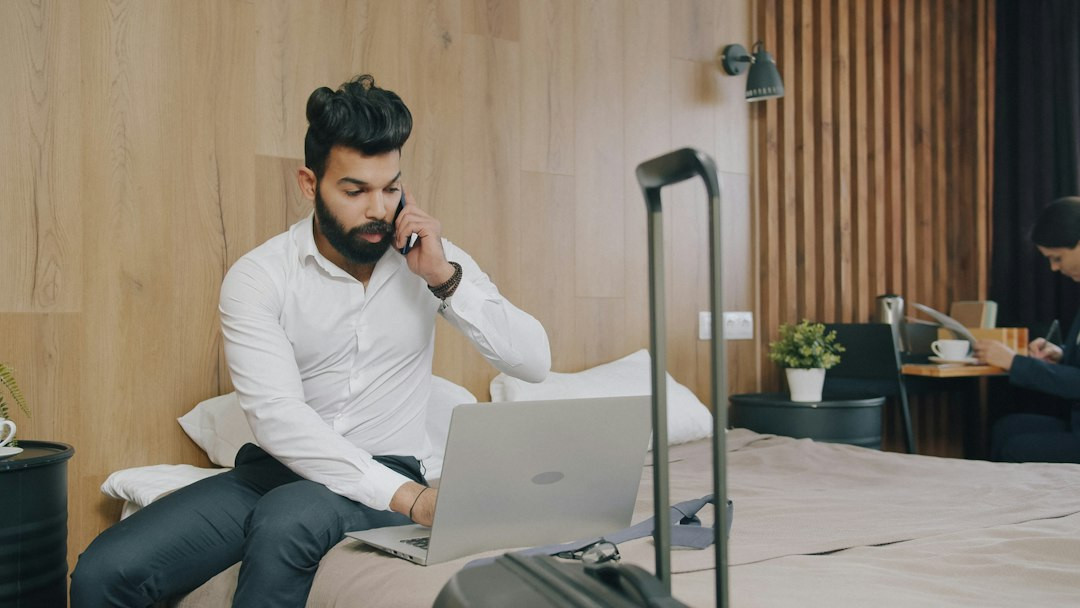
SAP Concur's 2026 Global Business Travel Survey found that 75% of surveyed travelers were already using AI-powered tools for some aspect of business travel. Seventy-two percent said they had used or would use AI tools not approved by their employer to plan or book trips, illustrating how quickly adoption is moving compared with corporate governance.
Travel managers see opportunities extending far beyond asking a chatbot for a hotel recommendation. In Concur's research, 45% prioritized AI-powered duty-of-care notifications, 42% wanted AI assistance with policy compliance, and 41% identified global risk monitoring as a priority. Travelers, meanwhile, showed interest in tools integrated into their existing workflows and in proactive booking alerts.
GBTA research conducted in March 2026 found particularly strong interest in using AI for prediction and operations. Ninety-two percent of surveyed travel buyers expressed interest in predictive analytics for travel-spend forecasting, 89% in automated disruption management and rebooking, 85% in AI-powered traveler support, and 83% in conversational booking tools.
The technology is not fully mature. Fifty-eight percent of the buyers in that GBTA study said AI had made little or no impact on their travel program so far. Data remains fragmented as well, with only 12% of global buyers reporting that they had a consolidated view of their travel program from a single data source.
Still, the direction is significant. Better data could allow companies to compare prices, policy compliance, traveler behavior, disruption risk, and historical spending before approving or designing future journeys. Predictive systems could help identify where budgets are likely to be exceeded, while automated rebooking could reduce the administrative burden created when an important trip goes wrong.
Travel managers themselves increasingly expect AI to make their work more strategic. In live polling of more than 470 travel buyers at GBTA's 2026 convention, 92% said they believed AI would make their jobs more strategic rather than replace them. The future travel department may therefore spend less time simply processing transactions and more time answering a harder question: which journeys actually deserve the company's money and its employees' time?
The New Road Warrior May Travel Less And Accomplish More
None of this points toward the end of business travel. SAP Concur's 2026 survey found that 97% of CFOs considered business travel important to their organization's overall growth strategy. GBTA's latest figures likewise show a global industry measured in the trillions of dollars, with more than 1.8 billion journeys expected this year.
What appears to be changing is the meaning of a successful travel program. For decades, a packed calendar could itself look like evidence that business was happening. The emerging model puts greater pressure on organizations to connect the expense of travel with the reason for making the journey.
That can change how employees experience corporate travel. A traveler who makes six important trips instead of ten routine ones has more incentive to arrive with a full schedule, meet several people, participate in training, visit a customer, or build an extra day around useful conversations. Travel departments have similar incentives to protect those journeys from disruption and make the booking process work smoothly.
The shift could also make meetings and events more important rather than less. When companies reduce routine point-to-point trips, conferences, team gatherings, and strategically planned meetings can bring many interactions together in one location. That helps explain why meeting budgets can remain under pressure to grow even while companies examine transient travel more carefully. GBTA's 2026 pricing forecast said meetings and events budgets were expected to increase through 2026 and 2027 despite continuing cost pressures.
There will never be one universal corporate travel strategy. A consulting firm, manufacturer, technology company, hospital network, university, and construction business have very different reasons for moving employees around the world. GBTA's 2026 Business Travel Index also shows substantial differences among industries and regions, making broad predictions about the disappearance of business travel particularly unreliable.
The stronger conclusion is that travel is becoming more deliberate. Companies still want the relationships, learning, collaboration, customer contact, and commercial opportunities that face-to-face interaction can provide, but costs and other constraints are making it harder to justify travel simply because that is how a meeting has always been conducted.
For business travelers, that could ultimately produce a different kind of road warrior. Success may no longer mean accumulating the most flights, hotel nights, or elite-status credits. It may mean traveling when physical presence can make a meaningful difference, then making every day on the road count.
That is why the future of corporate travel can simultaneously be expensive, enormous, technology-driven, and more selective. The business trip is not disappearing. It is being asked to earn its place.
You May Also Like:
Could Autonomous Taxis Transform The Business Traveler’s Day?
The Office Is Disappearing. The Company Retreat Isn’t
Could Digital Passports And Biometrics Make Business Travel Almost Frictionless?