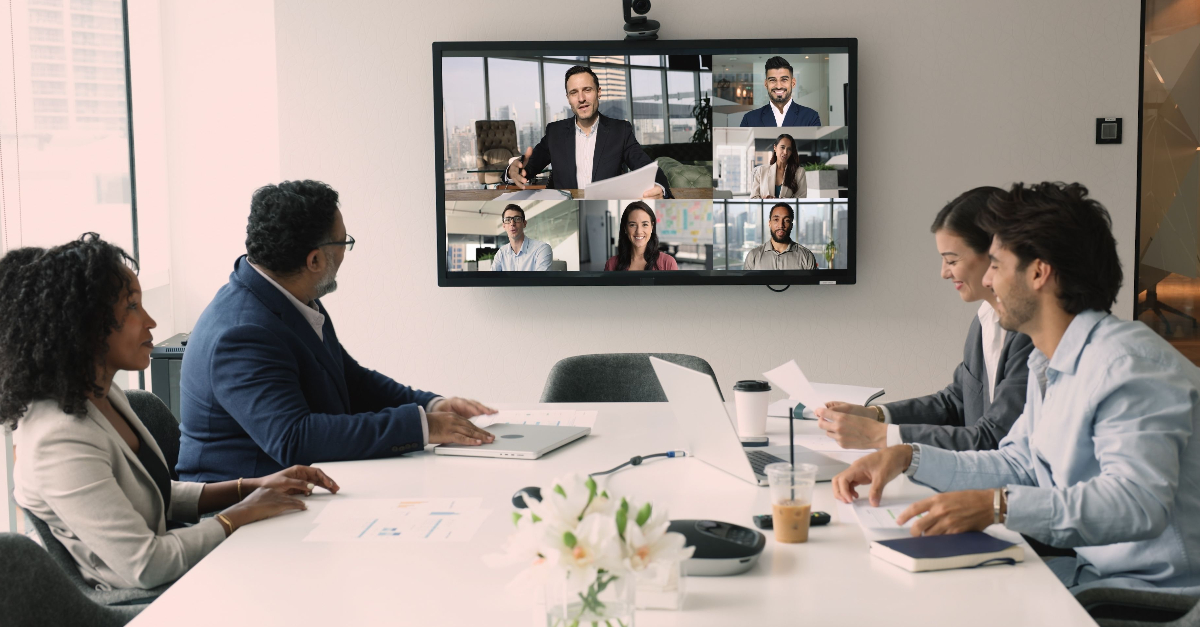
The office is not exactly going extinct. But for millions of employees, it is no longer the place where the whole team automatically gathers every morning.
Hybrid work has settled into a surprisingly durable pattern, and many companies are responding by reconsidering how much permanent office space they actually need. At the same time, another kind of workplace gathering is becoming harder to replace: the occasional offsite, team week, or company retreat that brings scattered colleagues together on purpose.
That creates an unusual new role for business travel. Employees may spend fewer days commuting to a central headquarters, yet periodically fly hundreds or thousands of miles to sit beside the same coworkers they normally see through a screen. The retreat is increasingly becoming the place where distributed teams do the things that once happened naturally because everybody worked under one roof.
The Office Is Becoming Less Of An Everyday Destination
Hybrid work has proved much more persistent than some return-to-office headlines suggest. Gallup's current tracking shows that just over half of remote-capable U.S. employees work on a hybrid schedule, while roughly another quarter are fully remote. Those patterns have remained relatively stable since 2022.
Companies are still encouraging employees to spend more time together, but that does not necessarily mean recreating the old five-day office week. CBRE's workplace research shows employers trying to make better use of their real estate, increasing desk sharing, experimenting with flexible space, and paying closer attention to how frequently offices are actually occupied.
In Europe, more than half of the companies surveyed by CBRE expected to reduce their office footprint over the medium term. Hybrid work was the most commonly cited reason. At the same time, CBRE's broader 2026 workplace research found rising office utilization and stronger demand for spaces that support collaboration and community rather than rows of permanently assigned desks.
That distinction matters. An office can become smaller or less central to everyday work without becoming irrelevant. Increasingly, companies appear to be asking what employees should actually accomplish when they make the effort to be together.

For a distributed worker, that can create a very different relationship with corporate real estate. Headquarters may become somewhere you visit for a project kickoff, training session, leadership meeting, or team gathering rather than somewhere you automatically report every Monday morning.
When Coworkers Stop Meeting By Accident
Traditional office life created countless small interactions that nobody bothered to schedule. You could ask a colleague a question on the way back from lunch, meet a new employee near the coffee machine, or continue talking after everyone else left a meeting room.
Remote work does not make those interactions impossible, but it does make them less automatic. A message generally needs to be sent. A call needs to be arranged. Even casual virtual gatherings still arrive as calendar invitations.
Microsoft's workplace research illustrates how dramatically that environment changed. Before the pandemic, most Microsoft teams were fully located in the same place. By 2023, only a little more than a quarter were, while partially distributed teams had become much more common.
Microsoft found that employees still valued flexibility but also wanted opportunities to build relationships in person. Its researchers identified several particularly useful reasons for gathering, including strengthening team cohesion, onboarding someone new, and beginning an important project.
That helps explain why a retreat can matter even at a company that has embraced remote work wholeheartedly. The trip is not necessarily an admission that remote work failed. It can be a way of supplying something that remote work was never designed to provide continuously.
Atlassian has taken that approach deliberately. The software company allows highly distributed work but brings teams together several times a year for what it calls intentional team gatherings. Instead of asking employees to commute routinely just to occupy the same building, the company concentrates some of its face-to-face time into gatherings designed around relationships and important work.
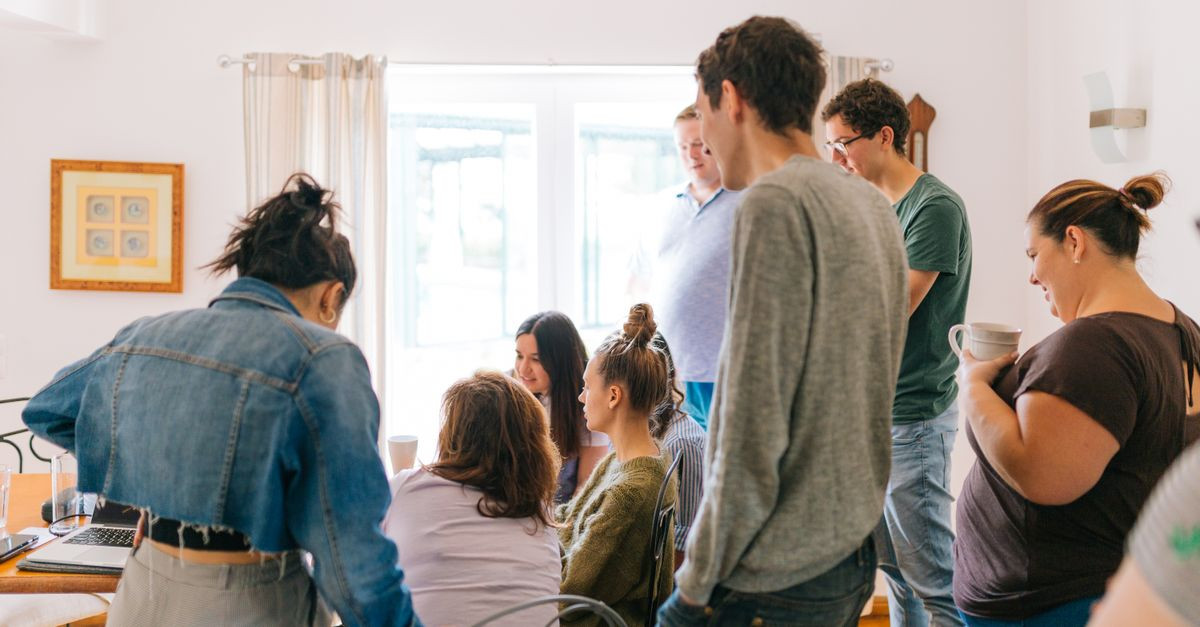
That is a very different philosophy from measuring workplace culture by office attendance. The question becomes less about how often somebody swipes through the front door and more about whether the occasions when people do meet actually accomplish something useful.
The Retreat Has Become Part Work Trip, Part Reunion
For travelers, this new version of the company retreat may feel different from the old stereotype of an annual escape to a resort. Many modern offsites combine serious working sessions with the social experiences that geographically scattered employees rarely get during the rest of the year.
Atlassian's gatherings typically last several days and deliberately mix team building with collaboration on important projects. The company has even redesigned office space to accommodate groups arriving with luggage, including a larger gathering area in New York after noticing how many office visitors were traveling in specifically to meet their teams.
Its internal research suggests there is a reason to invest in those trips. Employees reported stronger feelings of connection after intentional gatherings than after sporadic office attendance. The effect was especially pronounced for newer employees and recent graduates, people who have had less time to build relationships with coworkers organically.
That does not prove every corporate retreat improves teamwork. Atlassian's findings come from its own workforce and its own distributed-work system. They do, however, provide a useful real-world example of how one large remote-friendly company is using travel to compensate for the lack of everyday physical proximity.
Microsoft's research points in a similar direction. Its employees described social and team-building activities as an important reason to gather, while the company identified early project work as another moment when physical proximity can be particularly useful.
A retreat can therefore serve several purposes at once. Monday's workshop might be about strategy, Tuesday's meeting could launch a new project, and dinner that evening may be the first time two coworkers who have collaborated for a year actually get to know one another.
That mixed agenda is important. If employees fly across the country only to sit silently through presentations they could have watched at home, the retreat has missed much of the point.
The Best Offsites Are Becoming More Deliberate
The shift toward occasional gathering also makes every trip more expensive and more visible. Flights, hotel rooms, meals, meeting spaces, ground transportation, and several days of employee time can turn even a modest team event into a significant investment.
That is pushing planners away from treating an offsite as three days that simply need to be filled. GBTA and CWT have identified a broader move toward smaller, more curated and experience-focused corporate events. Per-person spending can actually rise when companies bring fewer attendees because many fixed costs remain.
American Express Global Business Travel's 2026 meetings forecast makes a similar point from the events side. Human connection remains a central priority, but planners are also placing greater emphasis on productivity, flexibility, attendee experience, and demonstrating the value of the gathering.
For a traveler, the practical result may be a more carefully built agenda. Routine updates can happen before the flight through a video call or shared document. The time together can then be reserved for workshops, difficult decisions, collaborative planning, training, and conversations that work better when people are physically present.
The destination itself is changing too. A company does not necessarily need a tropical resort to create a useful retreat. GBTA and CWT report increased interest in secondary cities as planners search for better value, while companies such as Atlassian frequently use their own offices as gathering locations.
What matters is whether the place works for the people attending. A city with easier flight connections, reasonable hotels, enough meeting space, and places where coworkers can spend relaxed time together may be more useful than somewhere photogenic but difficult to reach.
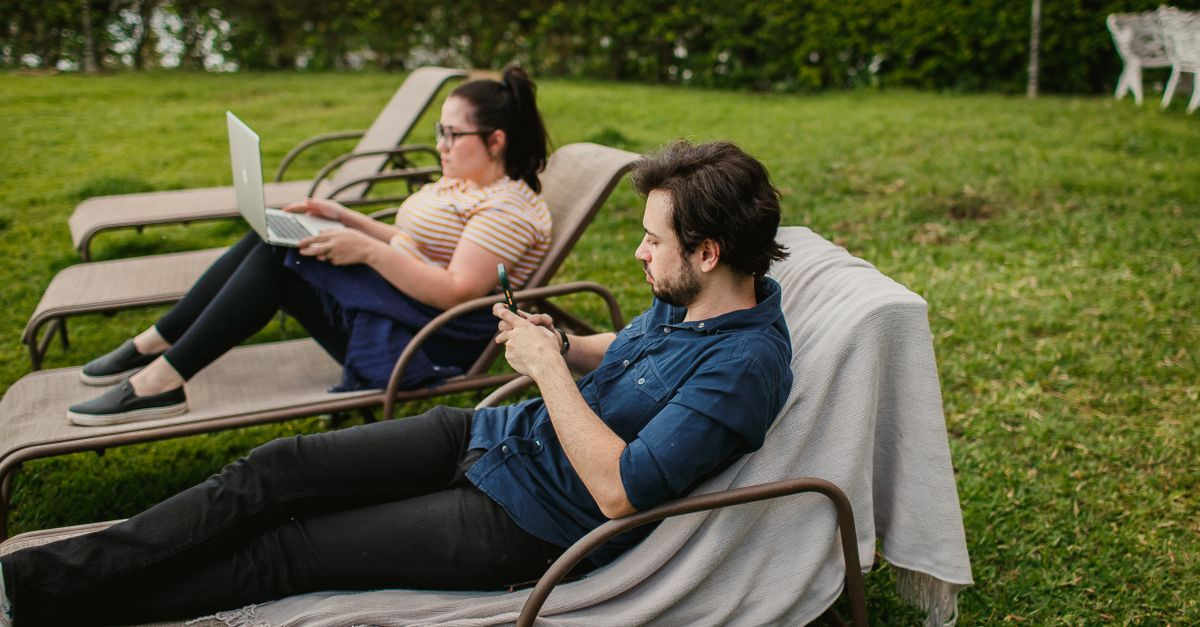
That can make the modern retreat feel less like a corporate vacation and more like a carefully concentrated burst of workplace life. The hotel breakfast, workshop, hallway conversation, group dinner, and taxi ride back from an activity all become opportunities for interactions that distributed employees ordinarily have to manufacture online.
A Few Days Together Can Change The Months Apart
The strongest argument for retreats may be what happens after everybody flies home.
Atlassian found that the increase in team connection following its gatherings did not disappear as soon as employees left the building. The boost gradually faded over several months, which is one reason the company favors periodic gatherings rather than requiring constant office attendance.
That model fits surprisingly well with the broader direction of hybrid work. Stanford research has found that a moderate hybrid arrangement can maintain employee performance while improving outcomes including work-life balance, job satisfaction, and feelings of isolation compared with schedules at either extreme. Gallup's current data likewise shows that hybrid work remains the most common arrangement among remote-capable employees.
Companies therefore do not necessarily face a choice between remote work and human connection. The harder task is deciding which activities belong online and which are valuable enough to justify getting everyone into the same room.
That calculation is also reshaping the office itself. CBRE's 2026 workplace research says collaboration is now the leading reason employees come into the office among the organizations it studied. Companies are responding by designing spaces as destinations for interaction rather than simply maintaining a dedicated desk for every employee.
The retreat takes that idea one step further. When coworkers live too far apart for Tuesday and Thursday office days to mean anything, the company can compress some of that valuable in-person contact into a few purposeful gatherings each year.
For employees, that means business travel can become an increasingly important part of remote work rather than its opposite. Your home may remain where most work happens. Your coworkers may spend most of the year in different cities.
But every so often, the distributed company still needs a physical address. Increasingly, it may only need one for a few days.