Something Enormous Walked Through North Dakota
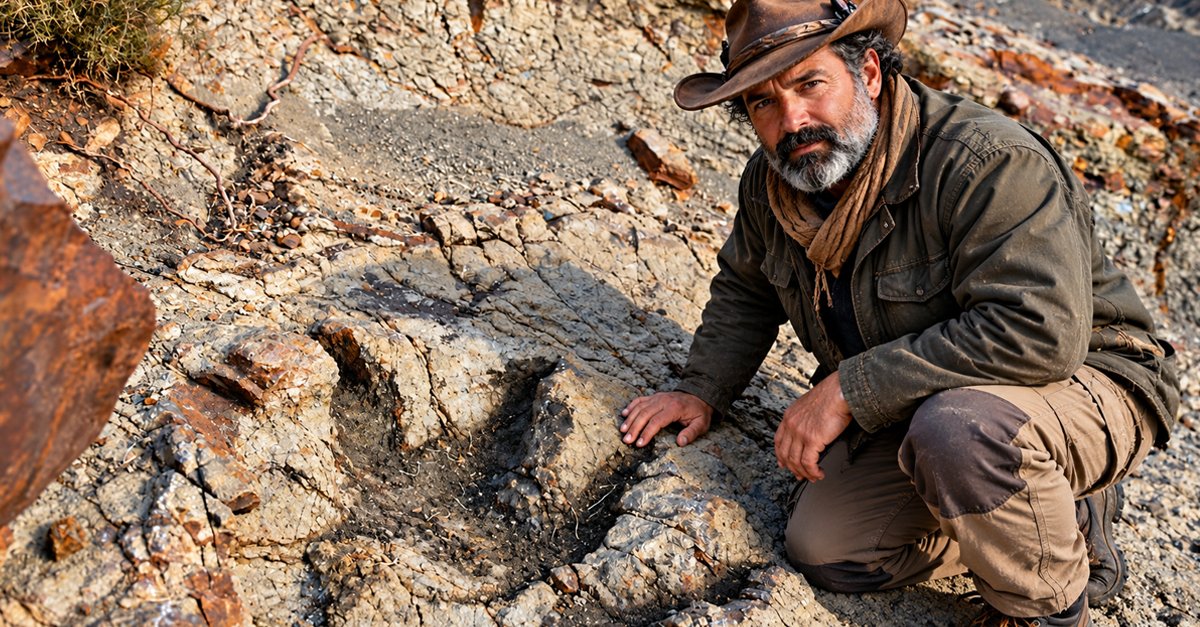
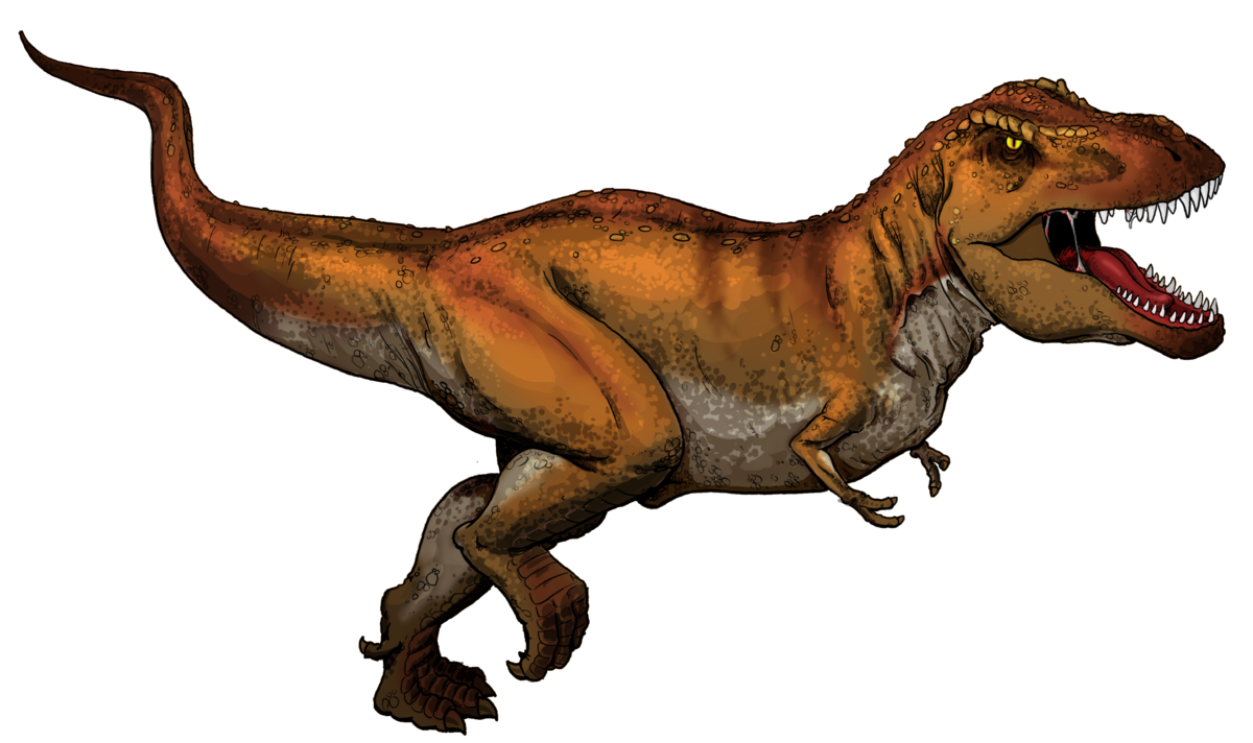
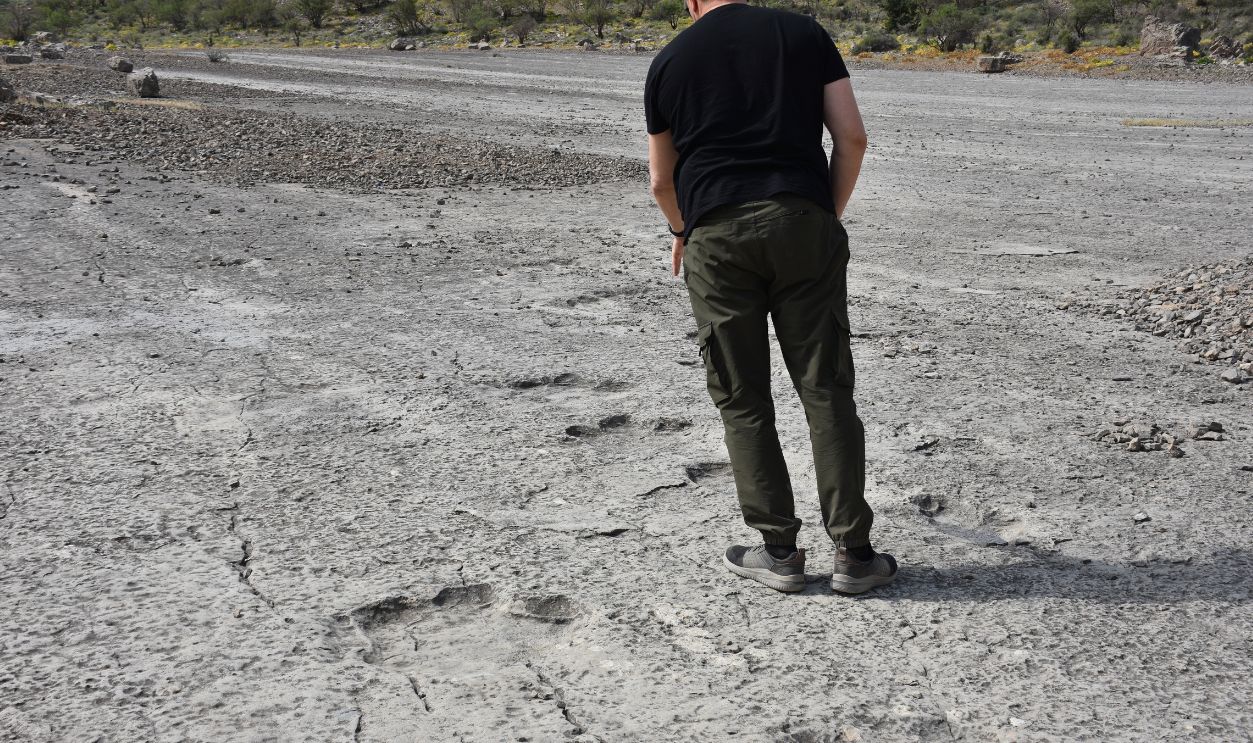
About 66.5 million years ago, something huge walked across a muddy landscape in what is now North Dakota. It left behind four three-toed footprints, each roughly three feet long, stretching across about 23 feet of ground. Scientists now think the most likely trackmaker was a fully grown Tyrannosaurus rex, which would make this the first known trackway attributable to an adult of the species.
A Teacher Spotted It First
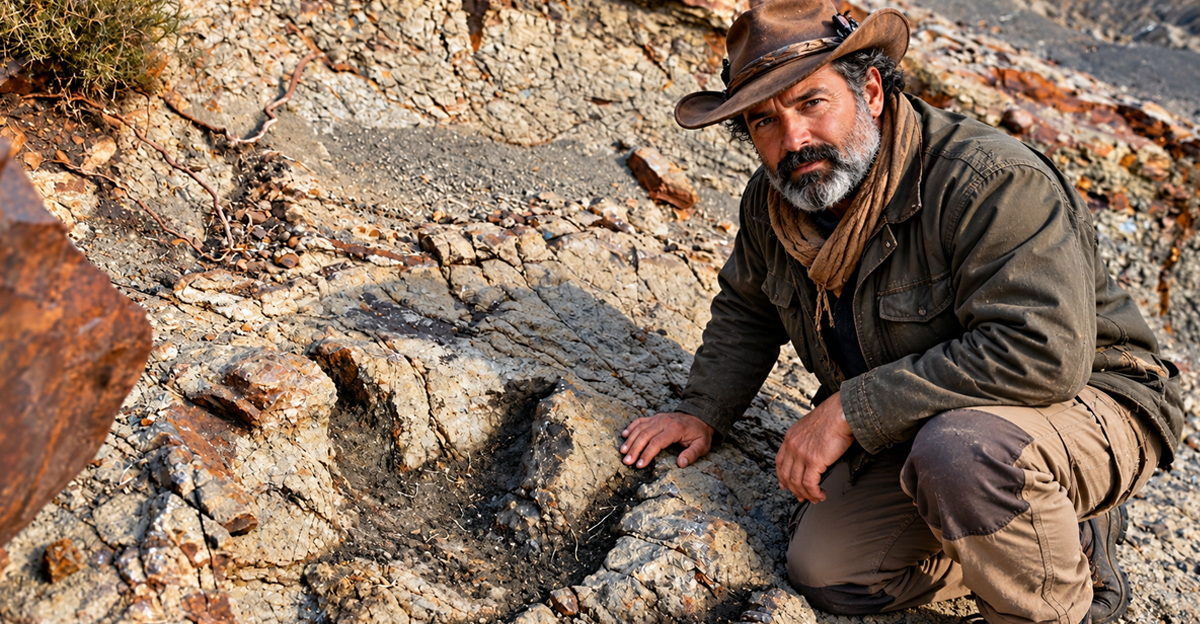
The discovery began in 2025 with Kent Hups, a Colorado high school teacher and experienced amateur fossil hunter. He was volunteering with a team led by Denver Museum of Nature & Science paleontologist Tyler Lyson near Marmarth in southwestern North Dakota. While searching the Hell Creek Formation, Hups noticed an unusual wedge-shaped piece of rock protruding from the ground.
 FlickreviewR, Wikimedia Commons
It Looked Like Three Giant Toes
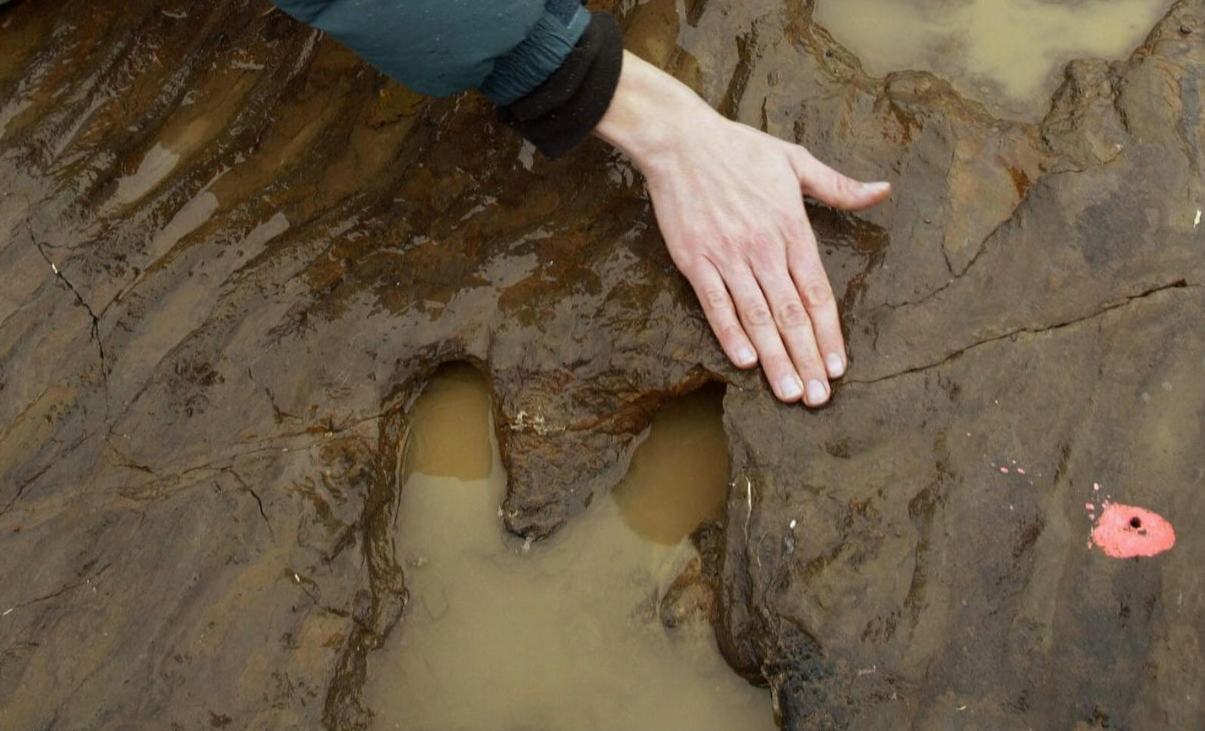
Hups had spent years interested in fossil footprints, and the unusual shape immediately caught his attention. The exposed rock appeared to branch outward into three enormous toe-like forms. He began to wonder whether he was looking at the fossilized footprint of a giant theropod dinosaur.
 Greg Willis from Denver, CO, usa, Wikimedia Commons
The Paleontologist Was Skeptical
Lyson had good reason not to declare it a T. rex footprint immediately. Isolated adult tyrannosaur footprints are exceptionally rare, and no trackway confidently attributed to an adult T. rex had previously been described. A strange three-toed rock in the badlands needed much more evidence before anyone could make that claim.
Then A Whole Trail Appeared
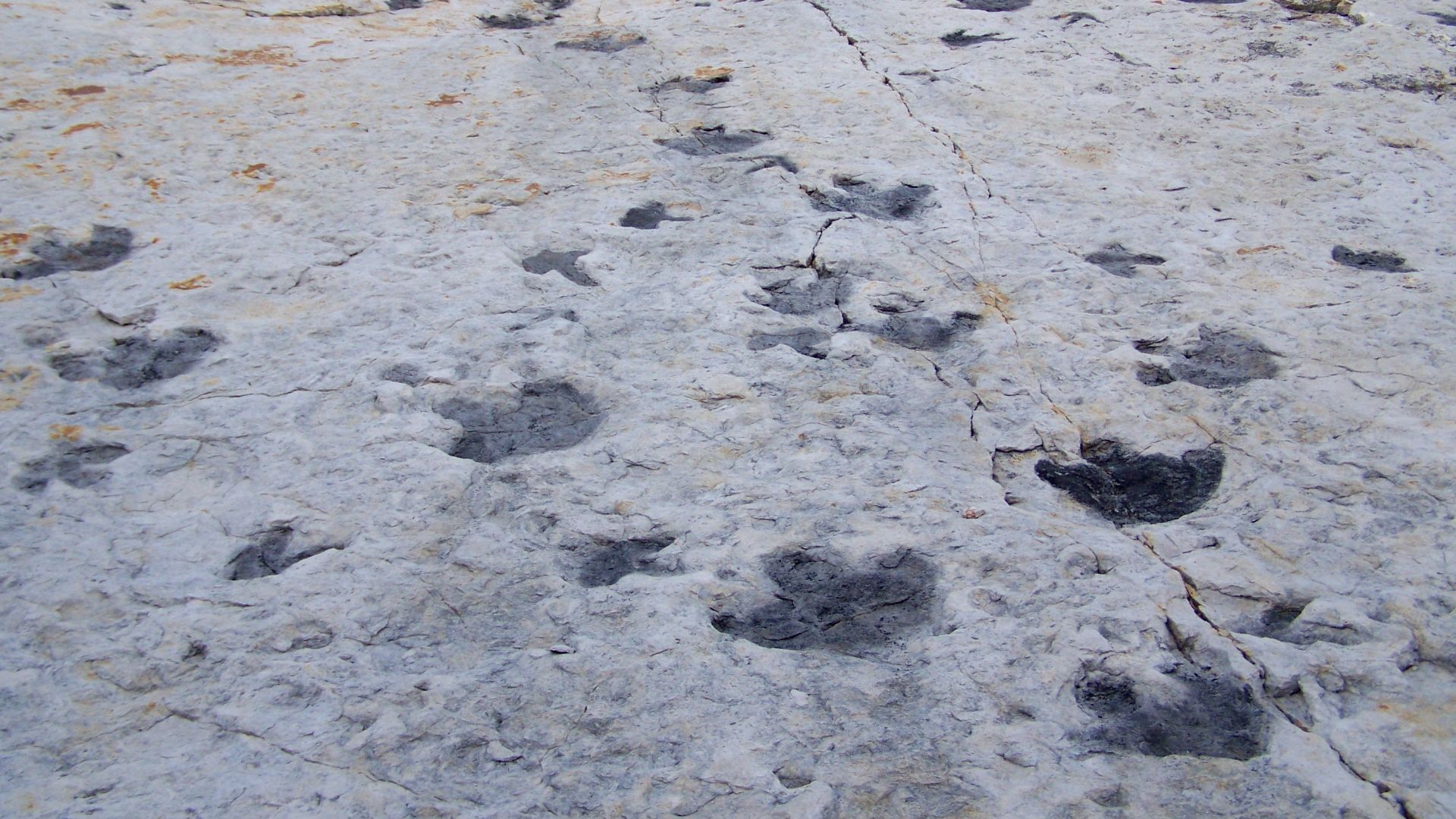
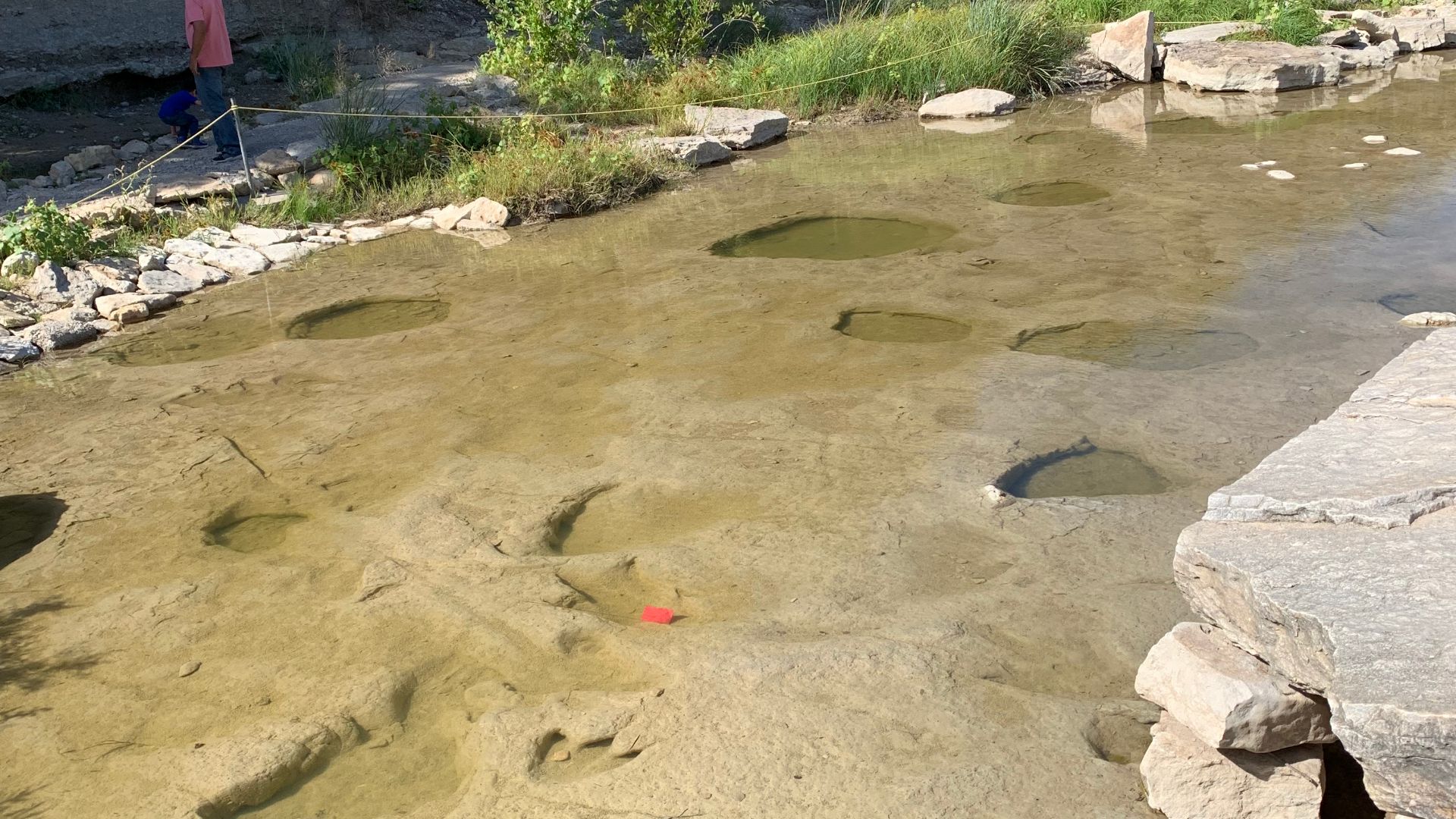
The team returned to investigate the surrounding ground and discovered that the first shape was not alone. Researchers ultimately documented four enormous footprints arranged as two left and two right tracks. Together, they form a trackway roughly seven meters, or 23 feet, long.
 Footwarrior, Wikimedia Commons
These Footprints Are Enormous
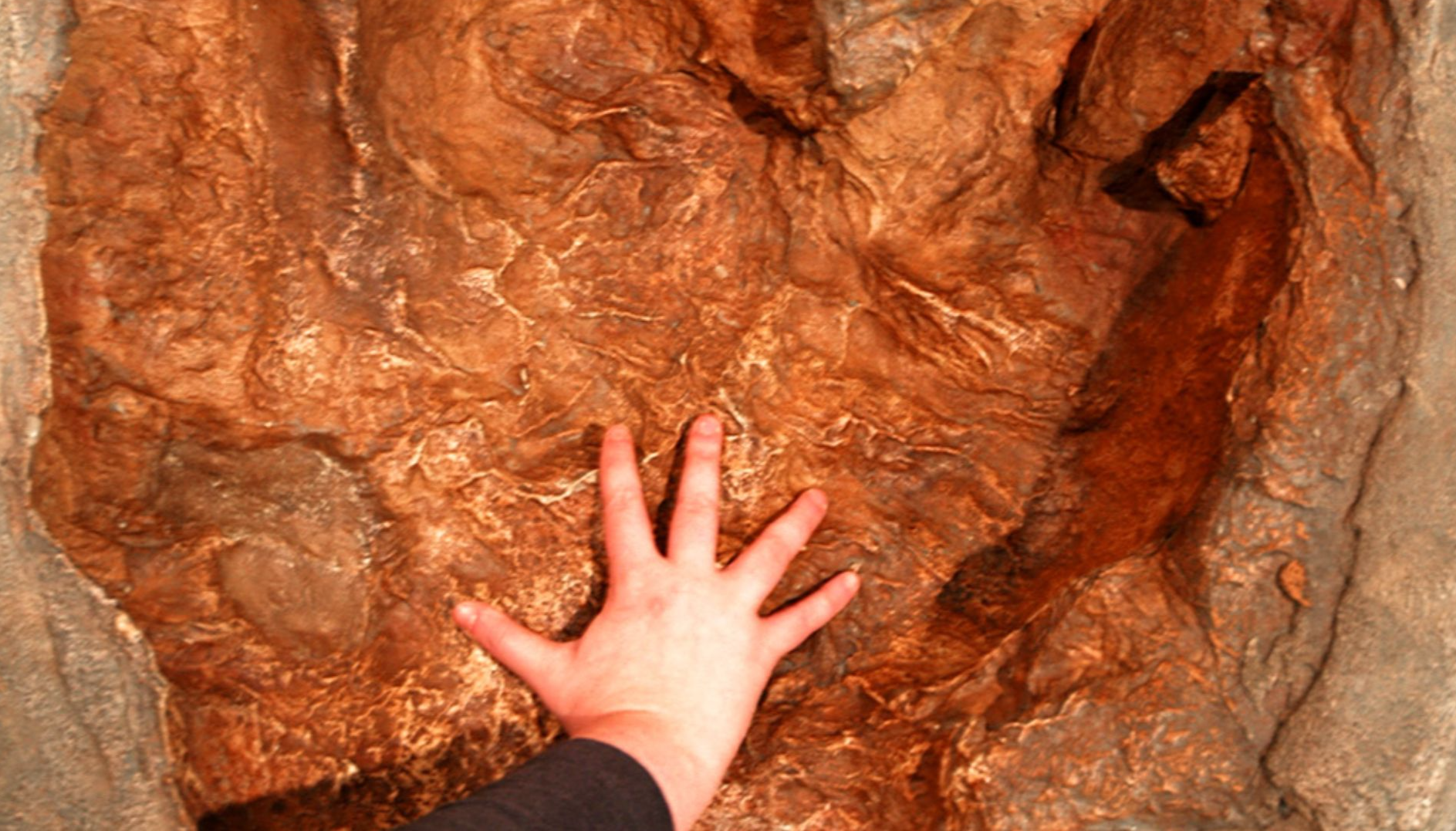
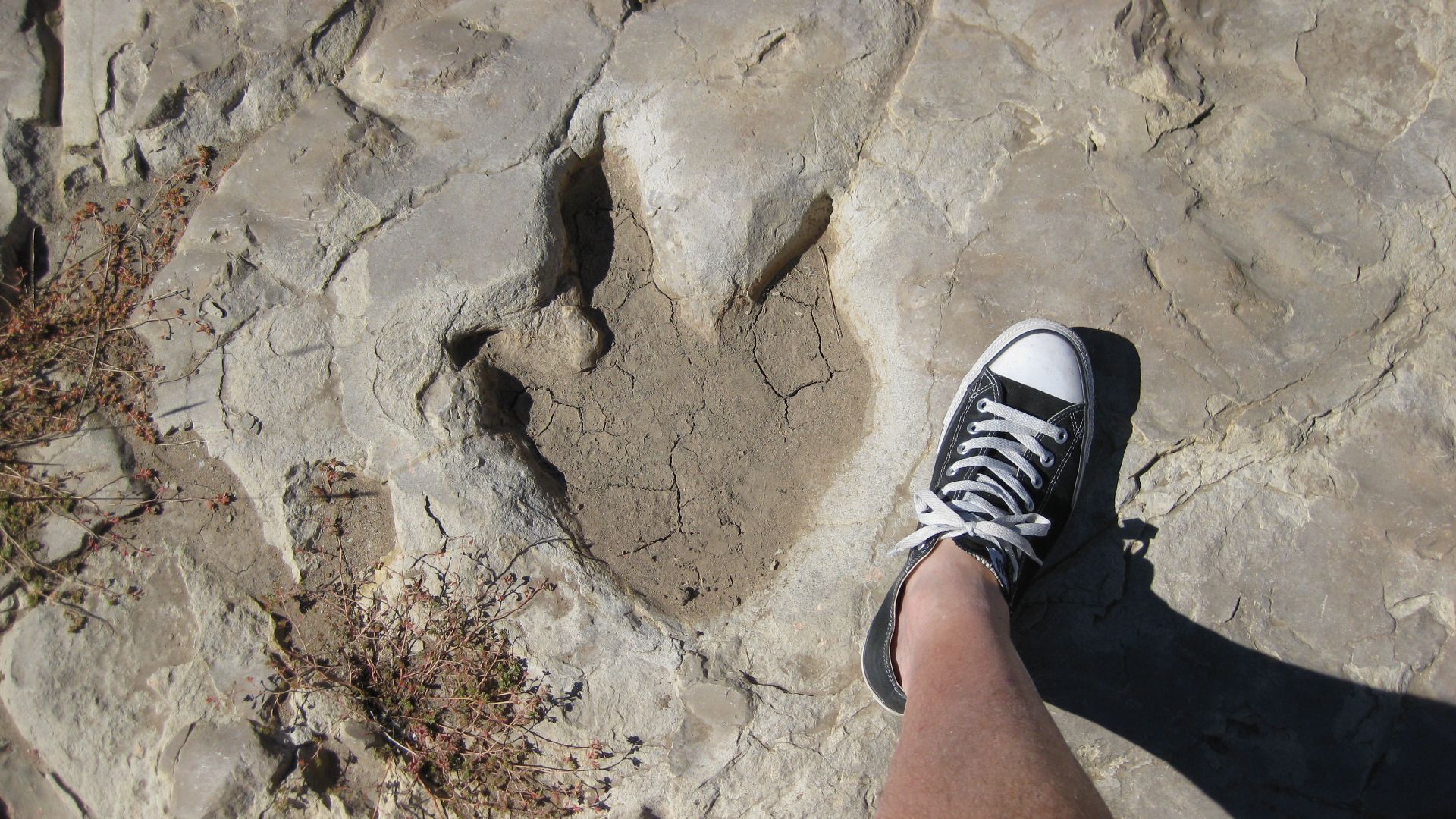
Each footprint is roughly 0.9 to one meter long, putting them at around three feet from end to end. Their enormous size indicates that the animal responsible was a very large dinosaur. The scale is one of the biggest pieces of evidence pointing researchers toward an adult tyrannosaur.
The Shape Points Toward T. Rex
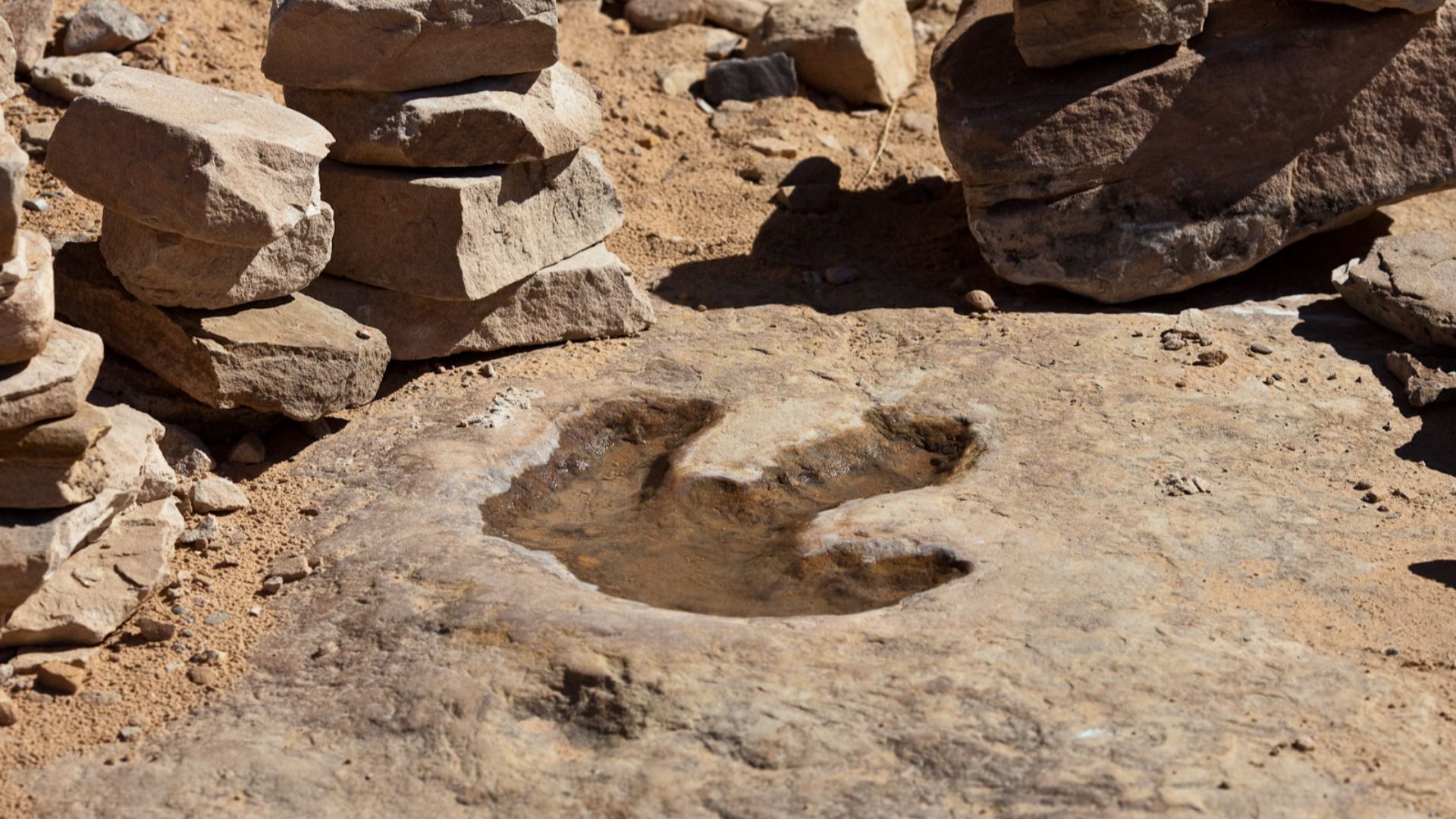
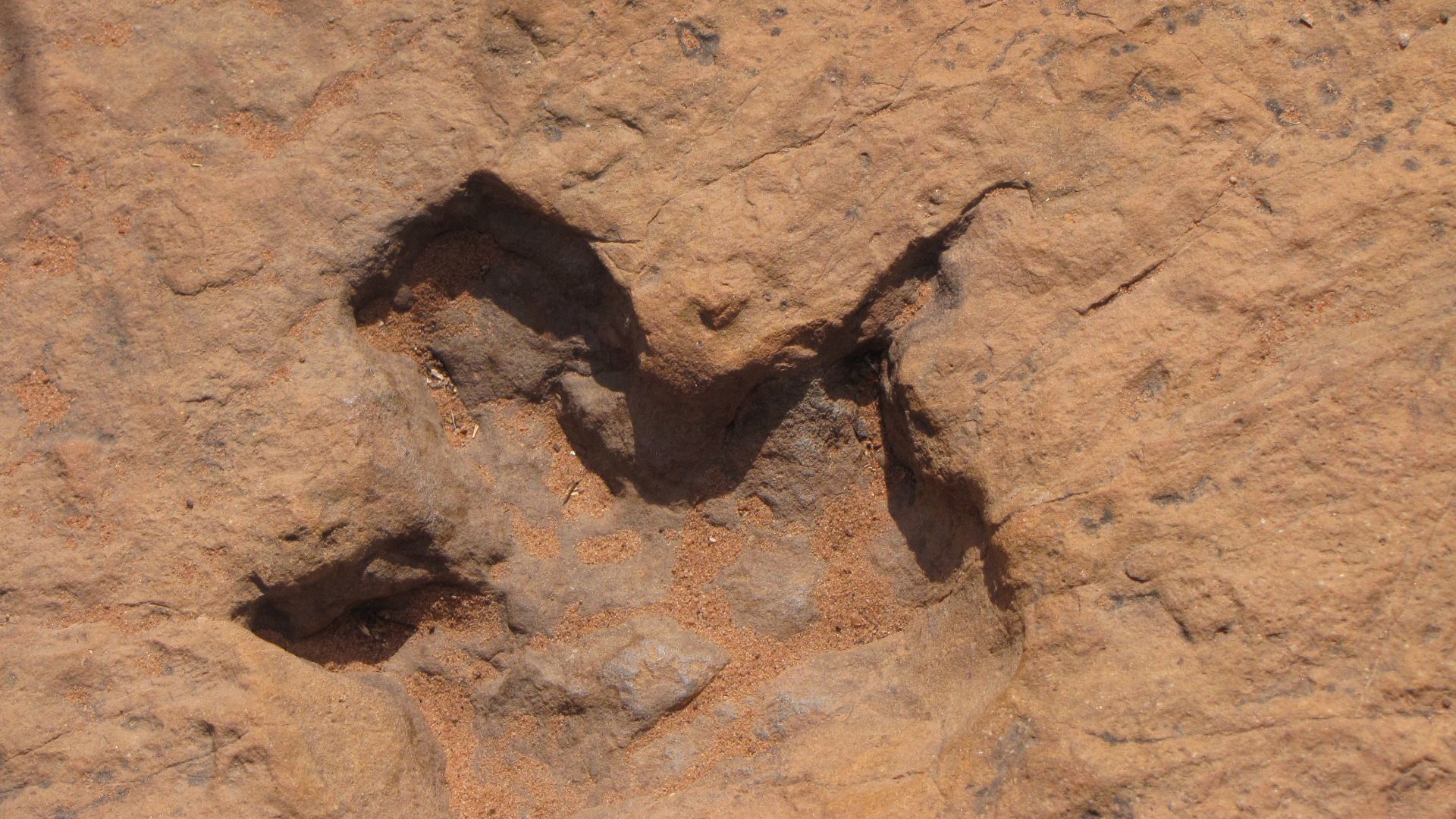
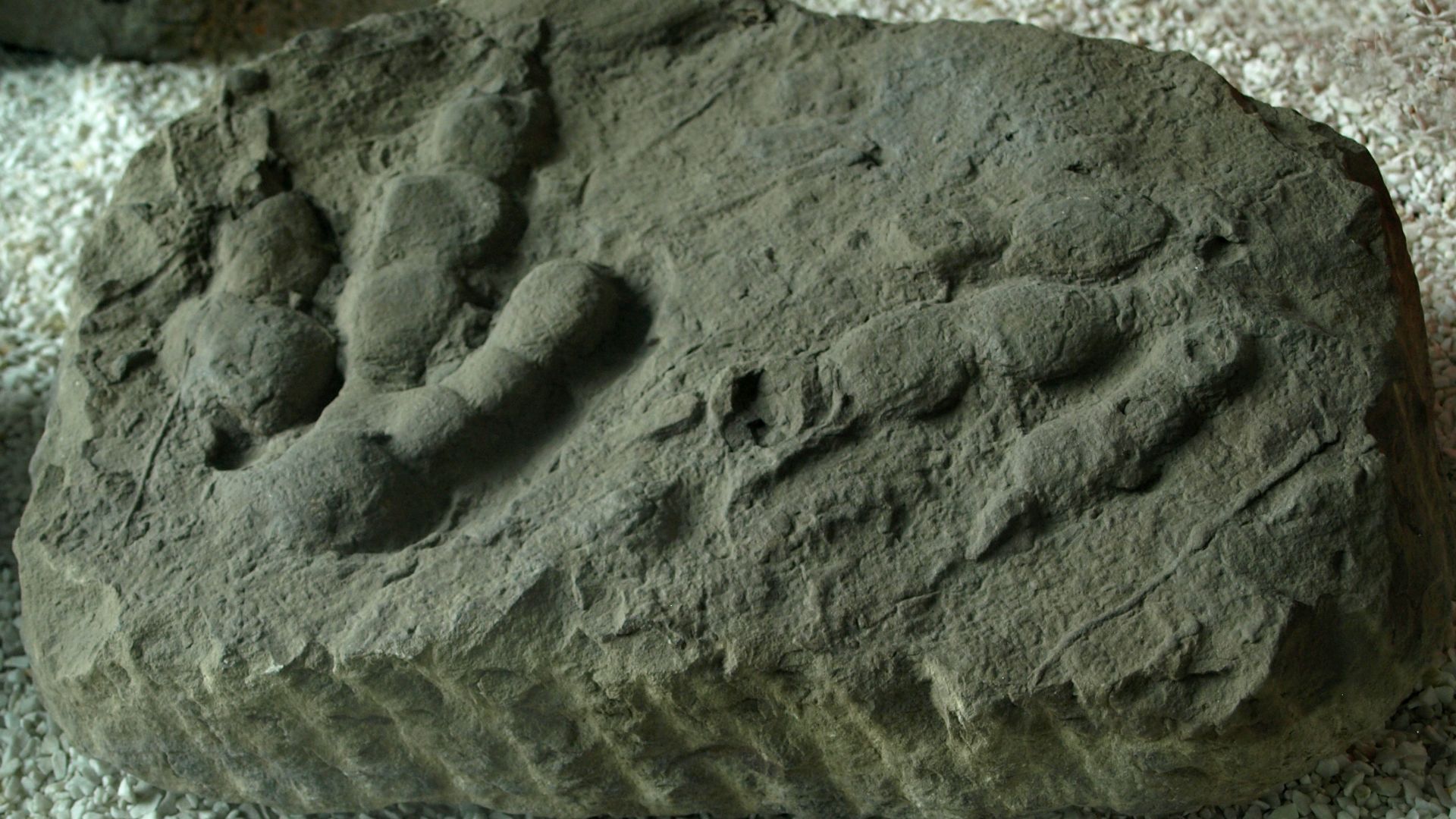
The tracks have three main toes, giving them the classic tridactyl shape of a theropod footprint. Large hadrosaurs also left three-toed tracks, but their footprints tend to be relatively broader, with wider toe impressions. The North Dakota prints are comparatively long and narrow, which better matches the feet expected from a giant meat-eating theropod.
The Location Makes T. Rex Even More Likely
The footprints come from the Hell Creek Formation, where T. rex fossils are well documented. Researchers considered the tracks' tremendous size, narrow shape and the local fossil record when identifying the animal that made them. Taken together, the evidence makes an adult T. rex the most likely candidate.
 Son of Groucho from Scotland, Wikimedia Commons
Scientists Still Stop Short Of Certainty
The researchers deliberately describe the trackway as "likely" attributable to an adult T. rex. The tracks are heavily weathered and preserve relatively little fine anatomical detail beyond their size and general shape. Without the dinosaur itself attached to its footprints, there is no way to prove its identity with absolute certainty.
 Alexander Koerner, Getty Images
Footprints Tell A Different Story Than Bones
T. rex skeletons can reveal anatomy, injuries and changes that occurred as the animal grew. A trackway preserves something different: a brief record of an animal moving through its environment. These four prints effectively capture several consecutive steps taken by one giant dinosaur millions of years ago.
 myfavoritedinosaur.com and LadyofHats, CC BY 3.0, Wikimedia Commons
This T. Rex Wasn't Running
The spacing of the footprints indicates that the animal was moving at an ordinary walking pace rather than running. Researchers calculated a stride of roughly four meters, or about 13 feet. That gives paleontologists a rare piece of direct evidence about the movement of an adult-sized tyrannosaur.
 User:Captmondo, Wikimedia Commons
Its Pace Was Like A Brisk Human Walk
Calculations based on the footprints and stride suggest a speed of roughly 1.5 to two meters per second, or about 3.4 to 4.5 miles per hour. That is around the pace of a brisk human walk. The researchers caution that the badly weathered tracks make the estimate approximate, and the animal may have been moving somewhat more slowly.
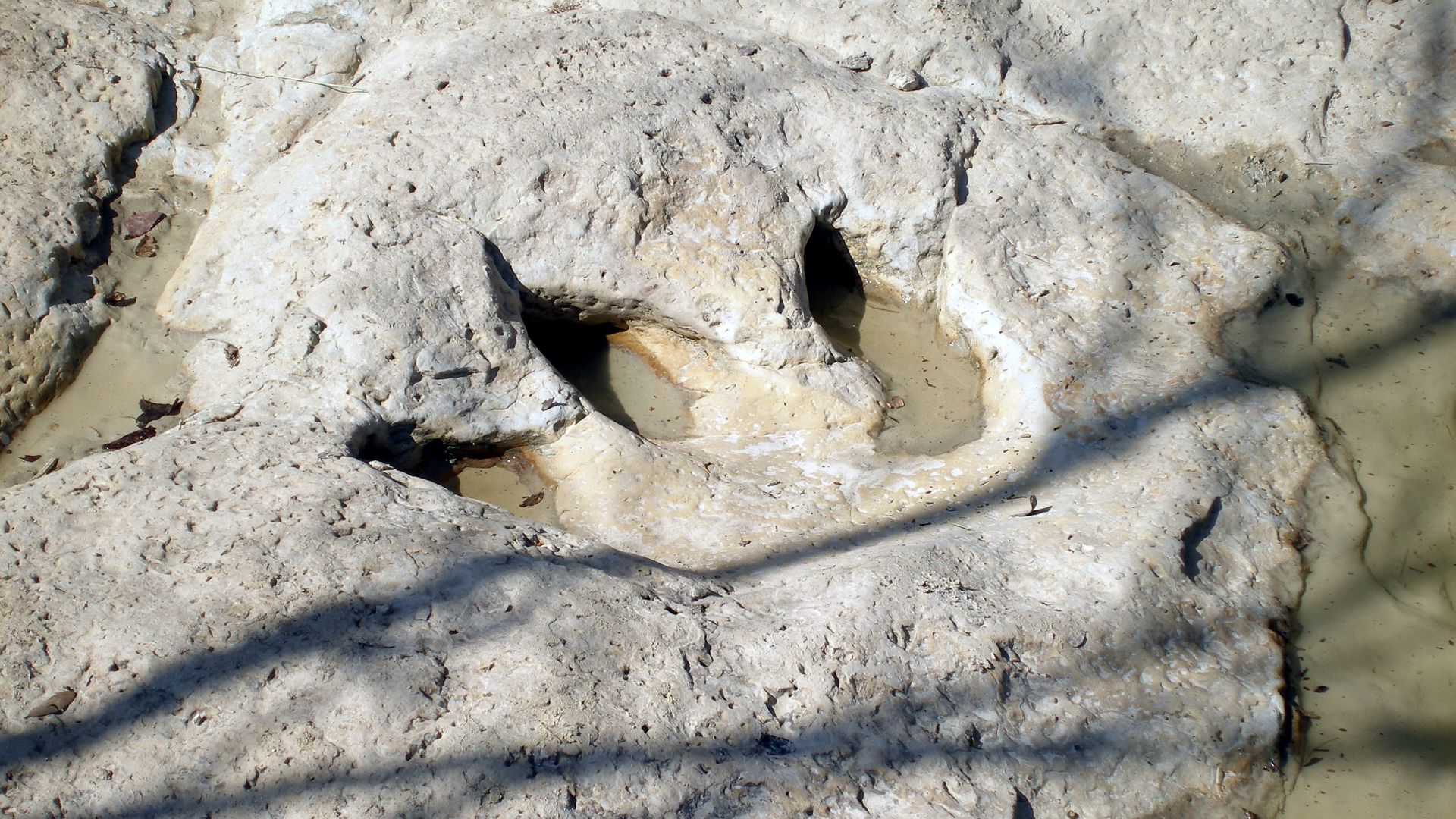 Diane Turner from Arlington, United States, Wikimedia Commons
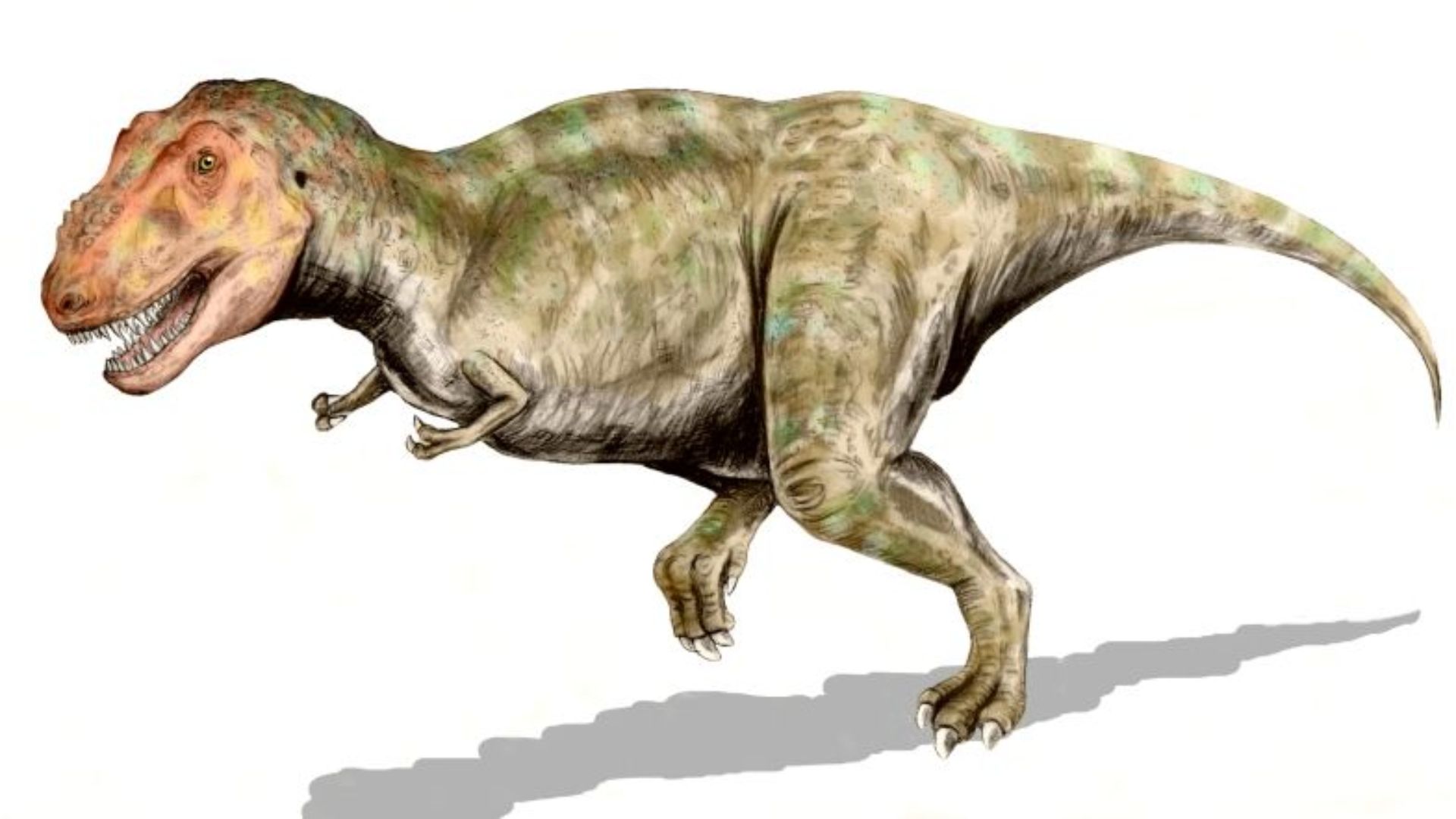
Its Hips May Have Been About 13 Feet High
Track measurements can also be used to make rough estimates of a dinosaur's dimensions. Using a standard trackway formula, researchers calculated a hip height of approximately four meters, or about 13 feet. Because the footprints may have spread beyond the exact dimensions of the animal's feet, that figure should be treated as an approximation.
 Nobu Tamura (http://spinops.blogspot.com), Wikimedia Commons
North Dakota Was Almost Unrecognizable
The animal was not walking through the dry badlands visitors see today. During the Late Cretaceous, the Hell Creek region was a much wetter landscape filled with rivers, floodplains, forests and swampy areas. It supported a rich ecosystem during the final stretch of the dinosaur age.
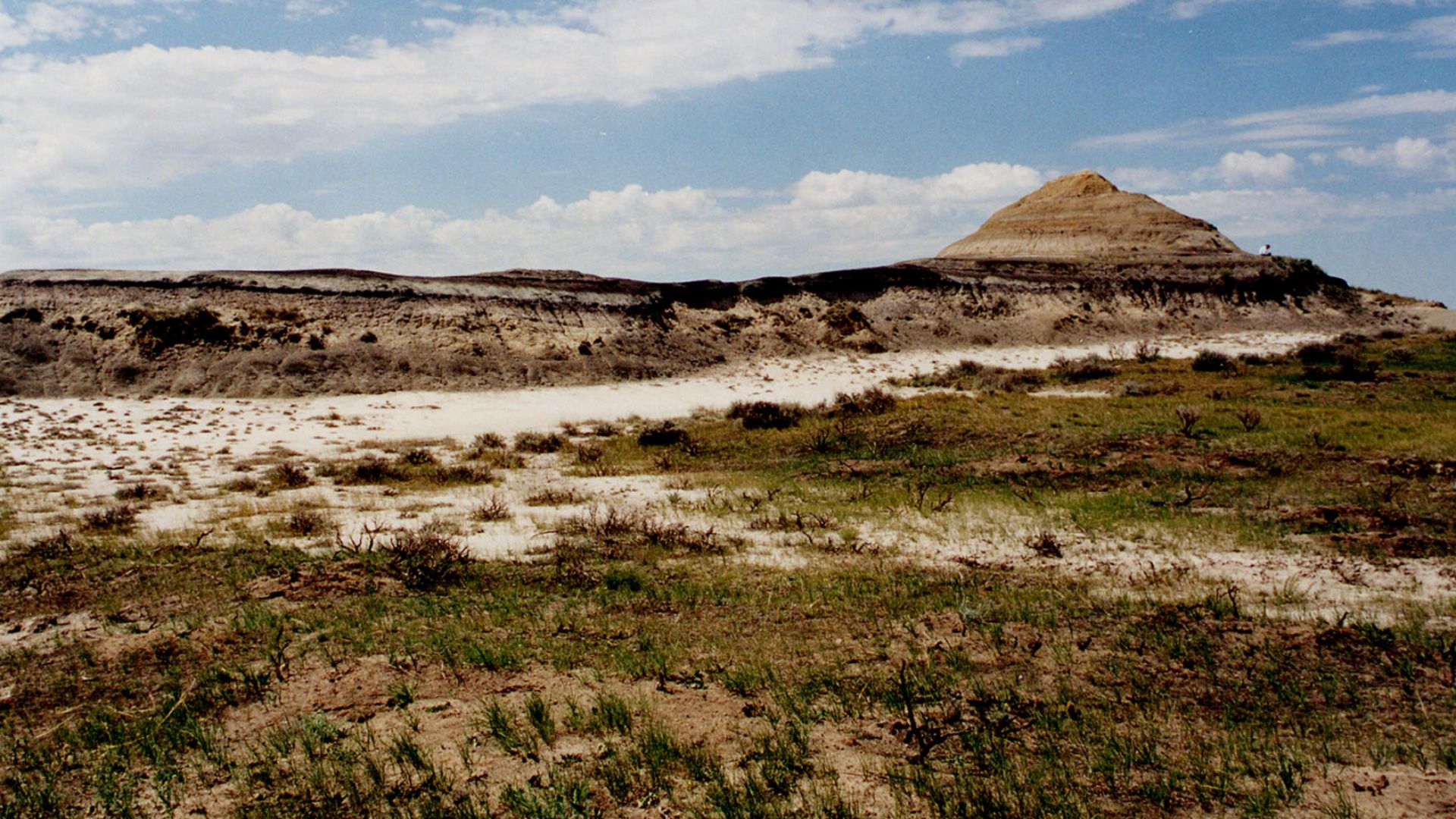 Joseph H. Hartman, Wikimedia Commons
T. Rex Had Plenty Of Neighbors
T. rex shared that environment with an extraordinary collection of other animals. The Hell Creek ecosystem included dinosaurs such as Triceratops and large hadrosaurs, along with turtles, crocodilian relatives, fish and smaller vertebrates. Many of those species lived remarkably close to the end-Cretaceous extinction event about 66 million years ago.
 Philip Nalangan, Wikimedia Commons
Tracks Are Surprisingly Rare Here
A muddy landscape sounds like the perfect place to preserve dinosaur footprints, but making a print is only the first step. Soft sediment can be disturbed, buried, eroded or reshaped long before it has a chance to become rock. That helps make recognizable dinosaur trackways unusually scarce in Hell Creek despite the formation's abundance of skeletal fossils.
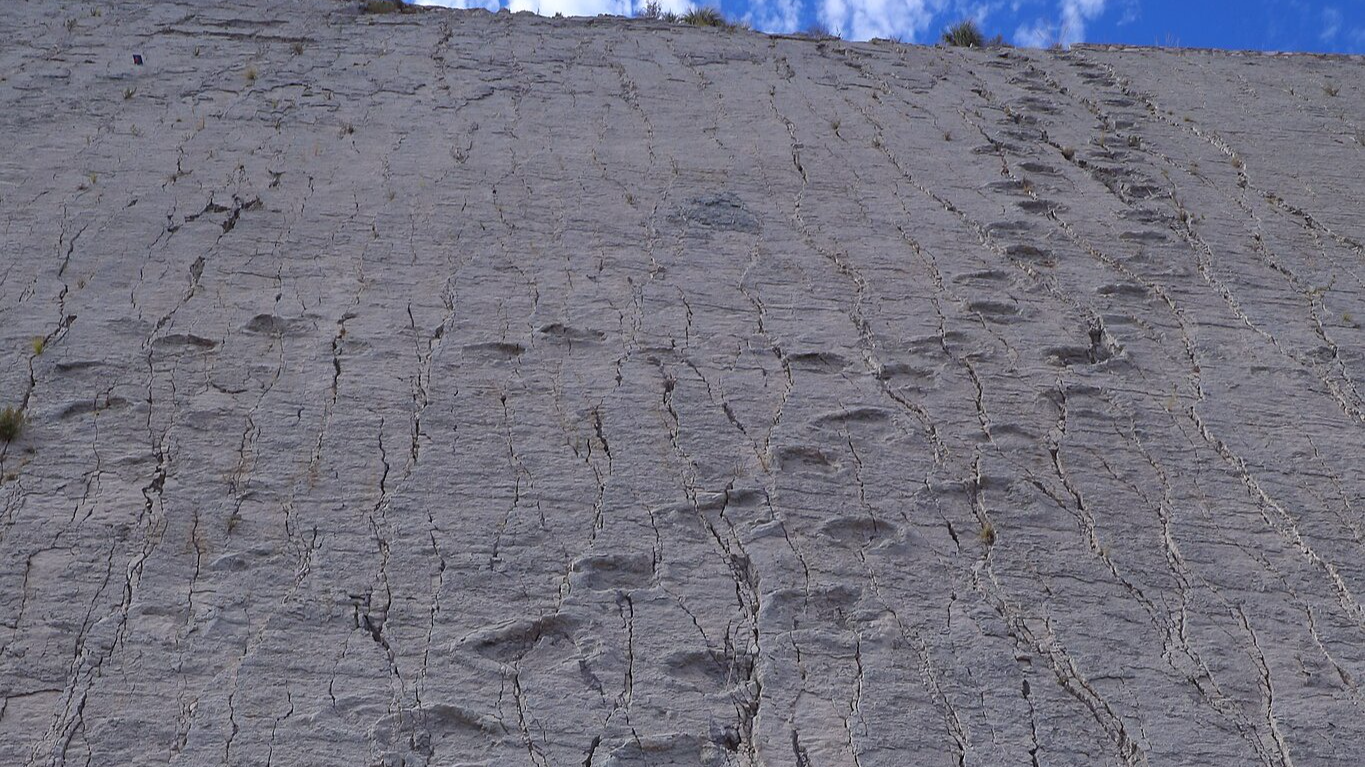 Paleoninja, CC BY 4.0, Wikimedia Commons
The Mud Became Something Much Harder
The animal's feet pressed deeply into wet sediment, leaving large depressions behind. Groundwater carrying calcium carbonate later moved through the buried material and helped cement sediment associated with the tracks into hard concretions. Those mineralized masses eventually became more resistant than much of the surrounding rock.
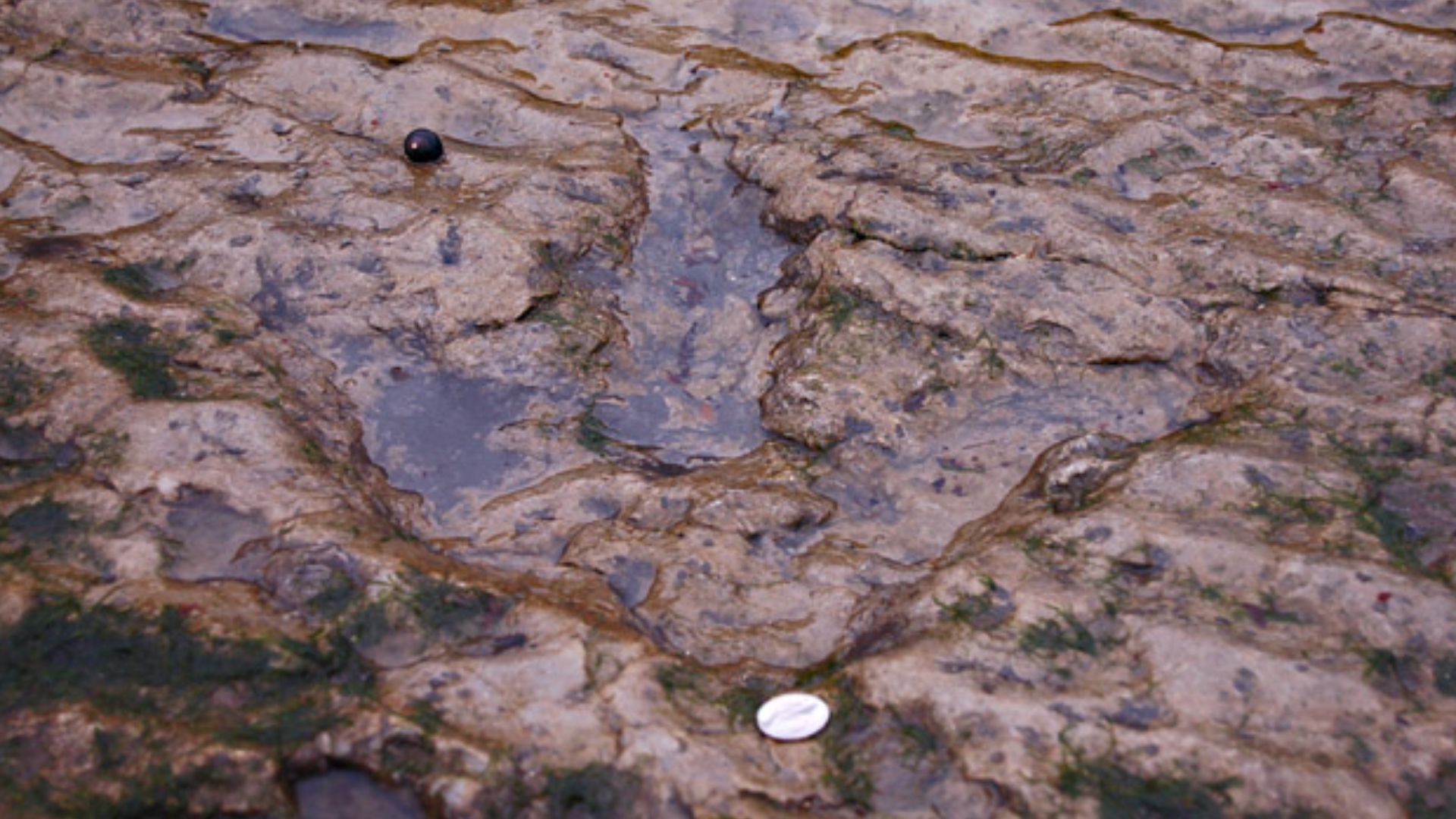
Erosion Finally Exposed The Trail
Over millions of years, weathering stripped away the softer material surrounding the hardened track structures. Portions of the footprints gradually emerged above the surface of the badlands. That unusual preservation explains why Hups initially saw a strange mass of rock rather than an obvious footprint pressed downward into a flat slab.
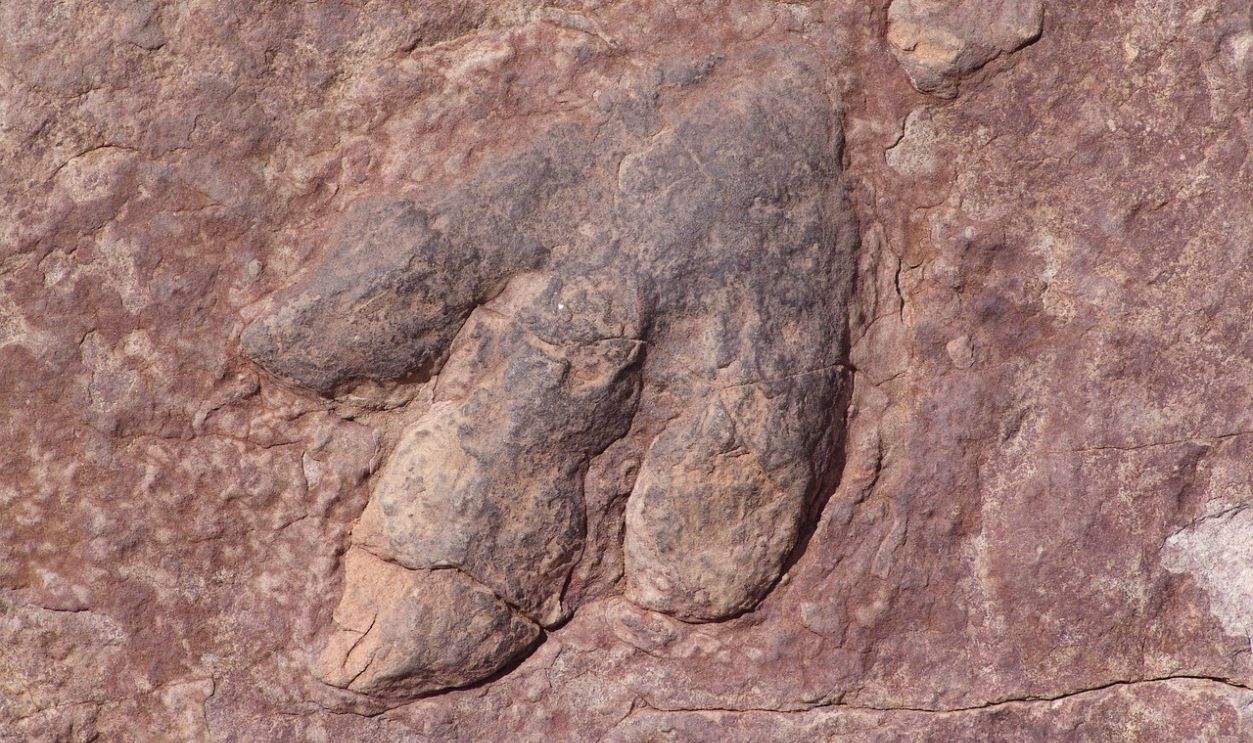
The Footprints Actually Stick Up
Many familiar fossil tracks appear as depressions, but these are preserved largely in positive relief. They are essentially hardened casts associated with the spaces created when the dinosaur stepped into soft sediment. Their unusual three-dimensional form helped the tracks survive while the surrounding material eroded away.
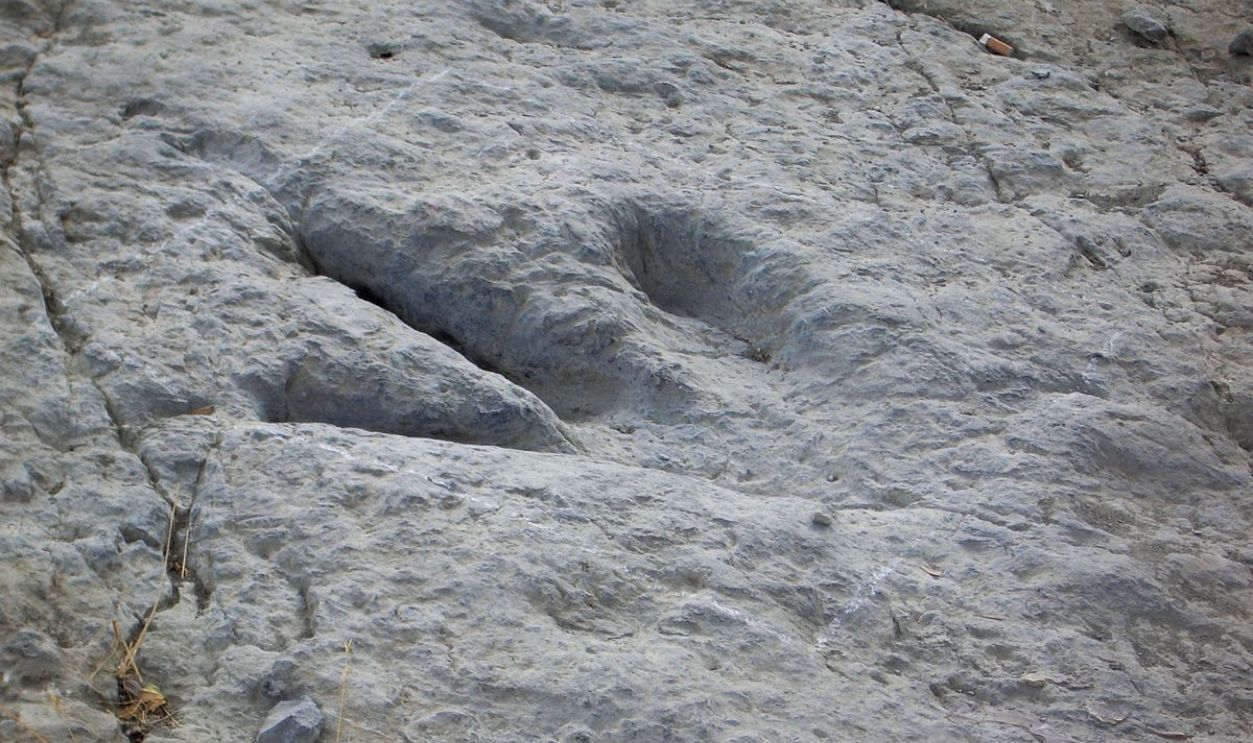 jynus, CC BY-SA 3.0, Wikimedia Commons
One Track Preserves Extra Detail
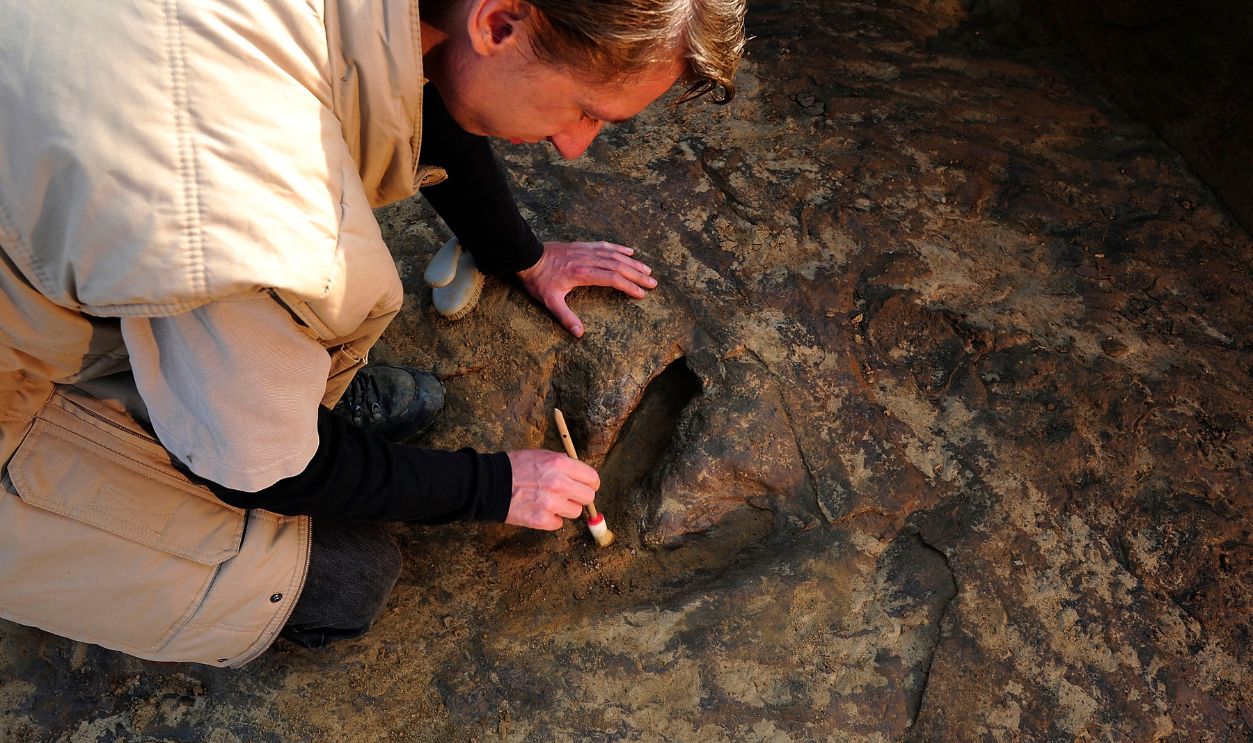
One of the best-exposed footprints gives scientists their clearest look at the trackmaker's foot. Its three principal toe impressions can be distinguished, while a feature toward the back of the track may represent either part of a foot pad or an impression associated with the small first digit, known as the hallux. Weathering prevents researchers from identifying that structure with certainty.
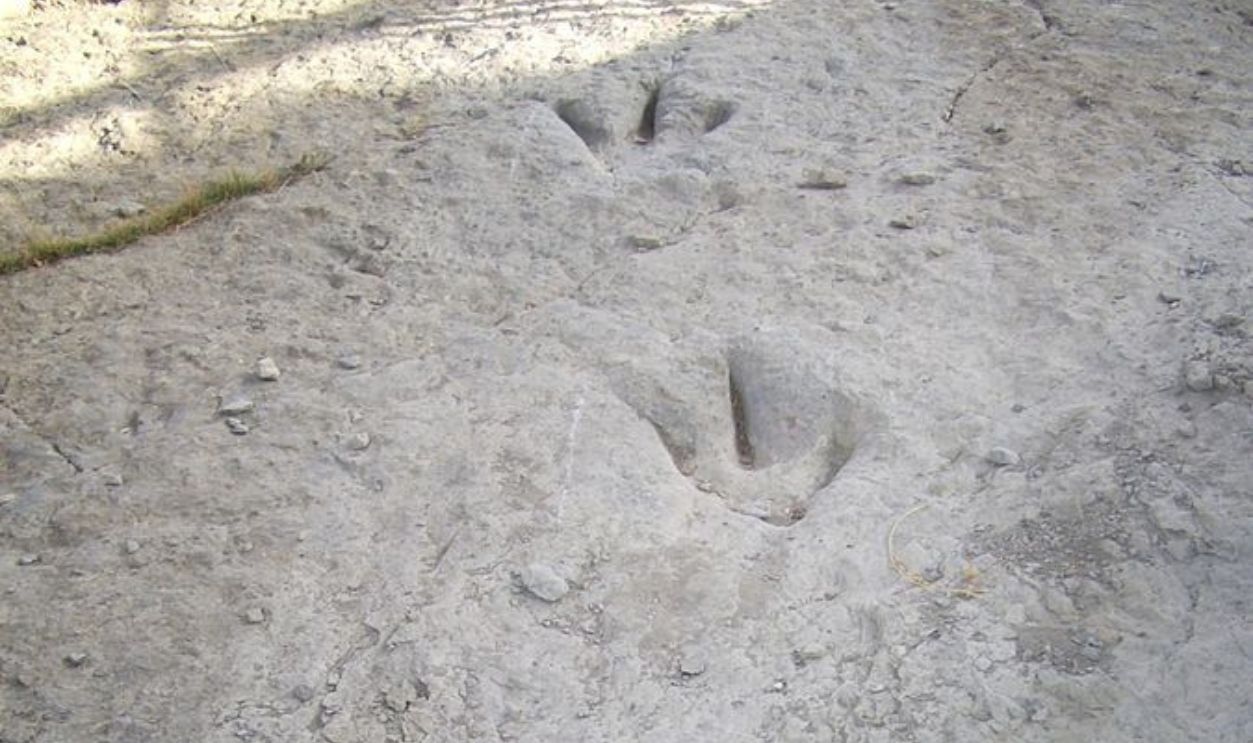 jynus, CC BY-SA 3.0, Wikimedia Commons
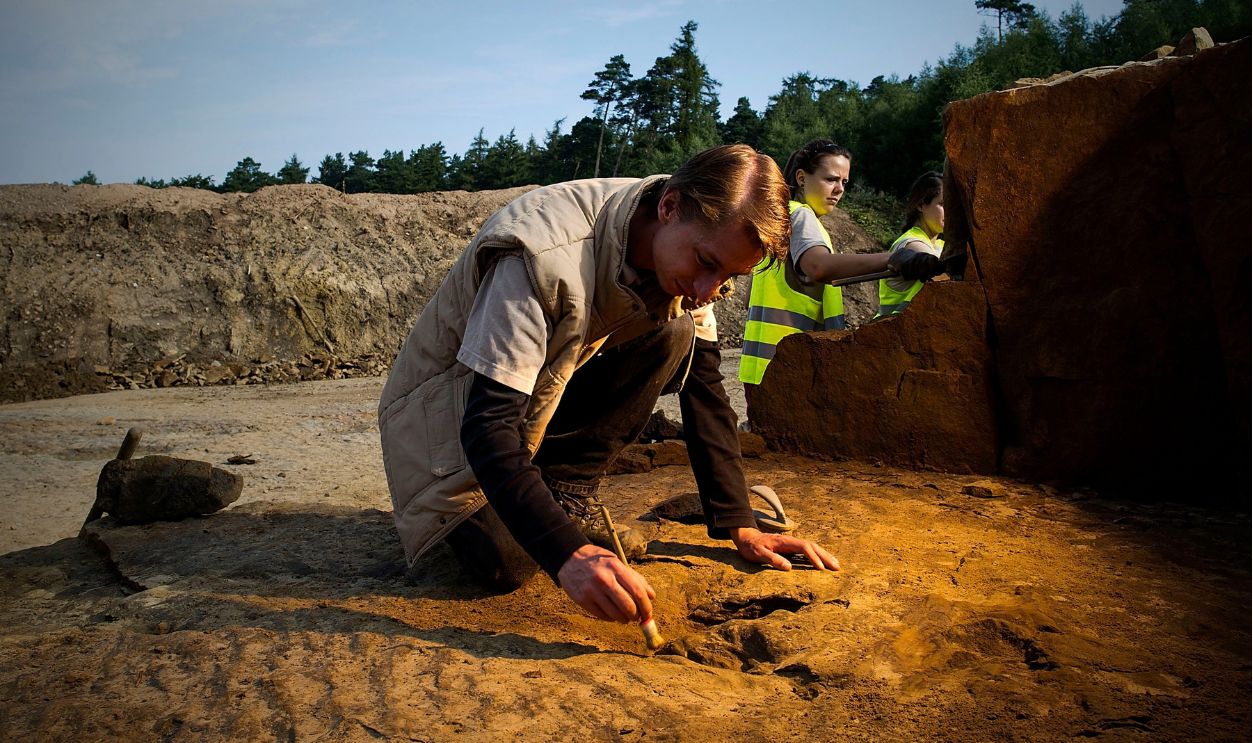
Researchers Digitized The Entire Trail
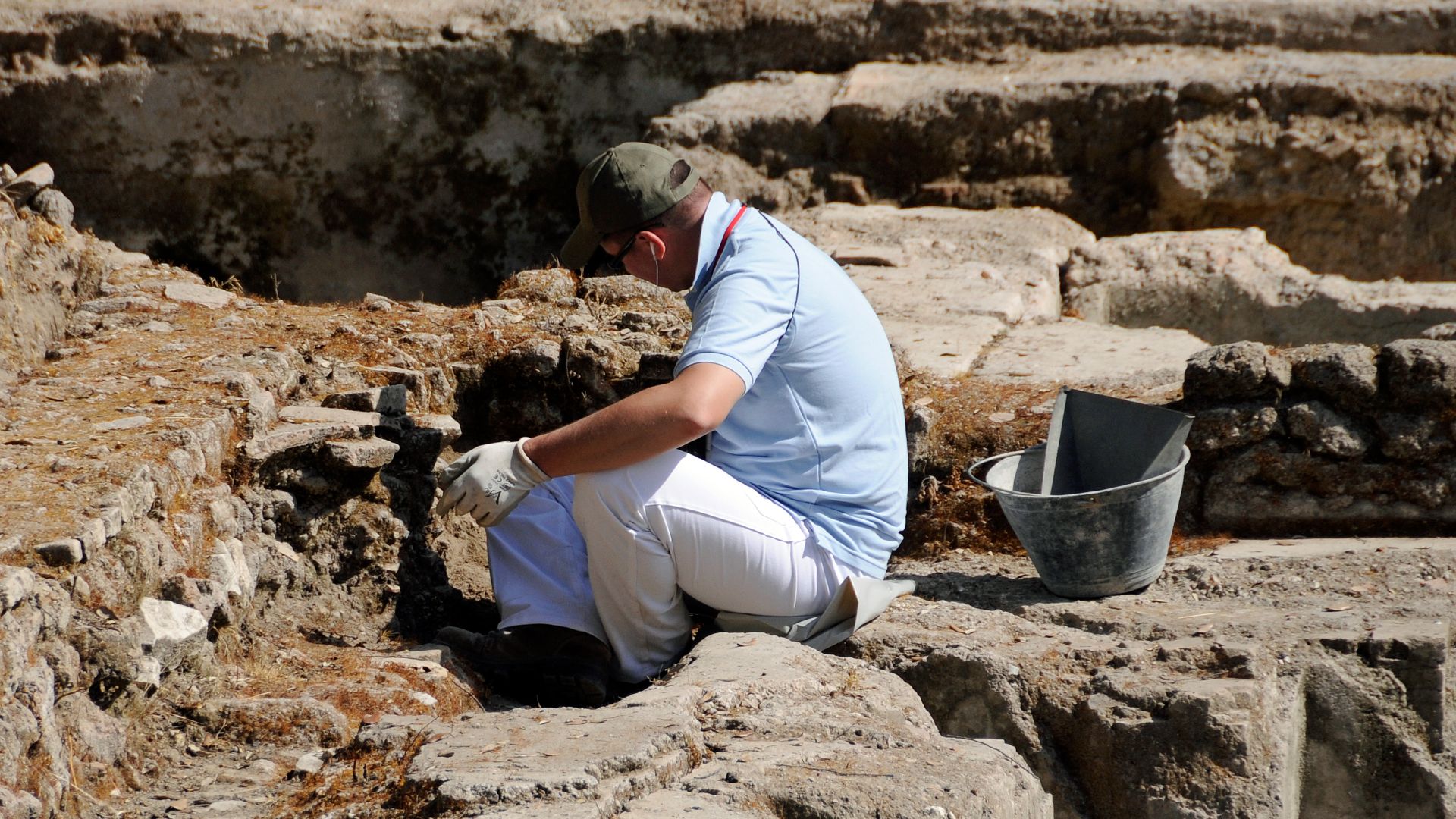
The team documented the site using detailed three-dimensional scanning. Those scans produced digital models that allow researchers to measure and examine both individual footprints and the overall trackway away from the North Dakota badlands. They also preserve a precise digital record of the site as it appeared when scientists studied it.
 Alexander Koerner, Getty Images
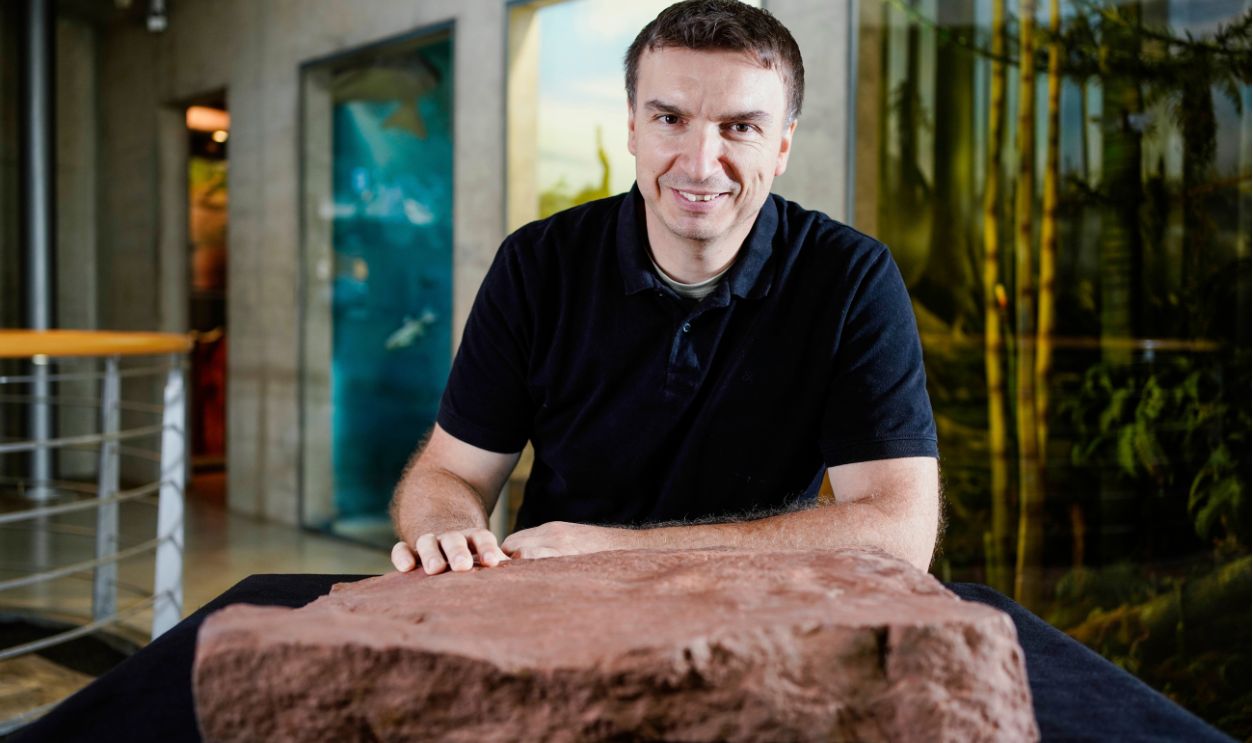
One Scientist Studied It From England
Lead author Peter Falkingham of Liverpool John Moores University was able to analyze the trackway remotely using the digital data collected in North Dakota. He did not need to stand physically beside the footprints to study their shape, spacing and dimensions. The project shows how high-resolution scanning can connect researchers with important fossils thousands of miles away.
 picture alliance, Getty Images
Leaving Them Outside Was Risky
Once erosion had exposed the footprints, the same process that revealed them also threatened their survival. Continued weathering could gradually damage their already-fractured surfaces. The team therefore began preparing several of the tracks for removal and long-term preservation.
Moving Them Takes A Helicopter
Three of the four footprints were slated to be recovered from the remote site and transported to the Denver Museum of Nature & Science. Their size, weight and location mean they cannot simply be carried out by hand. Plans announced with the discovery called for a helicopter to lift the massive fossils from the badlands.
 Bureau of Land Management, Wikimedia Commons
The Fossils Could Still Hold Surprises
Once the tracks are fully prepared, researchers may be able to examine details that were difficult to see in the field. The physical specimens can also be compared with their high-resolution digital models as scientists continue studying their shape and preservation. Even subtle features could add information about the foot anatomy of the animal that made them.
Four Footprints Can Tell Scientists A Lot
The trackway is important precisely because it preserves a sequence rather than one isolated footprint. Multiple steps allow scientists to estimate stride and walking speed while also showing how the animal placed its feet as it moved forward. For T. rex, whose adult track record is extraordinarily sparse, even four consecutive footprints represent valuable evidence.
A 66-Million-Year-Old Walk Survived
The dinosaur that made these tracks was doing nothing dramatic. It appears simply to have walked across soft ground, leaving four steps that happened to survive an extraordinary chain of geological events. Around 66.5 million years later, those footprints may represent the first known trackway left by an adult T. rex, preserving a remarkably ordinary moment from the life of one of history's most famous predators.
 Fausto García-Menéndez, Unsplash
You May Also Like:
Ancient Humans In Ethiopia Survived A Climate Disaster By Turning A Drying River Into A Lifeline