A Village Defying Gravity
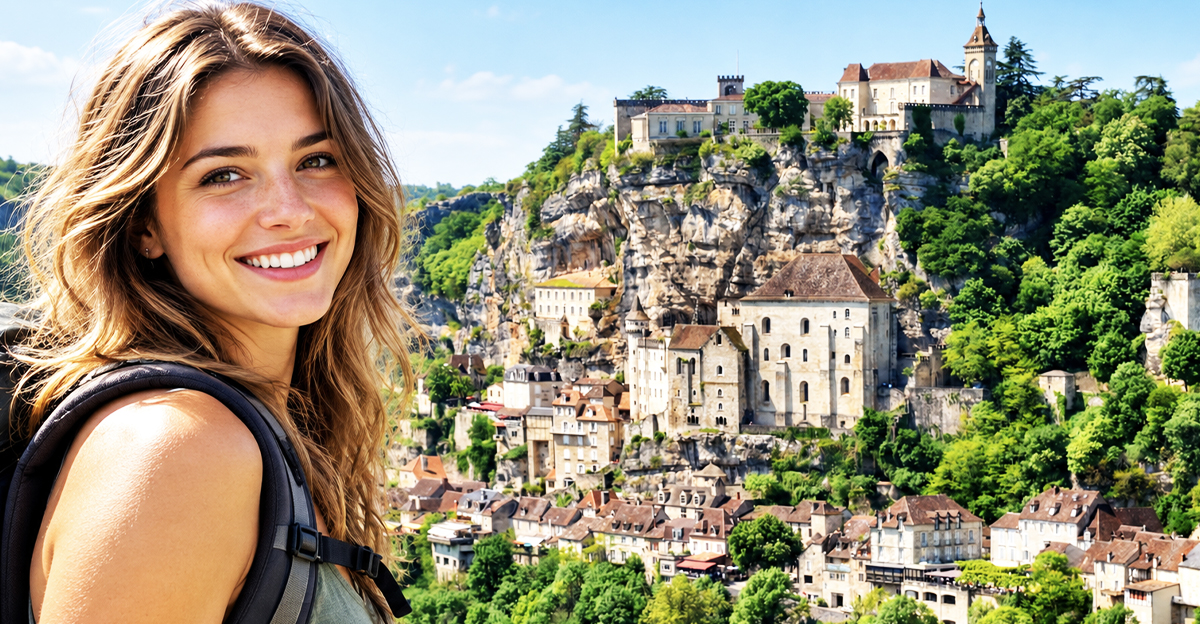
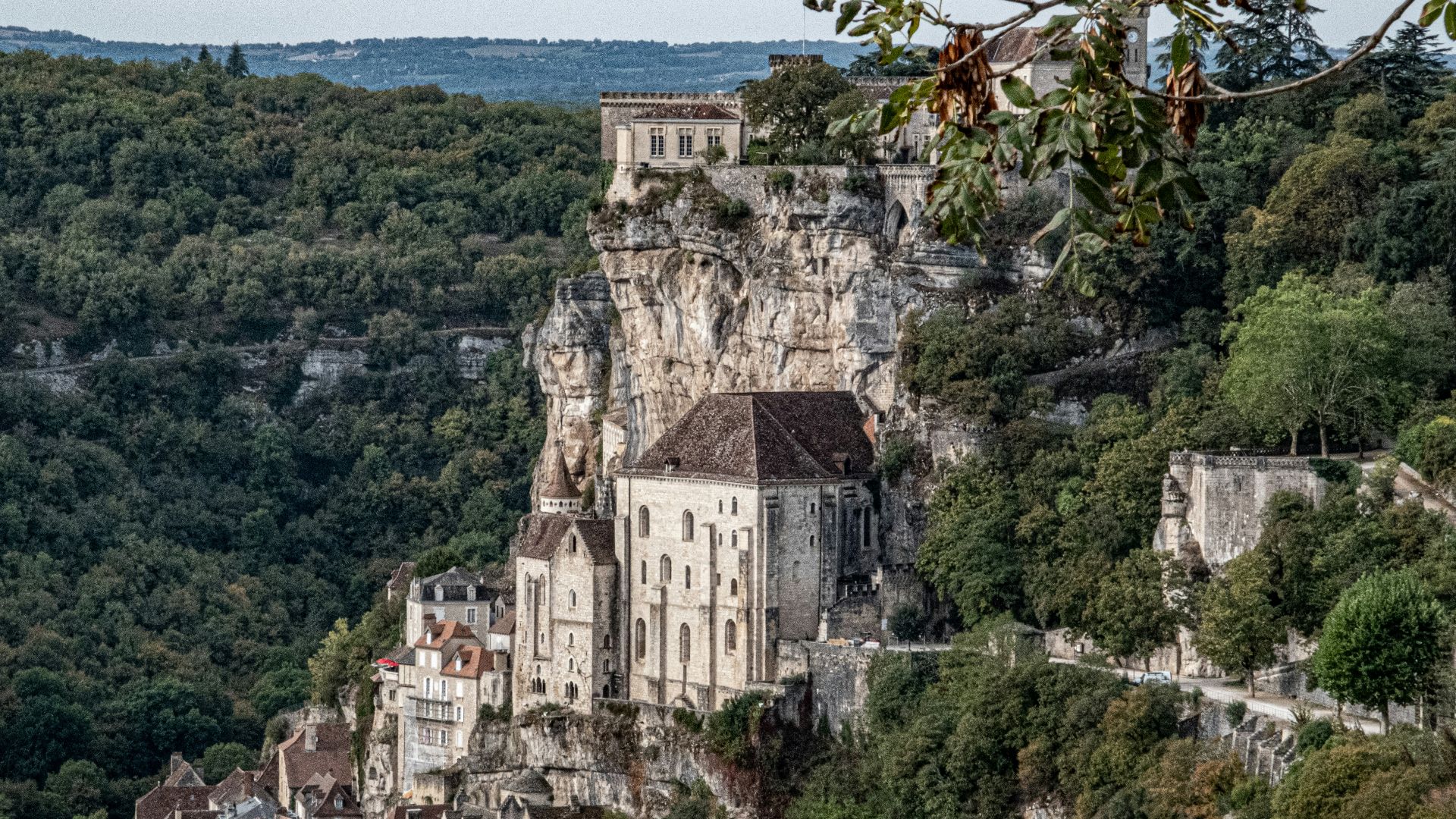
Imagine rounding a bend in the French countryside and discovering an entire medieval village seemingly suspended from a limestone cliff. Houses cling to the rock, churches rise above rooftops, and a castle crowns the summit. This is Rocamadour, one of France's most extraordinary historic settlements, where architecture and geography have combined to create something that almost defies belief.
Hidden In Southern France
Rocamadour sits in the Lot department of southwestern France, overlooking the dramatic Alzou canyon. Its buildings rise in successive tiers against a limestone cliff approximately 120 meters high. Rather than spreading across a valley like an ordinary village, Rocamadour developed vertically, with medieval houses below, religious sanctuaries above, and fortifications at the summit. The result is a remarkable architectural landscape that appears almost impossible from a distance.
 Dynamosquito, Wikimedia Commons; Factinate Ltd
A Thousand Years Of History
Rocamadour's origins stretch back long before medieval Europe. Prehistoric people inhabited the surrounding region, leaving evidence of their presence in nearby caves. According to religious tradition, a hermit named Amadour later settled among the rocks. By the 11th and 12th centuries, the settlement had become an important Christian pilgrimage destination. Its remote, dramatic setting only added to its reputation as a place of spiritual significance.
A Mysterious Medieval Discovery
In 1166, an unusually well-preserved body was reportedly discovered near the sanctuary. Local religious authorities identified the remains as those of Saint Amadour, a figure surrounded by centuries of legend. News of the discovery helped transform Rocamadour into one of medieval Europe's celebrated pilgrimage destinations. Travelers arrived from across the continent, drawn by stories of miracles, sacred relics, and the extraordinary religious buildings emerging from the cliff.
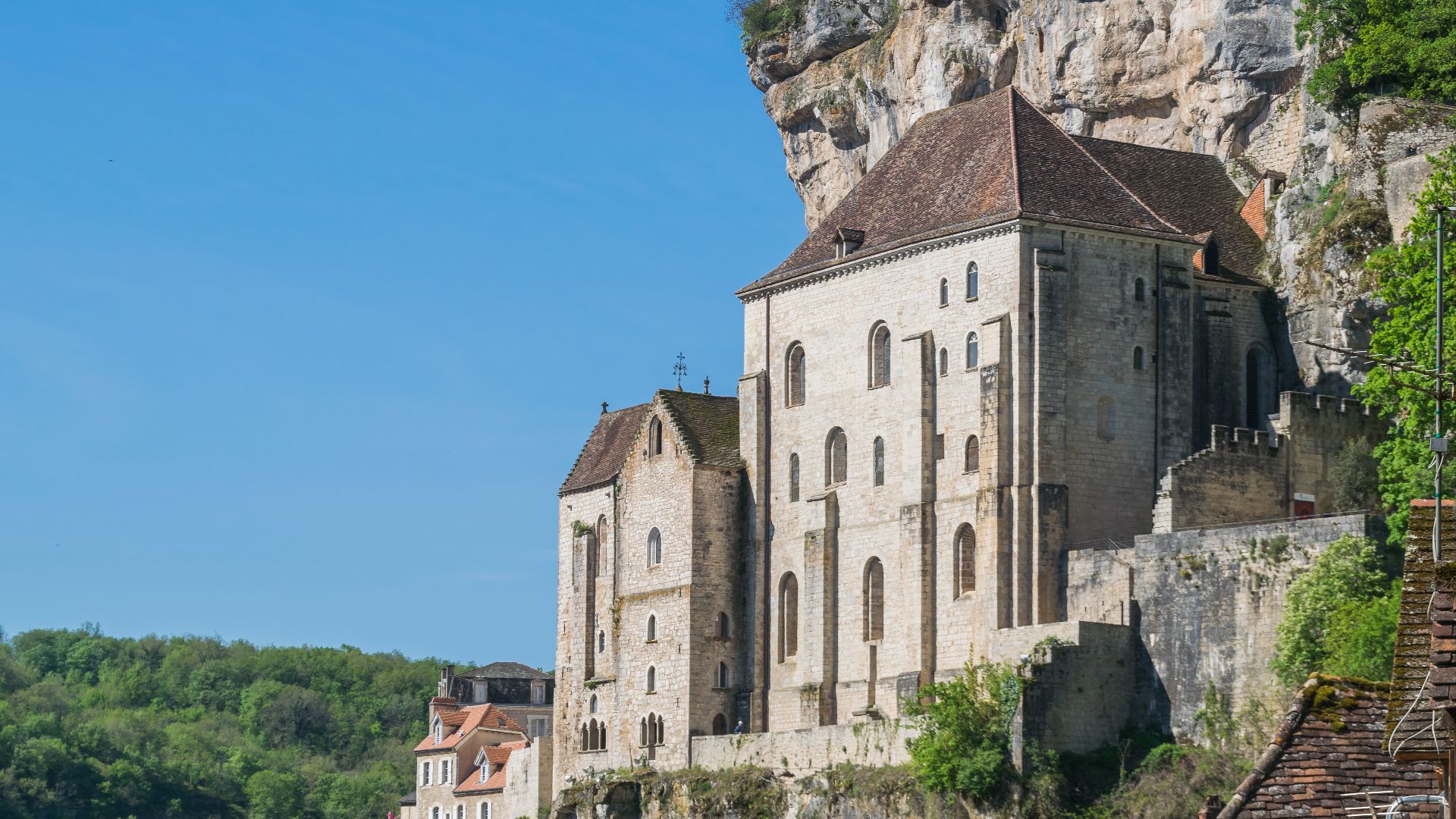 Krzysztof Golik, Wikimedia Commons
The Famous 216 Steps
Reaching Rocamadour's religious sanctuary traditionally required climbing a monumental staircase containing 216 steps. Medieval pilgrims sometimes ascended on their knees as an act of penance, hoping to demonstrate their devotion. The climb leads from the village's main street to a remarkable collection of chapels and sacred buildings. Modern visitors can still follow the same route, although lifts offer a welcome alternative for anyone unwilling or unable to tackle the staircase.
The Black Madonna's Mystery
At the heart of Rocamadour's sanctuary stands a 12th-century wooden statue known as the Black Madonna. Housed inside the Chapel of Notre-Dame, the figure of the Virgin Mary holding the infant Jesus has attracted pilgrims for centuries. Medieval worshippers credited the statue with miraculous interventions, particularly the rescue of sailors facing danger at sea. A small iron bell above the chapel became associated with these stories, supposedly ringing when miracles occurred.
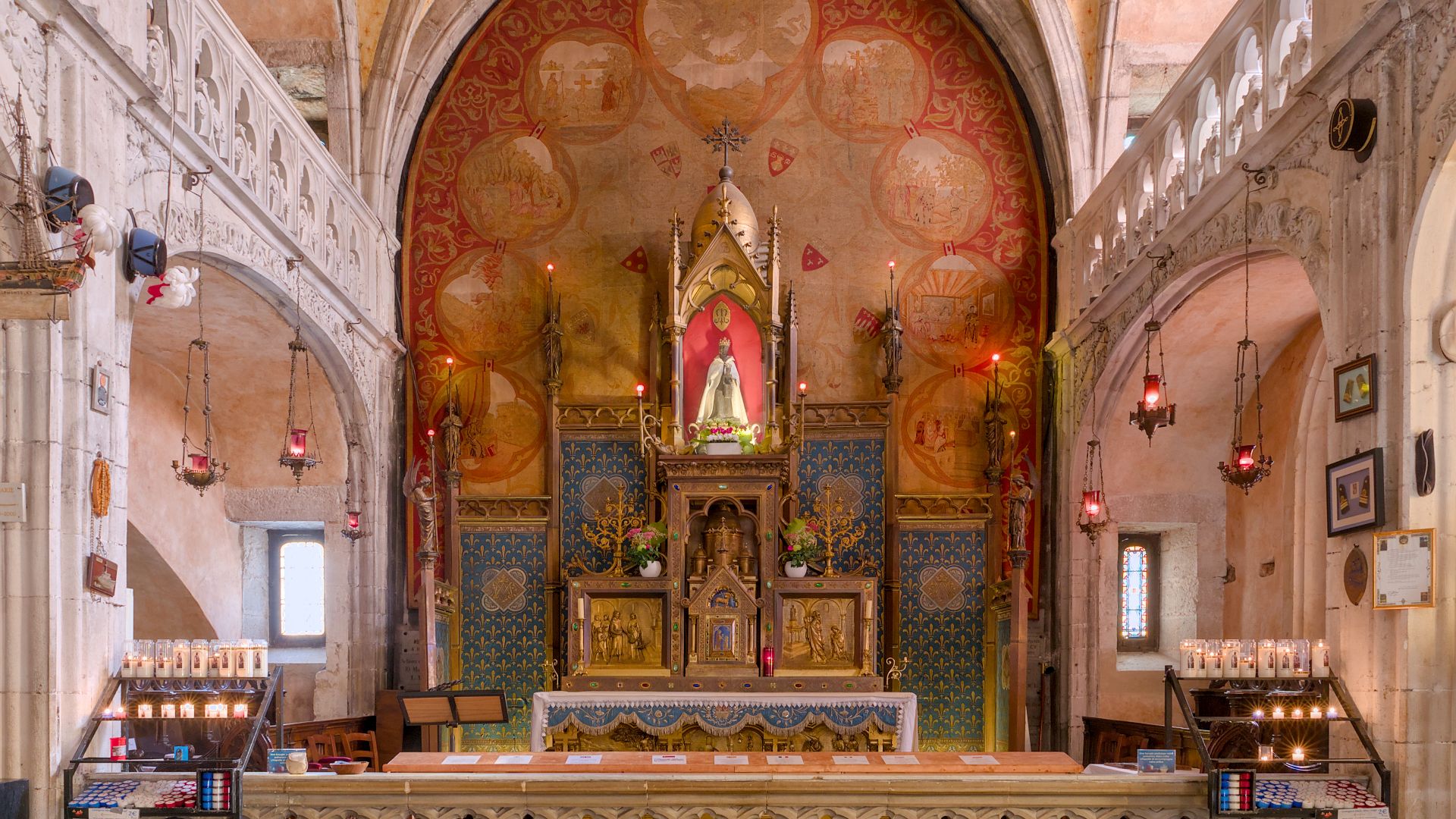 Benjamin Smith, Wikimedia Commons
A Castle Above The Clouds
High above the sanctuary, Rocamadour's medieval castle once helped protect the religious settlement below. Its commanding position provided a natural defensive advantage, while fortified gateways controlled access to the narrow streets. Today, visitors can explore the castle ramparts and enjoy spectacular views across the Alzou canyon. From this vantage point, the village's unusual arrangement becomes clear, with houses, chapels, and towers seemingly stacked against the rock face.
A Remarkable UNESCO Connection
Rocamadour's importance extends far beyond its striking appearance. The Basilica of Saint-Sauveur and the Crypt of Saint-Amadour are recognized as part of the UNESCO World Heritage listing for the Routes of Santiago de Compostela in France. The village lies along a historic pilgrimage route associated with journeys toward Spain. This recognition celebrates its religious and architectural heritage, although it is specifically the designated religious monuments, rather than the entire village, that form part of the UNESCO listing.
A Medieval Village Worth Exploring
Despite its ancient origins, Rocamadour is far from an abandoned historical monument. Its narrow, pedestrian-friendly main street is lined with shops, restaurants, and golden-stone buildings. Visitors can sample Rocamadour's famous local goat cheese, explore nearby prehistoric caves, or simply admire the extraordinary scenery. The village is particularly striking when illuminated after sunset, when its buildings glow against the dark limestone cliff. More than a thousand years after its rise to prominence, Rocamadour remains one of Europe's most unforgettable destinations.
You May Also Like:
European Destinations That American Travelers Say Are Better Than The Famous Ones