Earth Looks Like Another Planet
From the ground, they're ordinary deserts, lakes, farms, and cities. But photograph them from hundreds of miles above Earth, and suddenly they resemble giant eyes, fingerprints, abstract paintings, and alien landscapes. NASA astronauts have captured some extraordinary sights from orbit, revealing patterns and colors that are almost impossible to appreciate at ground level.
 NASA, Public Domain, Wikimedia Commons
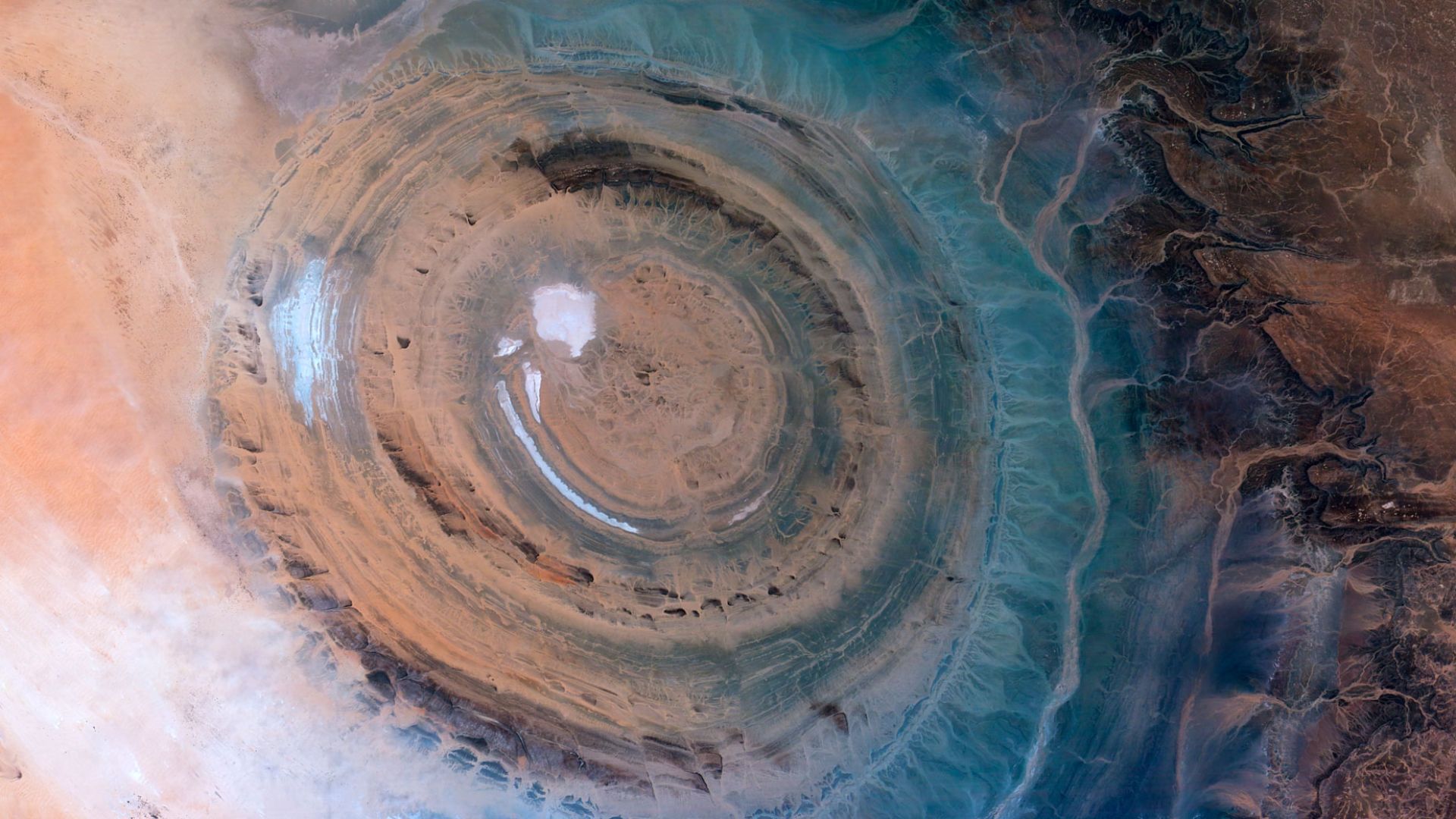
The Eye Of The Sahara, Mauritania
Deep in Mauritania's Sahara Desert lies the Richat Structure, an enormous formation resembling a giant bullseye. From the ground, its concentric rings are difficult to recognize, but astronauts can see the remarkable pattern from orbit. Roughly 25 miles across, it was once suspected to be an impact crater. Scientists now attribute its appearance to geological uplift and erosion.
 Axelspace Corporation, Wikimedia Commons
The Pink Lakes Of Australia
Australia's salt lakes can resemble enormous pools of strawberry milk when photographed from space. Their unusual pink and reddish colors are associated with salt-loving microorganisms and pigments, although the precise appearance varies between lakes and seasons. From the shoreline, visitors might see little more than shallow salty water and crusted earth. From orbit, the colors can look almost artificial.
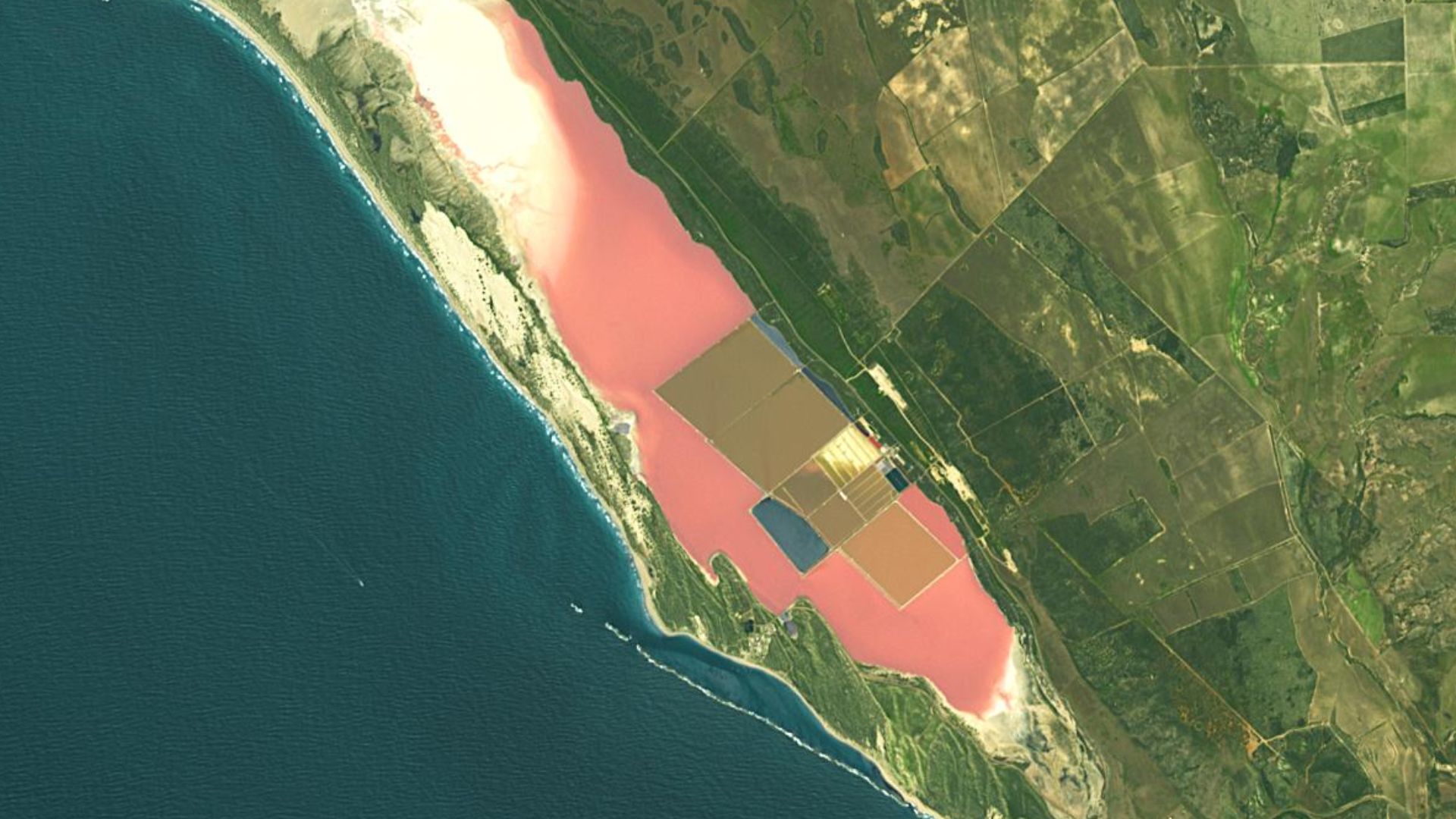 NASA/METI/AIST/Japan Space Systems, and U.S./Japan ASTER Science Team, Wikimedia Commons
The Great Salt Lake, Utah
Utah's Great Salt Lake looks especially peculiar from space because a railroad causeway divides its waters into sections that can display dramatically different colors. Differences in salinity and microorganisms help explain the contrast. Standing beside the lake, visitors see a vast inland sea. Astronauts can see a landscape that sometimes resembles two different lakes stitched together.
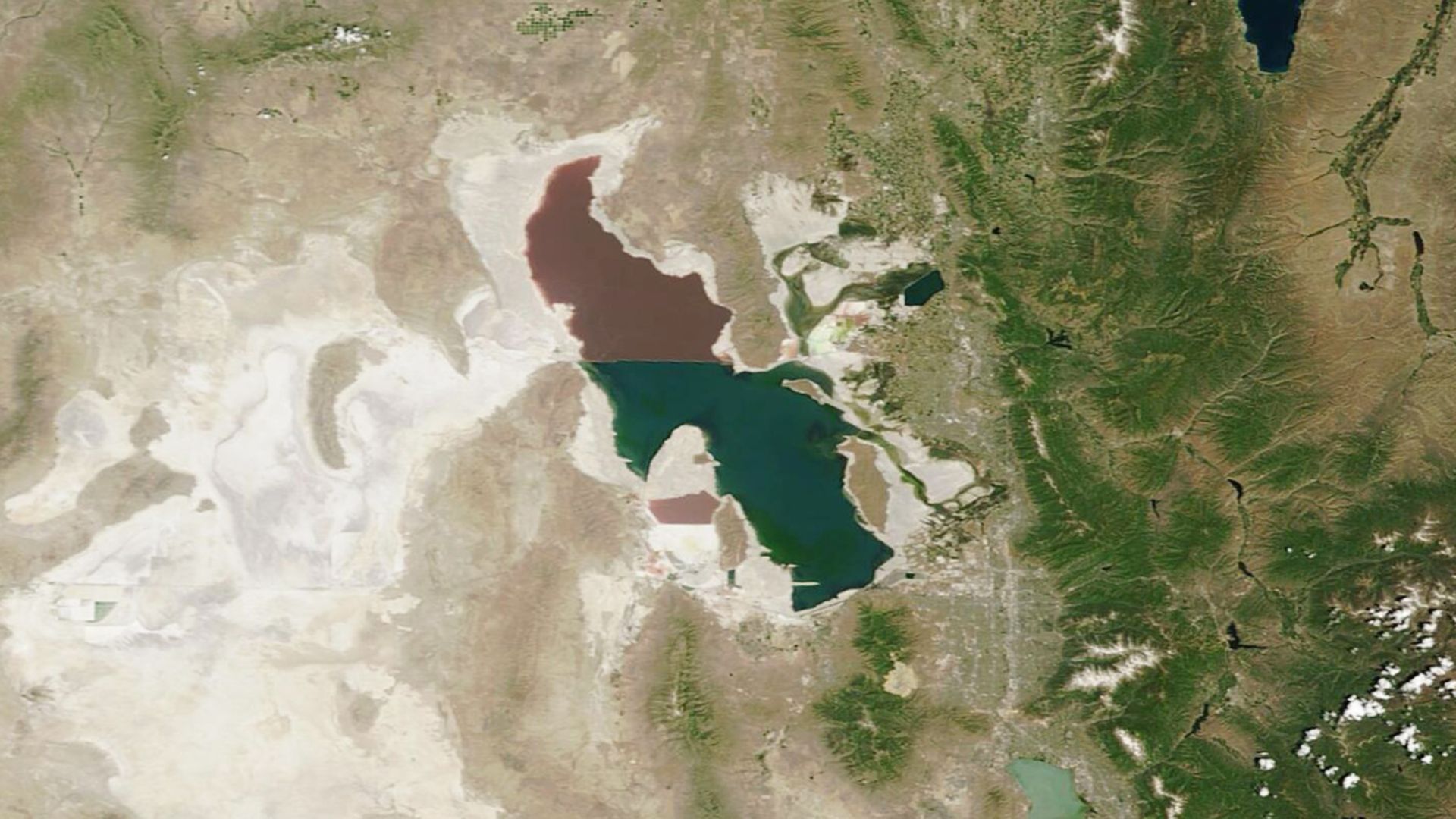 MODIS Land Rapid Response Team, NASA GSFC, Wikimedia Commons
The Colorful Salt Ponds Of California
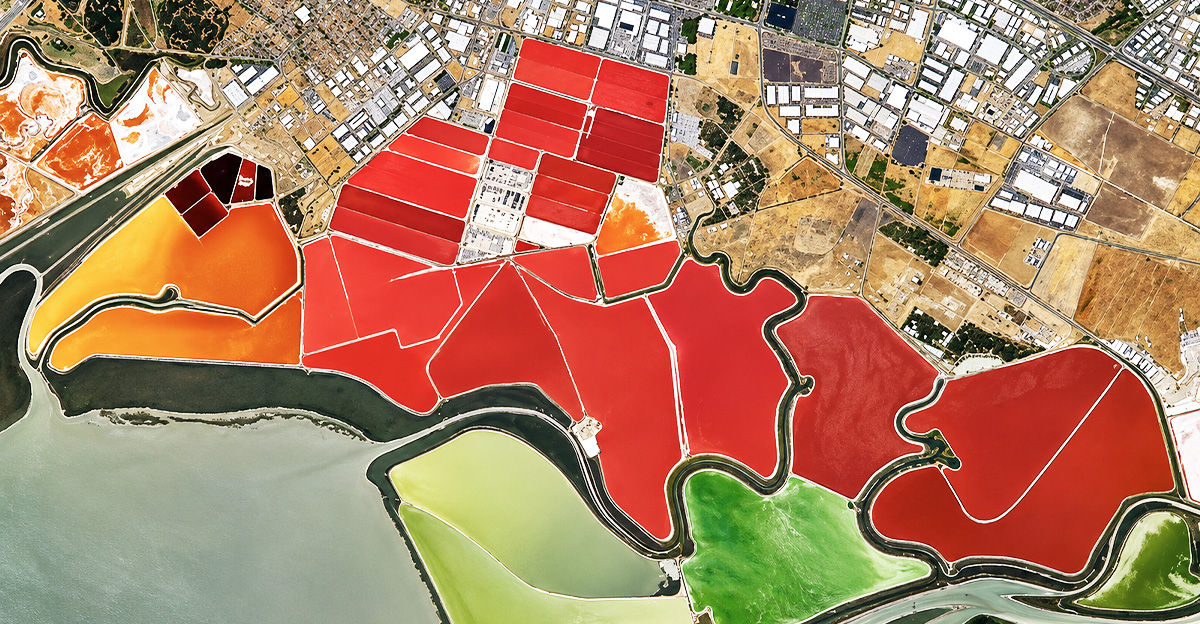
The salt evaporation ponds around San Francisco Bay look like enormous pieces of colored glass from space. Their rectangular shapes can appear red, orange, green, and other shades depending on salinity and microorganisms. At ground level, they're industrial salt-production landscapes. Astronaut photographs reveal a startling geometric mosaic that looks more like modern artwork than part of a natural coastline.
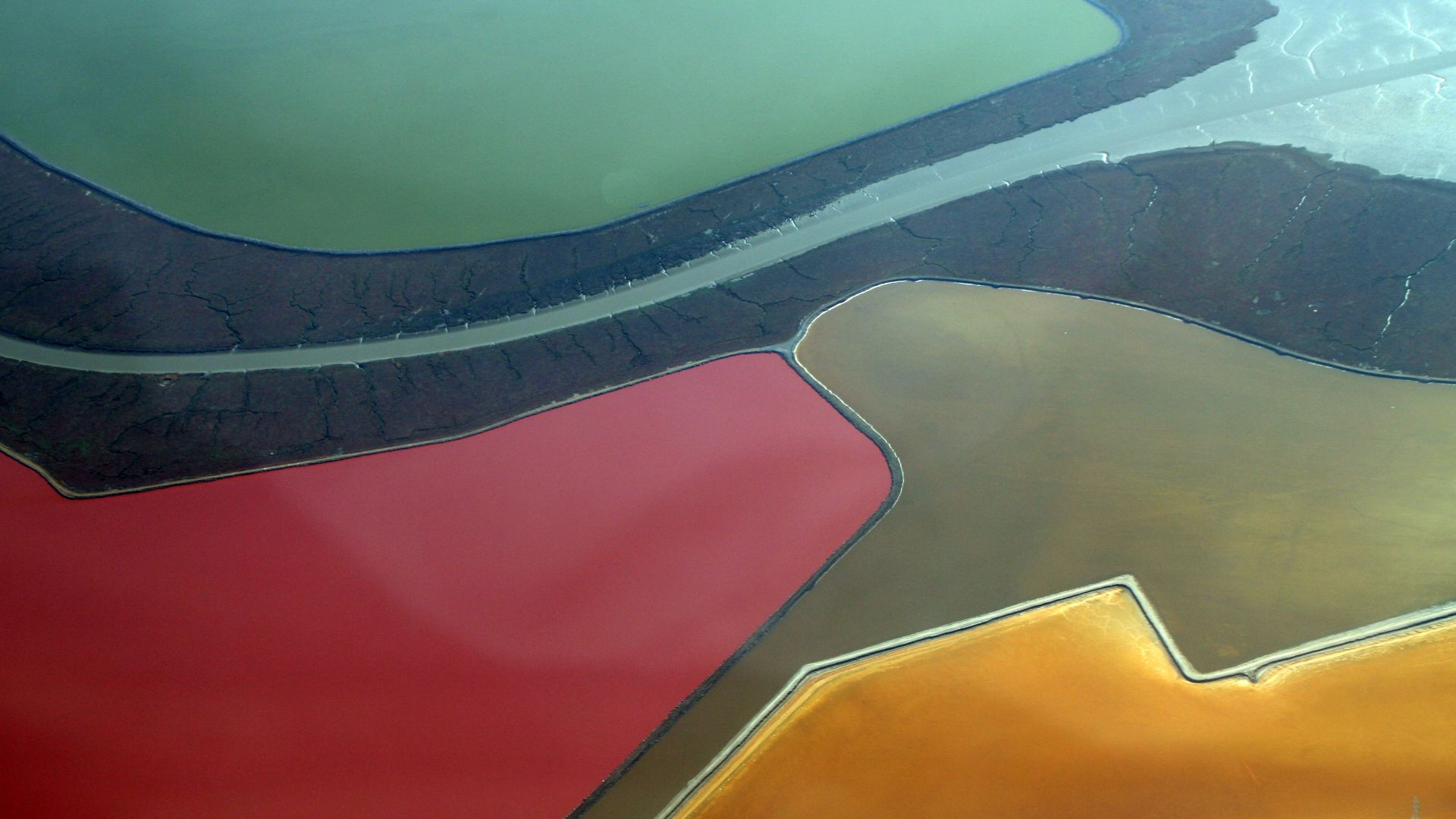 Doc Searls from Santa Barbara, USA, Wikimedia Commons
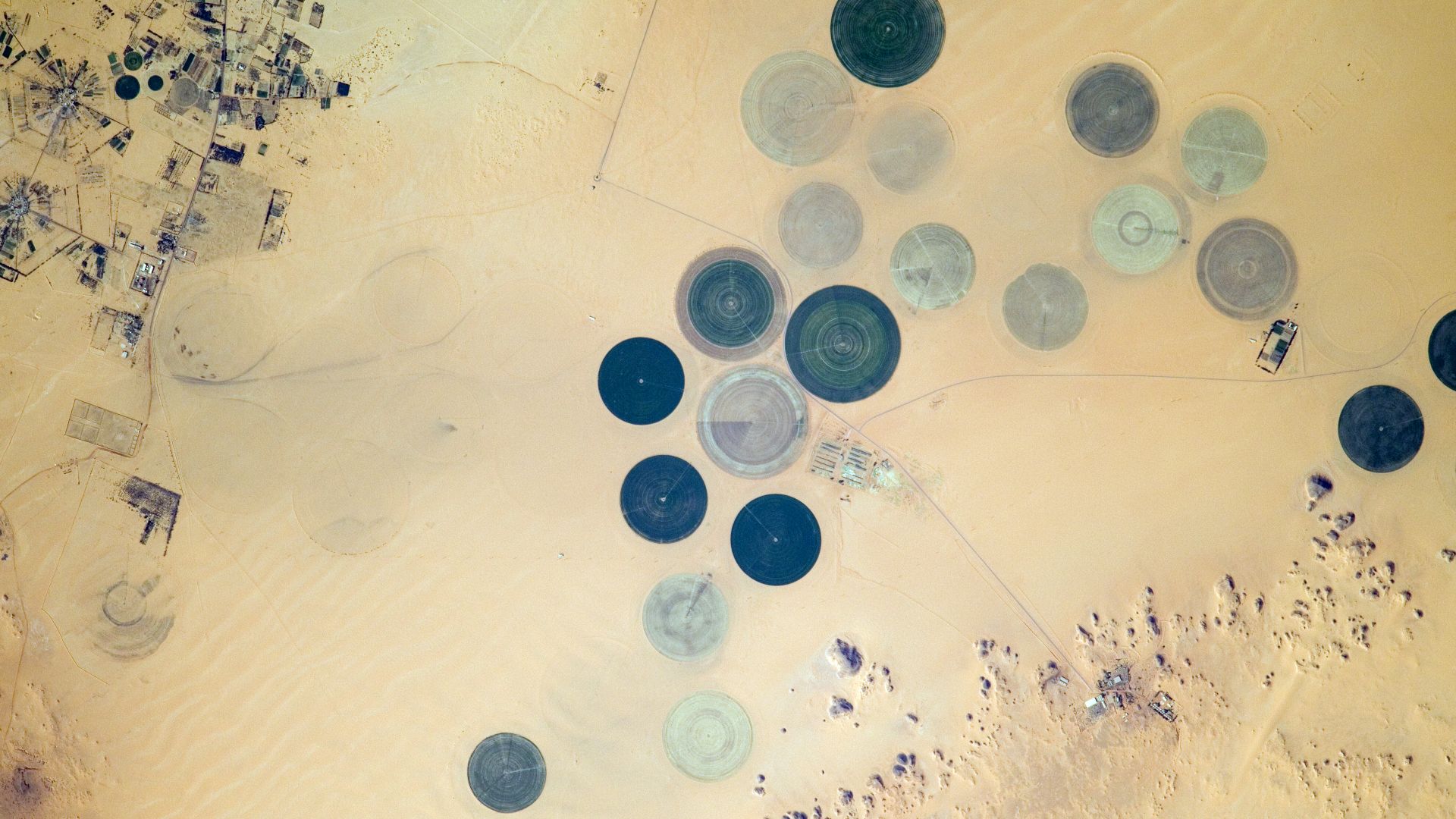
The Giant Circles Of Libya
In southeastern Libya, enormous green circles interrupt the otherwise barren desert. They're agricultural fields created by center-pivot irrigation systems that draw groundwater from beneath the Sahara. On the ground, they look like ordinary cultivated fields. From space, their perfect circular shapes form an almost science-fiction landscape, demonstrating how modern engineering can transform even extremely arid terrain.
The Strange Squares Of The Amazon
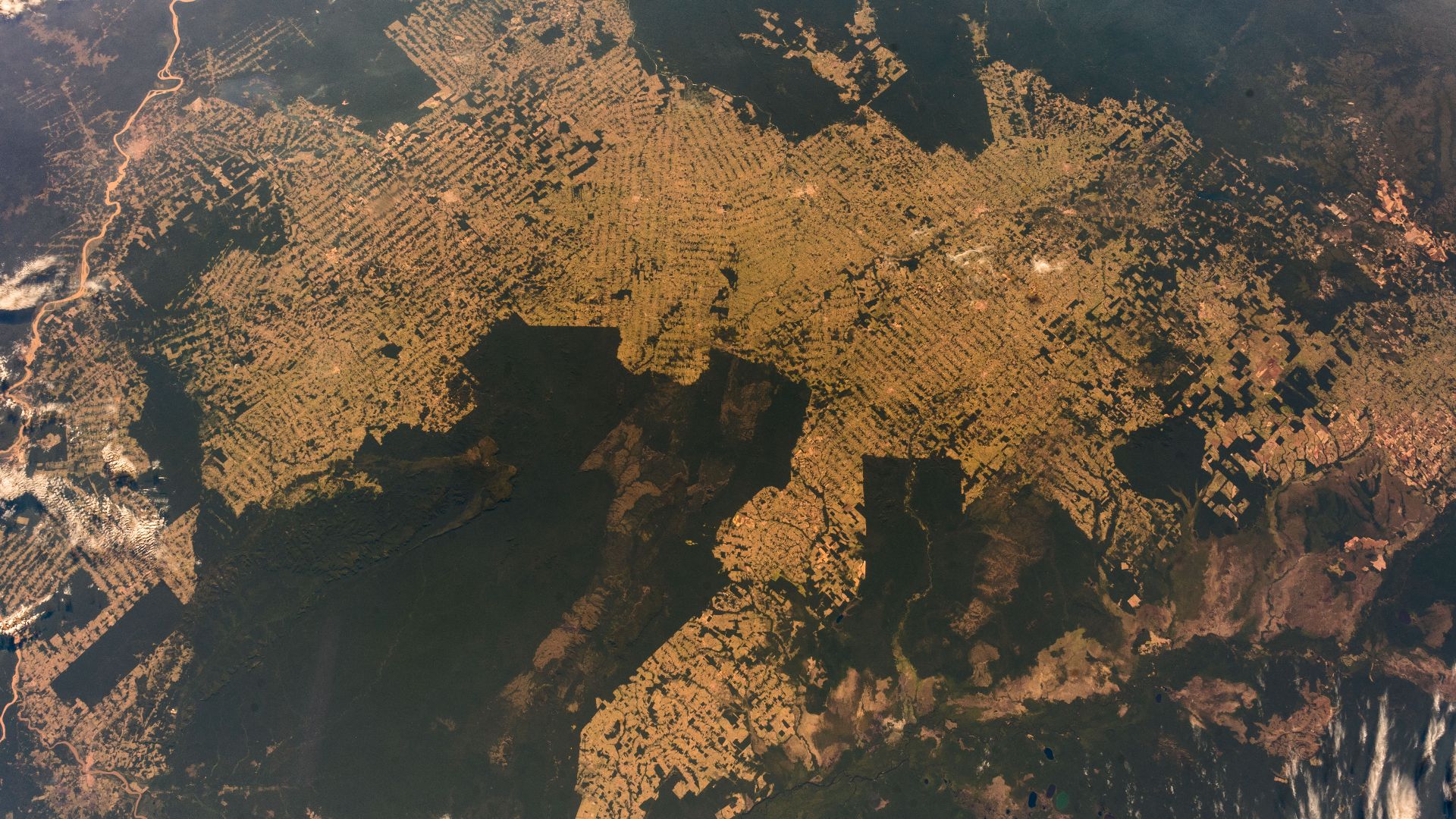
Large sections of the Amazon rainforest display geometric patterns that become visible from orbit. Roads, agricultural clearings, and deforestation can produce straight lines, rectangular patches, and distinctive fishbone arrangements. Walking through these areas reveals farms and forest edges. Astronaut photographs expose the enormous scale of human changes to the landscape, sometimes stretching across hundreds of miles.
 Alexander Gerst, Wikimedia Commons
The Palm Islands Of Dubai
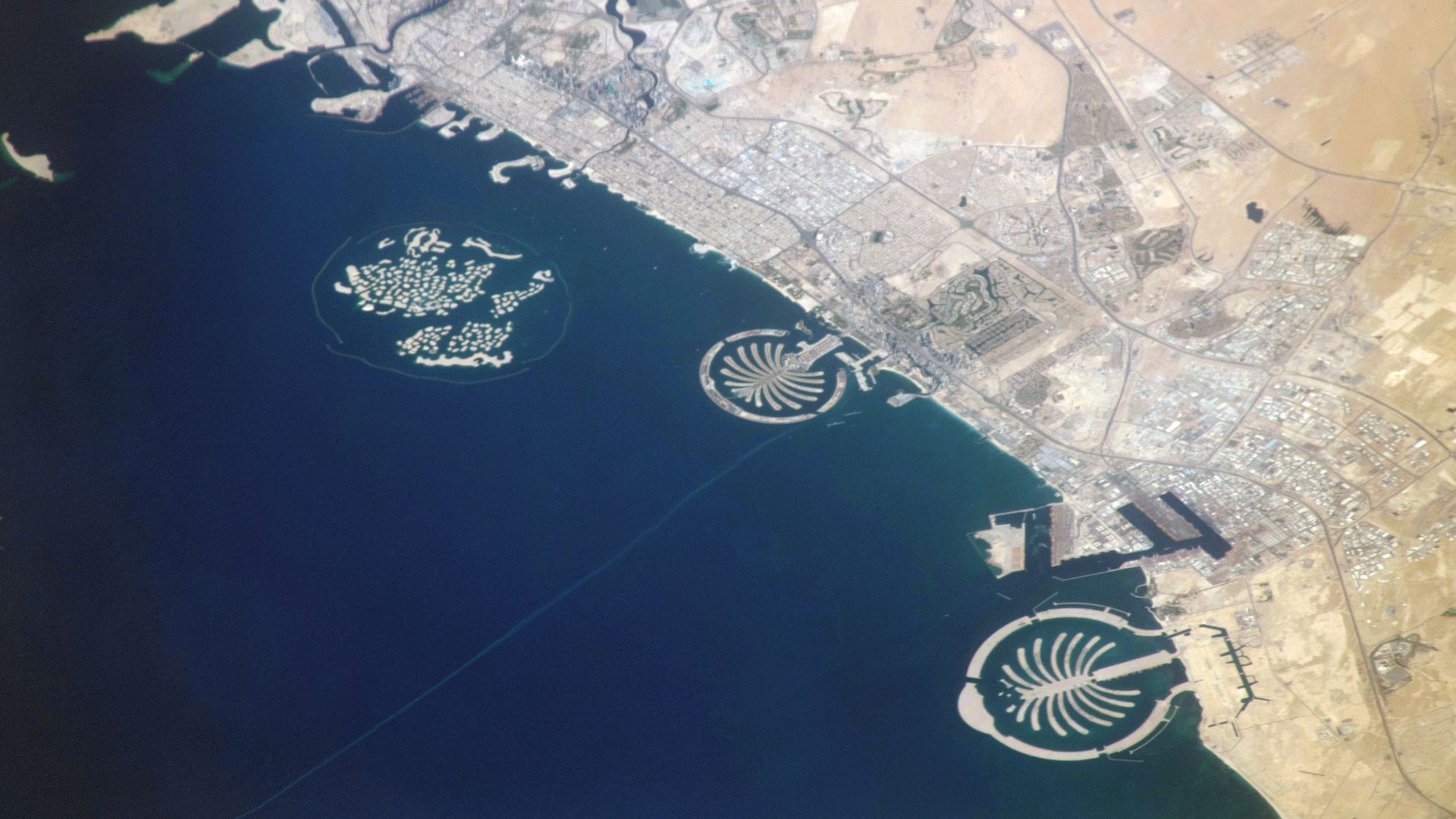
Dubai's Palm Jumeirah is one of the few coastal developments deliberately designed to be recognizable from above. Its artificial islands form the outline of a palm tree, while the nearby World Islands resemble a map of Earth's continents. Visitors on the ground experience beaches, hotels, and roads. Astronauts can see the extraordinary overall designs, created by moving vast quantities of sand.
The Fingerprint Desert Of Iran
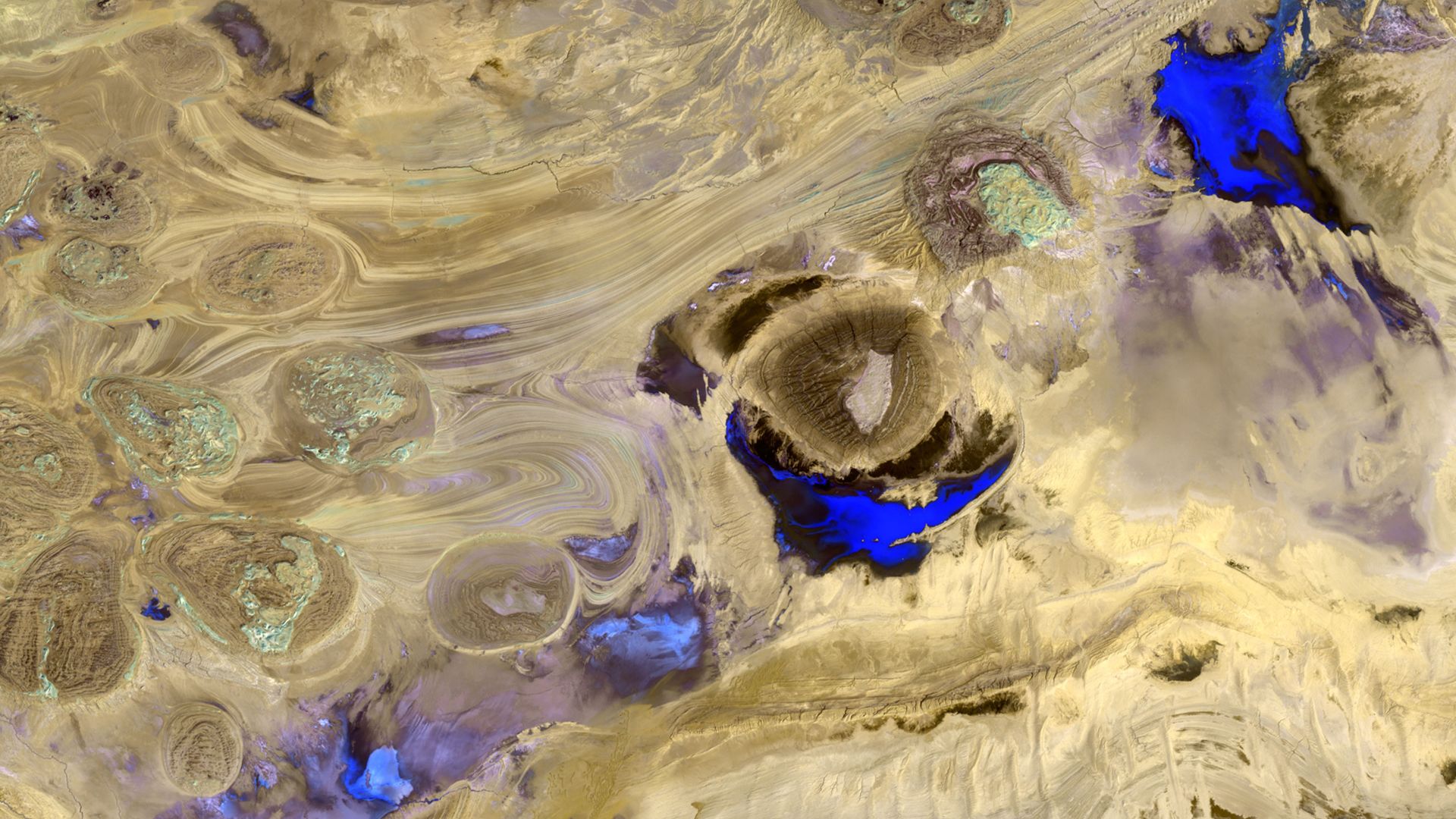
Iran's Dasht-e Kavir contains remarkable bands of exposed rock that resemble fingerprints or the layers of a sliced onion. Millions of years of geological folding, followed by erosion, created the sweeping curves. From ground level, travelers encounter an austere rocky desert. From the International Space Station, astronauts can see the intricate patterns spread across the landscape.
The Red Dunes Of Namibia
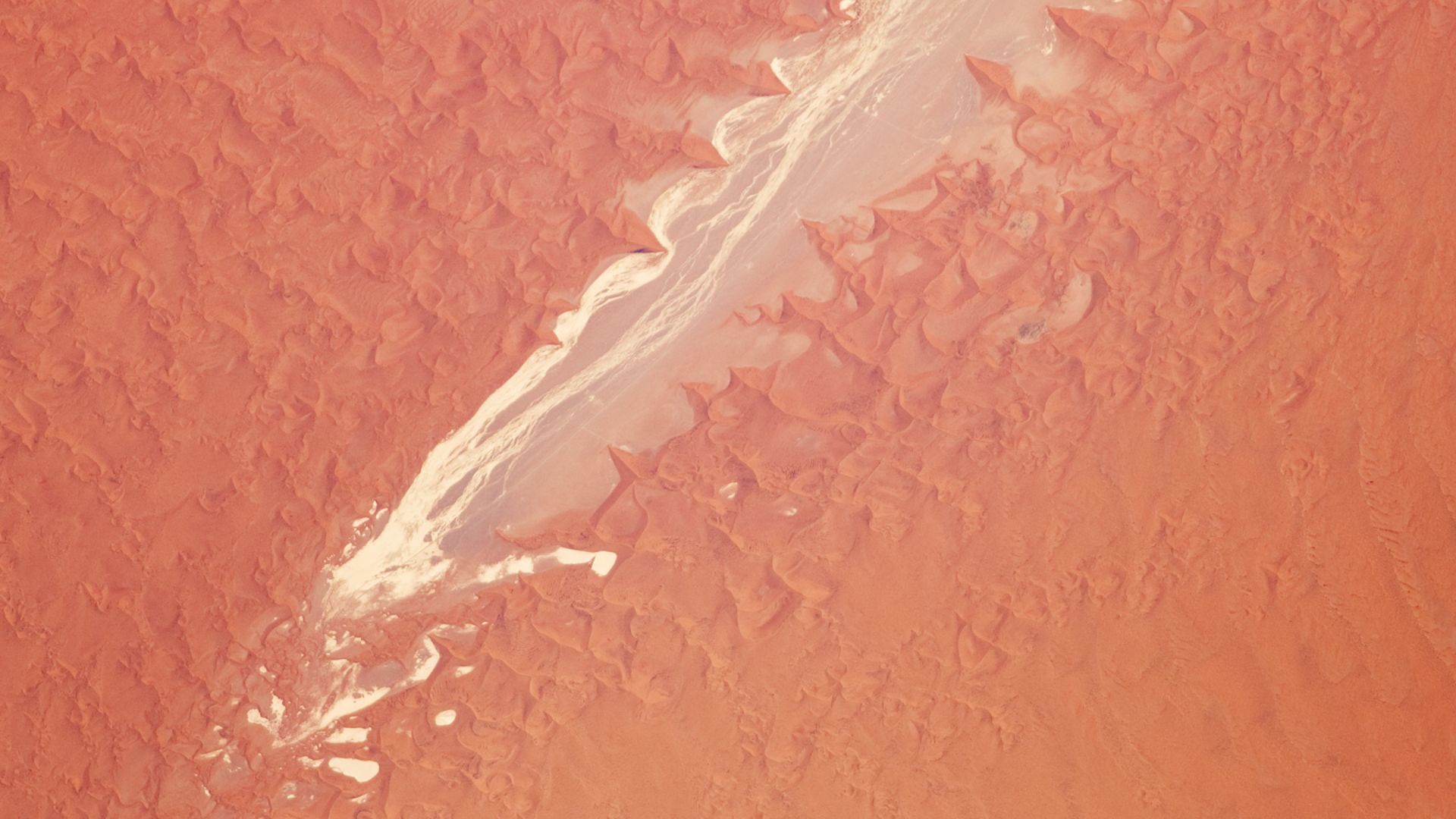
Namibia's towering dunes are spectacular from the ground, but their appearance changes completely when viewed from orbit. The Namib Sand Sea becomes a vast arrangement of reddish ridges, pale dry riverbeds, and white salt pans. Near Sossusvlei, the contrast is particularly striking. Astronaut photographs reveal patterns that individual visitors standing among the dunes can barely comprehend.
 Crew member of NASA ISS Expedition 22, Wikimedia Commons
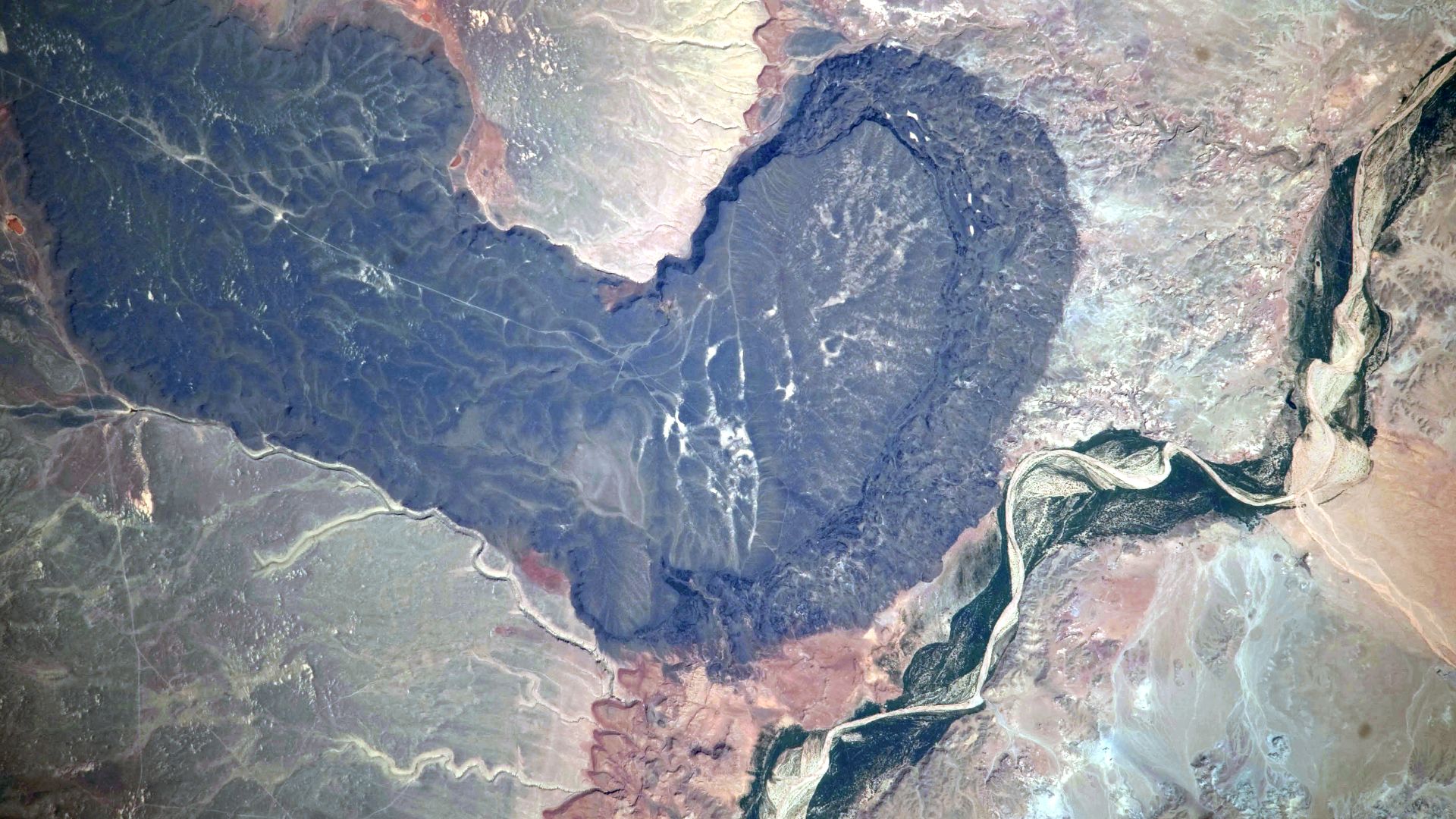
The Black Lava Of Arizona
Arizona's Black Point Lava Flow appears as an enormous dark stain across the desert when photographed from space. The basaltic rock was created by ancient volcanic activity, leaving a striking contrast against the surrounding lighter terrain. On the ground, travelers see rough, dark volcanic stone. Astronauts can appreciate the sprawling shape of the lava field and its relationship to the surrounding landscape.
 The NASA Expedition 20 crew., Wikimedia Commons
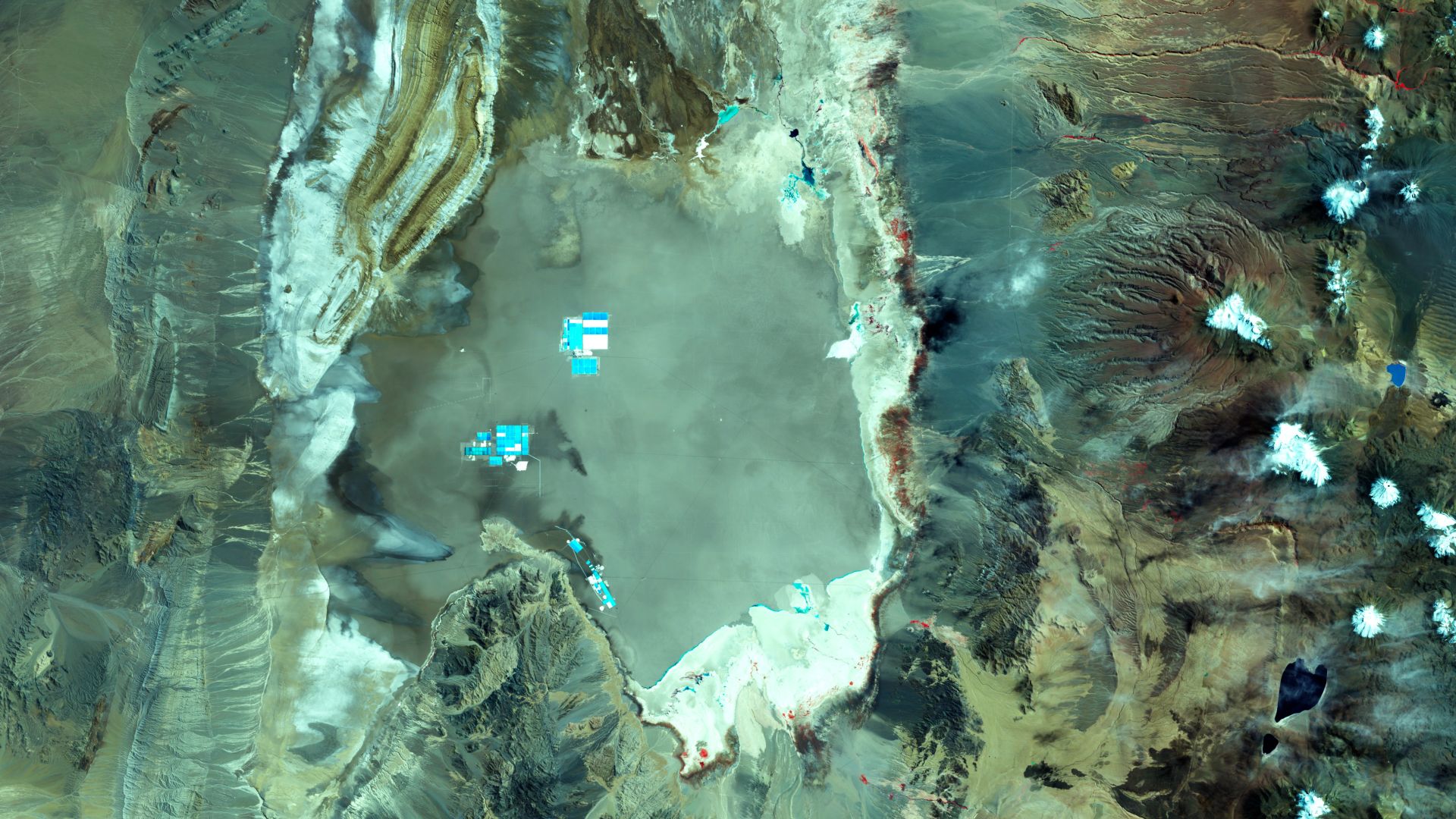
The Turquoise Ponds Of Chile
Chile's Salar de Atacama contains evaporation ponds used to concentrate lithium-rich brines. Photographed from orbit, the rectangular pools can display brilliant shades of turquoise and blue against the pale desert. At ground level, they're part of a large industrial operation. From space, their vivid colors and orderly geometry make them resemble an enormous collection of swimming pools.
 NASA's Earth Observatory, Wikimedia Commons
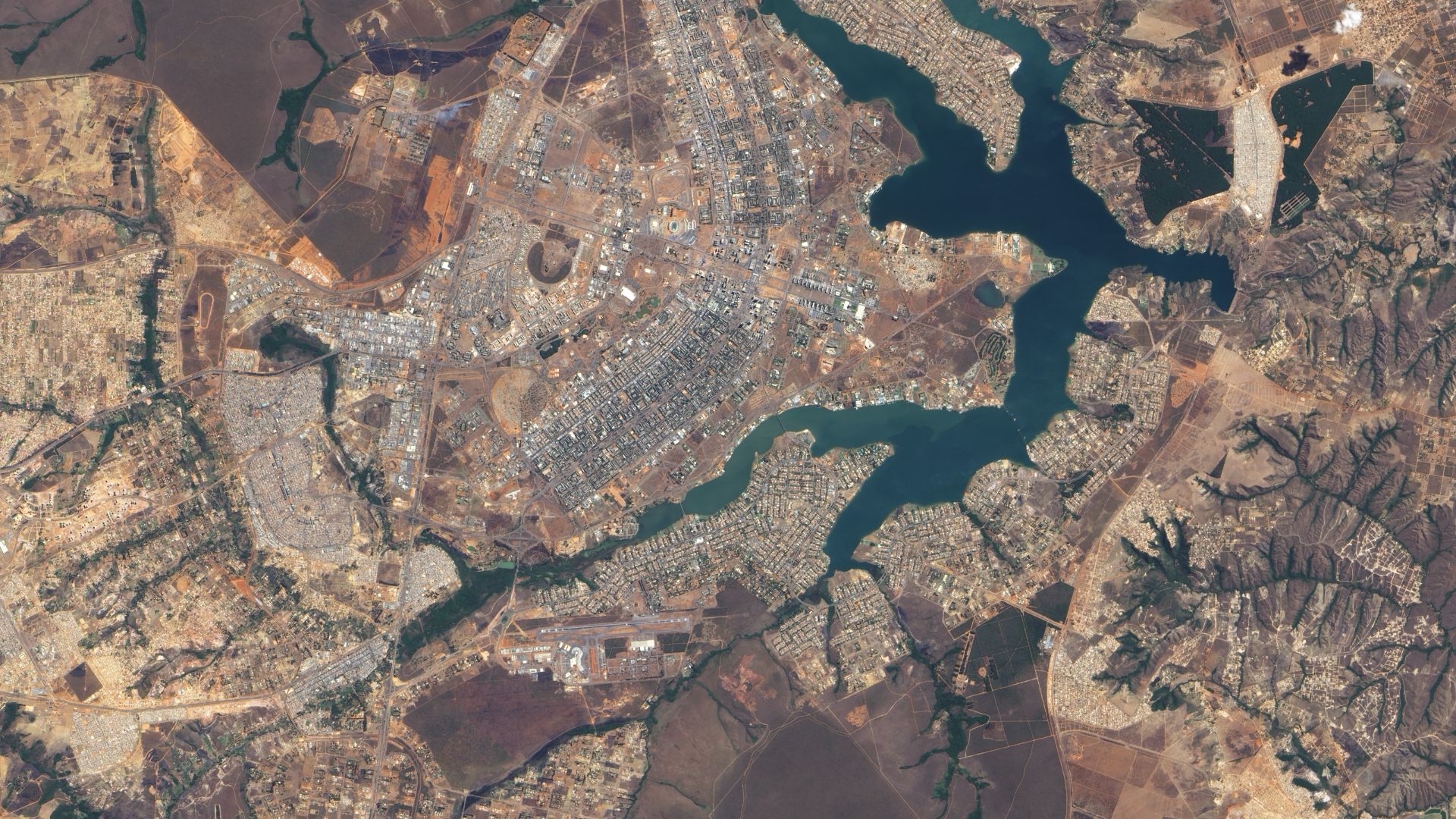
The Giant Spiderweb Of Brasília
Brazil's capital was deliberately planned with a striking overall layout. From orbit, Brasília's major roads and neighborhoods form a shape often compared to an airplane or a bird with outstretched wings. At street level, residents see broad avenues, government buildings, and residential districts. Astronauts can appreciate the city as an enormous architectural design drawn directly onto the landscape.
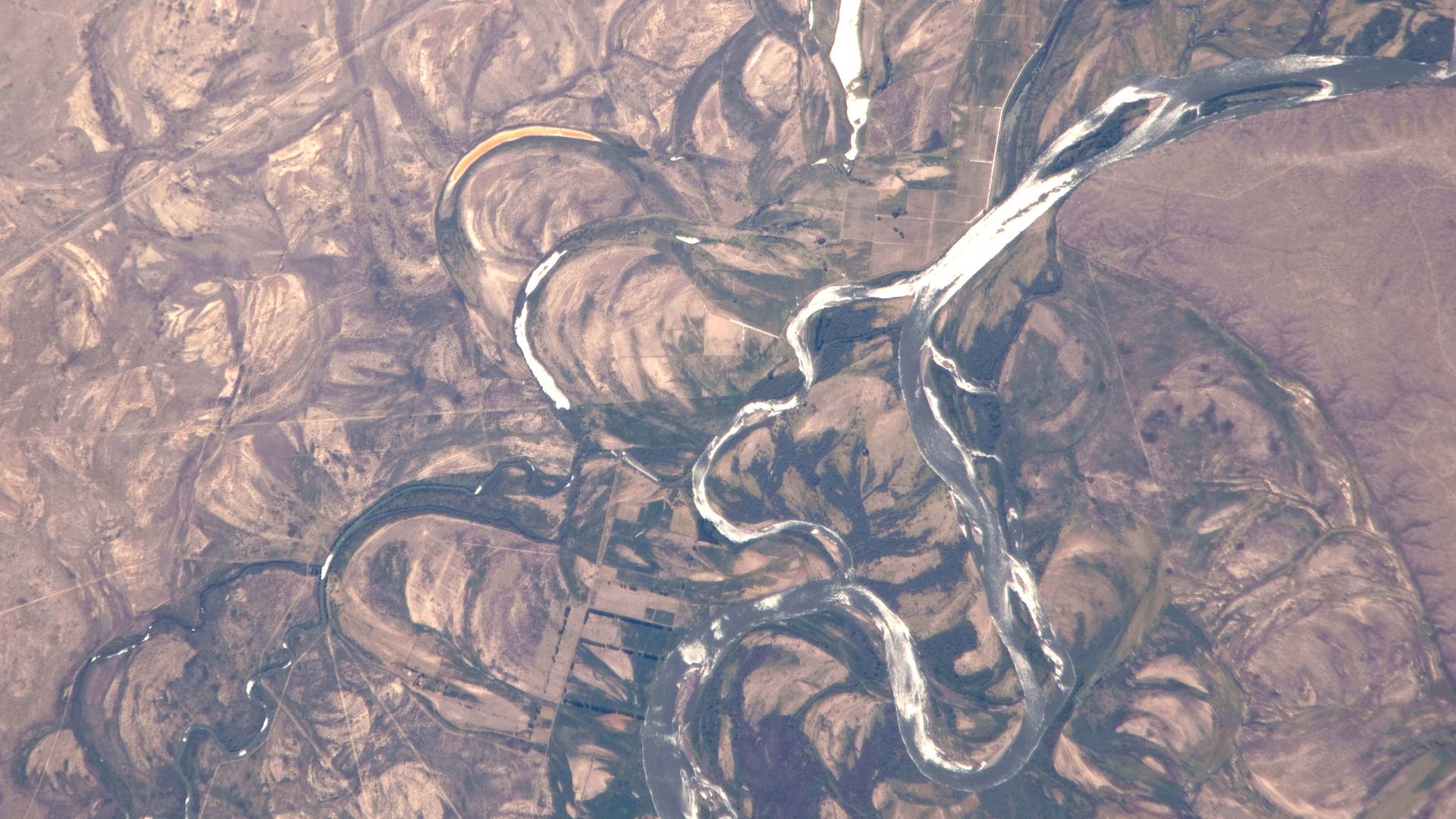
The Winding Rivers Of Patagonia
Argentina's Río Negro floodplain contains extraordinary looping patterns created by rivers changing course over thousands of years. Abandoned channels and oxbow lakes form curves that resemble enormous brushstrokes. On the ground, they appear as isolated wetlands, riverbanks, and dry depressions. From space, astronauts can see the winding history of the river written across the landscape.
 NASA Astronaut photograph ISS022-E-19513., Wikimedia Commons
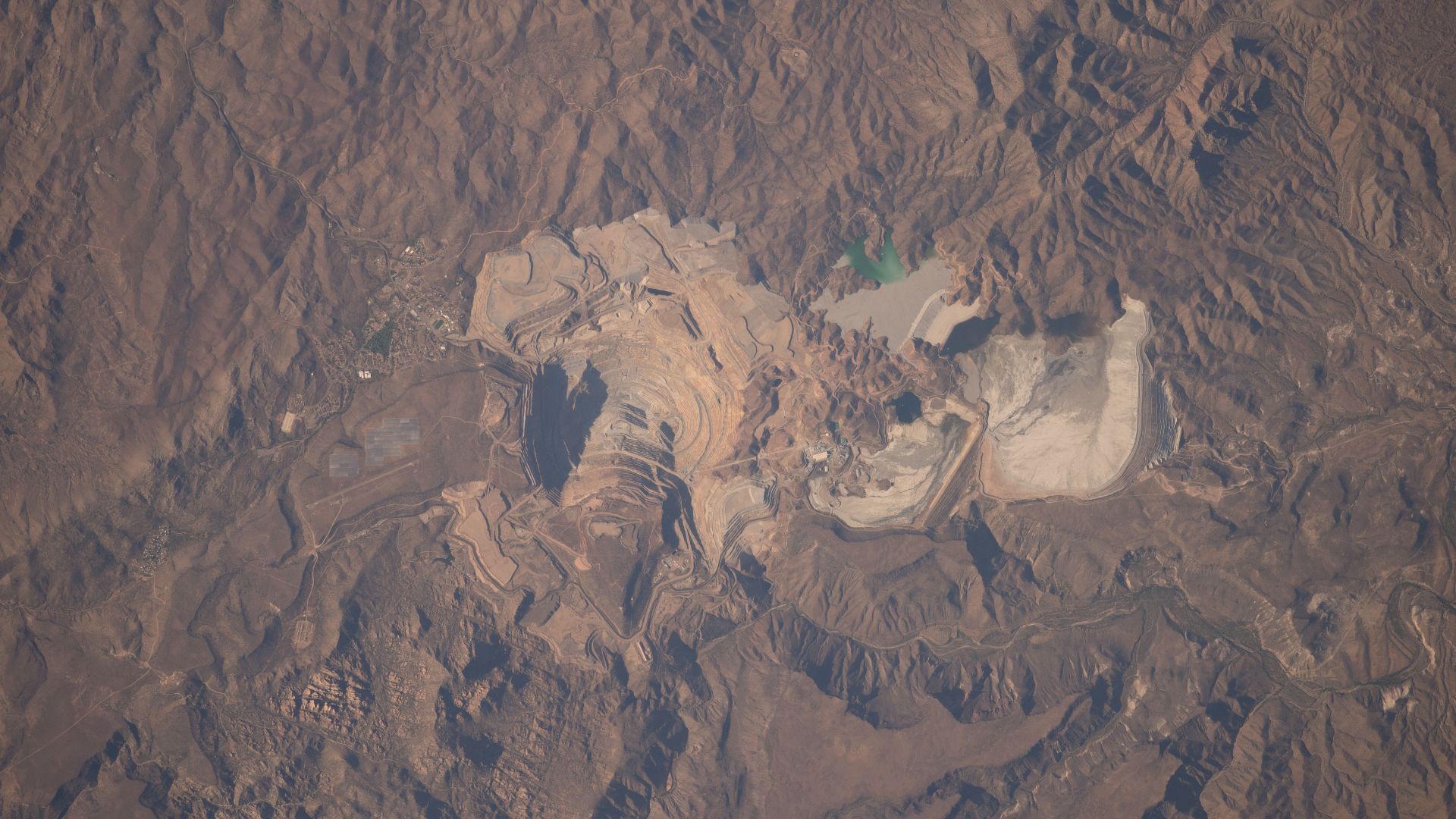
The Giant Mines Of Arizona
Arizona's enormous open-pit copper mines look like gigantic terraced craters when photographed from space. Their spiraling access roads and stepped walls create distinctive circular patterns. Standing near one, visitors see industrial machinery and exposed rock. From orbit, the mines become astonishing geometric scars, revealing the scale of excavation required to extract valuable minerals from beneath the desert.
 Earth Science and Remote Sensing Unit, Lyndon B. Johnson Space Center, Wikimedia Commons
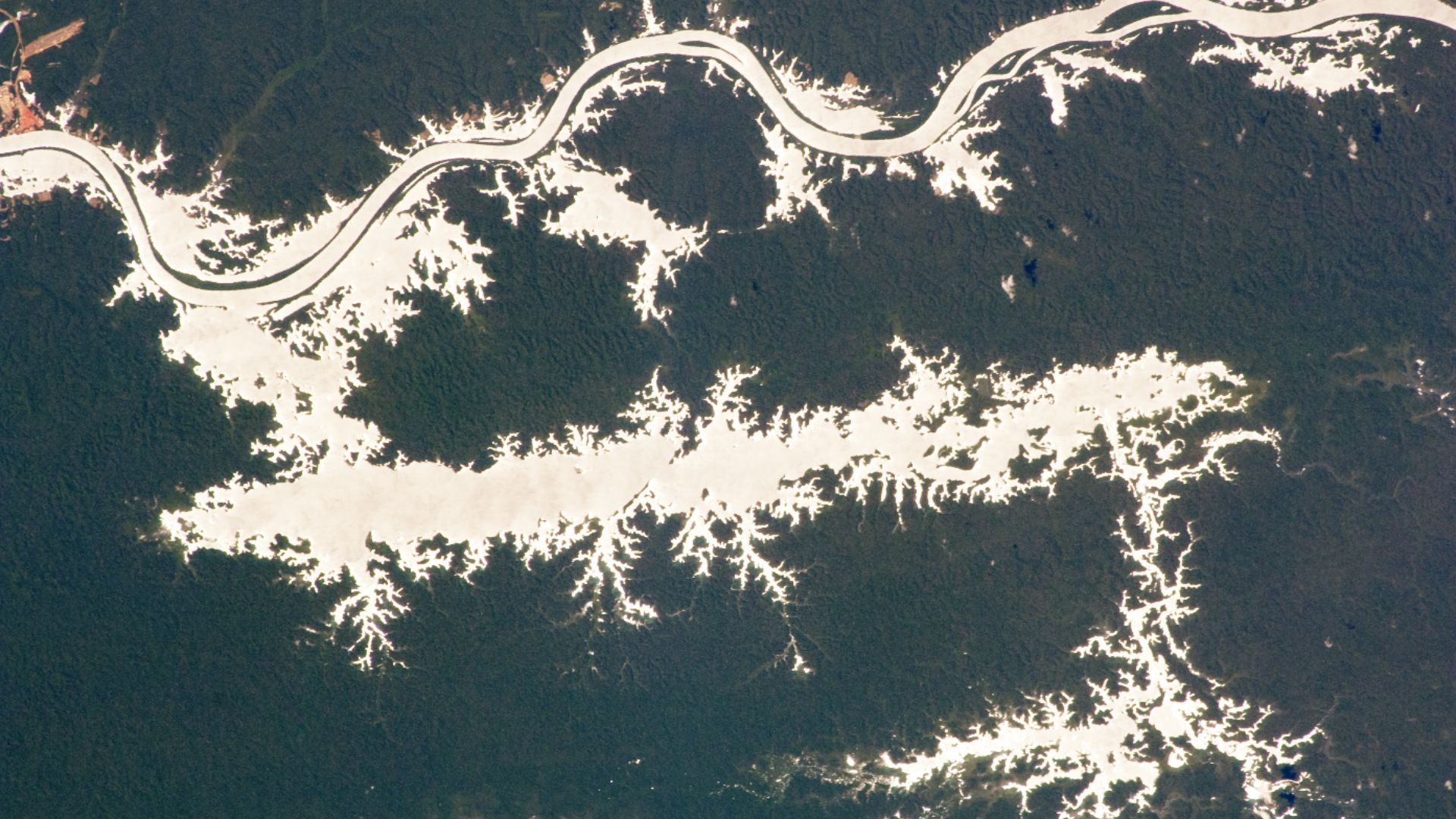
The Glowing Rivers Of Brazil
Brazil's Trombetas River and Lago Erepecu can appear almost metallic when photographed under the right lighting conditions. Sunlight reflecting directly toward an astronaut's camera creates an effect called sunglint, making water stand out brilliantly against the dark rainforest. From a boat, the surroundings look like an ordinary tropical waterway. From space, the rivers can resemble ribbons of polished silver.
 NASA Expedition 20 crew., Wikimedia Commons
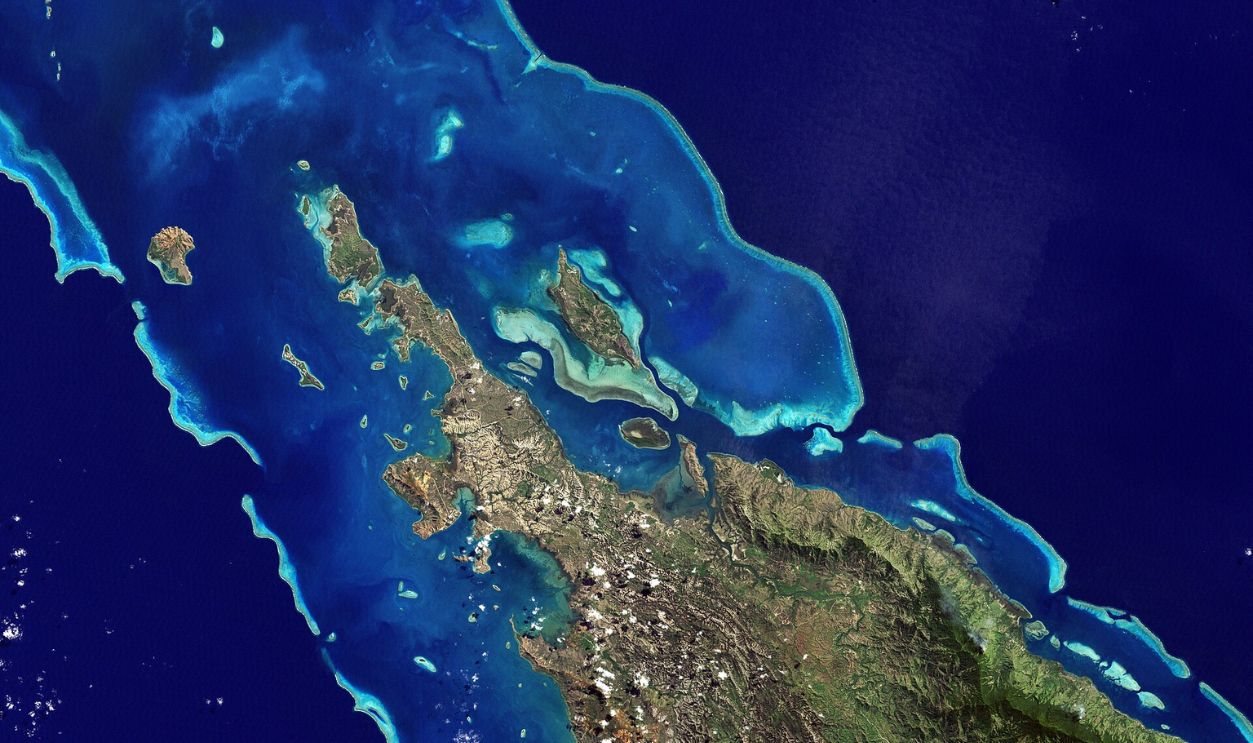
The Alien Reefs Of New Caledonia
The coral reefs surrounding New Caledonia create astonishing patterns of turquoise, deep blue, and pale sand. From the shoreline, visitors encounter beaches, shallow lagoons, and colorful marine life. Astronaut photographs reveal the enormous reef systems as intricate shapes extending across the ocean. Their branching outlines and changing colors make the coastline resemble an abstract painting.
 NASA Goddard Space Flight Center from Greenbelt, MD, USA, Wikimedia Commons
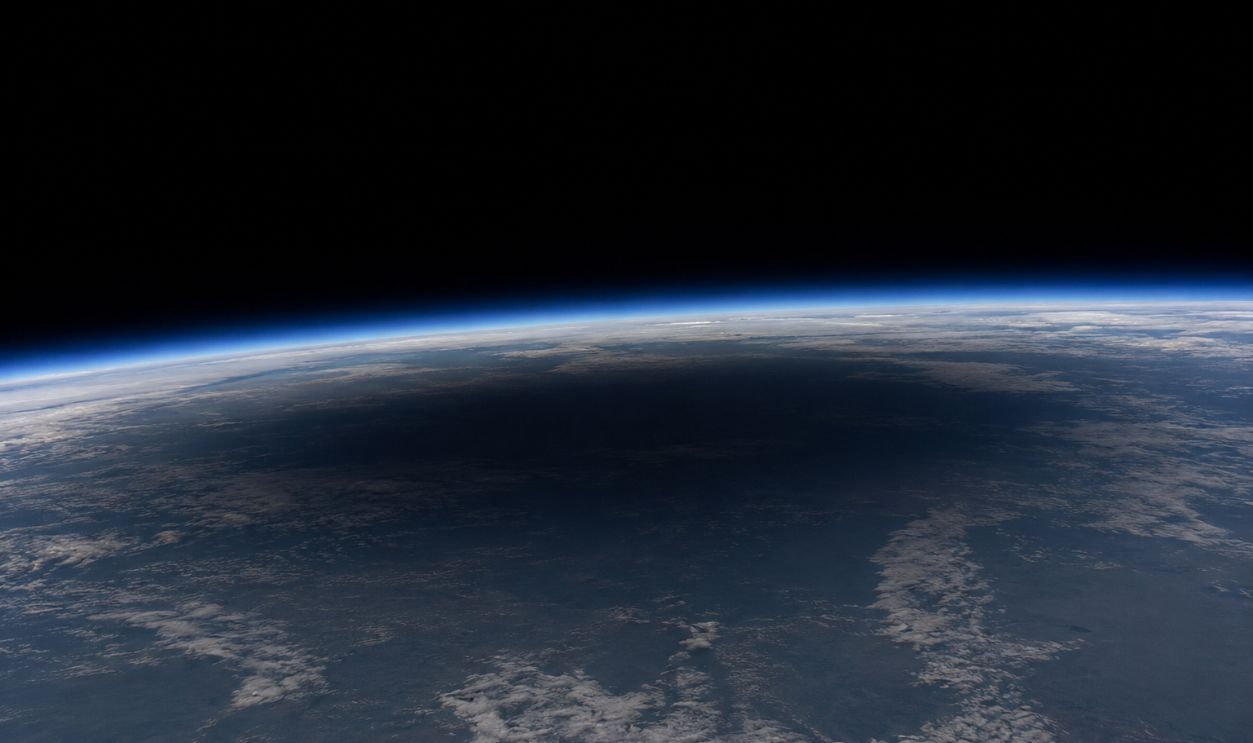
The Giant Shadow Of An Eclipse
During a total solar eclipse, people on the ground experience an eerie darkness as the Moon blocks the Sun. From space, the phenomenon looks completely different. Astronauts can photograph the Moon's enormous shadow sweeping across Earth's surface. Images captured during the April 2024 eclipse showed a darkened region moving across North America, revealing the extraordinary scale of an event that ground-based observers experience only briefly.
 Nearsys, Wikimedia Commons, Enhanced
The Giant Sand Waves Of Niger
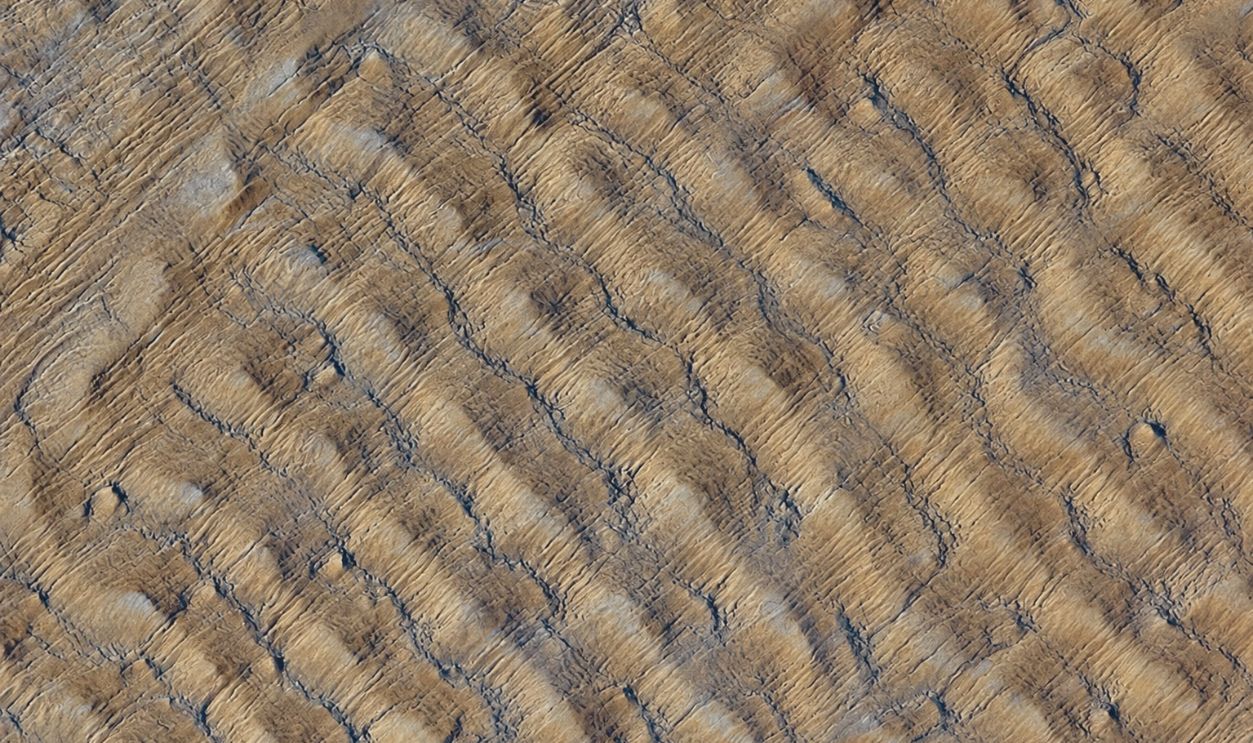
The Ténéré Desert in Niger contains immense fields of sand dunes that form long, repeating ridges. From the ground, travelers see individual hills of sand stretching toward the horizon. Astronaut photographs reveal something much stranger: enormous parallel waves running across the desert, shaped by prevailing winds. The patterns resemble ripples on a beach, except they're spread across a landscape of extraordinary size.
 NASA, Wikimedia Commons, Enhanced
The Strange Spikes Of Siberia
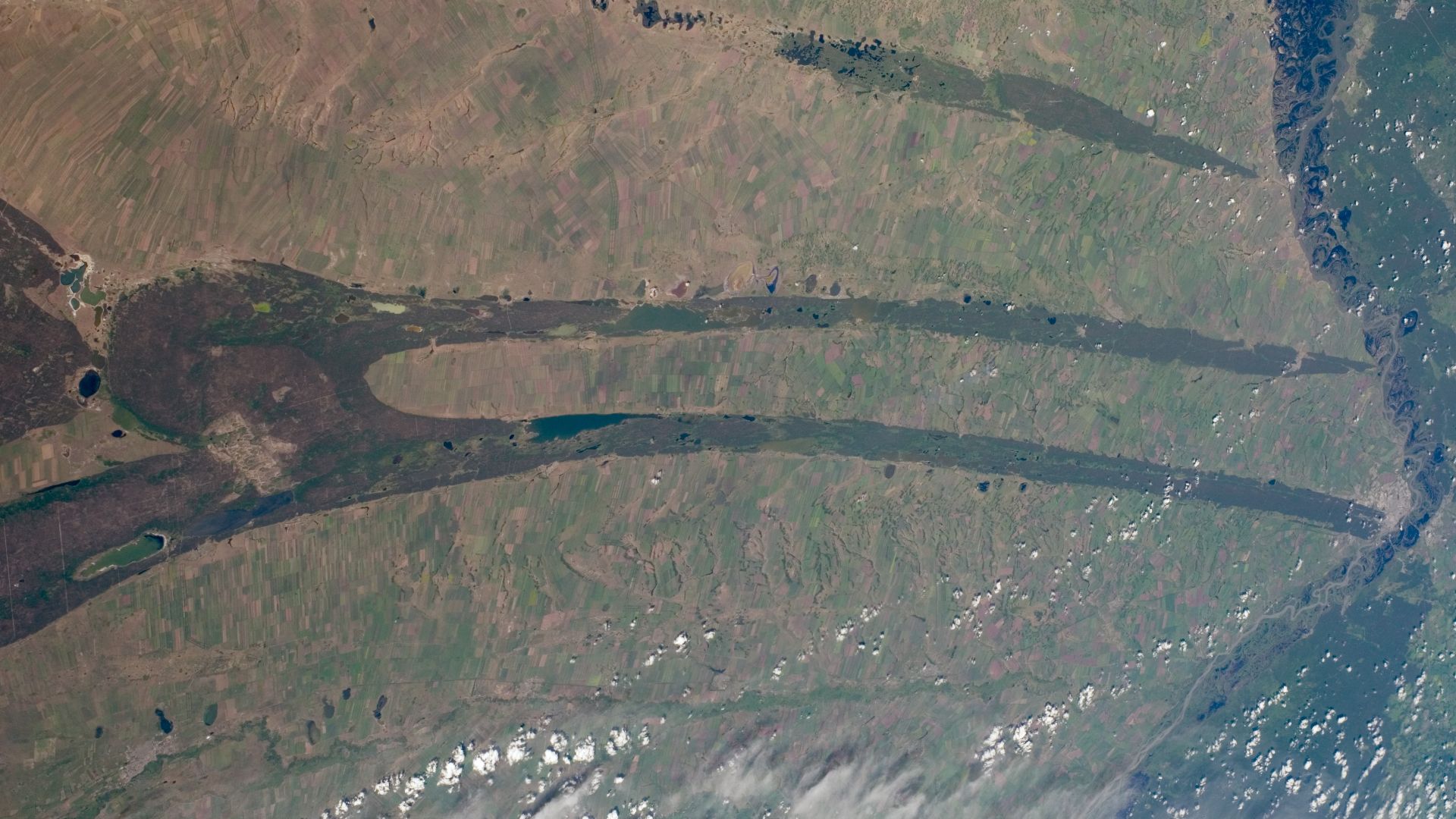
The Kulunda Steppe in southwestern Siberia contains agricultural patterns that resemble enormous spikes or comb teeth. The unusual shapes result from farming and land-use arrangements across the flat landscape. At ground level, visitors would see fields, roads, and cultivated countryside. From orbit, astronauts can recognize the distinctive geometric patterns extending across the Russian steppe.
The Glowing Lakes Of The Andes
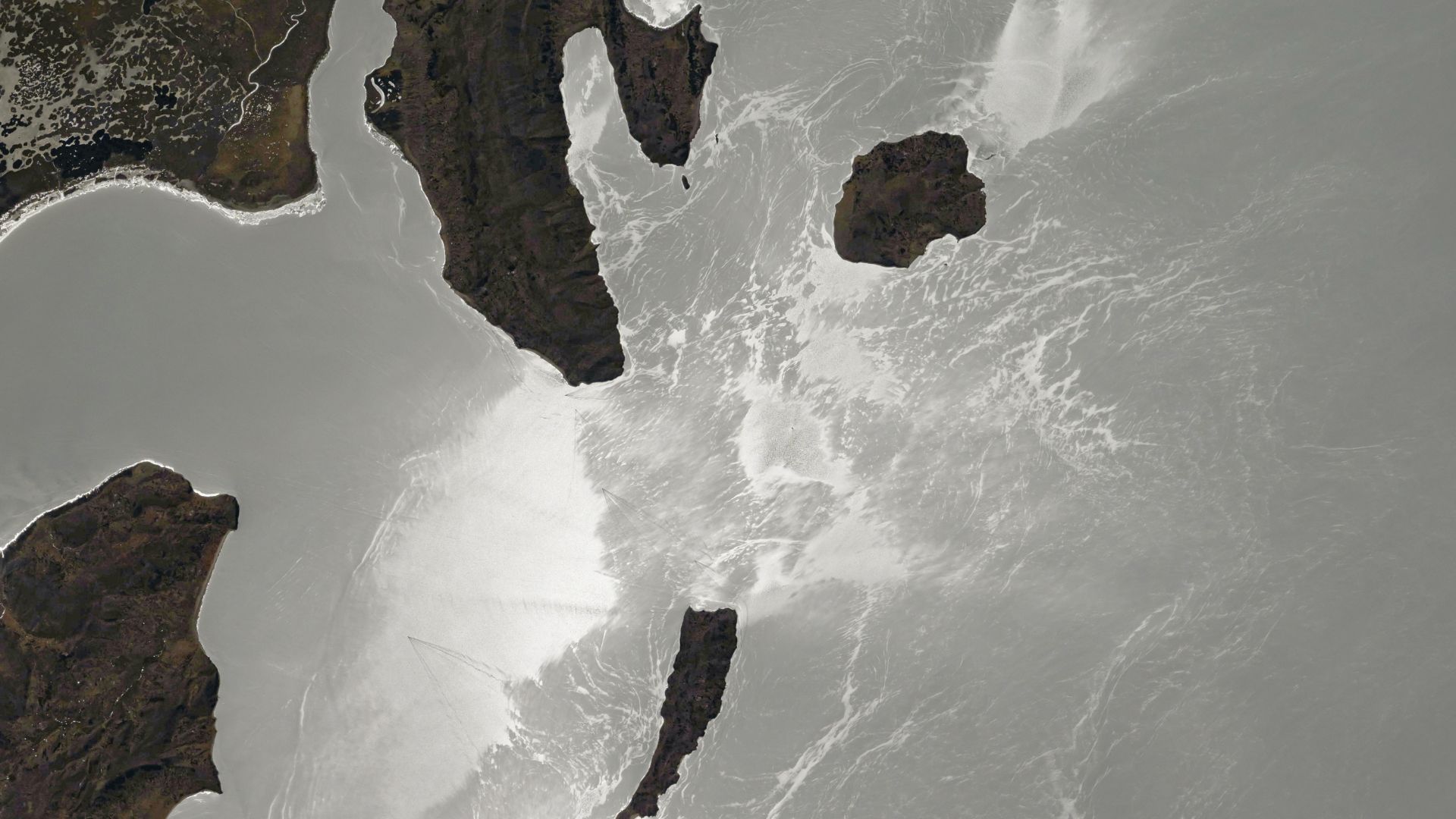
Lake Titicaca, straddling Peru and Bolivia, can look like a glowing sheet of metal from space. Astronauts have photographed complex patterns of reflected sunlight around its islands, created partly by differences in wind and surface conditions. From shore, visitors see a vast high-altitude lake. From orbit, its waters can appear covered in mysterious bright streaks and shimmering shapes.
The Frozen Patterns Of Pangong Lake
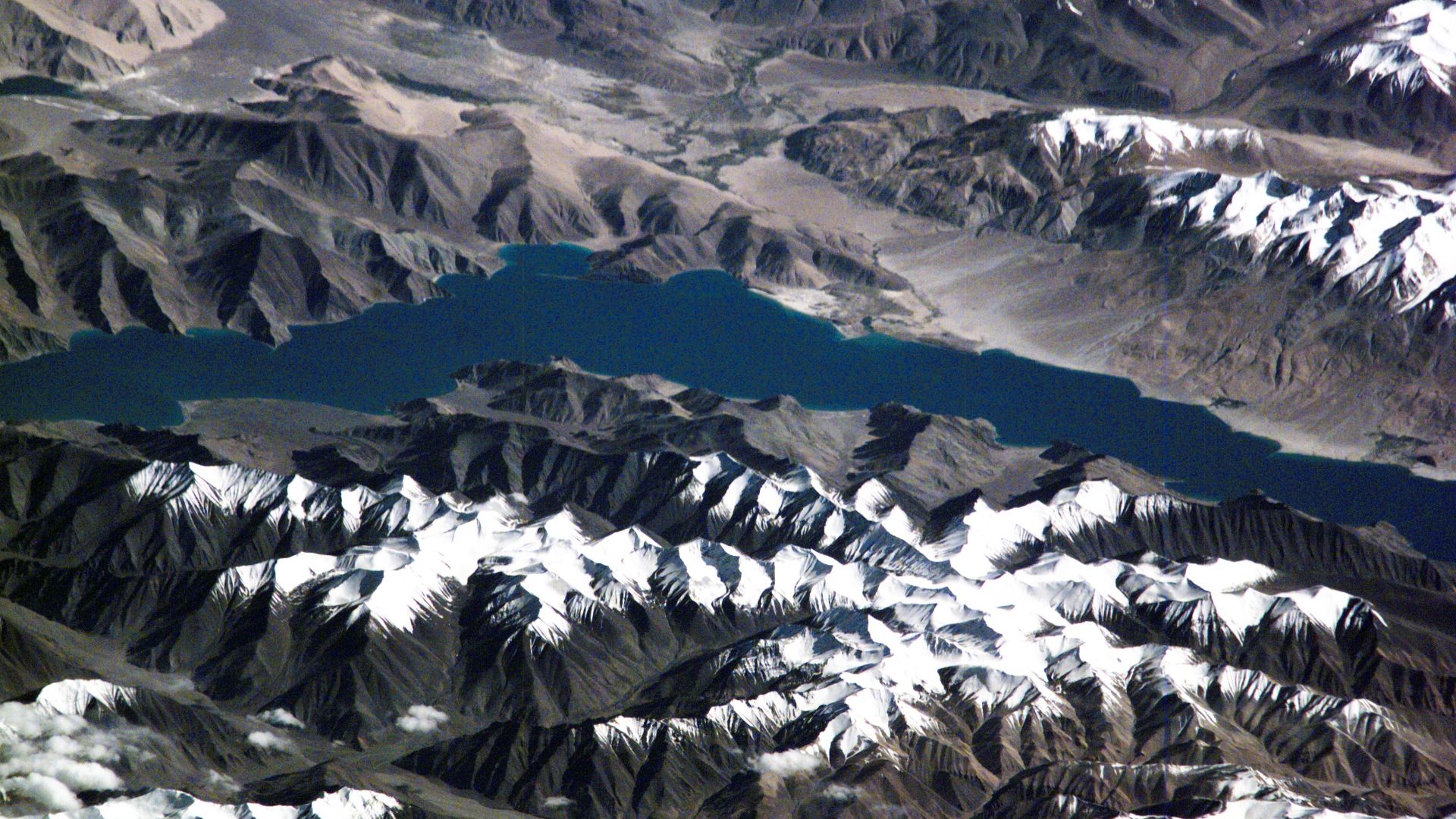
Pangong Lake, high on the Tibetan Plateau, becomes an especially strange sight during winter. Ice covers portions of its long, narrow waters, producing contrasts between frozen surfaces, surrounding mountains, and exposed rock. On the ground, travelers see a remote mountain lake. From space, its elongated shape and winter colors create a striking pattern across the barren high-altitude landscape.
 Earth Science and Remote Sensing Unit, Lyndon B. Johnson Space Center, Wikimedia Commons
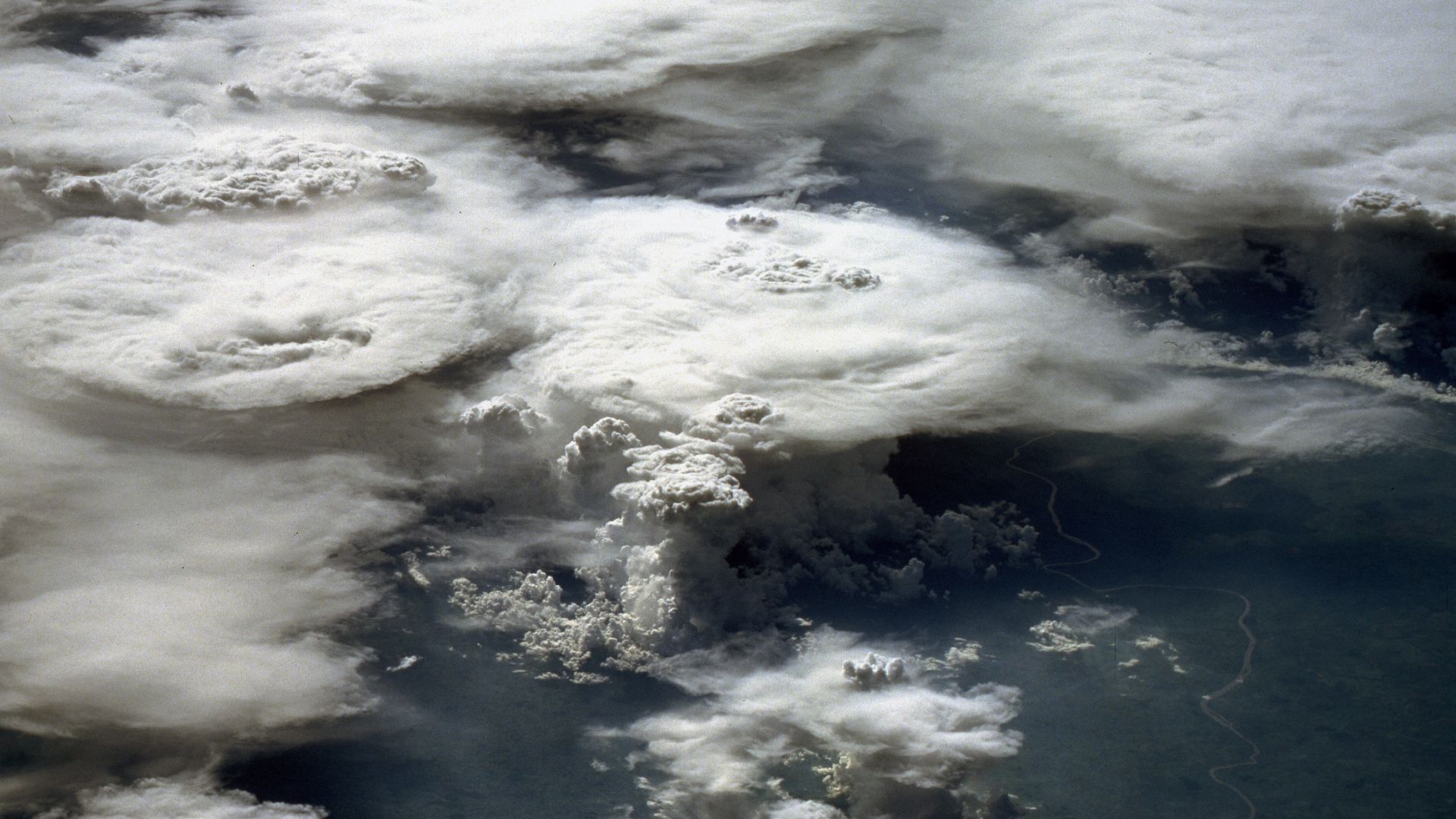
The Enormous Clouds Above Brazil
Thunderstorms look intimidating from the ground, but astronauts can see their entire three-dimensional structure. Above northeastern Brazil, an astronaut photographed towering cumulonimbus clouds casting enormous shadows across lower cloud layers. Their flattened anvil tops and vertical columns looked almost sculptural. From below, people experience dark skies and rain. From orbit, the same storms resemble gigantic floating mountains.
 Earth Science and Remote Sensing Unit, Lyndon B. Johnson Space Center, Wikimedia Commons
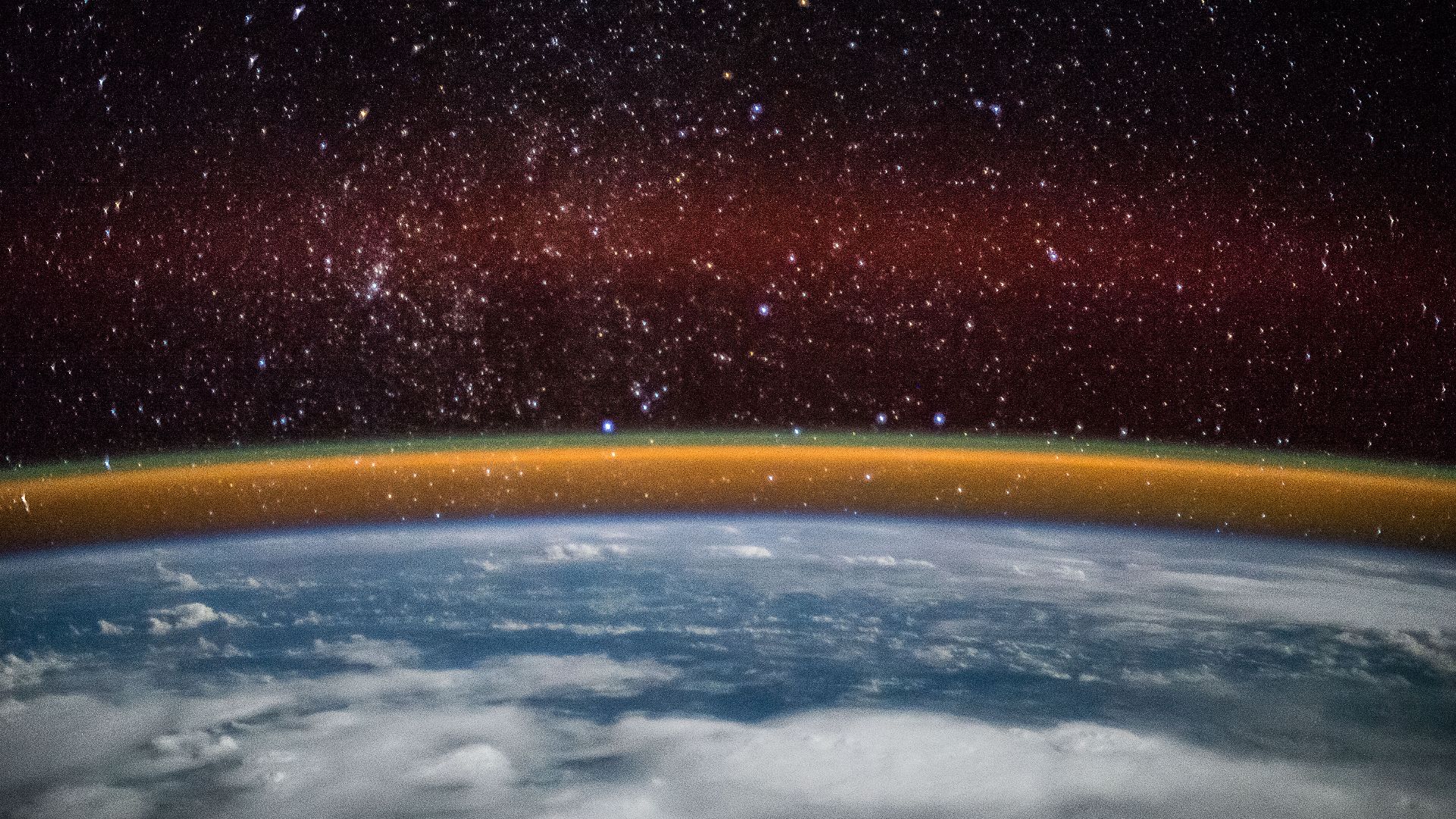
The Green Glow Above Earth
Earth's atmosphere can produce a faint green or orange glow that astronauts photograph along the planet's curved horizon. Known as airglow, the phenomenon results from chemical processes involving atmospheric molecules. It's usually difficult to notice from the ground. From orbit, however, the glow can form a delicate luminous band, making Earth resemble a planet surrounded by an illuminated halo.
 NASA/Samantha Cristoforetti, Wikimedia Commons
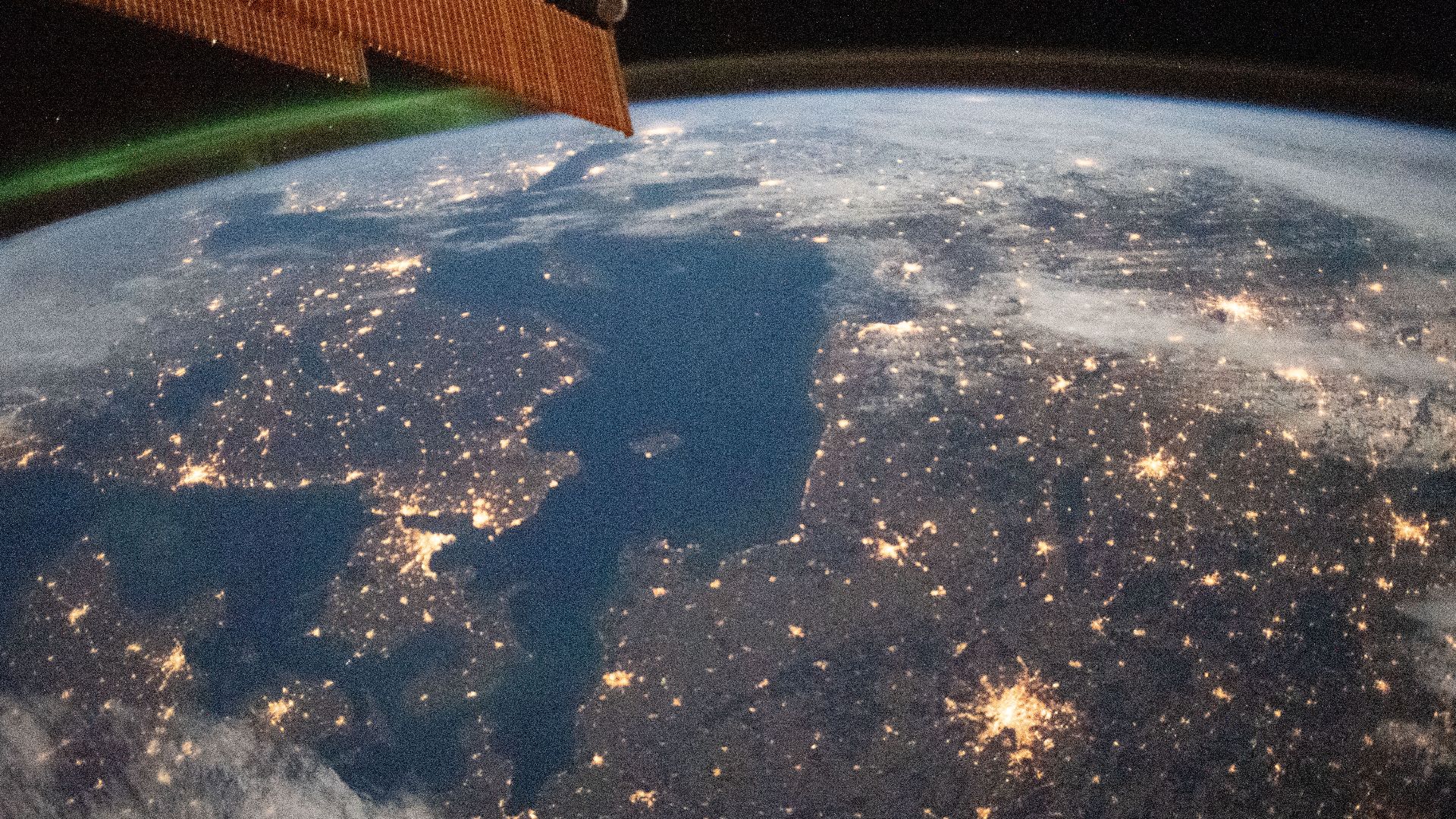
The City Lights Of Europe
From street level, London, Paris, and Amsterdam seem like separate cities divided by countryside and water. But astronaut photographs taken at night reveal sprawling networks of lights connecting towns, highways, and metropolitan areas. The dark English Channel and North Sea provide a dramatic contrast. From orbit, the familiar geography of Europe becomes a glittering web of human settlement.
You May Also Like:
Real Rover Photos From Mars That NASA Still Can't Fully Explain
NASA Just Confirmed Something Strange: The Earth Is Getting Darker
Scientists are investigating a strange signal coming from deep beneath Earth's surface.