Lives Reshaped In The Wild West
Life on the American frontier was far more complicated than the stories most history books tell. Some settlers were taken captive during conflicts, only to reappear years later with new identities, loyalties, and ways of life. Their remarkable experiences reveal a lesser-known side of frontier history, where the lines between two very different worlds were not always so clear.
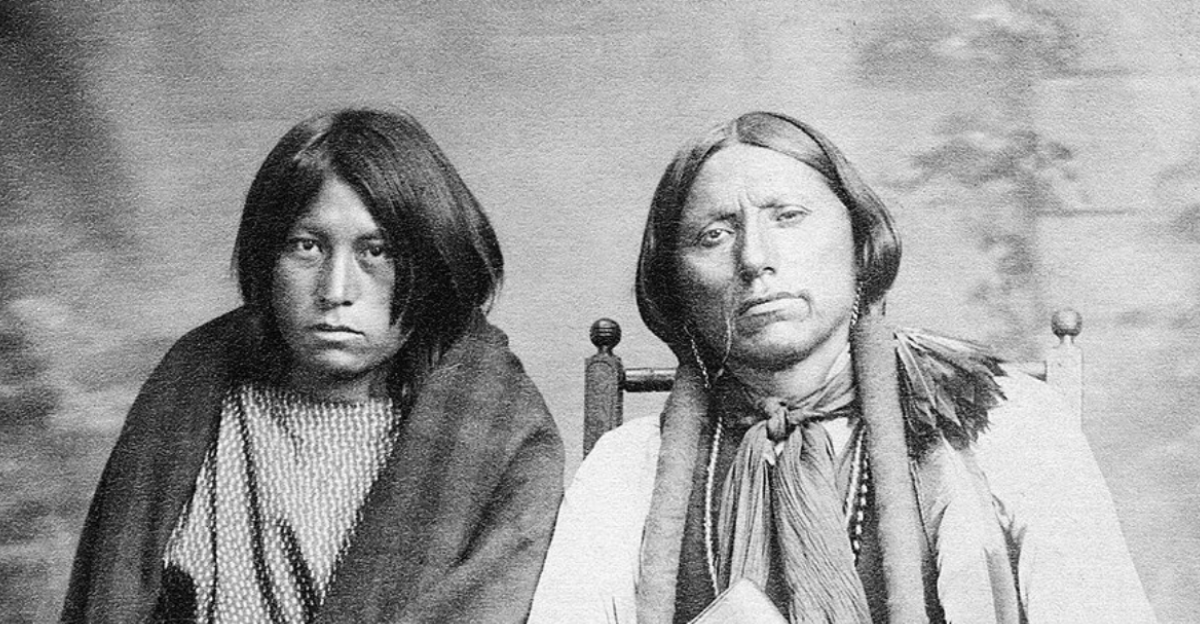 George A. Addison, Wikimedia Commons
Herman Lehmann Was Seized In Texas
In 1870, Apache raiders attacked near Mason County, Texas, and eleven-year-old Herman Lehmann was taken while tending fields with his family. His sisters escaped unharmed, but Herman was taken by Apaches. He was just a child caught in the violence of frontier clashes.
 Imagicomm Entertainment, Wild West Chronicles (2020-)
Life With The Apache
The Apaches carried Herman west and delivered him to Chief Carnoviste. Under the chief’s command, he learned horsemanship, marksmanship, and the ways of war. Though the discipline pressed hard on him, he gradually adjusted to his role within the camp.
 Imagicomm Entertainment, Wild West Chronicles (2020-)
A Fighter Among Them
Herman grew into a skilled warrior, even joining raids against settlers. The boy who once worked a Texas farm now lived fully within Apache ways. In battles and hunts, he earned respect, no longer seen as a prisoner but as one of their own.
 Imagicomm Entertainment, Wild West Chronicles (2020-)
Shift To The Comanche
After a clash with his Apache group, Herman wandered alone until Comanche warriors found him. They brought him into their tribe, where he again gained a place. The Comanche treated him as family, giving him a role that deepened his distance from Texas roots.
 Unstated
(Life time: Unknown), Wikimedia Commons
Return To Texas
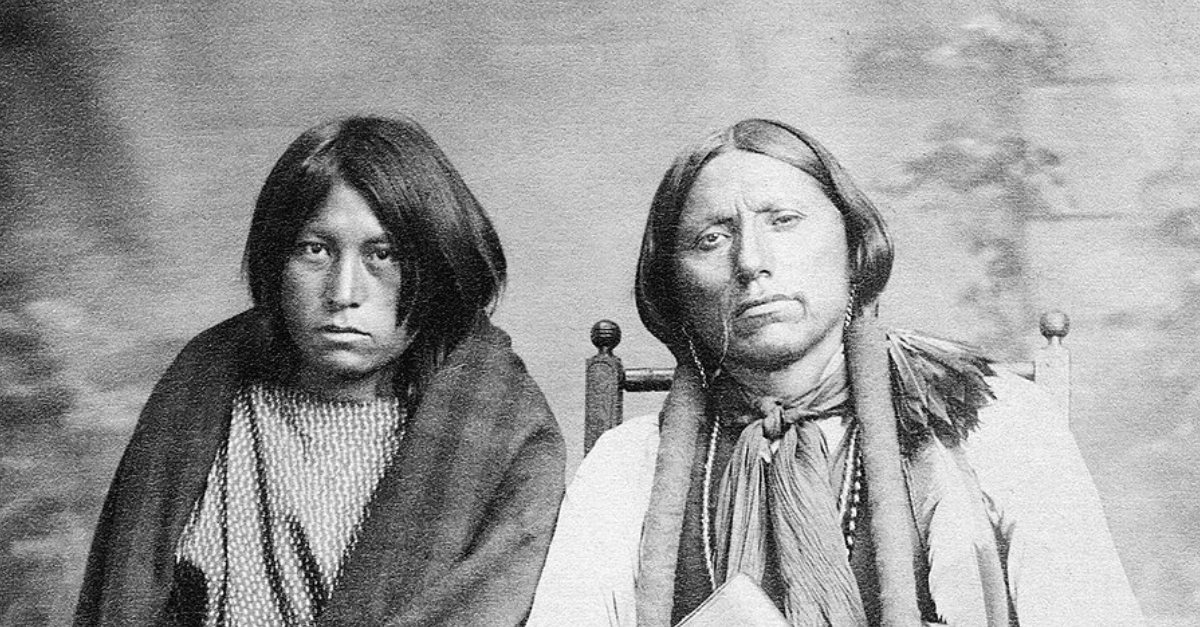
In 1877, US troops captured Herman and returned him to his mother the following year. Rejoining Anglo life felt impossible at first. He struggled with language, customs, and neighbors who feared his past. His life remained divided—part Comanche, part Anglo, and never fully either.
 Imagicomm Entertainment, Wild West Chronicles (2020-)
Olive Ann Oatman Was Attacked In The Desert
The Oatman family, in 1851, moved west through Arizona’s barren land. There, Yavapai warriors ambushed their wagon, killing most of the group. Thirteen-year-old Olive and her sister Mary Ann were dragged away as captives, while their brother Lorenzo lay wounded and left behind.
 Benjamin F. Powelson, Wikimedia Commons
Life With The Yavapai
The sisters were taken north to a Yavapai village where they worked long hours, carried heavy loads, and faced poor treatment. During this time, Olive clung to Mary Ann for comfort, the only link to her lost family. The girls waited, never knowing what fate would follow.

Traded To The Mohave
About a year later, the Yavapai exchanged Olive and Mary Ann to the Mohave. Immediately, the Mohave tattooed blue lines across Olive’s chin—a mark worn by Mohave women. That tattoo bound her to her new community and became a symbol settlers never forgot.
 Loryea & Macaulay, Souvenir Photographic Studio, Wikimedia Commons
Loss And Survival
Mary Ann eventually died during a devastating period of food shortages brought on by severe drought, leaving Olive to face life without her sister. Olive remained with the Mohave, adopting their clothing, customs, and daily routines. Although she carried the grief of losing her family, she also found a sense of belonging within a community that had once seemed entirely unfamiliar.

A Captive Returns
In 1856, at eighteen, Olive was released near Fort Yuma after negotiations. Her tattooed face astonished Americans, and her story filled newspapers, books, and lecture halls. To many, she became the most visible reminder of captivity on the western frontier.
 George Baker, Wikimedia Commons
The Rufus Buck Gang Was Made Up Of Young Outlaws
Rufus Buck, barely out of his teens, formed a gang in Indian Territory in 1895. His partners were Sam Sampson, Maoma July, and brothers Lewis and Lucky Davis. Fueled by resentment against colonists, they sought revenge through a violent spree across territory.
 United States. Bureau Of The Census, Wikimedia Commons
The Abduction Begins
During their rampage, the gang stormed homes and attacked innocent bystanders during the spree. Their short terror hit everyone, from settlers to travelers. They even shot Deputy US Marshal John Garrett near Okmulgee and, on the same route…

Mrs Wilson Taken
They seized Mrs Wilson, forcing her away from the safety of her family. The day was July 28, 1895, when the Rufus Buck Gang ambushed travelers near Okmulgee, then held the woman at gunpoint, and turned the road into a place of terror.
 unknown photographers, Wikimedia Commons
A Crime That Shook The Territory
The gang brutalized Mrs Wilson while she remained in captivity. Word of the occurrence traveled quickly through Creek Nation and shocked both settlers and Native families. Her abduction revealed the gang’s behavior and pushed lawmen into faster pursuit, determined to end the violence.

A Gang Destroyed
Rufus Buck and his men faced trial for all of their crimes and were sentenced to hang. The executions took place in 1896 in Fort Smith, Arkansas. Their downfall marked an end to one of the most violent sprees in frontier memory.

Mary Jemison Became A Victim Of A Raid At Dawn
In the mid-1750s, French-allied Shawnee warriors swept into the Jemison farm in Pennsylvania. Twelve-year-old Mary was seized during the attack, while most of her family was killed. Bound to a line of prisoners, she was forced westward into a future she could not imagine.
 Doug Kerr from Albany, NY, United States, CC BY-SA 2.0, Wikimedia Commons
The March West
With each passing day, she was led farther into unfamiliar territory, exhausted by the journey and struggling with hunger. Thoughts of her parents weighed heavily on her as unfamiliar voices and surroundings became her new reality. Far from everything she had ever known, she faced the frightening realization that returning home might no longer be possible.
 James E. Seaver, Wikimedia Commons
Given To The Seneca
Her captors eventually traded her to the Seneca. Two women welcomed her into their household, naming her Dehgewanus to honor a relative who had died. The violence that stole her family also anchored her to another.
 Andre Carrotflower, Wikimedia Commons
A Different Life
Mary took on the tasks of a Seneca woman, from planting corn to caring for hides. She even married within the tribe and raised children, which built bonds that anchored her firmly into the community. Over time, the rhythms of Seneca life shaped her world.
 Henry Kirke Bush-Brown, Wikimedia Commons
Her Choice
When officials later offered her release, Mary refused. She explained that her family now lived among the Seneca, and her children bound her to them. What began with violence ended with loyalty, as she chose to remain with the people who had become her own.
 Harriet S. Caswell (author of book in which this image appears), Wikimedia Commons
Adolph Korn Was Taken At 10
Ten-year-old Adolph Korn tended sheep in Texas when Apache raiders struck in 1870. They seized him and carried him into the frontier. That single act tore him from his family and thrust him into a new life he never imagined.

Into Comanche Hands
Korn moved from Apache captors to Comanche warriors. And with them, he learned to ride horses, track buffalo, wield weapons, etc. That farm boy became a fighter, shaped by skills that stood far from the quiet fields he once called home.
 Unstated
(Life time: Unknown), Wikimedia Commons
Life As A Warrior
Comanche life demanded toughness, so Korn faced harsh trials. However, he earned respect as he mastered survival. The tribe then no longer viewed him only as a captive. In time, he stood among them as a warrior, bound to his adopted people by loyalty.
 Unknown authorUnknown author or not provided, Wikimedia Commons
Return Without Belonging
Years later, Korn returned to Anglo-American society. But the reunion felt hollow. Family ties seemed thin, and the rhythms of town life no longer matched his own. A place that should have felt familiar instead left him unsettled and lost, which is why he spent the last years of his life in a cave.
 W. H. Barribal
(Life time: Unknown), Wikimedia Commons
The Captured By Scott Zesch
When Scott Zesch stumbled upon the grave of his distant relative, Herman Lehmann's contemporary Adolph Korn, he uncovered a family story too fascinating to ignore. How had a young settler boy become so deeply immersed in Native American culture? That question inspired Zesch to write The Captured, a book tracing the remarkable experiences of eight children whose lives took unexpected turns on the American frontier.