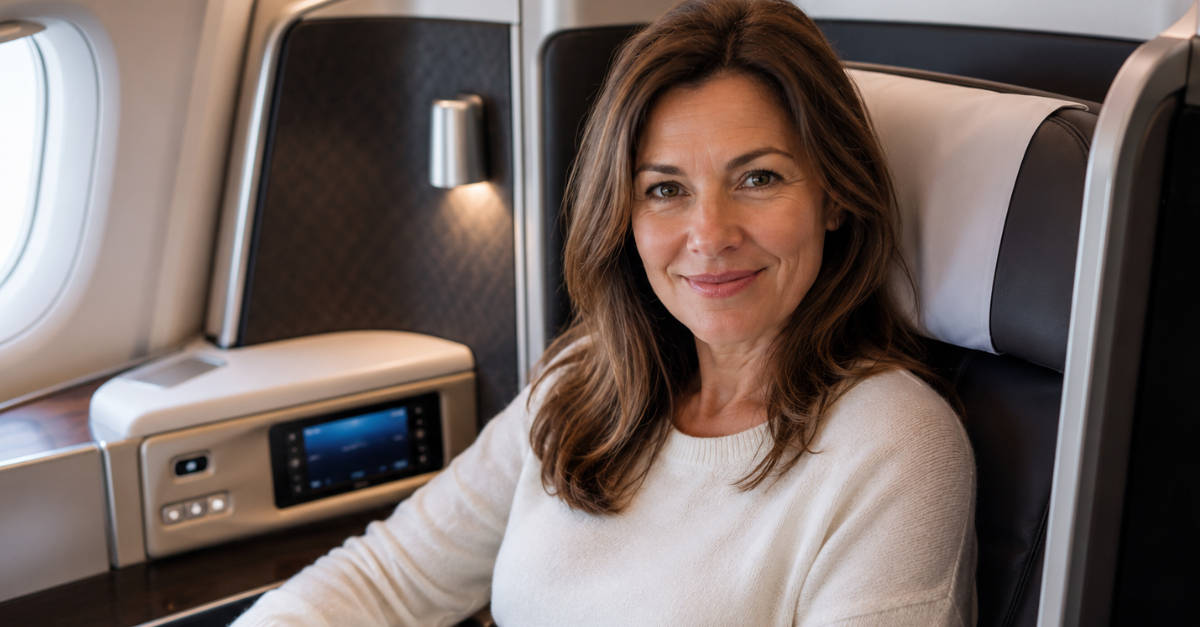
A First-Class Problem...
Winning a little money in the lottery should be exciting. For one reader, though, it created an unexpected dilemma. She can finally afford to fly first class on her family's next vacation—but only for herself. That would leave her husband in coach with their two children under 10.
So the question is simple: does enjoying the upgrade make her a terrible wife?

This Isn't Really About The Seat
At first glance, this sounds like an airline question. It isn't. Bigger seats, more legroom, and—depending on the airline and route—extras like upgraded meals, complimentary drinks, priority boarding, and more attentive service aren't really what this debate is about. The real issue is whether it's fair for one parent to enjoy a luxury while the other parent takes on almost all of the work during the flight.

Is This Even Allowed?
Yes. Airlines don't require both parents to sit together. As long as young children are seated with a responsible accompanying adult, families can split between cabins if they choose. In the United States, the Department of Transportation now requires airlines to seat children age 13 and younger next to an accompanying adult at no additional charge whenever adjacent seating is available in the airline's seating class. Whether one parent sits somewhere else is generally up to the family.
Flying With Two Young Kids Is Work
Children under 10 usually need help during a flight, whether it's getting settled, finding entertainment, opening snacks, making bathroom trips, or simply staying occupied for a few hours. That said, 'under 10' covers a wide range of ages. Two independent 9-year-olds are a very different challenge from a toddler and a preschooler who need constant supervision.
Does That Automatically Make It Selfish?
Not necessarily. Families divide responsibilities every day. One parent cooks while the other cleans. One handles bedtime while the other gets groceries. Healthy relationships aren't built on making every task perfectly equal. They're built on both people feeling that things balance out over time.
Equal And Fair Aren't Always The Same Thing
That's an important distinction. Equal means everyone gets exactly the same thing. Fair means both people feel respected and valued, even if one person occasionally gets the better end of a particular situation. Many successful marriages are built on fairness rather than strict equality.

The Flight Itself Matters Too
A two-hour domestic flight and an overnight international flight aren't the same experience. Spending a couple of hours managing the kids alone is one thing. Doing it for eight or ten hours while the other parent relaxes in first class could understandably feel very different. Context matters.
So What's Really Being Judged?
Interestingly, it isn't the first-class seat. Most people wouldn't think twice if someone used unexpected money to buy themselves a nice watch, a weekend away with friends, or tickets to a concert. Flying first class feels different because the luxury happens while someone else is handling a responsibility that would normally be shared.
Is The Lottery Money Relevant?
Every couple handles unexpected money differently. Some treat it as personal spending money. Others immediately view it as part of the family's shared finances. Neither approach is automatically right or wrong, but it's another reason this question doesn't have a universal answer.

The Better Question To Ask
Instead of asking whether flying first class makes someone a terrible wife, it may be more helpful to ask something else. Will this decision leave one spouse feeling appreciated—or feeling like they got the short end of the stick? That question is much more likely to lead to the right answer, and that's exactly where we'll go next.

Communication Comes First
Before anyone upgrades the ticket, the most important conversation probably isn't with the airline. It's with each other. Assumptions can cause far more problems than the seating assignment itself. Both spouses should have an honest conversation about whether they're genuinely comfortable with the arrangement before any money is spent.

Don't Accept 'It's Fine' Too Quickly
Sometimes 'it's fine' really does mean it's fine. Other times, people say it because they don't want to disappoint someone they love or create unnecessary conflict. That's why it's worth making sure both spouses are being completely honest about how they feel before treating the issue as settled.

First Class Usually Means Being Separate
On many airlines, first-class passengers board before the main cabin and are separated from economy by a curtain, divider, or bulkhead. In practical terms, that means the parent sitting up front usually won't be available to regularly help with snacks, bathroom trips, or keeping the children entertained during the flight.
There Are More Options Than Just Yes Or No
The decision doesn't have to be all or nothing. Some families might put the money toward premium economy or extra-legroom seats for everyone instead of one first-class ticket. Others might save the money for a future adults-only trip when neither parent is responsible for looking after young children during the flight.
Think About The Whole Vacation
It's easy to focus on a few hours in the air, but that's only the beginning of the trip. If one spouse starts the vacation feeling exhausted or underappreciated, those feelings can easily last longer than the flight itself. Looking at the entire vacation instead of just the upgrade often changes the decision.

On The Other Hand...
Parents don't stop being individuals simply because they have children. Enjoying an occasional personal luxury doesn't automatically make someone selfish. Many healthy couples encourage each other to enjoy opportunities that happen to benefit only one person, provided both people genuinely feel good about the decision.

Marriage Isn't About Perfect Equality
Long marriages rarely involve every benefit and every responsibility being divided exactly down the middle. One spouse may occasionally get an opportunity the other doesn't. What usually matters more is whether both people believe the relationship is fair overall, not whether every individual moment is perfectly equal.

Try Reversing The Situation
One useful way to think about the decision is to reverse it. If the husband had won the lottery money and wanted to try first class while she stayed in coach with the children, would that arrangement still feel fair? Sometimes looking at the situation from the opposite perspective makes the answer much clearer.

It's Bigger Than The Kids
The children probably won't remember which cabin each parent sat in years from now. The bigger issue is whether both parents feel supported and respected during the trip. That's what is most likely to influence whether the experience becomes a happy family memory or a source of lingering frustration.
So...Does This Make Her A Terrible Wife?
Based solely on the information in the question, no. Wanting to experience first class one time doesn't make someone a terrible wife. The deciding factor isn't the seat—it's whether both spouses genuinely agree with the plan, understand what it means for the flight, and feel the arrangement is fair.
Our Take
If both spouses honestly agree that this is a one-time treat and neither feels pressured into accepting it, there's nothing inherently wrong with taking the upgrade. But if either person has lingering doubts or expects resentment to build, skipping first class this time may be the wiser choice. A bigger seat is nice. A strong marriage is worth considerably more.

You Might Also Like:
Sources: 1