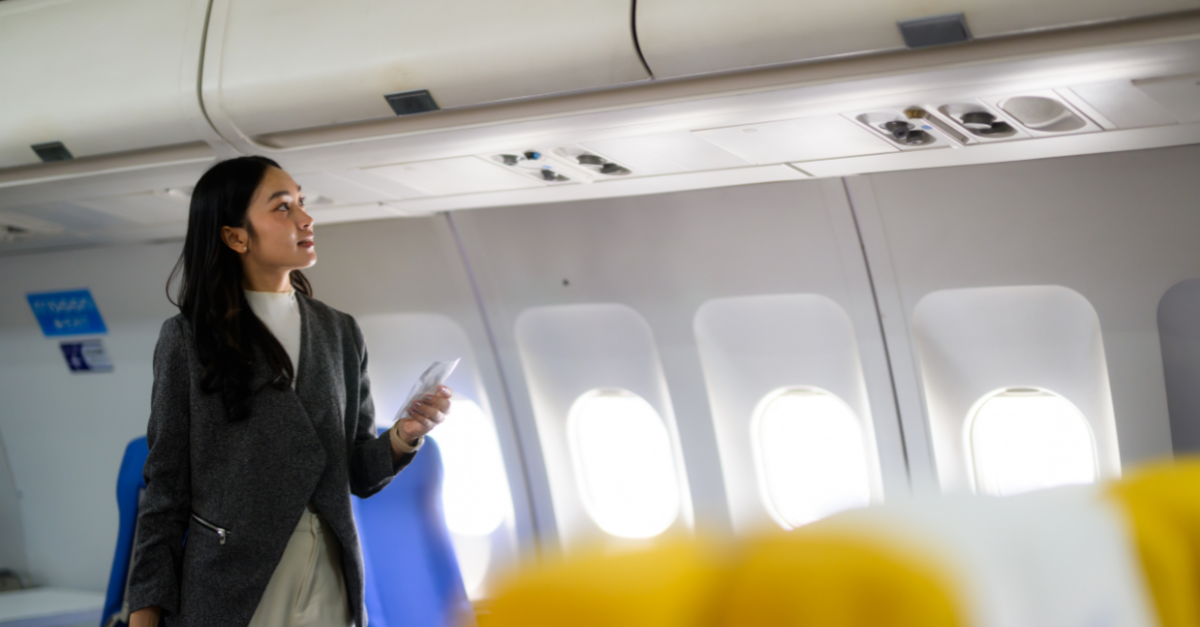
The youngest employees in today’s workforce are arriving at the airport with a different set of expectations. They are not rejecting business travel, but they are less willing to accept a trip simply because that is how work has always been done. Corporate Travel Management’s 2025 survey of 702 Millennial and Gen Z employees found that 55 percent wanted to travel more for business, while 57 percent said business travel was very important to career progression. At the same time, separate SAP Concur research found that 58 percent of Gen Z travelers said their current travel frequency did not match what they wanted, which suggests the story is more complicated than younger workers simply asking for more flights.
That split matters because Gen Z is not a single block of enthusiastic frequent flyers. In SAP Concur’s 2025 global survey, 34 percent of Gen Z respondents said they were traveling more than they would like, while 24 percent said they were traveling less than they would like. Amex GBT and Ipsos also found more mixed feelings among Gen Z than among older groups, with 45 percent of Gen Z respondents reporting a lot or a fair amount of disruption in their work travel plans. For employers, the message is less about raising trip counts and more about making each trip feel worthwhile.

There is also a practical reason for this shift. Many Gen Z employees entered the workforce during or after the pandemic, giving them a distinctly different introduction to corporate travel than earlier generations. Amex GBT’s research highlights this difference, while only 53 percent of Gen Z respondents in its survey agreed that there is no substitute for face-to-face time with colleagues. A work trip therefore has to offer something that a video call cannot easily reproduce.
They Want A Trip With A Point
For younger travelers, one of the clearest answers is connection. Corporate Travel Management found that conferences, events and trade shows were the most common purpose for business travel across its combined Millennial and Gen Z sample, followed by training and education, then customer and sales meetings. When the company separated the responses by generation, customer and sales meetings and training ranked especially high for Gen Z. That puts relationship building, learning and direct interaction near the center of the younger traveler’s work trip.
The same CTM research found that the most enjoyed parts of business travel included experiencing new destinations, collaborating with colleagues and partners, and taking a break from routine. Those preferences help explain why a tightly scheduled overnight visit can feel less appealing than a trip that includes time to learn, meet people and actually experience the place. This does not mean every company trip needs a packed social calendar. It does mean younger employees are more likely to see value when the trip delivers something memorable beyond transportation and a meeting room.

That preference also fits the broader return of company travel. In early 2025, the Global Business Travel Association reported that 48 percent of travel buyers expected their companies to take more business trips that year, while 57 percent expected higher travel spending. The industry is growing, but Gen Z’s expectations create a useful test for whether that growth is meaningful. If companies are asking employees to leave home, spend hours in transit and rearrange their schedules, younger travelers increasingly expect a clear professional reason for doing so.
Flexibility Is Becoming Part Of The Package
Once the trip has a purpose, flexibility becomes the next major issue. CTM’s 2025 survey ranked personal safety and security as the top travel consideration for its Millennial and Gen Z respondents, followed by flexible travel plans and then price or travel budget. The same report found that 83 percent understood the objectives of their company travel policy, but only 54 percent said that policy aligned with their personal needs and expectations. That gap is a reminder that knowing the rules is not the same as liking the experience they create.
Flexible scheduling also shows up in the growing interest in adding personal time to a work trip. Amex GBT and Ipsos found that 65 percent of Gen Z respondents would have liked to extend their most recent work trip to include more leisure time. Hilton’s travel research similarly found that more than a third of Gen Z and Millennial business travelers planned to extend a work trip for personal time, while 27 percent of Gen Z travelers planned to bring a friend or family member on a business trip. For younger employees, the ability to shift a return flight or add a personal day can make a work trip fit more comfortably into the rest of life.

Still, flexibility should not be confused with a desire to turn every assignment into a mini vacation. SAP Concur found that Gen Z travelers were more likely than older groups to say their habits changed depending on whether they were traveling for work or for personal reasons. The same research found that younger travelers were willing to spend some of their own money on upgrades or comforts they valued, even as many also looked for ways to stretch their company travel budgets. In practice, Gen Z seems to want clearer choices and more control, not a blank check.
Digital First Does Not Mean Digital Only
Gen Z has grown up with mobile apps, instant search and digital self-service, so clunky booking systems can quickly become a source of frustration. CTM found that 59 percent of its Millennial and Gen Z respondents booked their own business travel, while online booking tools and websites were used by 71 percent and mobile apps by 52 percent. Amex GBT and Ipsos found that 44 percent of Gen Z respondents said arranging their most recent work trip was difficult, compared with 26 percent of Gen X respondents. That makes ease of use more than a convenience feature.

Artificial intelligence is becoming part of that conversation. SAP Concur’s 2025 survey found that 95 percent of Gen Z business travelers would be comfortable using AI powered automation for at least some parts of a work trip, and 92 percent were open to AI enabled booking options. CTM’s younger respondents expected AI to help most with booking speed, wider travel choices and price. They also showed interest in conversational AI tools becoming part of the booking mix over the next few years.
Yet a digital preference does not mean younger workers want to be left alone when something goes wrong. SAP Concur found that Gen Z travelers were more interested than older groups in recommendations from AI, travel advisers or colleagues, rather than only sorting through every available option themselves. Amex GBT likewise found broad interest in both self-service tools and access to a person who can help when a trip becomes difficult. The ideal setup is therefore not technology instead of service, but technology that removes routine friction while keeping useful human support close by.
The New Standard Is Better, Not Bigger
Younger travelers are also paying attention to the quality of the trip itself. CTM found that price, flight schedules and on-time performance were the leading airline considerations among its Millennial and Gen Z sample. For hotels, location, round-the-clock reception and on-site fitness or wellness facilities ranked highly. Those choices point to a practical version of comfort, where convenience, reliability and a workable routine matter more than old ideas of corporate travel prestige.
Environmental considerations are part of the picture as well. In CTM’s survey, 55 percent of Millennial and Gen Z respondents looked for environmentally sustainable airline services, while 51 percent did so when choosing hotels. Fifty-seven percent expected their employers to pay more for sustainable business travel services. The figures varied sharply by region, so companies should be careful about treating any one global percentage as a universal Gen Z preference.
The technology gap shows how quickly companies may need to adapt. GBTA found only 34 percent of travel buyers planned to incorporate AI into their travel programs in significant ways during 2025, even as SAP Concur found 95 percent of Gen Z travelers comfortable with AI powered automation for at least some trip tasks. Younger travelers may therefore encounter consumer-style expectations that move faster than the corporate systems they are required to use.
For travel managers, the bigger lesson is that the next generation is pushing business travel toward a more customized model. Younger workers want trips with a clear purpose, room for personal choice, simple digital tools, dependable support and travel policies that acknowledge how people work now. They are also comfortable questioning whether a trip is necessary, even while many still see travel as useful for career growth and professional development. The work trip is not disappearing, but Gen Z is helping redefine what makes one worth taking.