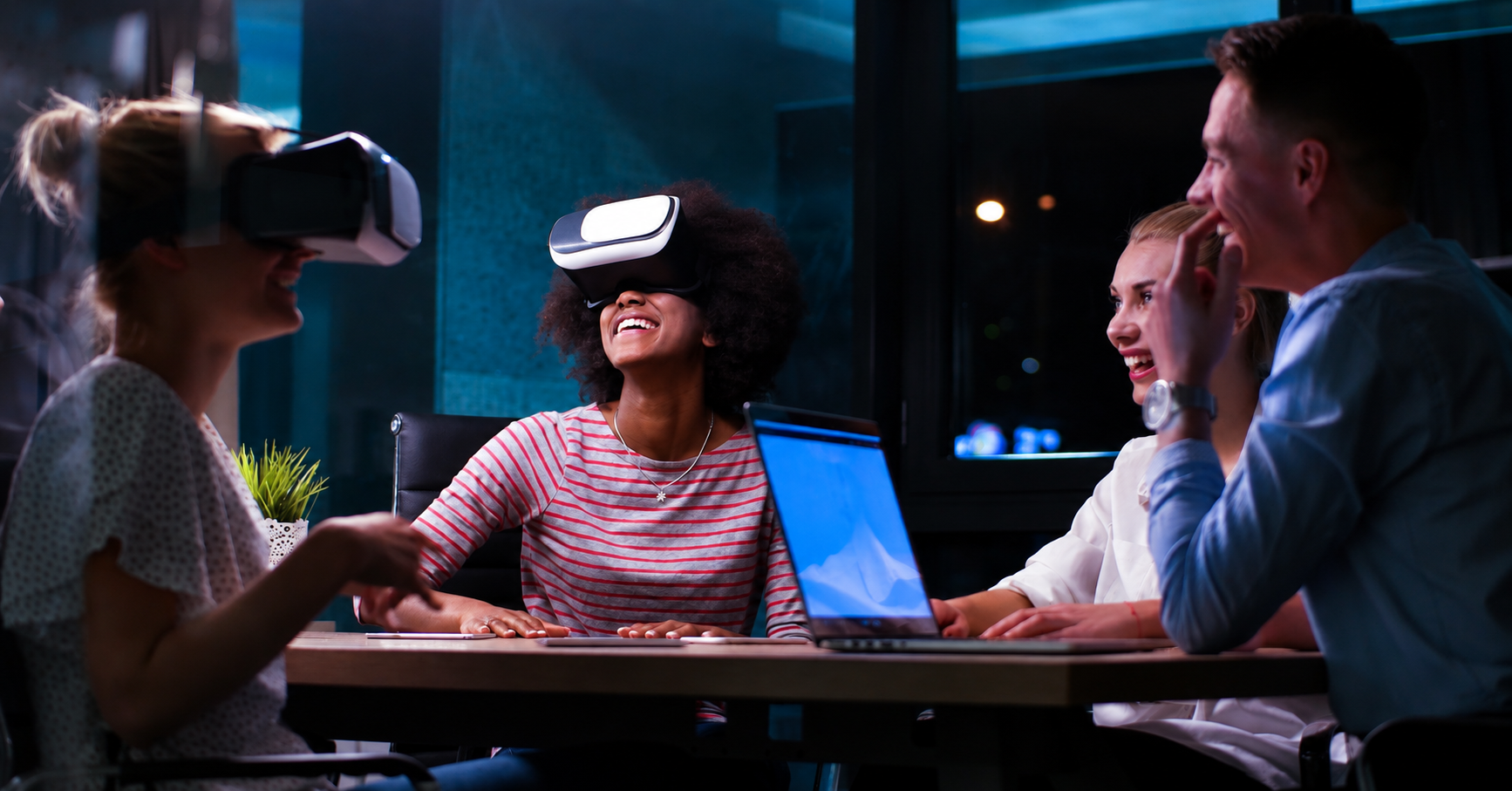
For years, business travelers have been told that the next video call, collaboration platform, or immersive headset might make corporate travel unnecessary. That prediction has never fully materialized, but virtual reality is giving it a more serious test. Modern VR and extended reality platforms can create shared three-dimensional spaces, represent colleagues as avatars, and support presentations, training, brainstorming, and large virtual events. The more useful question is no longer whether a headset can imitate a meeting room. It is whether companies can get enough of the value of a trip without putting anyone on a plane.
Business Travel Is Still Very Much Alive
If virtual meetings were going to wipe out business travel quickly, the latest spending numbers would look very different. The Global Business Travel Association forecasts worldwide business travel spending of $1.71 trillion in 2026, with roughly 1.84 billion work trips expected during the year. GBTA also says spending is rising faster than trip volume, which means companies are facing higher travel costs even as the number of journeys grows more slowly. That combination gives travel managers a strong reason to ask which trips are truly necessary.

Companies are already becoming more selective. GBTA reported that nearly three quarters of business travelers surveyed in May 2026 said they were traveling as much as or more than in previous years, while rising transportation costs were putting more pressure on budgets. The organization also described corporate travel as increasingly productivity-focused, with companies paying closer attention to the value of each journey. In other words, virtual reality is not entering a world where business travel is disappearing. It is entering a world where every trip has to justify itself more clearly.
That distinction matters because the most replaceable trips are not necessarily the most important ones. A routine internal update, standard training session, or recurring project meeting may not require an airport at all. A sensitive negotiation, major sales presentation, factory visit, or first meeting with a new partner can involve activities that are difficult to reproduce remotely. VR therefore competes less with business travel as a whole than with particular types of trips.
VR Meetings Are Becoming More Convincing
Today's immersive collaboration tools are far more sophisticated than a standard video grid. Microsoft's current immersive events in Teams let organizations create customizable 3D spaces where participants attend as avatars, move between conversations, hear spatial audio, view presentations, and interact inside branded virtual environments. The system can run on PCs and Macs as well as Meta Quest headsets, so an immersive event does not necessarily require every participant to own VR hardware. Microsoft retired its earlier Mesh apps and immersive 3D meeting view on December 1, 2025, replacing them with immersive events inside Teams.
Research suggests that this added sense of space can affect remote collaboration. A study of multi-user immersive VR group decision-making found that VR groups could perform efficiently on a collaborative decision task, although their reported social presence remained below the face-to-face condition. More recent research has found that choices such as avatar visibility and the participant's viewing perspective can influence social presence, coordination, and performance during VR collaboration. These results suggest that VR can support serious collaborative work, but the design of the virtual environment matters considerably.
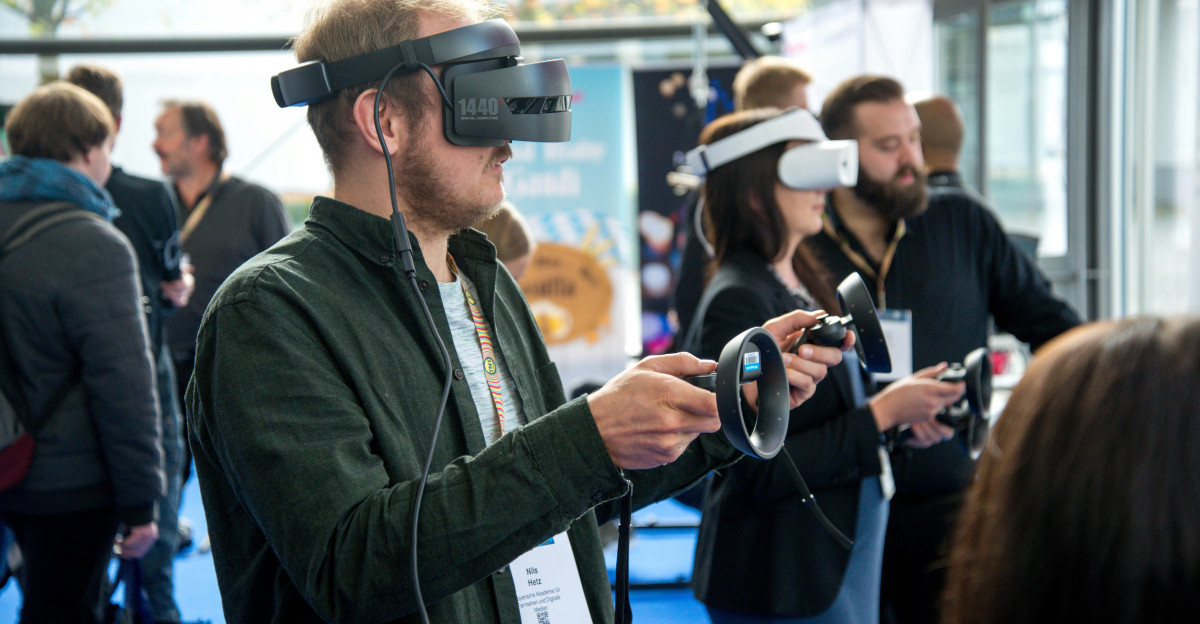
VR also has a practical advantage over physical travel that no amount of lounge access can match. A virtual room can bring together employees in several countries without requiring travel time, hotel nights, airport connections, or long-haul flights. Microsoft's platform is already designed for uses including presentations, interactive events, customizable environments, and conversations within shared 3D spaces. For multinational teams that meet frequently, that flexibility can make immersion a useful middle ground between a flat video call and a long-distance trip.
The Headset Still Has To Beat The Human Meeting
The hardest problem for VR is that business trips are rarely just about transferring information. People also travel to build relationships, visit facilities, interact informally with colleagues, and spend extended periods working with customers or partners. Research from MIT has linked face-to-face encounters between workers at different companies with greater knowledge flows, measured through patent citations between establishments. The researchers estimated that reducing face-to-face interactions could meaningfully reduce those knowledge flows, highlighting the importance of encounters that are difficult to schedule into a formal online meeting.
That does not mean every physical meeting automatically produces better work. Virtual formats can perform well for structured decision-making and other clearly defined tasks, and the appropriate format depends heavily on what participants are trying to accomplish. The evidence instead suggests that in-person interaction can offer forms of social contact and spontaneous knowledge exchange that digital platforms do not always reproduce in the same way. For companies deciding whether to approve a trip, the purpose of the meeting may matter more than the sophistication of the technology.
Hardware creates another obstacle. A comprehensive review focused on VR in workplace settings identified potential short-term effects including cybersickness, visual fatigue, muscular fatigue, acute stress, and mental overload. Its authors recommended measures such as limiting periods of immersion and taking regular breaks, while noting that existing headsets and virtual environments can still cause VR-related symptoms. Those problems will not affect every user equally, but they make it harder to imagine replacing a long day of physical meetings with an equally long day inside a headset.

There is also the social friction of asking clients, executives, or partners to adopt the same system. A conventional business meeting can happen even when the other side has never purchased a particular headset or learned how to navigate an avatar. Immersive collaboration can depend on compatible devices, accounts, permissions, software, technical support, and participants who are comfortable using the technology. The smoother these systems become, the stronger VR's case will be.
The Environmental Case Is Much Stronger
Where VR and other virtual meeting tools have an especially clear advantage is avoided travel. The U.S. Environmental Protection Agency classifies employee business travel using commercial airlines, rental cars, trains, and other transportation outside company-owned vehicles as a Scope 3 greenhouse gas emissions category. For organizations measuring indirect emissions, reducing unnecessary travel can therefore directly affect the business-travel portion of their emissions inventory.
The International Energy Agency has also identified virtual meetings as a possible substitute for some long-haul business travel. In an analysis of teleworking and transportation, the IEA estimated that halving business trips to destinations requiring flights longer than six hours could save about 50 million tonnes of carbon dioxide annually under the aircraft-efficiency assumptions used in its study. The agency noted that videoconferencing can reduce jet-fuel demand when it replaces those journeys.
Academic research on conferences points in the same general direction. A Nature Communications study examining virtual, in-person, and hybrid conferences found that shifting toward virtual and carefully structured hybrid events could substantially reduce their carbon footprints. Importantly, the researchers accounted for emissions associated with digital technology rather than assuming that online meetings have no environmental footprint at all. Transportation, accommodation, catering, computing, and other activities all affect the final calculation.
For companies with emissions-reduction goals, that makes virtual substitution a practical tool rather than a futuristic idea. Travel managers do not need to eliminate every client visit to see a benefit. They can concentrate on repeat internal meetings, some training sessions, planning meetings, or events where the travel burden is large and the value of physical presence is relatively small. VR becomes most useful when it eliminates a trip whose business case was marginal in the first place.

The Future Looks More Hybrid Than Virtual
The most plausible future is not one where business travelers trade their passports for headsets. It is one where companies separate travel by purpose and use increasingly immersive technology for activities that gain relatively little from taking place in person. A recurring team gathering might move into a virtual 3D environment, while a site inspection, important negotiation, or relationship-building visit still happens across a real table. That approach fits a market in which business travel remains huge but companies are becoming more selective about what they spend.
VR may also become more useful when it stops trying to copy a conference room perfectly. Shared three-dimensional environments can accommodate interactive models, virtual facilities, presentations, branded spaces, and spatial conversations that would be difficult to create through ordinary videoconferencing. Microsoft's current immersive Teams strategy emphasizes customizable environments and interactive events, suggesting that business VR is evolving toward experiences that take advantage of being digital rather than simply recreating rows of office chairs.
The technology still has plenty of ground to cover. Headset comfort needs to improve, virtual interactions have to become easier for occasional users, and organizations need evidence that immersive meetings produce enough additional value to justify the equipment and training involved. Research already shows both promising collaboration capabilities and persistent human-factors challenges. That combination argues for experimentation rather than wholesale replacement.
For the business traveler, the result could be fewer low-value flights without the end of travel itself. VR can reduce the need for some journeys, expand access to distant colleagues, and make remote collaboration feel more spatial and interactive. The trips that remain may become more intentional, with companies reserving travel budgets for situations where physical presence adds something that technology still struggles to provide. Replacing the business trip entirely would require VR to replace not only the scheduled meeting, but also the human relationships, physical access, and spontaneous interactions that can make getting on the plane worthwhile.