 Furius, CC0, Wikimedia Commons, Modified
In 2018, routine road construction near Taiyuan in China’s Shanxi Province led to an unexpected pause. Beneath the ground lay an intact Tang dynasty tomb dating to 736 CE. Archaeologists soon identified the burial as belonging to an elderly couple, likely a man aged sixty-three and his wife. What transformed the find from notable to remarkable was the interior. Nearly every wall and ceiling surface was covered in vivid murals. Color survived. Detail remained sharp. Together, these paintings offered something rare. Instead of focusing on emperors or ritual symbolism, the tomb preserved scenes of ordinary life. The discovery also revealed everyday life in one of China’s most influential eras through vivid visual detail. So, explore how these remarkably preserved murals turn an ancient tomb into a vivid record of everyday life during the Tang dynasty.
The Tang Dynasty and Taiyuan’s Role
The Tang dynasty, which ruled from 618 to 907 CE, marked a period of political strength and cultural expansion shaped by long-distance exchange. Chang’an served as the imperial center, but cities like Taiyuan held strategic importance. Located in northern China, Taiyuan also functioned as a military and administrative hub guarding routes into the capital region. Stability there supported the empire beyond it. Wealth moved through the city via officials, soldiers, and merchants. Tombs from this era often emphasized rank through decoration and symbolic goods for the afterlife. This burial differs. Its imagery favors everyday activity, suggesting values rooted in labor and social movement rather than status alone.
Frescoes of Everyday Life
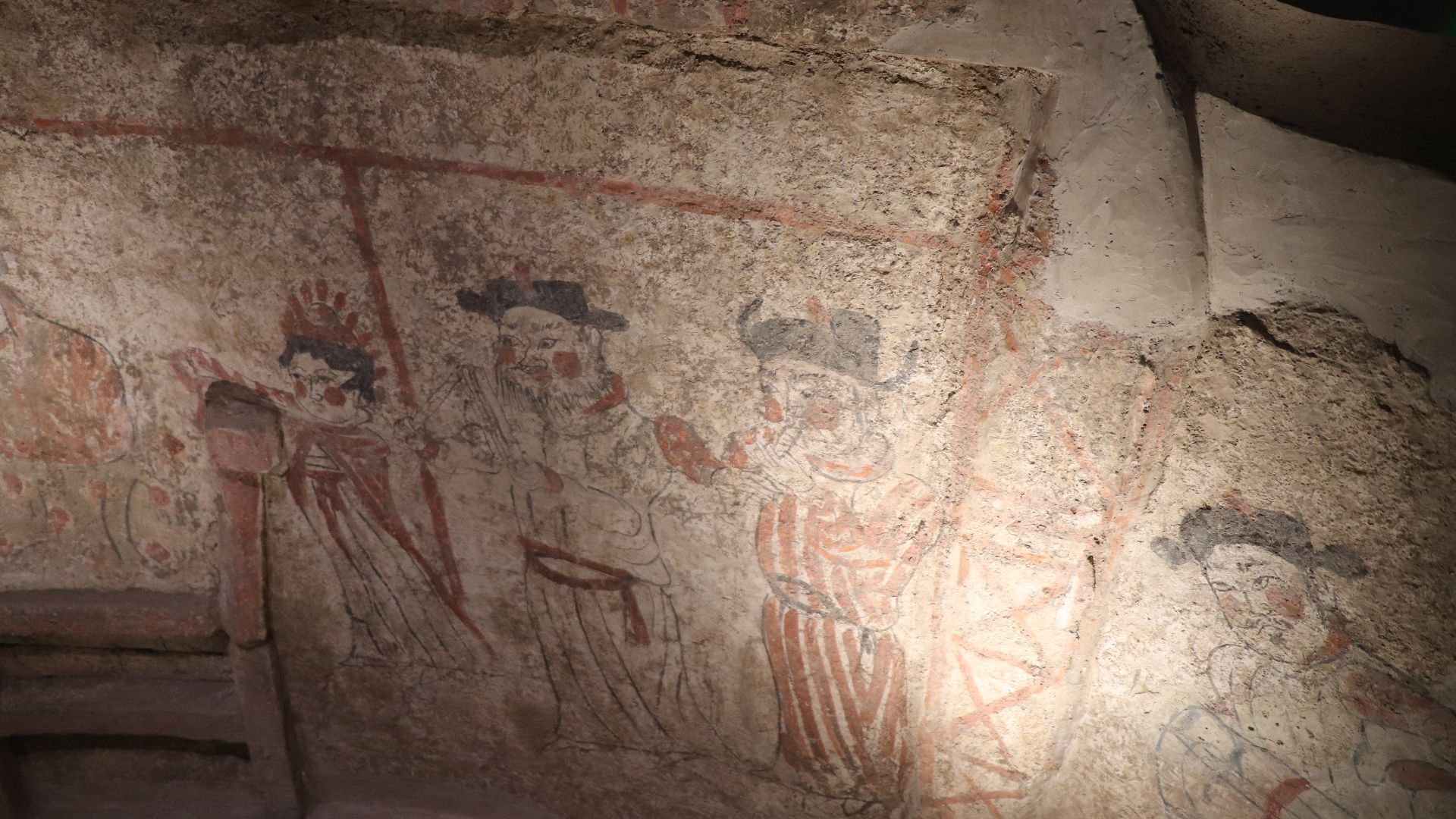
Stepping inside the tomb feels like entering a frozen moment. Murals show farmers threshing and processing grain with practiced rhythm. Nearby, women fetch water using a well device with care. Cooks prepare noodles while attendants lead horses and camels through an imagined space. All these scenes appear purposeful. Each task connects to survival, trade, or service. Moreover, craftsmen occupy prominent positions. Figures also engage in labor, such as grinding or pounding, and handle tools with confidence. Therefore, labor is not hidden here. Instead, it becomes worthy of preservation. Such attention suggests respect for the systems that supported Tang society, where production mattered as much as ceremony.
Markets appear equally alive. Stalls line painted streets while buyers and sellers face each other in negotiation. Gestures feel familiar, where one detail draws particular attention. A blond-haired, bearded man stands among local figures. His features differ sharply, signaling foreign origin. Scholars suggest that Central Asian or Middle Eastern traders were active participants along Silk Road routes. Their presence within a private tomb underscores how integrated outsiders were within urban life. Trade was not distant or abstract. It unfolded daily, face to face, which shaped routines that residents recognized and remembered.
Cultural and Archaeological Significance
Written records from the Tang period often center on officials, poets, and court politics. Every day labor receives less attention. These murals fill that gap. Visual evidence captures tasks rarely described in texts, offering scholars a richer view of social structure. Because images bypass literary bias, they preserve details that documents ignore. Tool use and physical posture, especially, emerge clearly. In addition, the inclusion of foreign figures confirms historical accounts of Tang cosmopolitanism. Interaction across cultures was also not limited to ports or courts. It occurred in markets, workshops, and homes.
Artistic technique further strengthens the tomb’s importance. Painters used mineral pigments in red, yellow, green, black, white, and orange across walls and ceilings. Brushwork remains confident despite centuries underground. Preservation, however, presents challenges. This is because frescoes react poorly to air exposure and temperature change. Conservation teams must balance study with protection. Every step carries risk. Still, the tomb enhances Taiyuan’s standing as a heritage center. Scholars gain new material, while visitors encounter history grounded in human routine rather than abstraction.
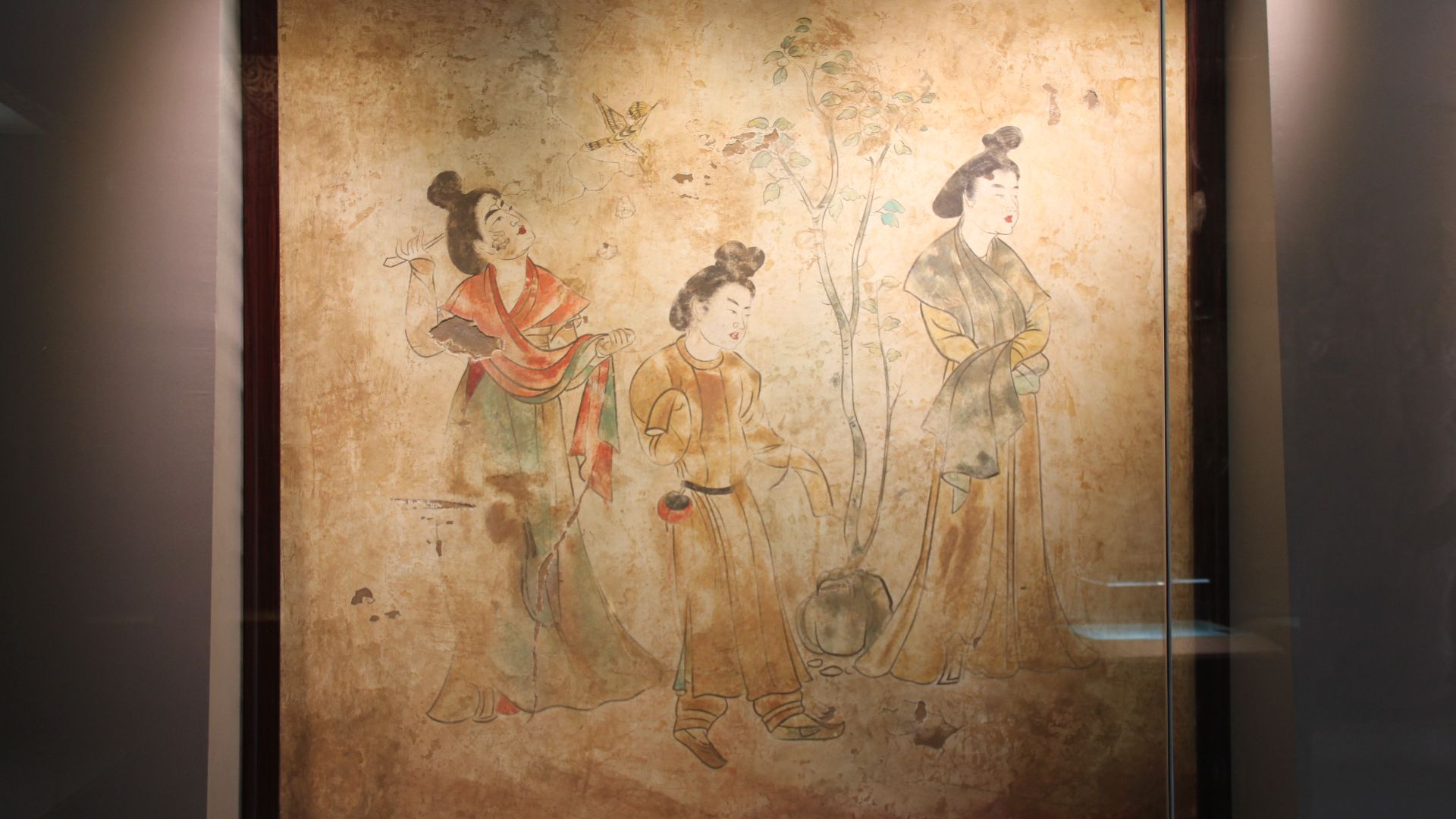 Gary Todd from Xinzheng, China, Wikimedia Commons
Daily Life Preserved in Stone and Paint
The Taiyuan tomb offers more than burial goods or architectural insight. It provides access to daily rhythms that sustained China’s Tang civilization. Farmers, artisans, traders, and attendants share space within its walls, which remind viewers that prosperity relied on many hands. Foreign merchants stand beside local workers, reinforcing the reach of global exchange. Archaeology often recovers fragments. Occasionally, it restores voices. This discovery does both. By preserving ordinary moments, the tomb expands historical understanding beyond rulers and wars. It also shows how life moved and connected, quietly shaping an era remembered for its brilliance.