The Ultimate Backyard Find
A Danish homeowner thought they were clearing stubborn grass and gravel for a new patio. Instead, their garden fork clanged against something strange beneath the soil. What emerged was astonishing: roughly 40 pounds of Viking Age silver, the largest known hoard of its kind ever discovered in Denmark.
It Happened In Rebild
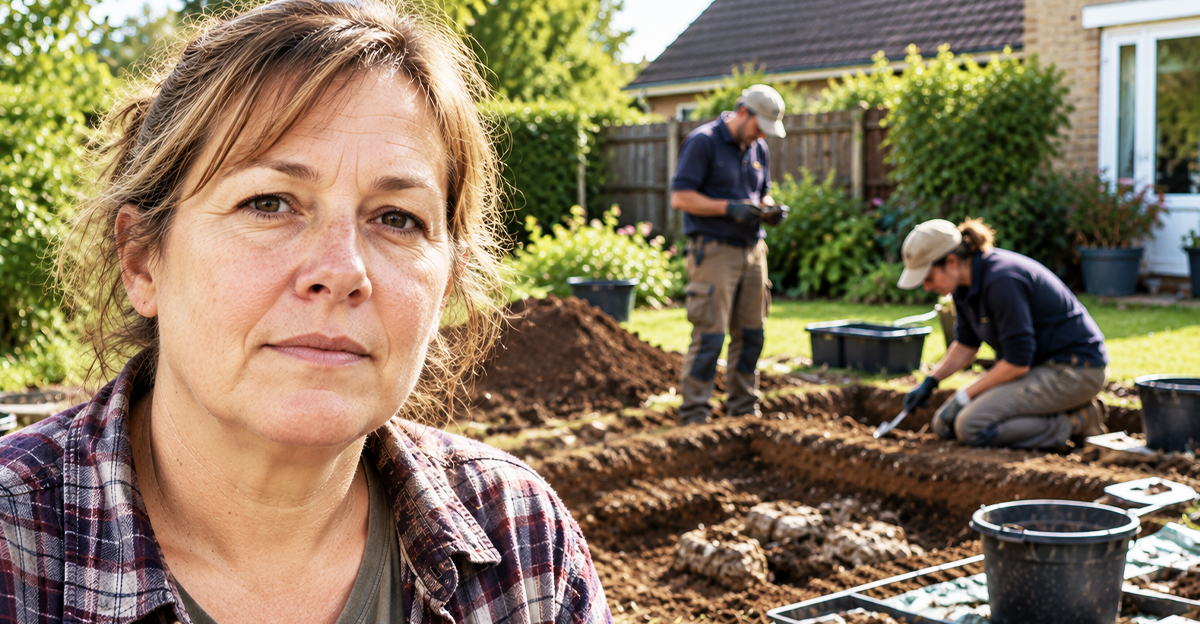
The discovery was made in spring 2026 in a private garden in Rebild, a municipality in northern Denmark. The homeowner, who has remained anonymous, had no archaeological expedition planned. They simply wanted to prepare part of the yard for a new tiled terrace.

Something Sounded Strange
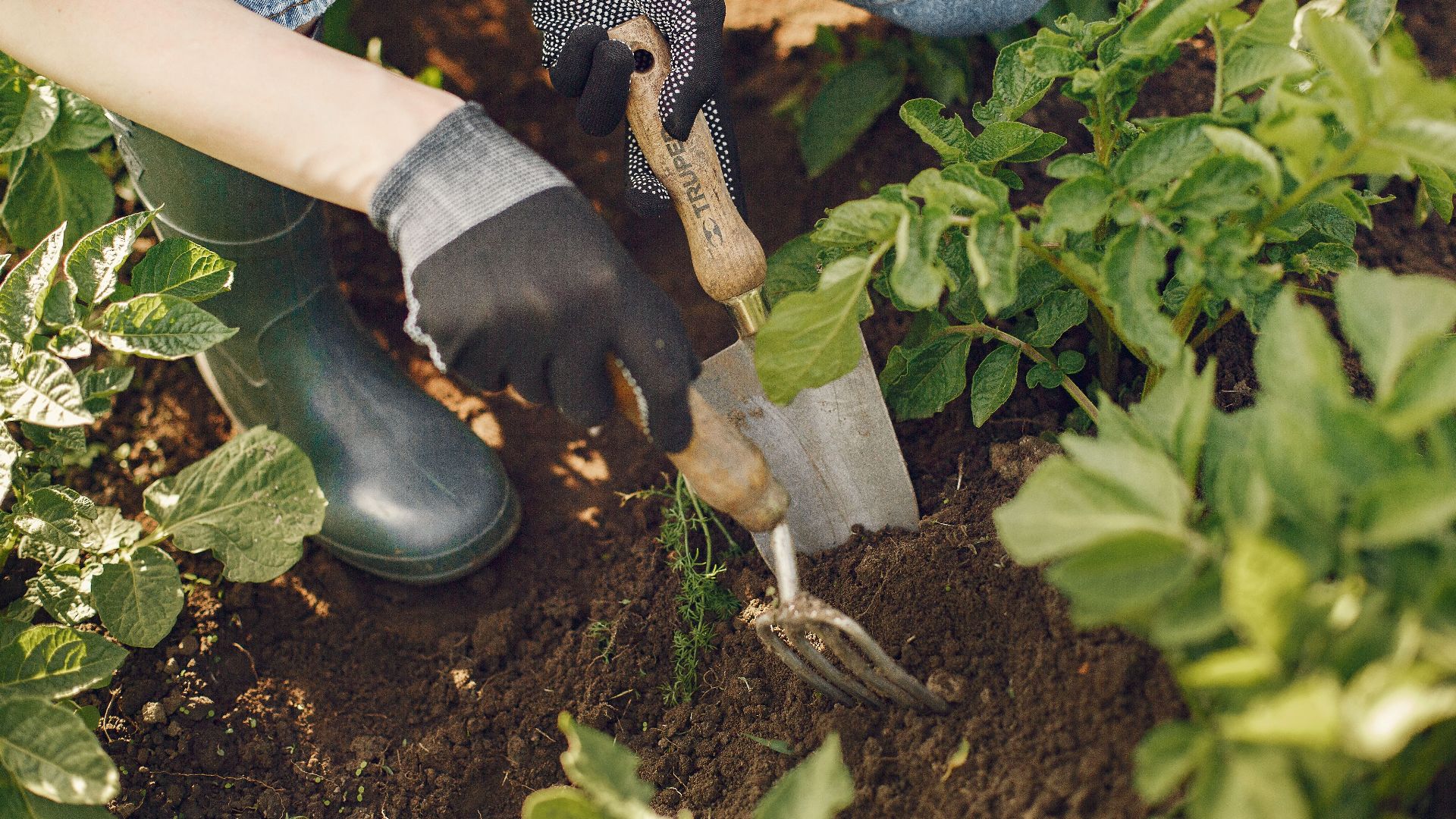
After about half an hour of digging, the homeowner's garden fork struck something that made an unusual sound. At first, they suspected old iron, fencing wire, or other buried debris. Then they got down on their hands and knees and started carefully removing soil by hand and realized metal objects were appearing one after another.
This Wasn't Garden Junk
Jewelry appeared. Then coins. Then silver bars. The homeowner later called it the biggest surprise of their life. Archaeologists eventually determined that the accidental discovery wasn't merely an interesting Viking artifact. It was an enormous trove of Viking loot buried more than 1,000 years ago.
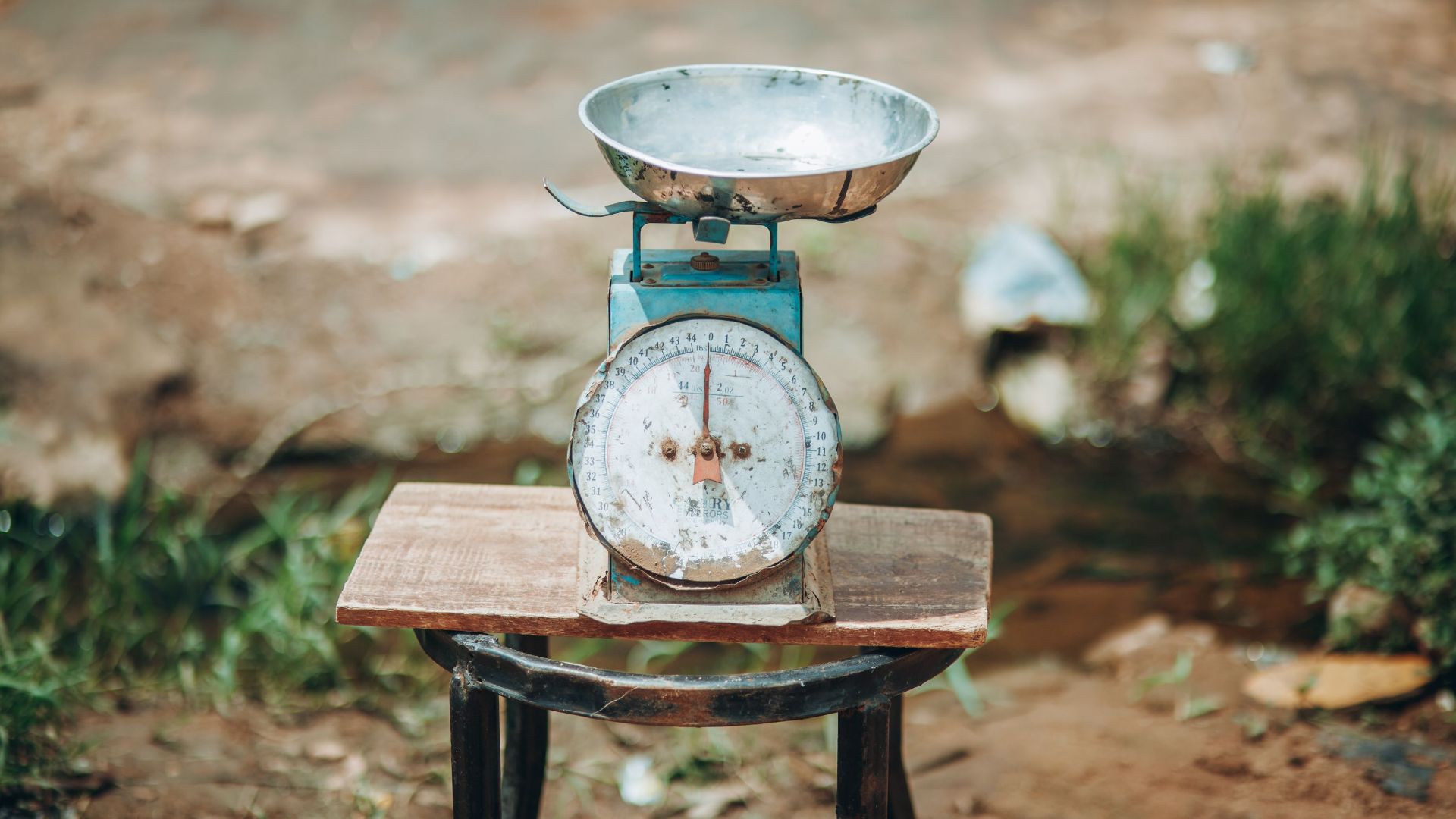
Forty Pounds Of Silver
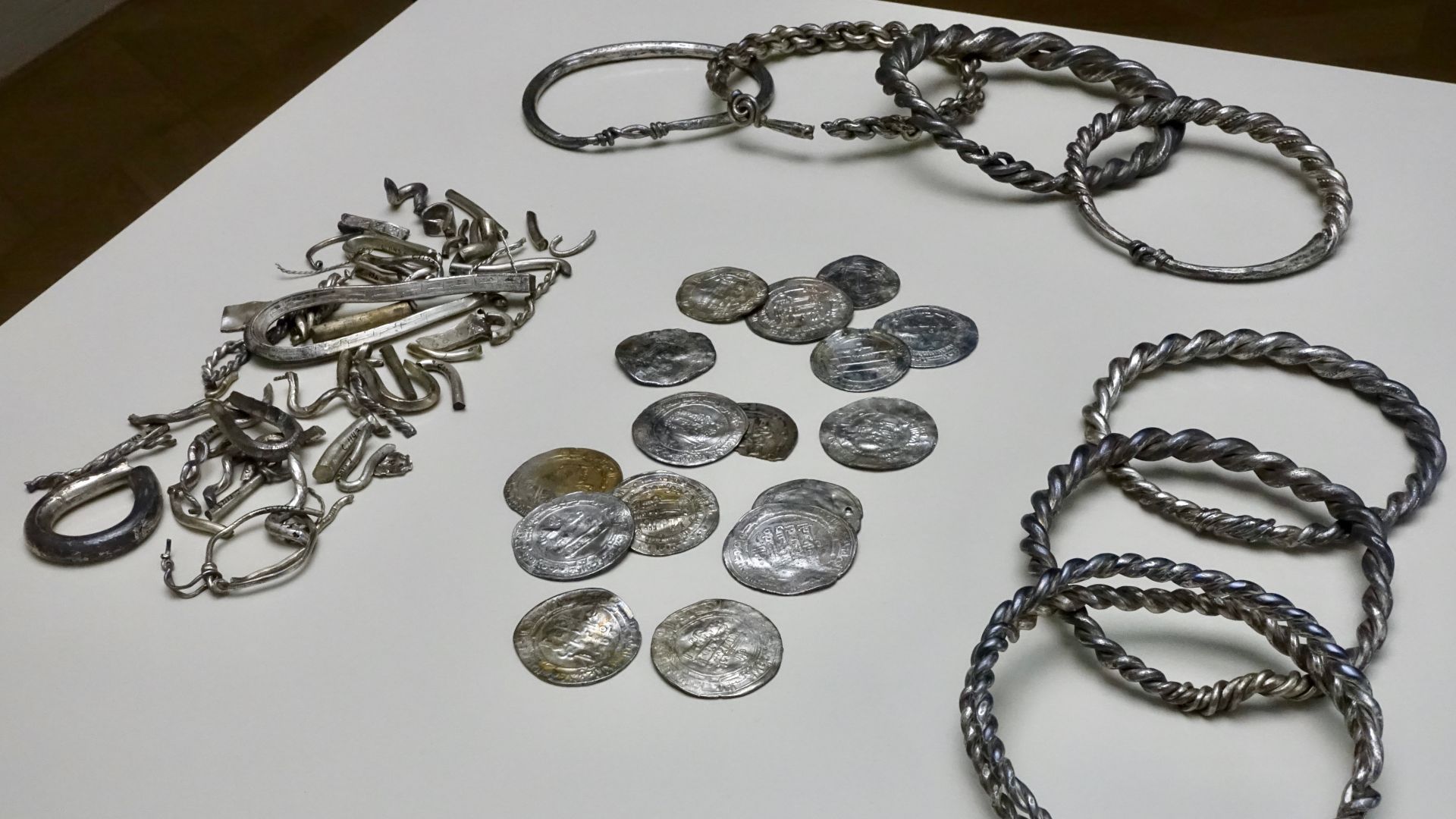
The complete hoard weighs approximately 18.5 kilograms, or nearly 41 pounds. It contains around 700 objects and fragments. That makes it nearly three times heavier than Denmark's previous record-holder, the roughly 6.5-kilogram Terslev hoard. Suddenly, an ordinary backyard contained a national archaeological record.
Some Remained Inside
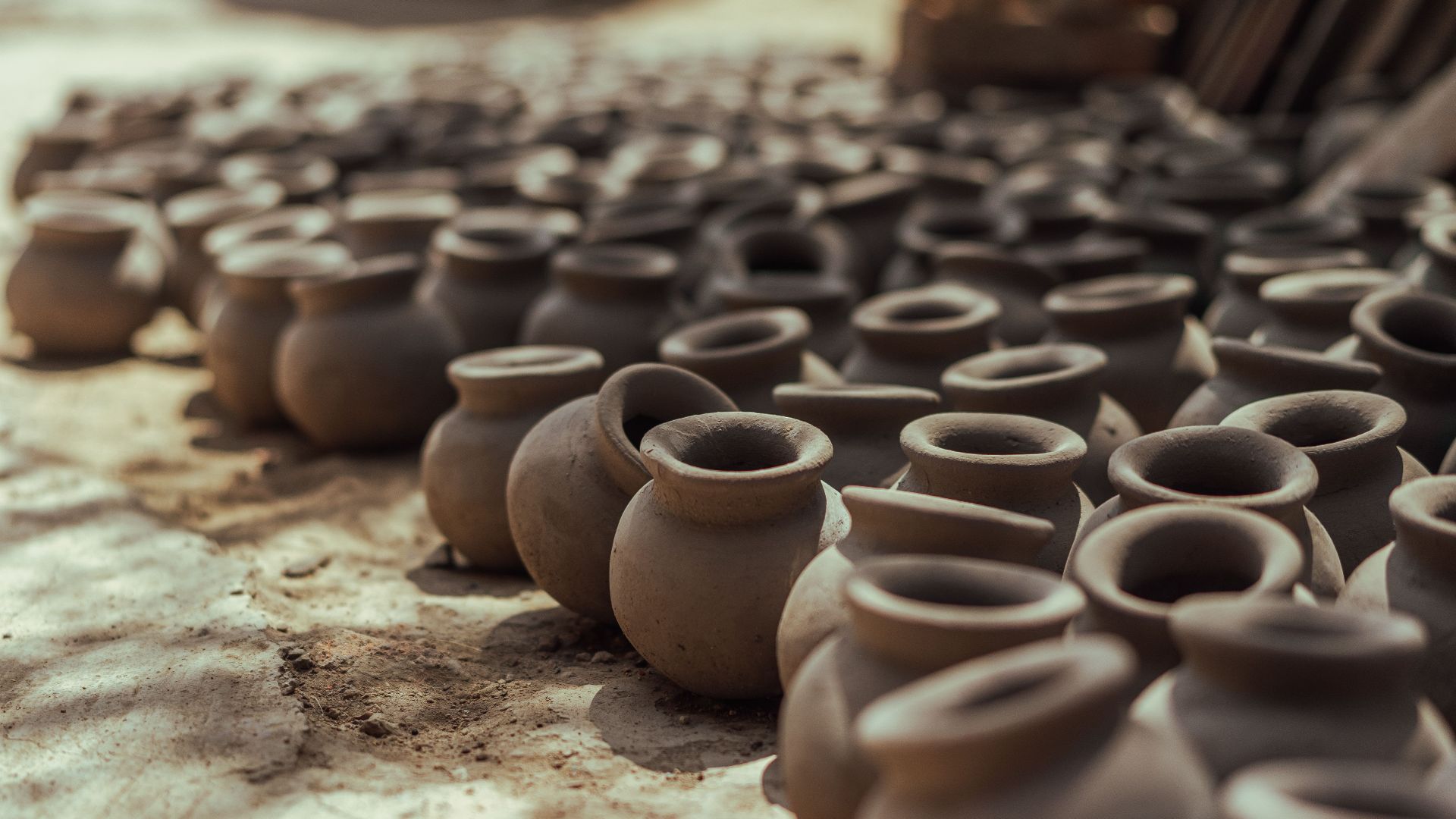
The treasure had originally been deposited in a clay vessel. Roughly 320 objects weighing about 6.4 kilograms were still inside it when archaeologists started rooting around in it. Other pieces had gotten dispersed through the surrounding soil, presumably as the container and ground were disturbed over the centuries.
Not Just Coins
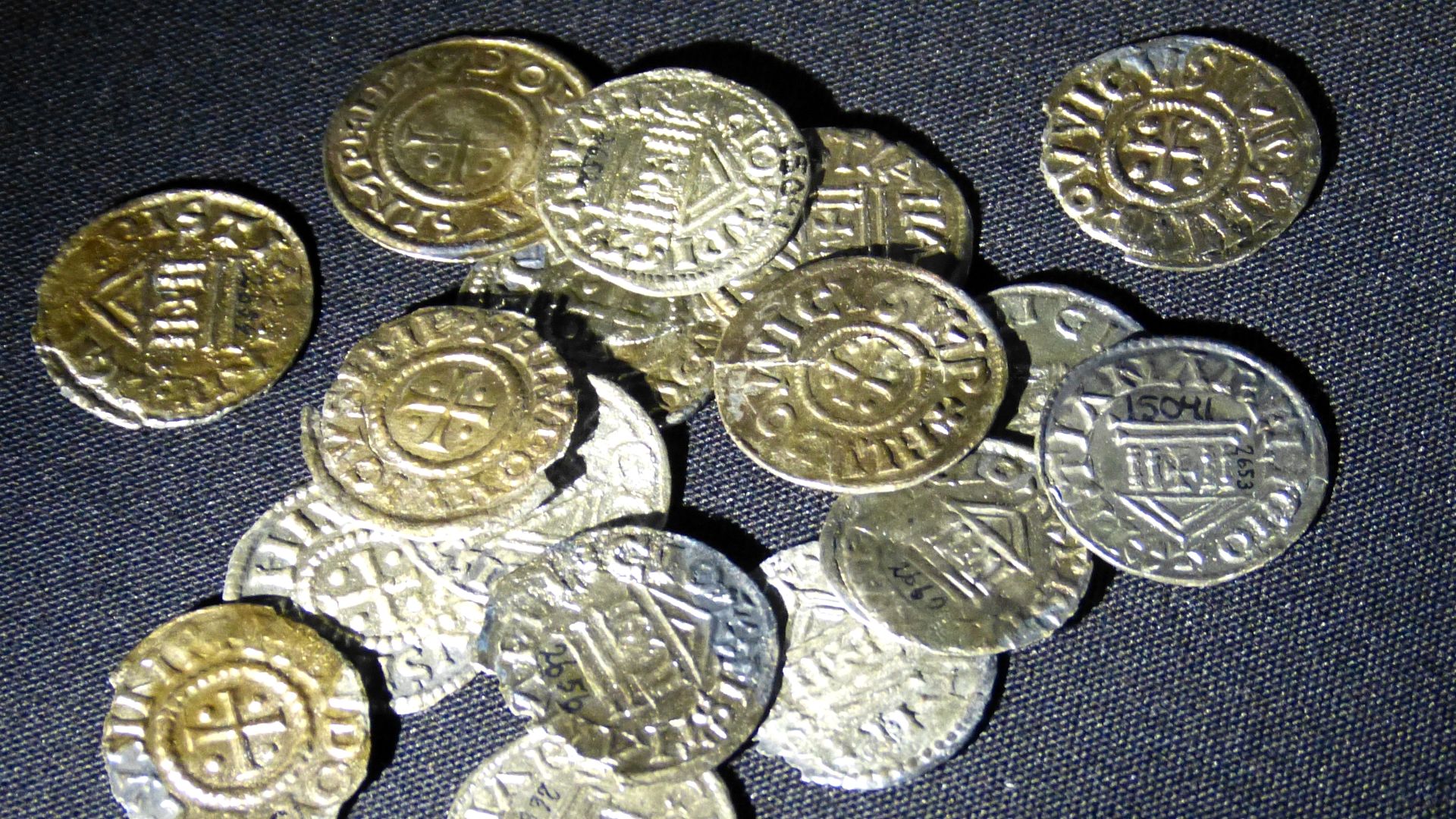
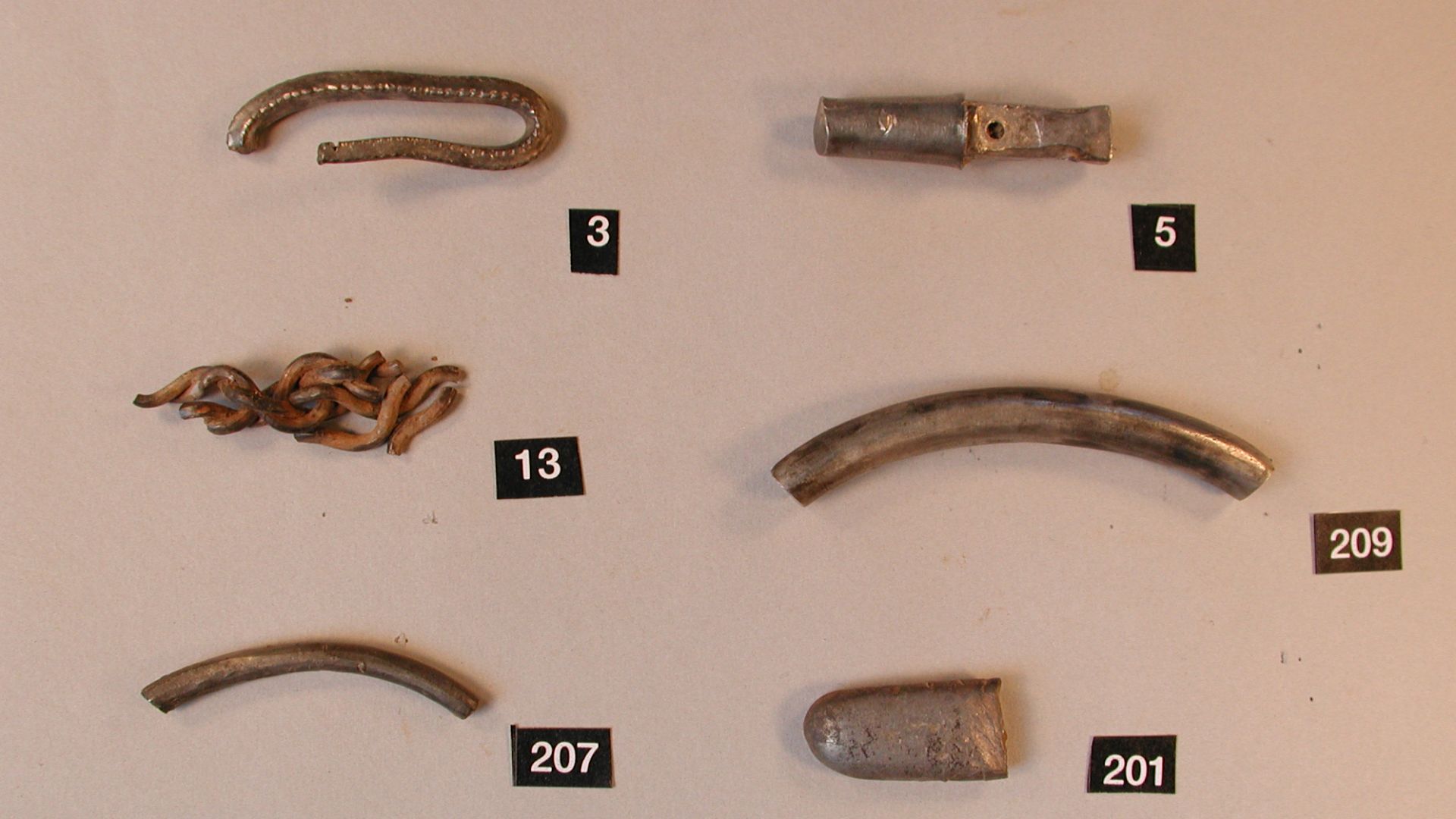
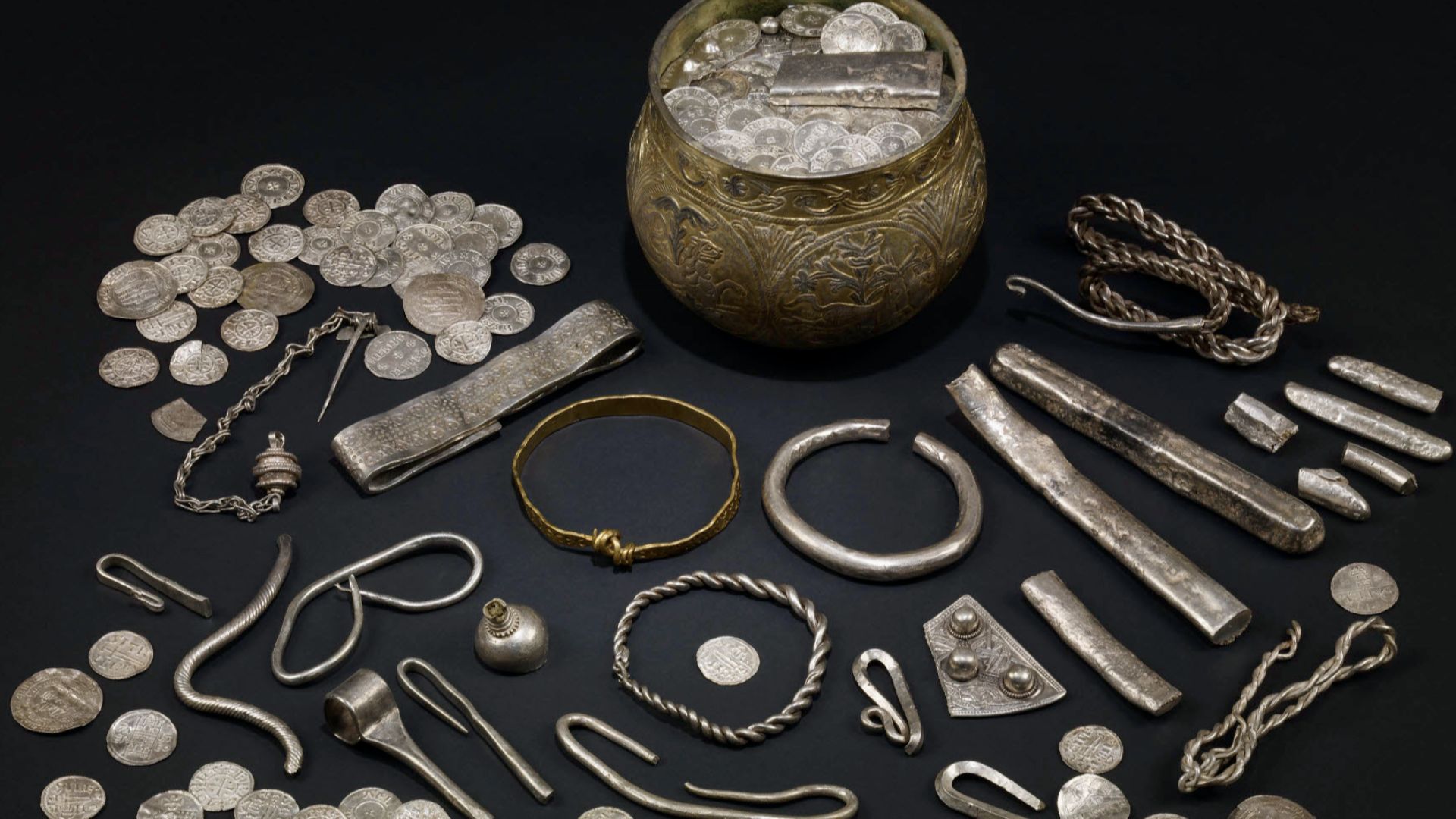
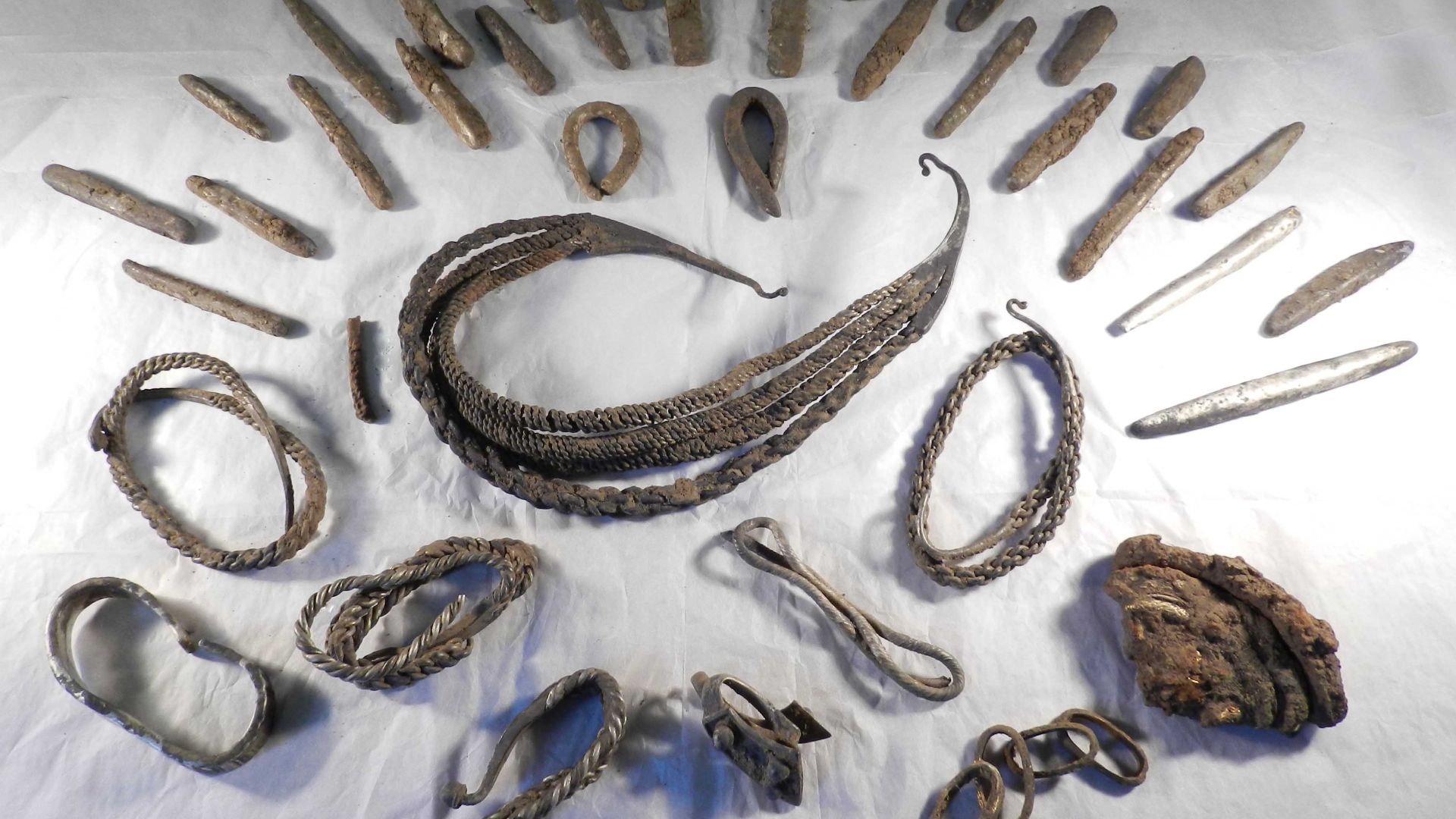
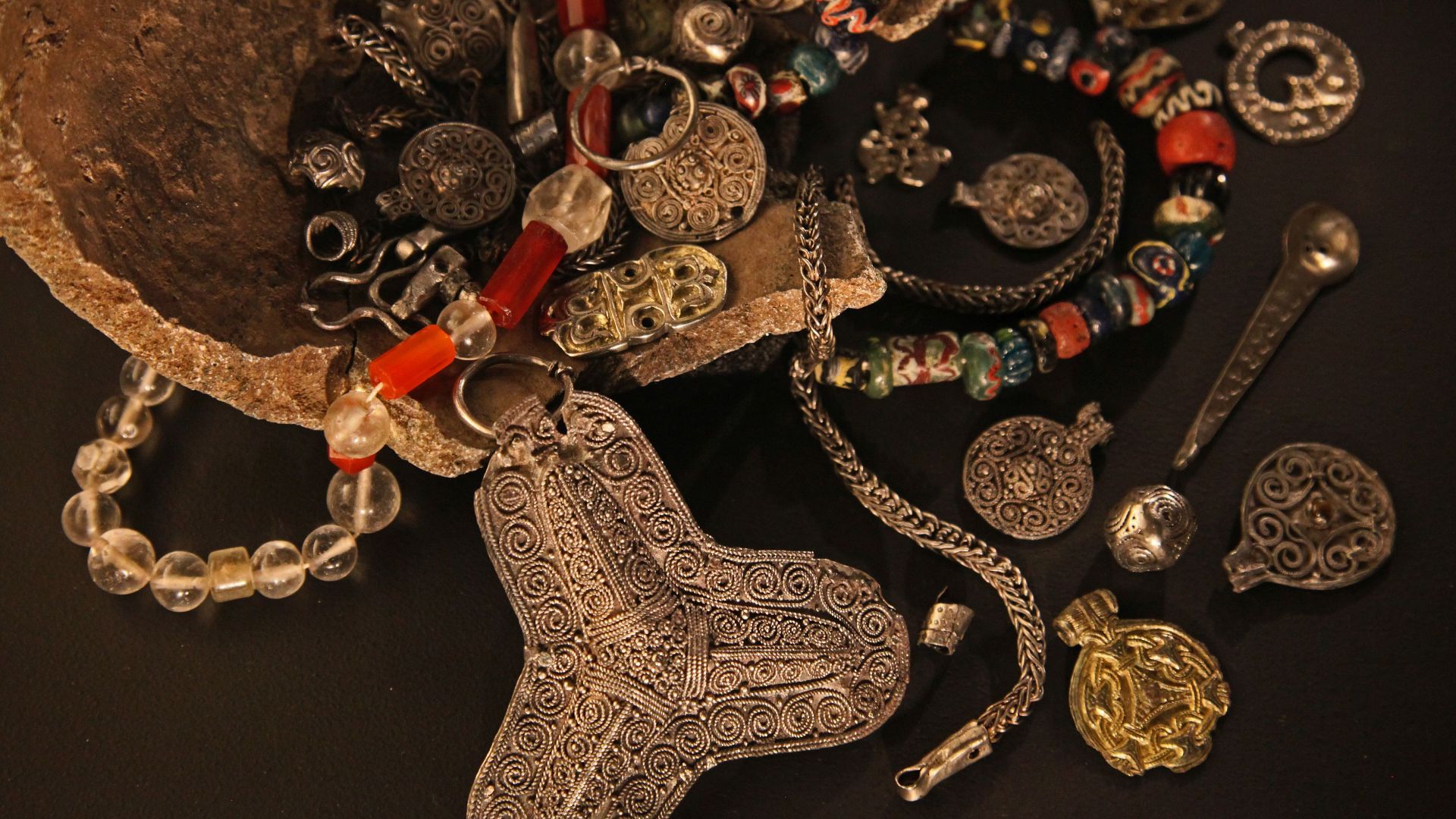
Calling this a pile of Viking coins doesn't really capture it. This hoard boasts numerous silver ingots, bracelets, chopped-up pieces of silver and 47 coins or coin fragments. There is also one particularly evocative object: a small silver Thor's hammer.
 Wolfgang Sauber, Wikimedia Commons
A Viking Piggy Bank
Torben Sarauw, archaeologist and cultural heritage manager at North Jutland Museums, compared the discovery to finding a Viking Age safe. That's important because much of the silver wasn't valuable because of what the individual object represented. Silver itself was wealth, and its weight helped determine its value.
![A hoard of Viking treasure now located in the Rijksmuseum van Oudheden (Leiden Museum). NOTE: This image makes the horde appear to consist of gold while in fact it is all silver. See [1] and [2] for true color image and history of this find.](https://www.factinate.com/storage/app/media/splashtravels/2026/9/25/1790347841151128e5c1846ae13ade1da92a0e304b593e2418.jpg) Marieke Kuijjer, Wikimedia Commons
Marieke Kuijjer, Wikimedia Commons
Silver Worked Differently
Viking Age Scandinavia didn't operate exclusively with standardized coins in the modern sense. Silver jewelry, ingots and fragments could function as stores of wealth and means of payment. Pieces could be cut apart or melted down, with weight and purity often mattering more than the original form of the object.
 Lancashire County Council, Dot Boughton, 2007-09-07 16:32:01, Wikimedia Commons
The Weights Reveal Something
Researchers noticed that many of the ingots fall into particular weight groups. The same pattern appears among some bracelets and pieces of hacked silver. That suggests this wasn't a random collection accumulated over generations. Its owner appears to have deliberately organized a substantial reserve of wealth.
 The British Museum, Janina Parol, 2012-02-28 15:08:57, Wikimedia Commons
One Bar Has Runes
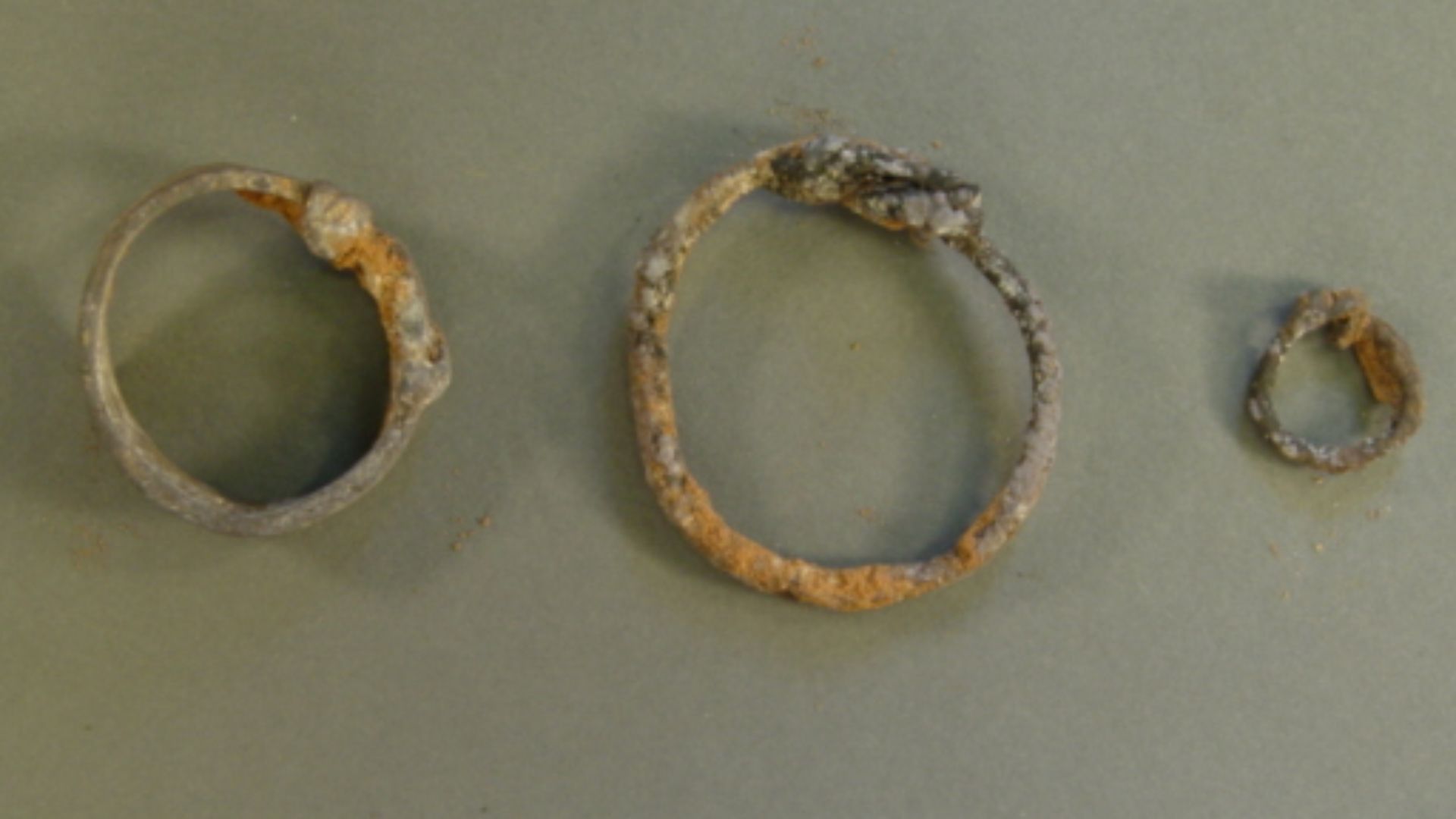
One silver ingot carries a tantalizing inscription written in runes. Archaeologists believe it may read “hutu.” Exactly what that means is anybody's guess. It could represent someone's name, an ownership mark or another meaningful designation, potentially leaving behind a tiny clue about whoever once possessed the treasure.
Coins Date The Treasure
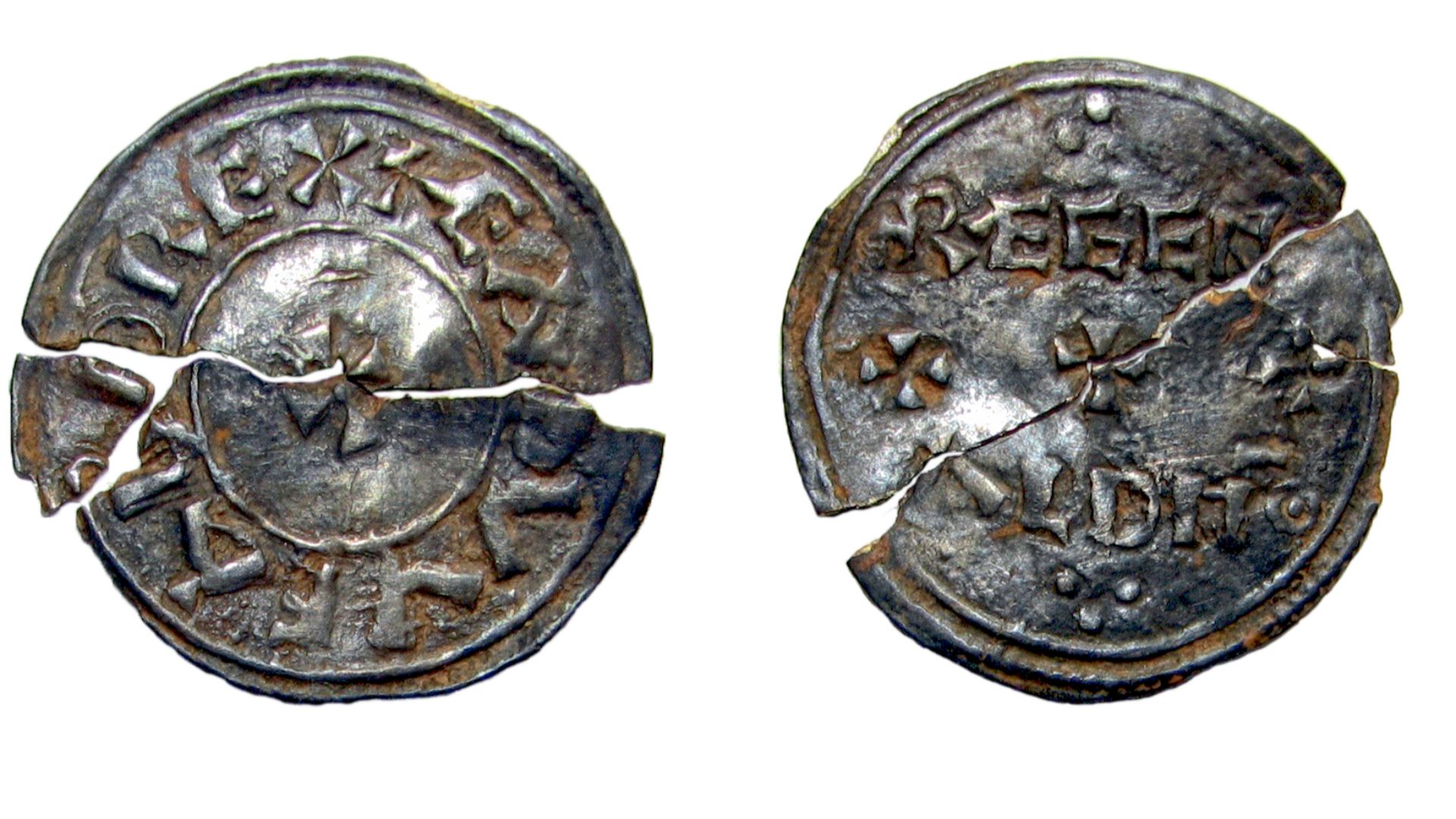
Among the hoard are two Anglo-Saxon silver pennies minted during the reign of Edward the Elder, king from 899 to 924 AD. Because those coins couldn't have been buried before they existed and circulated, they help archaeologists place the hoard's burial sometime during the 10th century.
 The Portable Antiquities Scheme, Dot Boughton, 2017-06-02 15:12:07, Wikimedia Commons
England Wasn't So Distant
Finding English coins in northern Denmark shows how connected the Viking world could be. People, goods and wealth moved across the North Sea, and Viking activity in England was already extensive. But another group of coins found in that Rebild garden traveled, directly or indirectly, from considerably farther away.
Silver From The East
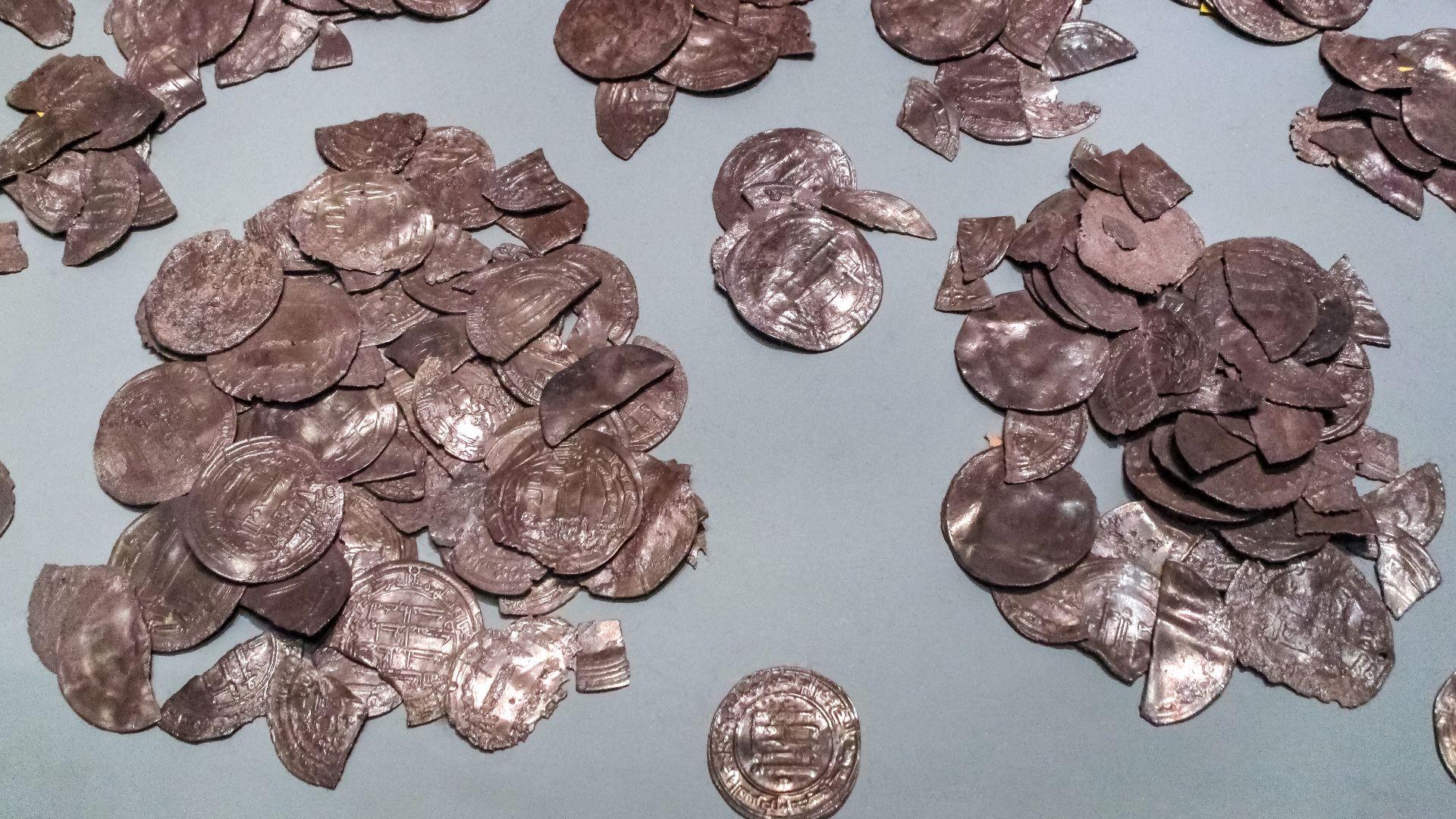
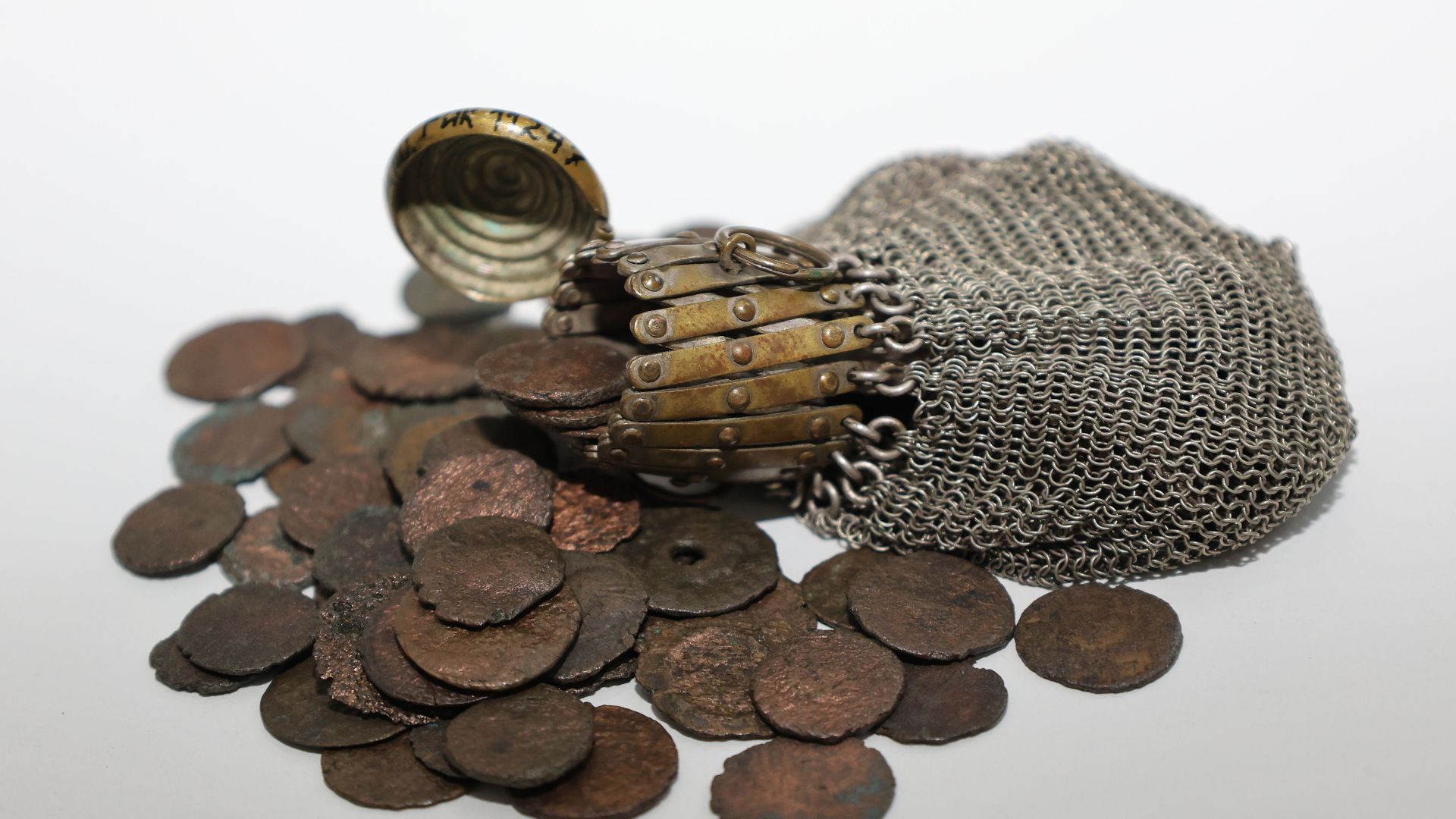
The hoard also contains Islamic silver coins known as dirhams. Such coins frequently appear in Scandinavian Viking Age finds, sometimes chopped into smaller pieces. Their presence reflects enormous trading networks that connected northern Europe with regions far to the east, even when individual Vikings didn't personally travel the entire route.
 Portable Antiquities Scheme, Wikimedia Commons
Vikings Recycled Money
Recent research into another Danish hoard revealed just how important this imported silver could become. Scientists studying early Viking pennies from the Damhus hoard found that some were made partly from melted Islamic coins. Foreign money could therefore arrive in Scandinavia and literally become something new.
Why Bury It?
That's one question archaeologists can't yet answer. Someone deliberately accumulated an extraordinary quantity of silver and concealed it during the 10th century. Perhaps it was hidden for security during uncertain times. Whatever the reason, its owner apparently never returned to retrieve a fortune that remained underground for roughly 1,100 years.
 Son of Groucho from Scotland, Wikimedia Commons
The Backyard Limits Answers
Normally, archaeologists would want to examine the surrounding landscape for evidence of a Viking settlement, road or other activity that might explain the burial. That's difficult here because the find sits within a modern developed area. North Jutland Museums says the precise archaeological context may therefore remain unresolved.
 Ziko van Dijk, Wikimedia Commons
Rebild Had Done This Before
Strangely, this isn't Rebild's first enormous Viking silver discovery. Another hoard uncovered in the area in 1971 contained roughly four kilograms of silver, including ingots, chopped jewelry and smaller fragments. That treasure, also dating from the 10th century, had apparently been wrapped in animal hide.
 Portable Antiquities Scheme from London, England, Wikimedia Commons
Then Came The Gold
The picture became even more intriguing in 2026. Just months before the backyard discovery was announced, another nearby find known as the Rold hoard produced six intact Viking Age gold arm rings weighing a combined 762.5 grams. Unlike the silver economy, those gold objects may speak particularly strongly to elite status and power.
 JC Merriman, Wikimedia Commons
Rebild Looks Different Now
Taken together, these discoveries are changing how archaeologists view the region. Rather than being some peripheral corner of Viking Denmark, Rebild appears connected to economic and cultural networks stretching through Scandinavia, the Baltic, England, western Europe and toward the Islamic world. A backyard find has helped redraw that picture.
The Treasure Goes To Denmark
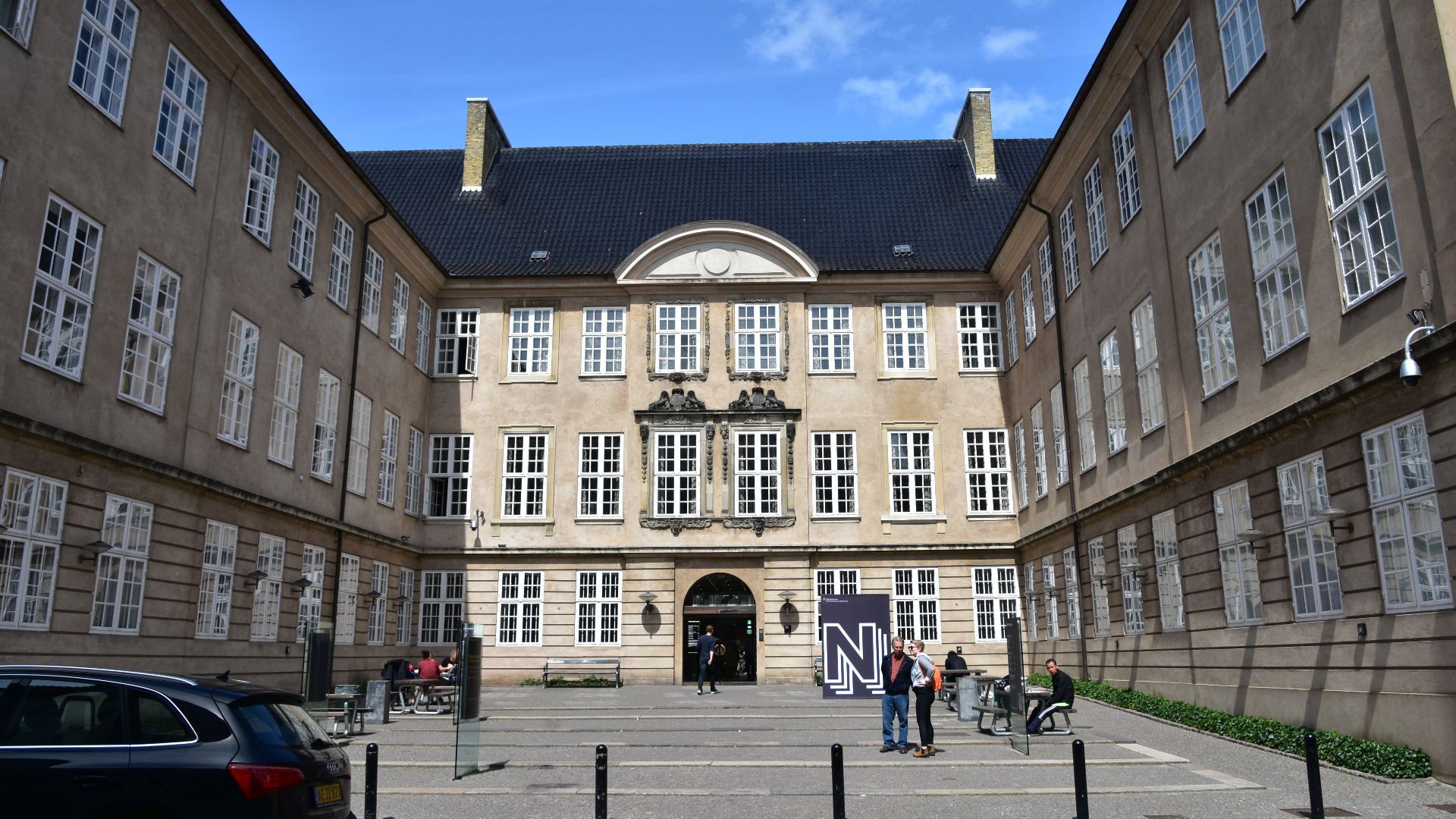
The silver qualifies as danefæ, Denmark's legal designation for especially significant ancient treasure. Such finds belong to the state and are assessed by the National Museum. North Jutland Museums hopes the Rebild treasure can eventually be displayed at the Viking Museum Fyrkat alongside the recently discovered Rold gold.
 Richard Mortel from Riyadh, Saudi Arabia, Wikimedia Commons
From Patio To History
The homeowner never got the simple afternoon of gardening they expected. Instead, a fork striking something beneath the lawn uncovered 700 pieces of a lost Viking fortune. More importantly, those 40 pounds of silver offer a remarkably tangible glimpse of how Vikings saved money, traded across continents and jealously guarded their wealth.
 Bering Land Bridge National Preserve, Wikimedia Commons
You May Also Like:
Researchers Found Runestones That Tell Story Of Thyra, A Queen Who Shaped Viking-Age Denmark