

A Secret Gallery In The World’s Biggest Desert
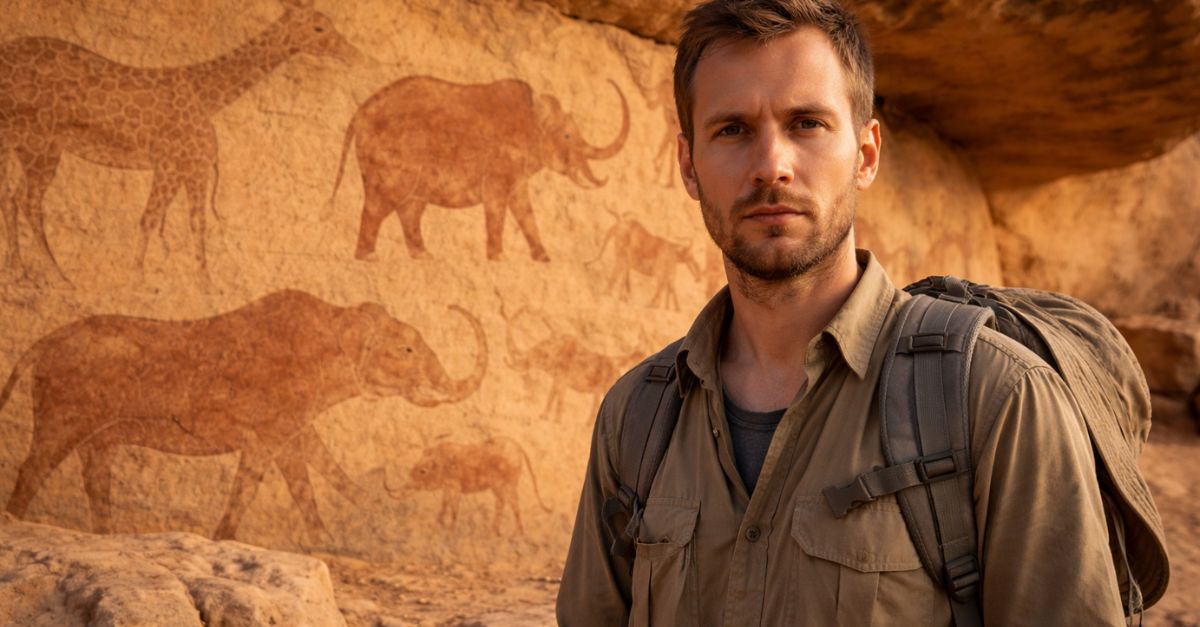
Today, the Sahara is one of the most desolate places on the planet. But once, it was a green paradise where people lived, hunted, and raised animals. A shift in Earth's orbit brought apocalypse to these people's home, and only their rock art remains. These massive murals reveal not only animals that were forced to leave the Sahara; they portray animals that no longer exist at all.
When The Sahara Was Green And Crowded
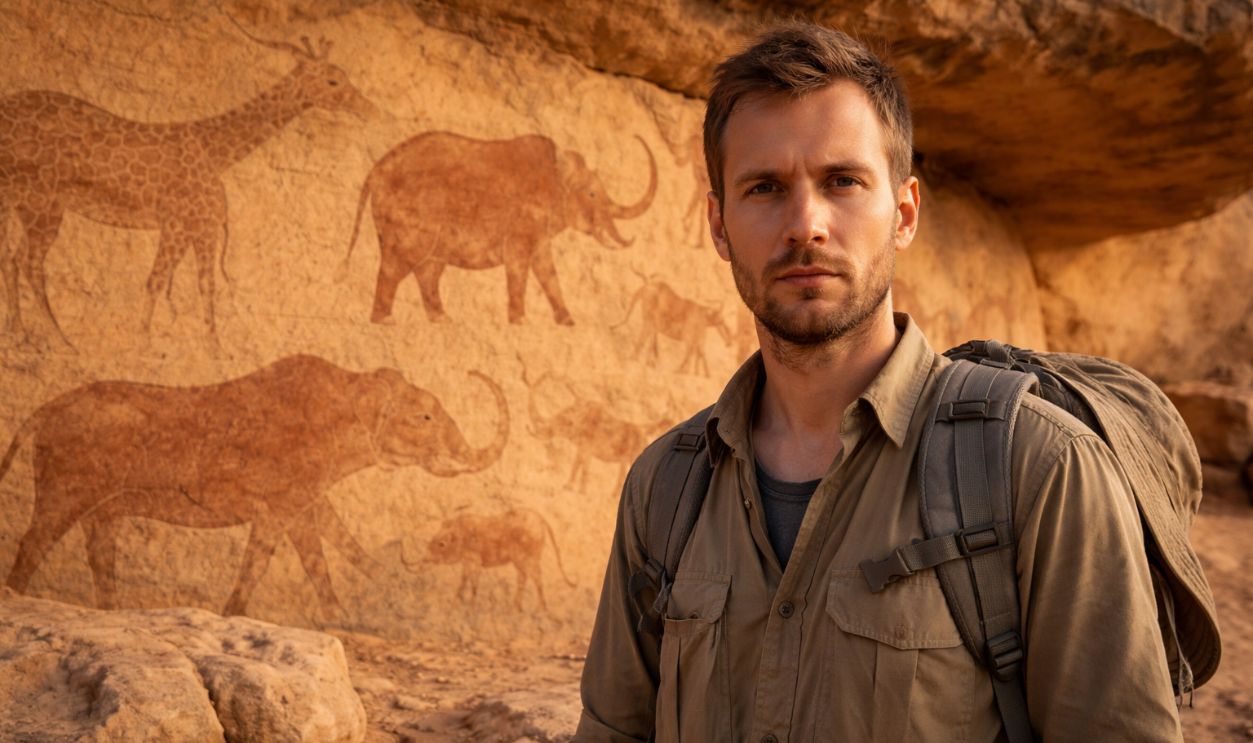
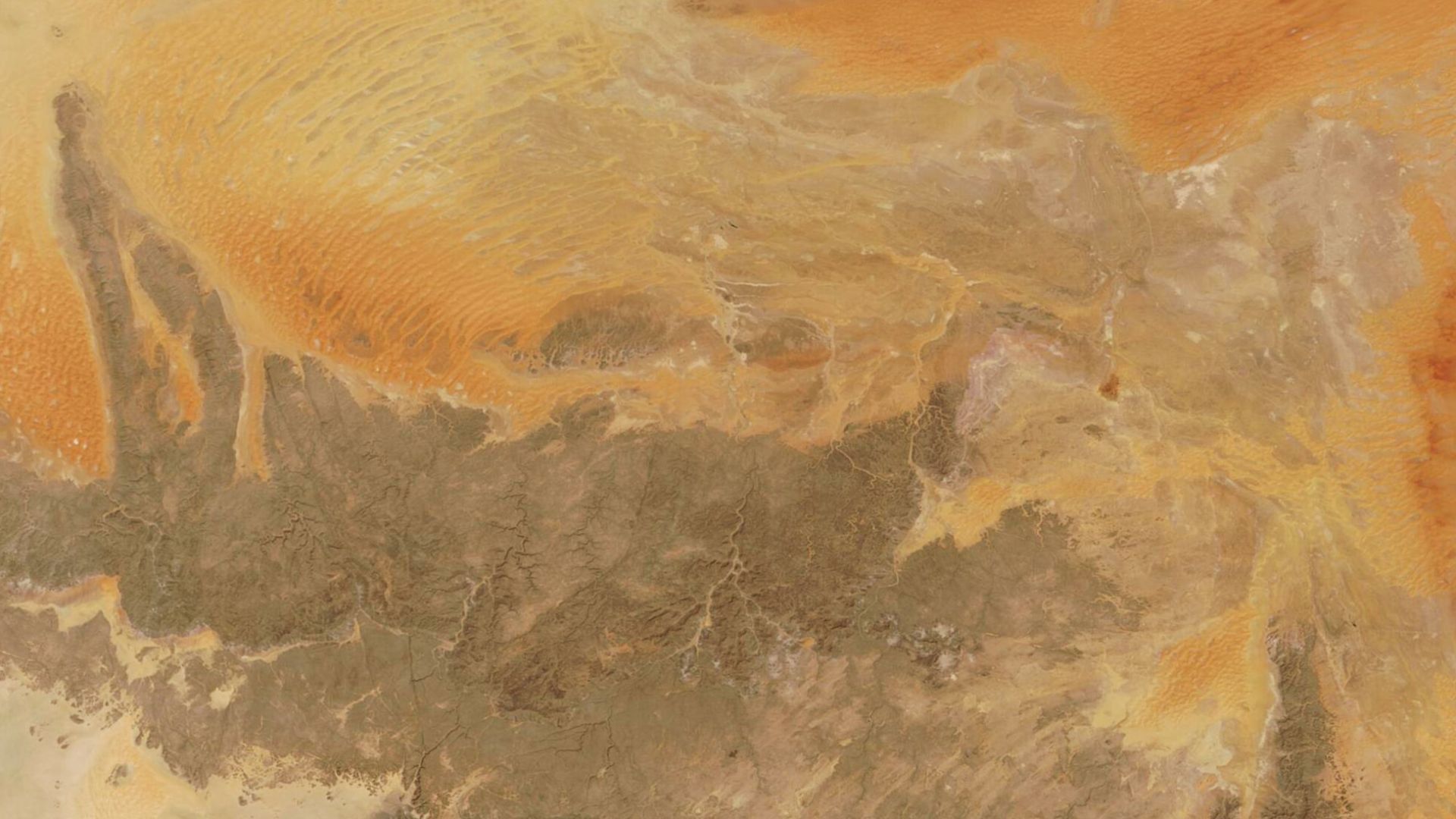
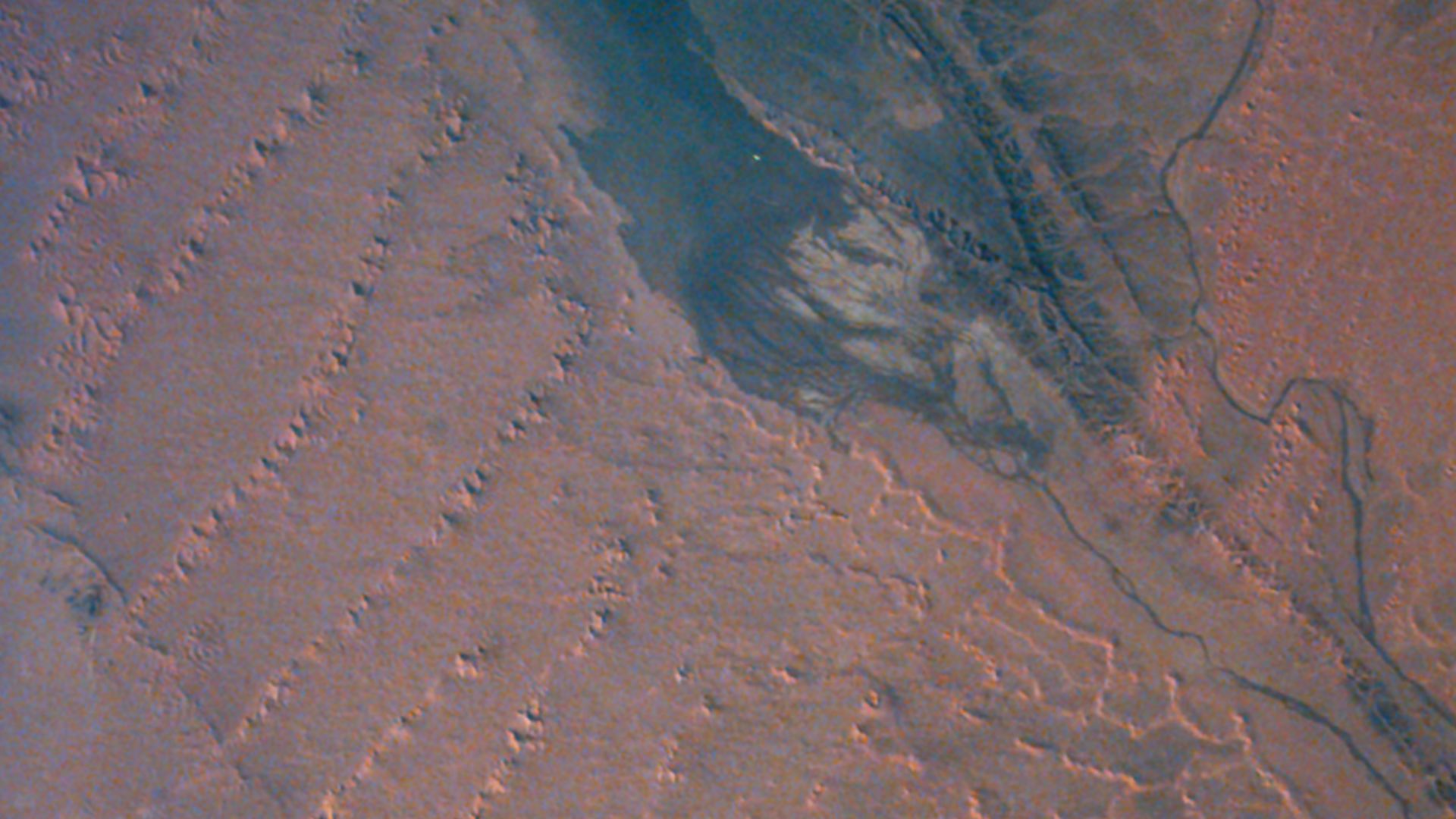
Between roughly 11,000 and 5,000 years ago, parts of the Sahara went through the “African Humid Period,” when monsoon rains pushed north. Lakes formed, grasslands spread, and wildlife followed. Rock art from this era has become one of the clearest windows into that vanished landscape.
 MODIS Land Rapid Response Team, NASA GSFC, Wikimedia Commons
The Rock Art That Stopped Researchers Cold
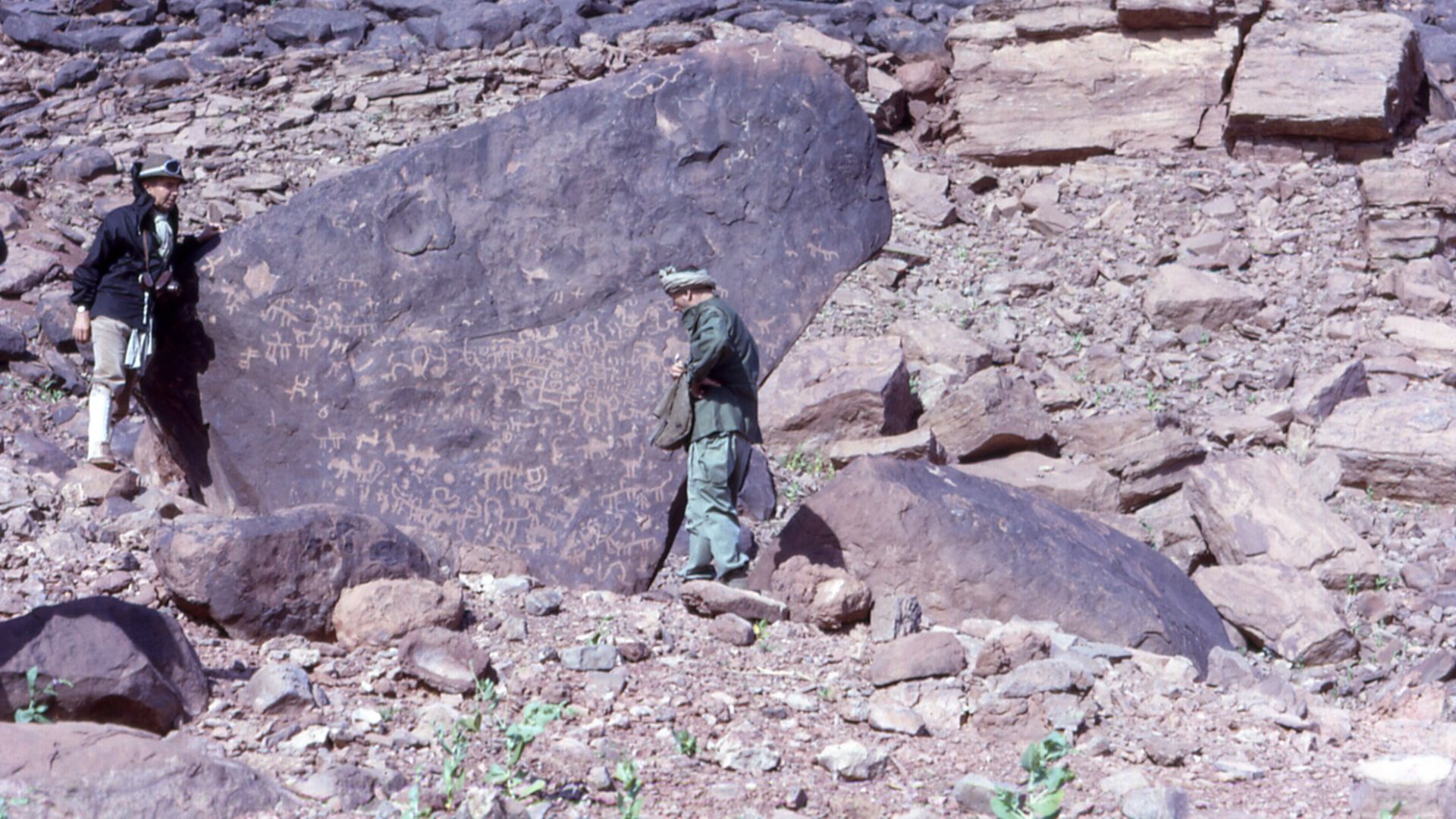
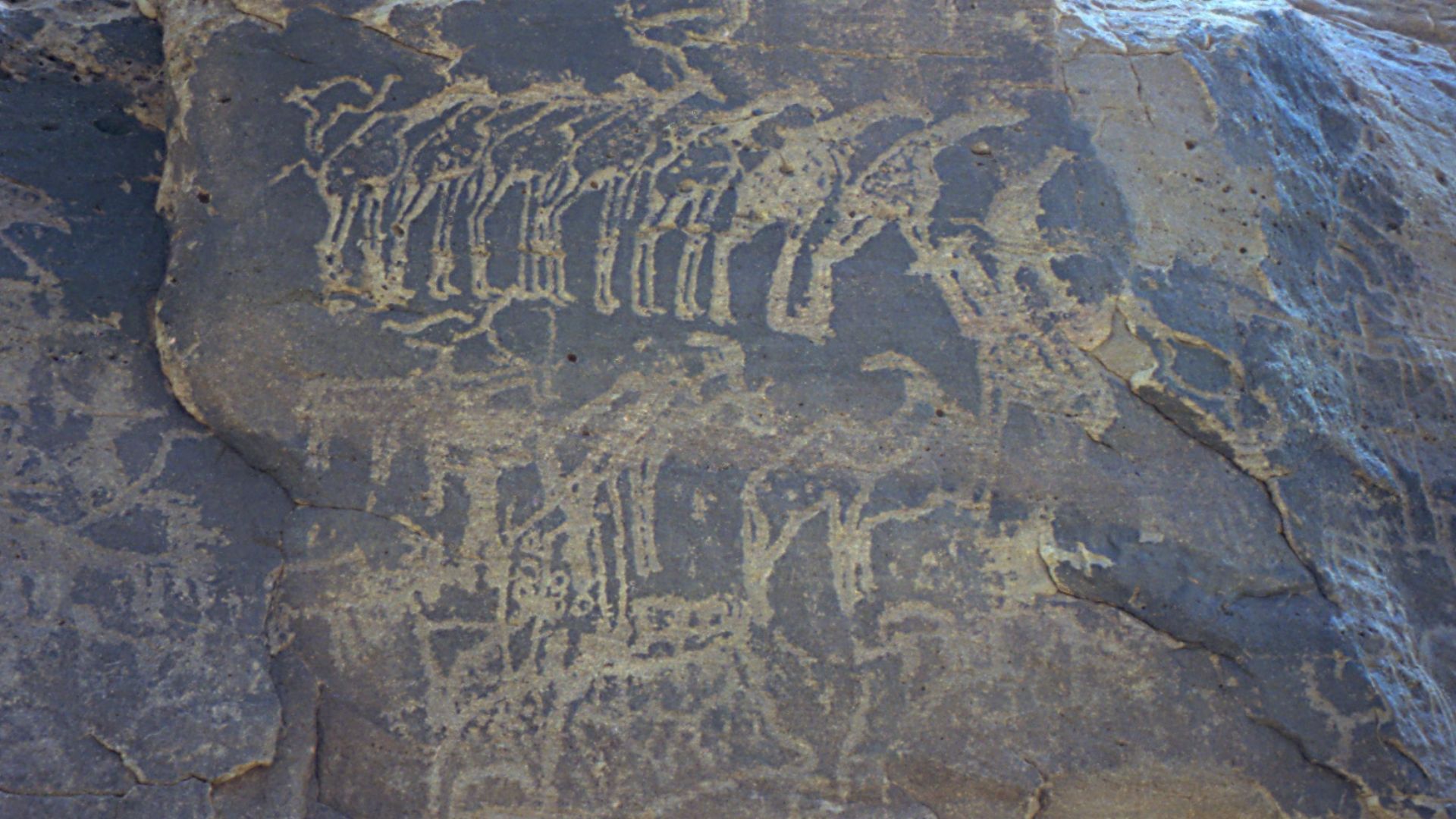
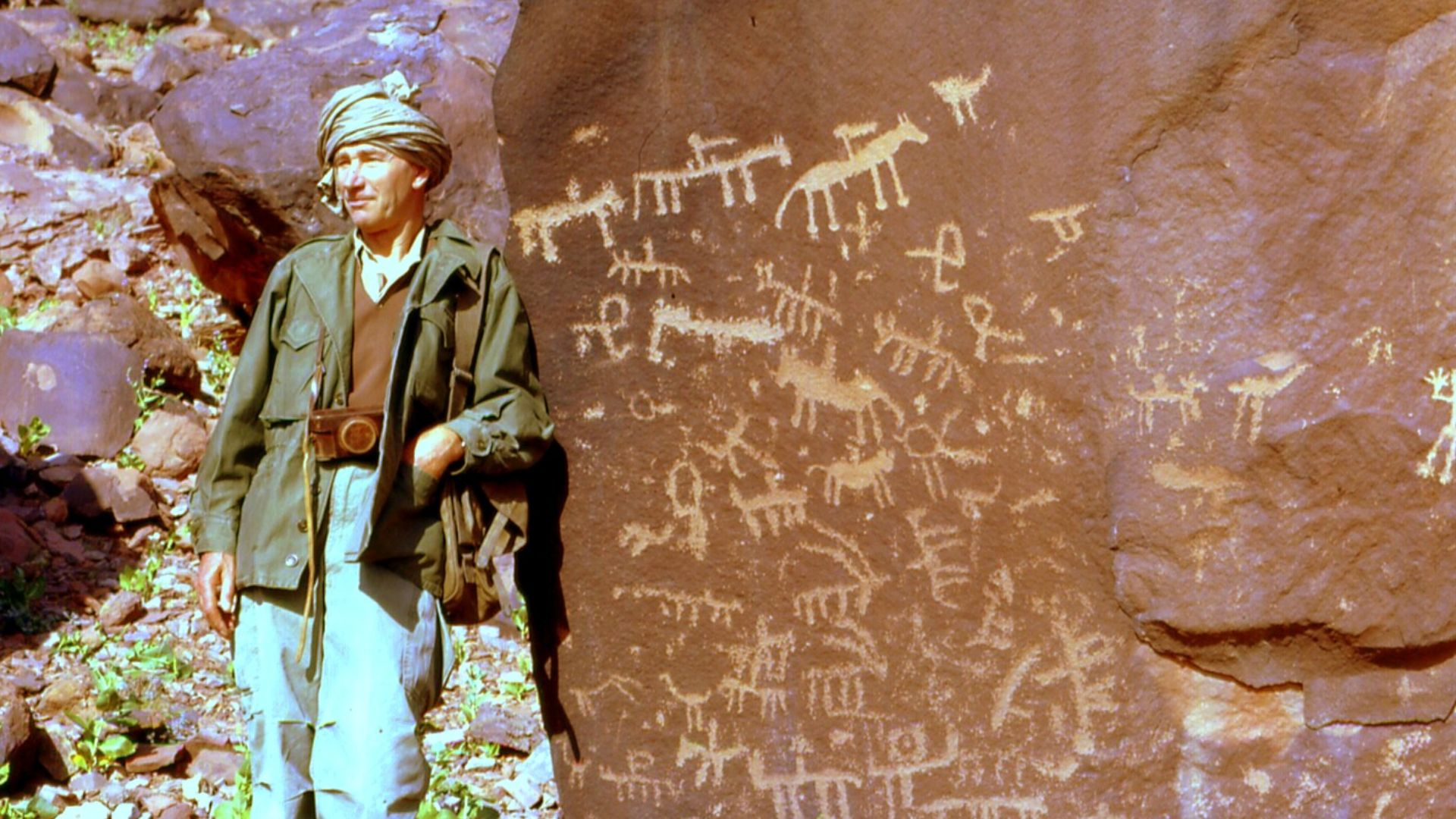
The art described in recent reporting includes detailed depictions of animals in Saharan massifs where prehistoric artists left huge visual records on stone. Some figures are familiar, like cattle and antelope. Others are the kind that make you pause, because they suggest a wildlife community that feels almost impossible for today’s Sahara.
 John Atherton, Wikimedia Commons
Meet The Long-Extinct “Buffalo” Of North Africa
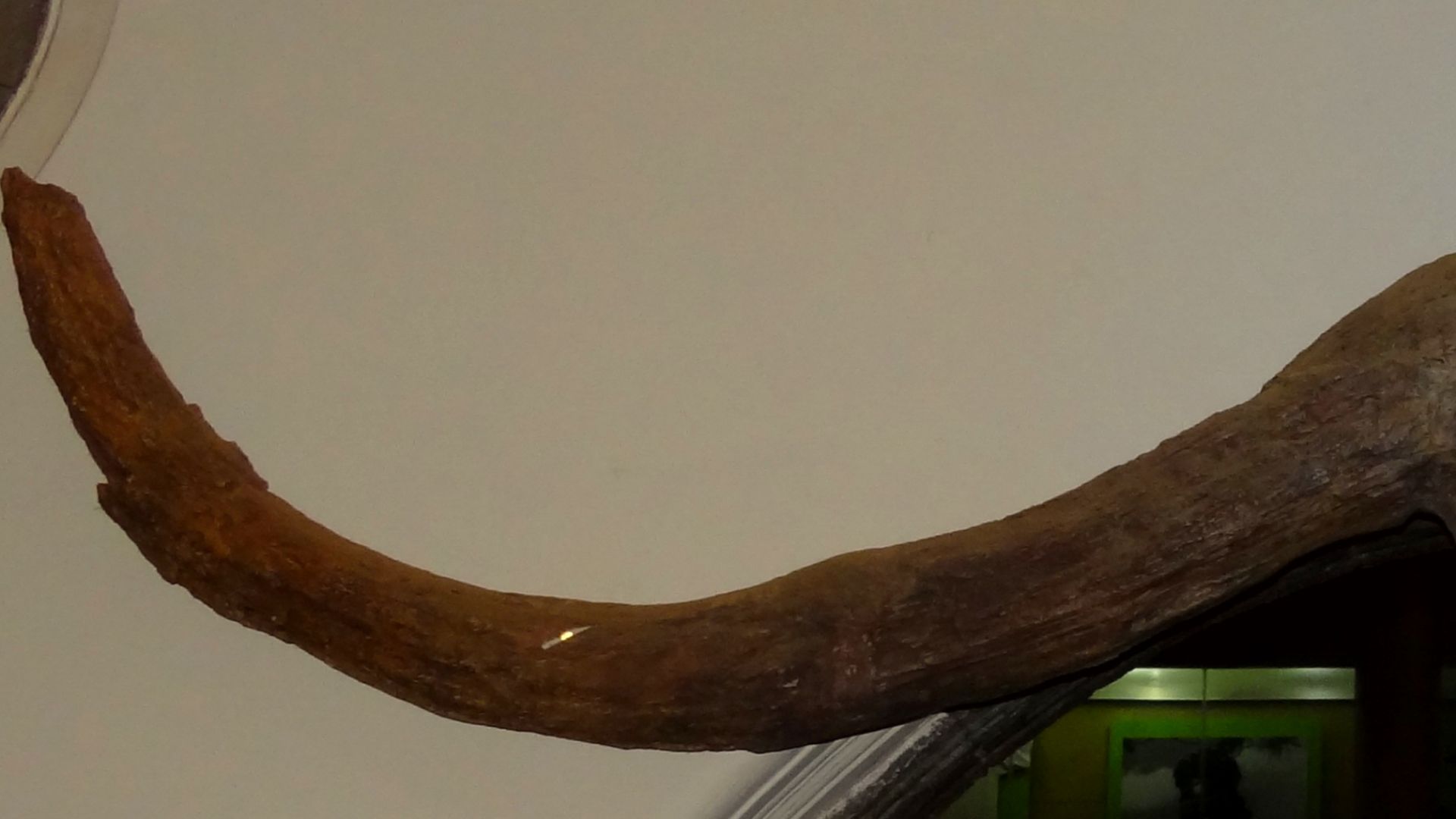
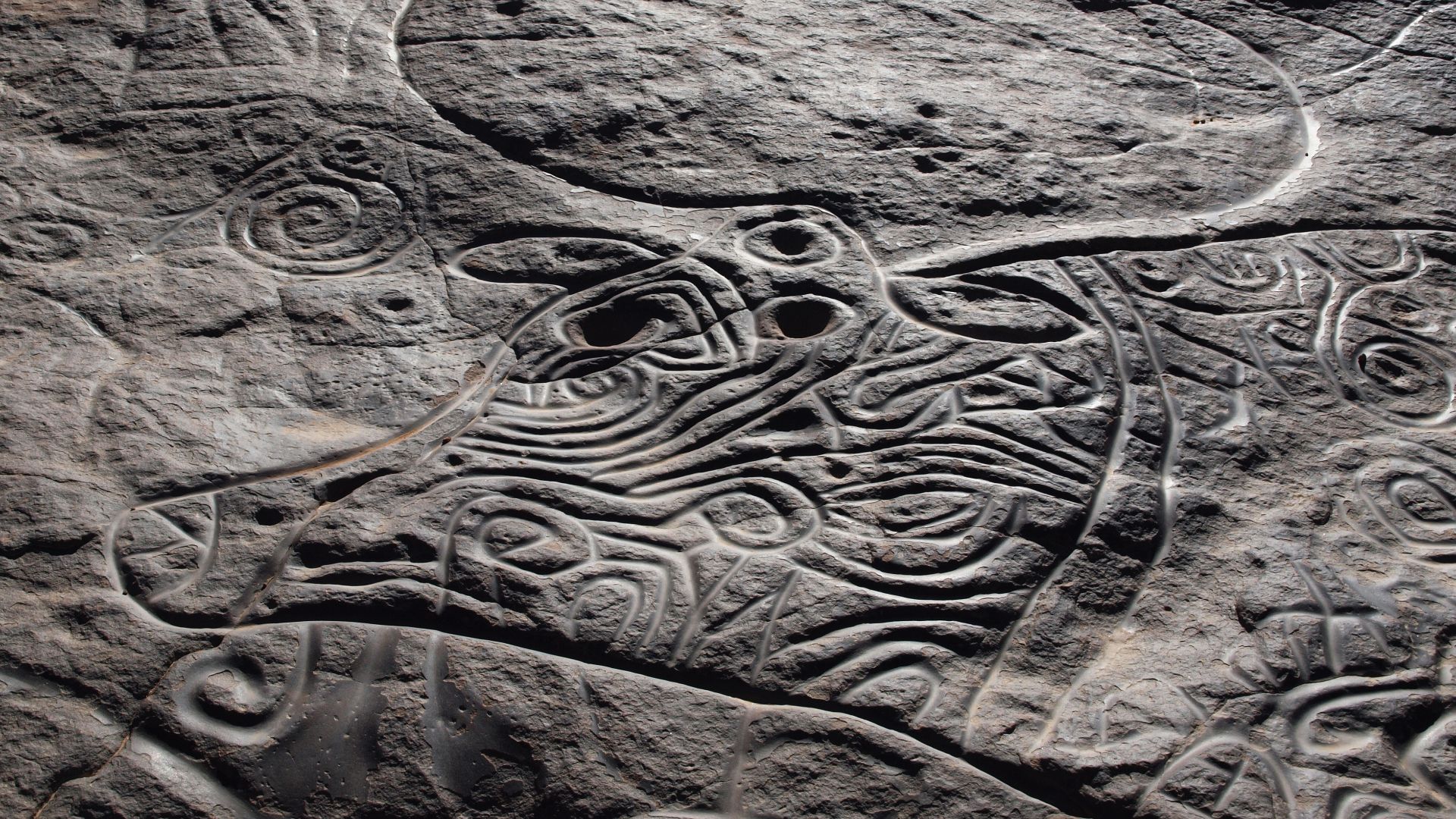
One of the standout animals is an extinct giant buffalo known as Pelorovis. Researchers have linked certain Saharan rock engravings to this species based on its enormous horns and heavy build. Pelorovis vanished from North Africa in the late Pleistocene and early Holocene, making its appearance in rock art a major clue about timing and environment.
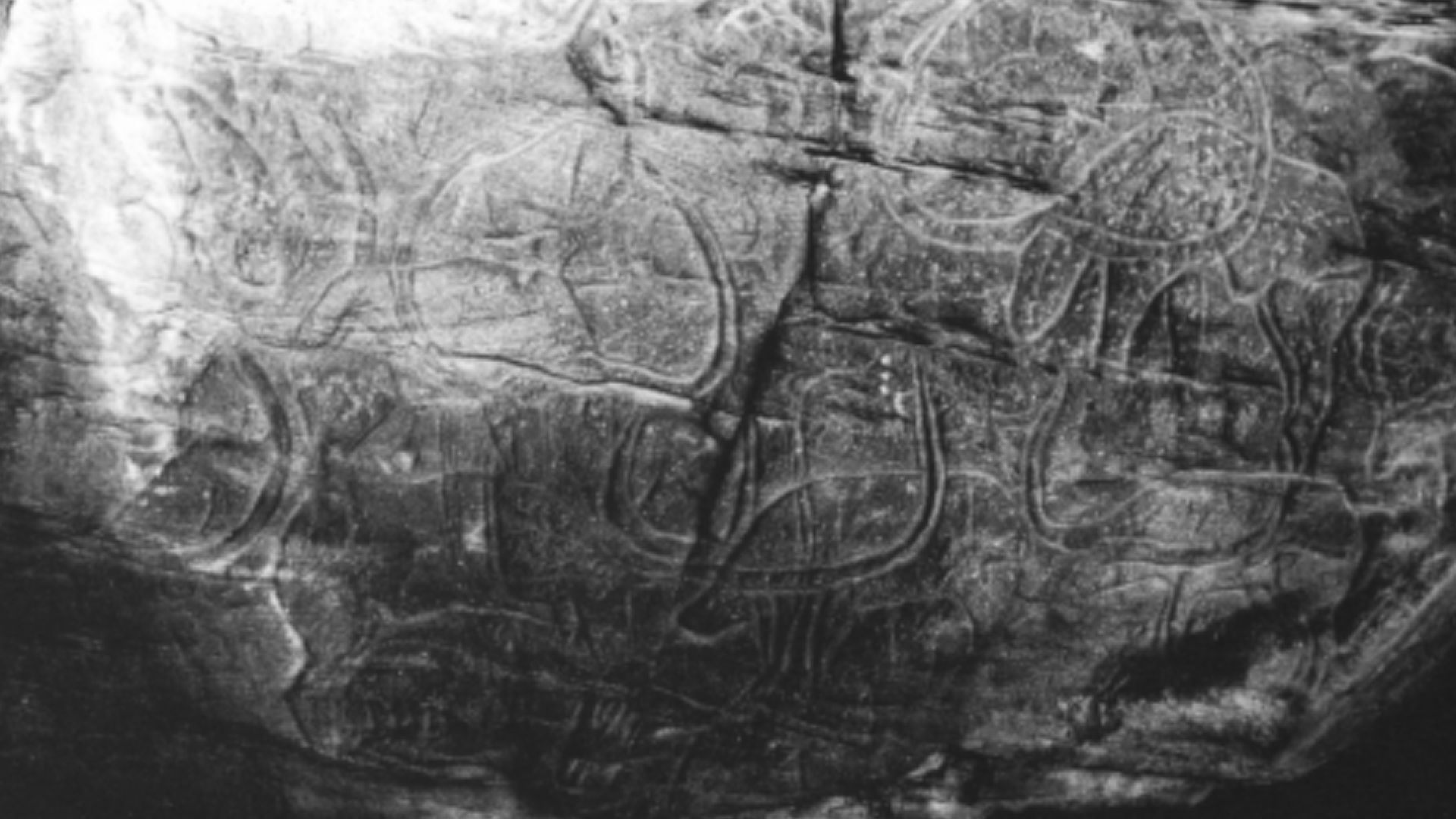
Those Horns Were The Giveaway
In the engravings, the horns are the whole story. They are long, thick, and sweeping, unlike the horns of modern African buffalo. That anatomical detail is what lets scientists argue these are not generic “cattle-like” drawings, but deliberate images of a specific, now-extinct animal.
 Bjorn Christian Torrissen, Wikimedia Commons
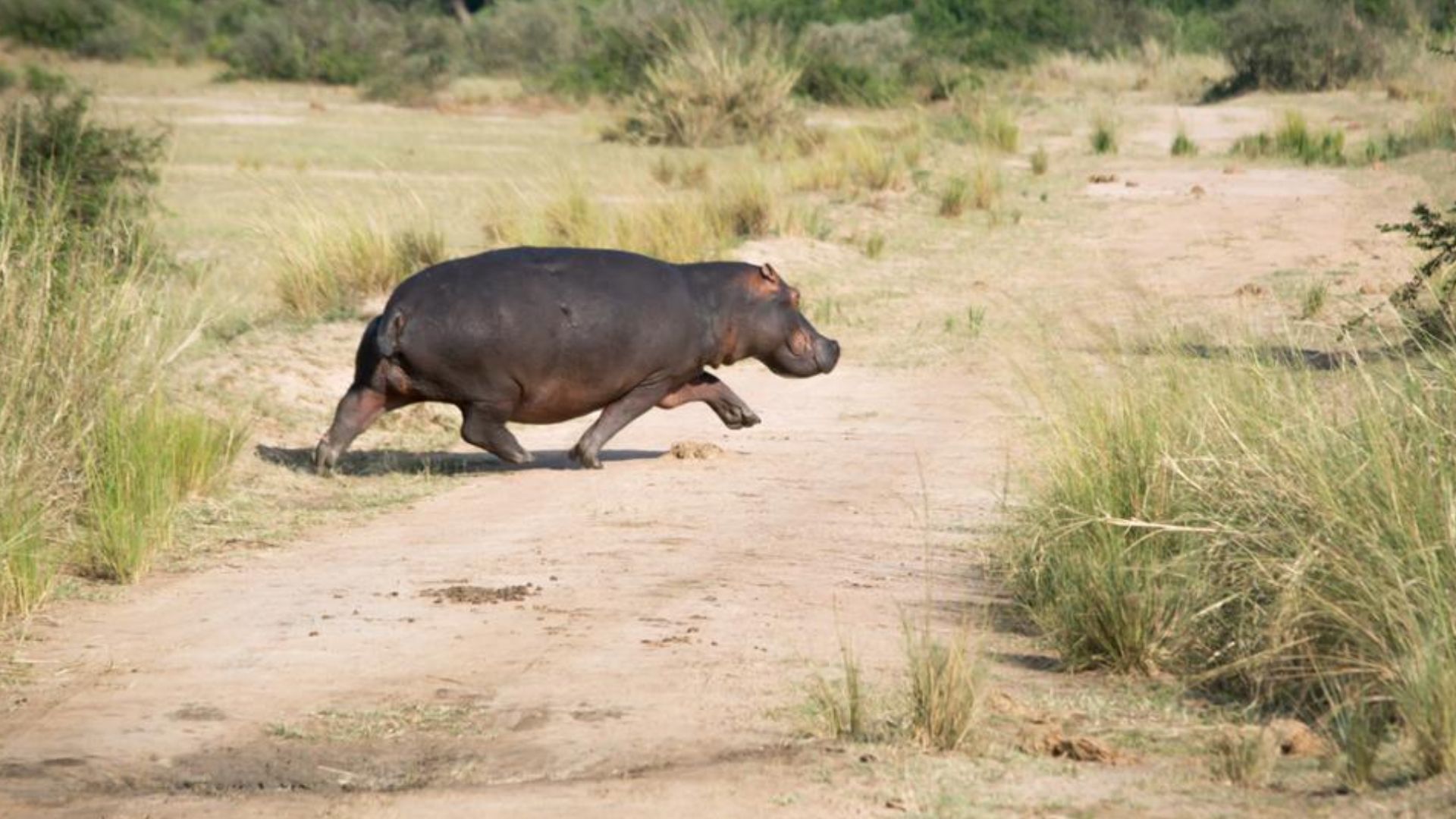
A Sahara With Hippos, Too
Other Saharan rock art panels show hippos, which require deep water and steady supply, two things the Sahara definitely lacks today. Their presence in the imagery fits what climate records already suggest about lakes and wetlands in the Green Sahara period. It also hints that humans were watching these animals up close, not imagining them from stories.
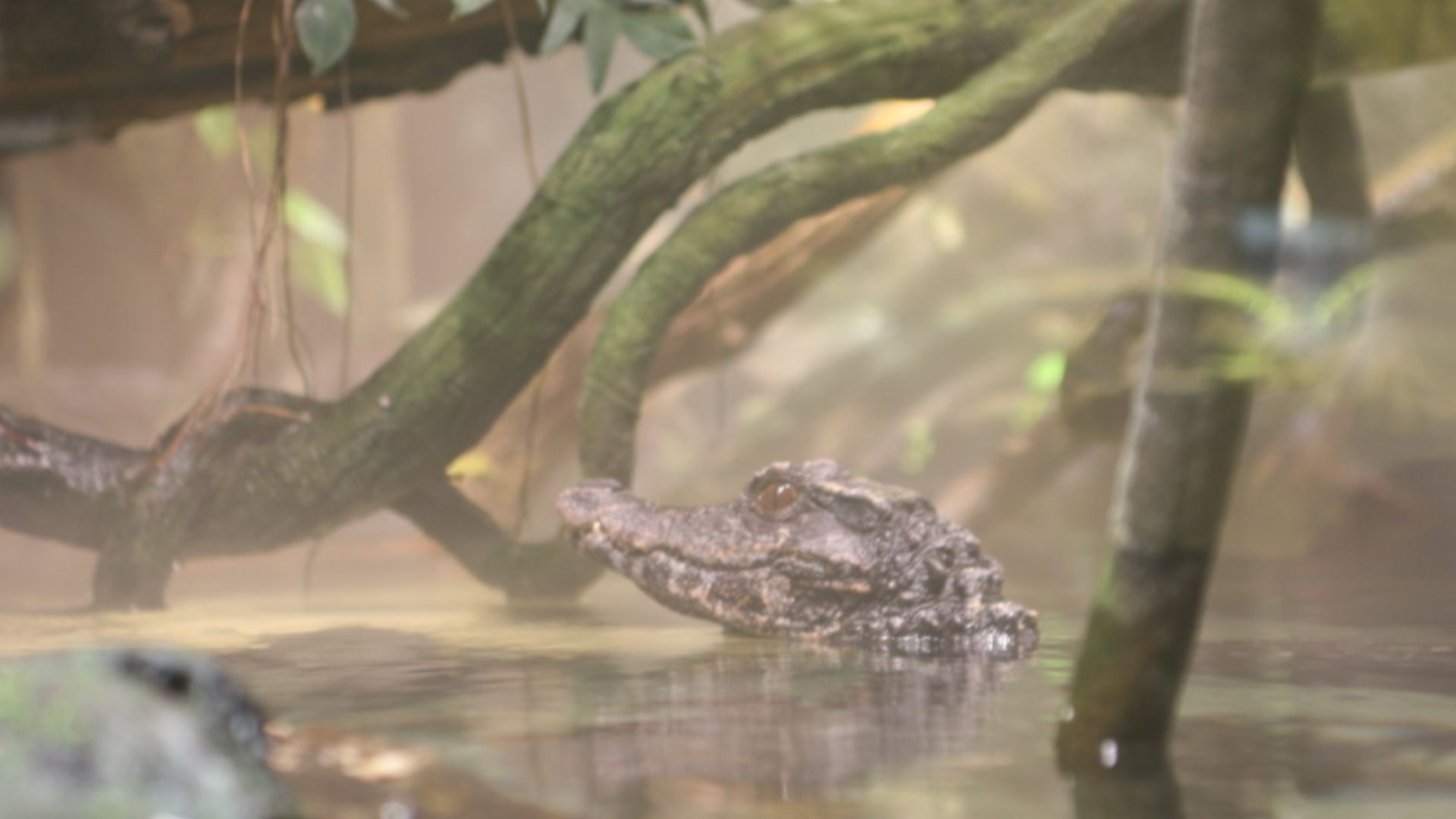
Crocodiles In Places That Now Get Almost No Rain
Some panels include crocodiles, another signal that water was nearby for long stretches. Today, it is hard to picture a crocodile habitat in these locations, which makes the art feel like a taunt from the past. The animals in the stone are quietly insisting that the Sahara used to be green, wet, and bountiful.
 Cliff from Arlington, Virginia, USA, Wikimedia Commons
Giraffes On The Move
Giraffes show up repeatedly in Saharan rock art, sometimes in groups that look like they are walking. That makes sense in a savanna landscape with scattered trees and browse. It also shows how carefully artists observed posture and proportions.
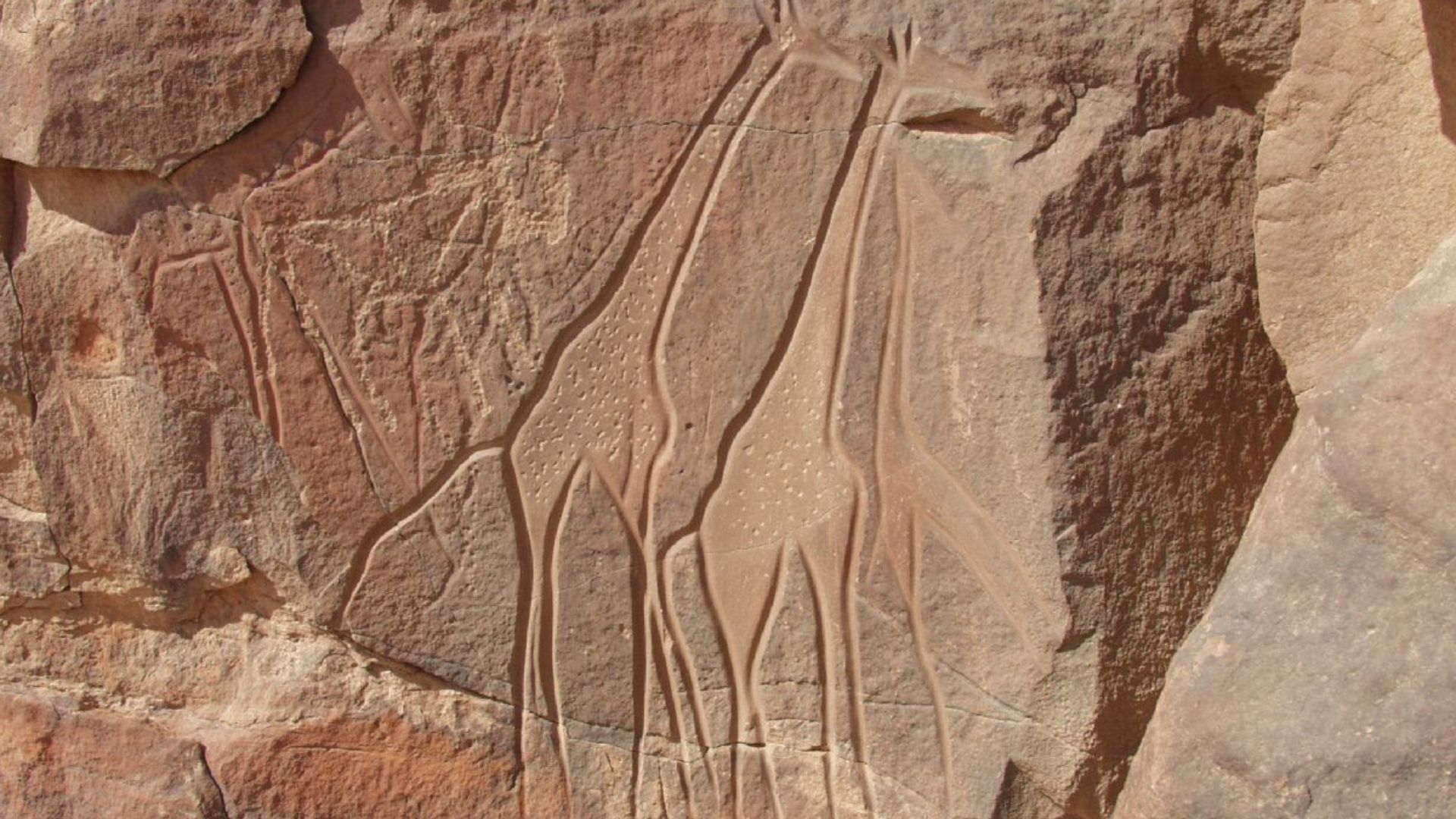 ruba_ch/Rudolf Baumann, Wikimedia Commons
Elephants Were Part Of The Scene
Elephants appear in multiple Saharan rock art regions and are often rendered at large scale. Their presence signals broad grasslands and woodland edges that could support big herds. For archaeologists, it is another line of evidence that the animal community was once closer to East African savannas than to modern desert life.
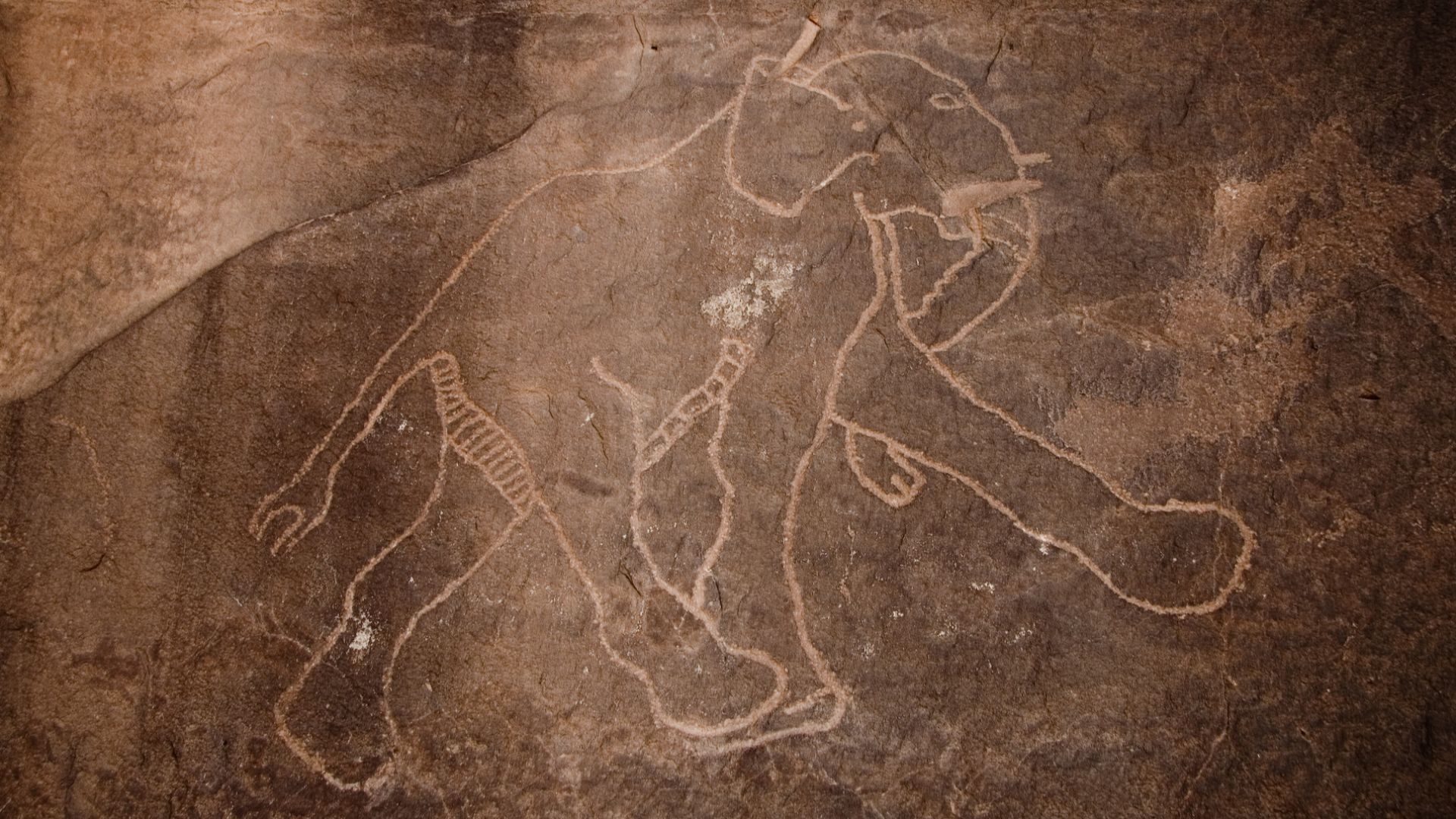 Luca Galuzzi (Lucag), Wikimedia Commons
Lions, Hunters, And The Risk Factor
Predators appear, too, including big cats in some Saharan traditions. These people were not only living near water and grazing herds. They were sharing it with animals that could kill them.
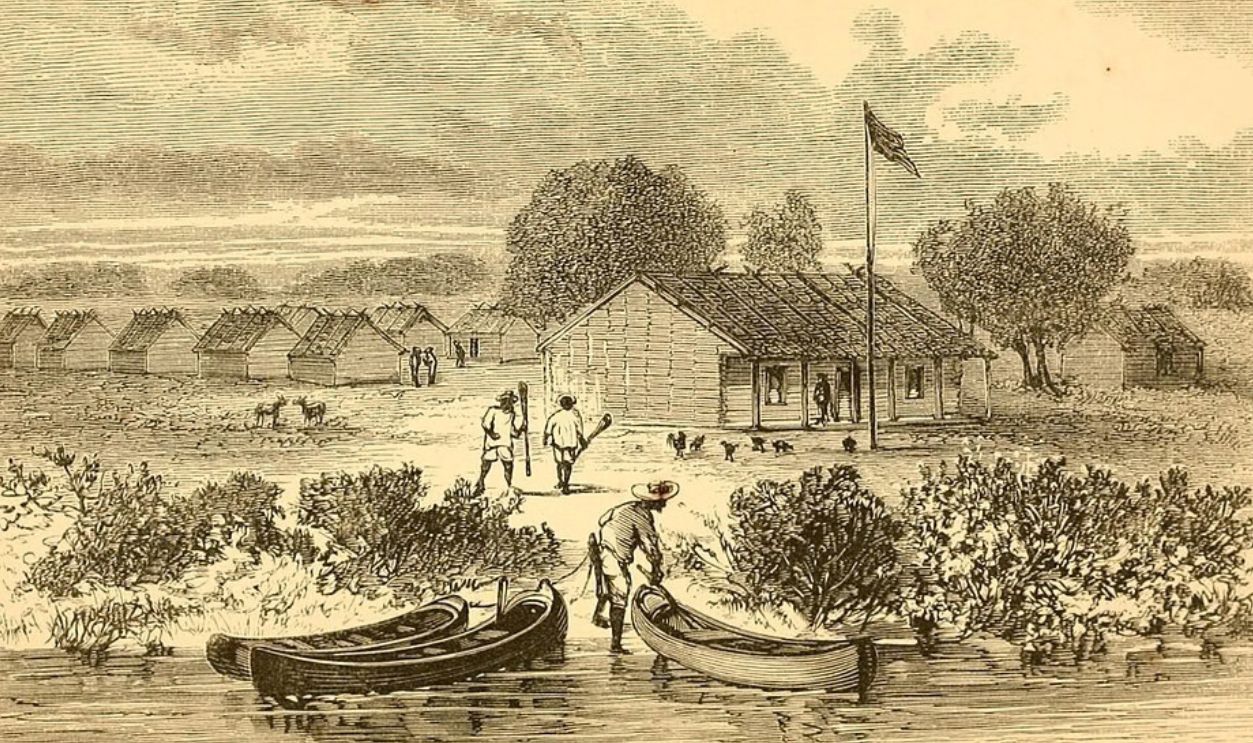 Internet Archive Book Images, Wikimedia Commons
This Was Not Just Nature Watching
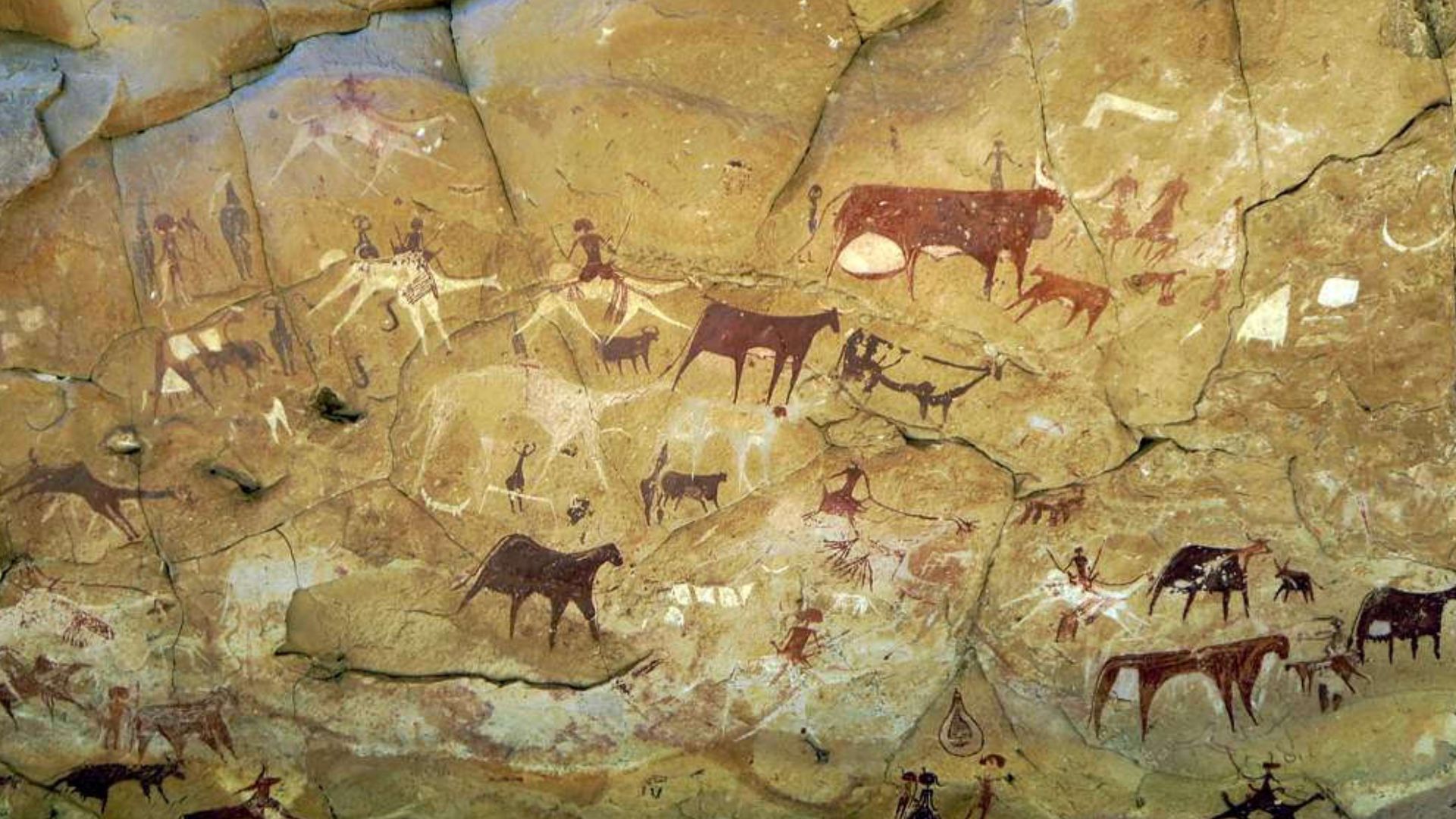
Many panels mix wildlife with humans, and sometimes with domesticated cattle. That combination suggests the art spans different moments, including periods when herding had arrived. In other words, these rocks captured change in real time, even if the artists did not know it was happening.
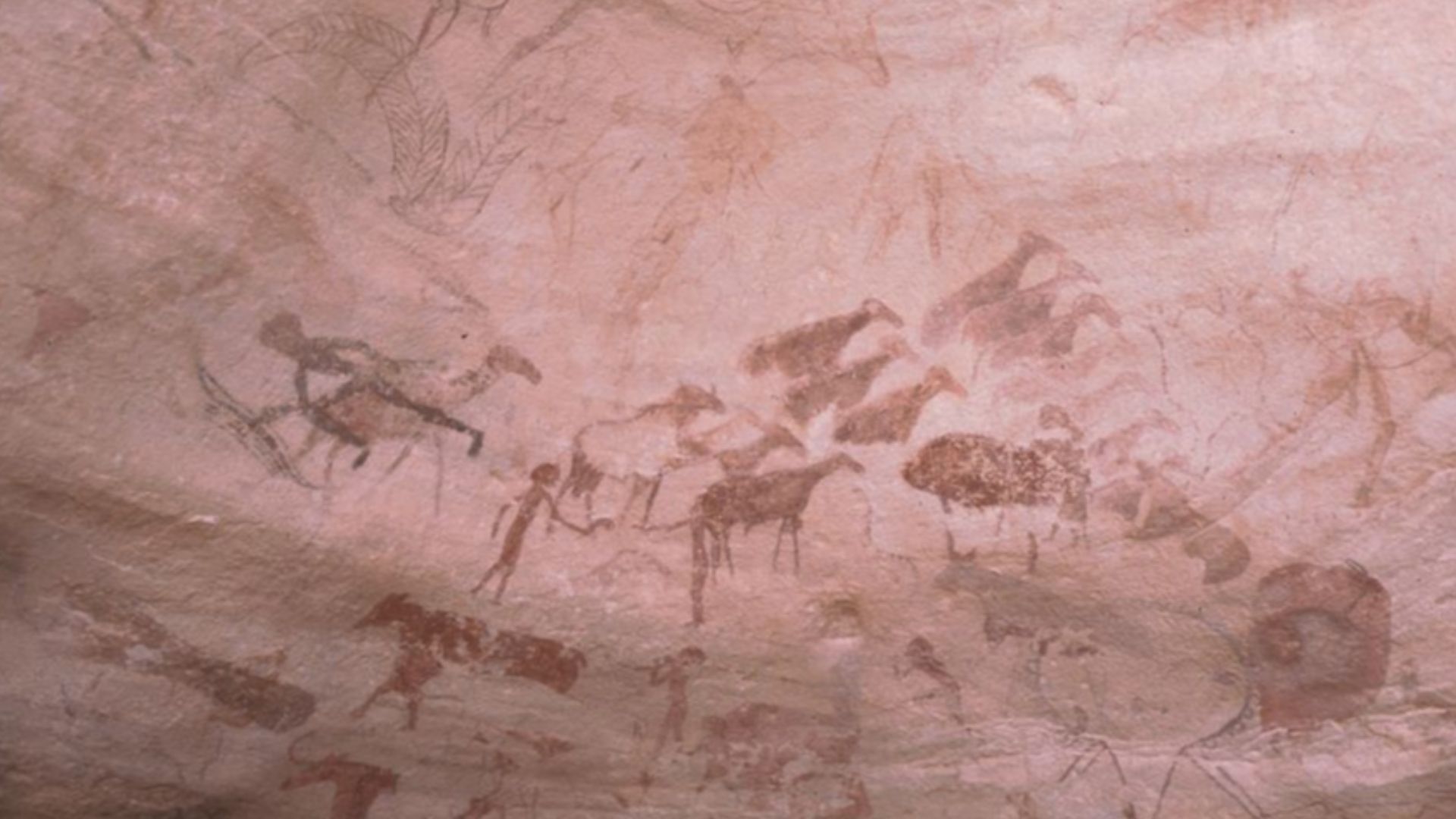 Alessandro Passare, Wikimedia Commons
Engravings Versus Paintings
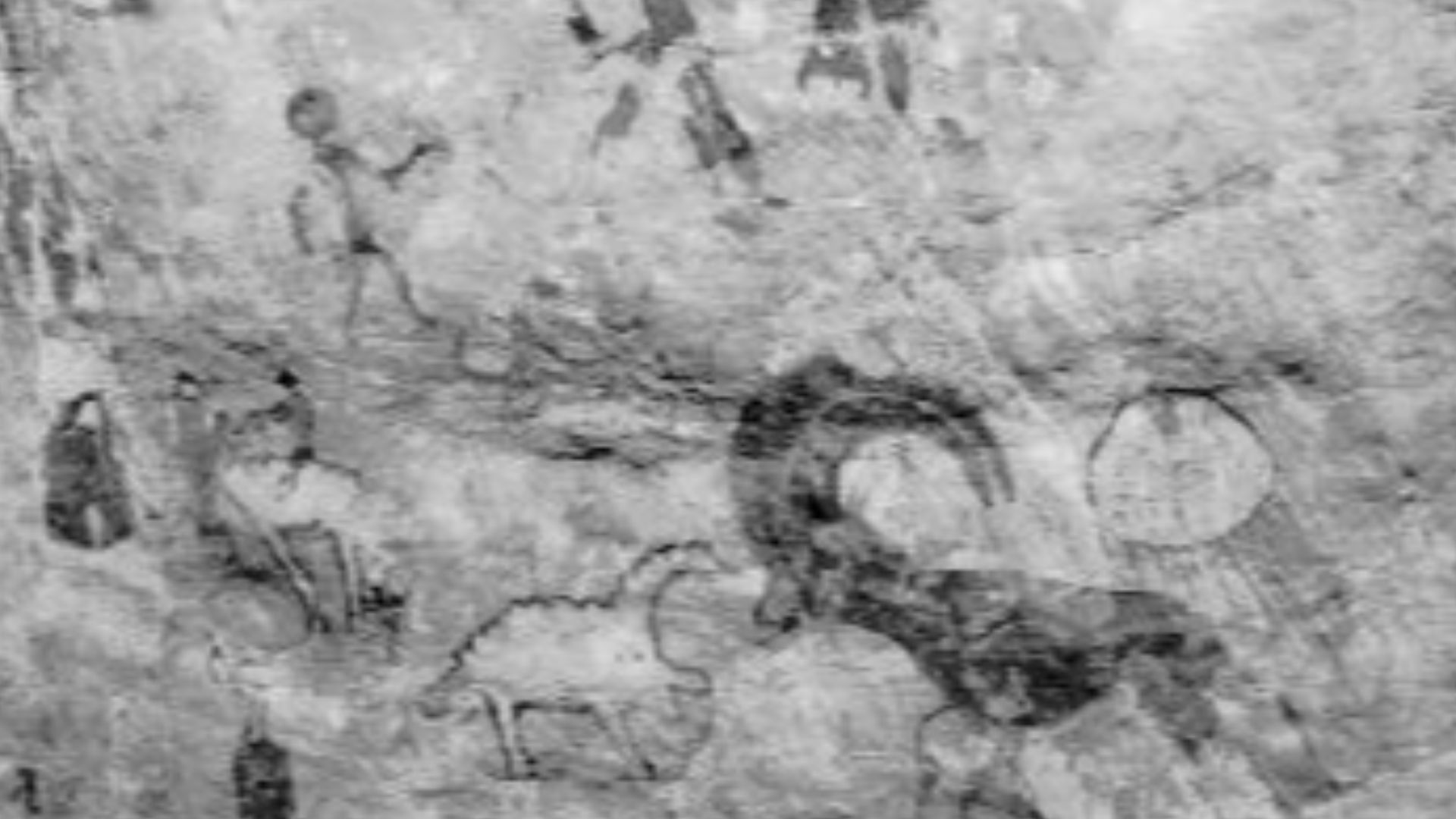
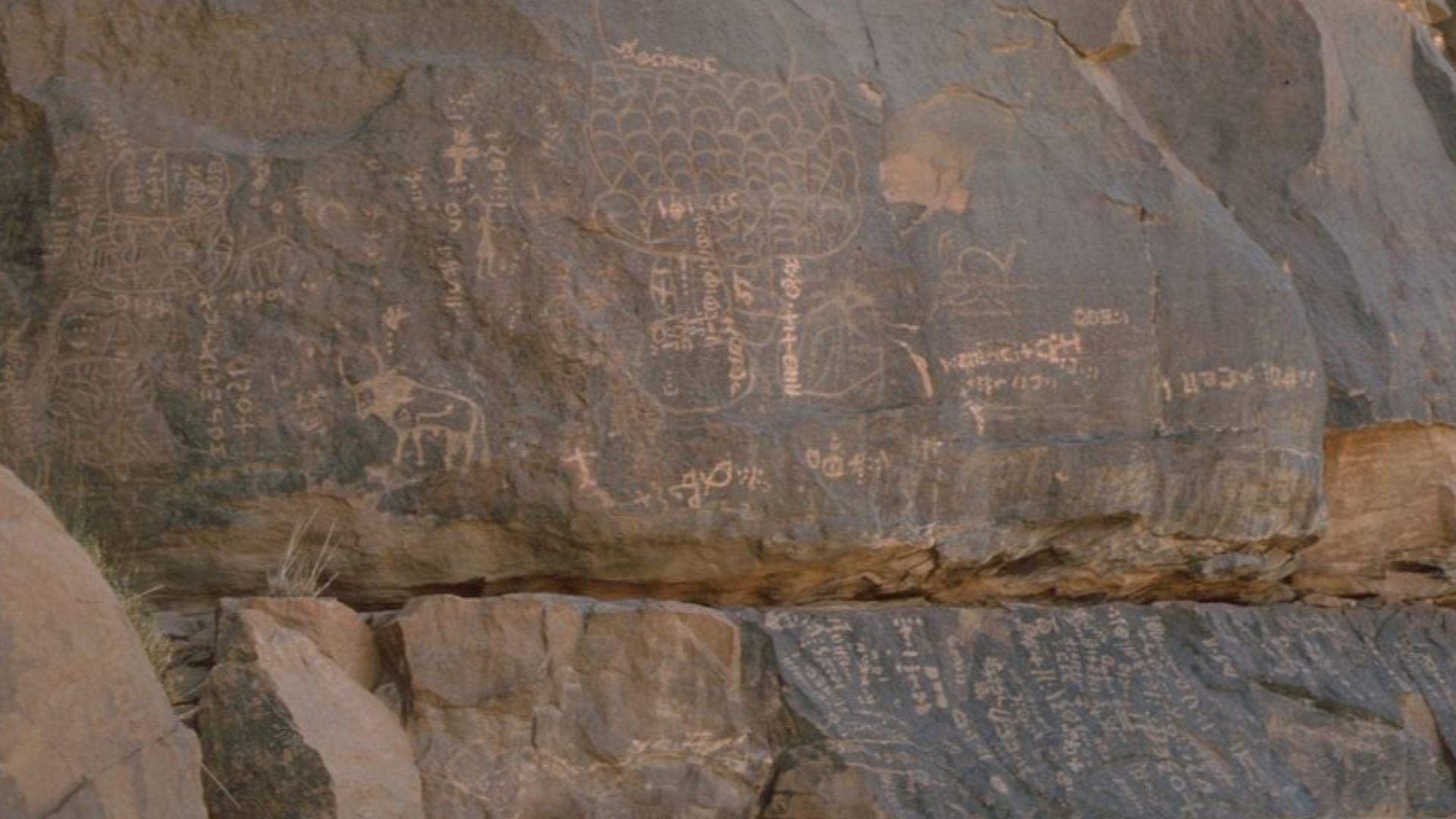
Saharan rock art comes in both engraved and painted forms, and they often belong to different artistic phases. Engravings can be deeply carved and long-lasting, while paintings are more vulnerable to weathering. That difference shapes what survives for researchers to study today.
 Closedmouth, Wikimedia Commons
The “Bubaline” Tradition And Its Big Beasts
Some of the oldest Saharan engravings are often discussed under the “bubaline” or “wild fauna” tradition, known for large, naturalistic animals. This is where many of the dramatic giant-buffalo style figures appear. The scale alone makes it feel like prehistoric artists were showing off.
The Dating Problem Nobody Can Fully Escape
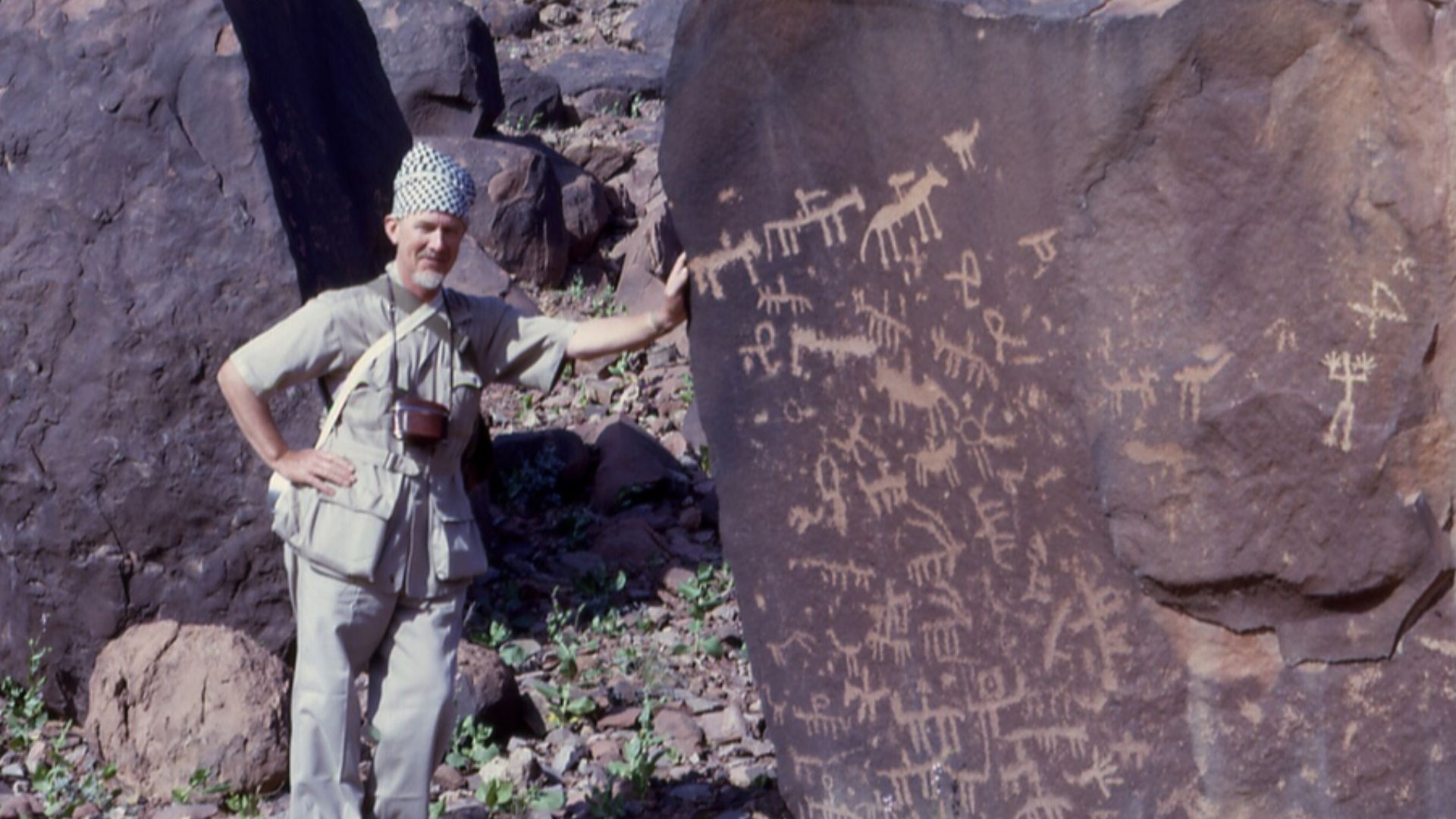
Rock art is notoriously hard to date directly. Researchers often rely on style, superimposition, weathering, and the known time ranges of animals depicted. That is why identifying a specific extinct species matters so much, because it acts like a timestamp carved into stone.
Why These Animals Count As Evidence
When an engraving clearly matches an animal with a known extinction timeline in a region, it becomes more than art. It becomes a data point to understand our ancient past. In the Sahara, where organic remains can be scarce or scattered, those data points are precious.
 Alessandro Passare, Wikimedia Commons
A Climate Story With A Brutal Ending
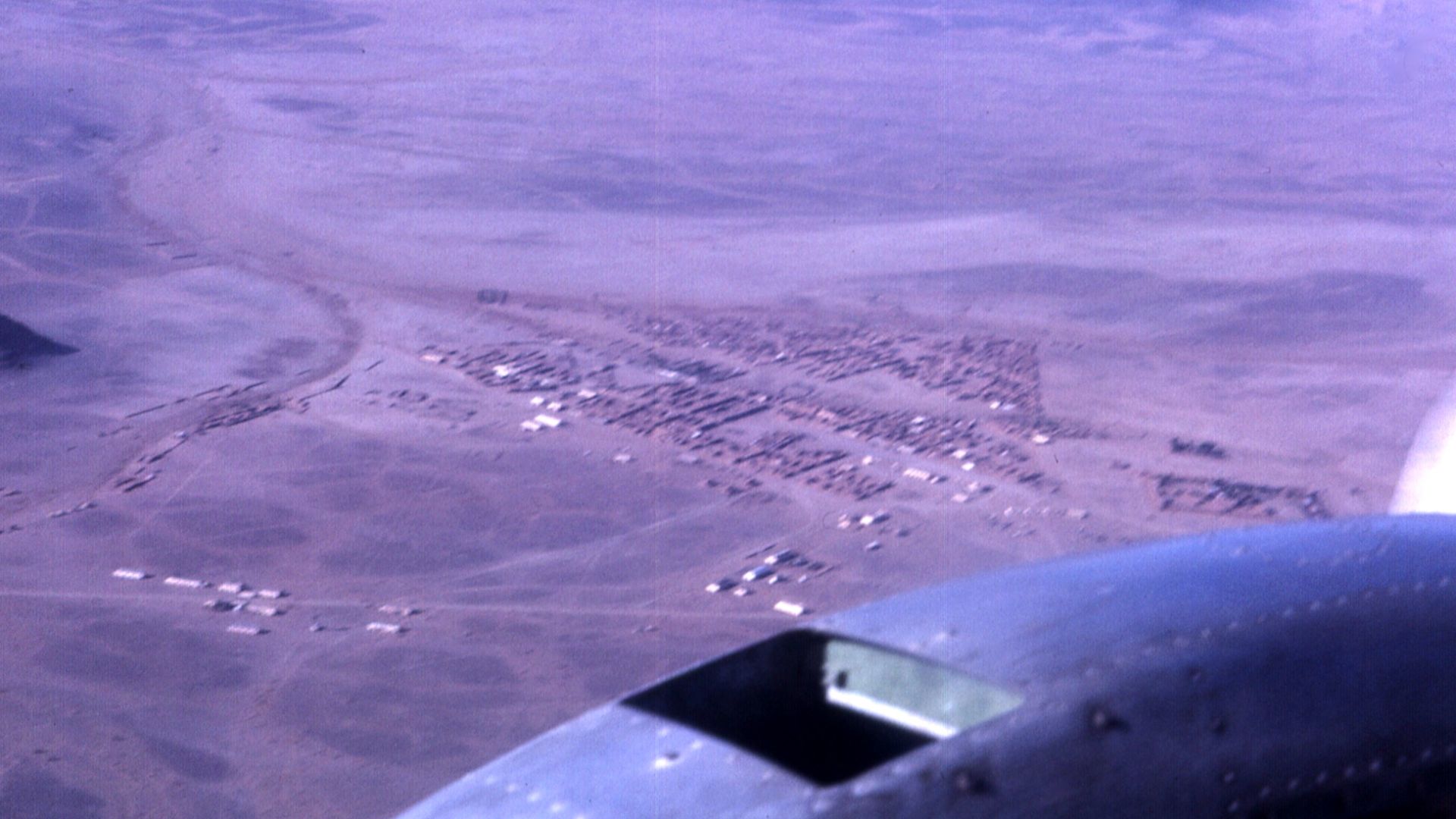
The African Humid Period did not last. As Earth’s orbit shifted, monsoons weakened and the Sahara dried out over thousands of years. Waterholes shrank, wildlife ranges collapsed, and many communities had to adapt, move, or disappear from the record.
 John Atherton, Wikimedia Commons
What Happened To The People
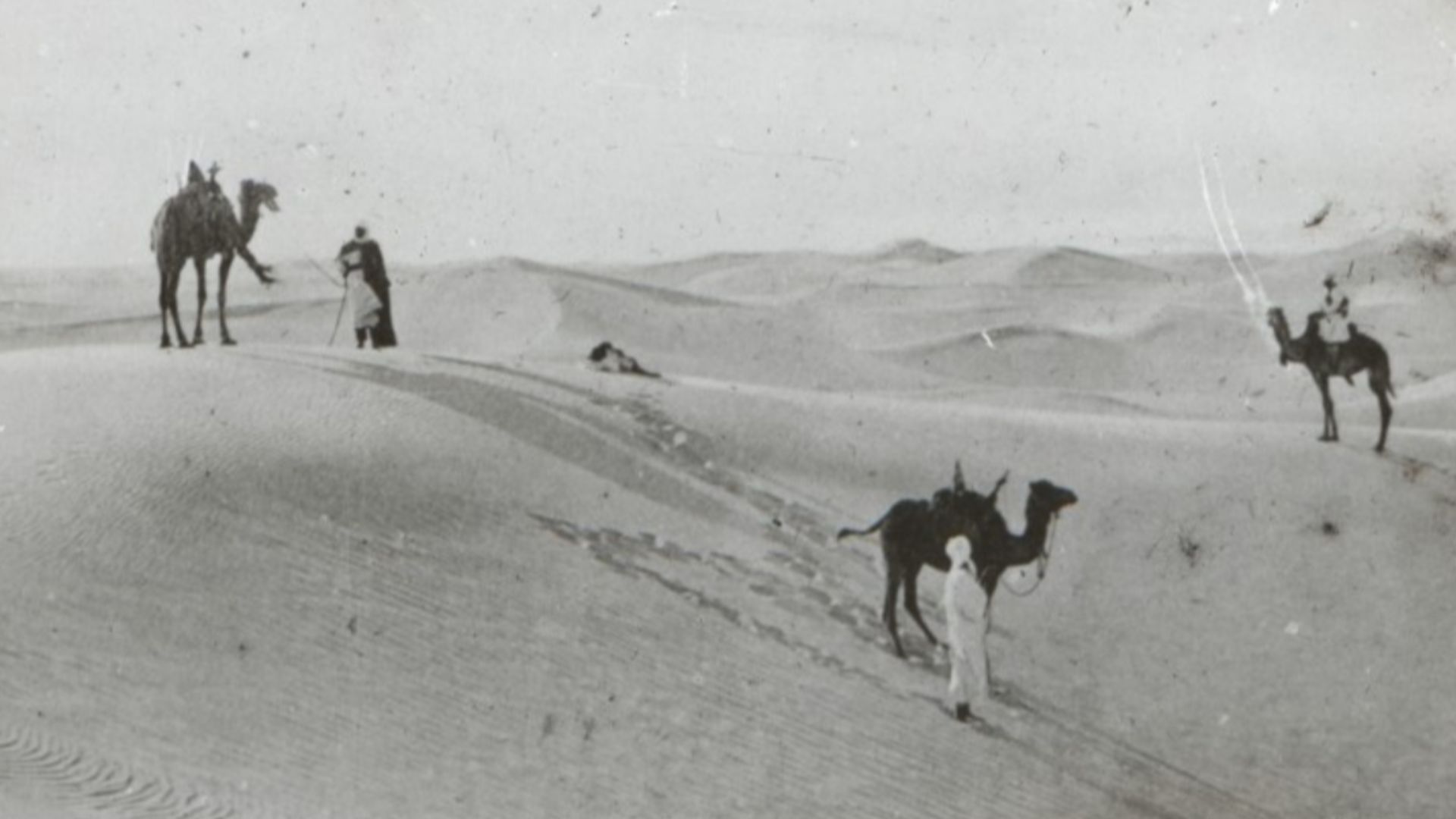
As the region dried, populations likely clustered near reliable rivers and lakes, such as the Nile, the Congo, and the Great Rift Valley. Archaeologists connect this broader drying trend to major shifts in settlement across North Africa. The rock art feels like a leftover diary from before the doors closed.
 Unknown authorUnknown author, Wikimedia Commons
These Artists Knew Animal Behavior
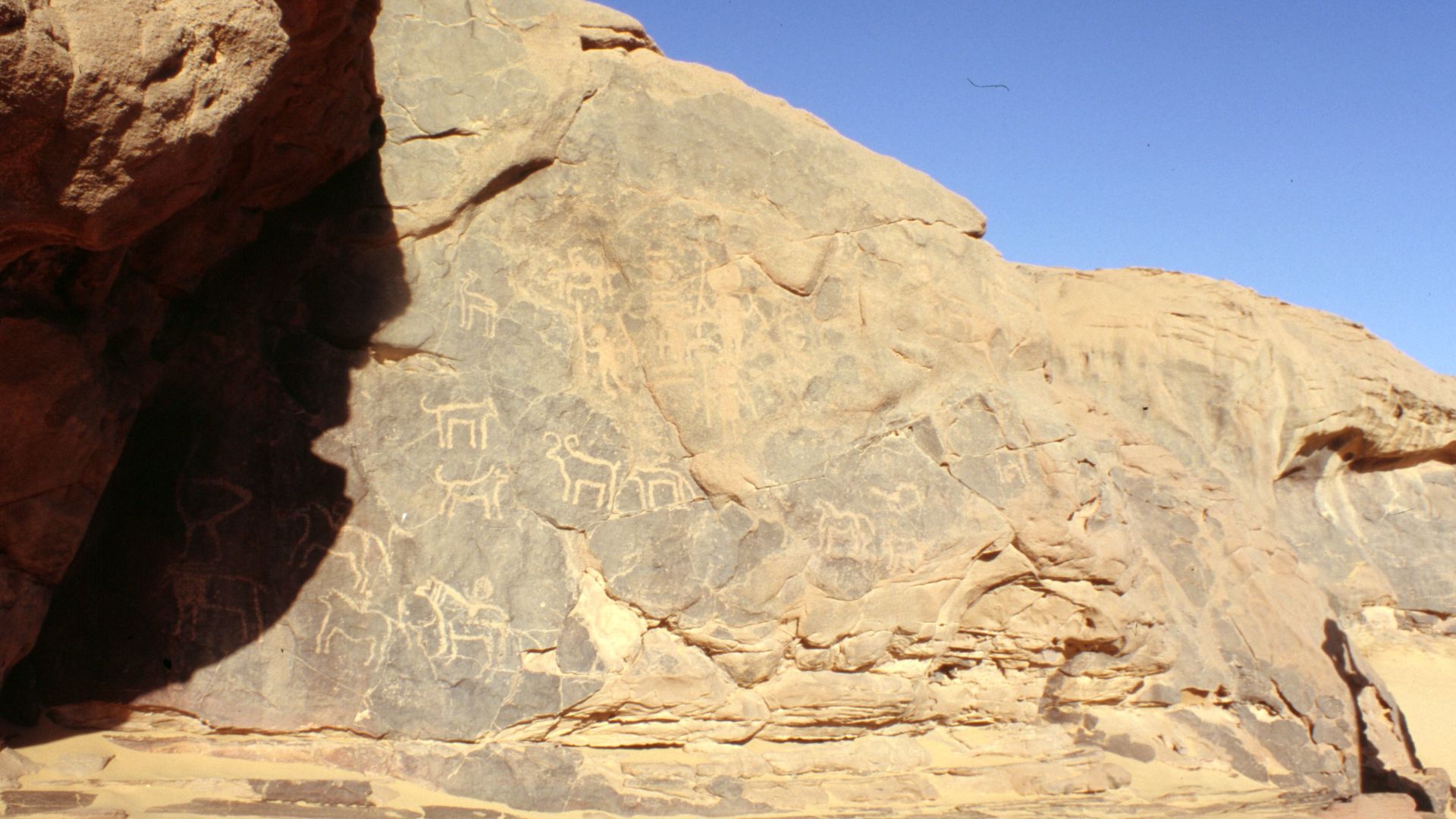
The best Saharan panels are not random doodles. They show herd groupings, body posture, and species-specific features like horn curvature and snout shape. That level of detail implies artists were recording what they actually saw, and the scale shows the ritual importance of creating art.
 Patrick Gruban (Gruban) from Munich, Germany, Wikimedia Commons
Not Every “Weird Beast” Is A Mystery Monster
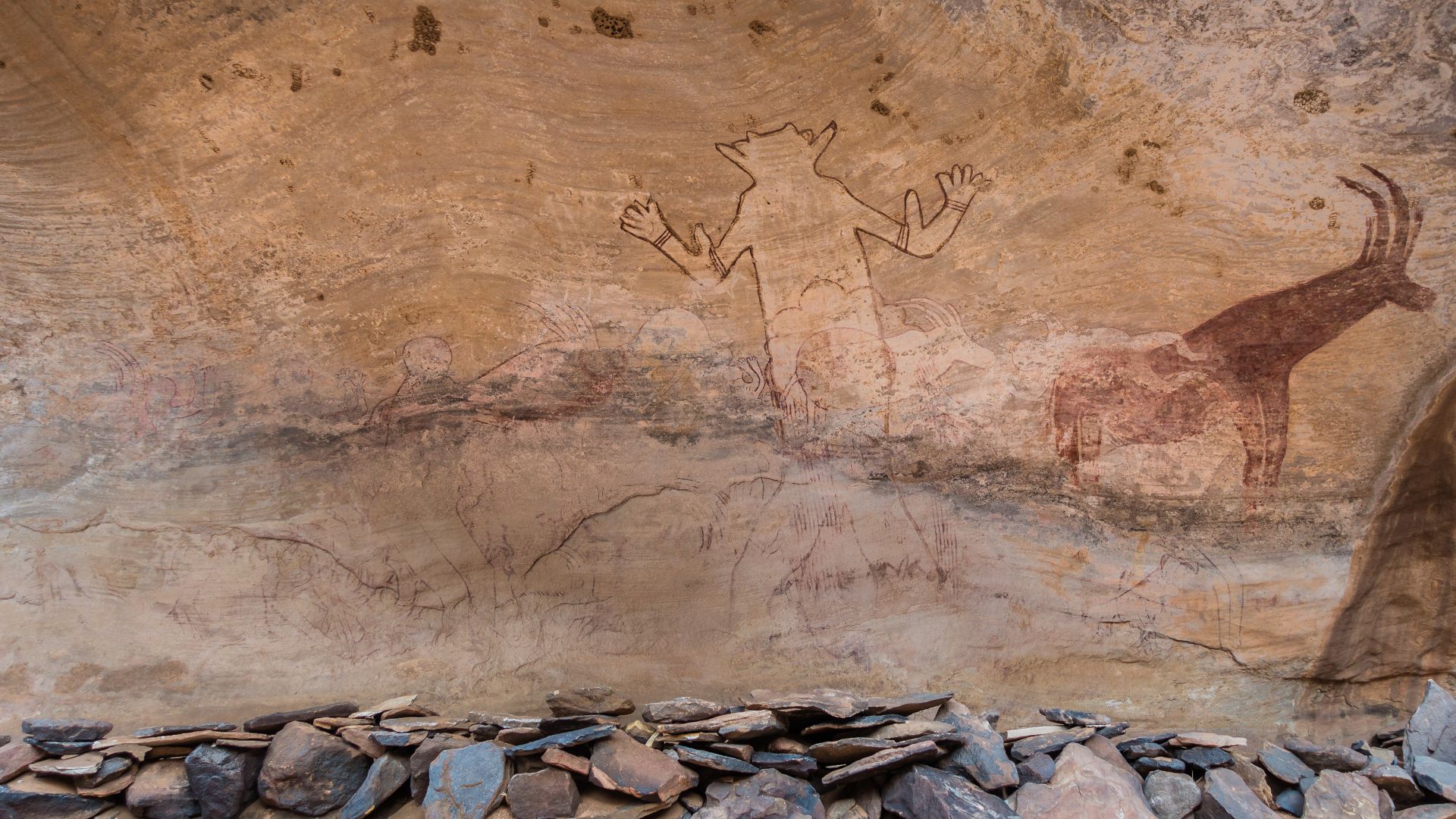
When an animal looks unfamiliar today, it is tempting to call it mythical. Researchers try to resist that by comparing the images with paleontology and modern anatomy. Sometimes the answer is simpler, and stranger, than a legend.
 IssamBarhoumi, Wikimedia Commons
The New Attention On An Overlooked Animal
Recent coverage highlighted how some Saharan animal figures may have been underappreciated or misidentified in the past. Once you look closely, the horn shapes and proportions start pointing in a specific direction. Then the question becomes uncomfortable: How many more are sitting in plain sight?
 Dan Lundberg, Wikimedia Commons
Rock Art Sites Are Vulnerable
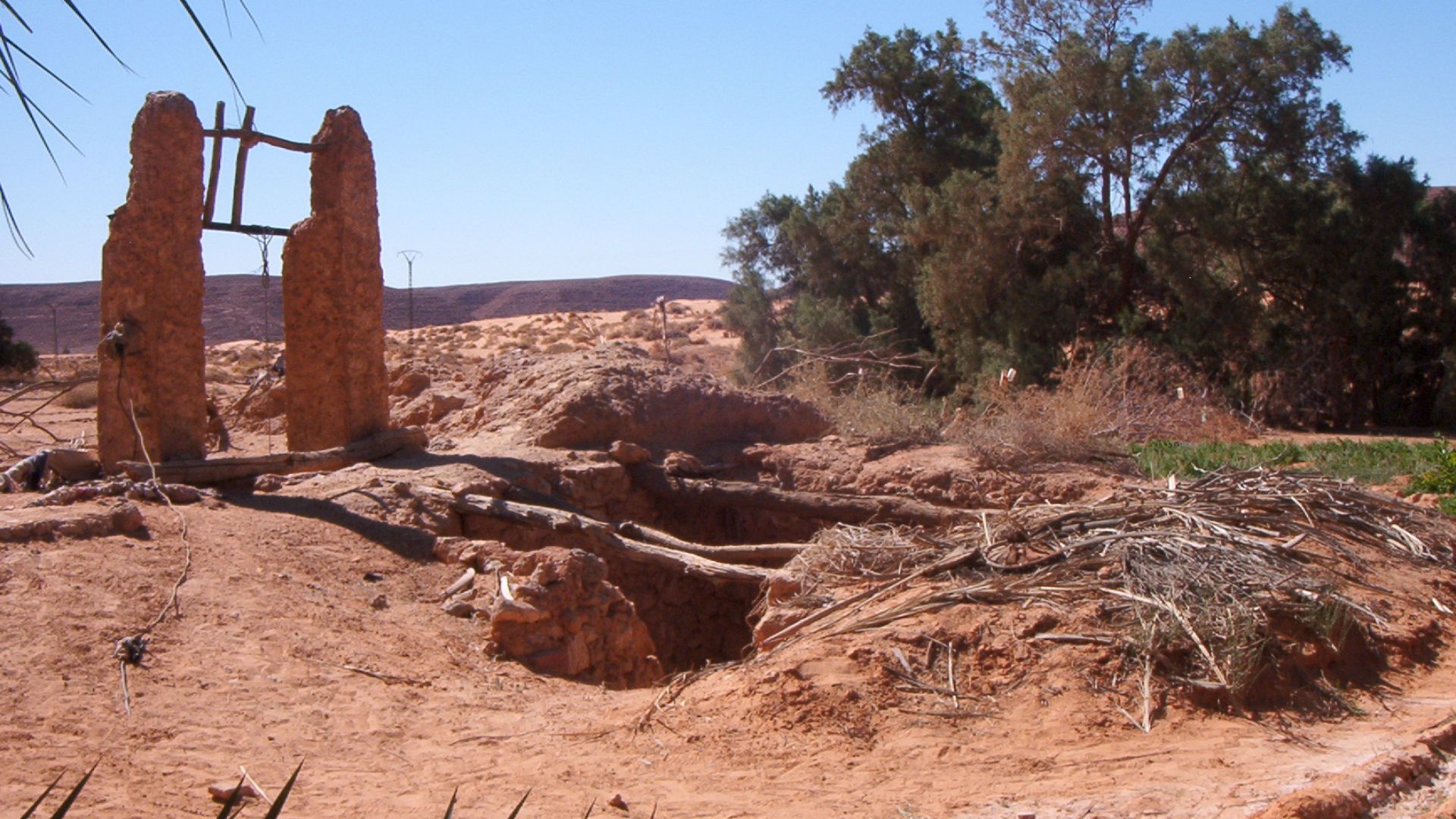
Even in remote desert landscapes, rock art can be damaged by erosion, vandalism, and unregulated visitation. Paintings are especially fragile, but engravings can be scarred, too. Each loss is permanent, because the original context cannot be rebuilt.
Why Researchers Keep Details Tight
Archaeologists sometimes avoid sharing precise site locations publicly. That can frustrate curious readers, but it is often a security move. The more famous a panel gets, the more tempting it becomes for the wrong kind of visitor.
The Scandal Of Time: A Whole World Went Missing
The most unsettling detail is how normal these animals look in the art, like they belonged there. Then you remember that many of them do not live anywhere near this region now. The scandal is not a human feud. It is the speed at which a living ecosystem can vanish.
What Scientists Want To Do Next
Researchers want tighter chronologies, better recording methods, and more digital documentation of panels before they degrade further. High-resolution photography and 3D scanning can capture tiny tool marks and weathering patterns. That may help separate older engravings from later ones, and clarify who made what and when.
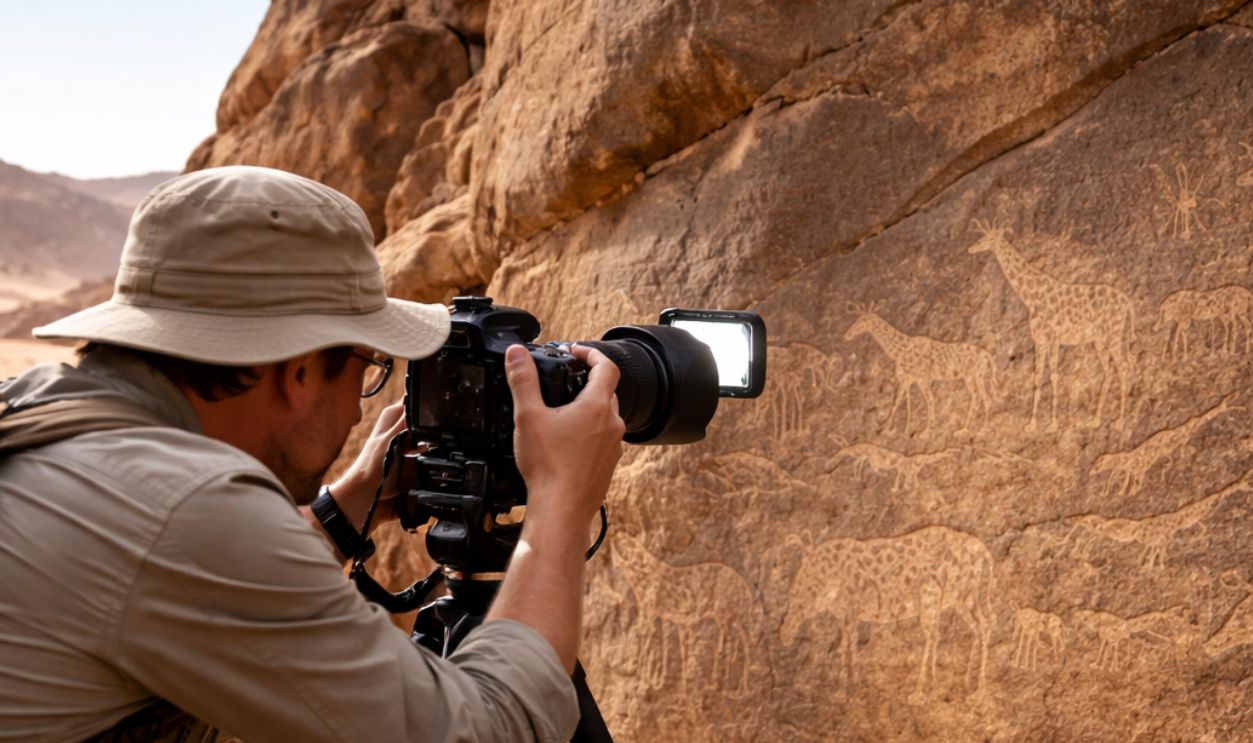
The Cliffhanger Carved Into Stone
Some Saharan panels still defy clean identification, and not because the artists were sloppy. The animals are detailed, but the region’s past biodiversity is still being pieced together. The next “unknown” creature might not be mythical at all. It might be a real animal we forgot the desert once had.
 David Stanley from Nanaimo, Canada, Wikimedia Commons
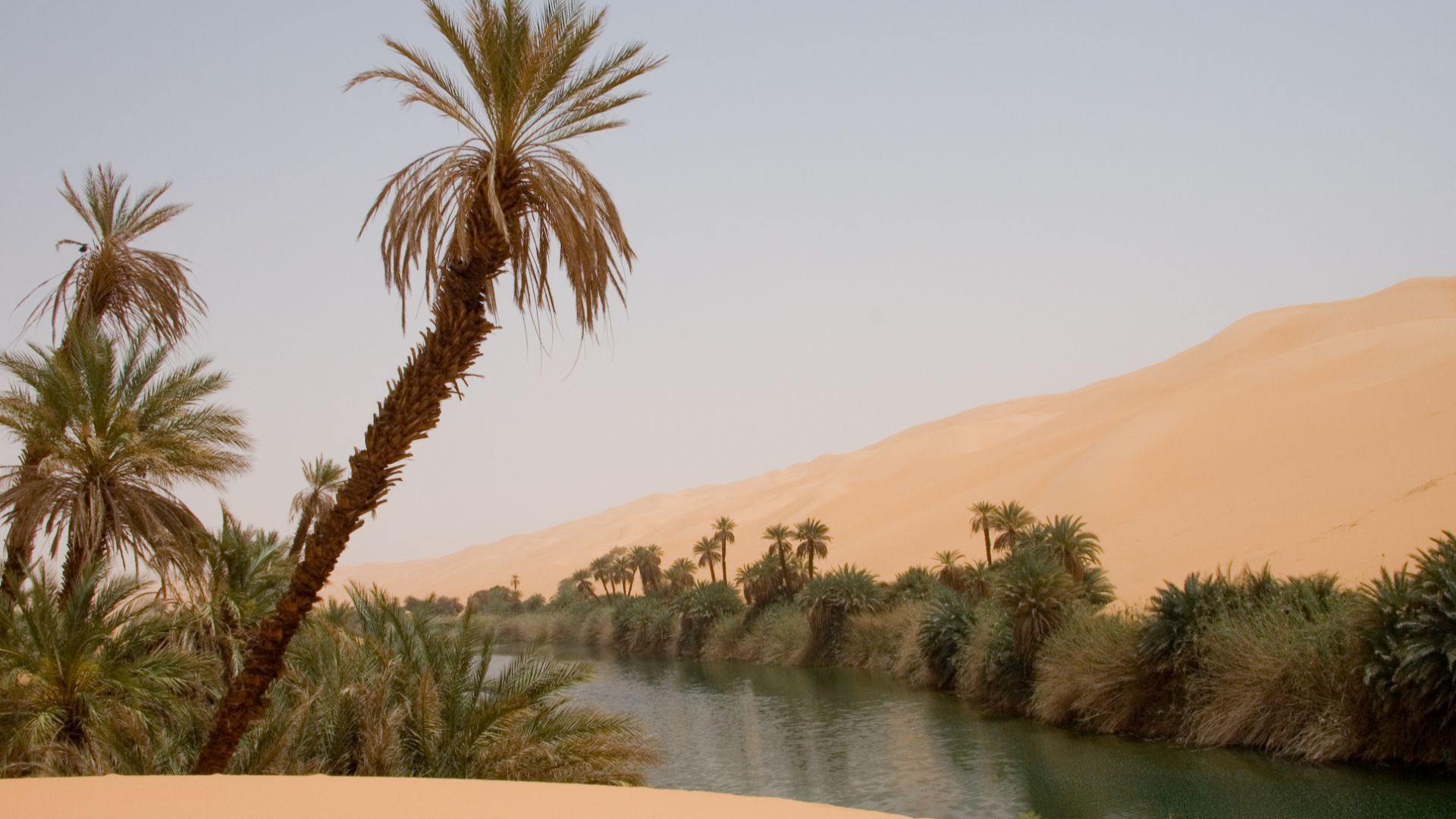
The Sahara Was Never Just Sand
These depictions are reminders that deserts can be temporary, even if they look eternal to us. The Sahara has been a wet grassland before, and it can shift again on long timescales. For now, the rock art is doing the job of memory.
 Luca Galuzzi (Lucag), Wikimedia Commons




_(14576957410).jpg)