The Wedding Hotel Rate That Catches Guests Off Guard
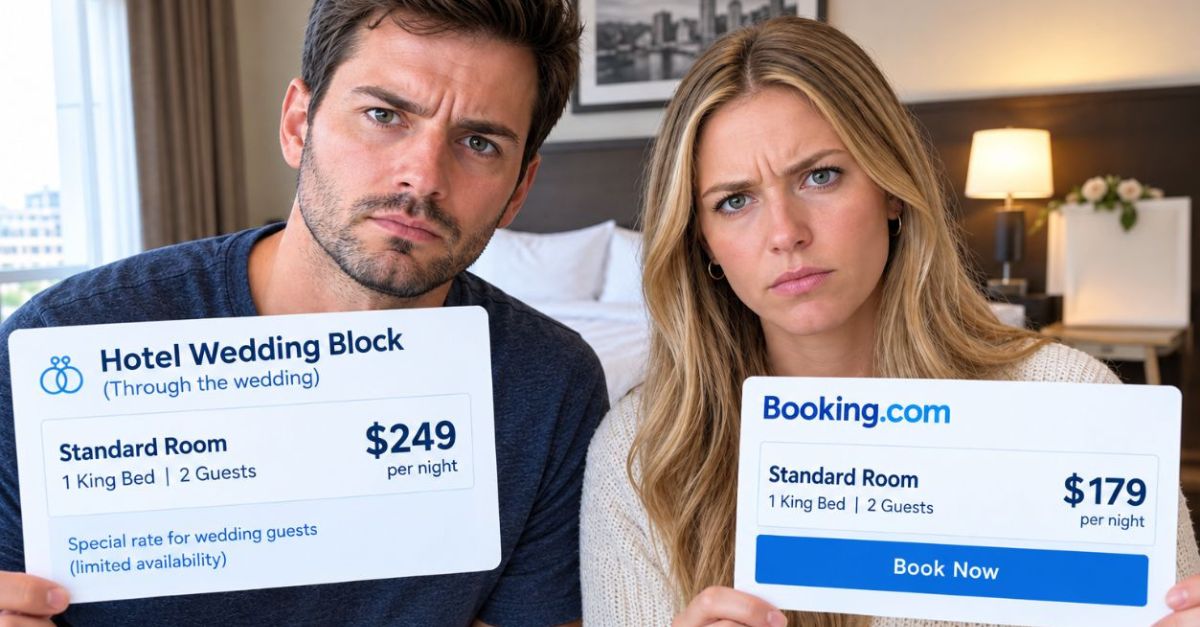
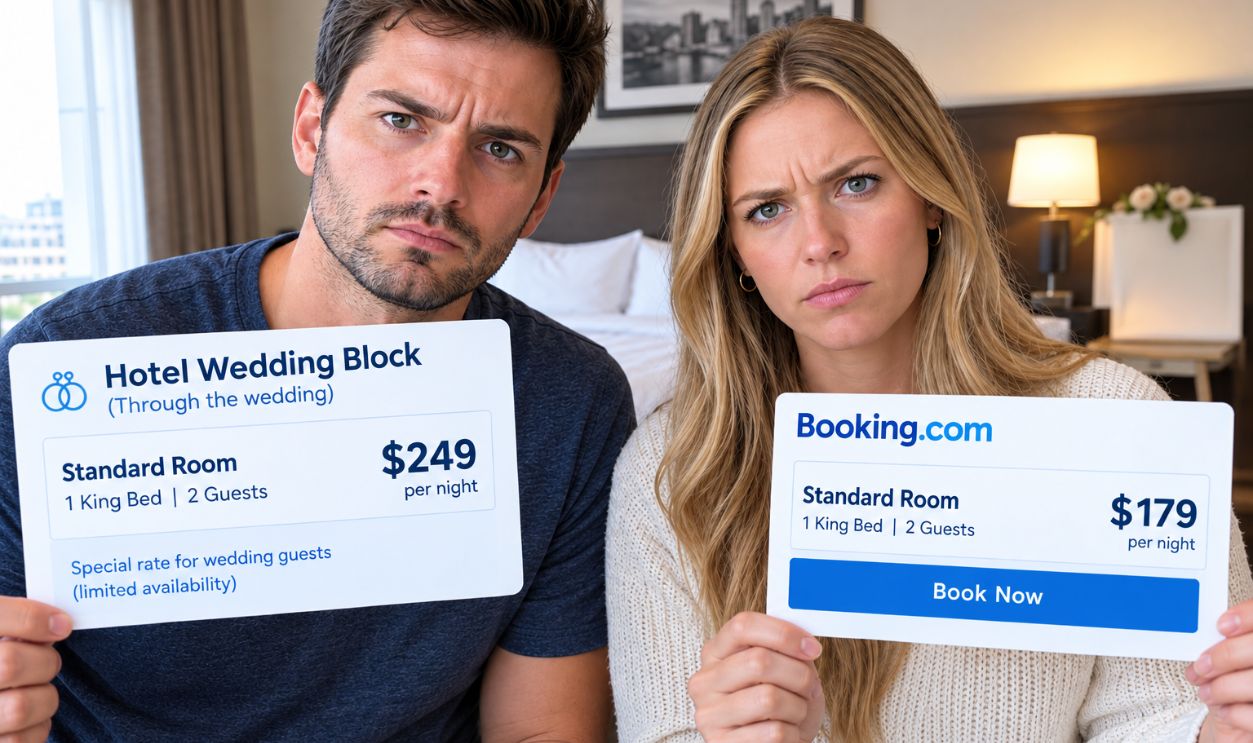
It happens all the time. You click the hotel link from the couple, check the “discounted” wedding block, and then spot the same room for less on the hotel’s own website. The short version is simple: A wedding block does not always mean the cheapest price, and the contract details matter more than most people think.
Why This Happens So Often
Hotel room blocks are mainly a planning tool, not always a money-saving one. They help couples hold a group of rooms near the venue and give guests an easy place to book. But the block rate may be a fixed price set months earlier, and later on that price can be beaten by a public sale or a lower flexible rate online.

What A Hotel Block Really Is
Wedding planners and travel experts usually describe a hotel block as a set of rooms held for an event at an agreed rate until a cutoff date. The key point is that “agreed rate” does not mean “lowest rate.” Guidance from wedding sites like The Knot and Brides makes that clear, even though many couples naturally assume the block will be the best deal.

The Biggest Misunderstanding
A lot of people think a group rate is always cheaper than every other rate the hotel offers. That is not how it works. In many cases, the group rate is simply a locked-in price for a certain room type and set of dates. If the hotel later runs a flash sale, a prepaid special, or a member deal, the public price can drop below the wedding block.

Who Has Been Warning Couples
Wedding planning sites have been pointing this out for years. The Knot tells couples to compare rates before signing and ask whether the hotel can offer the lowest available rate if prices change. Brides has also explained that room blocks are great for convenience and availability, but they do not always deliver the absolute lowest nightly price.

How Timing Can Flip The Deal
A block rate can look strong when it is set months ahead of the wedding, then look expensive as the date gets closer. Hotel prices move all the time based on occupancy, season, and local demand. If the hotel does not fill up the way it expected, public rates may drop after the block contract is already signed.

Flexible Rates And Prepaid Rates Are Different
This is where comparisons get tricky. A wedding block may come with flexible cancellation, while the cheaper room online could be prepaid and nonrefundable. Before deciding the block is overpriced, guests should make sure they are comparing the same room type, cancellation terms, taxes, fees, and other details.

The Room Can Look The Same But Cost More
Hotels often sell nearly identical rooms under different terms. One rate may include breakfast, late checkout, or shuttle access, while another does not. If the wedding block comes with extra perks tied to the event, the higher rate may reflect those add-ons even if the room itself looks the same.

Cutoff Dates Can Change Everything
Most room blocks have a reservation cutoff date. After that, any unused rooms go back into general inventory. Once that happens, prices online can move quickly. Guests who wait too long may end up seeing a lower rate or a much higher one, which is why planners often tell people to book early if they want one of the held rooms.

Attrition Clauses Add Pressure
One reason couples sometimes accept a rate that is not perfect is the attrition clause. According to guidance from The Knot and wedding planners, some contracts require the couple to fill a certain share of the block or pay a penalty. That can make room availability more important than getting the very lowest nightly rate.

Courtesy Blocks Are Different
Not every room block puts the couple at financial risk. A courtesy block, as described by Brides and The Knot, holds rooms without making the couple pay for the ones that go unsold. That is usually the safer setup, but even then, the rate may just be steady rather than lower than every public deal.

Guaranteed Blocks Raise The Stakes
With a guaranteed block, the couple may have to cover rooms that do not get booked. Hotels may offer better perks or terms in return, but the tradeoff is real financial risk. That setup can affect pricing because the hotel is balancing its own risk, expected occupancy, and the value of the group business.

Hotels Use Pricing Systems, Not Wedding Logic
Behind the scenes, hotels use revenue management systems to maximize occupancy and income. Group bookings are just one part of that system, and they are priced differently from regular one-off reservations. If demand drops, the public rate may fall while the wedding block stays at the price negotiated earlier.

Member Discounts Can Beat The Block
Guests in hotel loyalty programs sometimes find member-only prices that are lower than the wedding rate. Big hotel chains often promote their best direct-booking prices to members who sign in. That can make the wedding block look weak, even if the rate seemed fair when the couple first signed the contract.

Third-Party Sites Make It Harder To Compare
Travel sites can sometimes show rates lower than both the block and the hotel’s regular direct price. But those bookings may come with tighter cancellation rules, different payment terms, or less help if plans change. On a wedding weekend, that flexibility can matter a lot.

Sometimes The Hotel Is Selling More Than The Room
A wedding block may include perks that help the couple more than the individual guest. Hotels sometimes tie room pickups to benefits like a suite upgrade, welcome bags, shuttle help, or better event pricing. In that situation, the guest rate may be helping unlock extras for the whole wedding weekend.

Fees And Taxes Can Make The Price Look Worse
Even if the base room rate matches the public price, the final total can still be a shock. Taxes, service charges, and resort or destination fees can push the block cost much higher by checkout. The smartest comparison is always the full total, not just the advertised nightly rate.

What To Do First If You Spot A Lower Price
Start with the basics. Take a screenshot of the cheaper rate, make sure the room type and cancellation terms match, and then contact the hotel directly. Consumer advice from travel sites like NerdWallet notes that a direct conversation can sometimes get you a rate adjustment, or at least a clear answer about why the prices differ.

One Question To Ask Right Away
Ask whether the hotel will honor the lower public rate and still count the booking toward the wedding block. Sometimes the answer is yes, especially if the hotel wants to keep the group happy and on site. Sometimes it is no, but the question can reveal whether the issue is hotel policy or just a mistake.

Couples Should Bring This Up Early
The best time to deal with this problem is before the contract gets signed. Brides and The Knot both suggest asking whether the hotel can include a lowest-available-rate clause or revisit the rate if public prices fall. Not every hotel will agree, but it is a fair ask and can prevent awkward conversations later.

It Pays To Compare More Than One Hotel
Wedding experts often tell couples to check several nearby hotels before choosing a block. That makes it easier to see whether one property is inflating the rate or just matching the local market. It also gives guests choices at different price points, which matters when wedding travel already comes with flights, outfits, and gifts.

The Cheapest Rate Is Not Always The Best Deal
The lowest price online can come with real tradeoffs. Nonrefundable bookings can backfire if plans change, and third-party reservations can be harder to adjust if weather or scheduling becomes a problem. A room block can still be the better value if it offers convenience, location, and flexibility.

When Guests Feel Trapped
Problems usually start when guests think they have to book inside the block to be helpful. Most of the time, the block is optional unless the couple has tied it to special event logistics. If a nearby hotel or a better direct rate fits your budget better, it is reasonable to consider that option and still let the couple know where you will be staying.

Why Couples Often Miss The Problem
Most couples are juggling a long list of wedding decisions when they sign a hotel agreement. It is easy to assume that a “group rate” automatically means a better deal for guests. Industry advice shows that this is a common mistake, which is why planners keep telling couples to read the pricing, cancellation, and attrition terms closely.

The Contract Terms That Matter Most
Experts usually point to the same key details. Check the cutoff date, any minimum pickup requirement, whether the block is courtesy or guaranteed, and whether the hotel will revisit the rate if the public price drops. Those terms show whether the block mainly protects guests, protects the hotel, or just locks everyone into the deal.

How To Deal With It Without Starting Drama
If you find a lower rate, keep it calm and straightforward. Send the screenshot, ask whether the hotel can match it, and only bring it to the couple if it affects whether you can stay there. Most of the time, this is just how hotel pricing works, not a scam and not an attempt by the couple to make friends and family overpay.

The Bottom Line On Wedding Block Sticker Shock
Wedding guests sometimes end up paying more because hotel blocks are built around availability and planning, not a guaranteed promise of the cheapest room online. Public prices can drop later, member discounts can beat the block, and contract terms often favor stability over savings. The good news is that couples can negotiate better upfront, and guests can compare rates carefully before they book.