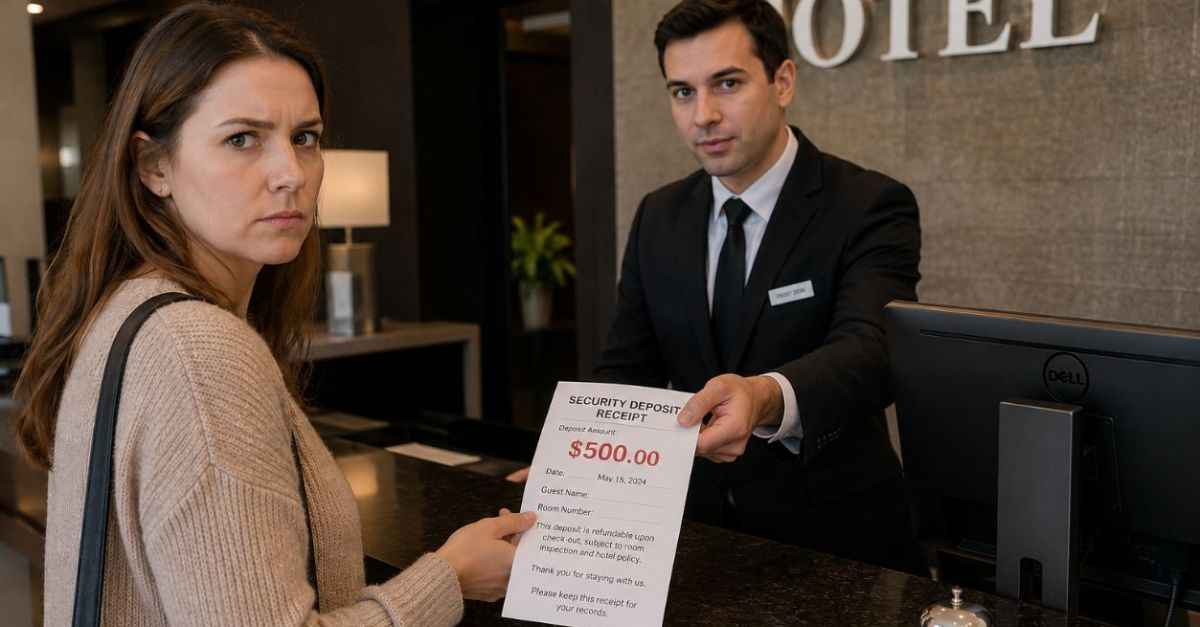
The $500 Surprise At The Front Desk
You show up tired, hand over your ID, and then before you get your room, the clerk demands a $500 security deposit that you never saw online. It can feel like a bait and switch, especially if you already prepaid the room. But whether it's allowed is often a different question from whether the hotel handled it fairly.
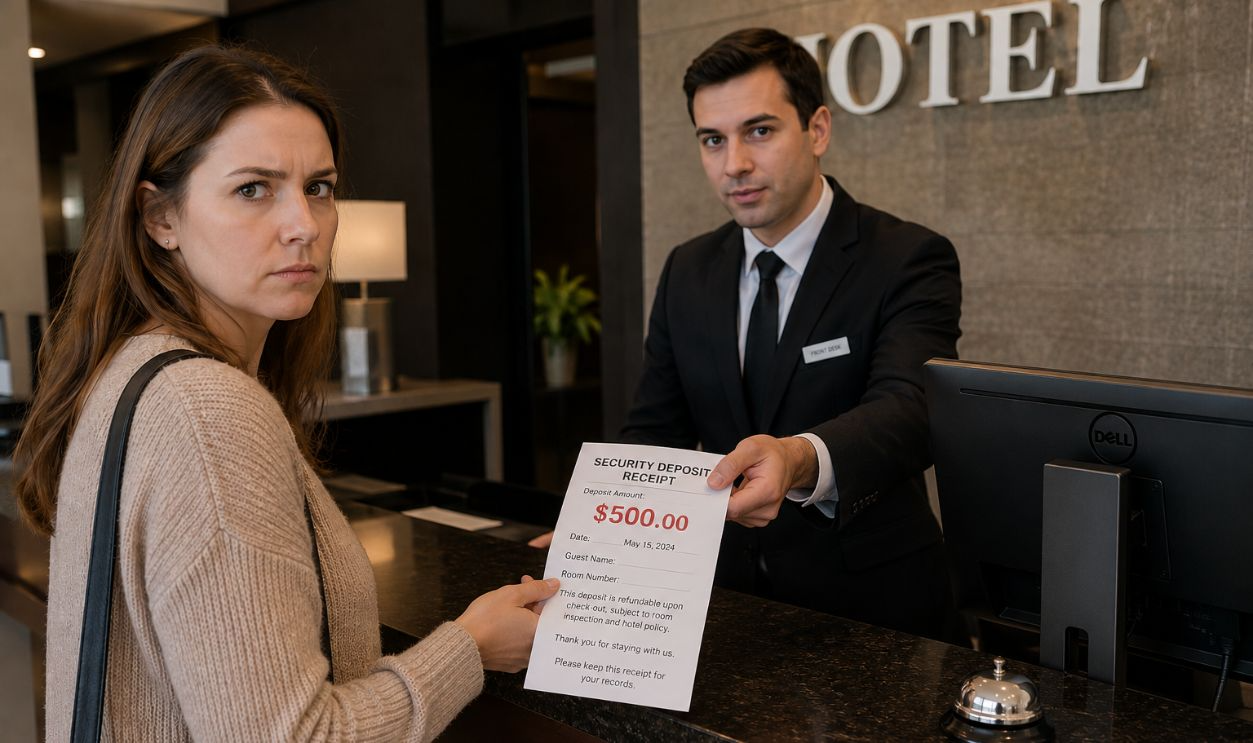
Why This Keeps Happening
Hotel security deposits, incidental holds, and resort fees are some of the most common travel complaints in the U.S. Consumer watchdogs have long warned that mandatory charges should be disclosed before booking. When a large hold shows up only at check-in, travelers can suddenly lose access to money they planned to use for the rest of the trip.

What A Hotel Deposit Usually Means
A hotel security deposit is usually a temporary hold on a credit or debit card for incidentals such as room damage, minibar purchases, smoking fees, or unpaid parking. Many hotels call it an “incidental hold” instead of a deposit, but the result is the same. Your available funds shrink until the hold is released.

Yes, Hotels Usually Can Require One
In general, hotels in the U.S. can require a security deposit or incidental hold as a condition of check-in. That is usually part of the hotel’s own policies and is not automatically illegal. The bigger legal issue is disclosure, because a hold that is not clearly revealed before booking can raise consumer protection concerns.

The FTC Has Been Watching Hidden Hotel Fees
The Federal Trade Commission has said hotels and booking sites should clearly disclose total prices and mandatory charges. In September 2024, the FTC announced a final Rule on Unfair or Deceptive Fees aimed at banning bait-and-switch pricing and hidden mandatory fees in live-event ticketing and short-term lodging. That matters because short-term lodging includes hotels and similar places to stay.

What The FTC Rule Is Really About
The FTC’s 2024 rule targets misleading pricing, especially when mandatory charges are left out of the advertised price. The agency said businesses must show the total price more prominently than other pricing information. A security deposit is not always the same as a mandatory room charge, but if it is required to complete the stay, poor disclosure can still become a real consumer issue.

California Went After Drip Pricing Too
California’s junk fee law, Senate Bill 478, took effect on July 1, 2024. It generally bars businesses from advertising a price that leaves out mandatory fees or charges, except taxes and certain government fees. For travelers booking hotels in California, that law added more pressure on businesses to be upfront about unavoidable costs.

Deposits Are Different From Resort Fees
Resort fees are usually mandatory charges added to the bill, while security deposits are often refundable holds. That difference matters because a deposit may not be part of the room price in the same way. Still, if the hold is required at check-in and was not disclosed during booking, it can feel like a hidden cost with immediate financial impact.

Why Debit Card Users Get Hit The Hardest
A $500 hold on a credit card is annoying, but a $500 hold on a debit card can freeze actual cash in your bank account. Hotels and card issuers often warn that debit card holds can take longer to disappear after checkout. That delay can throw a trip into chaos, especially for travelers on a tight budget.

Visa’s Rules Help Explain The Delay
Visa’s hotel guidance explains that merchants may place an authorization for estimated charges and incidentals, then adjust it later once the final amount is known. The timing for when a hold drops off can depend on the merchant, the transaction, and the card issuer. That is why one traveler sees the money come back in a day while another waits a week or more.

Consumer Agencies Have Warned About This For Years
The Consumer Financial Protection Bureau has published guidance on preauthorization holds, explaining that hotels and rental car companies commonly place them on cards for estimated costs. The CFPB warns that these holds can reduce available credit or bank balances even when the final charge is lower. That is exactly why an undisclosed $500 hold can wreck a travel budget.

Disclosure Is The Main Issue
If a hotel clearly said before booking that it requires a $500 incidental hold at check-in, it is in a much stronger position. If the hold was buried in fine print, tucked away on a separate policy page, or not mentioned at all, the hotel may have a problem. In many cases, consumer protection law turns less on whether the hold exists and more on whether it was disclosed clearly and early enough.

Where Travelers Should Check Before Booking
The best places to look are the rate details, house rules, and terms and conditions on both the hotel’s own site and any third-party booking site. Some hotels list an incidental hold under “important information” or “property policies.” The problem is that those disclosures can be easy to miss, especially on mobile pages.

Third-Party Booking Sites Can Make It Worse
Online travel agencies sometimes display room rates clearly while pushing property policies far down the page. A traveler may reasonably think the total shown is the real amount needed on arrival day. If the hotel then demands a large hold that was not shown clearly during booking, the experience can feel deceptive even if a policy existed somewhere in the listing.

What Should Raise Concern
A demand for a cash-only deposit is a major red flag, especially if the hotel never mentioned it before arrival. Another warning sign is a clerk who cannot show you the written policy you supposedly agreed to. If the hotel will not explain the amount, the release timeline, or whether it is a hold versus an actual charge, pause before handing over your card.

Questions To Ask Right Away
Ask whether the $500 is an authorization hold or an actual charge. Ask how long it usually takes to be released after checkout, whether that timing is different for debit cards, and where the policy appeared during booking. Then ask for the answer in writing, whether by email, text, or a printed copy of the property policy.

Take Screenshots Before You Push Back
If the hotel says the policy was disclosed online, pull up your booking confirmation and take screenshots of every page you can still access. Save the original listing, the price breakdown, the property rules, and your confirmation email. That evidence can matter a lot later if you dispute the charge or file a complaint.

Can You Refuse To Pay It
Usually yes, you can refuse the deposit, but the hotel can often refuse to check you in if the deposit is part of its check-in terms. In practical terms, that can leave you choosing between paying the hold or scrambling to find another place to sleep. Late at night or during a busy travel period, that is a rough spot to be in.

When Your Case Gets Stronger
Your argument gets stronger if the hotel demanded the hold even though there was no mention of it in the booking flow, confirmation, or published policies. It also gets stronger if the amount is far higher than what is typical for that kind of property and location. A luxury resort may have a bigger hold than a budget motel, but disclosure matters either way.

What To Do Before Leaving The Desk
First, politely ask the front desk to waive or reduce the hold, especially if you prepaid, do not plan to use incidentals, or can switch from a debit card to a credit card. Second, ask for a manager if the agent cannot help. Third, if the hotel will not budge and you have other options, weigh the cost of walking away against the risk of having $500 tied up for days.

If You Already Paid, Watch Your Statement
Check whether the hotel placed a pending authorization or posted an actual transaction. A pending hold should disappear or be replaced by the final charge after checkout. If the hotel posts the full $500 as a completed charge and does not reverse it quickly, the problem may be more serious than a routine incidental hold.

How Long Can A Hold Last
There is no single nationwide deadline that applies to every hotel and every card issuer. Visa guidance and CFPB consumer information both make clear that release timing can vary. Many hotels say a few business days, but debit card holds can linger longer depending on the bank.

When To Escalate
If the deposit was not disclosed and the hotel refuses to document its policy, escalate quickly. Start with the hotel’s corporate customer service if it is part of a chain, then contact the booking platform if you used one. After that, consider filing complaints with your state attorney general, your state consumer protection office, or the FTC if the pricing seems deceptive.

Can You Dispute It With Your Card Issuer
If the hotel only placed a temporary authorization, your bank may tell you to wait until it either drops off or posts as a final charge. If it becomes a posted charge you do not owe, you may have stronger grounds to dispute it. Keep your screenshots, receipts, confirmation emails, and written messages from the hotel before contacting your card issuer.

The Best Way To Protect Yourself Next Time
Use a credit card instead of a debit card when possible, because a hold usually affects available credit rather than your bank balance. Read the property policies before booking, and search the listing page for words like “deposit,” “incidentals,” and “hold.” If the website is vague, call the hotel directly and ask for the exact amount required at check-in.

So, Is It Allowed
Usually yes, a hotel can require a security deposit or incidental hold. But if that $500 requirement was never clearly disclosed before booking, the hotel may be on shaky ground under consumer protection principles and hidden-fee rules that got more attention in 2024. Allowed does not always mean fair, and fair does not always mean clearly disclosed.

The Bottom Line For Travelers
A surprise hotel deposit can turn a simple trip into a financial mess in minutes. The smartest way to look at it is as a disclosure problem first, a card issue second, and a customer service fight third. If the policy was hidden or missing, document everything and push back calmly, because the facts matter most.