
Business travel was once treated as a normal part of career development in many industries. Junior employees attended conferences, visited clients, toured facilities, and learned by watching experienced colleagues work. As travel costs rise and companies demand clearer returns from every trip, however, those opportunities may be reaching a smaller group of employees.
The evidence does not show that business travel has become exclusively reserved for executives. It does suggest that seniority can influence who gets approved, especially when budgets are tight and virtual meetings offer a cheaper alternative. That matters because the employees excluded from travel may also miss the relationships, training, and visibility that help people become senior employees in the first place.

Travel Is Growing, But Access Remains Uneven
At first glance, the business travel market appears healthy. The Global Business Travel Association estimated that worldwide business travel spending reached $1.47 trillion in 2024, an increase of about 10 percent from the previous year. It projected spending of approximately $1.57 trillion for 2025.
Those large figures do not necessarily mean more employees are traveling. GBTA reported that spending adjusted for inflation was expected to remain $134 billion, or 14 percent, below its 2019 level in 2025. The association said that this gap suggested travel activity had recovered more slowly than headline spending.
Deloitte found a similar disconnect in its 2025 Corporate Travel Study. The share of surveyed professionals traveling for work fell from 36 percent in 2024 to 31 percent in 2025. At the same time, some of the employees who remained active travelers expected to take six or more trips during the year.
This combination can create a concentrated travel culture. Companies may continue spending heavily while directing trips toward a relatively small group of employees whose roles already involve major clients, international operations, sales, or executive decision-making. The travel program looks active from the outside, but the opportunity is not necessarily distributed widely.
SAP Concur’s 2024 global survey found that 66 percent of business travelers believed they had not received the same travel opportunities as their colleagues. Seniority was the most frequently identified reason, cited by 19 percent, followed closely by age at 18 percent. Parenthood, location, office attendance, gender, and other personal characteristics were also mentioned.
The survey does not prove that companies intentionally reserve trips for executives. It does show that many employees perceive access as unequal and connect that inequality to their position in the workplace. When seniority is the most commonly cited explanation, employers have a reason to examine how travel assignments are awarded.
Tight Budgets Favor Employees With Proven Influence
Business trips are expensive, and the price extends beyond airfare and hotel rooms. Companies must also consider meals, local transportation, booking fees, employee time, disruption risk, and the possibility that a meeting will not produce a measurable result. As finance departments scrutinize these costs, managers are under pressure to send the person most likely to justify the investment.
Senior employees often have an advantage in that calculation. They may possess authority to negotiate, approve terms, reassure an important client, or make decisions without repeatedly checking with headquarters. A manager choosing one traveler for a high-stakes meeting may view an executive as the safer financial bet.
That reasoning can become self-reinforcing. Senior employees are selected because they have established relationships and experience, then gain even more relationships and experience through travel. Junior workers remain less proven partly because they are not given the same opportunities to demonstrate themselves in person.
SAP Concur’s 2025 survey found that 66 percent of business travelers had seen important trips curtailed because of costs. Forty-eight percent worried that their company’s travel budget would remain flat or decline. Meanwhile, 43 percent of surveyed chief financial officers believed that more than half of their organization’s business travel could be replaced by teleconferencing or other remote communication.
Deloitte reported that three-quarters of surveyed travel managers expected their budgets to increase in 2025, but the share expecting reductions rose from 6 percent to 10 percent. One in five large companies with more than $7.5 million in annual travel spending expected a decline. Larger organizations also showed a particularly noticeable reduction in frequent travel.
When companies reduce trips, they rarely cancel every category equally. Travel tied to major customers, business development, operations, and executive strategy can be easier to defend than an observational trip for a newer employee. Training and conferences may remain available, but they can face greater scrutiny when immediate financial returns are difficult to calculate.

Junior Employees May Have More To Lose
For an established executive, one canceled conference may be inconvenient. For an early-career employee, it could mean losing a rare opportunity to meet senior leaders, understand a client’s operation, or build a network outside the employee’s immediate team. Those experiences can influence future assignments and promotions.
SAP Concur’s 2024 research found that 67 percent of travelers considered business travel critical for career advancement. The belief was strongest among Gen Z respondents, at 72 percent, compared with 58 percent of baby boomers. Younger workers may therefore place the greatest career value on the opportunities they are least established enough to receive.
American Express Global Business Travel and Ipsos reached a similarly important conclusion in 2025. Seventy percent of Gen Z respondents said they looked forward to traveling for work, while older millennials were especially likely to describe business travel as beneficial for their careers, motivation, and teamwork. Younger employees are not uniformly rejecting corporate travel.
The risk is that virtual access can look equal while producing different results. A junior employee attending through a laptop may receive the same presentation as colleagues in the room, but miss the conversations before dinner, introductions during breaks, and informal moments when trust develops. Those benefits are difficult to record in a spreadsheet, yet they often explain why companies continue approving in-person meetings.
Remote workers may face another disadvantage. SAP Concur’s 2023 survey found that 77 percent of remote business travelers believed they lacked equal travel opportunities, compared with 61 percent of hybrid workers and 52 percent of office-based workers. Remote employees were more likely to identify location and office attendance as reasons for that disparity.
Travel can also create unequal burdens. Parents, caregivers, employees with disabilities, and workers with safety concerns may be unable to accept an assignment arranged with little notice. If flexibility is available only to powerful employees, declining one impractical trip can reduce a junior worker’s chances of being asked again.
 LinkedIn Sales Solutions, Unsplash
Premium Treatment Is Not The Same As Access
The word “luxury” can refer to two different problems. One is whether an employee gets to travel at all. The other is whether senior travelers receive business-class seats, upscale hotels, lounge access, or flexible itineraries while everyone else travels under tighter restrictions.
There are practical reasons for some differences. A company may permit business class for long international flights, regardless of rank, or give executives more flexible tickets because their schedules change frequently. Security needs, health requirements, and the necessity of working immediately after arrival can also justify different arrangements.
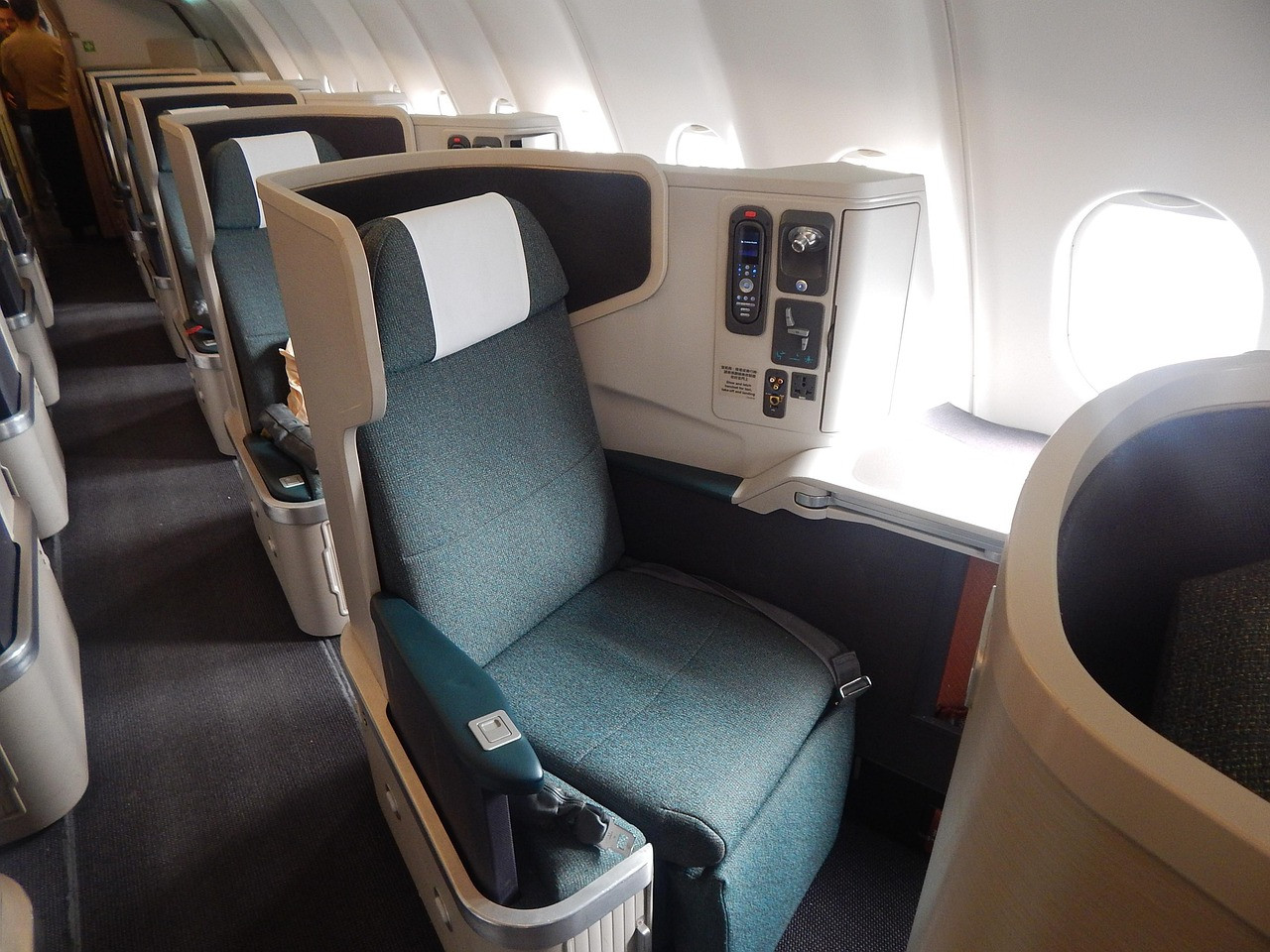
Problems arise when comfort is linked mainly to status rather than the demands of the trip. A junior employee may arrive exhausted after an overnight economy flight while a senior colleague receives a lie-flat seat on the same itinerary. If both people are expected to perform at the same meeting, the policy can create a visible workplace hierarchy before anyone reaches the conference room.
SAP Concur found in 2024 that 91 percent of surveyed business travelers had seen companies restrict at least one travel option. Twenty-seven percent reported cutbacks involving business or premium-class travel. Others had seen reductions in direct flights, overnight stays, rideshares, and the ability to add personal time.
These cutbacks suggest that premium travel is not expanding freely across corporate workforces. It may instead be preserved selectively for longer journeys, revenue-critical roles, or employees with enough influence to secure an exception. Junior workers can receive both fewer trips and less comfortable conditions when they do travel.
Employers should distinguish legitimate trip requirements from status benefits. Clear rules based on flight duration, arrival time, safety, disability accommodations, and business purpose are easier to defend than unwritten privileges based on job title. Transparent policies also help employees understand why two travelers may receive different arrangements.
Companies Can Prevent A Two-Tier Travel Culture
Business travel does not need to be distributed equally in a strictly numerical sense. A salesperson covering several regions will naturally travel more than an employee whose work is tied to one location. Fairness means using consistent business criteria and recognizing travel as a development resource, not simply an executive perk.
Companies can begin by tracking who travels. Useful data includes department, seniority, age group, gender, work location, trip purpose, approval rate, and frequency. Patterns may reveal that the same leaders repeatedly attend conferences while qualified junior employees rarely receive consideration.
Managers can also add development goals to travel approvals. A senior employee attending a client meeting could bring a junior colleague who has a defined role, such as presenting research or managing part of the discussion. This is more valuable than sending someone merely to observe without meaningful participation.
Deloitte found that training and development was the fastest-growing driver of corporate travel in its 2025 study. Two-thirds of travel managers said spending in that area was increasing, up from 54 percent in 2024. That finding suggests companies still recognize that travel can build skills rather than only close immediate deals.
Not every development opportunity needs a premium international itinerary. Regional conferences, office exchanges, customer visits, and team gatherings can provide valuable exposure at lower cost. Rotating attendance can spread the benefits without sending an oversized group to every event.
Employees can also advocate for themselves. A strong request should identify the trip’s purpose, expected business outcome, estimated cost, and the role the employee will perform. Asking to attend because a destination looks exciting is unlikely to succeed, while connecting the trip to a client need or specific skill makes approval easier to justify.
So, is business travel becoming a luxury reserved for senior employees? Not entirely, but the risk is real. Spending remains high, yet fewer professionals may be traveling, seniority is a reported source of unequal access, and tight budgets encourage companies to concentrate trips among people with established influence.
The fairest travel programs treat in-person access as both a business investment and a career opportunity. Senior leaders will still take important trips, but they should not be the only employees building relationships beyond the screen. If companies reserve every valuable journey for people already at the top, they may save money today while weakening the next generation of leadership.