
Sending employees to a major conference has never been cheap. Registration fees are only the beginning once airfare, hotels, meals, ground transportation, and several days away from normal work are added to the bill. In 2026, those expenses are receiving more scrutiny as companies try to make every business trip demonstrate a clearer purpose. Yet conferences remain one of the most important reasons employees get on airplanes for work, suggesting that companies have not abandoned them so much as raised the standard for what makes a trip worthwhile.
The real question, then, is not whether conferences are still valuable. It is whether a particular conference is valuable enough to justify sending particular employees. That distinction is becoming increasingly important as travel managers move away from treating conferences as automatic annual expenses and start asking what the company expects to get back.
The Conference Business Is Still Very Much Alive
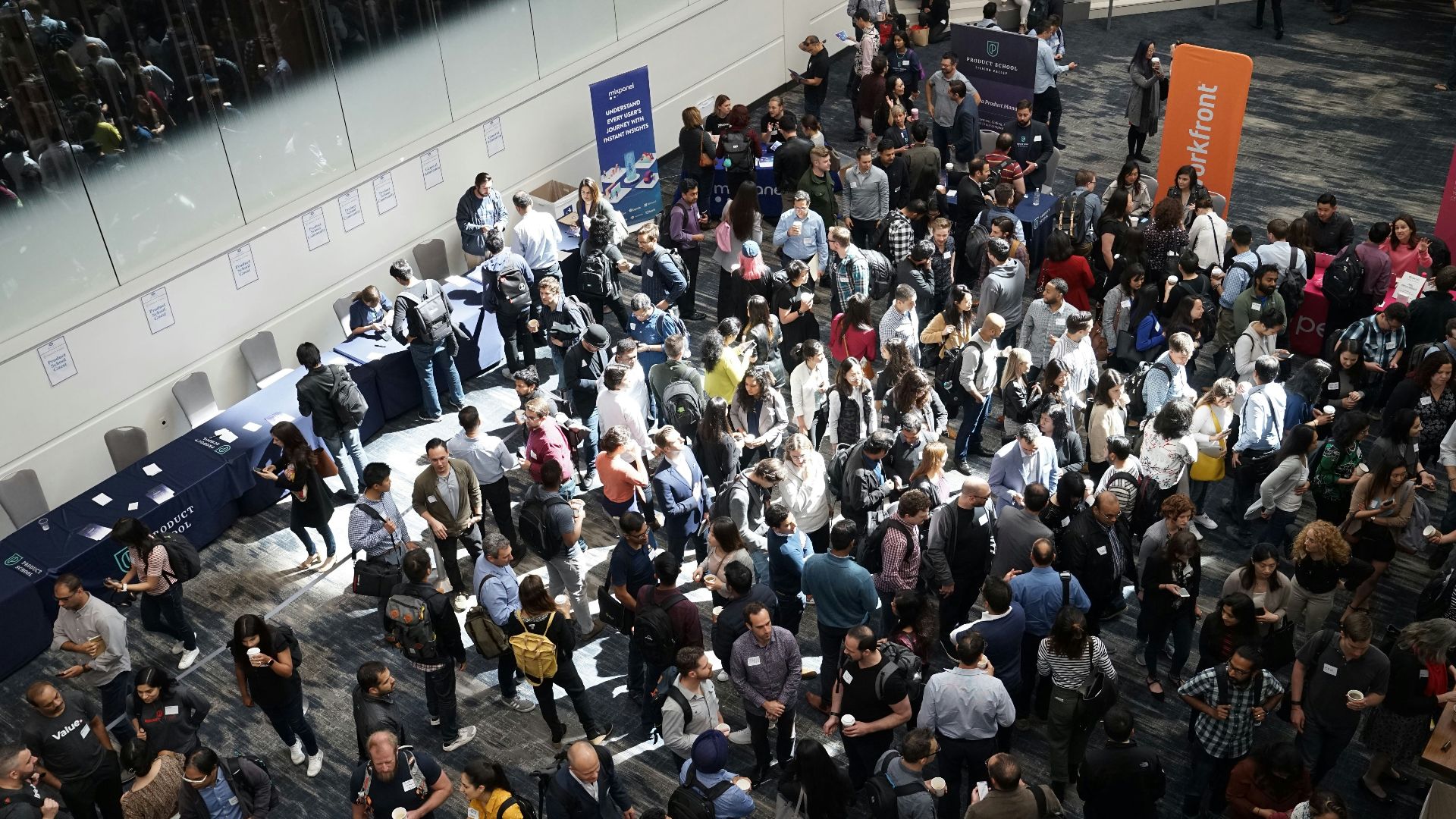
Predictions that video calls and virtual events would permanently diminish the business conference have not played out. Deloitte's 2025 Corporate Travel Study found that nearly two-thirds of surveyed business travelers expected to attend a conference that year. Conferences also ranked among the four biggest drivers of corporate travel growth, alongside business development and face-to-face engagement with customers and partners.
That matters because corporate travel is becoming more selective overall. Deloitte found that costs were one of the three biggest constraints on travel for 54% of the travel managers it surveyed, up from 48% the previous year. Larger organizations appeared particularly cautious, with one in five companies spending at least $7.5 million annually on travel expecting their travel budgets to decline in 2025.
At the same time, the meetings industry continues to anticipate substantial demand. American Express Global Business Travel's 2026 Global Meetings and Events Forecast describes an industry with rising budgets and continued emphasis on face-to-face connection, while also highlighting a growing focus on productivity and data-driven event programs. That combination captures the direction corporate conferences are taking surprisingly well: companies still want employees in the room, but simply being in the room is no longer enough.
Costs are also unlikely to return to the levels companies remember from years ago. GBTA's July 2026 travel forecast said business travel prices were expected to remain elevated through the end of 2026, driven partly by higher energy and labor costs. Conferences therefore have to compete for budget in an environment where every flight, hotel room, and event expense can attract attention.
What Companies Are Actually Buying
It is easy to judge a conference by its keynote speakers or educational sessions, but companies are often purchasing something harder to quantify. A useful event puts customers, prospective clients, suppliers, competitors, experts, and potential recruits in the same place for several days. An employee who would otherwise require months of emails, calls, and individual trips can potentially have numerous important conversations in one location.
Deloitte specifically noted this advantage for smaller companies. Its research found that smaller organizations were more likely than larger ones to identify increased event attendance as a factor driving business travel and to report increasing spending on conference trips. Deloitte suggested that live events can give companies with fewer employees an efficient way to meet multiple external stakeholders within a short period.

Networking is also more than a pleasant side benefit for many attendees. Research commissioned by event company Freeman and conducted with The Harris Poll found that 82% of surveyed working professionals believed in-person settings were the best environment for building important professional relationships. Ninety-two percent said live events helped them remain at the forefront of developments in their industries.
Those findings should still be treated in context because Freeman operates in the events industry and has an obvious interest in live events. They nevertheless highlight something companies should consider when calculating value. A conference may produce benefits through relationships, information gathering, recruiting, training, and customer retention even when nobody signs a contract during the trip.
That is also why comparing a conference directly with a Zoom call can be misleading. A video meeting is extremely efficient when two people already know why they need to speak. A conference is potentially valuable because it creates conversations that might never have been scheduled in the first place.
The Problem Is Proving The Return
This is where the case for conferences becomes more complicated. Companies are accustomed to calculating returns on advertising campaigns, software subscriptions, or capital investments. Conference attendance can produce results months later, and the connection between the trip and the eventual outcome is not always obvious.
Event technology company Bizzabo reported in 2026 that 70% of organizers surveyed for its 2025 State of Events research struggled to measure and demonstrate event ROI effectively. The difficulty helps explain why conference budgets can become vulnerable when executives demand clearer evidence that spending is contributing to sales, partnerships, employee development, or other strategic objectives.
The answer is not to pretend every valuable conversation can be converted neatly into dollars. Companies can instead decide what success should look like before approving the trip. A sales employee might have a target list of prospects and scheduled meetings, while someone attending for professional development could identify specific sessions, skills, or industry information they are expected to bring back to the team.
 Gorilla ROI Data Connector, Unsplash
Companies can also distinguish between immediate results and longer-term ones. Qualified sales leads, meetings completed, recruiting conversations, partner introductions, and customer appointments can be recorded immediately after the event. Deals influenced, partnerships created, or new customers acquired can then be reviewed months later.
That approach is more useful than asking travelers to return with a vague report that the conference was "great for networking." A trip does not need to produce a signed contract to be worthwhile, but there should be some evidence that the employee accomplished what the company sent them there to accomplish.
Not Every Employee Needs To Go
One of the easiest ways to make conference spending more efficient is also one of the least glamorous: send fewer people to more carefully chosen events. A conference that makes excellent sense for a salesperson, product manager, or senior executive may offer much less value to another employee whose role has little connection to the people attending.
That makes selection important on two levels. Companies first need to identify which conferences contain the customers, partners, expertise, or opportunities they actually care about. They then need to identify which employees are best positioned to capitalize on those opportunities.
Preparation can change the economics considerably. An employee arriving without scheduled meetings may spend three days wandering between booths and collecting business cards. Someone arriving with customer meetings, prospect lists, networking targets, and carefully selected sessions already on the calendar is using the same airfare and hotel room much more deliberately.
Companies should also question whether sending a large delegation is necessary. If five employees from the same department attend largely identical sessions, the incremental benefit of the fourth and fifth traveler may be difficult to justify. Sending two employees who divide the program, meet different contacts, and brief colleagues afterward can sometimes provide much of the same organizational benefit at a substantially lower travel cost.

That does not mean companies should always choose the cheapest possible option. The better question is whether each additional dollar improves the probability of achieving the objective. A more expensive conference filled with major customers could easily outperform a cheaper event where few relevant people attend.
The Best Conferences Have A Job To Do
Companies looking for a simple yes-or-no answer will probably be disappointed. Conferences are neither inherently wasteful nor automatically worthwhile. Their value depends heavily on why employees are attending, who will be there, what happens during the event, and what the organization does afterward.
The strongest case exists when several objectives can be combined into one trip. An employee might meet existing customers, speak with prospective clients, attend training sessions, study competitors, and strengthen relationships with suppliers during the same three-day conference. Few other business trips can concentrate that many opportunities in one place.
The weakest case is the conference attended primarily because the company has always attended it. As travel budgets become more strategic, tradition alone becomes a poor justification for several thousand dollars in registrations and travel costs. Deloitte's research indicates that organizations are increasingly trying to align travel spending with identifiable business outcomes, even if the exact methods for doing that continue to evolve.
That suggests companies should establish a basic conference test before approving travel. Who does the employee need to meet? What information or skills should they acquire? What opportunities could realistically emerge? Is this specific event significantly better for those goals than a cheaper meeting, local event, or virtual alternative?
Afterward, someone should check whether those expectations were met. Tracking meetings, leads, useful contacts, follow-up activity, and eventual business results turns conference travel from an unquestioned perk into an investment that can be compared with other uses of the travel budget.
For companies willing to do that work, conferences can still be remarkably efficient. They compress networking, learning, sales activity, relationship building, and market intelligence into a few intense days. But in 2026, "everyone in the industry will be there" is no longer quite enough. The conference that deserves a place in the budget is the one where a company knows why it is sending people before anyone books the flight.
You May Also Like:
AI Is Completely Changing How We Book Business Trips In 2026
Why Business Travelers Are Paying More Attention To Wellness, Sleep, And Downtime
Is The Era Of The One-Day International Business Trip Ending?