
For centuries, the quiet banks of the Tollense River in northern Germany seemed ordinary, until new research revealed traces of a massive Bronze Age clash buried beneath the soil. Recent analyses of recovered arrowheads now suggest a large-scale conflict that drew in warriors from distant regions. What once appeared to be scattered archaeological finds has transformed into one of Europe’s most startling prehistoric discoveries—a battlefield frozen in mud. The weapons and artifacts recovered from the valley hint at a violent encounter on a scale few imagined for the Bronze Age. So, what really happened on those riverbanks 3,000 years ago, and what drove them to fight on such a scale?
Discovering A Battlefield Hidden In Plain Sight
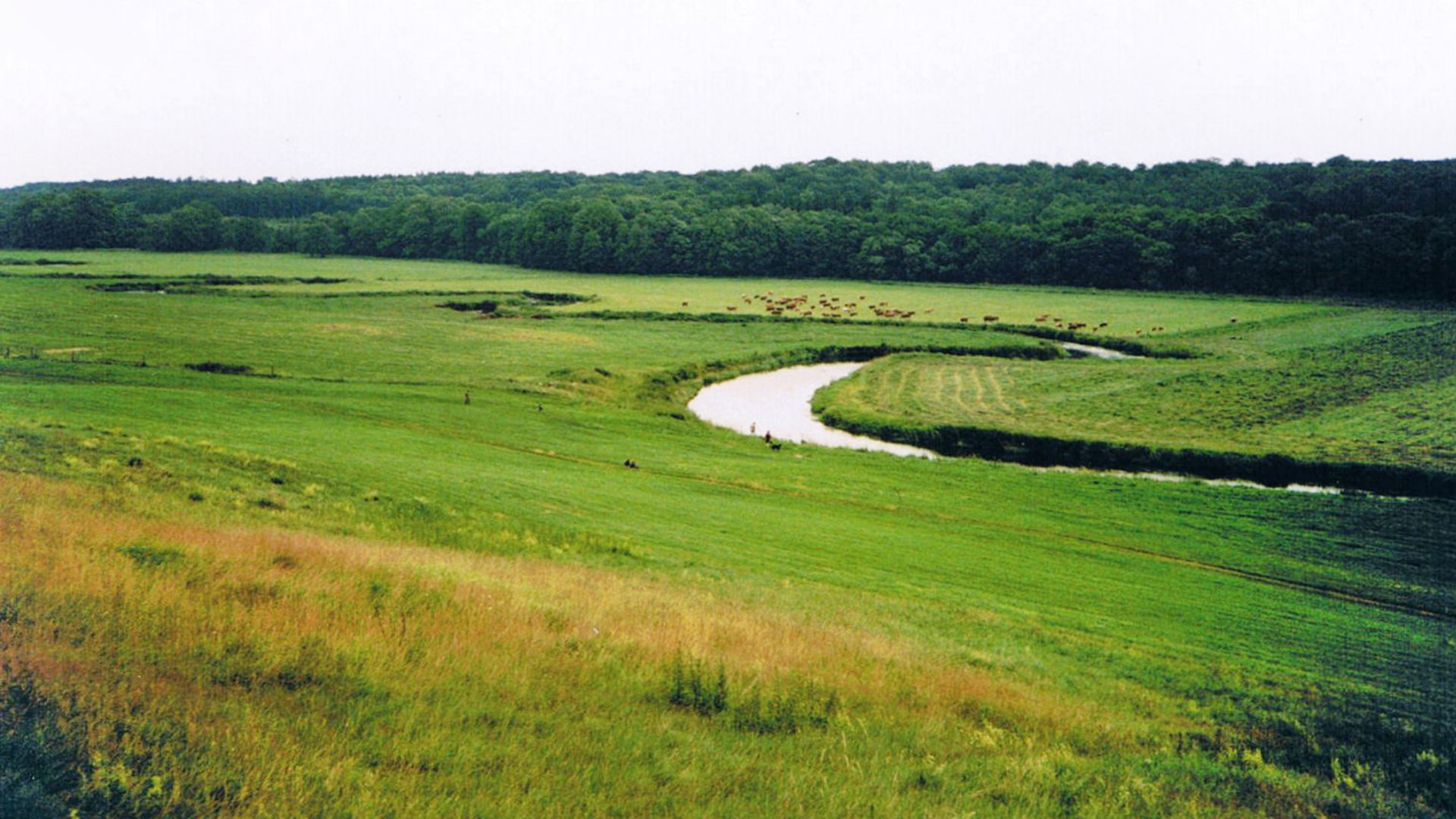
Archaeologists first stumbled upon human bones in the Tollense Valley during the 1990s. As excavations expanded, they found thousands of bone fragments and tools scattered across the riverbanks. A 2019 isotope study by the University of Göttingen revealed that many of the fallen warriors weren’t locals but had journeyed from southern Central Europe. Their origins traced to areas like modern-day Bavaria, the Czech Republic, and Austria—some traveling as far as 373–497 miles (600 to 800 kilometers). The findings suggest the battle wasn’t just a regional skirmish but a large-scale conflict drawing fighters from across Central Europe.
Further investigations uncovered signs of organized combat: wooden clubs, bronze spearheads, and horse remains that may indicate the presence of mounted fighters or transport teams. The density of artifacts along a narrow stretch of the river suggests a concentrated clash, possibly a planned ambush along a known crossing point. Researchers also noticed trauma patterns consistent with close-quarters combat, such as fractured skulls, cut marks on arms, and embedded arrowheads still lodged in bone. Some warriors bore healed battle wounds from earlier fights, showing they weren’t farmers caught off guard but seasoned fighters familiar with warfare. This evidence points to a battlefield where trained groups met in violent confrontation, not an accidental skirmish. For the Bronze Age, this level of organization was once thought impossible—yet Tollense forces historians to rethink the past.
 Botaurus stellaris, Wikimedia Commons
A Glimpse Into Bronze Age Power Struggles
This battle challenges long-held ideas about Europe’s past. For years, historians believed the Bronze Age in northern Europe was relatively peaceful. Yet the Tollense Valley tells a different story. It reveals a time when alliances and trade networks stretched farther than previously thought. Archaeologists from the University of Kiel suggest that the conflict may have been tied to control over vital trade routes that carried metal and amber. Such resources held immense value and gave communities both wealth and power. The clash at Tollense might have erupted when those interests collided, leaving behind the remains of what could be the earliest known interregional war in European history.
Other theories propose political rivalry between emerging tribal leaders or disputes over territory along the river corridor. Bronze Age Europe was not a static world—it was a network of communities competing, negotiating, and expanding. The Tollense battle may have represented a turning point where smaller groups banded together under powerful chiefs to form alliances that predate the structured societies of the Iron Age. Moreover, the sheer number of combatants—estimated between 2,000 and 4,000—suggests logistical planning. Armies of that size require organization and hierarchy. This discovery pushes back the timeline of large-scale European warfare by centuries and reveals a far more interconnected and politically complex Bronze Age than previously believed. Weapons found at the site also hint at varying status among fighters. Some carried finely crafted bronze pieces, while others wielded simpler wooden weapons. This mix might reflect a diverse force made up of elite warriors and lower-ranked fighters who joined the march.
What The Past Still Teaches Today
Though 3,200 years have passed, the site continues to evolve with every discovery. Researchers are now using advanced imaging and DNA sequencing to piece together how the battle unfolded and who the combatants truly were. Each artifact, from a broken spear tip to a worn bracelet, adds a detail to the story of a violent but pivotal era. The Tollense Valley reminds modern society that organized warfare has deep roots in human history. It shows how far people were willing to travel and sacrifice for influence long before written records existed. As scientists continue to unearth new clues, this quiet German river stands as a powerful symbol of Europe’s earliest interconnected world, one built on both cooperation and conflict.The Tollense Valley reminds modern society that organized warfare has deep roots in human history. It shows how far people were willing to travel and sacrifice for influence long before written records existed. As scientists continue to unearth new clues, this quiet German river stands as a powerful symbol of Europe’s earliest interconnected world, one built on both cooperation and conflict.