

Older Than Pharaohs
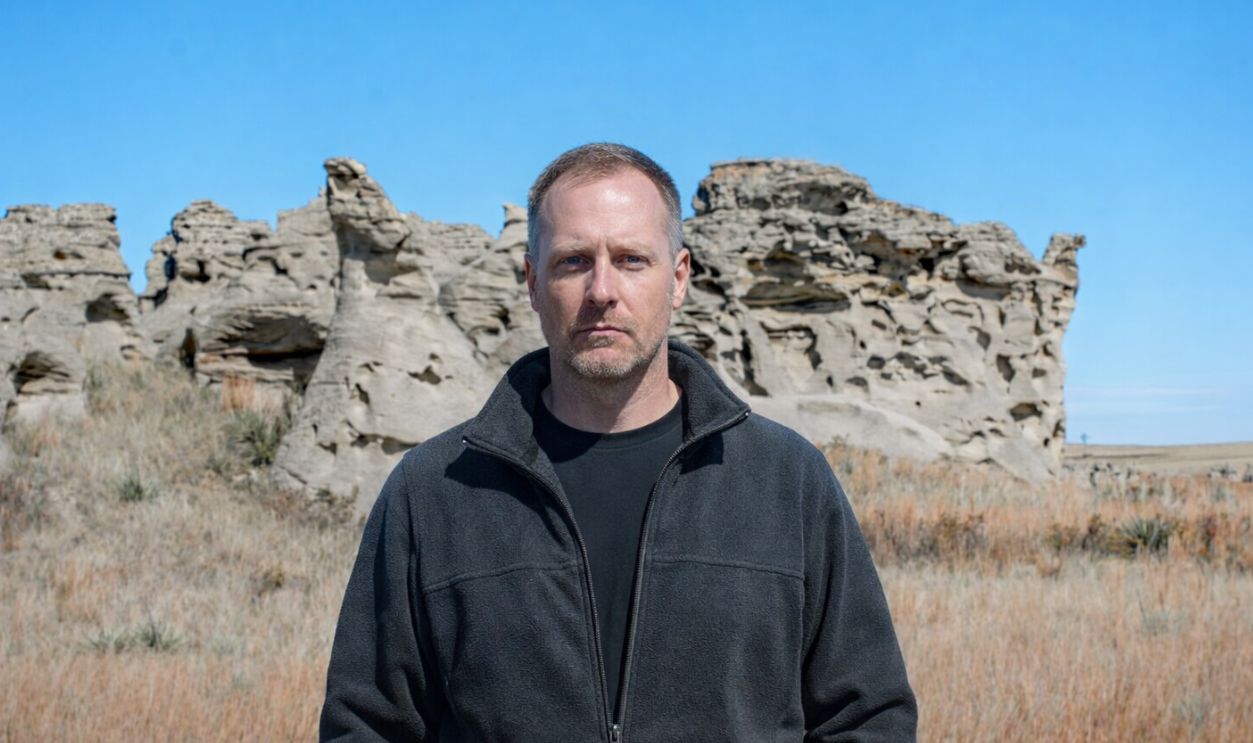
In eastern Montana, stone keeps a timeline that makes human history look brief. At Medicine Rocks State Park, pointed sandstone towers bear resemblance to the Pyramids of Egypt, only they've stood watch over the land for 61 million years. But how do geologists know?
It's time to talk about Deep Time, even if the human mind can never truly comprehend it.
 Tim Evanson, CC BY-SA 2.0, Wikimedia Commons, Modified
What Formation Are Scientists Talking About?
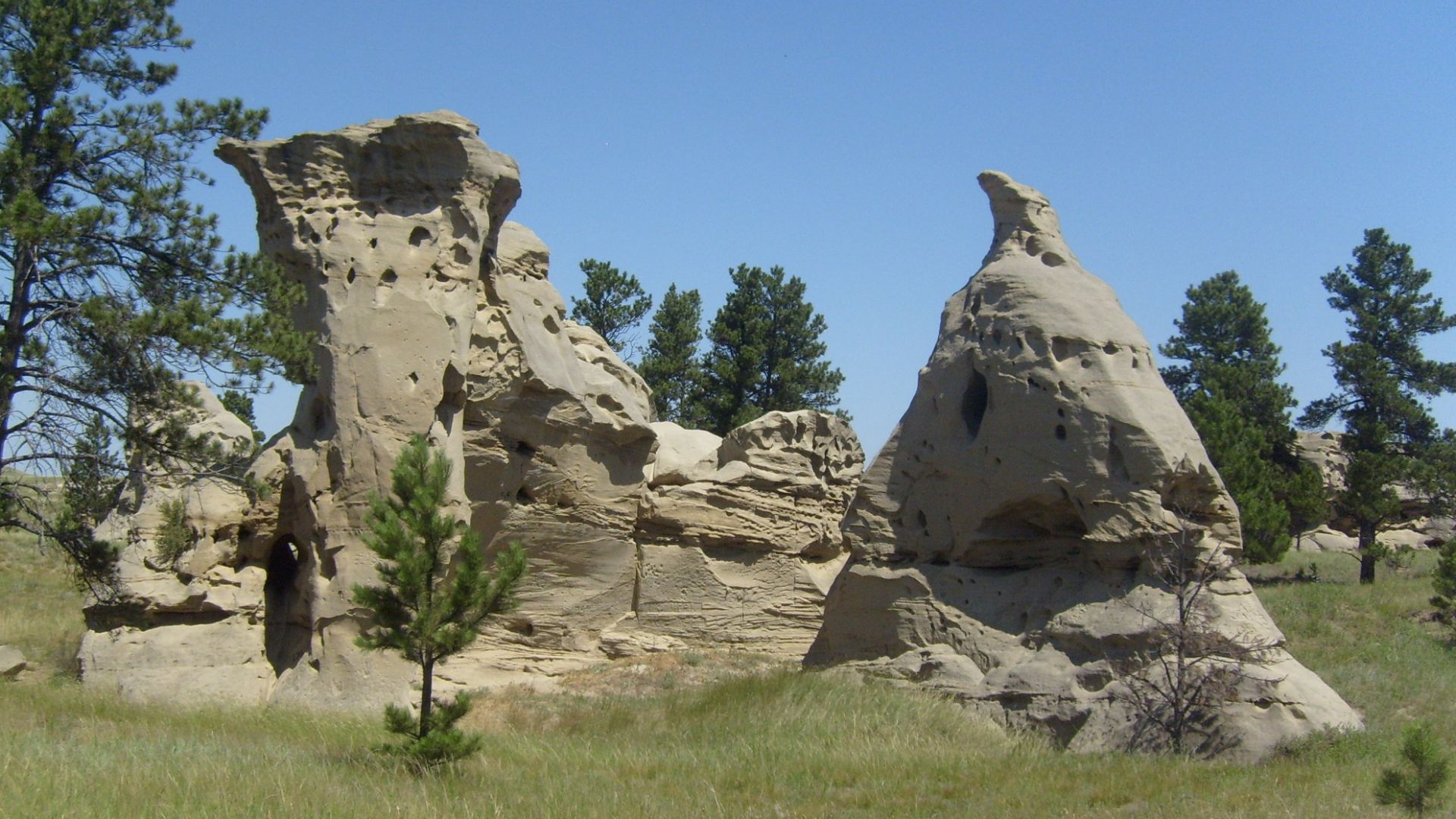
Out in eastern Montana sits Medicine Rocks State Park, a place where sandstone towers rise like weathered sculptures. Theodore Roosevelt once wandered here and called it “fantastically beautiful.” Today, geologists study those same formations for a different reason: their origins stretch tens of millions of years into Earth’s past.
 J.B. Chandler, Wikimedia Commons
Estimated Age of the Formation
Radiometric dating and stratigraphic analysis place these sandstones at around 61 million years old. That timeframe falls within the early Paleocene. Such dating relies on measurable isotope decay and fossil correlation, providing a reliable geologic framework rather than casual visual estimation.
 James St. John, Wikimedia Commons
Comparison to the Great Pyramids
Around 2560 BCE, workers completed the Great Pyramids of Giza, roughly 4,500 years ago. Medicine Rocks formed between 60 and 66 million years ago. That means the sandstone predates the pyramids by over 59 million years. Human history feels long, but deep time stretches far, far beyond it.
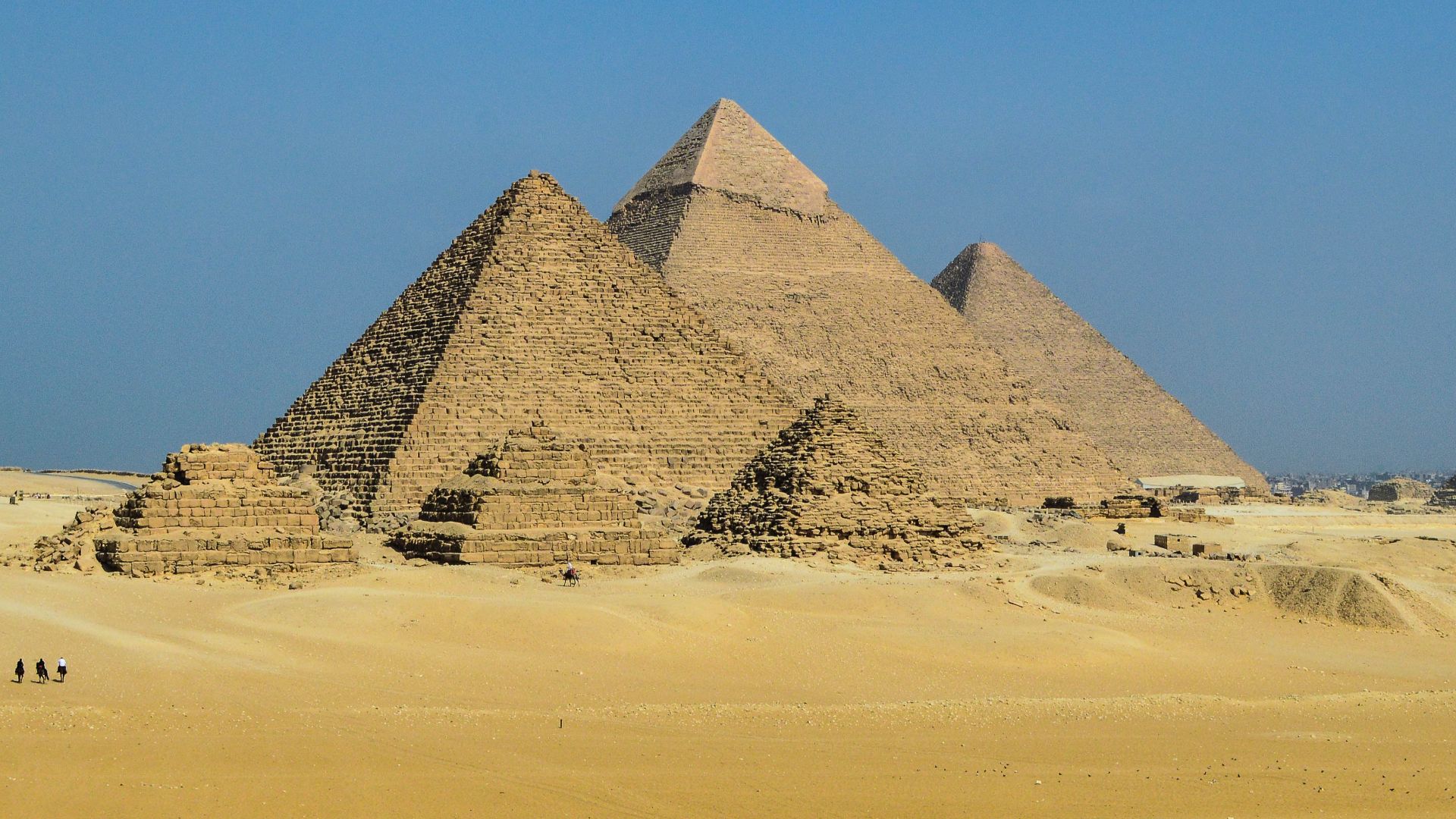 Morhaf Kamal Aljanee, Wikimedia Commons
How Scientists Determined Its Age
Field teams examined sediment layers, fossil content, and mineral composition to establish a clear stratigraphic position. Volcanic ash beds in comparable regional formations help refine dating benchmarks. In addition, regional correlation with the Fort Union Formation strengthens age estimates across eastern Montana.
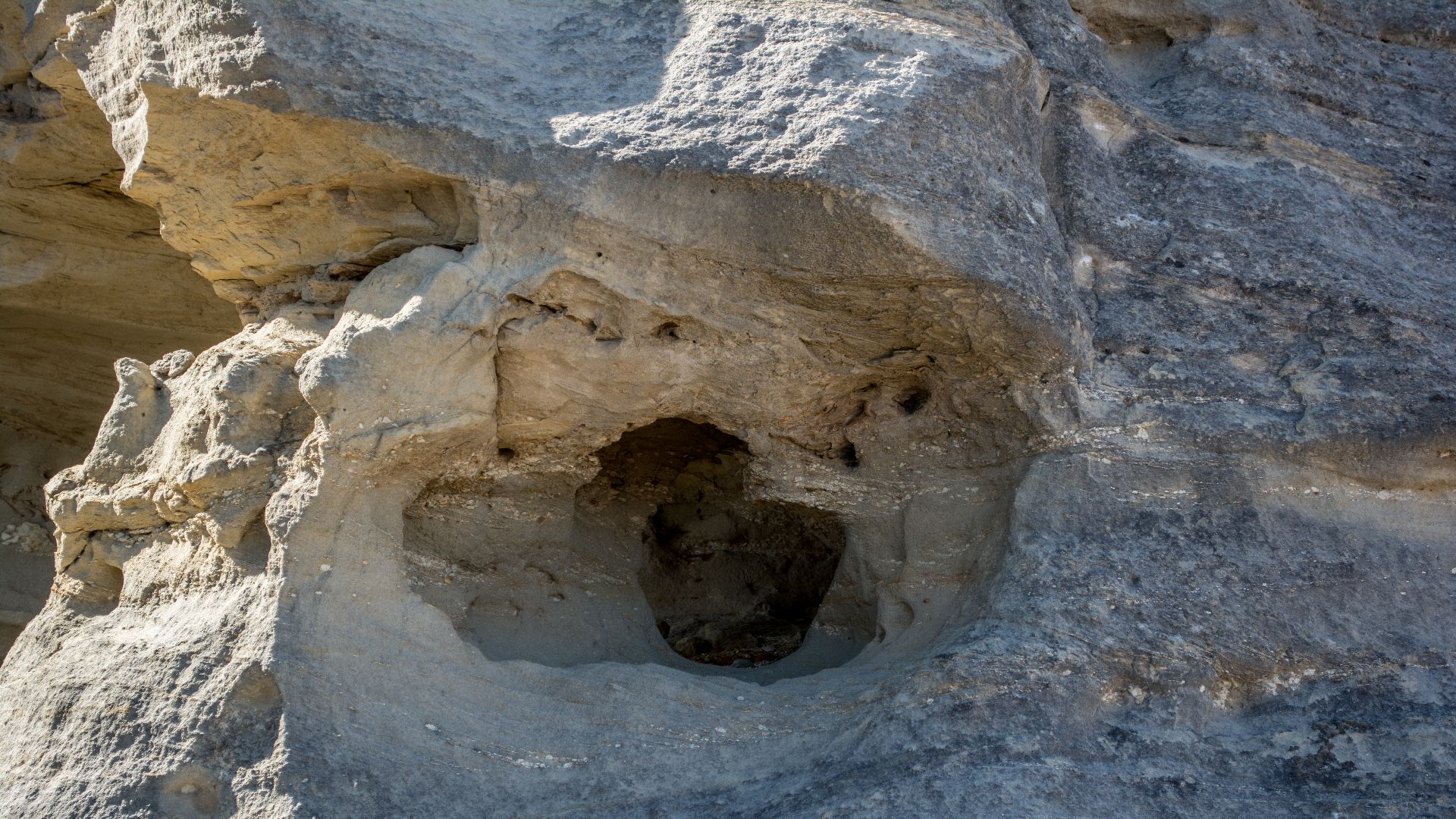 Tim Evanson, Wikimedia Commons
The Geological Period It Formed In
These sediments settled shortly after the mass extinction that ended the dinosaur era. During the early Paleocene, mammals began to diversify across North America. Shortly afterward, a mass extinction reshaped life entirely. Medicine Rocks quietly recorded that planetary drama without asking for attention.
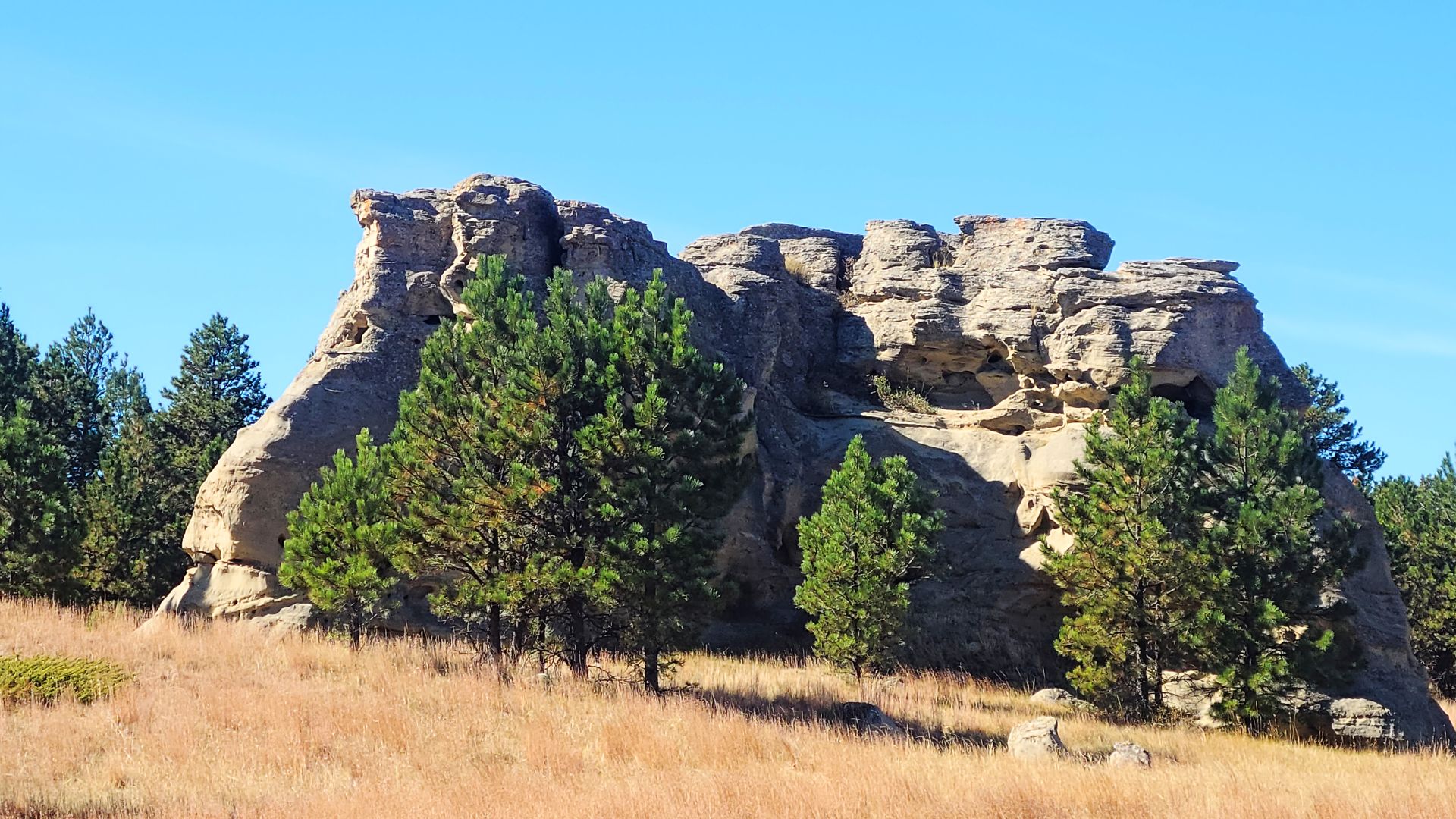 Tim Evanson, Wikimedia Commons
What the Area Looked Like Millions of Years Ago
Broad rivers. Slow channels. Muddy floodplains stretching across low ground. Sediment piled layer by layer as water shifted course over centuries. Vegetation lined the banks, and distant uplifts fed sand downstream. Therefore, it looked nothing like the dry formations visible today.
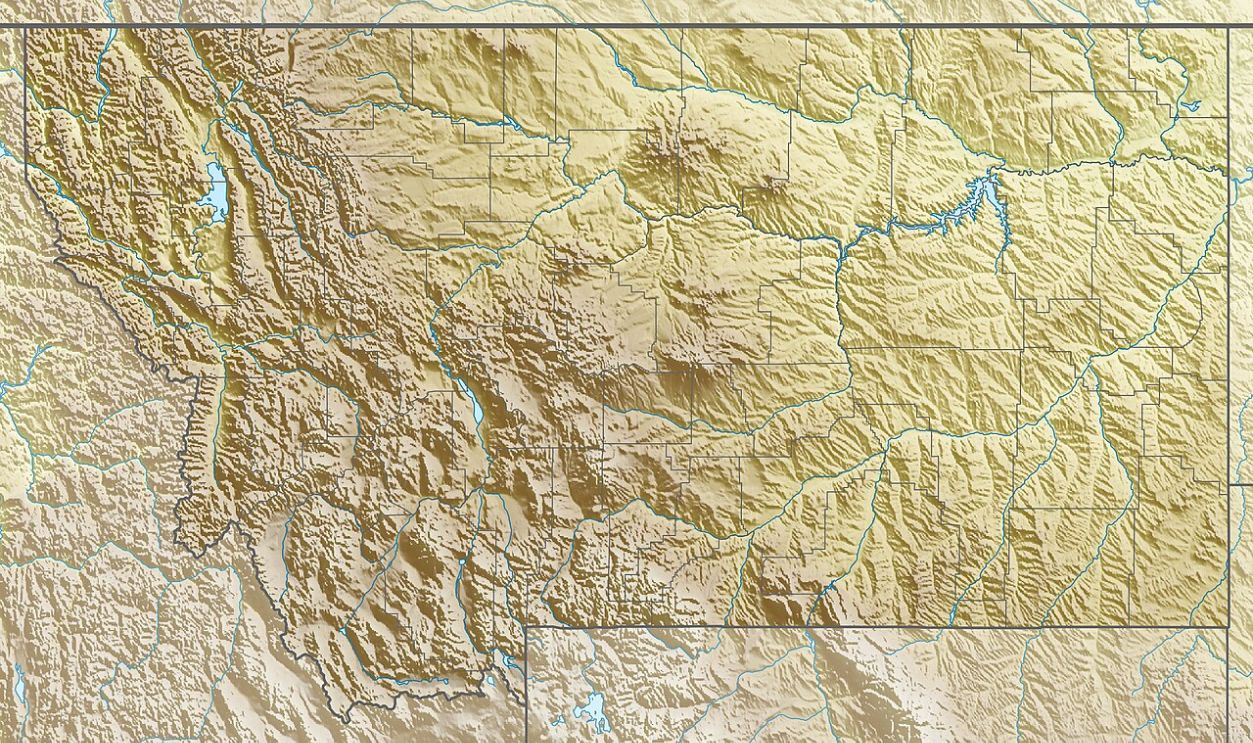 Carport, CC-BY-SA-3.0, Wikimedia Commons
Type of Rock Involved
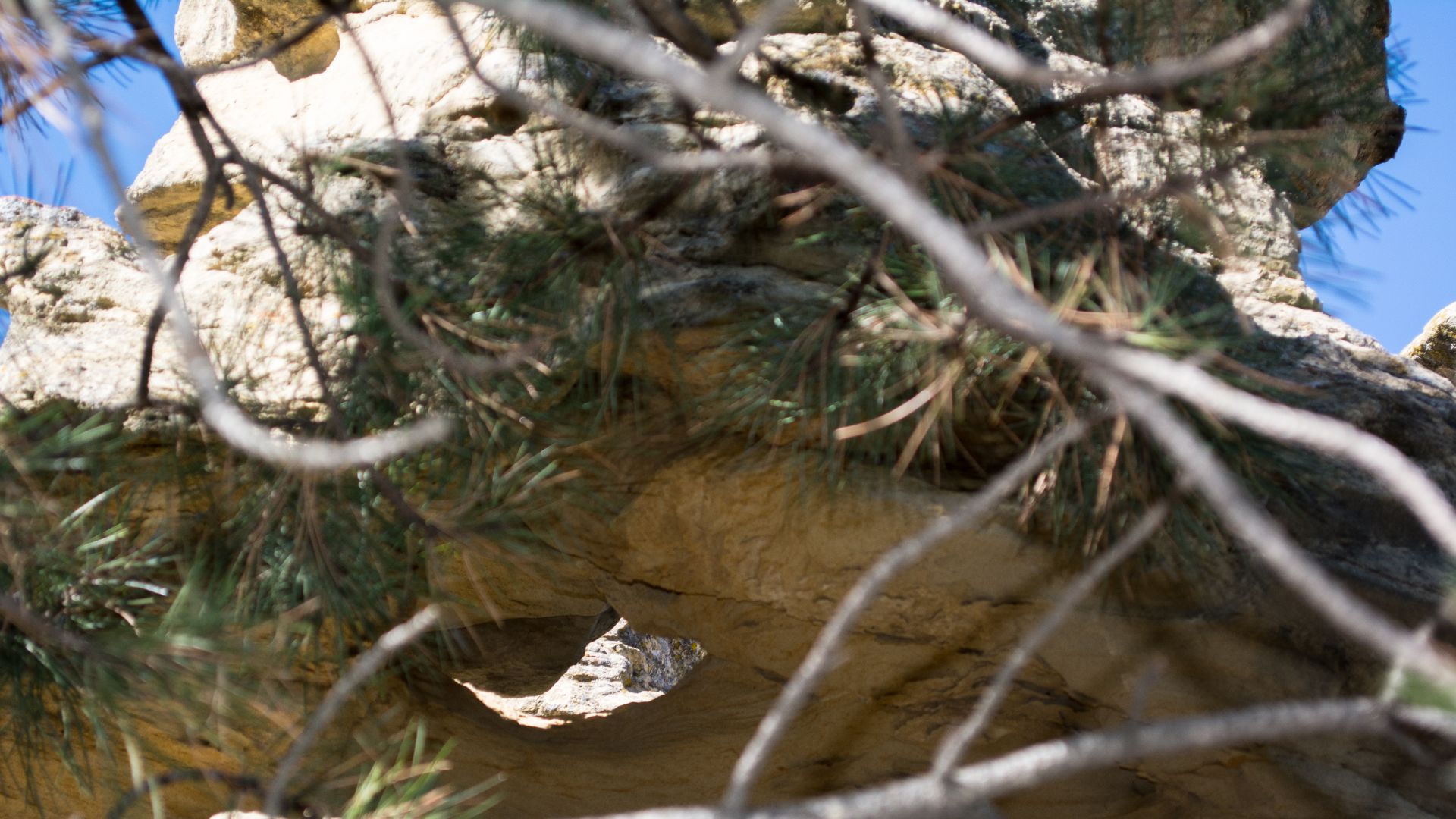
Sandstone defines Medicine Rocks, formed from grains once carried by ancient streams. Over the immense spans of deep time, pressure bound those tiny sand particles together into rigid stone. No human will ever be able to experience this effect, but we still see the final result.
 Tim Evanson, Wikimedia Commons
How the Formation Was Created
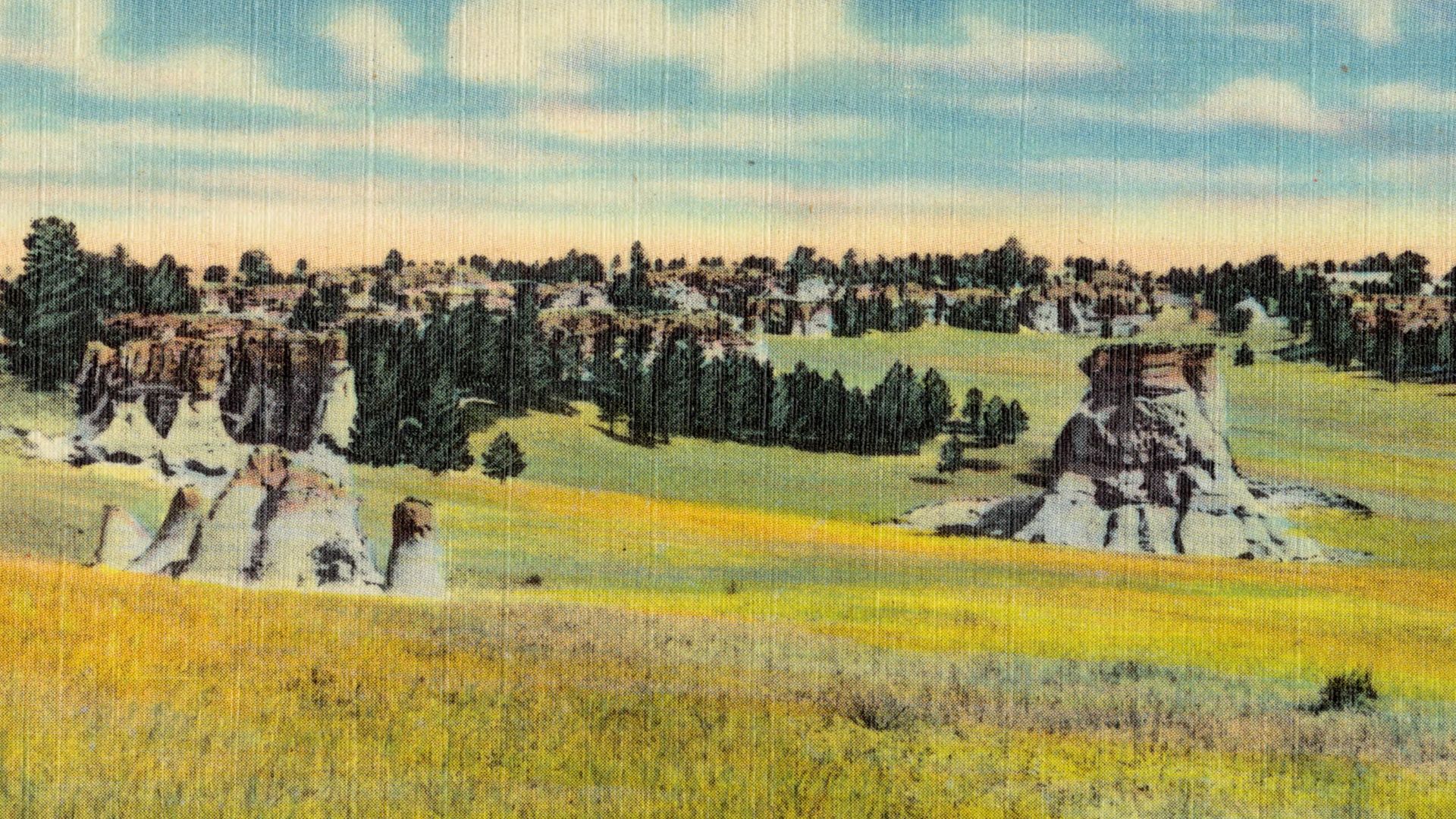
Sediment settled in quiet water, then buried deeper with each passing era. Weight increased. Minerals crystallized between grains. Stone replaced loose sand. Beneath shifting continents, pressure and chemistry performed their slow work, turning an ordinary river deposit into enduring rock.
 The Hafstrom Co., Publishers, Belfield, N. Dak., Wikimedia Commons
Fossils Found Within the Formation
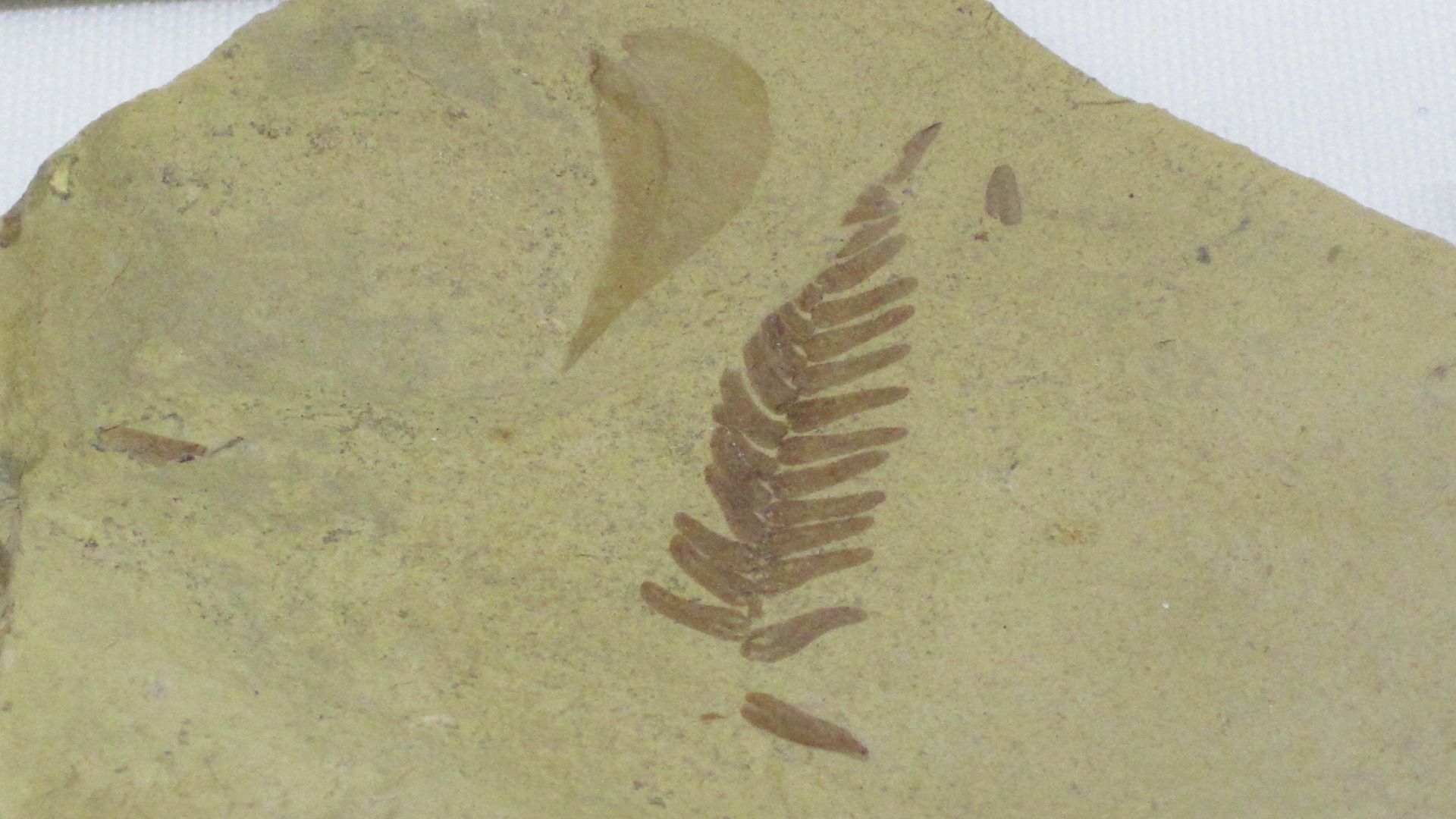
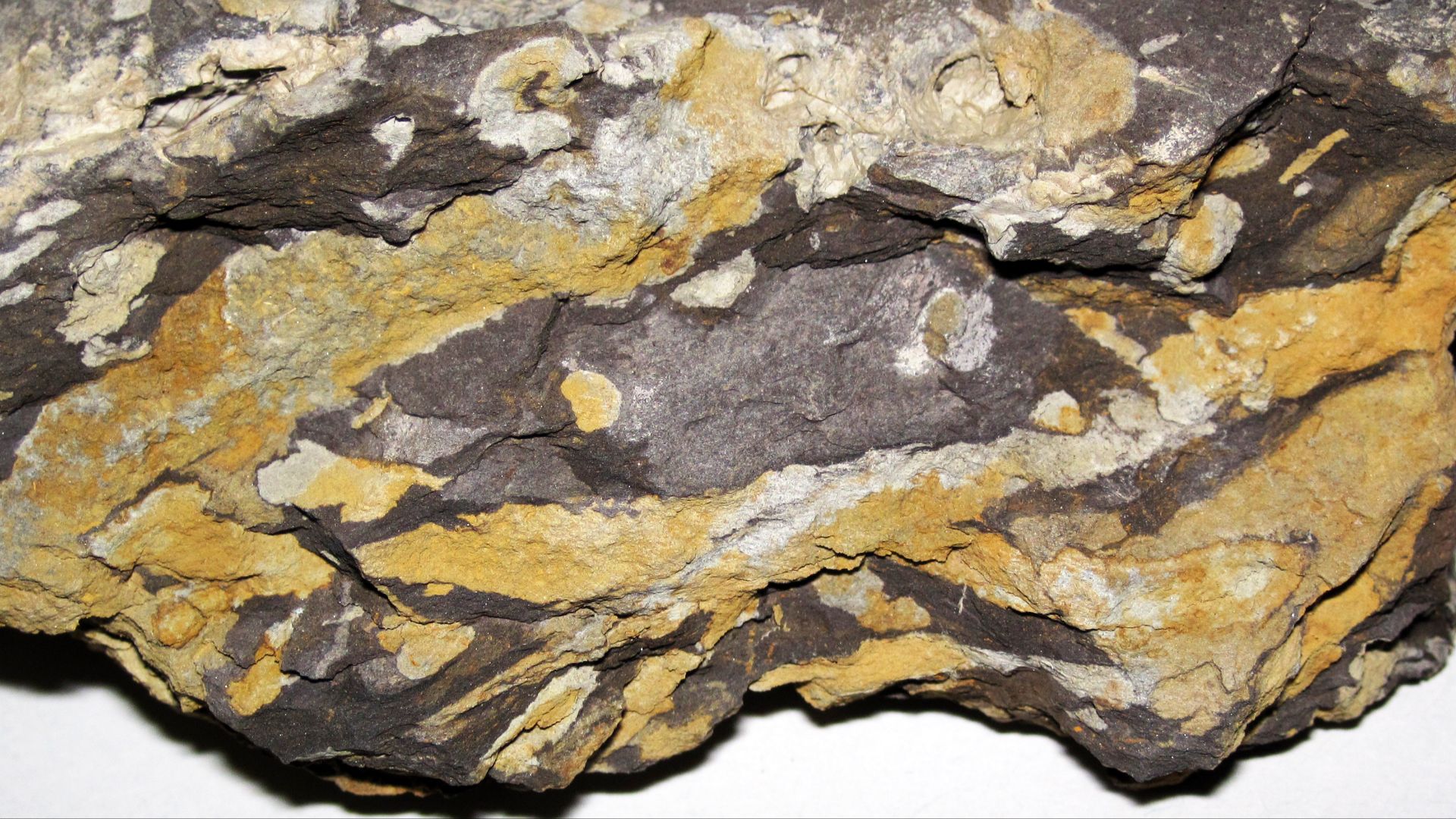
Fossil fragments within related regional layers reveal mammals, reptiles, and plant life adapting after dinosaur extinction. Such finds anchor imagination in evidence. Touching ancient stone suddenly feels different once you realize entire ecosystems once moved across what now appears still and silent.
 James St. John, Wikimedia Commons
Ancient Climate Evidence
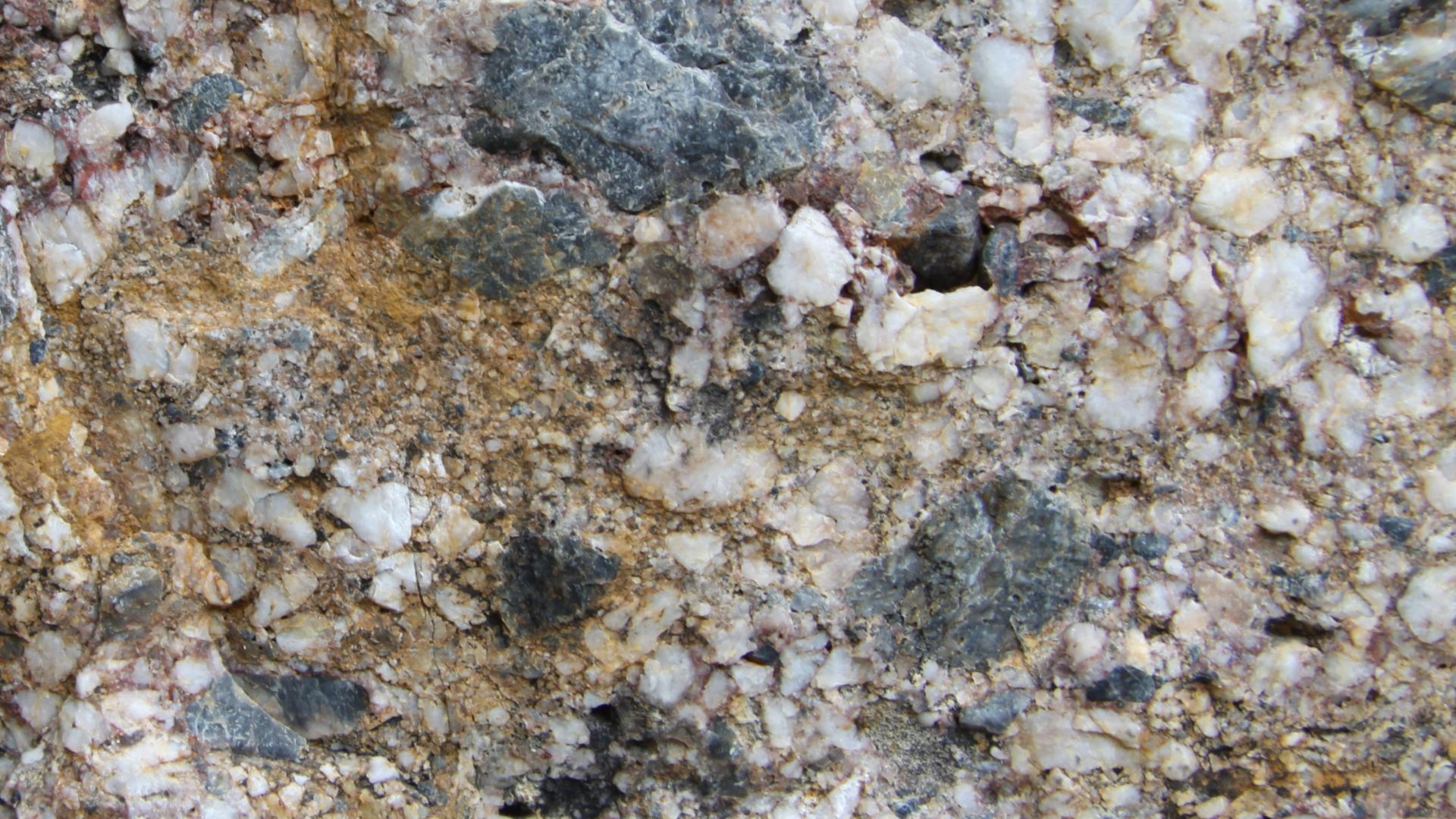
Climate clues hide in grain size and sediment patterns. Coarser deposits suggest stronger water flow, whereas finer layers indicate calmer conditions. In fact, certain mineral signatures point to seasonal flooding cycles. Rocks may not check forecasts, yet they record weather better than any diary.
Tectonic Activity in the Region
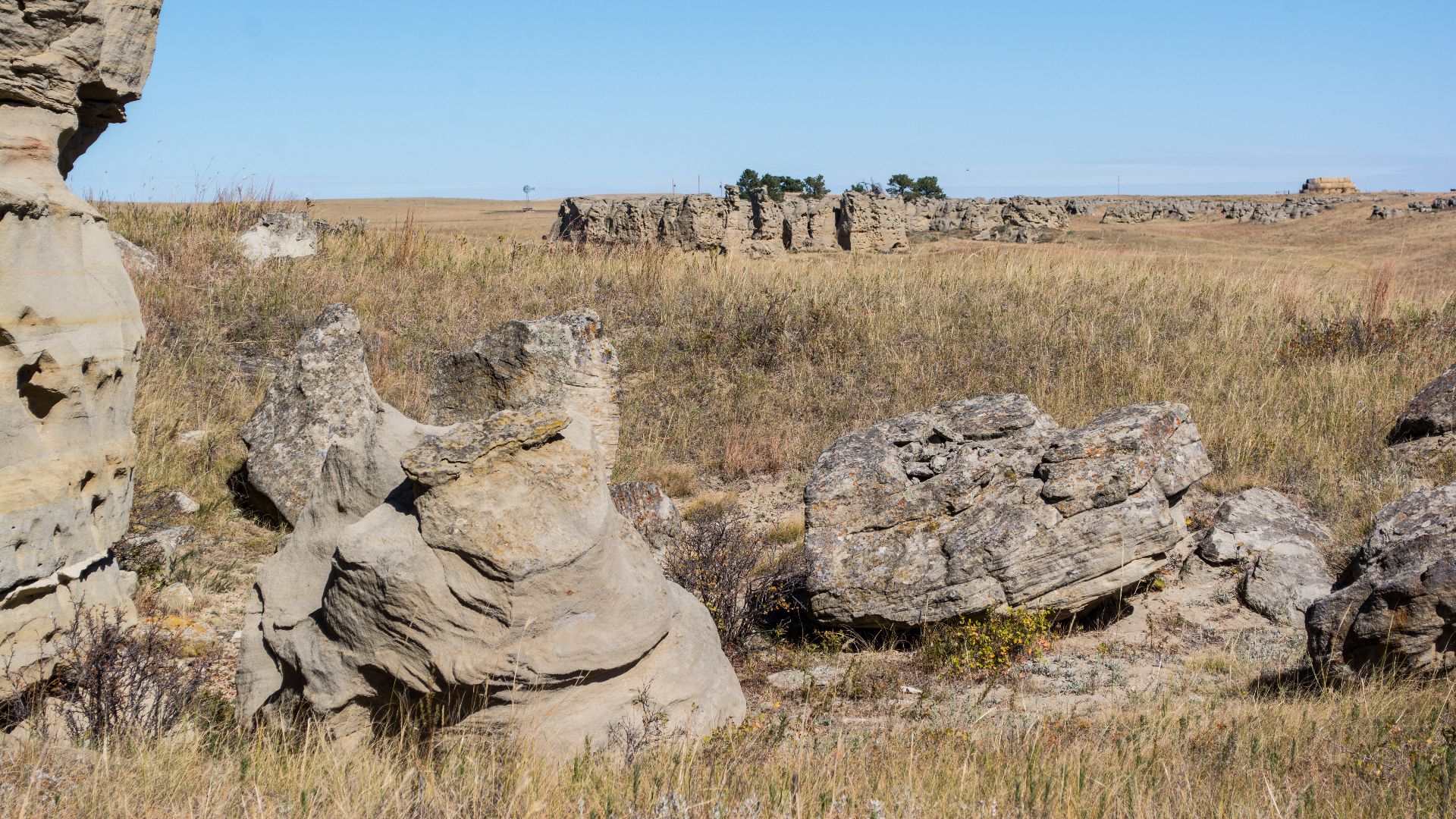
Regional geology ties Medicine Rocks to the Laramide orogeny, a mountain-building episode that shaped much of western North America between 80 and 55 million years ago. Compression from shifting plates uplifted nearby terrain. Consequently, sediment pathways and drainage systems across Montana gradually changed.
 Tim Evanson, Wikimedia Commons
Relation to the Rocky Mountains
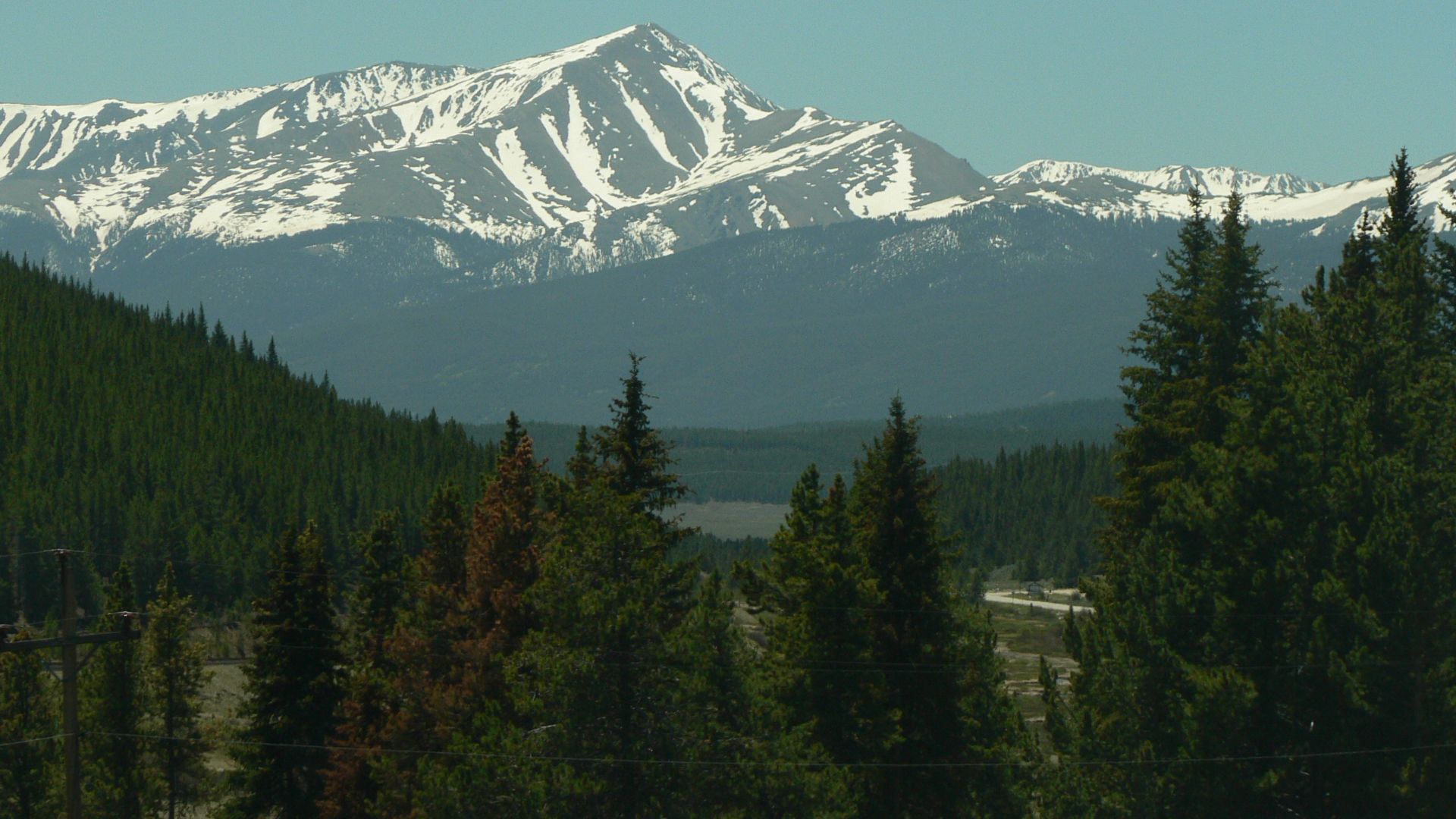
Consider the timing. While sediments at Medicine Rocks were settling, forces that would eventually raise the Rocky Mountains were already underway. Uplift occurred over millions of years. Stone preserves that slow transformation, reminding observers that mountains themselves begin as subtle shifts beneath the surface.
 Rick Kimpel, Wikimedia Commons
Mineral Composition
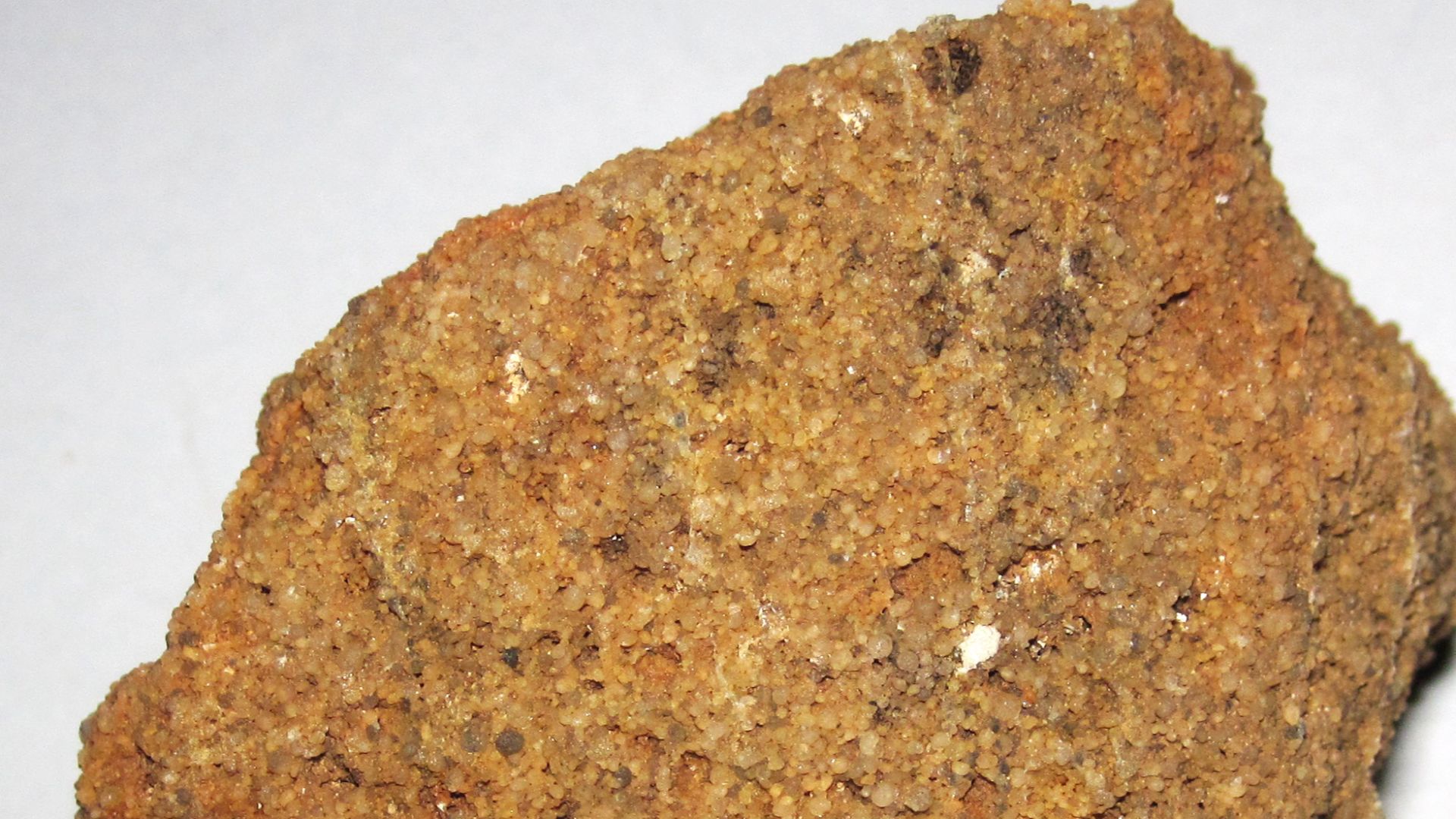
Quartz dominates the sandstone at Medicine Rocks, which explains why the formations have resisted erosion for millions of years. Feldspar appears in smaller amounts throughout the layers, while clay minerals occupy fine spaces between grains. Iron oxides create the warm red and orange tones across exposed surfaces.
 James St. John, Wikimedia Commons
Erosion That Shaped It Today
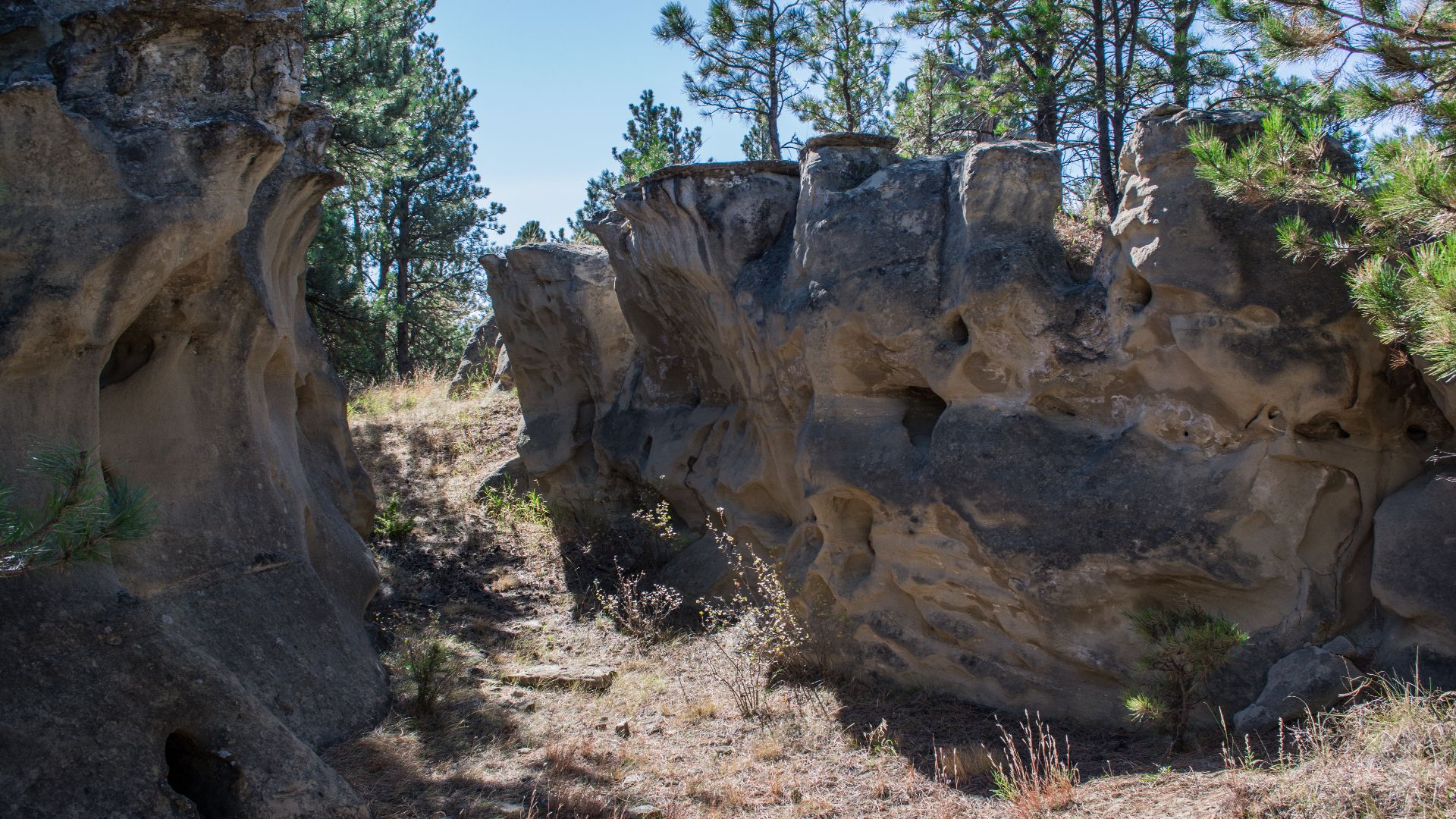
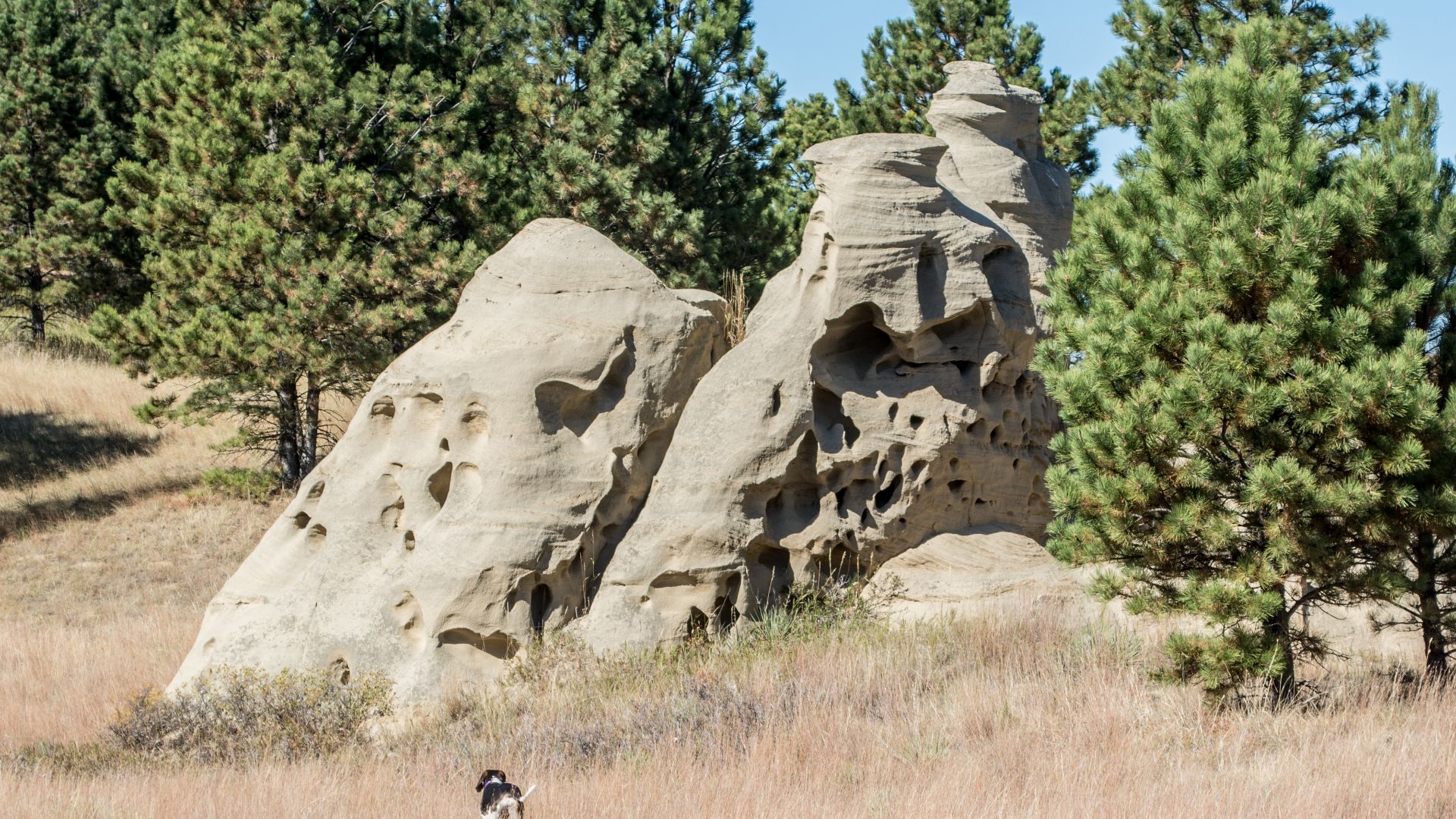
Wind-carved openings. Water widened cracks. Freeze-thaw cycles expanded fractures season after season after season. Over the millennia of deep time, the softer layers yielded more quickly than harder sections. What remains are perforated towers and honeycombed walls, shaped patiently by natural forces that never rushed their work.
 Tim Evanson, Wikimedia Commons
When It Was First Scientifically Studied
During the late nineteenth century, surveyors cataloging western territories documented the unusual sandstone forms. Field notes described cavities, arches, and inscriptions left by earlier travelers. Later geological mapping placed the area within broader regional formations, providing context beyond simple visual curiosity.
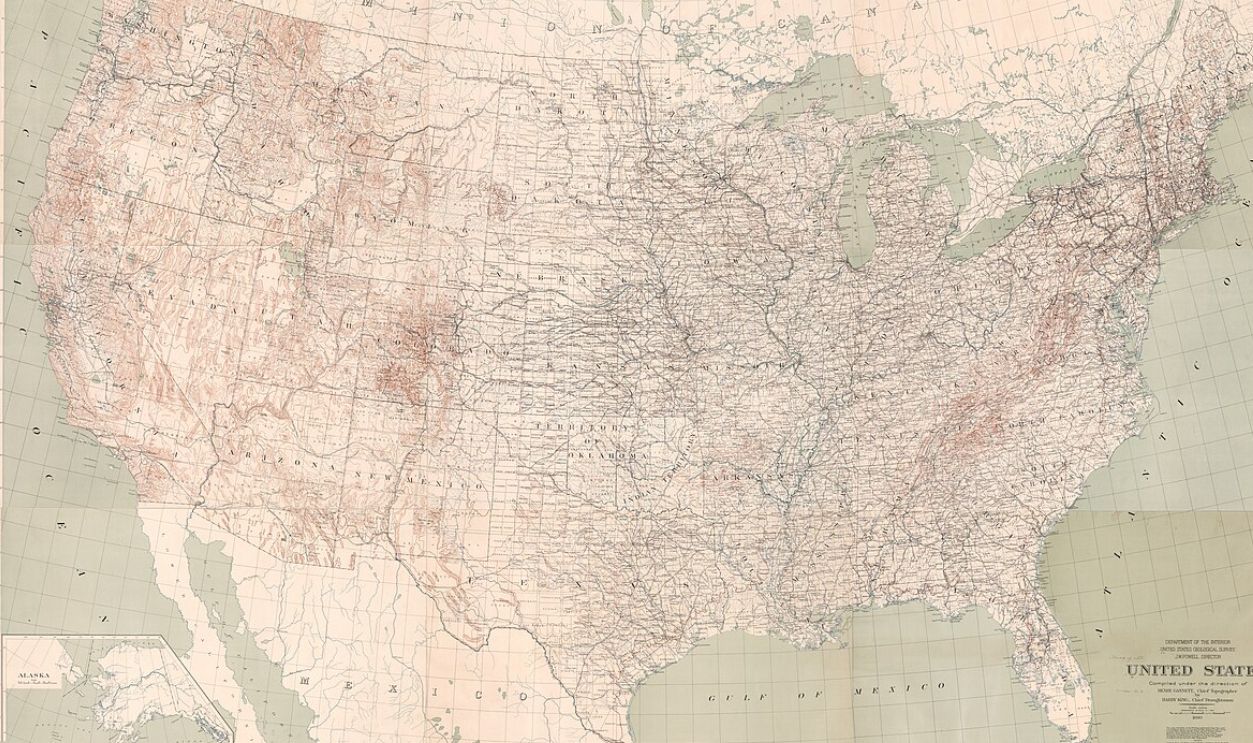 John Wesley Powell, Wikimedia Commons
Indigenous Knowledge of the Area
Long before formal surveys, Indigenous peoples recognized the significance of these rocks. Oral histories from Northern Plains tribes reference the area as culturally meaningful. Carved names and symbols remain on some surfaces. Stone held living, human memory here, not merely sediment compressed through deep time.
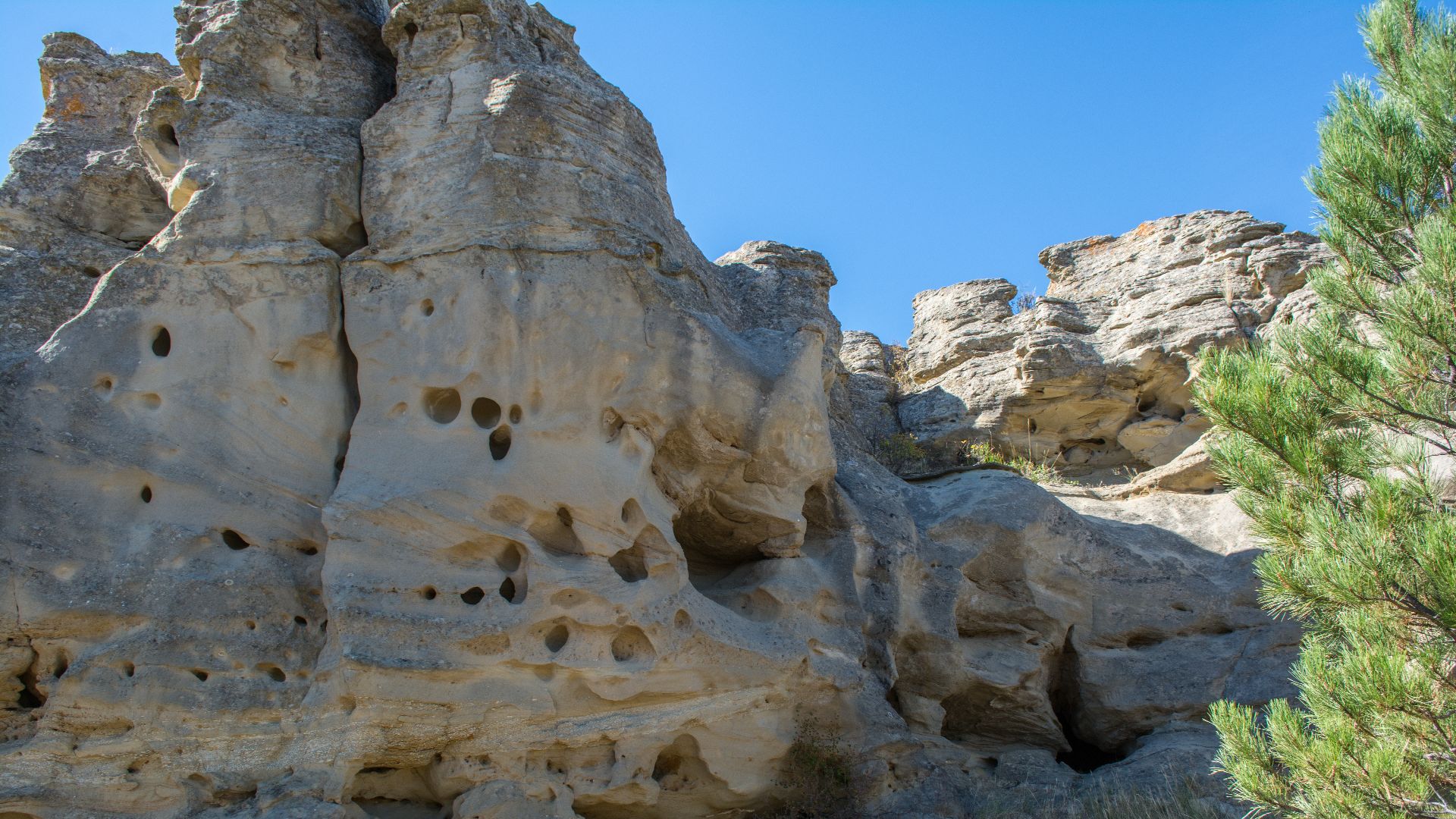 Tim Evanson, Wikimedia Commons
Why It Matters to Modern Geology
Geologists value Medicine Rocks because it records a transition between dinosaur-dominated ecosystems and mammal expansion. Sediment layers help track environmental recovery after mass extinction. For researchers studying North American stratigraphy, these formations offer reliable reference points within a broader regional framework.
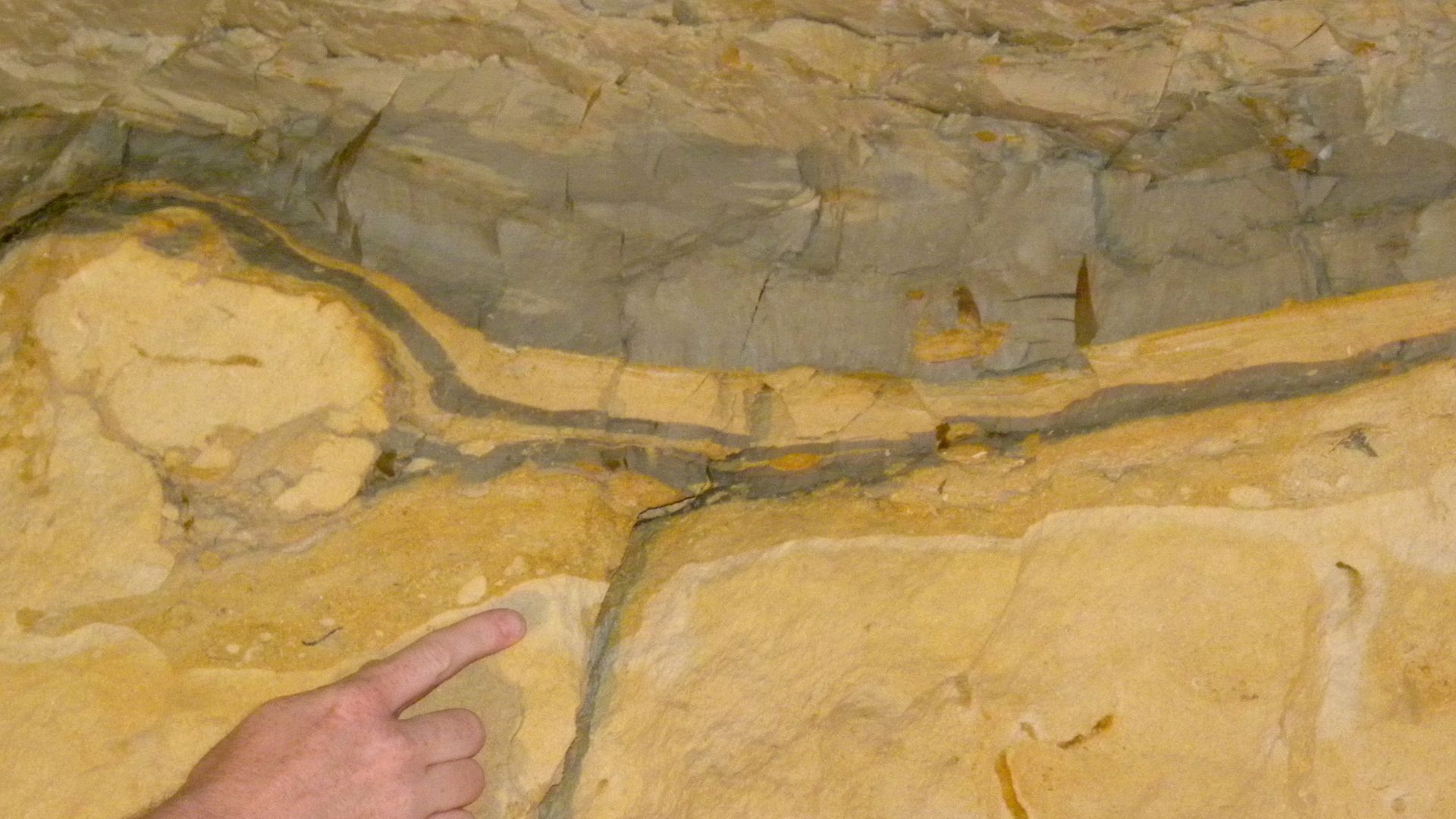 Wilson44691, Wikimedia Commons
Misconceptions About “Older Than the Pyramids”
Headlines love the phrase older than the pyramids, as though that sets a high bar. In truth, most exposed rock formations on Earth exceed human monuments by millions of years. The comparison grabs attention. After all, geological age rarely needs a publicity boost.
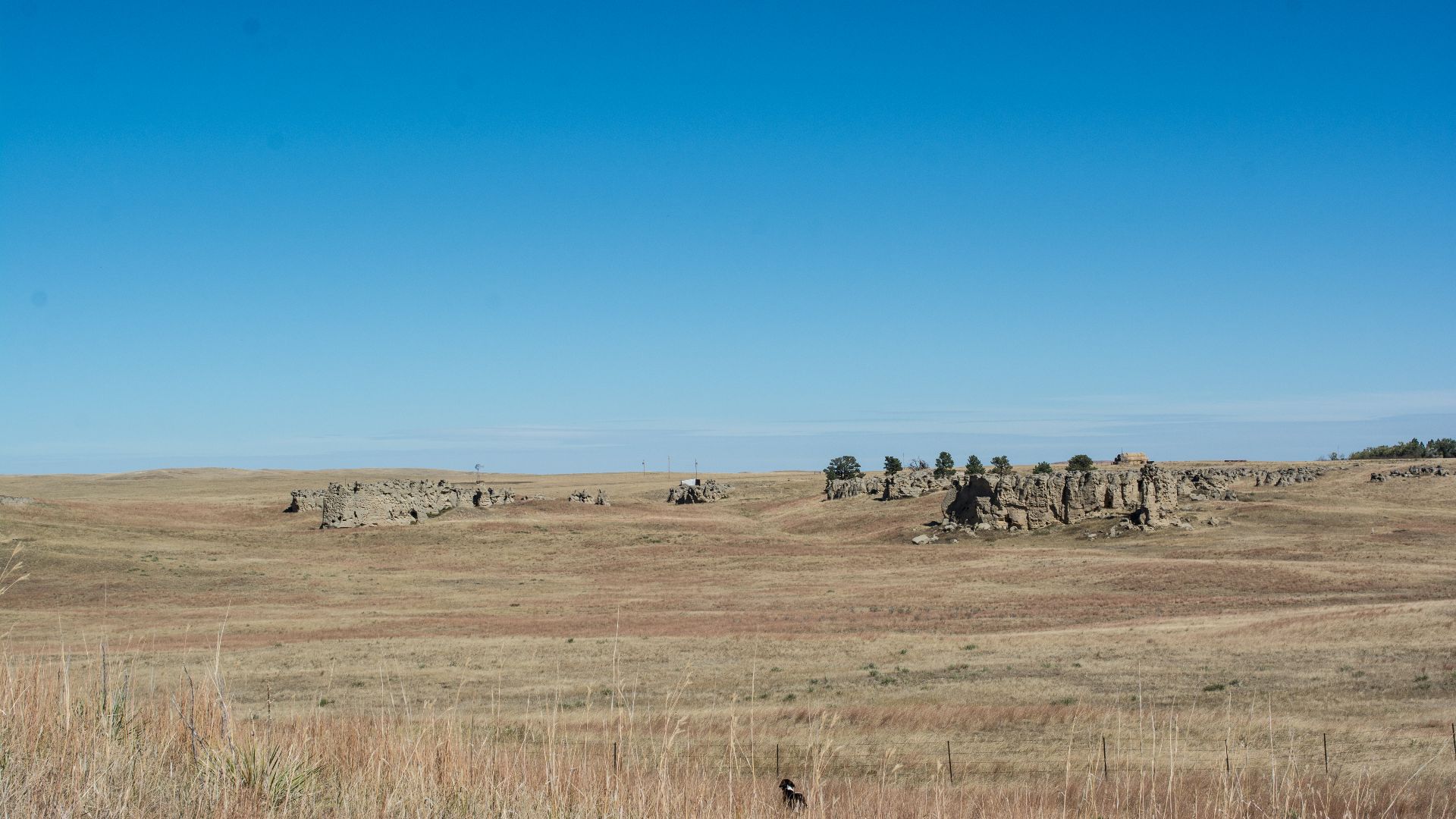 Tim Evanson, Wikimedia Commons
Similar Ancient Formations in North America
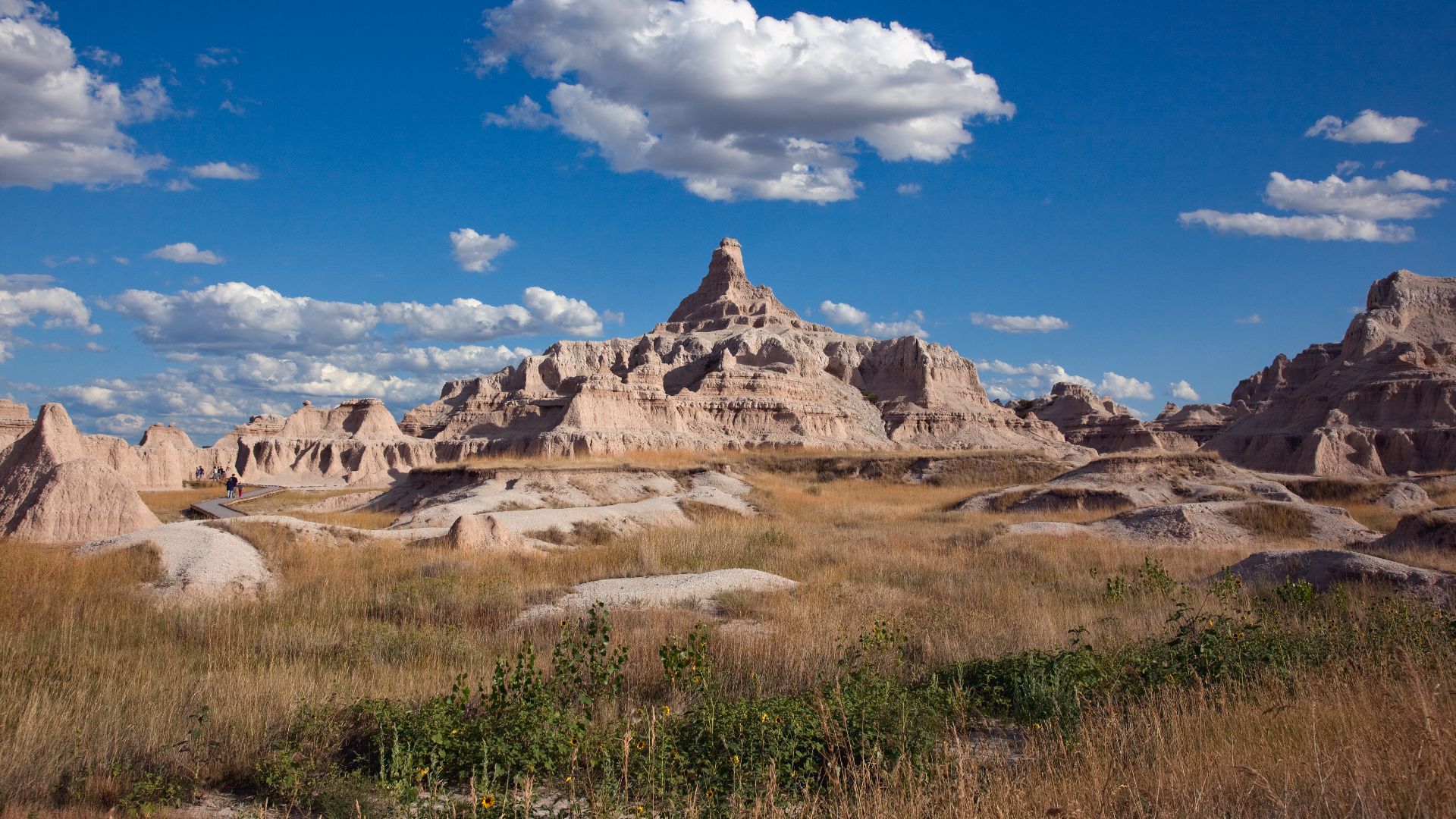
Across North America, formations such as the Badlands and portions of the Hell Creek region preserve sediments from a similar but slightly earlier period. Each site reveals different fossil and environmental clues. Medicine Rocks forms part of that broader geologic story, not an isolated anomaly.
 Carol M. Highsmith, Wikimedia Commons
Whether It Is Accessible to Visitors
Visitors can walk among the sandstone pillars at Medicine Rocks State Park today. Trails weave between formations, and nearby camping areas sit. Climbing fragile sections is discouraged, for obvious reasons. Even ancient stone appreciates a little respect from modern footwear.
 Tim Evanson, Wikimedia Commons
Ongoing Research Projects
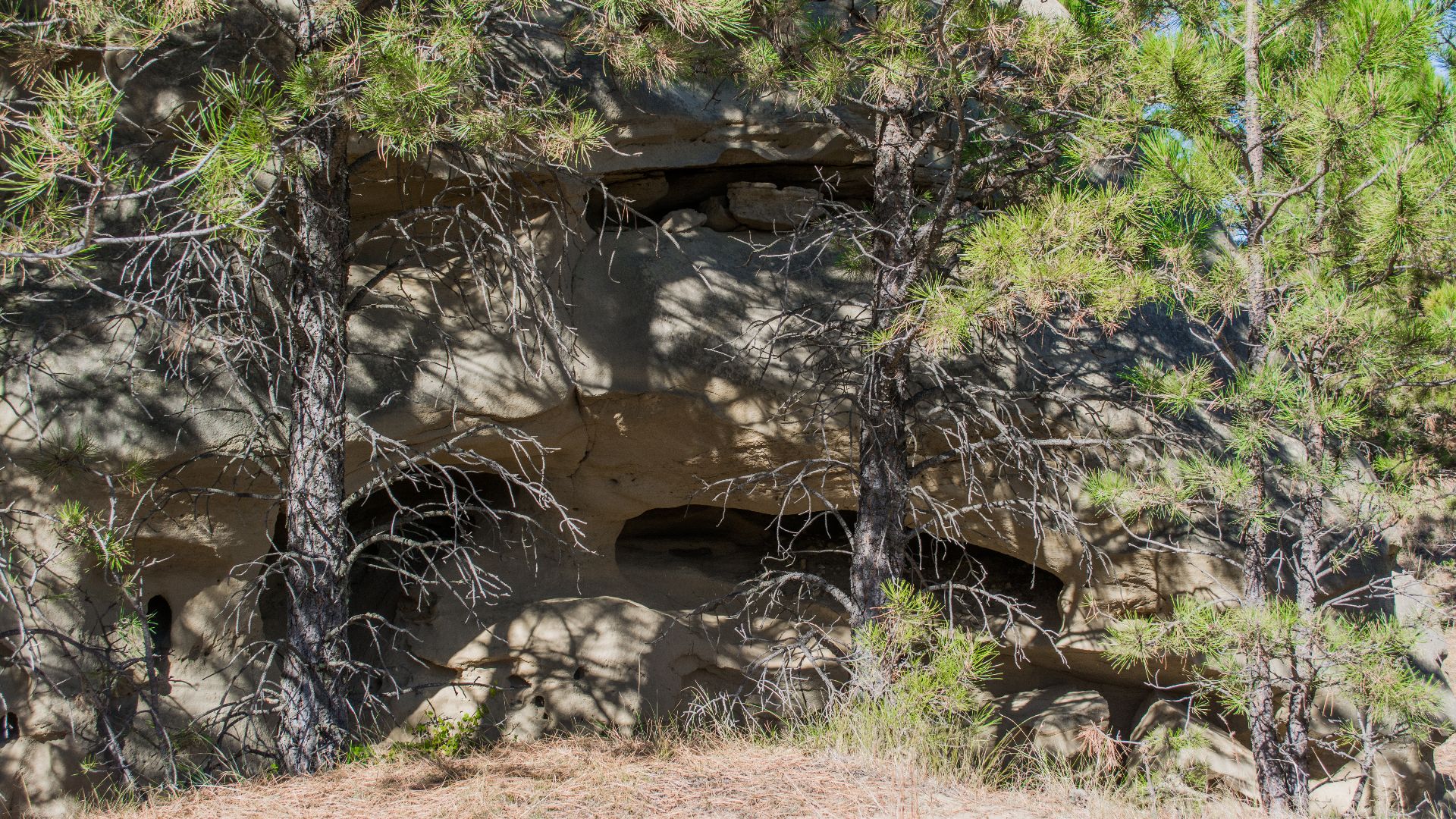
Current research in eastern Montana focuses on refining Paleocene stratigraphy and correlating sediment layers across basins. Core samples and regional mapping continue to clarify depositional patterns. In addition, fossil recovery efforts nearby contribute to broader reconstructions of post-extinction ecosystems in North America.
 Tim Evanson, Wikimedia Commons
How Climate Change Affects the Site Today
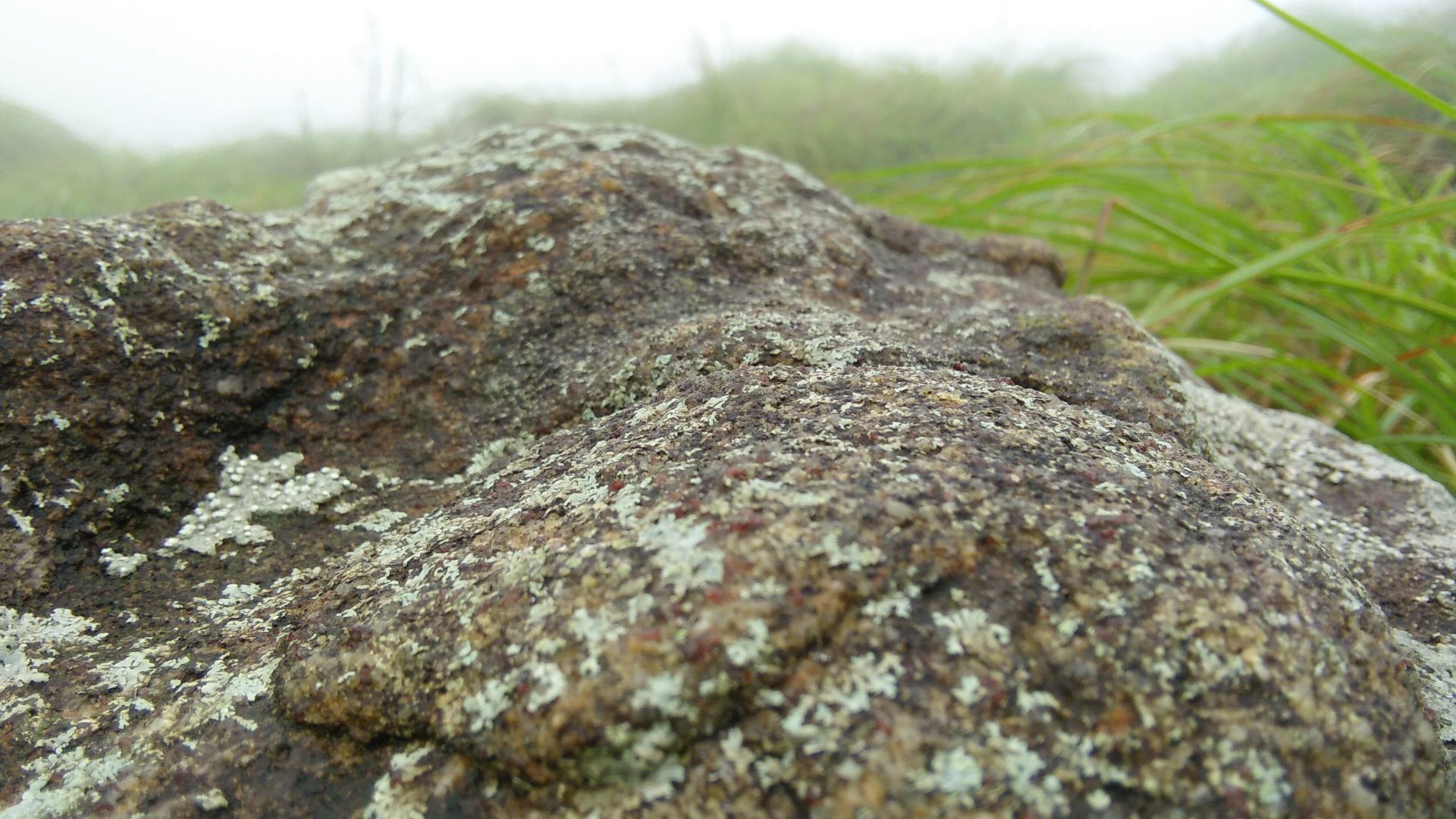
Modern climate patterns influence erosion rates across the park. Increased precipitation events accelerate runoff, while freeze-thaw cycles widen fractures in exposed rock. Subtle shifts compound over decades. Watching these formations means witnessing subtle change in real time, even within a human lifespan.
 Ajith kumar A, Wikimedia Commons
Why Geological Time Is Hard to Grasp
Deep time resists easy comprehension, because the brain did not evolve to comprehend it. Human memory spans decades, and recorded history stretches over thousands of years. Geologic processes operate across scales that exceed ordinary reference points. We can say "61 million years," but that alone doesn't really communicate the magnitude of this timeframe.
But standing before Medicine Rocks offers a tangible anchor for otherwise abstract time.
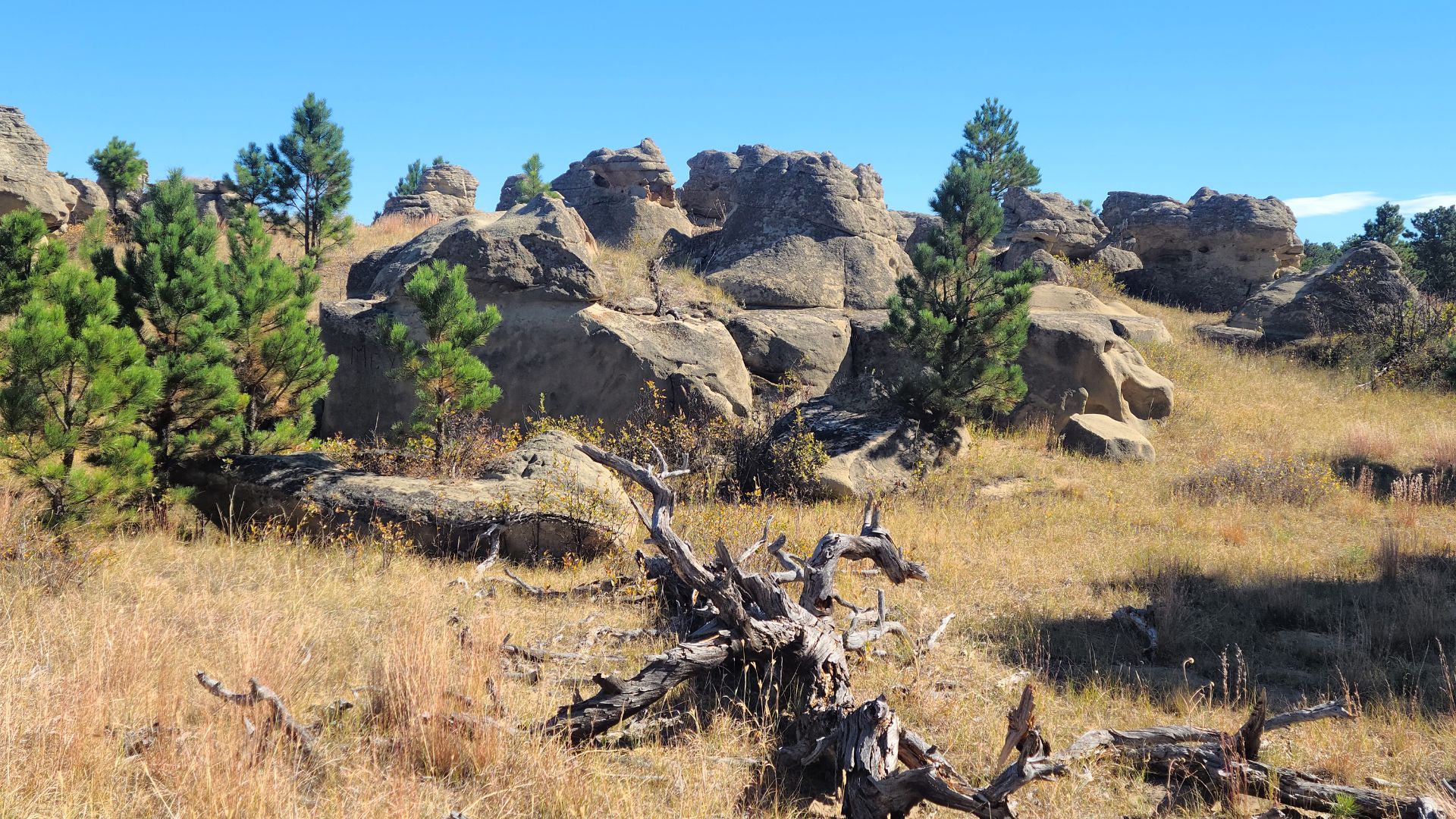 Tim Evanson, Wikimedia Commons
Broader Significance in North American History
Eastern Montana preserves some of the clearest records of the transition from the age of dinosaurs to the rise of mammals. Medicine Rocks sits within that wider context. Understanding its layers helps explain how environments recovered and diversified after global upheaval.
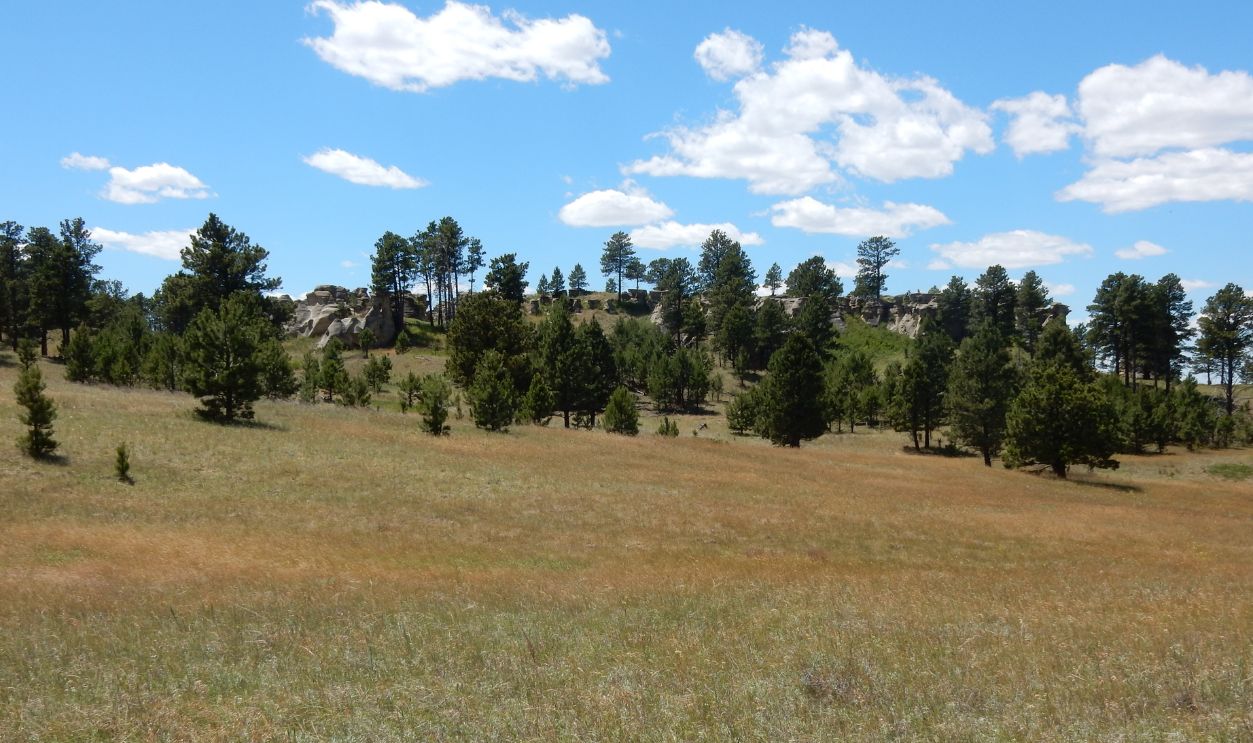 Matt Lavin from Bozeman, Montana, USA, CC BY-SA 2.0, Wikimedia Commons
What This Formation Ultimately Reveals
Stone stores memory without intention. Grain by grain, pressure turned river sediment into enduring form. Meanwhile, continents shifted, and species vanished. Medicine Rocks stands as quiet evidence that Earth writes its history slowly, across spans that outlast every monument humanity can build.
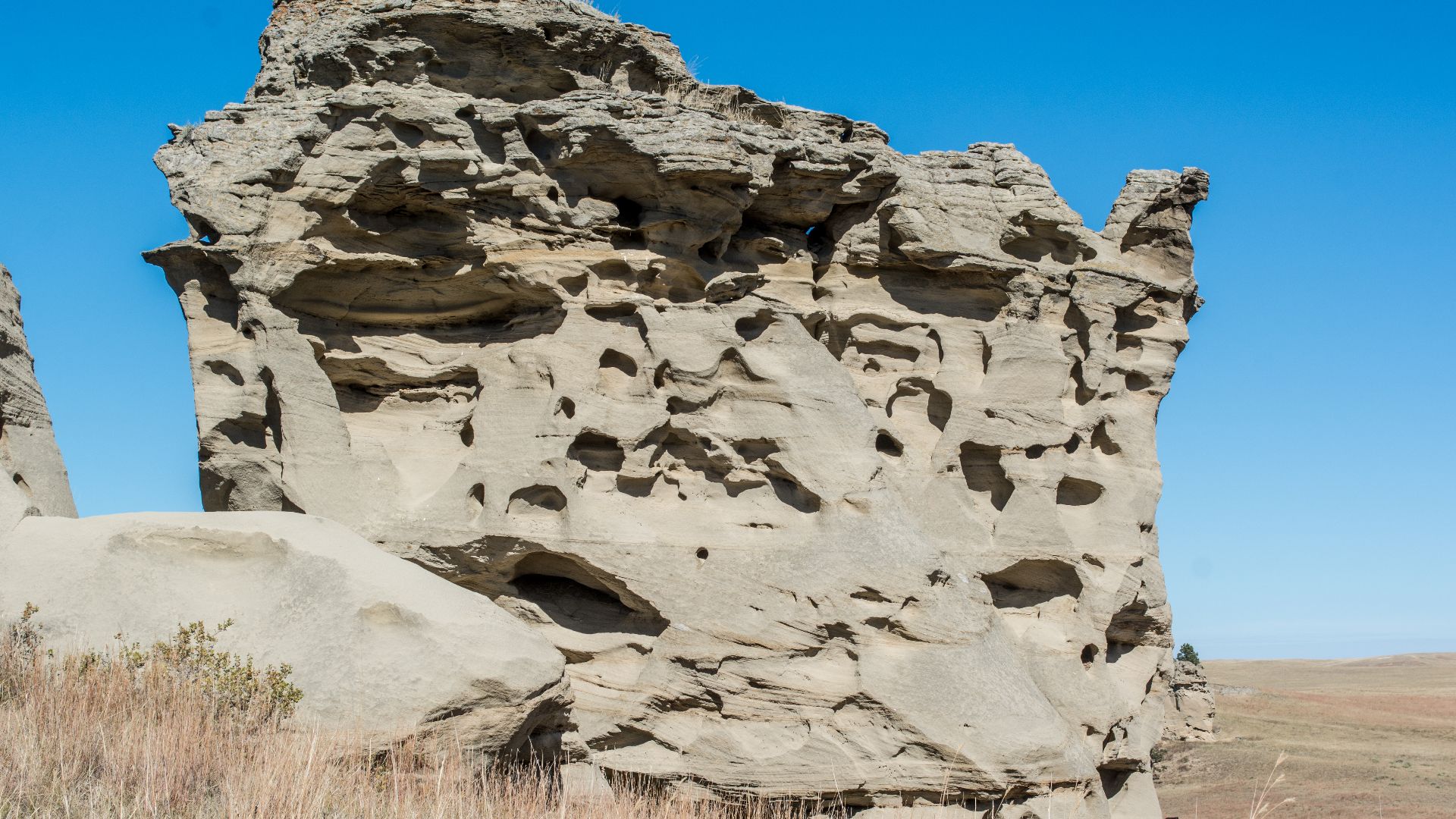 Tim Evanson, Wikimedia Commons







.jpg)