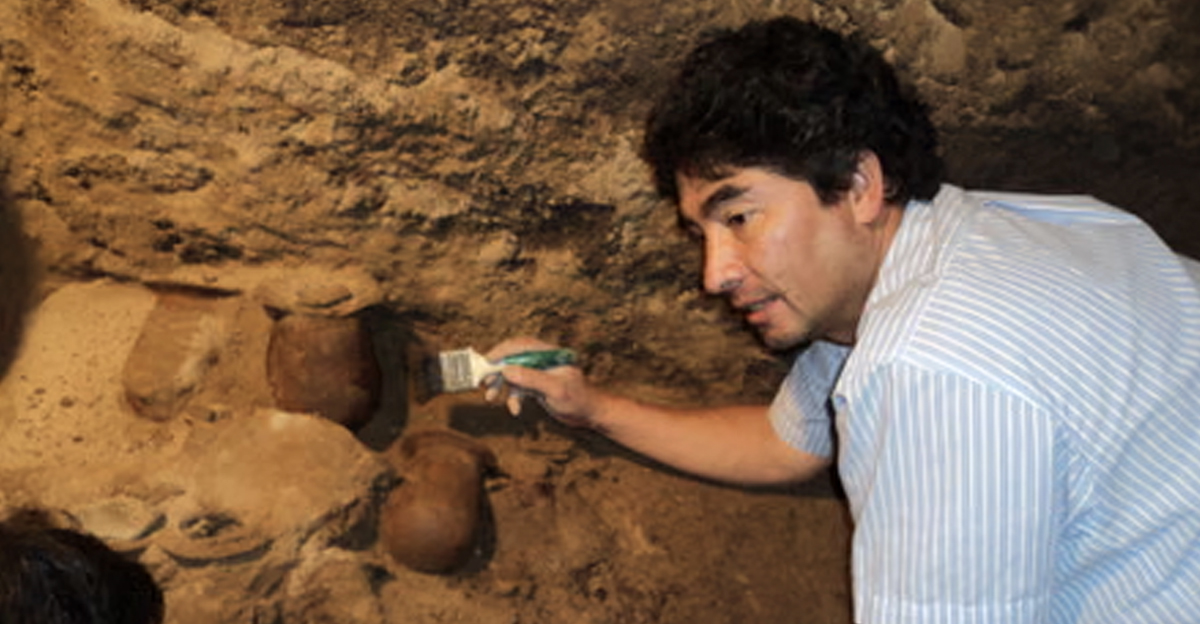
A hidden chamber beneath the famed ruins of Chichen Itza has yielded one of the most haunting and illuminating archaeological discoveries in decades. In 1967, builders unearthed an underground cistern near the site’s sacred sinkhole, packed with the remains of over 100 children. Recent DNA work on 64 of those remains, published in 2024, reveals a dramatic new truth: every one was a young boy, including two sets of identical twins. This isn’t just a cold scientific footnote. It actually offers a deep, human echo from a civilization many thought they understood.
A Pattern Emerges
Radiocarbon dating places the burials spanning roughly four centuries, from the 6th to the 10th century AD, with the bulk of individuals interred during Chichen Itza’s zenith, roughly 800–1000 AD. Genetic analysis confirmed that all 64 sampled remains belonged to male children, most of them between about 3 and 6 years old at death—starkly contradicting earlier narratives that sacrificial victims at this site were often young women. Further, roughly one quarter of those children were genetically related to another child in the same chamber. Among these were not only siblings but two pairs of identical twins, which is a remarkable first in the archaeological record.
Those relationships between brothers, cousins, or twins suggest this chamber was not a random dumping ground, but a carefully arranged burial space for children chosen with distinct ritual intent. Similar diets detected through isotopic analysis strengthen the idea that many came from shared households or extended family groups, pointing to a selection process rooted in lineage. When young boys appear in related pairs across centuries of burials, the pattern goes beyond coincidence. It signals a recurring ritual strategy shaped by belief, not chance. It’s a practice that drew deliberately from family networks to fulfill specific ceremonial roles within Maya society.
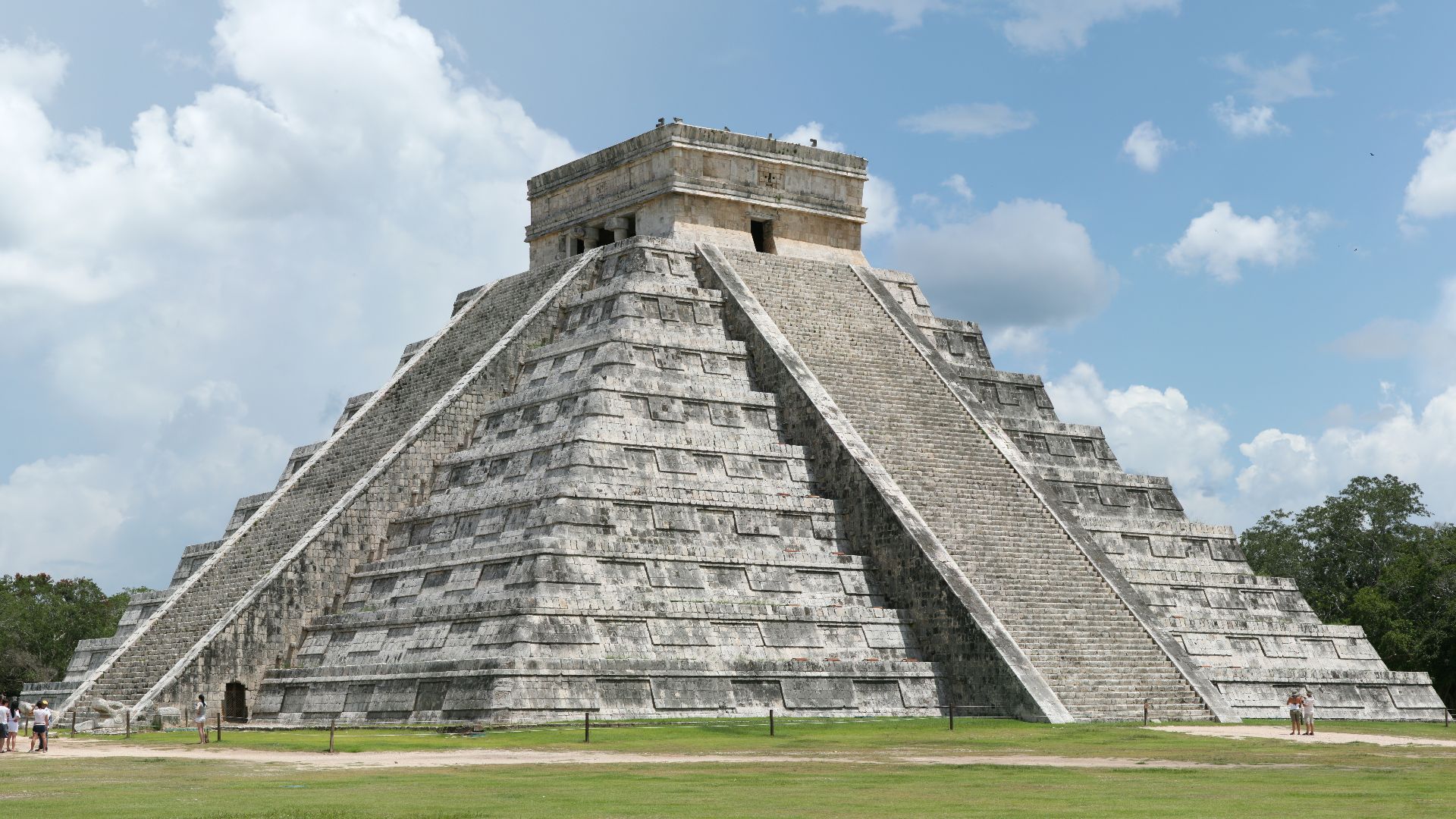 Daniel Schwen, Wikimedia Commons
Rituals And The Underworld
Twins hold special resonance in Maya cosmology, especially in the sacred narrative found in the Popol Vuh. That myth tells of divine twins who descend into the underworld, suffer sacrifice, only to be reborn and become the fabled “Hero Twins”. The presence of identical twins among the sacrificial victims at Chichen Itza suggests this was not random cruelty but a deeply symbolic act. By sacrificing related boys, possibly twins or brothers, the Maya may have sought a ritual echo of the myth: a mortal re-enactment of divine sacrifice to open a channel to the underworld, appease their gods, or renew life and fertility. Subterranean structures such as chultuns and caves were long associated with passage to the underworld, so this chultun may have served as a physical and spiritual portal.
Genetic Heritage And Lost Histories
The modern descendants of the ancient Maya are not cut off from this history. Genetic comparisons link the DNA of these sacrificial children to people living today in the nearby village of Tixcacaltuyub, suggesting an unbroken ancestral lineage spanning more than a millennium. Additionally, researchers identified immune-system genes in present-day Maya that likely arose in response to epidemics after the Spanish conquest, a grim legacy of colonial-era disease. The ancient genomes provide a baseline: by comparing them with modern DNA, scientists inferred how epidemics reshaped the genetic landscape of the region over centuries.
This adds unexpected depth: the same individuals once chosen for ritual sacrifice echo today in living communities, not just culturally, but biologically. Given the absence of trauma marks on the bones, the actual cause of death remains uncertain. Poison? Suffocation? Illness? The evidence so far can’t be confirmed. However, the consistency in age, gender, familial relations, and burial context argue strongly for an intentional, ritualized practice rather than random fatality. The revelation from ancient DNA that Chichen Itza’s child sacrifices followed a deliberate pattern of male kinship and forced a rethink of long-held assumptions about Maya ritual life, which archaeologists studied for decades. It invites deeper reflection on how myth, family, and belief intertwined in a city whose stones still rise, centuries later, while encouraging researchers to revisit earlier interpretations shaped by limited evidence. This expanded genetic picture pushes the conversation forward, urging you to consider how ritual, ancestry, and community memory shaped practices that left marks still recognizable.
 Escalante-Pasos, Wikimedia Commons