America's Most Notorious Prison

America's Most Notorious Prison


April 1, 2025 | Samantha Henman

America's Most Notorious Prison


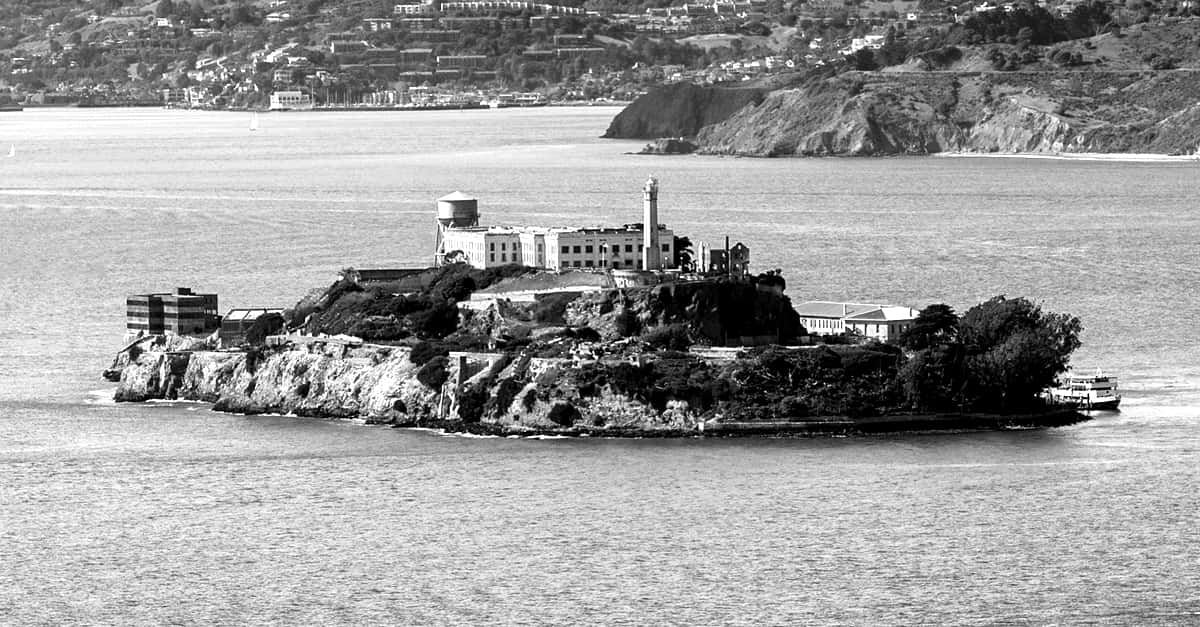
Although Alcatraz gained a reputation as the toughest prison in the U.S. due to brutally inhumane conditions—that wasn’t the reason the prison was ultimately shut down.

READ MORE

Mggallery

Archaeologists excavated a chultun mass grave in Mexico, but it was DNA analysis that found the twin boys who echo the Maya myth of the Hero Twins.

A hidden chamber beneath the famed ruins of Chichen Itza has yielded one of the most haunting and illuminating archaeological discoveries in decades. In 1967, builders unearthed an underground cistern near the site’s sacred sinkhole, packed with the remains of over 100 children. Recent DNA work on 64 of those remains, published in 2024, reveals a dramatic new truth: every one was a young boy, including two sets of identical twins. This isn’t just a cold scientific footnote. It actually offers a deep, human echo from a civilization many thought they understood
January 2, 2026 Marlon Wright

Thinking About Retiring? These Are The States That Will Cost You The Most

From housing and healthcare costs to taxes and everyday living expenses, where you choose to spend your later years has a massive impact on how far your savings will go. Based on recent retirement cost analyses and data on savings needed to retire comfortably, here are the 20 most expensive states to retire in and how much you’d likely need saved to call that state home.
January 2, 2026 Peter Kinney

Foodies Around The World Say These Countries Have The Best Street Food

Street food is where a country’s culinary soul shines brightest, sometimes humble, always delicious, and packed with culture. Based on travel guides, global street-food rankings, and foodie consensus from around the world, here are 20 countries where street food is a must-try experience, ranked from delightfully flavorful to undeniably the best.
January 2, 2026 Quinn Mercer
La Alcudia - Fb

Eight seasons of exhaustive digs at an Ancient Roman site in Spain reveal a sprawling Roman bath complex with a giant natatio and vivid mosaics.

Just outside Elche, calm fields and gentle hills sit over an unexpected secret. La Alcudia conceals its history so thoroughly that its depth becomes visible only when the soil is opened for all to see. Layers of time lie there like folded pages, each preserving traces of earlier worlds. Across eight digging seasons, archaeologists uncovered a Roman bath complex of remarkable scale. Baths were shared throughout the empire, yet few in Spain survive in such size or with such preservation. The discovery revealed not a modest installation but a sophisticated public space shaped for regular use and community life. When excavation began, the extent of the complex remained unknown, but its centerpiece soon emerged: a massive natatio, an open-air swimming pool large enough to evoke scenes of Roman citizens moving through the water beneath open sky. Surrounding rooms traced a full bathing sequence, from warm spaces to cold plunges and steam rooms, all supported by a hypocaust system circulating heated air beneath the floors. With each season, new chambers and pools appeared, exposing a site built for a substantial population and functioning as an essential gathering place for relief, routine, and social connection.
January 1, 2026 Marlon Wright
Untitled Design (23)

Researchers re-opened a 5,000-year-old tomb in Andalusia and found ivory and amber from thousands of miles away, proof of prehistoric trade routes.

Archaeologists in southern Andalusia recently uncovered a massive stone tomb that dates back an astonishing 5,000 years. The structure, buried beneath layers of soil near the town of Teba, appears far more elaborate than most prehistoric graves found in the region.
January 1, 2026 Alex Summers
812645214 Inrap President Dominique Garcia

An INRAP crew in the south of France has unearthed rows of planting pits from a Greek-era vineyard not far from the ancient Greek colony of Massalia.

As INRAP teams opened trenches in Marseille’s northern districts, the work initially looked like another routine intervention beneath busy streets. Layers of asphalt and industrial debris came away as expected, each tied to the city’s long expansion. But then a curious alignment appeared: evenly spaced pits forming a geometry too deliberate to ignore. What seemed like a minor irregularity expanded with every foot of soil removed. By the time the full pattern emerged, archaeologists realized they were no longer dealing with isolated traces. They were facing the layout of a Greek-era vineyard positioned 1.2 miles beyond ancient Massalia.
December 31, 2025 Marlon Wright