

America Goes Big.
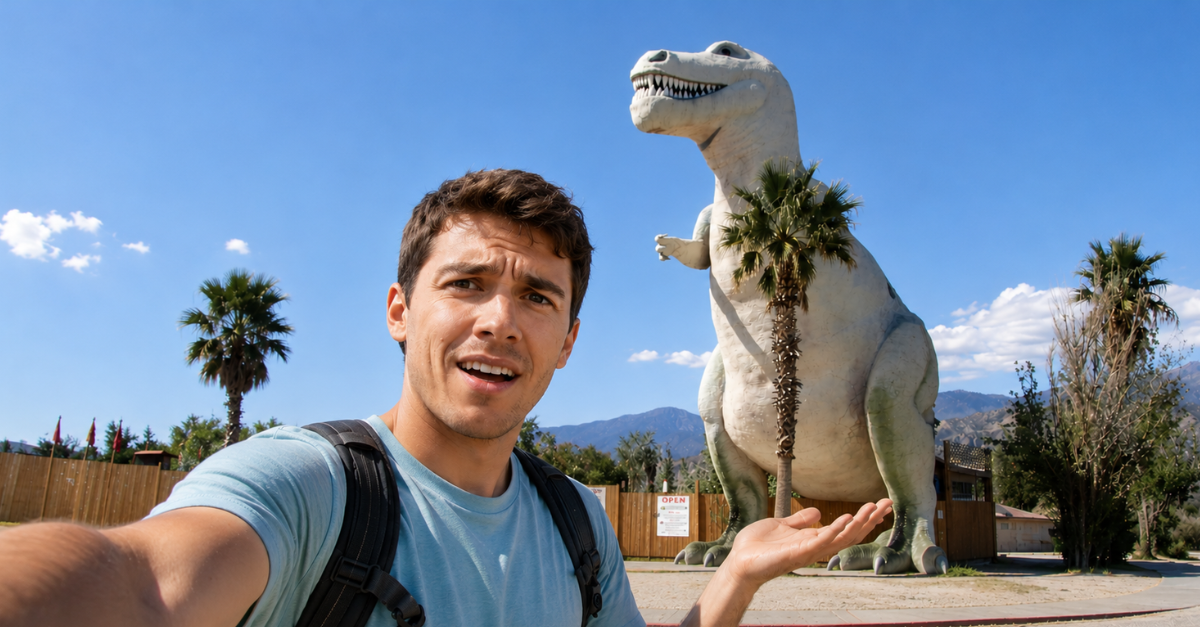
Canadians certainly have their own giant statues and quirky highway stops, but the United States turned roadside spectacle into something close to an art form. Drive long enough and you may encounter buried Cadillacs, a palace decorated with corn, an elephant you can walk inside, and objects whose main qualification for fame is being enormous.
America Makes Weirdness Huge
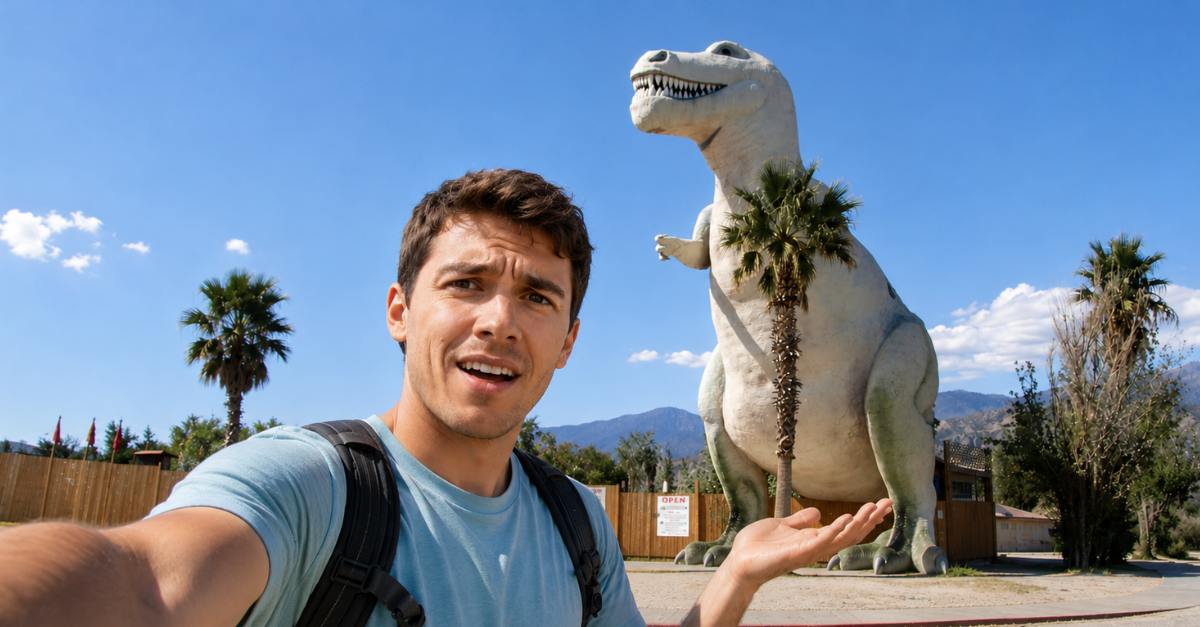
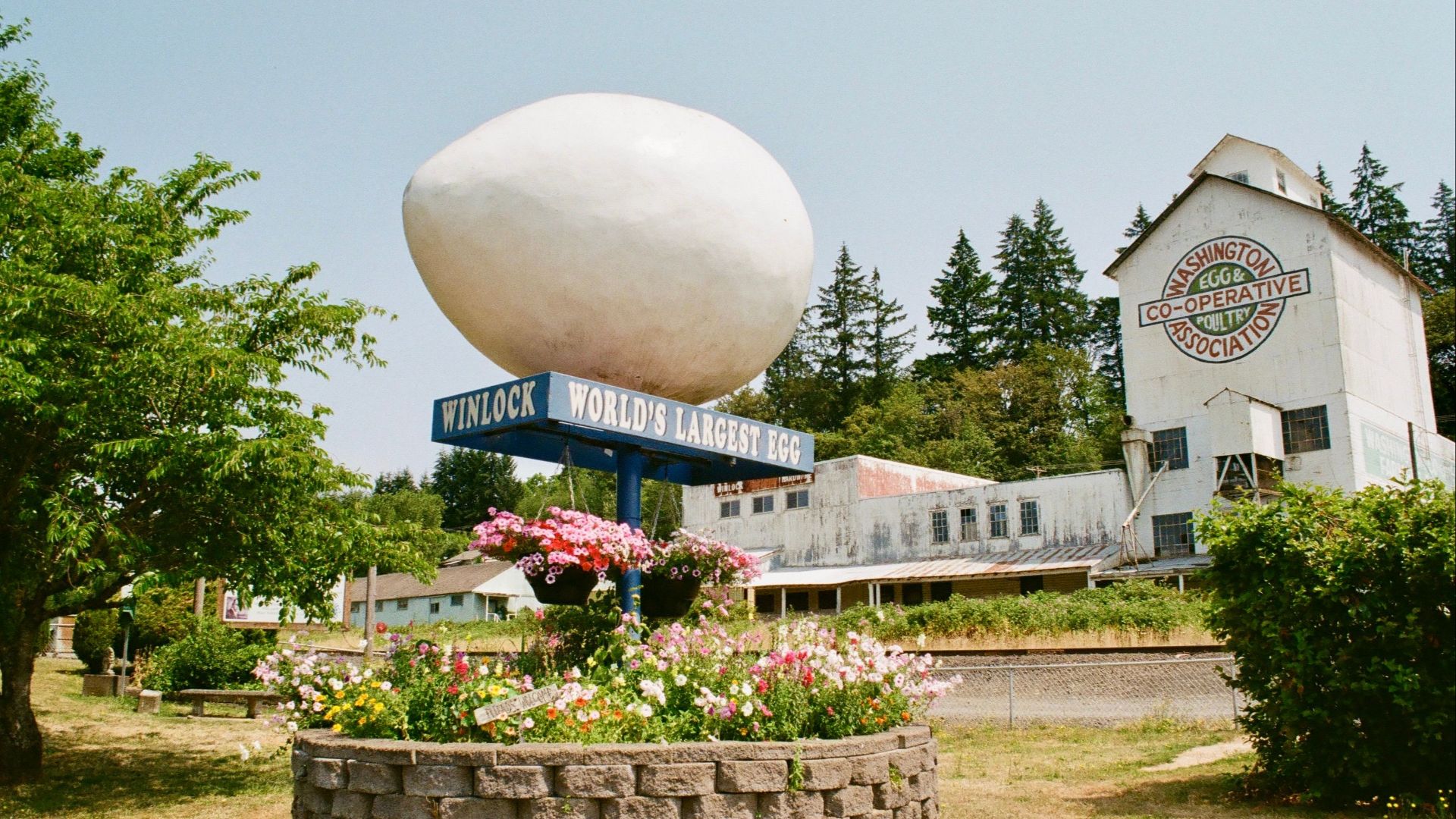
The first surprise is how often an ordinary object becomes an attraction simply by being made gigantic. Smithsonian has documented American roadside monuments shaped like enormous food, including pistachios, strawberries, eggs, and donuts. The scale is part advertisement, part photo opportunity, and part challenge to every passing driver to stop.
Route 66 Made It A Tradition
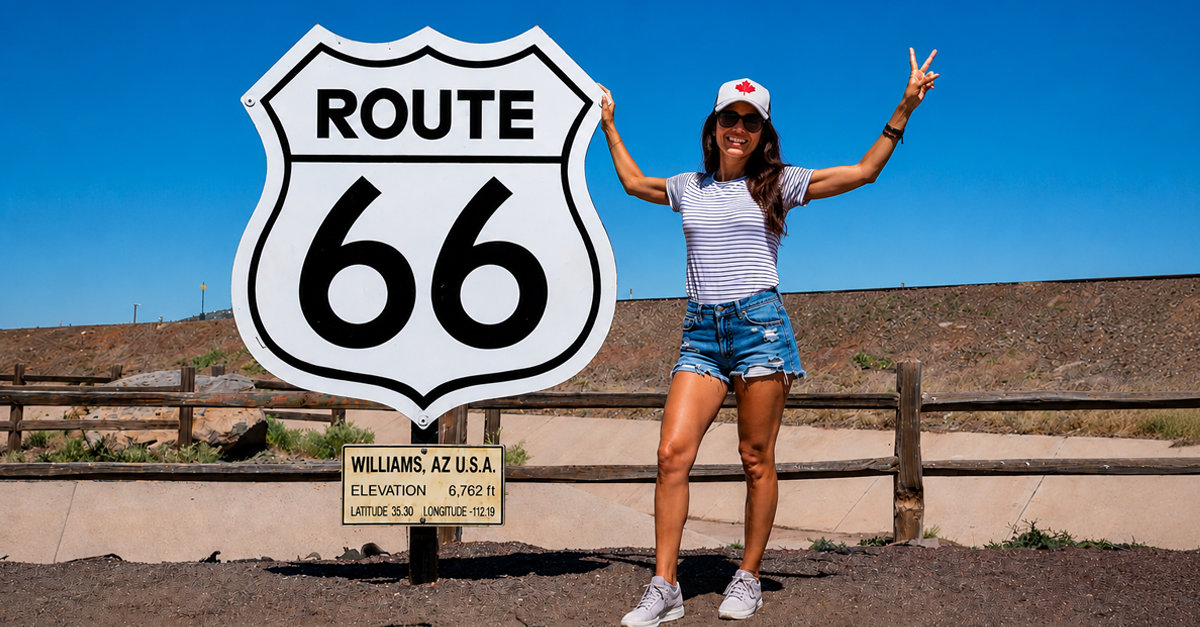
Much of this culture grew alongside the rise of automobile tourism. The National Park Service says Route 66 businesses expanded rapidly as increasing traffic created demand for fuel, food, lodging, and attractions. Eventually, the journey itself became part of the entertainment rather than merely transportation between destinations.
 Wirestock Creators, Shutterstock
Billboards Are Part Of The Show
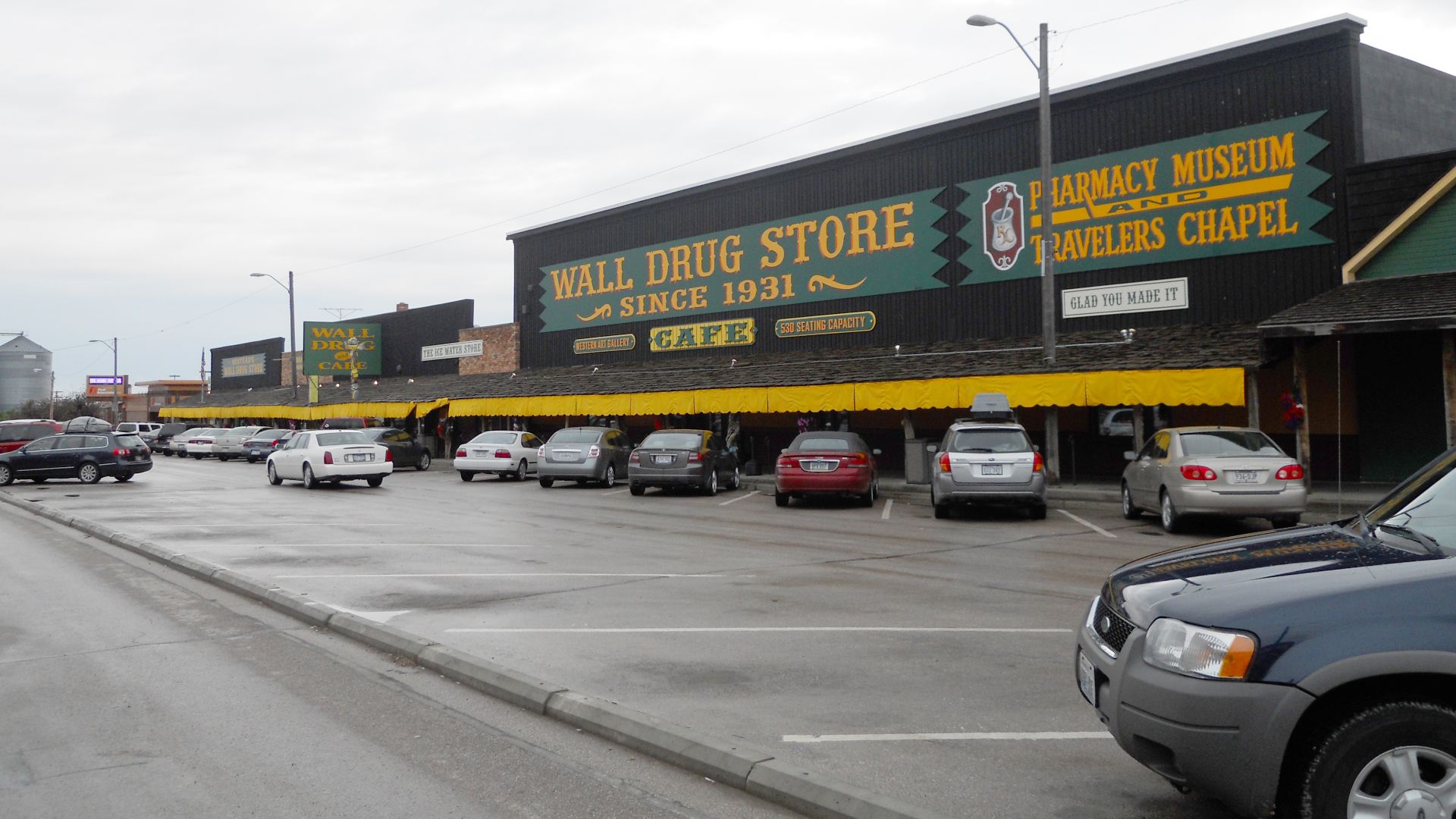
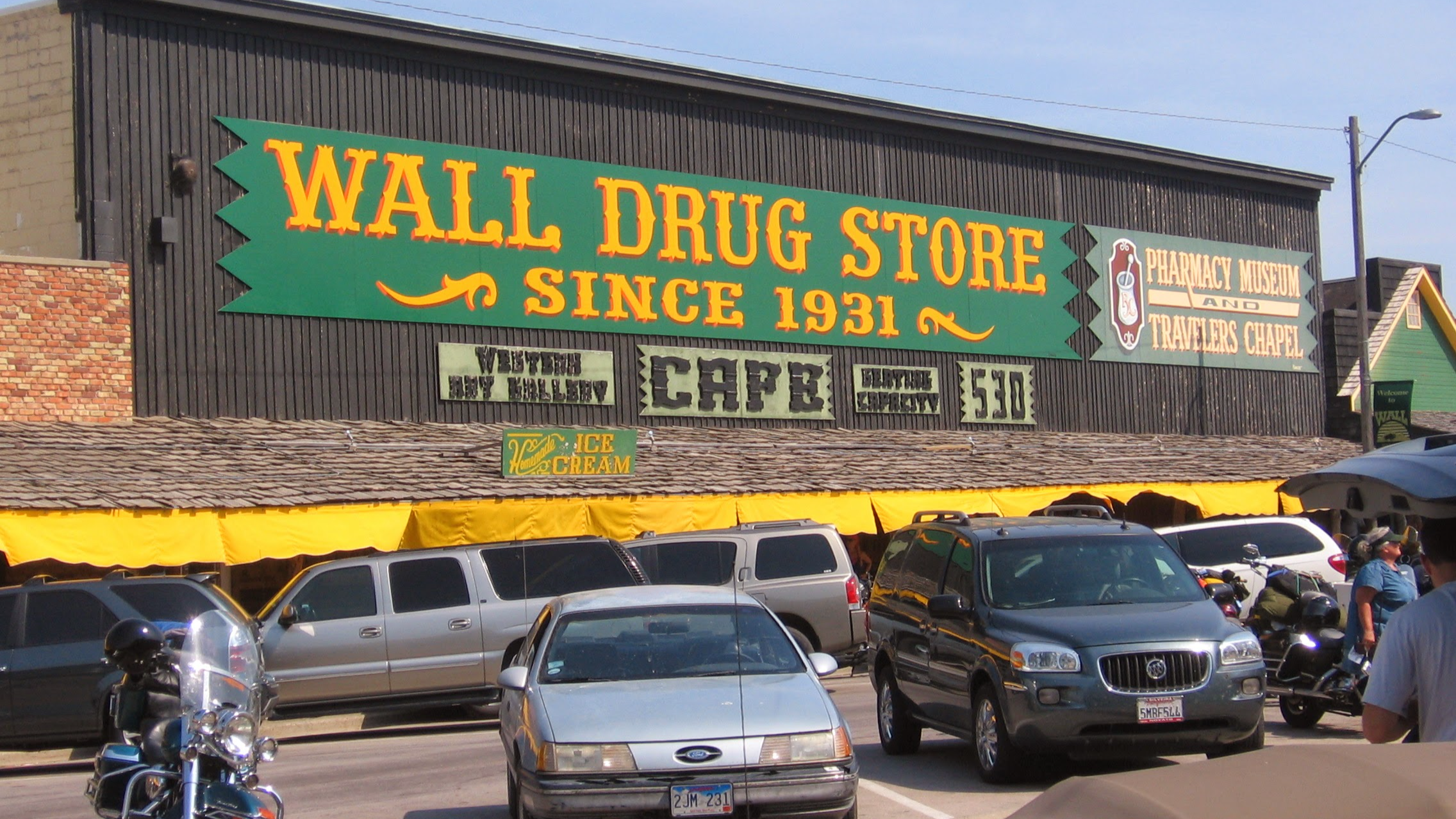
Some attractions begin long before you reach the parking lot. Wall Drug in South Dakota famously built its reputation through roadside signs advertising free ice water to passing motorists. The signs transformed a struggling small-town pharmacy into a destination visited by millions.
 Konrad Summers, Wikimedia Commons
Wall Drug Starts Miles Away
Wall Drug does not behave like an ordinary pharmacy anymore. The business describes itself as a highway oasis containing dining, shopping, activities, souvenirs, and visitor services. By the time travelers arrive, the attraction feels more like a miniature theme complex than a place to pick up toothpaste.
Free Ice Water Built An Empire
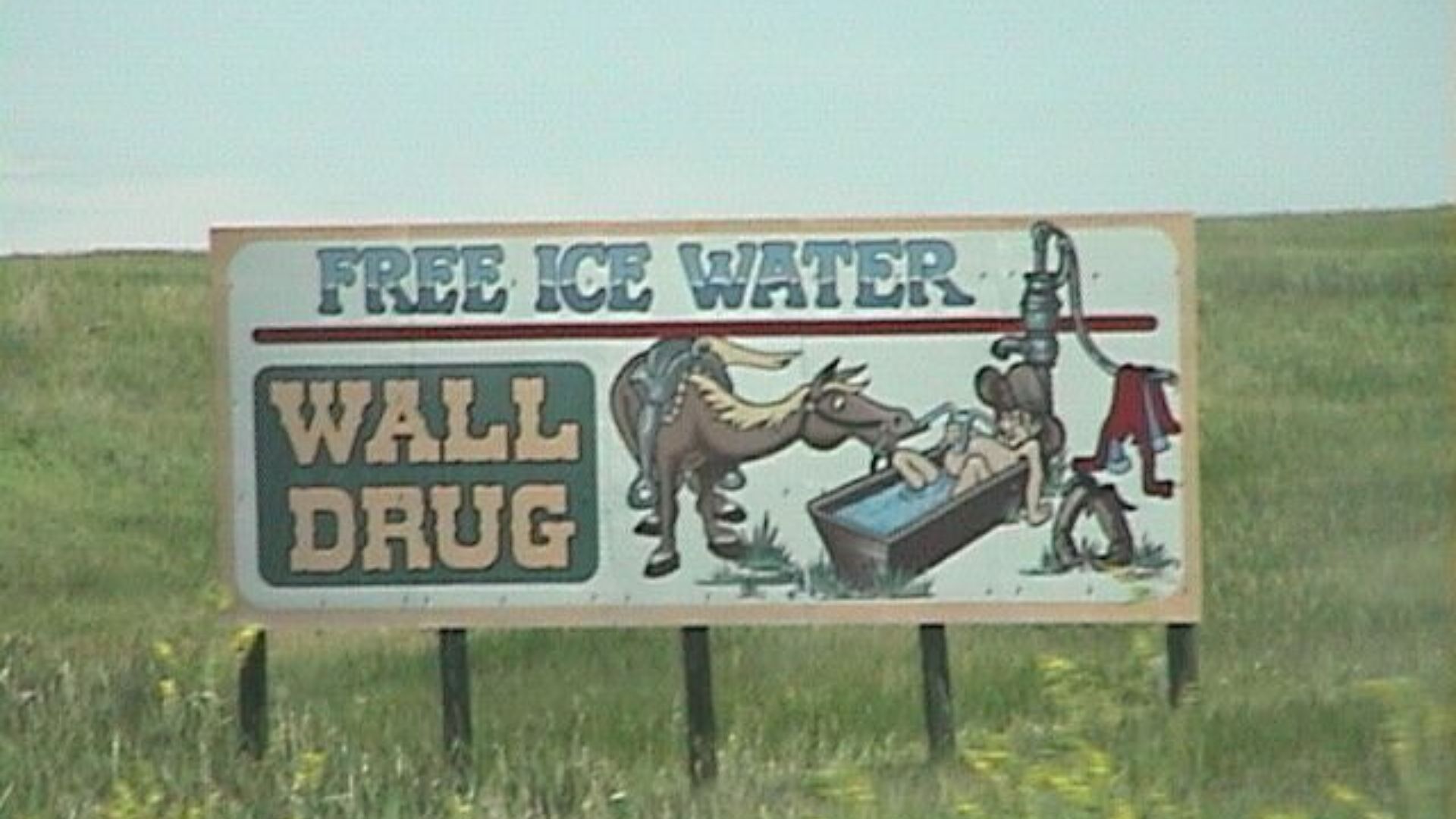
The strangest part of the Wall Drug story may be how modest the original marketing idea was. Dorothy Hustead suggested advertising free ice water to hot, tired travelers in 1936, and motorists began stopping. The business still provides free ice water today while drawing roughly two million visitors annually.
 The original uploader was Jkeiser at English Wikipedia., Wikimedia Commons
Corn Became Architecture
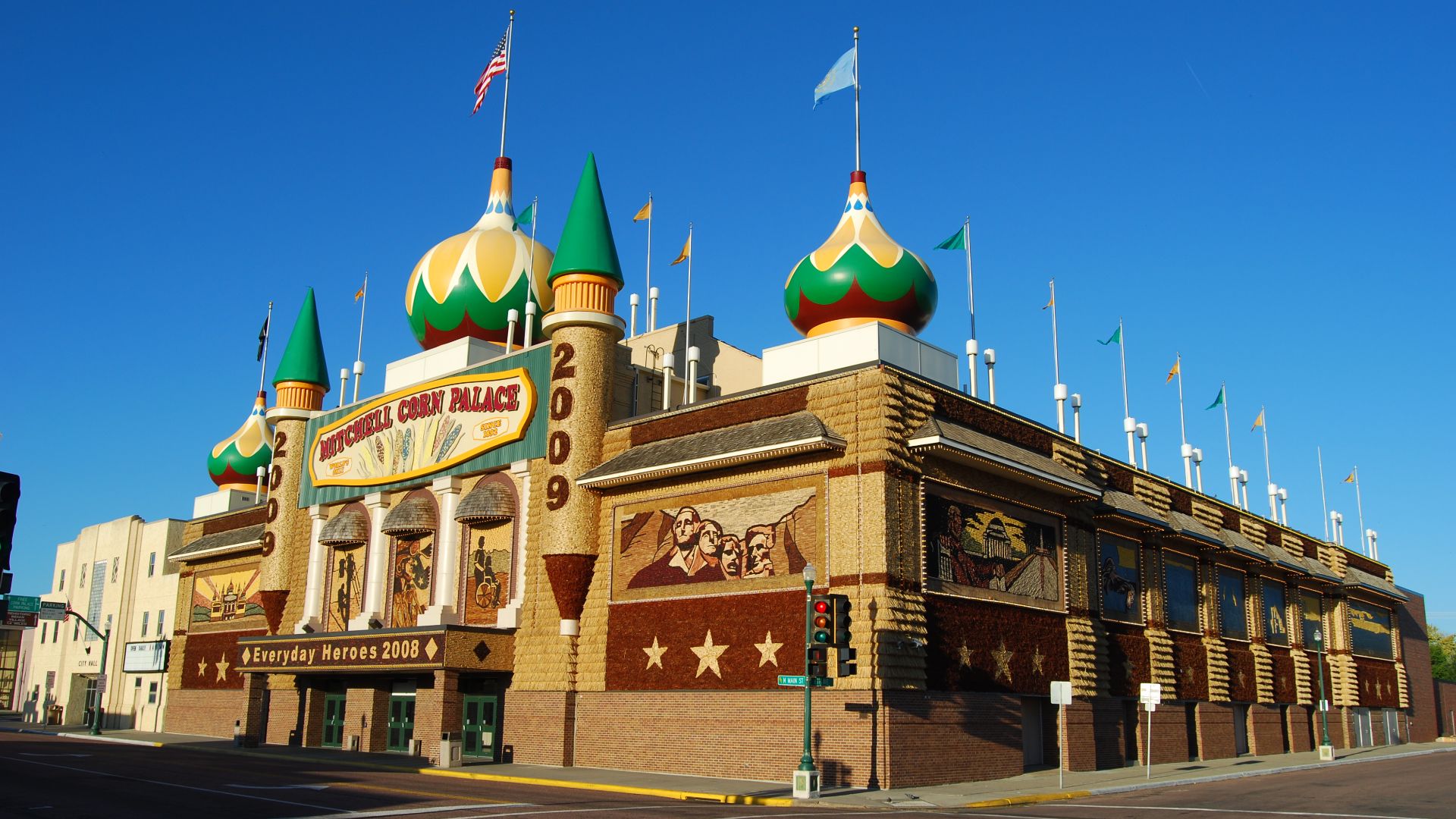
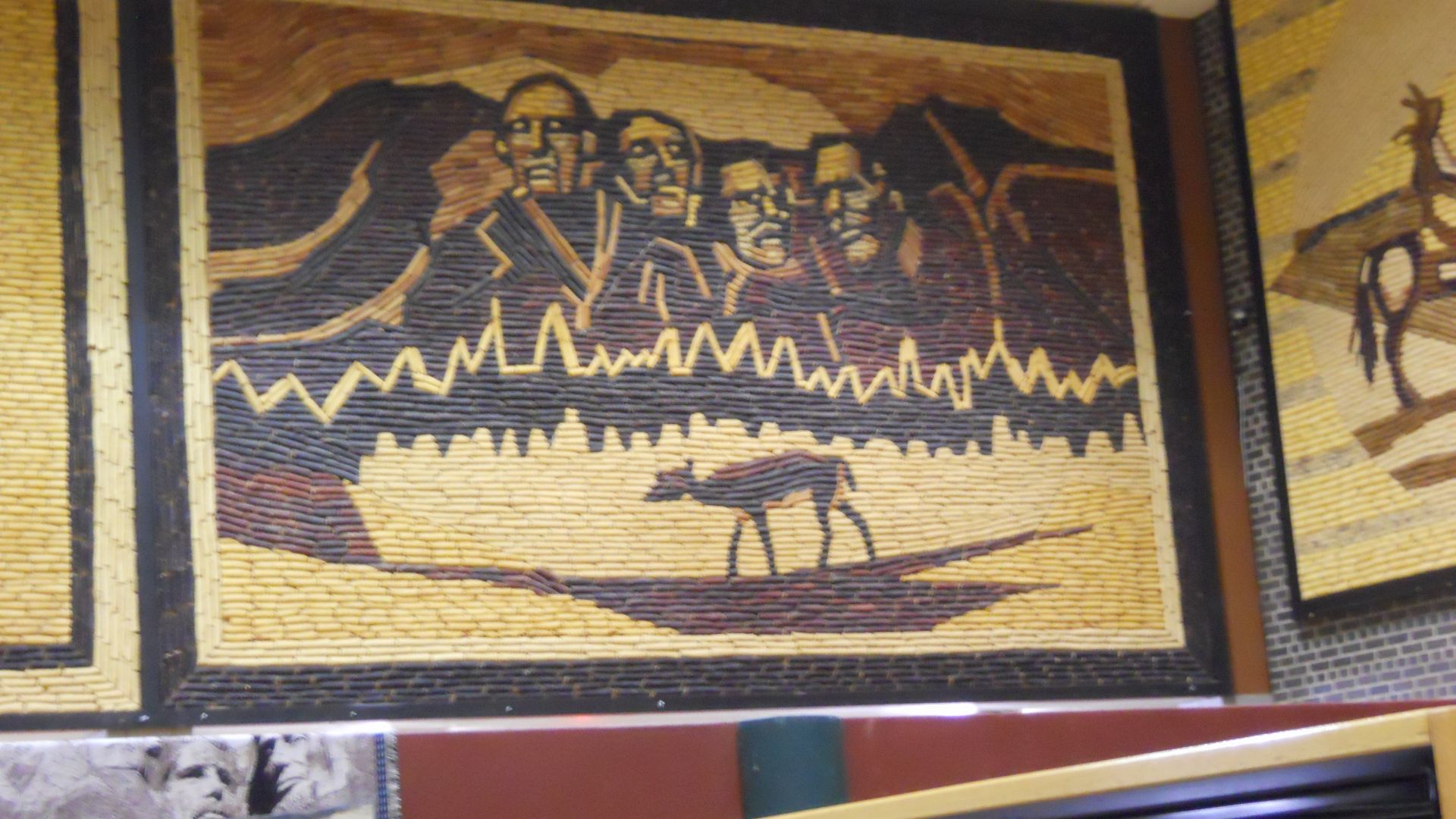
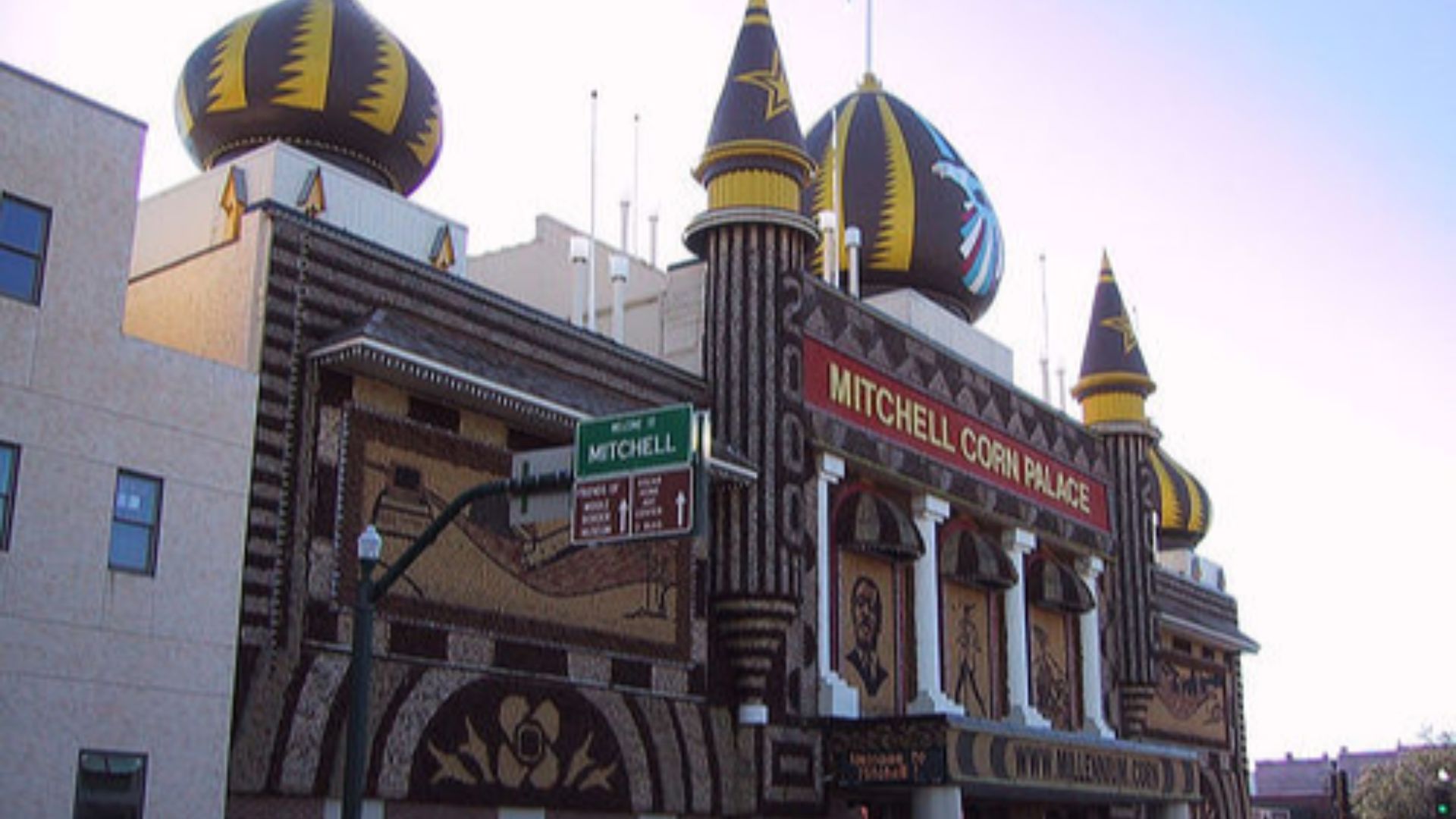
Mitchell, South Dakota, decided that corn belonged on a palace. The first Corn Palace opened in 1892 as a way to demonstrate the region's agricultural productivity and celebrate the harvest. Today, the building remains both a functioning event venue and one of the state's best-known tourist attractions.
The Corn Palace Keeps Changing
The exterior decorations are not simply permanent sculptures painted to resemble crops. Corn and other plant materials are used to create elaborate murals and designs on the building. The attraction continues a tradition that began more than a century ago, making agricultural decoration part of the spectacle.
 Konrad Summers from Santa Clarita (Valencia) , California, USA, Wikimedia Commons
Twine Became A Destination
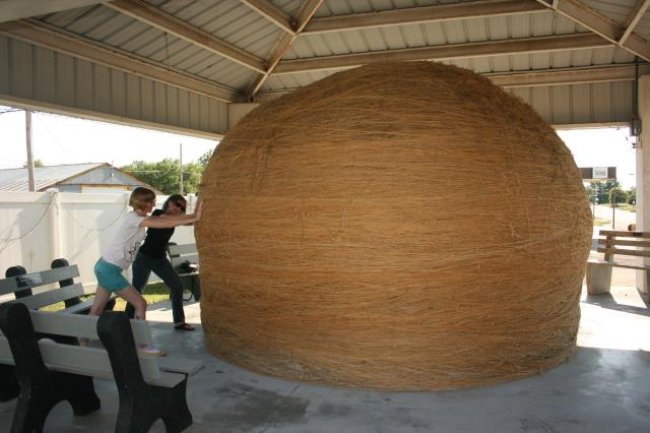
Cawker City, Kansas, is home to an enormous community-built ball of sisal twine. Kansas Tourism says the attraction contains millions of feet of twine and weighs many thousands of pounds. There is no thrill ride attached because the giant ball itself is the reason people stop.
 Andrew Bogott, Wikimedia Commons
Visitors Can Help Grow It
Most monuments become less interactive as they grow older, but the Cawker City twine ball follows a different model. Kansas Tourism says an annual Twine-a-Thon allows people to add more material to the attraction. That means tourists are not merely photographing the giant object because they can literally help make it bigger
. TigerPaw2154, Wikimedia Commons
“World's Largest” Is A Genre
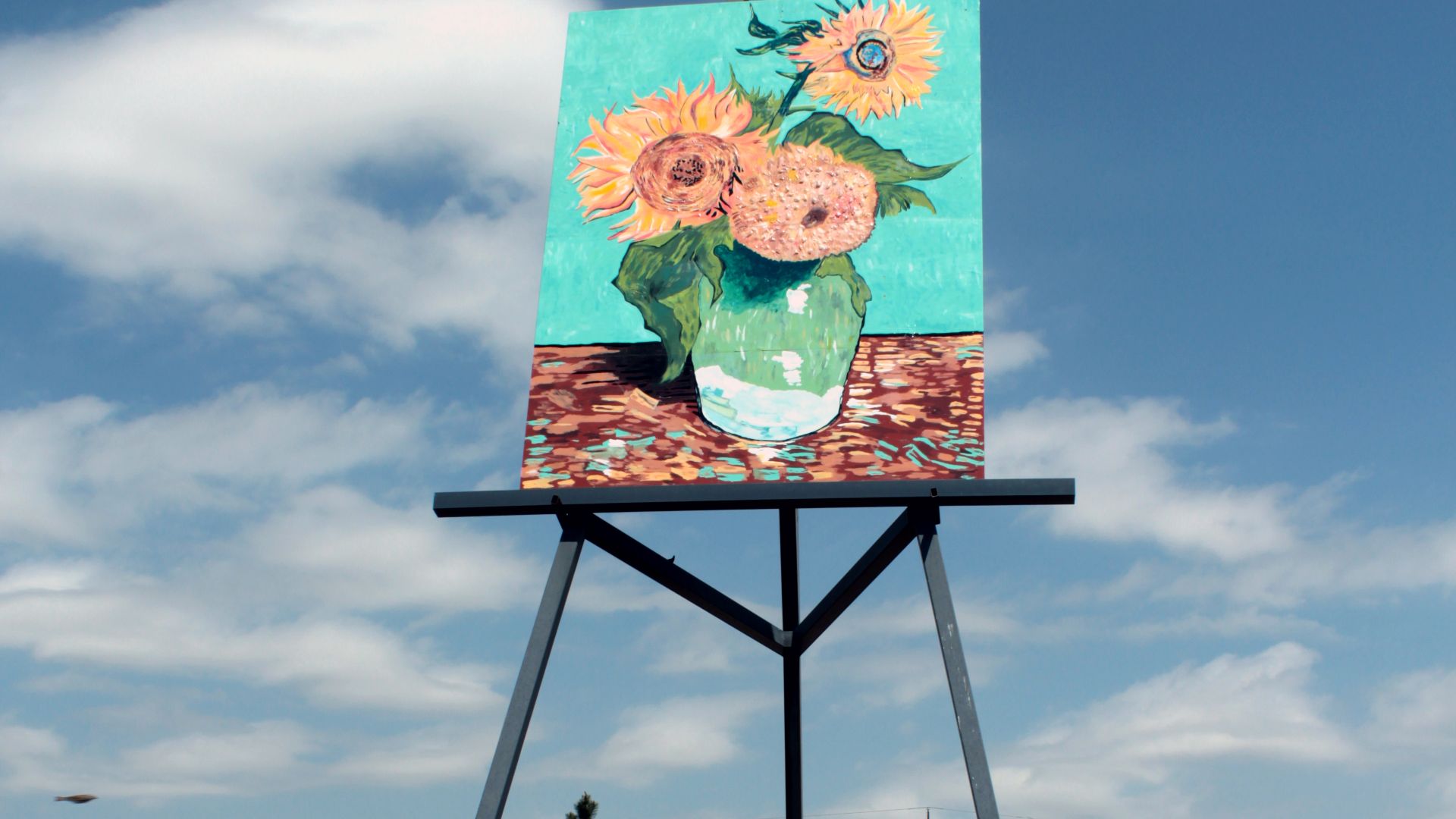
Across the United States, claiming enormous scale has become a recognizable roadside strategy. Kansas alone promotes giant objects including a huge belt buckle, an enormous Van Gogh reproduction, and its famous ball of twine. The appeal is wonderfully simple because travelers immediately understand why the thing deserves a photograph.
 Ayleen Gaspar from Los Angeles, Wikimedia Commons
A Pistachio Gets A Monument
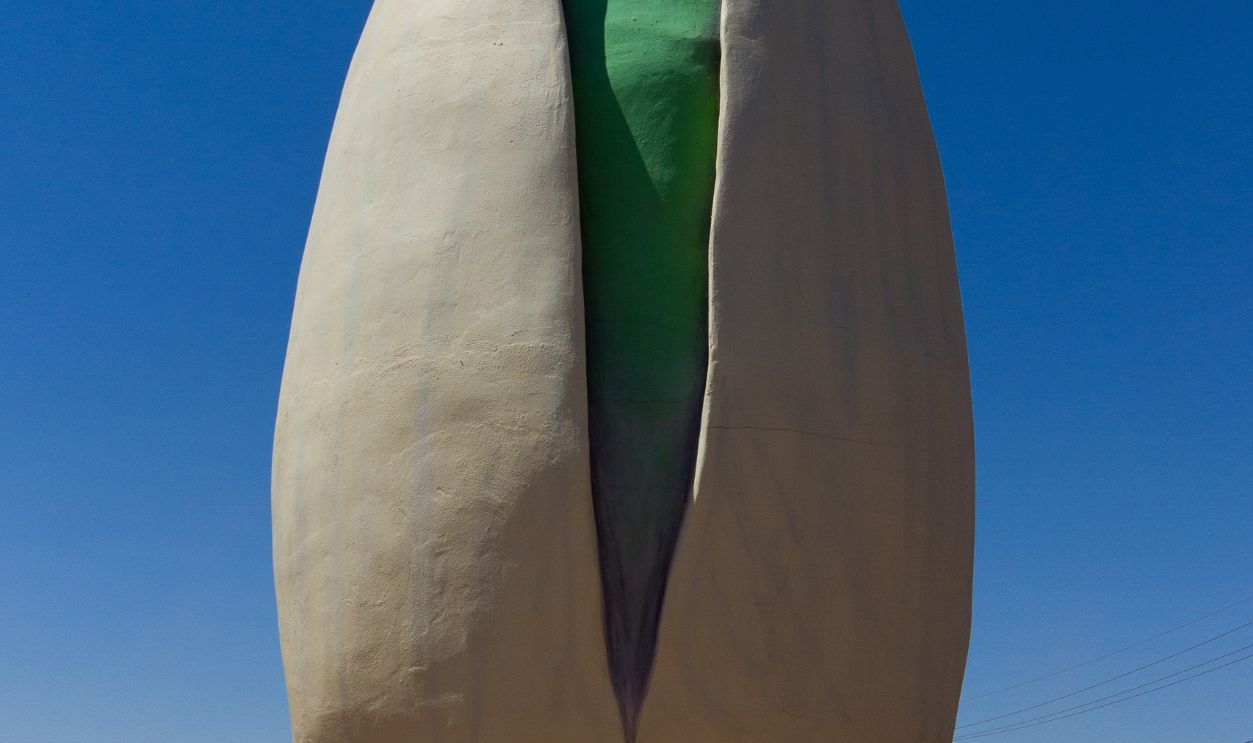
Alamogordo, New Mexico, offers a 30-foot pistachio outside PistachioLand. Local tourism officials say it was built as a memorial to farm founder Thomas McGinn after his death in 2008. Somehow, a sincere family tribute also became exactly the kind of oversized highway spectacle American road trips specialize in.
A Rocking Chair Needs Engineering
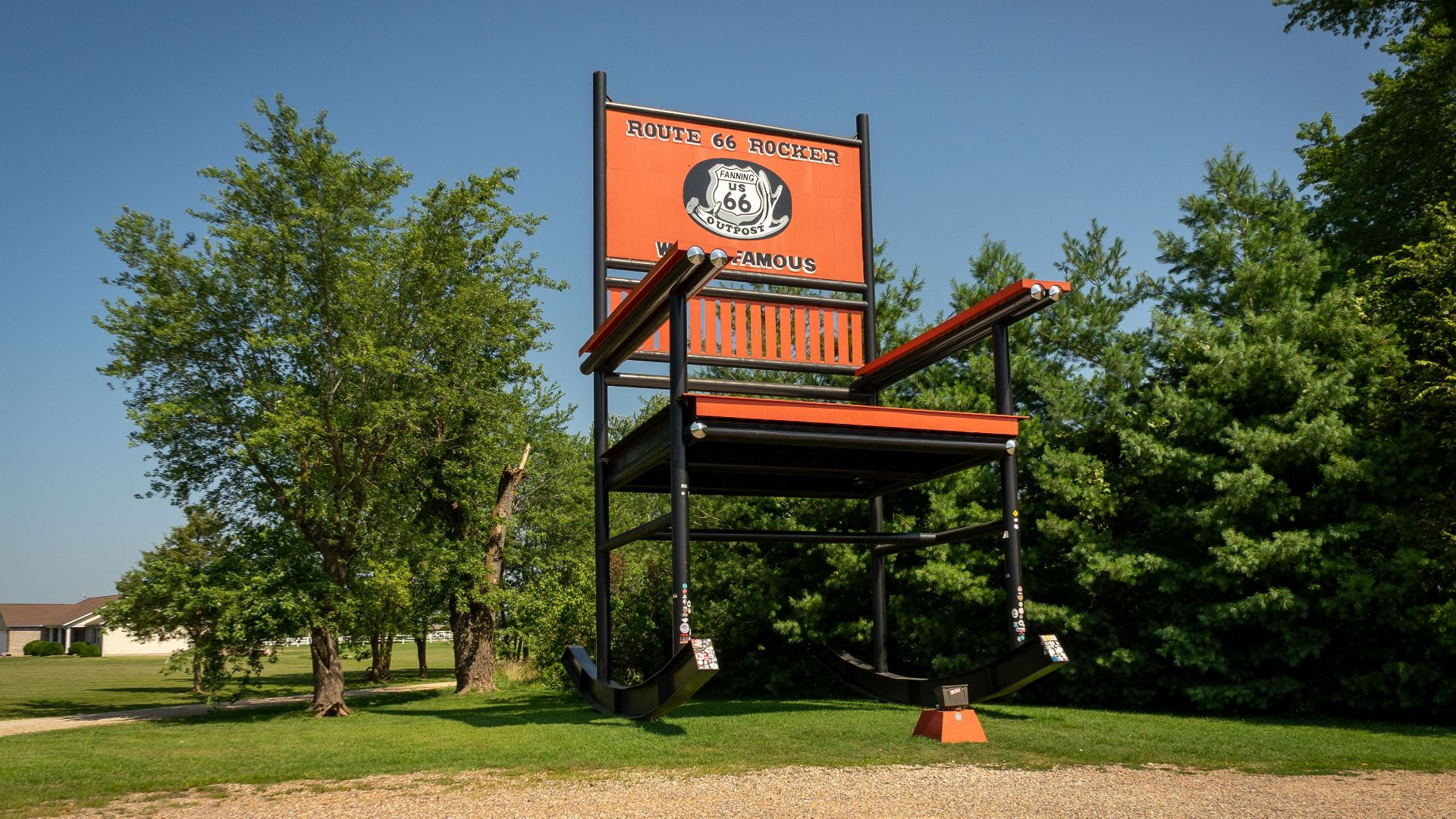
Casey, Illinois, takes giant-object tourism seriously enough to have a massive rocking chair. The city says the structure rises 32 feet 6 inches and weighs 46,200 pounds. At that point, calling it lawn furniture feels increasingly inaccurate.
Stonehenge Gets Rebuilt With Cars
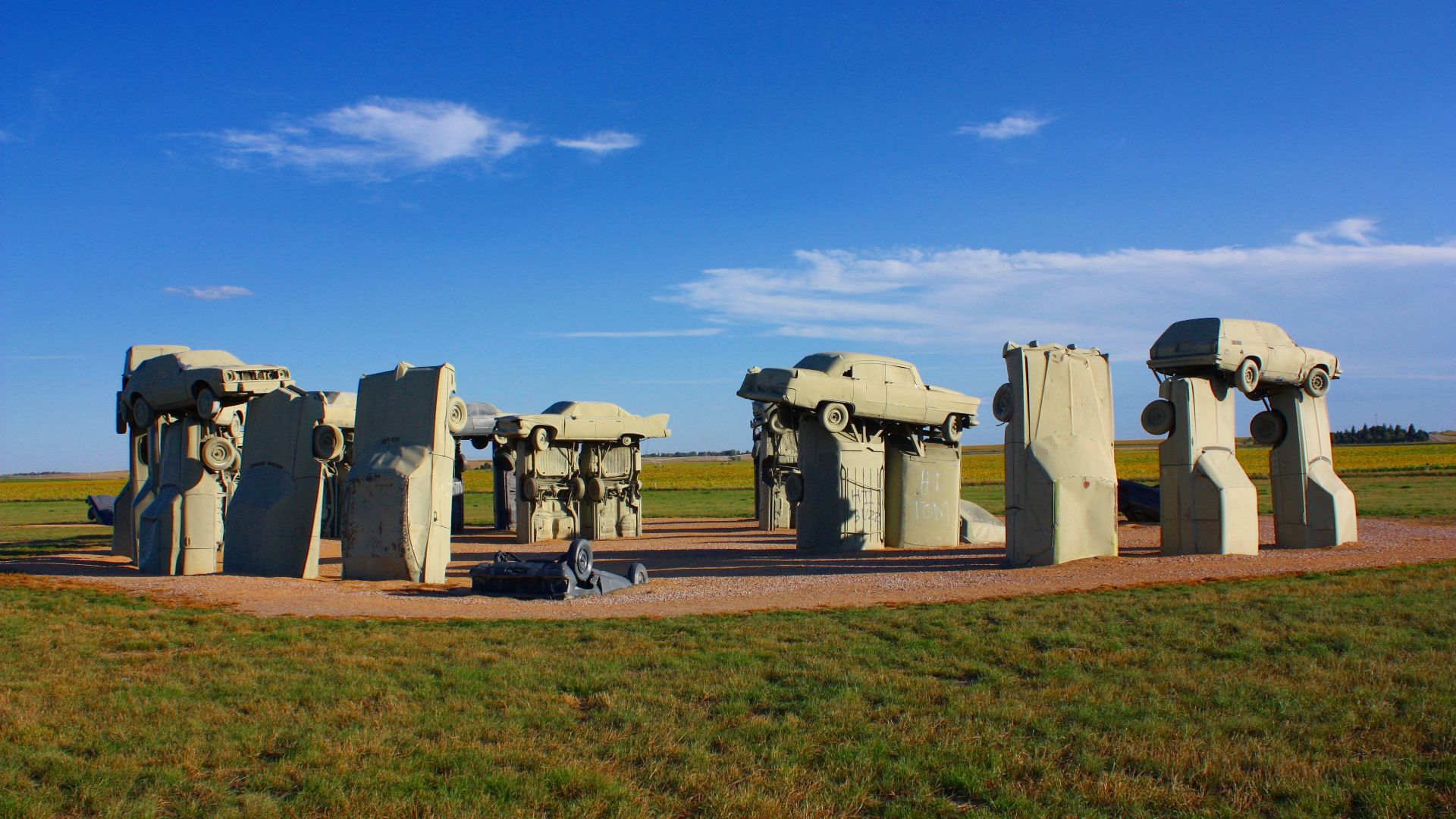
Nebraska's Carhenge recreates the basic form of Stonehenge using old automobiles. Nebraska Tourism says Jim Reinders and his family constructed it in 1987 as a memorial to his father during a family reunion. It is open year-round and free to visit, which makes the concept even more delightfully matter-of-fact.
 Jacob C. Kamholz, Wikimedia Commons
Cadillac Ranch Buries The Cars
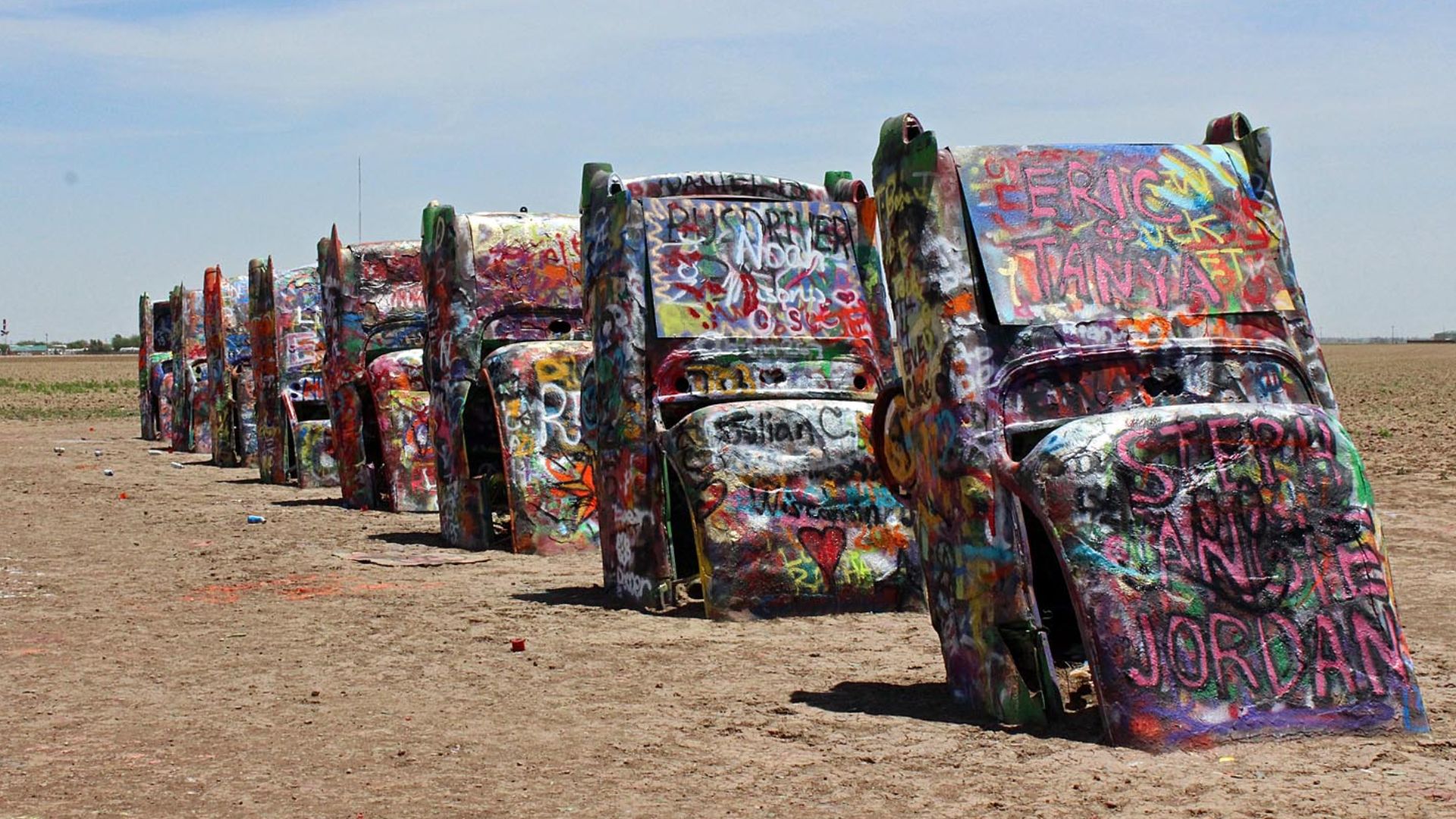
Near Amarillo, Texas, ten Cadillacs are planted nose-down in a field beside Interstate 40. The installation was created by the art group Ant Farm in 1974 and became closely associated with Route 66 road-trip culture. It is open around the clock and does not charge admission.
 scott1346 from Mechanicsville, MD, USA, Wikimedia Commons
Visitors Are Invited To Paint It
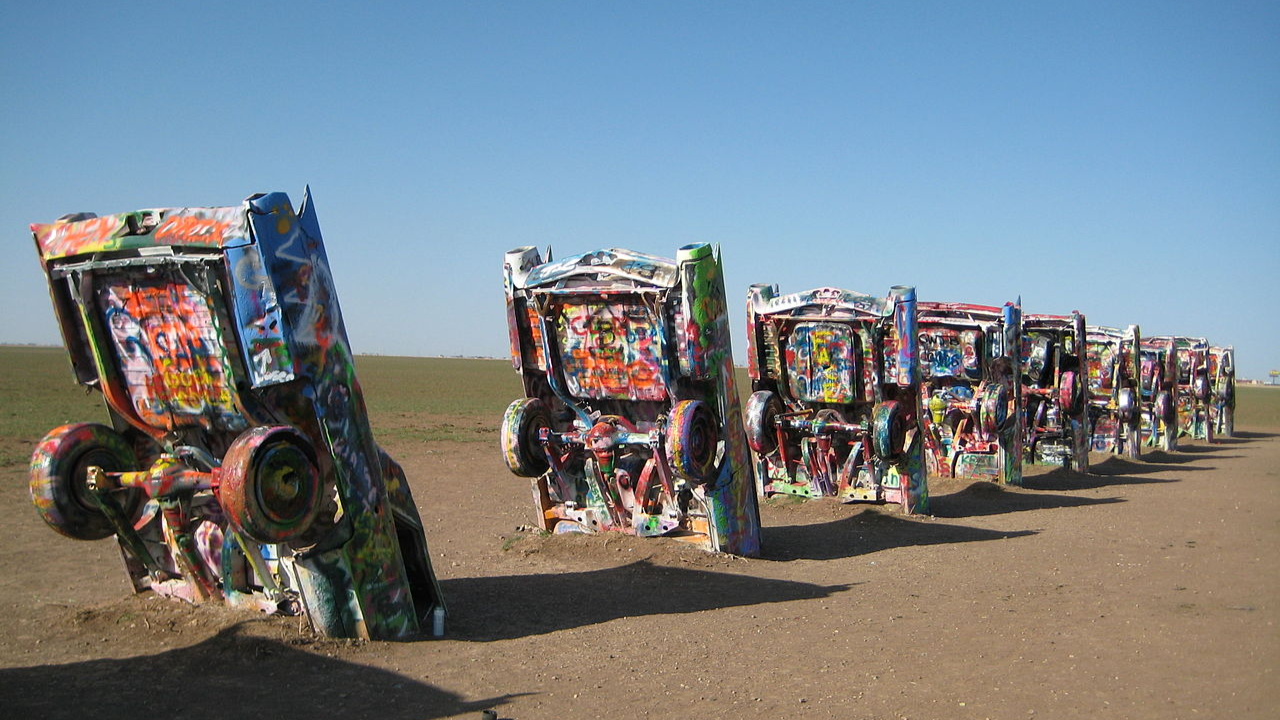
Most famous artworks come with strict instructions not to touch anything. Cadillac Ranch reverses that expectation because visitors are encouraged to add spray paint to the cars. The constantly changing layers of paint make tourists participants in the artwork rather than passive spectators.
 Richie Diesterheft, Wikimedia Commons
Dinosaurs Guard The Highway
California's Cabazon Dinosaurs prove that subtlety is optional when trying to attract motorists. The site features the enormous Dinny and Mr. Rex alongside more than 100 additional dinosaur figures. One of its gift stores is even located inside the large Apatosaurus, making the souvenir shop part of the sculpture.
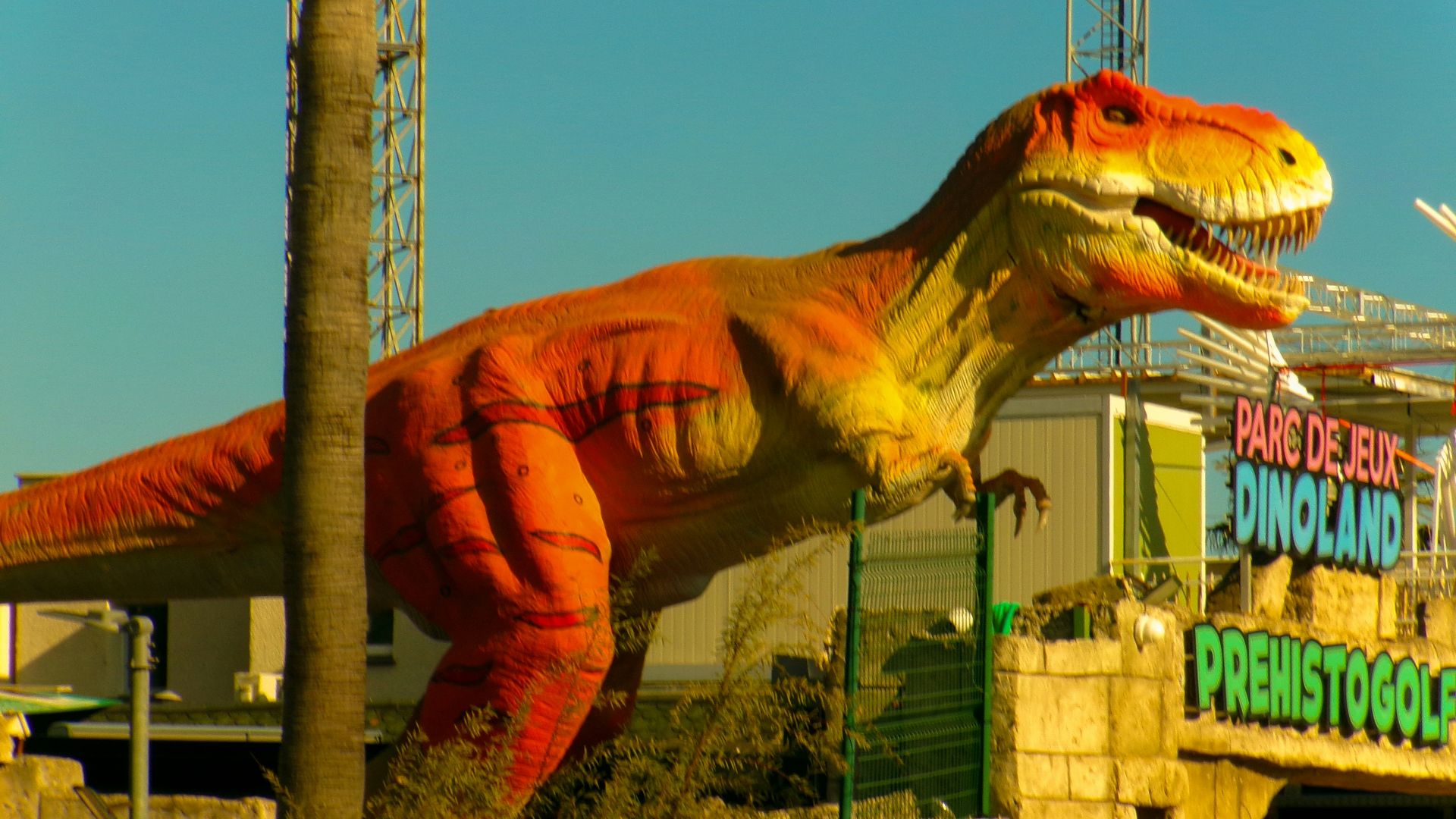
You Can Walk Inside An Elephant
Lucy the Elephant has been standing in Margate, New Jersey, since the 19th century. The six-story elephant-shaped structure dates to 1881 and became a National Historic Landmark in 1976. Visitors can take guided tours inside Lucy, turning a giant animal-shaped building into an actual architectural experience.
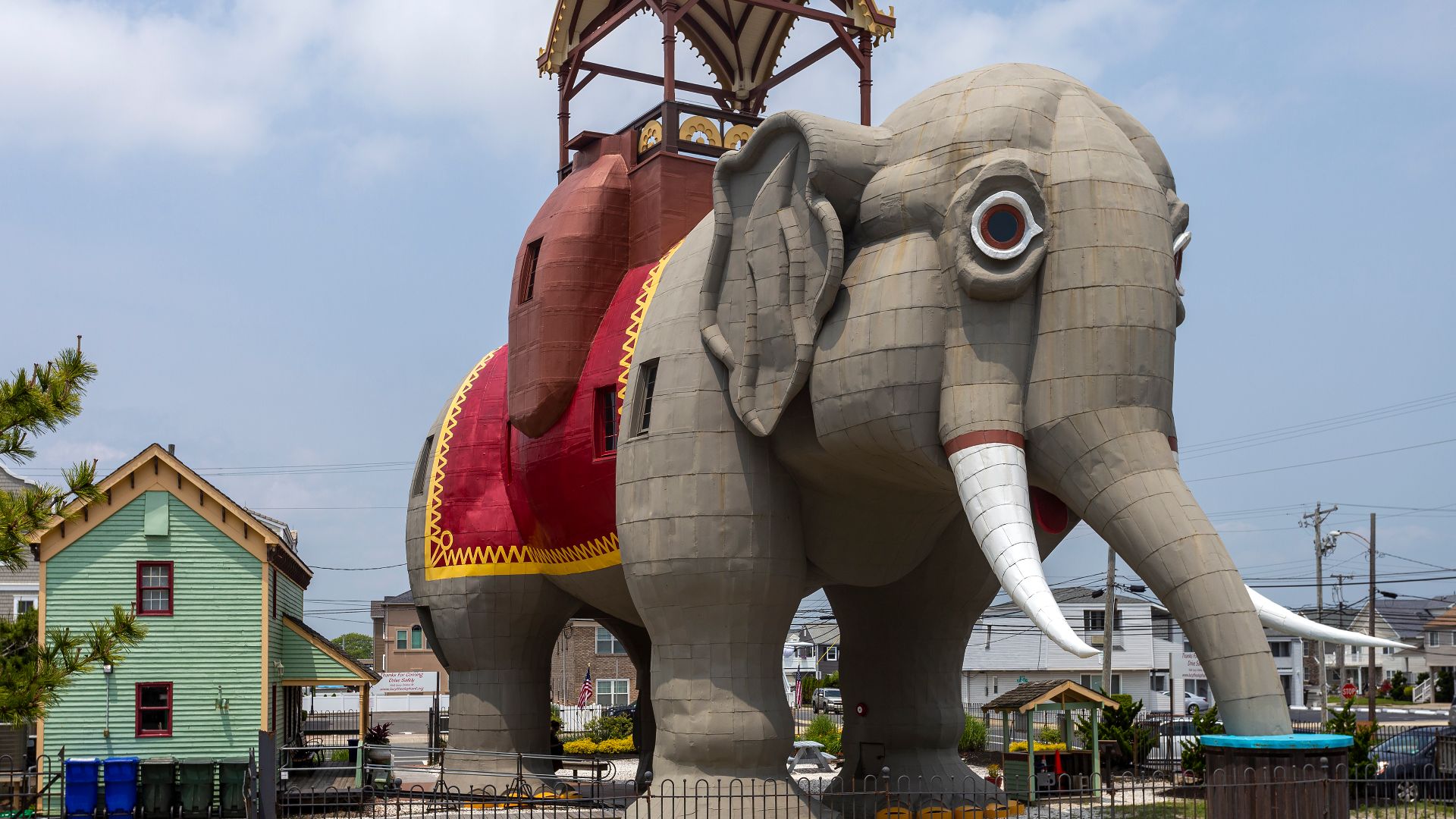
Gravity Gets Its Own Tourist Stop
The Mystery Spot near Santa Cruz, California, markets a short tour built around unusual visual and spatial effects. The attraction operates year-round and warns that busy weekends can become crowded enough that advance reservations are strongly advised. Even an intentionally mysterious roadside stop now sometimes requires appointment planning.
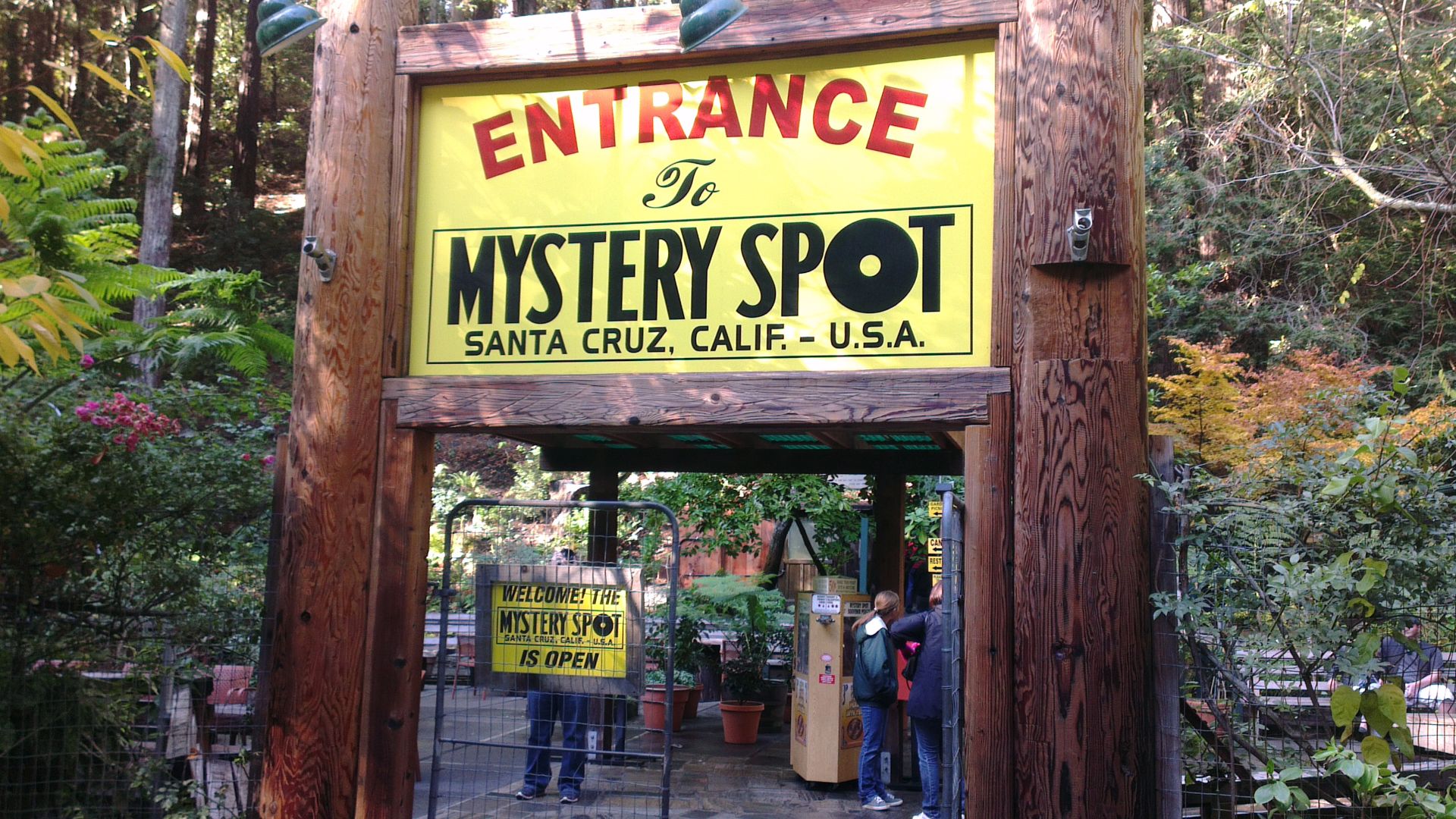 Tshrinivasan, Wikimedia Commons
A Beer Stand Became A Highway Empire
South of the Border began near the North Carolina-South Carolina line as a small beer stand in 1949. Its location benefited from nearby North Carolina counties where alcohol sales were restricted, and the business soon expanded into food and lodging. The site eventually grew into the brightly advertised highway complex generations of Interstate 95 travelers recognize.
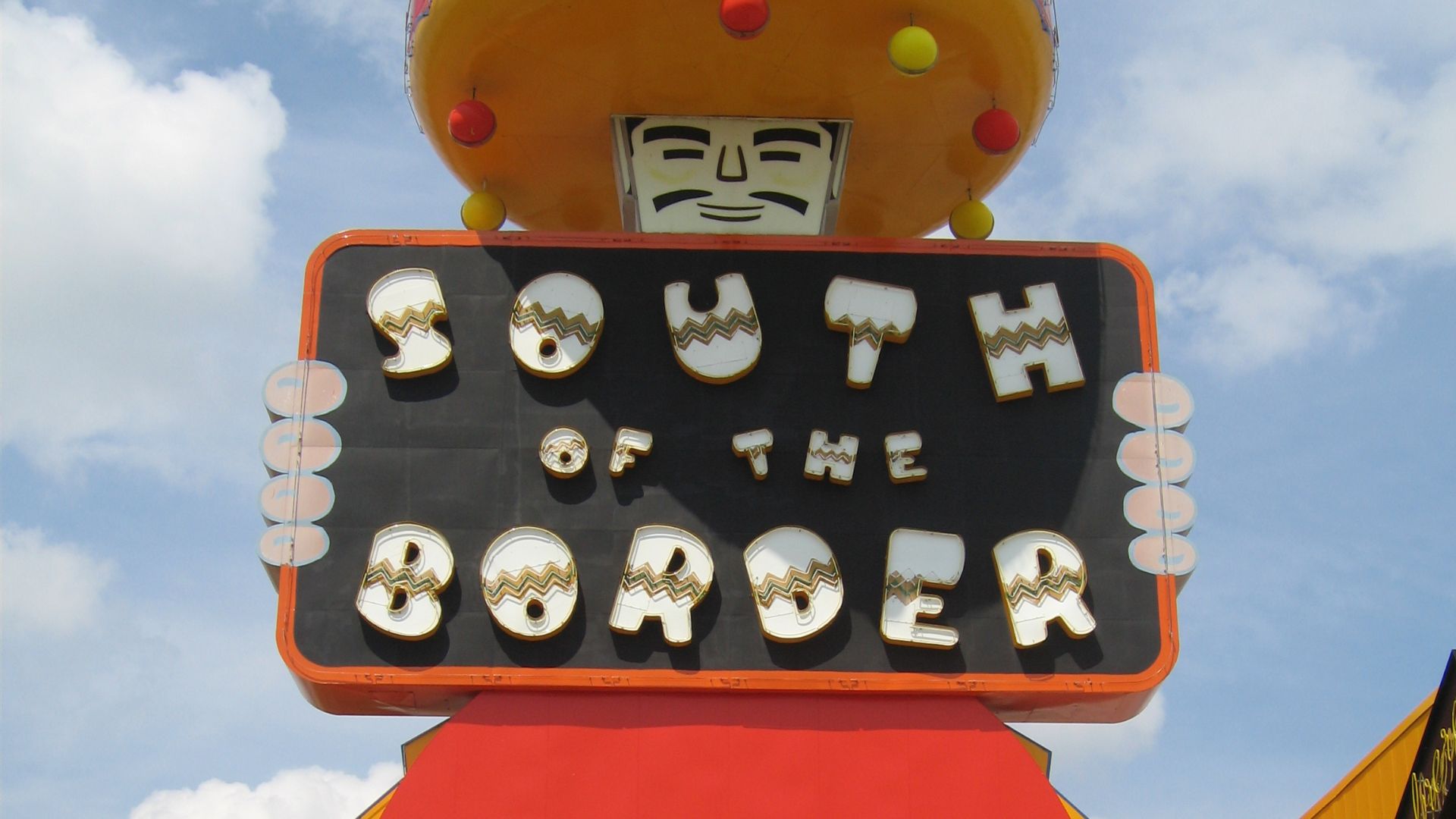 Leonard J. DeFrancisci, Wikimedia Commons
Motels Became Architecture
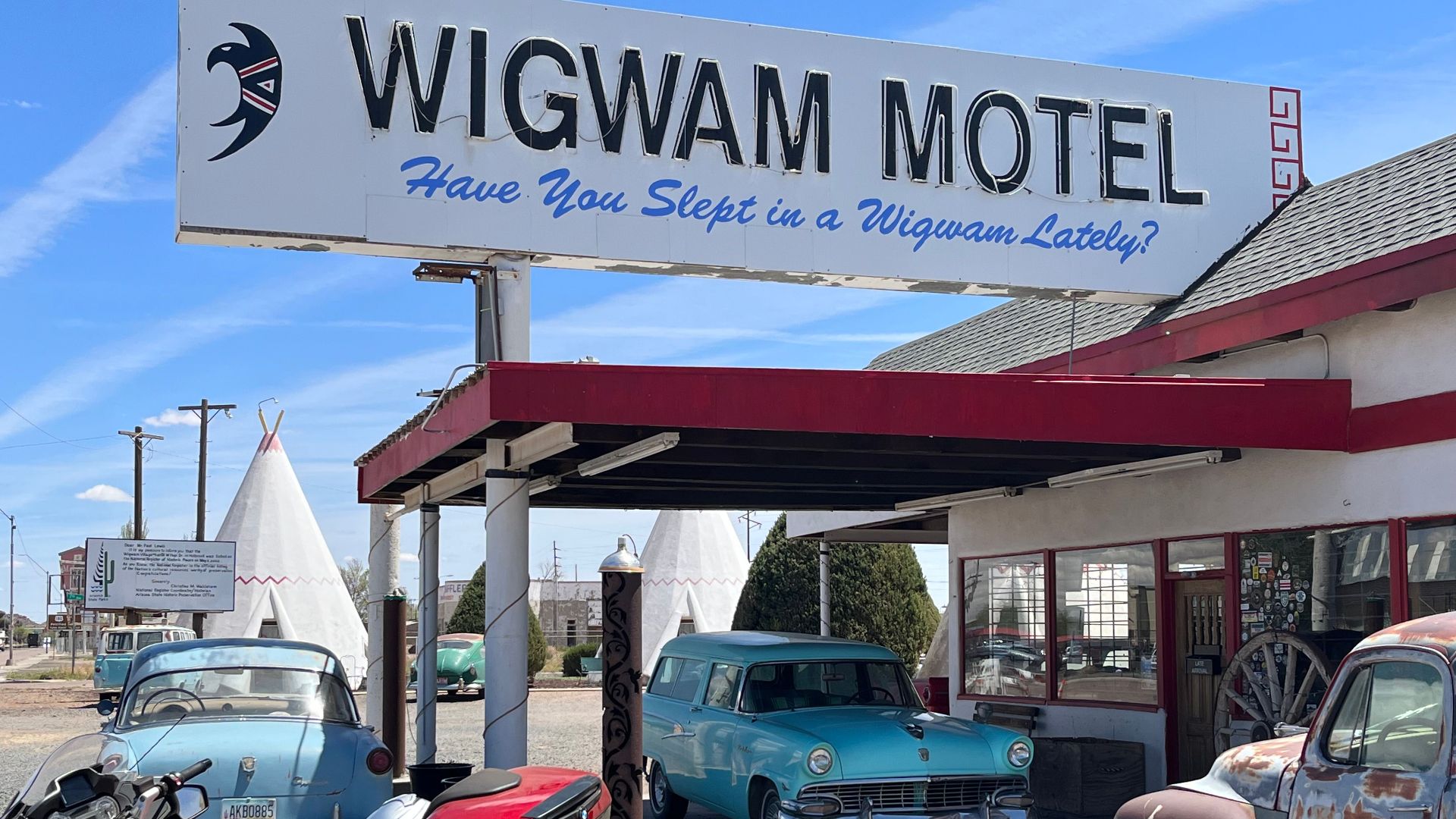
American roadside businesses once competed for motorists by making the building itself an advertisement. Surviving Wigwam Motels feature individual sleeping units designed to resemble teepees, despite the historically inaccurate use of the word “wigwam.” The National Park Service considers several surviving properties important examples of Route 66 automobile tourism.
Neon Became A Navigation Tool
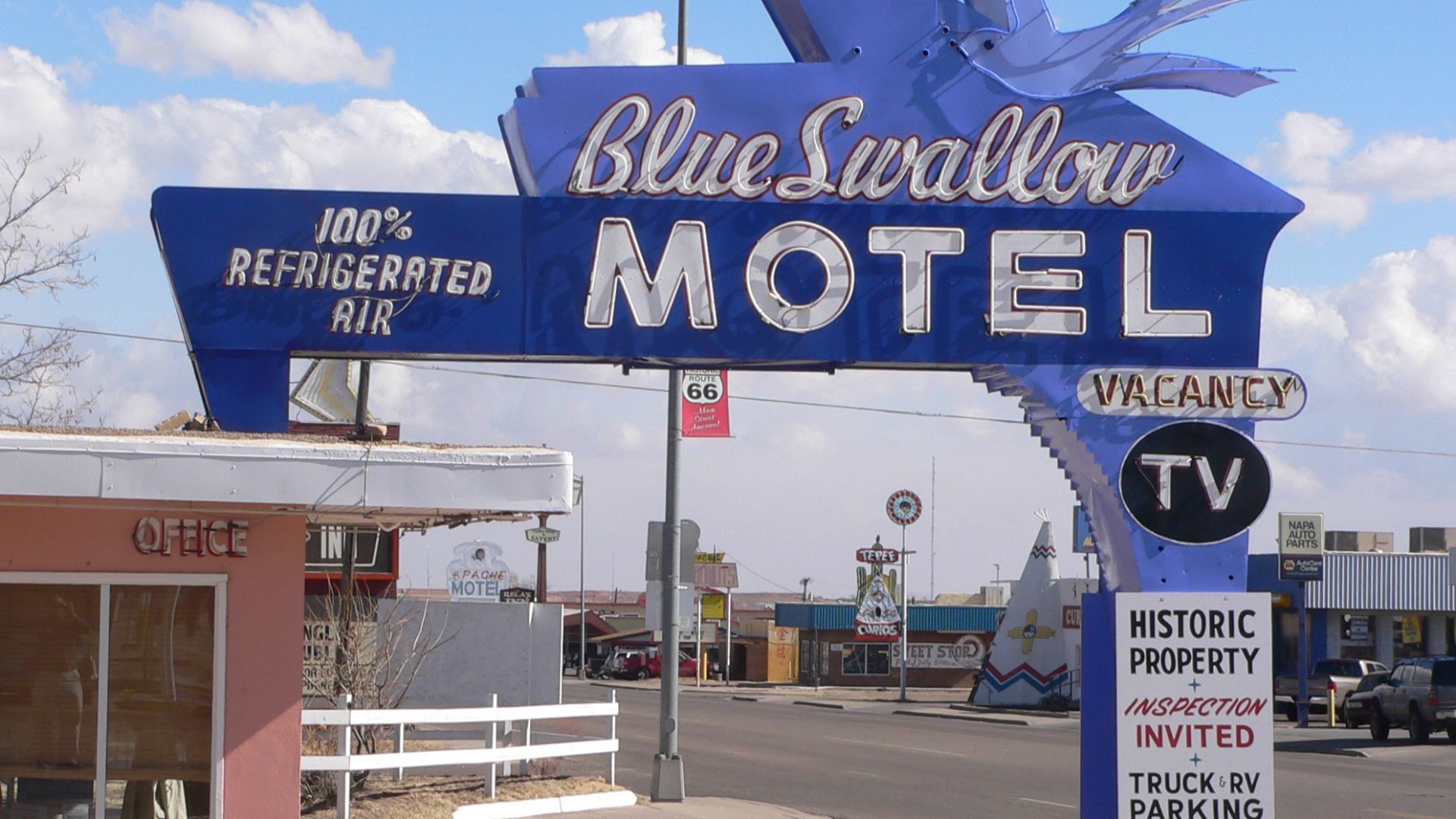
Before travelers had GPS directions and online reviews, a glowing sign could be the deciding factor in where they slept. Tucumcari's Blue Swallow Motel opened in 1942 and became known for its distinctive neon roadside identity. The restored motel still operates, preserving a time when highway advertising needed to be visible through a windshield at night.
Giant Fiberglass Men Became Icons
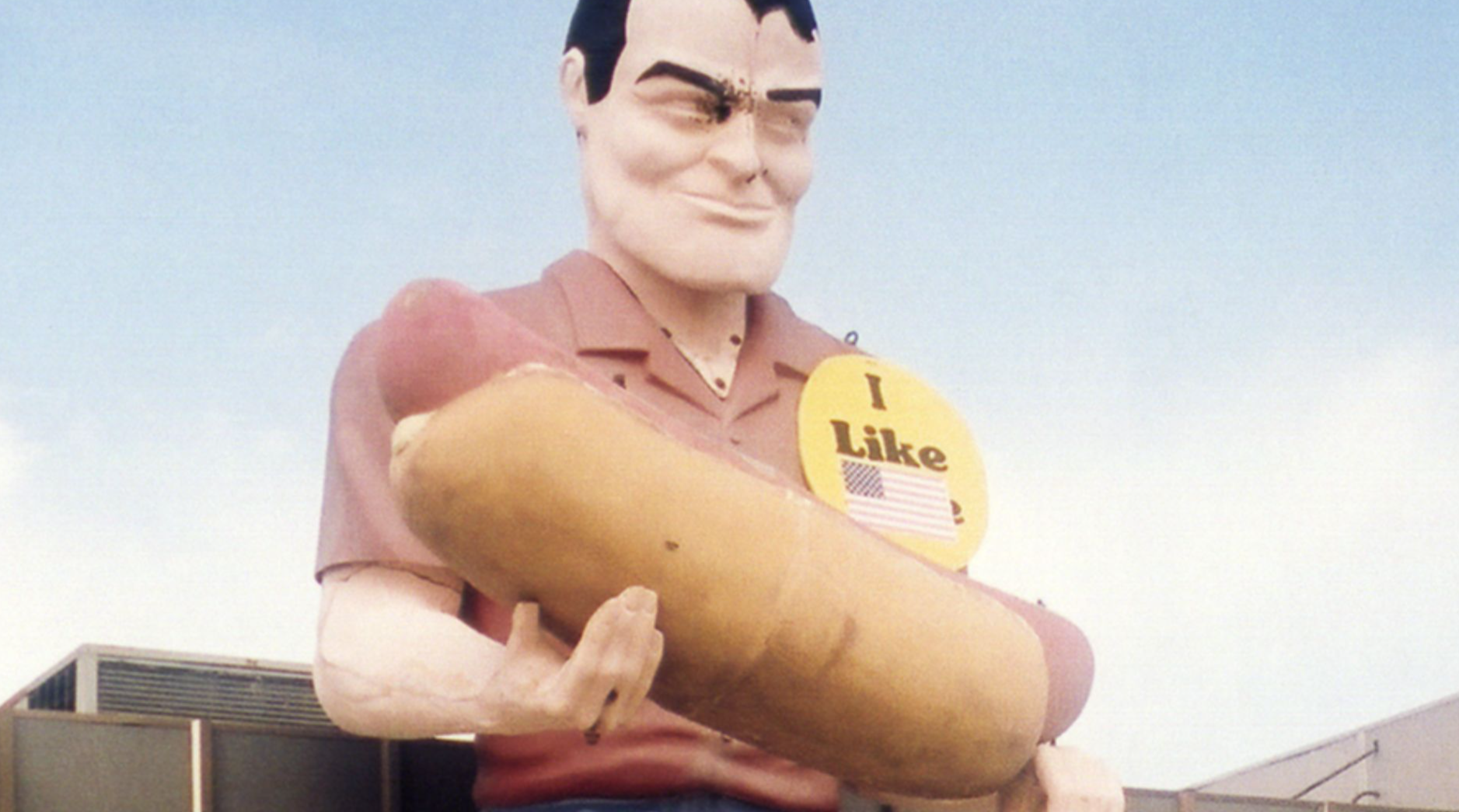
For decades, businesses placed enormous fiberglass men beside American roads to grab motorists' attention. Smithsonian reported that collectors nicknamed them “Muffler Men” because many originally held giant automotive mufflers. Variations later appeared holding axes, hot dogs, rockets, and other objects suited to whatever business stood nearby.
 Mykl Roventine, Wikimedia Commons
Buildings Were Designed To Stop Cars
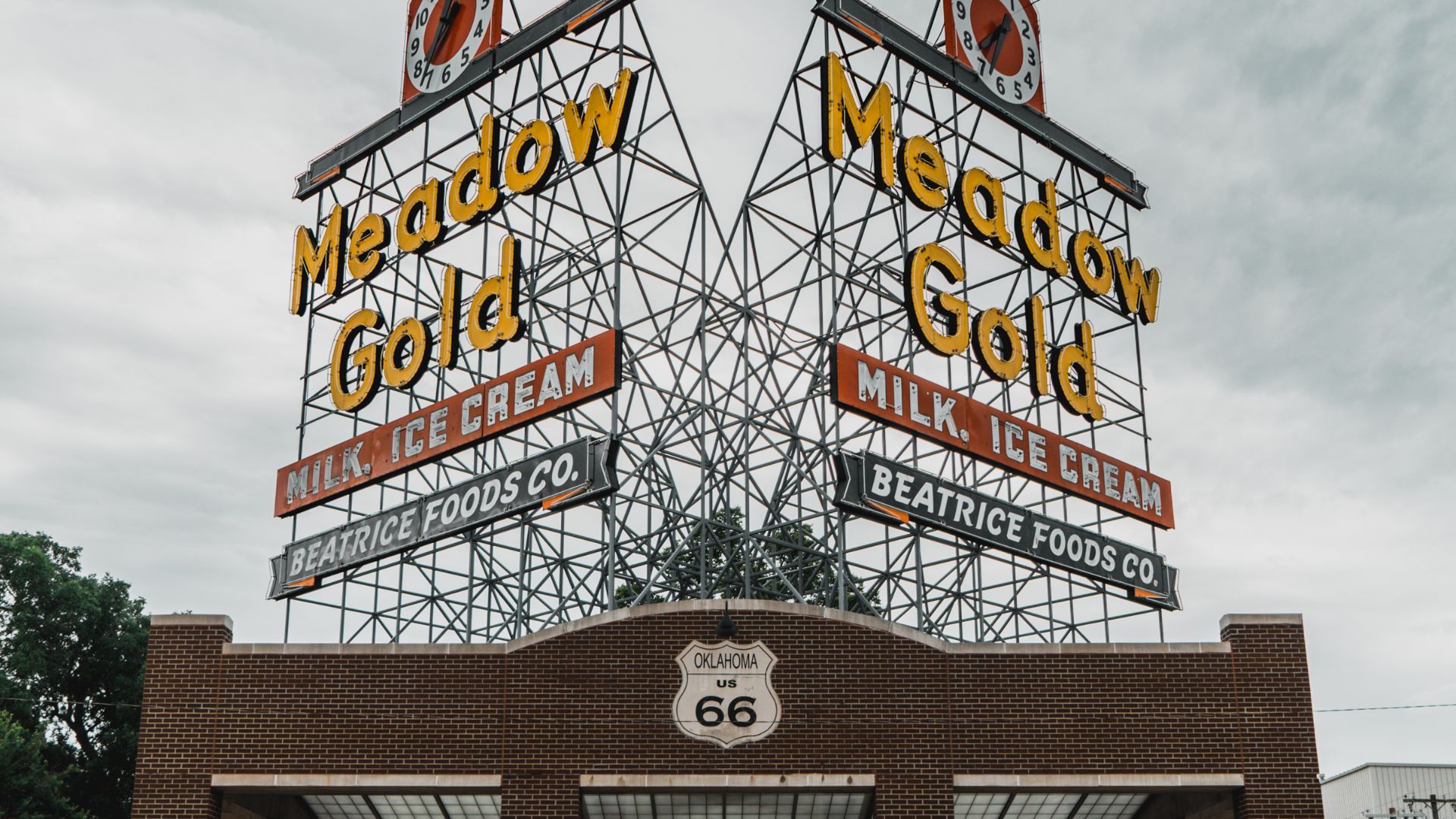
Roadside architecture deliberately became louder as automobiles moved faster. National Park Service research on Route 66 describes businesses using oversized signage, bold neon, gimmicks, and extravagant facades to make an instant impression on passing drivers. Architecture was no longer just shelter because it had to compete for attention at highway speed.
 Jordan Michael Winn, Wikimedia Commons
Bypasses Created Ghost Attractions
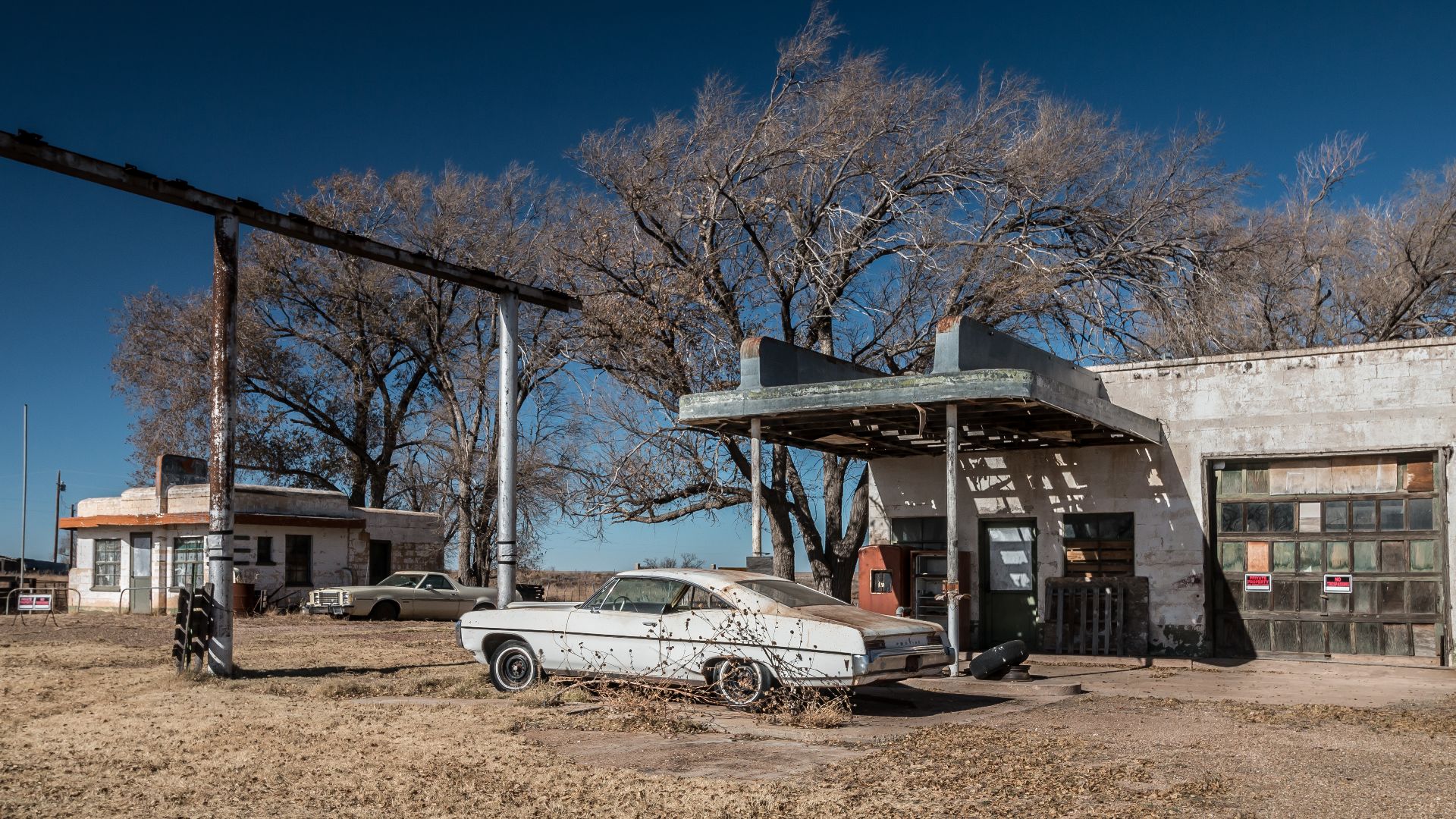
The Interstate system eventually redirected traffic away from many older roadside businesses. Glenrio, on the Texas-New Mexico line, declined sharply after Interstate 40 bypassed it in 1975, leaving old motels, restaurants, and service buildings behind. Today, the abandoned structures preserve a striking snapshot of what happens when the cars stop coming.
 Renelibrary, Wikimedia Commons
Small Towns Use Weirdness Economically
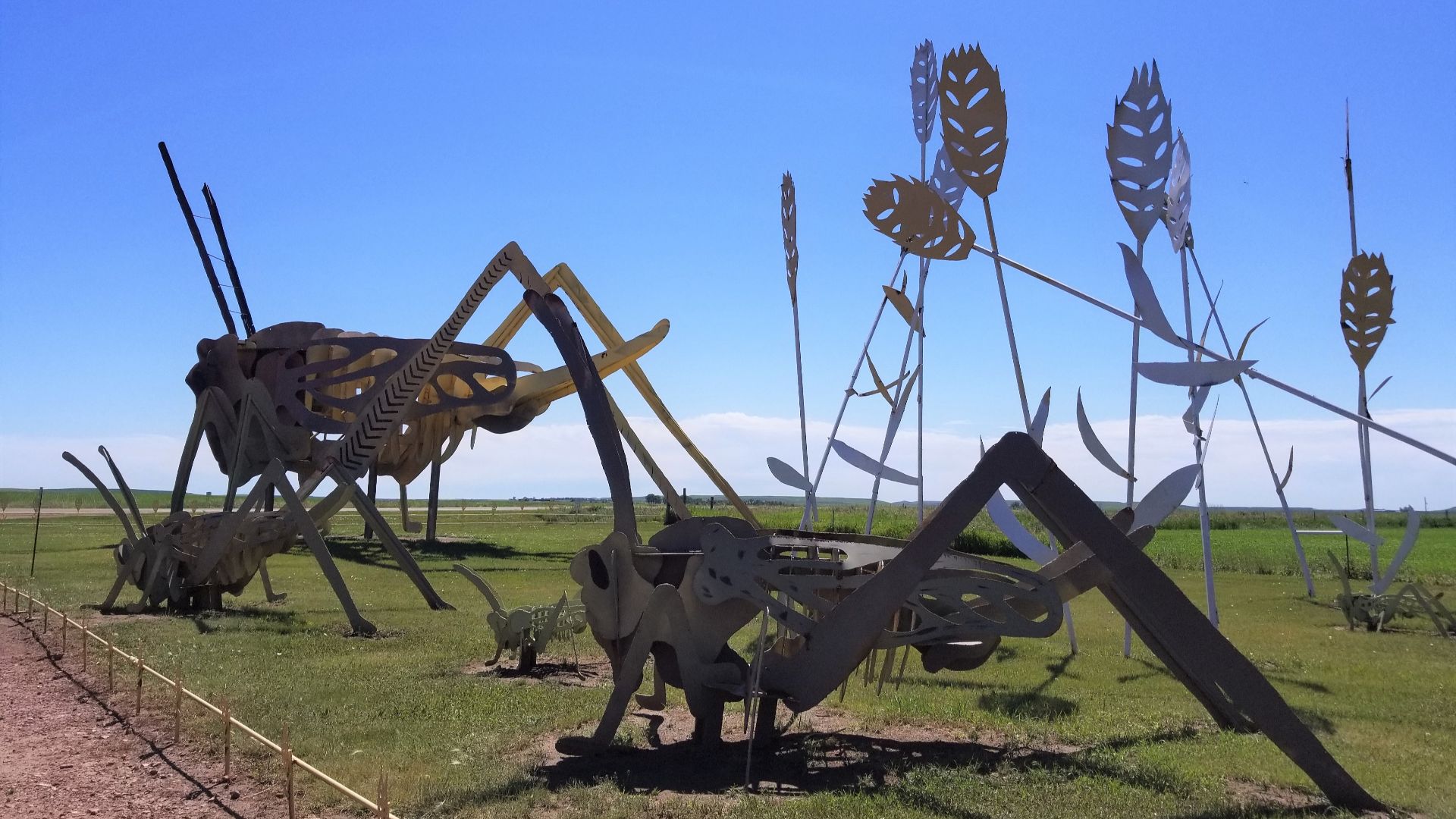
Roadside attractions can serve a serious economic purpose beneath the jokes. Route 66 merchants historically built eye-catching businesses to capture revenue from motorists passing through isolated communities. In North Dakota, the Enchanted Highway's giant metal sculptures were similarly conceived as a way to draw travelers toward the tiny community of Regent.
Some Stops Are Completely Free
One of the nicest surprises is how many bizarre attractions cost nothing to see. Carhenge is free, Cadillac Ranch charges no admission, and the Corn Palace currently offers free admission and parking. Road-trippers can therefore collect some wonderfully odd experiences without turning every stop into another expensive ticket.
 Patrick Bolduan, Wikimedia Commons
The Gift Shop Is Often Half The Point
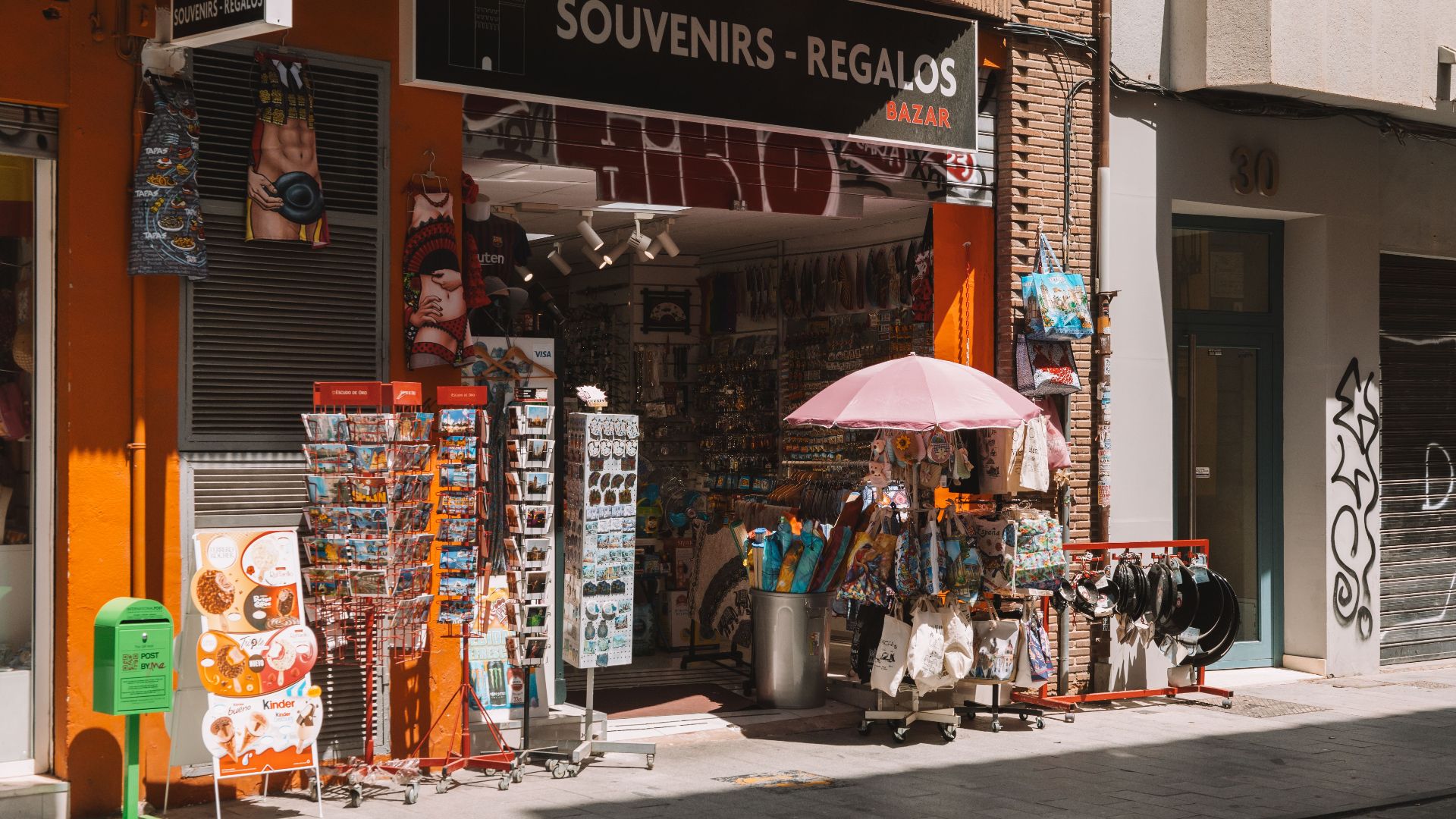
American roadside culture understands that seeing something ridiculous tends to create an immediate desire for a souvenir of it. Cabazon Dinosaurs operates gift shops including one inside the giant Apatosaurus, while the Corn Palace sells souvenirs connected with its unusual history. The attraction and the merchandise often become parts of the same joke.
Roadside Stops Blur Art And Advertising
It can be surprisingly difficult to decide whether some attractions are sculpture, marketing, architecture, or all three. Cadillac Ranch is an art installation that also became a tourism icon, while giant food sculptures historically advertised local businesses and crops. The ambiguity is part of what makes the American roadside tradition so distinctive.
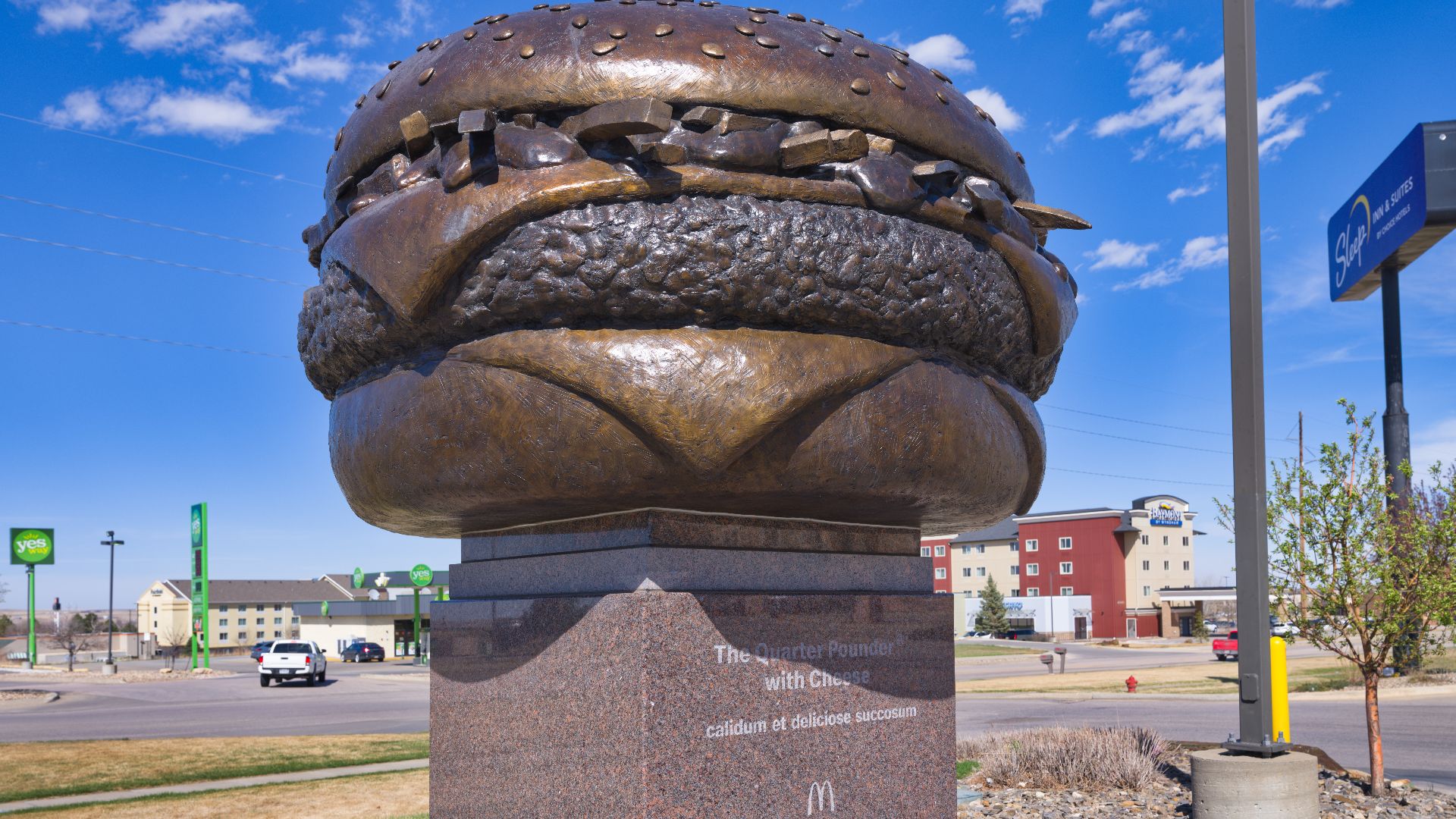 Gregory F. Maxwell <[email protected]> PGP:0xB0413BFA, Wikimedia Commons
The Detour Becomes The Memory
Route 66's enduring appeal rests partly on the idea that stopping matters as much as arriving. The National Park Service describes the historic highway as a journey where individual communities offered their own regional character, businesses, and eccentric attractions. Travelers may forget an ordinary hour of highway driving but remember the enormous pistachio forever.
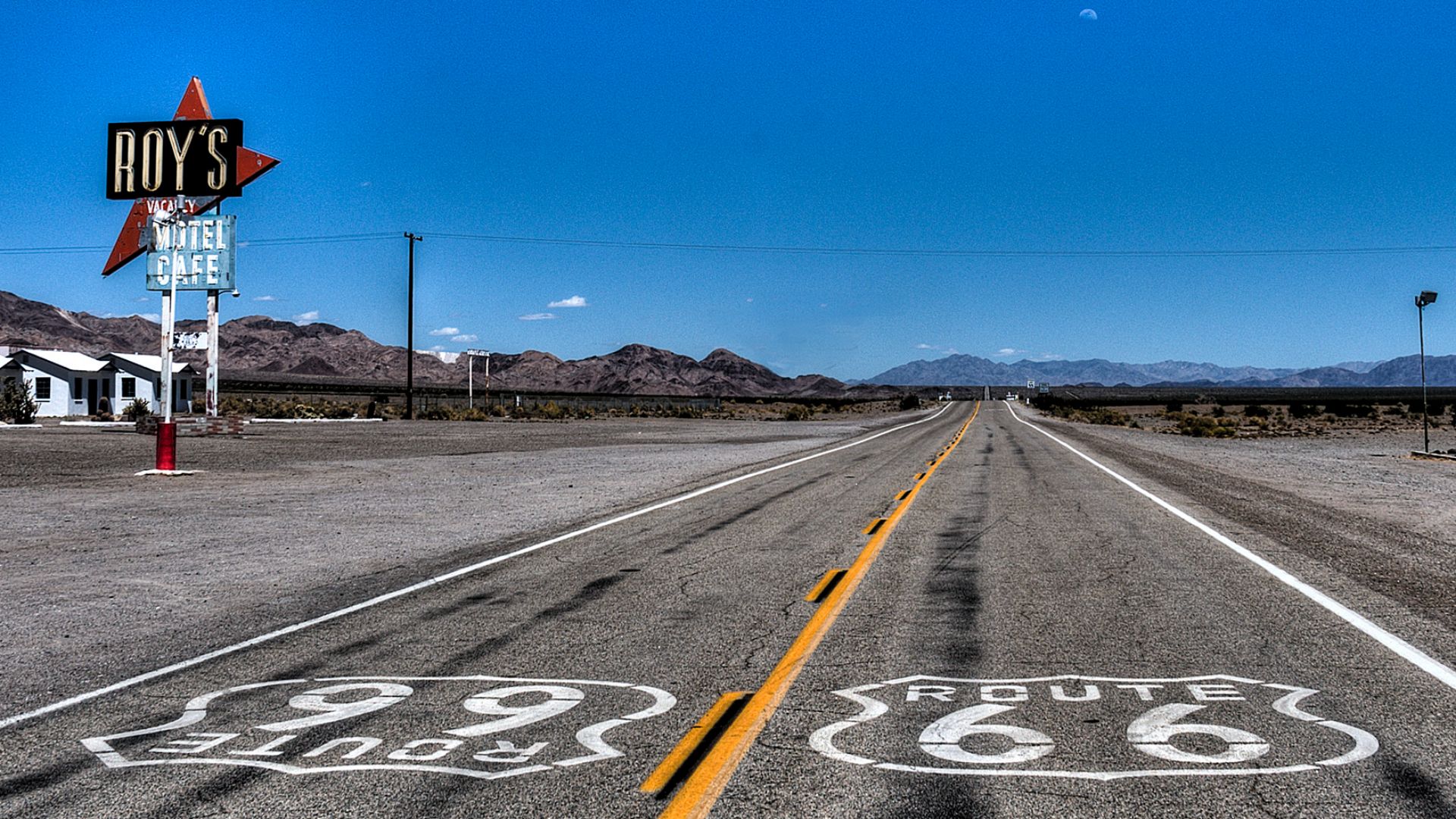 Dave Johnson from Arroyo Grande, Ca., U.S., Wikimedia Commons
Canadians Can Enjoy The Absurdity
None of this means Canada lacks oversized roadside attractions or eccentric small-town landmarks. What stands out in the United States is the density of these places and their deep relationship with automobile tourism, advertising, Route 66, and the growth of highway businesses. The strangest part may be how quickly a skeptical Canadian traveler starts scanning the horizon for the next enormous object.
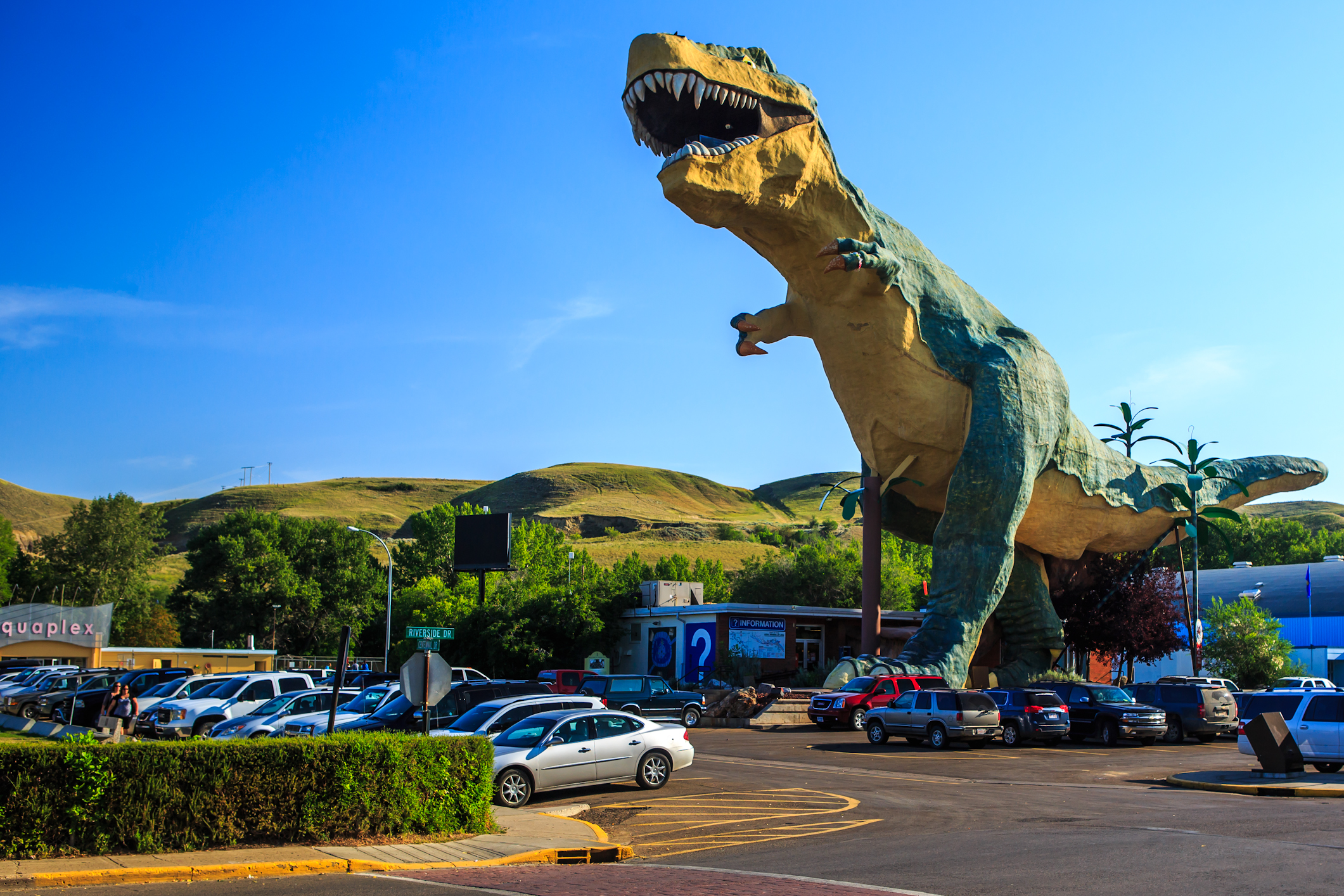 Murray Foubister, CC BY-SA 2.0, Wikimedia Commons
You May Also Like:
The Most Peaceful Countries In The World—Ranked According To Data
America’s Most Dangerous Tourist Destinations
The World's Oldest Hotels Still Welcoming Guests Today
Sources: 1, 2, 3, 4, 5, 6, 7, 8, 9, 10, 11, 12, 13, 14, 15, 16, 17, 18, 19, 20, 21, 22, 23, 24, 25, 26


.jpg)