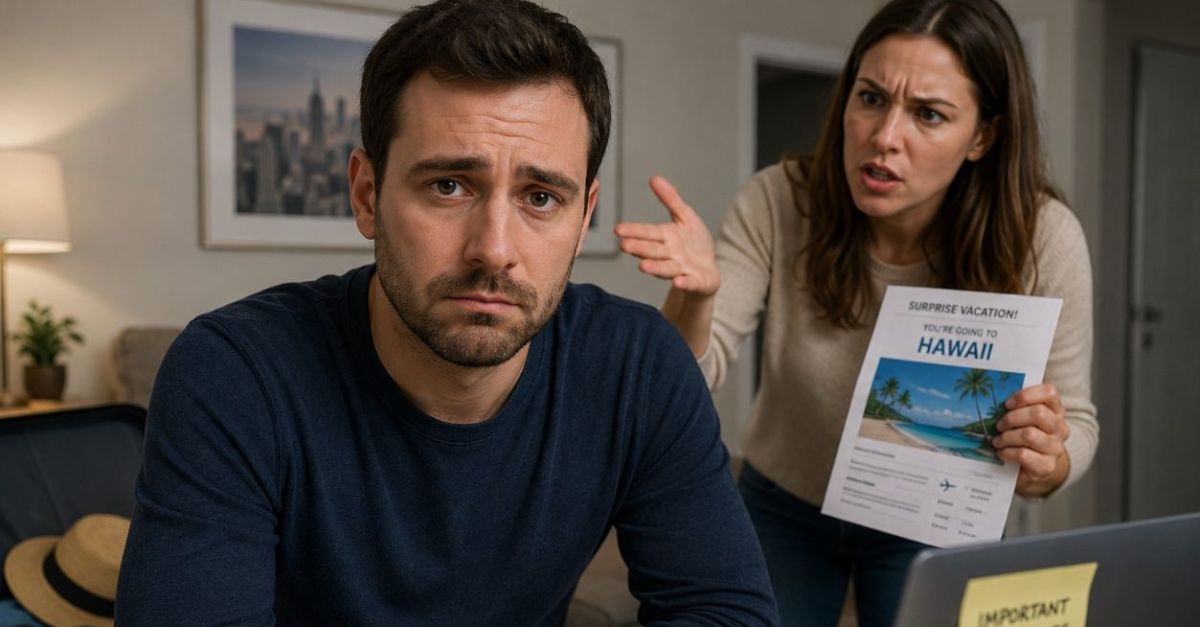
A Surprise Vacation Collides With A Work Deadline
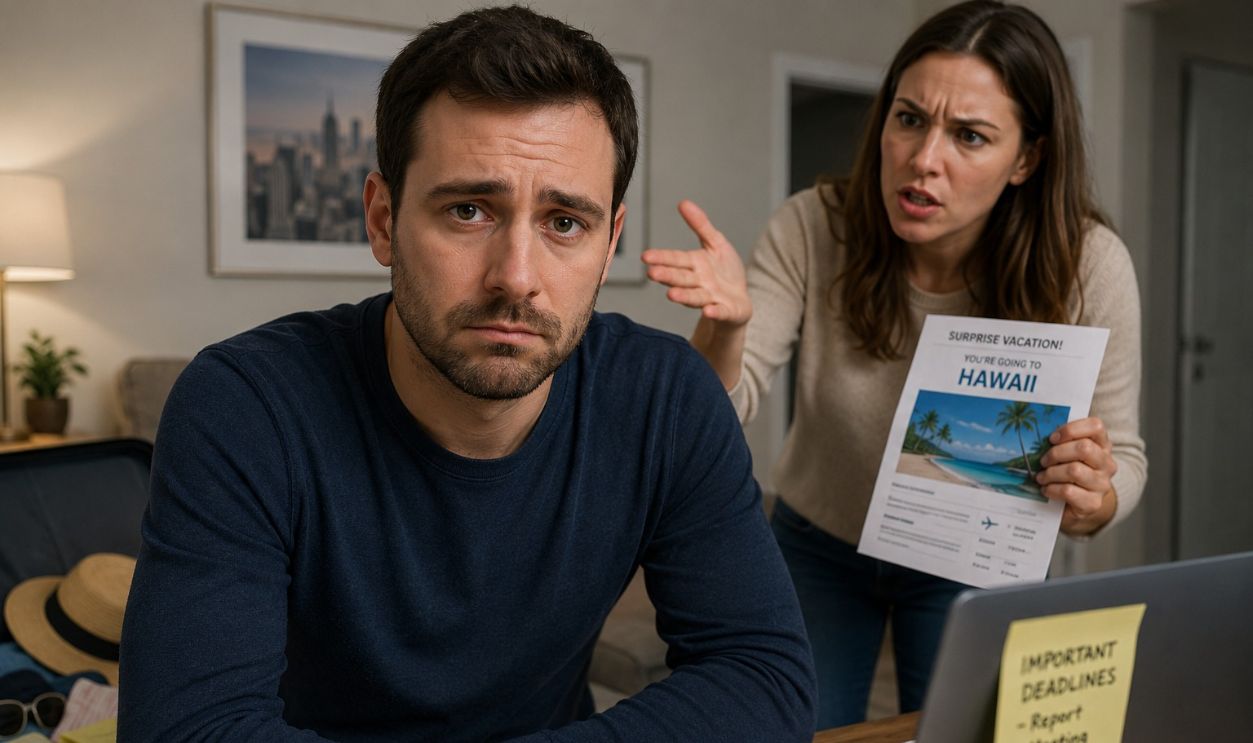
A dream trip can sound romantic until it lands in the busiest week of your year. She booked a surprise getaway that would be truly wonderful, he's got a high-stress, long-hours job that he's told her many times gets busiest around their anniversary. Who should feel bad?
Why This Feels Bigger Than Bad Timing
This is not just about flights and hotel rooms. It is also about communication, money, and whether a surprise stops feeling thoughtful when it creates stress. For a lot of couples, travel planning brings bigger issues to the surface fast.

The Main Question
Who is in the wrong here: the wife who booked a surprise vacation without checking the dates, or the husband who says he has to cancel because he cannot miss the busiest week of his job? In most cases, the trip may have been well meant, but booking it without confirming the timing was the bigger mistake.

Why Surprise Travel Can Backfire
Surprise vacations sound great in theory, but real life can wreck them quickly. Work schedules, childcare, budgets, passports, and cancellation rules all matter. A trip can be generous and still be badly planned.

What Booking Rules Usually Reward
When money is on the line, flexibility matters more than romance. The U.S. Department of Transportation says airlines must either hold a reservation for 24 hours without payment or allow cancellation within 24 hours for a full refund when a flight is booked at least seven days before departure. That rule exists for a reason. People make booking mistakes, and sometimes they need a fast way out.

If The Booking Just Happened
If the wife booked the flights within the last 24 hours, there may still be an easy fix. The airline's policy should be checked right away, since carriers can meet the federal rule in one of two ways. That small timing detail could make the difference between a simple refund and an expensive problem.

Hotels Can Be Trickier
Flights get most of the attention, but hotels often decide how painful a cancellation becomes. Booking sites and hotel brands may offer different rates with different rules, and the cheapest option is often the least flexible. That means a surprise planner can lock in penalties before the other person even sees the itinerary.

Nonrefundable Does Not Always Mean Impossible
Travel companies do not always bend, but sometimes they do. Consumer guidance from major booking platforms says to check the reservation terms and contact the provider as soon as plans change. In some cases, travelers can still get a credit, rebook, or recover part of the cost.

The Work Conflict Is Real
Calling someone ungrateful skips over the obvious issue. Jobs come with responsibilities. Missing a peak week at work can hurt income, reputation, promotion chances, or even job security. If one spouse knew, or should have known, that this week was off-limits, then asking to cancel looks a lot more responsible than rude.

What Makes A Gift Thoughtful
A good gift fits the life of the person receiving it. With travel, that means matching the dates, energy, budget, and available time off. A vacation is not much of a gift if the person has to choose between enjoying it and protecting their job.

Why Consent Matters With Travel
Travel may be optional, but the costs are real. One person can create a shared financial problem with a few taps on a phone. That is why surprise travel works better when the surprise is the destination, not the dates or the price tag.

Where The Real Mistake Usually Starts
If the husband had already said this was the busiest week of the year at work, then the wife was wrong to book nonflexible plans. If he never made that clear, then the blame is more shared. Still, in most versions of this kind of fight, the person who made the nonreversible purchase without checking first carries more of the responsibility.

Why Travel Advice Always Pushes Flexibility
Booking guides and consumer resources keep making the same point: read the cancellation policy before you pay. Flexible reservations usually cost more, but they give you breathing room. That matters even more with surprise trips, where one traveler does not get to approve the timing in advance.

How To Judge Whether Canceling Is Fair
Three questions matter most. Was the work conflict known before the booking? How much money is at risk? Are there real alternatives, like changing the dates? Those facts matter more than whether someone looks grateful enough.

Rebooking Might Save The Whole Situation
Canceling does not have to mean rejecting the gesture. If the trip can be moved to a calmer week, both people can keep the spirit of the surprise without the pressure. That is often better than turning the whole thing into a fight about appreciation.

Start With The Airline
If money is at stake, begin with the flight. Airlines usually have clearer rules and deadlines than the rest of the trip. Check whether the reservation is still within the federal 24-hour cancellation window, then look at whether the fare allows changes or future credit.

Then Look At The Hotel And Activities
Hotels and tours usually come with separate rules. A prepaid hotel room may be stricter than the flight, while a local activity provider might allow changes with enough notice. Each part of the trip should be checked on its own, because one refundable piece can soften the overall loss.

The Biggest Emotional Mistake To Avoid
Do not turn a scheduling problem into a personality judgment. Calling someone ungrateful or controlling usually makes the fight worse. It is smarter to stick to facts like dates, deadlines, refund windows, and how much money will be lost.

What If The Trip Was Meant To Help With Stress
That intention is sweet, but it does not solve the timing problem. A vacation meant to help someone relax can do the opposite if it creates panic about unfinished work. Timing is part of the gift.

What If The Deal Was Too Good To Pass Up
Even a great fare is not really a bargain if taking the trip causes work problems. Travel experts often point out that nonrefundable bookings can end up costing more in indirect ways, from missed work obligations to extra rebooking costs. A low upfront price does not tell the whole story.

There Is Also The Money Issue
If the couple shares finances, one spouse may reasonably expect to be consulted before a major travel purchase. If they keep separate budgets, the emotional angle may be different, but the scheduling problem stays the same. Either way, surprise spending on a fixed-date trip is riskier than it sounds.

The Fairest Verdict For Most Couples
In most cases, the wife is more at fault for booking a surprise vacation during a known high-pressure work period without checking first. The husband is not automatically ungrateful for wanting to cancel. He can appreciate the thought and still say the timing does not work.

How To Say It Without Making It Worse
The husband should start by acknowledging the effort, then explain the conflict clearly. A calm version sounds like this: I love that you planned this for us, but I cannot responsibly travel that week, so can we move it before we lose more money.

How The Wife Can Recover Smoothly
The best move is not to defend the surprise no matter what. It is to shift into problem-solving mode. Calling the airline, hotel, and any other providers quickly, asking for credits, and offering new dates shows care a lot more than insisting the original plan has to stay.

A Better Way To Plan Surprise Trips
Keep the destination secret, not the time window. A lot of couples handle this by first agreeing on a free weekend or approved vacation period, then revealing the flights or hotel later. That keeps the fun while protecting work schedules, budgets, and sanity.

The Travel Lesson Inside The Drama
The best trips usually start with clear expectations, not dramatic reveals. Travel companies build their policies around date mistakes, fare confusion, and last-minute changes because these problems happen all the time. The romance lasts longer when the logistics make sense.

So Who Is Wrong
If the busiest week of the job was already known, the wife made the key mistake by booking first and checking later. Wanting to cancel because of work obligations is not ingratitude. It is damage control.

The Bottom Line
If you are thinking about surprising your partner with travel, make sure the timing works before you book. Choose refundable or flexible options when you can, and move fast if the dates are wrong. A vacation should feel like a gift, not a trap.