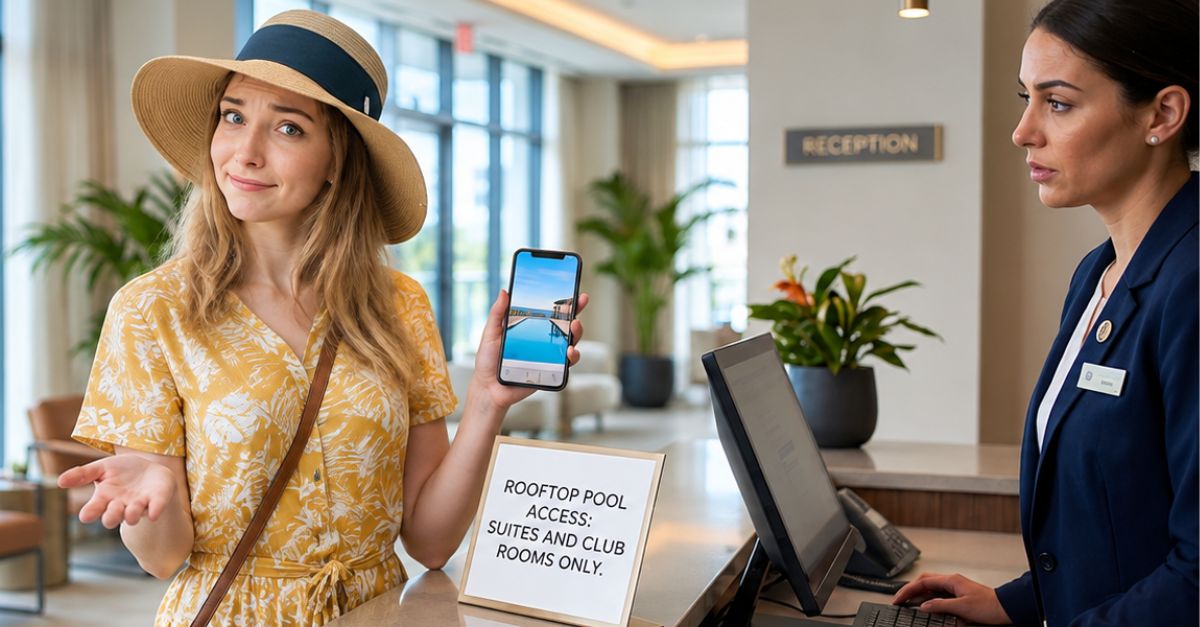
The Rooftop Pool Catch
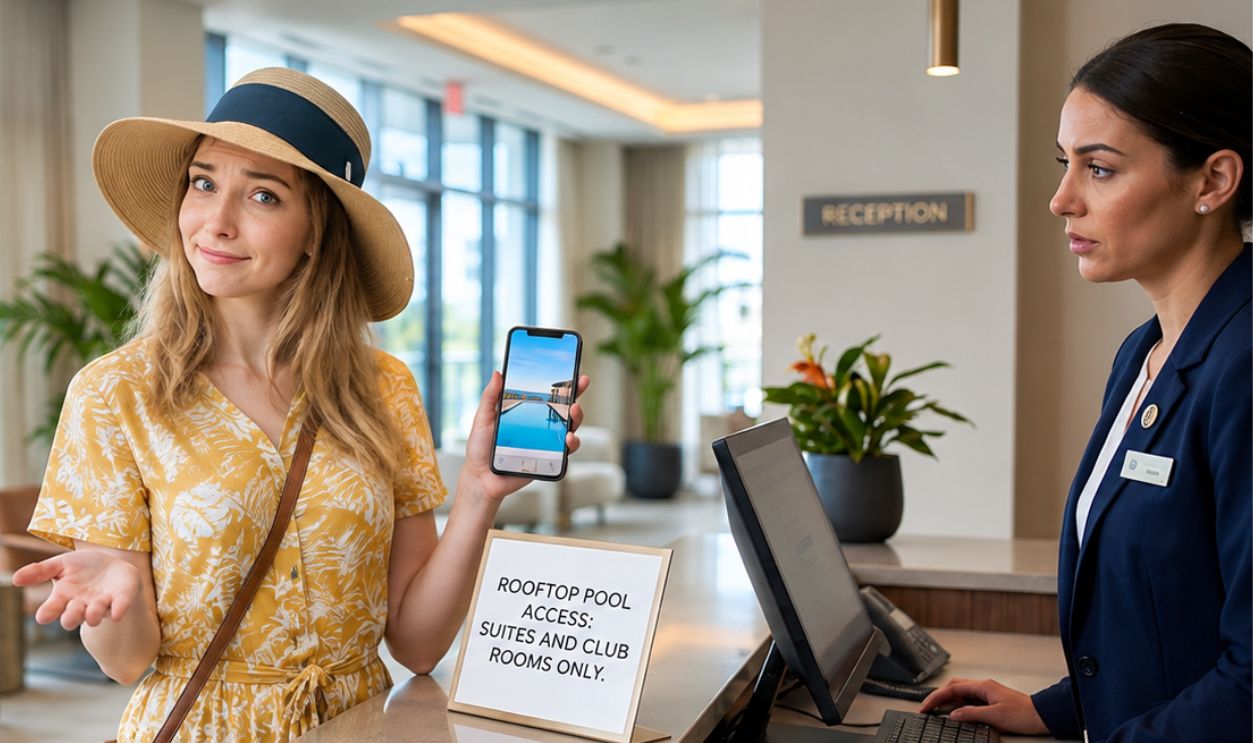
You check in, drop off your bags, and head straight up to the rooftop pool that you saw advertised—only to get turned away because you didn't book a premium room, suite, or club-level stay. It might feel like a splash of ice-cold water on the first day of your stay, but practises like these are becoming common many modern hotels.
Yes, Hotels Can Do That
Usually, yes. A hotel can often limit access to a pool, lounge, beach area, or other amenity based on room type, package, or loyalty status. Hotels set those rules as part of what you agree to when you book. Unless the restriction crosses consumer protection rules, accessibility law, or a clear promise made in your reservation, it is generally allowed.

What Really Matters Is Disclosure
The main issue is usually not whether the hotel can restrict the pool. It is whether the hotel told you clearly before you paid. The Federal Trade Commission requires truth in advertising, which means hotels should not promote an amenity in a misleading way if many guests will not actually be allowed to use it.
 Bernard Gagnon, Wikimedia Commons
Why Pool Photos Matter So Much
A rooftop infinity pool is not some small extra in a hotel listing. It is often the main draw, all over the homepage and booking photos. If access is restricted, that should be made clear where people are deciding whether to book, not buried somewhere after the sale.
 Shixart1985, Wikimedia Commons
There Is No Universal Pool Rule
Many travelers assume a hotel pool is a basic amenity for every overnight guest. There is no broad U.S. law that says every hotel pool must be open to every guest no matter what room they booked. Hotels usually have a lot of room to decide what comes with a standard room and what is saved for upgraded stays.

Room-Based Restrictions Are Common
This is not just about pools. Club lounges, free breakfast, private beach sections, spa areas, and executive fitness spaces are often limited to certain bookings. Some resorts also keep their best pool decks and cabanas for guests who pay more.

Hotels Say It Helps Control Crowding
Hotels often defend these limits as a way to manage space and protect the guest experience. A small rooftop pool can get packed fast if every guest can use it. Limiting access to premium bookings helps keep it quieter and more exclusive, which is often part of what higher-paying guests expect.

Luxury Hotels Often Spell It Out
Some hotel brands clearly describe certain pools or club spaces as perks tied to specific room categories in their marketing and booking terms. That does not automatically make every restriction fair. It does show that the travel industry has long treated some amenities as tiered benefits instead of something every guest gets.

Third-Party Booking Sites Complicate Things
Things can get messier when you book through a third-party site. Expedia, Booking.com, and similar platforms rely on hotels to provide accurate amenity details, but those listings can be shortened, outdated, or unclear. That is often where travelers get caught off guard.

If The Listing Was Vague, Save Proof
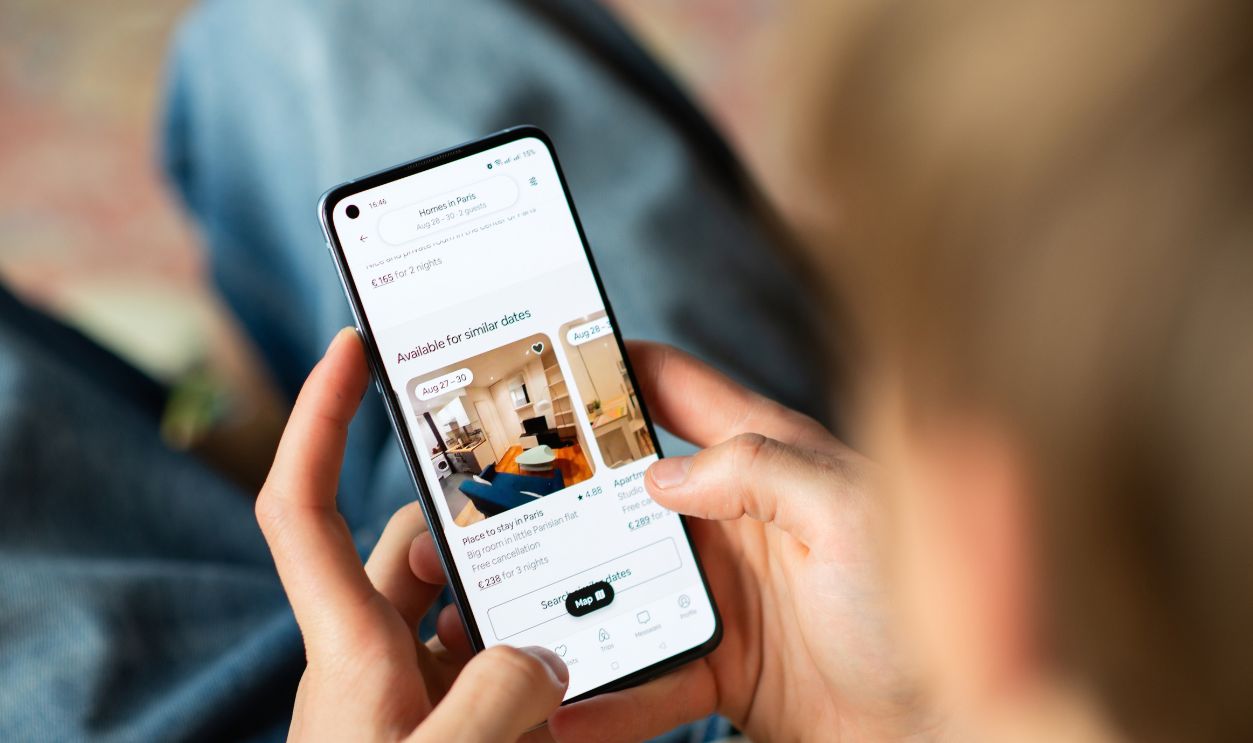
If the booking page showed a rooftop pool without clearly mentioning access limits, save the evidence right away. Take screenshots of the hotel description, room details, confirmation email, and any photos used to sell the stay. Those records can matter if you ask for compensation or dispute the charge later.
The FTC Watches Misleading Travel Claims
The FTC Act bans deceptive acts or practices in commerce, including misleading advertising. The agency also says important disclosures should be clear and easy to notice. If pool access was a major reason you booked, a hidden restriction could turn into a real consumer complaint.

State Consumer Laws May Also Help
Many states have their own unfair and deceptive acts and practices laws, often called UDAP laws. These can give travelers another path if a hotel marketed an amenity in a misleading way. The exact rules depend on the state, so the details matter.

Not All Amenities Carry The Same Weight
There is a big difference between a bonus perk and a signature feature. If a property is built around a rooftop pool, adults-only deck, or skyline swim experience, access limits matter a lot more. The more central the amenity is to the hotel’s appeal, the stronger the case for clear, upfront disclosure.

Photos Can Shape Expectations
Consumer law does not just focus on fine print. It can also look at the overall impression created by images and layout. If nearly every promo photo spotlights the rooftop pool, that can shape a traveler’s reasonable expectation that the amenity is part of the stay.
 Summit Art Creations, Shutterstock
There Is Another Legal Angle
Accessibility rules still apply, even when access is limited. The Americans with Disabilities Act sets requirements for swimming pools and spas at places of lodging, including accessible means of entry where required. A hotel cannot use a premium-only policy to get around those obligations.

What The ADA Actually Covers
The ADA Standards for Accessible Design cover features like pool lifts or sloped entries for pools that fall under the rules. Those standards deal with access for guests with disabilities, not whether every paying guest gets to use every pool. Still, they are an important reminder that hotel policies do have legal limits.

Brand Standards Matter Behind The Scenes
Big hotel chains often require properties to follow brand standards on how amenities are described and sold. Marriott, Hilton, Hyatt, and others also push for accuracy on direct booking channels because surprise restrictions lead to complaints and refund fights. If a property is franchised, the brand may still get involved in a guest-relations problem.
 Tony Webster, Wikimedia Commons
Loyalty Status Can Open Closed Doors
Some guests get access through elite status instead of room type alone. Club floors, private decks, and premium pools can sometimes come through loyalty benefits, upgrades, or special packages. That can make the policy seem uneven at the front desk, even when it technically follows the hotel’s rules.

Your Confirmation Email Matters Most
If you want to know what you actually bought, start with the confirmation email and rate details. Look for language about included amenities, resort fees, exclusions, and access by room category. If the hotel promised access there, your position gets much stronger.

A Resort Fee Does Not Guarantee Pool Access
Travelers often assume a resort fee covers every on-site amenity. That is not always true. A hotel may charge a resort fee for Wi-Fi, gym access, local calls, or basic services while still restricting premium pools or club areas.

Ask One Specific Question Before You Book
Do not ask whether the hotel has a rooftop pool. Ask whether your exact room category includes access to that rooftop pool. That small change can save you from an ugly surprise at check-in.

If You Are Already There, Stay Cool
Front desk staff usually did not make the policy, and a calm approach often works better than anger. Explain that the pool affected your booking decision and ask whether an exception, upgrade option, or credit is available. Hotels sometimes have flexibility when a guest can show the restriction was not clearly disclosed.
 Tongpool Piasupun, Shutterstock
Escalate With Proof
If the answer is no, ask for a manager and show your screenshots and confirmation details. Be specific about what was advertised and where the limit was not disclosed. Clear documentation usually works better than broad complaints about fairness.

When Asking For A Refund Is Reasonable
If the rooftop pool was a big reason you picked the hotel and the restriction was not disclosed, it is reasonable to ask for a partial refund, rate adjustment, or waived fee. That request is strongest when the amenity was central to the hotel’s marketing. It is weaker when the limitation was clearly stated before booking.
 Hryshchyshen Serhii, Shutterstock
Credit Card Disputes Are The Last Step
If the hotel and booking platform both refuse to help, a charge dispute may be possible for services not delivered as advertised. Card issuers usually want proof, dates, and copies of your communication with the merchant. This step makes the most sense in clear cases of misrepresentation.

Reviews Can Warn The Next Traveler
After the trip, leave a factual review that explains the room-category restriction and whether it was disclosed ahead of time. Skip the exaggeration and stick to what happened, when it happened, and how the hotel responded. That kind of detail is useful to the next person comparing options.

So Should Every Guest Get Pool Access
Not always. A hotel pool does not automatically belong to every guest just because it exists, especially when it is marketed as a premium or exclusive space. But if the restriction was not made clear before you booked, the frustration is fair and you may have a valid consumer complaint.

The Bottom Line
The rooftop pool dream can still happen, but only if you check the fine print before you pack the swimsuit. Verify your room category, save the listing, and ask direct questions if anything feels unclear. At hotels, access often depends less on what the property has and more on what your booking actually includes.