When A Flight Is Too Full
You procrastinated and needed the specific flight you booked. At the last minute, they tell you they "overbooked" and you can't fly. But don't worry, here's a voucher for tomorrow that's useless to you. It feels like they should refund you with actual cash. Well, in many cases, the answer is yes, you can ask for money instead of a voucher. But the details depend on whether you gave up your seat willingly, whether you were actually denied boarding, and where the flight was operating.

Overbooking Is Usually Legal
Airlines often sell more tickets than there are seats because they expect some passengers to miss the flight or cancel late. In the United States, this is legal, though it is regulated. The key legal question is not whether the flight was oversold, but what happens when too many people actually show up. That is when compensation rules can apply.
Volunteering And Being Forced Off Are Very Different
The most important difference is whether you gave up your seat on your own or whether the airline denied you boarding against your will. If the airline asks for volunteers and you agree, the compensation is whatever you and the airline agree to. That often means a voucher, miles, or another perk instead of cash. Once you willingly accept that deal, the airline usually does not have to give you the cash payment that applies to involuntary denied boarding.
Yes, You Can Usually Refuse A Voucher Offer
If the airline is asking for volunteers, you are generally free to say no to the voucher and keep your reservation unless they later deny you boarding involuntarily. Airlines often start with vouchers because they cost the airline less than cash. You can try to negotiate for a bigger voucher, ask for a different route, or simply decline to volunteer. In short, a voucher offer is usually not something you must accept.

If You Are Bumped Involuntarily, Cash Rules Matter
In the U.S., if you are involuntarily denied boarding on an oversold flight, federal rules may entitle you to compensation based on the price of your one-way ticket and how much later you arrive. The U.S. Department of Transportation says this compensation must be paid in cash or by check unless you knowingly agree to take a travel voucher or other non-cash compensation instead. That means the airline cannot force a voucher on you if you qualify for denied boarding compensation. You can ask for money.

The Airline Must Explain Your Rights
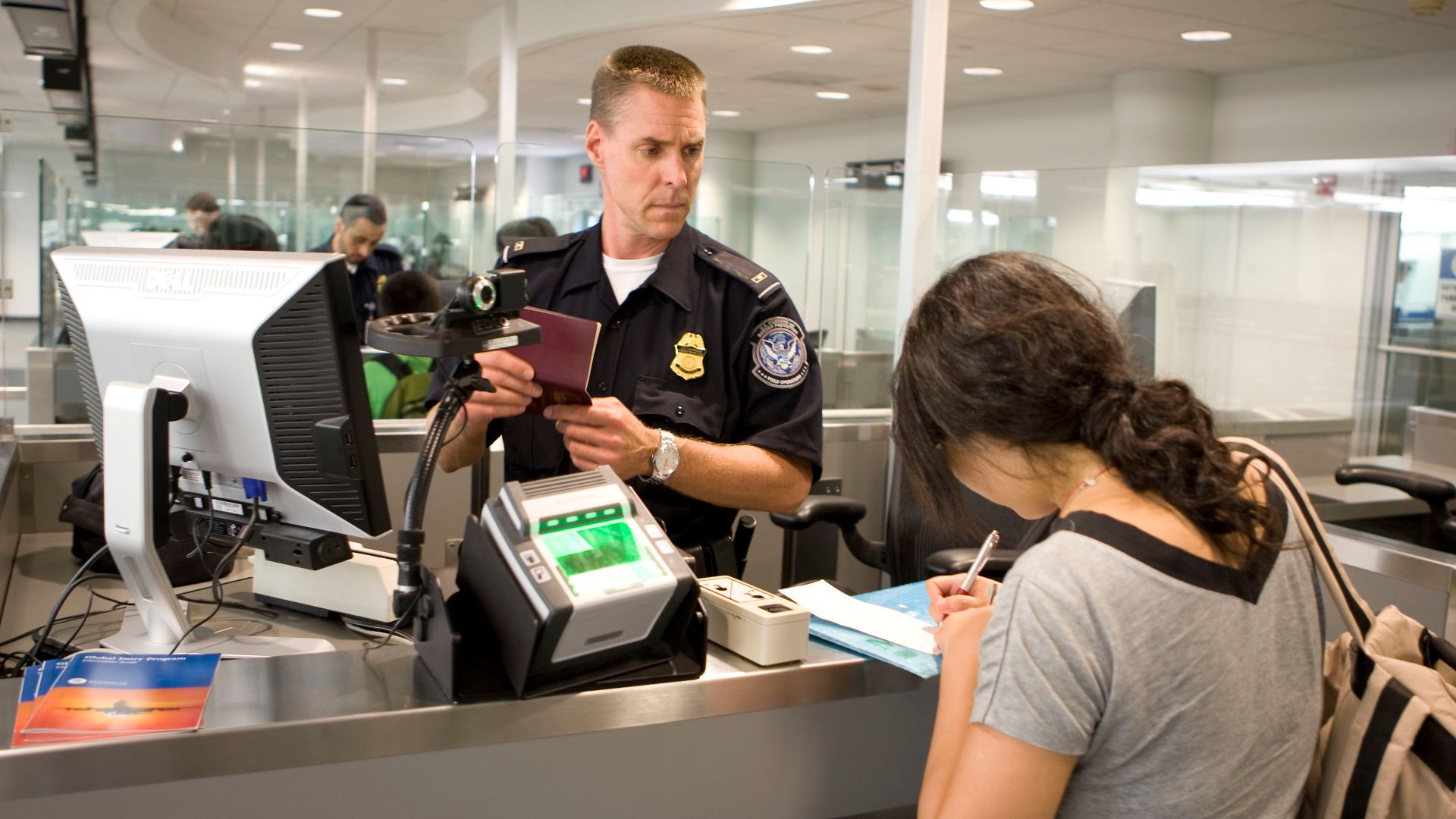
When involuntary denied boarding happens in the U.S., the airline is supposed to give you a written statement that explains your rights and how compensation is figured out. This matters because it makes clear that cash is the default unless you choose something else. If a gate agent is pushing a voucher, ask to see the denied boarding notice. Reading that paperwork before you agree to anything can keep you from giving up money you were owed.
 CBP Photography, Wikimedia Commons
How U.S. Compensation Is Calculated
Under DOT rules, the amount mostly depends on how much later you arrive at your destination compared with your original flight. For domestic flights and many international trips leaving the U.S., shorter delays may mean no compensation, while longer delays can trigger 200% or 400% of your one-way fare, subject to government caps. Those cap amounts are updated from time to time. That is why it helps to check the latest DOT chart if you are trying to see whether the airline’s offer is too low.
 Frame Stock Footage, Shutterstock
There Are Situations Where No Cash Is Owed
Not every bump leads to compensation. In the U.S., you generally are not entitled to denied boarding compensation if you missed check-in deadlines, did not have the right travel documents, were denied boarding for safety or security reasons, or were moved off the flight because of a smaller aircraft in certain cases. You also may not qualify if the airline gets you to your destination with only a small delay. So the fact that a flight was oversold does not automatically mean you get paid.
Weather And Mechanical Problems Are A Different Issue
Overbooking compensation rules apply to denied boarding from oversales, not to normal delays and cancellations. If your flight is canceled because of weather, air traffic control, or a mechanical problem, the denied boarding compensation rules do not apply just because the airline later offered a voucher for the trouble. That said, separate refund rights may exist if your flight is canceled or changed in a major way and you choose not to travel. It is important not to mix up refund rights with bump compensation rights.
What Counts As “Cash” Here
“Cash” in this context does not always mean paper money at the gate. Under U.S. rules, airlines can pay with cash, check, or in some cases another form of payment you can use right away, as long as you are not pushed into taking a voucher instead. A travel voucher is different because it usually ties the value to future travel on that same airline and may come with expiration dates or other limits. That is why many travelers would rather have actual money.

Watch Out Before You Sign Anything
If the airline offers a voucher, there may be paperwork or an app prompt asking you to accept it. Once you agree to a non-cash offer, you may be giving up your right to ask for the cash amount required by law. Before accepting, ask three simple questions: Is this voluntary or involuntary, how long is my delay, and what cash amount would apply if I refuse the voucher? Getting those answers first can make a real difference.

Vouchers Can Sometimes Be Worth More
Airlines often tempt volunteers with vouchers worth more than the legal cash amount they would owe if they had to bump someone involuntarily. For some travelers, that can be a smart deal if they know they will use the airline again soon and the voucher terms are flexible. But a higher face value does not always mean better value. A $1,000 voucher that expires quickly or cannot be transferred may be less useful than a smaller cash payment.
 Monkey Business Images, Shuttestock
Ask About The Fine Print
If you are thinking about taking a voucher, ask whether it expires, whether it is transferable, whether taxes and fees are covered, and whether it can be used online without calling in. Also ask whether the voucher can be combined with future credits or used for multiple passengers. Some airline credits are easy to use, while others come with limits that make them a hassle. The less flexible the voucher, the more sense it makes to push for money instead.

European Flights Have Their Own Rules
If your trip falls under the European Union’s air passenger rights rules, the system looks a little different but still often favors actual money over vouchers. Under EU rules, compensation for denied boarding is generally paid in cash, electronic bank transfer, bank orders, or bank checks, and vouchers require the passenger’s signed agreement. That means an airline generally cannot just decide that your compensation will be store credit. If your trip involves the EU, those protections are worth checking.
 Nicoleta Ionescu, Shutterstock
The U.K. Is Similar After Brexit
The United Kingdom kept a version of the EU denied boarding compensation system, often called UK261. Like the EU system, compensation for denied boarding generally is not supposed to be replaced with a voucher unless the passenger agrees. So if you were bumped on a covered U.K. flight and handed a credit without real consent, that may not be the end of the story. You can challenge it through the airline’s complaint process or the relevant enforcement body.

Canada Has A Passenger Rights System Too
Canada also has air passenger protection rules covering denied boarding in some situations. Compensation there depends on the size of the airline and the length of delay, and the rules say compensation can be offered by electronic transfer or voucher only if the passenger agrees in writing. If the passenger does not agree, the compensation must be paid in money. So again, a voucher is often optional, not required.

Refunds Are Separate From Bumping Pay
If you decide not to travel at all after being bumped or after a major schedule change, you may also have a right to a ticket refund depending on the situation. That refund is separate from denied boarding compensation. In the U.S., DOT requires refunds when a passenger is entitled to one and does not accept alternative transportation or travel credits instead. Knowing the difference helps you avoid taking a voucher when you were actually eligible for cash back on the ticket itself.
 CBP Photography, Wikimedia Commons
How To Push Back At The Gate
If the airline is trying to hand you a voucher, stay calm and be direct. Ask, “Am I volunteering, or am I being involuntarily denied boarding?” Then ask for the written denied boarding notice and say, “If I qualify for compensation, I want the cash amount, not a voucher.” Clear wording matters because gate areas are chaotic, and agents may default to the fastest option unless you specifically ask for money.
Keep Records Of Everything
Save your boarding pass, booking confirmation, screenshots from the airline app, and any written offer you were given. If the compensation conversation happens verbally, write down the names of employees, the time, and what was said. These details can help if you later file a complaint with the airline, a regulator, or your credit card travel protection provider. Good records make your claim much stronger.

What To Do If The Airline Already Gave You A Voucher
If you were pressured into taking a voucher or did not realize you had a cash option, contact the airline as soon as possible and ask for the compensation to be reissued in cash if the law required that option. Be polite but specific, and point to the rule that applies to your trip. If the airline refuses, you can escalate to the right regulator, such as the U.S. Department of Transportation for covered U.S. flights. Your chances are better if you can show that you never clearly agreed to give up cash.

When Small Claims Or Complaints Make Sense
For disputes that do not get resolved, formal complaints can help. In the U.S., consumers can file complaints with the DOT, and in other places there are national enforcement bodies or ombuds services. Some travelers also use small claims court for simple compensation disputes, especially when the amount is clear and the airline has stopped responding. Still, it is usually best to go through the airline’s own complaint process first.

The Bottom Line On Cash Versus Vouchers
If an airline overbooks your flight and offers a voucher, you generally do not have to accept it. If you volunteer your seat, you are negotiating a deal and can refuse or ask for better terms. If you are involuntarily denied boarding on a flight covered by laws like U.S. DOT rules, EU rules, UK261, or Canada’s system, a voucher usually cannot replace cash unless you agree. So yes, in many overbooking situations, you can ask for actual money.