Wait...This Is What Canadians Call A Cottage?
For Americans, "cottage" might suggest a tiny house with flowers around the door. Then you arrive in Canadian cottage country and discover docks, granite shorelines, pontoon boats, tiny general stores—and occasionally a lakeside house nicer than your actual house. Ontario alone has more than 250,000 lakes, so Canadians have had plenty of room to perfect the cottage weekend.
But Americans quickly discover that Canadian cottage country comes with its own strange rules, traditions, and surprises—and some of them make absolutely no sense until you've spent a weekend there.

"Cottage" Can Mean Almost Anything
Americans may picture something small and rustic when Canadians announce they're "going to the cottage." That could be accurate—or you could arrive at a sprawling waterfront property with six bedrooms, a boathouse, multiple decks, and Wi-Fi faster than yours at home. Apparently the word "cottage" has a very generous definition up here.
 WabbitWanderer from London, Canada, Wikimedia Commons
The Lake Is Basically The Living Room
At an American vacation home, everyone might gather around the patio or pool. In cottage country, the dock often becomes command central. Coffee happens there. Lunch happens there. Reading happens there. Eventually someone realizes they've been sitting on the same piece of wood for six hours—and considers the day extremely productive.

Canadians Will Jump Into Surprisingly Cold Water
An American may cautiously dip one foot into the lake and begin reconsidering every decision that led to this moment. Meanwhile, the Canadian beside them has already jumped off the dock. Canadian cottage swimming operates on a simple principle: if the lake isn't frozen, somebody will insist it's "actually really nice once you're in."

There Are Rocks Everywhere
Visitors expecting sandy shorelines may be surprised by the enormous slabs of exposed granite around places such as Muskoka and Georgian Bay. Much of classic Ontario cottage country sits on the Canadian Shield, producing those rugged, rocky shorelines that look like somebody landscaped the entire region with boulders. It's inconvenient for bare feet but fantastic for photographs.

Some Cottages Don't Even Have Roads
Here's where the American road-trip plan can encounter a small complication: your rental may be on an island. Muskoka includes cottages that are accessible only by boat, meaning groceries, luggage, children, dogs, and that one person who packed six bags for three nights may all need to make the final journey by water.

Everyone Suddenly Knows How To Drive A Boat
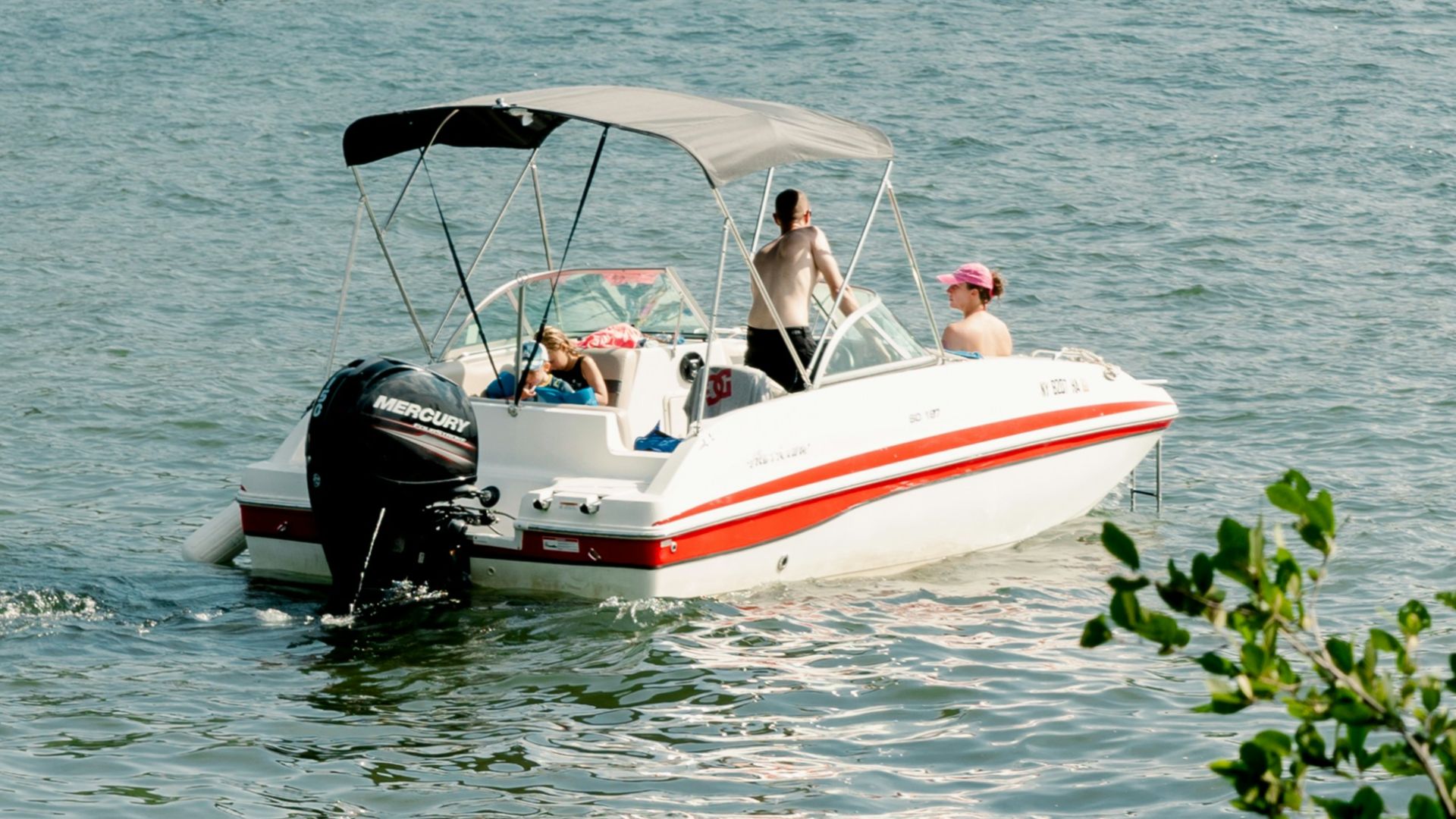
Back home, owning a boat can feel like a serious hobby. At a Canadian cottage, somebody's aunt casually pulls away from the dock in a pontoon while carrying a coffee and discussing dinner. Ontario has an enormous boating culture, with marinas, launches and rentals scattered throughout cottage regions.
 Matti Blume, Wikimedia Commons
The Boat Can Basically Become The Family Car
Need ice cream? Boat. Visiting friends across the lake? Boat. Going out for lunch? Depending on the lake, also boat. Americans accustomed to hopping into an SUV may find it wonderfully strange that a dock can function like a driveway and a marina can become the cottage-country equivalent of a parking lot.
"Going Into Town" Is An Actual Event
You don't casually discover you're out of hamburger buns when the nearest decent grocery store is a considerable drive—or boat ride—away. Cottage veterans learn to stock up. A trip "into town" can mean groceries, ice, fuel, bait, hardware, coffee, and three things nobody remembered they needed until the car was already moving.

The General Store Still Matters
In plenty of American vacation destinations, you've got Walmart, Target, pharmacies, and chain restaurants within easy reach. Cottage country can feel refreshingly different. Small towns and general stores remain useful stops for ice, snacks, forgotten supplies, fishing gear, and emergency marshmallows. Suddenly paying attention to closing time becomes important again.
 Chicken4War, Wikimedia Commons
The Loon Is Basically The Soundtrack
Americans hearing a common loon for the first time may wonder what mysterious creature is calling across the lake after dark. Canadians barely look up. That haunting cry is so closely associated with Canadian lakes that the bird appears on Canada's one-dollar coin—which is, naturally, why Canadians call it the "loonie."

Mosquitoes Apparently Own The Place
Cottage country is beautiful. Cottage country also has bugs. Mosquitoes, blackflies and other tiny airborne residents can turn an unprepared American into a frantic interpretive dancer within minutes. Bug spray isn't something Canadians toss into the bag just in case. It can be treated more like essential equipment alongside sunscreen.

Canadians Have Surprisingly Strong Dock Opinions
Floating dock or permanent dock? Morning sun or sunset? Adirondack chair or Muskoka chair? Americans may not realize they've wandered into deeply important territory. The dock isn't merely where the boat goes. It's where you swim, read, socialize, nap, drink coffee, watch sunsets, and quietly judge whoever made too much wake near shore.

The "Muskoka Chair" Looks Very Familiar
Americans know that low, wide wooden seat as an Adirondack chair. In Ontario cottage country, you'll frequently hear a similar style called a Muskoka chair. So if an American and Canadian start arguing over what the chair is called, congratulations: you've discovered one of the least consequential international disputes imaginable.

Cottage Décor May Have Stopped Updating In 1978
Plaid blankets. Wood paneling. Old board games. Mismatched mugs. A lamp nobody remembers buying. Some cottages are spectacularly luxurious, but others proudly preserve decades of family history. Even Destination Canada jokes that some Ontario cottages remain charmingly "stuck in the '70s." For nostalgic Americans, that may be half the appeal. SiamBill555, Wikimedia Commons
Nobody Seems Particularly Concerned About Entertainment
Where's the television? What are we doing tonight? Canadians have answers: cards, Monopoly, swimming, canoeing, fishing, campfires, or sitting around talking until someone gets hungry again. Cottage culture deliberately leans toward unplugging; Destination Canada even contrasts Monopoly and campfire sessions with Netflix and phones.

Dinner Somehow Tastes Better Outside
Nobody drove three hours north to prepare a delicate seven-course tasting menu. Cottage dinners tend to favor grills, burgers, corn, steaks, hot dogs, fresh local food, and anything that can feed a crowd without keeping somebody trapped in the kitchen. Add a lake view and suddenly an ordinary cheeseburger tastes suspiciously expensive.

Nighttime Gets Seriously Dark
Americans arriving from cities and suburbs may not realize how much artificial light they're accustomed to until cottage country goes dark. In places with little nearby development, the night sky can be spectacular. Muskoka's Torrance Barrens is even home to a designated dark-sky preserve. Your phone camera will inevitably fail to capture how good it looks.

The Weekend Traffic Makes Absolutely No Sense
You can spend hours surrounded by lakes, forest and apparent wilderness—and then join what feels like half of Toronto heading home at the same time. Summer weekends send huge numbers of people between southern Ontario and cottage country. The peaceful Canadian wilderness experience sometimes concludes with the very unpeaceful Canadian tradition of staring at brake lights.

Some Of Those "Cottages" Are Mansions
This is where first-time Americans may start laughing at the terminology. Muskoka's shorelines include everything from simple family cottages to elaborate estates and private-island properties; National Geographic has even described the region as the "Hamptons of the North." Canadians may still casually say, "We're heading up to the cottage," as though they're spending the weekend in a shed.

The Cottage Can Stay In The Family For Generations
Many cottages aren't simply vacation rentals—they're family institutions. Summers can become attached to the same lake, dock, bedrooms, neighbors and traditions year after year. That's why an old canoe, battered board game, or questionable piece of 1970s furniture may survive indefinitely. Nobody is allowed to throw it away because "it's always been here."

Eventually, Americans Understand Why Canadians Keep Coming Back
At first, cottage country can seem almost aggressively simple: lake, dock, boat, barbecue, campfire, repeat. Then the sun starts dropping behind the trees, the water goes still, somebody hears a loon across the lake, and nobody has checked their phone in an hour.
That's usually when it clicks. With more than 1,600 lakes in Muskoka alone and countless waterfront escapes elsewhere in Ontario, cottage country isn't really about doing more on vacation. It's about discovering how surprisingly good it feels to do less.

You May Also Like: