Structures That Stole The Spotlight
Architecture gets interesting once rules start feeling optional. Big risks and strange choices helped American cities grow personalities, stir opinions, and leave behind buildings that feel more like statements than shelter for decades to come.
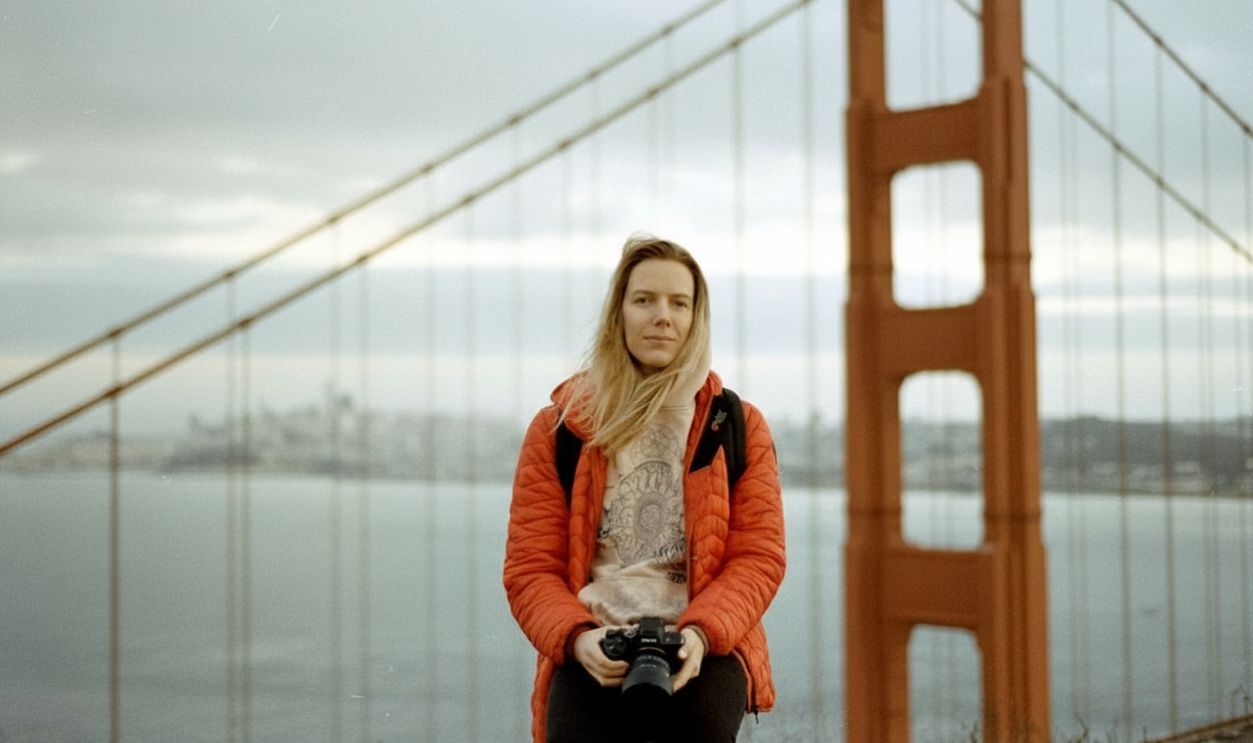
Empire State Building – New York City
What grabbed people first in 1931 was the sheer speed behind this record-breaking tower, finished in only 410 days during the Great Depression. The height reached 1,454 feet with its antenna, and storms still remind New Yorkers of its presence with 20 to 25 lightning strikes yearly.
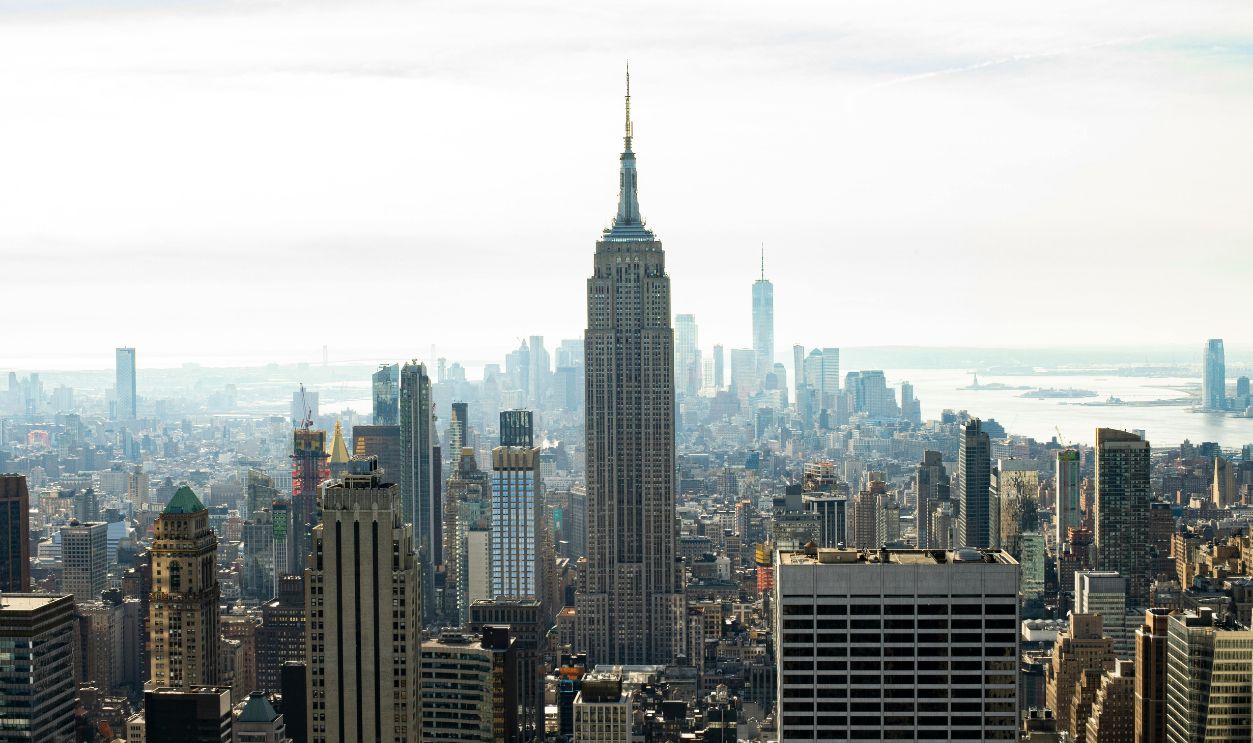
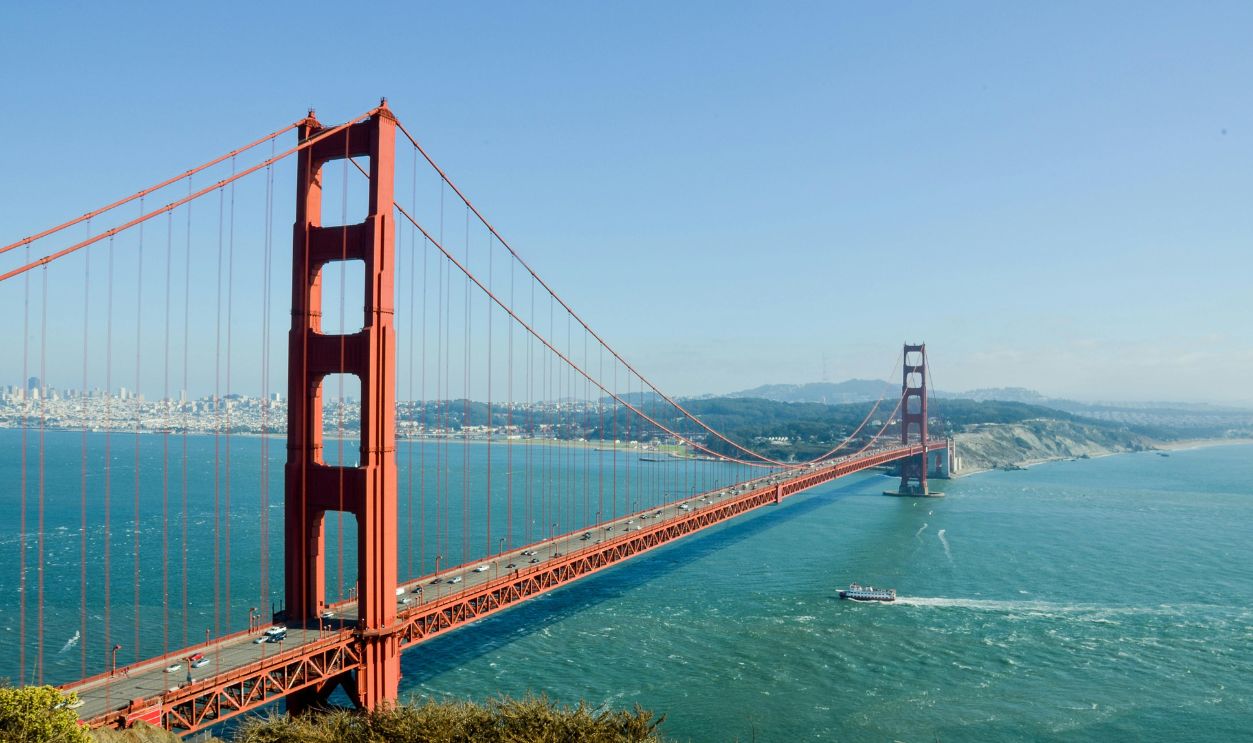
Golden Gate Bridge – San Francisco
Nothing prepared visitors in 1937 for a suspension bridge stretching 4,200 feet across the strait with towers rising 746 feet above the water. The 1.7-mile crossing quickly became a symbol of the city, helped by the International Orange paint chosen to stand out in heavy fog.
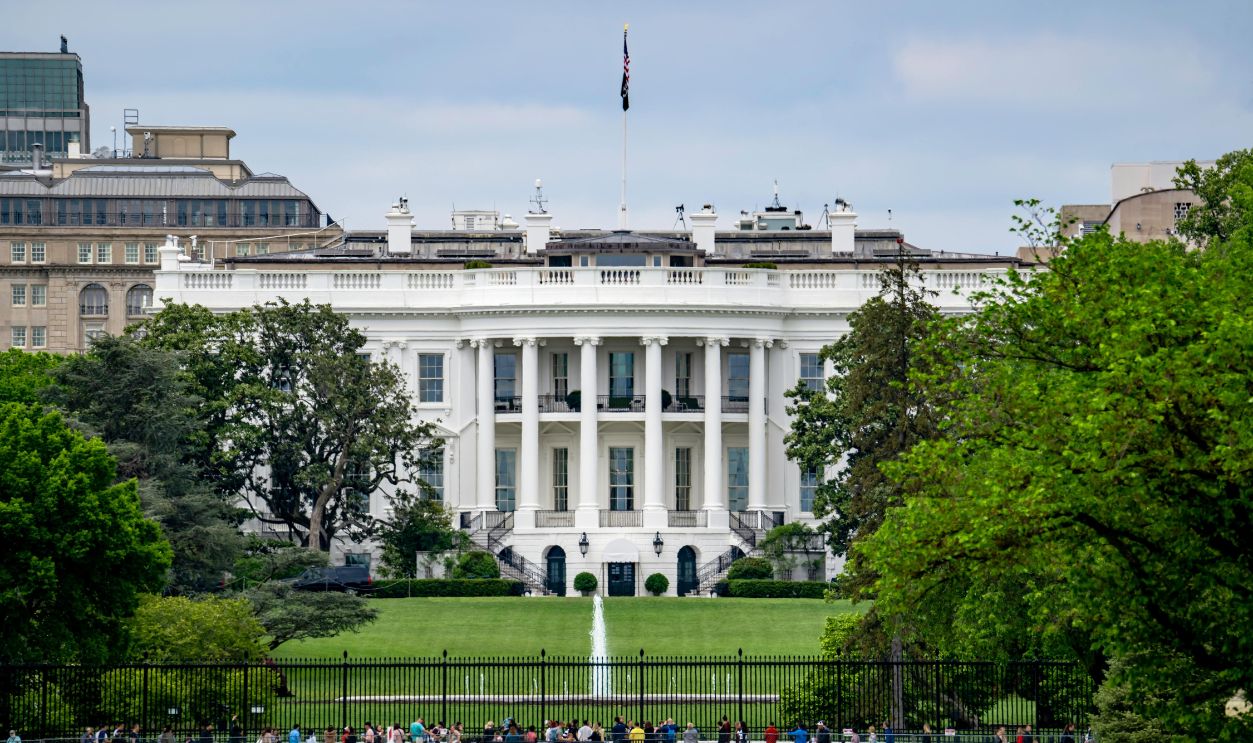
White House – Washington, D.C.
Life inside 1600 Pennsylvania Avenue began in 1800 when John Adams stepped into a Neoclassical home shaped by ideas rooted in European design. Construction had started in 1792, and the building soon became a national focal point as presidents continued shaping policy within its formal rooms.
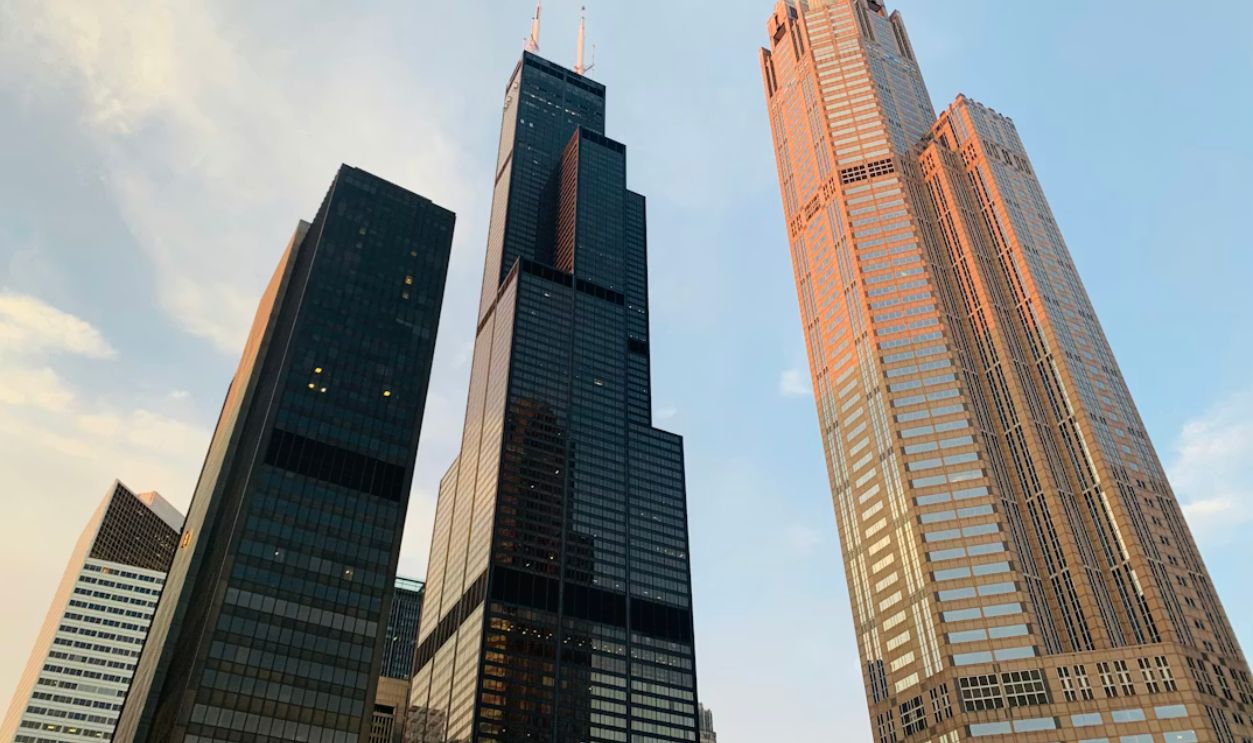
Willis Tower – Chicago
Chicago gained a new attitude in 1974 as this tower climbed to 1,451 feet at the roof and 1,707 feet with antennas. Bruce Graham and Fazlur Rahman Khan designed it, and today, visitors edge onto the glass ledge to stand 1,353 feet above the sidewalks below.
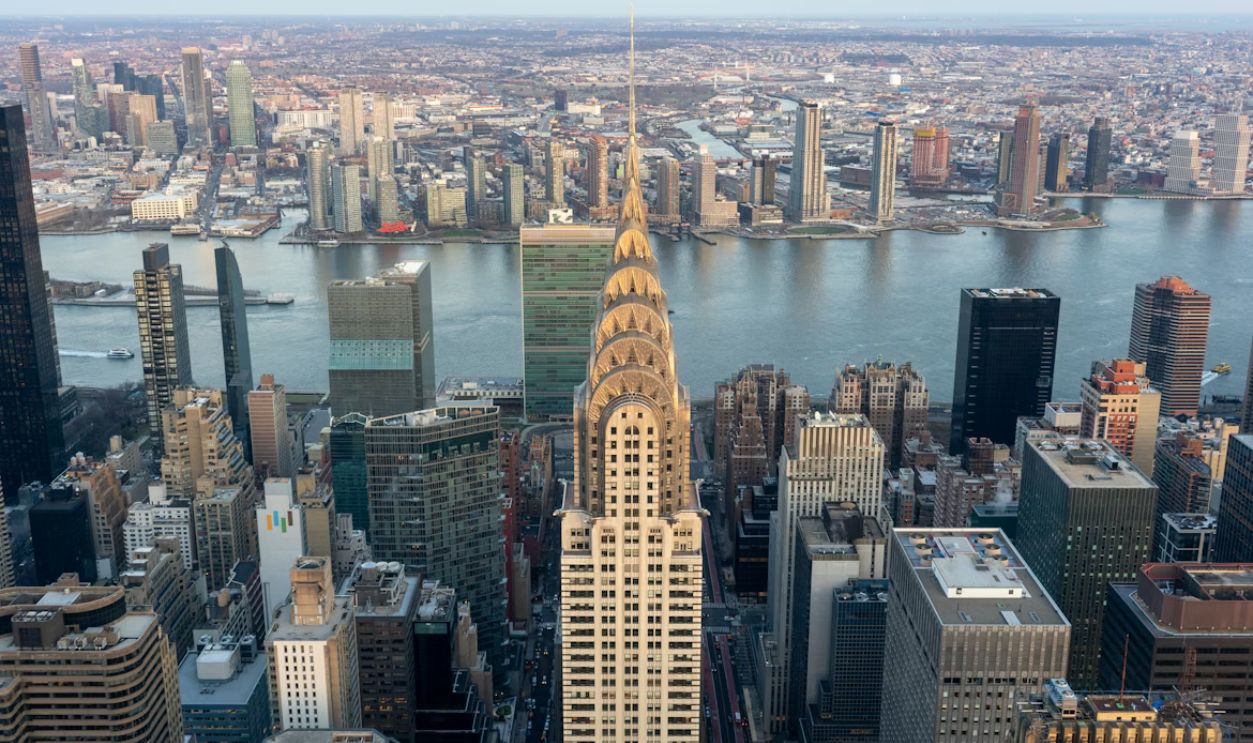
Chrysler Building – New York City
Art Deco style found its boldest moment in 1930 when this tower briefly claimed the title of tallest in the world at 1,046 feet. William Van Alen had hidden the spire inside the structure before lifting it skyward to outshine a competing skyscraper.
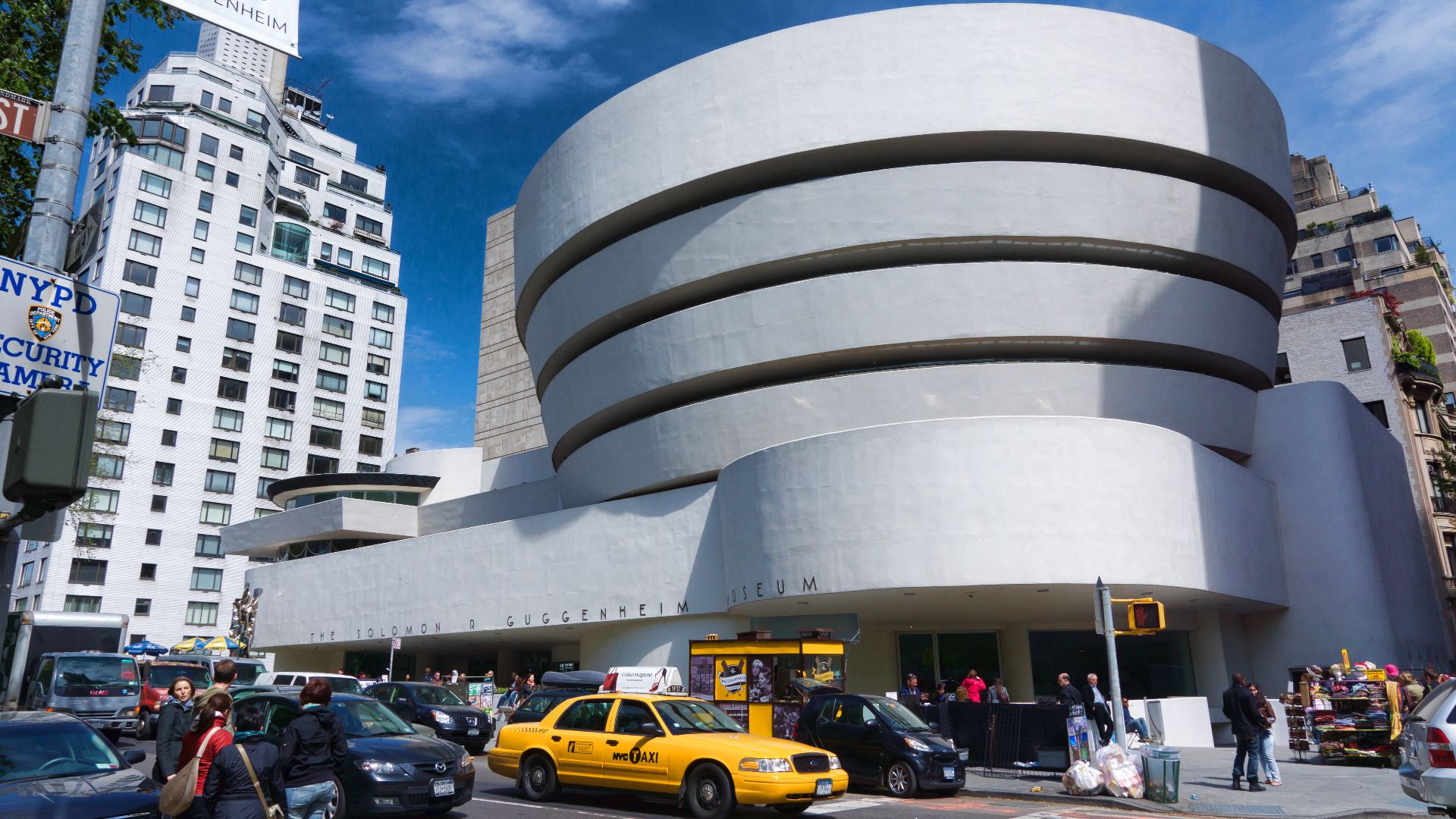
Guggenheim Museum – New York City
Visitors stepping inside this museum immediately notice Frank Lloyd Wright’s spiral ramp, completed in 1959 after years of debate about his unconventional design. The building later earned UNESCO recognition in 2019, even though some artists originally hesitated to show work in such an unfamiliar space.
 Jean-Christophe BENOIST, Wikimedia Commons
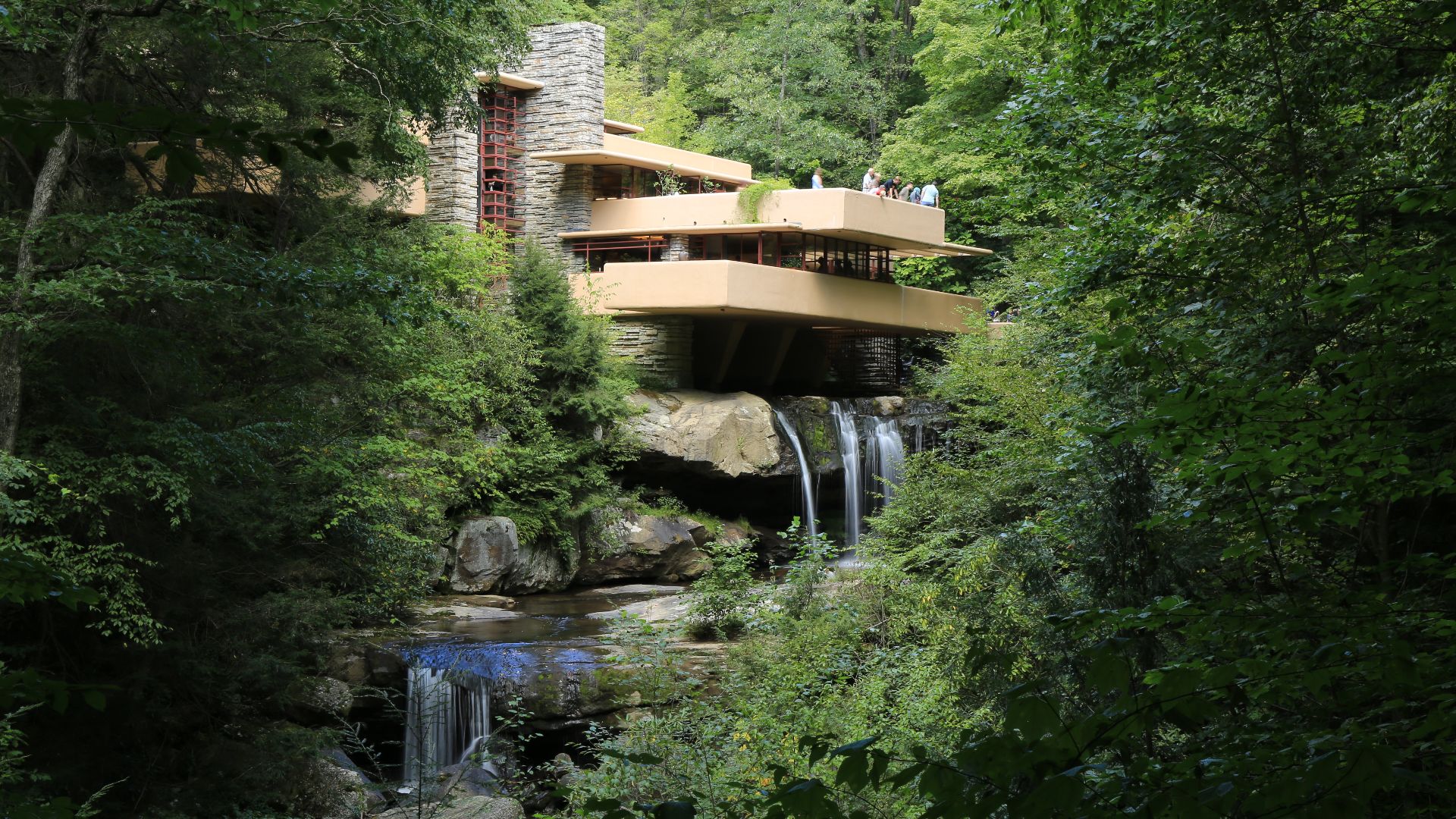
Fallingwater – Pennsylvania
Wright pushed ideas further in 1937 by placing this home directly over a waterfall in Mill Run, a choice the client never expected. The structure blended into the surrounding land using bold cantilevers and later gained UNESCO status in 2019 for its harmony with its natural surroundings.
 User:Euelbenul, Wikimedia Commons
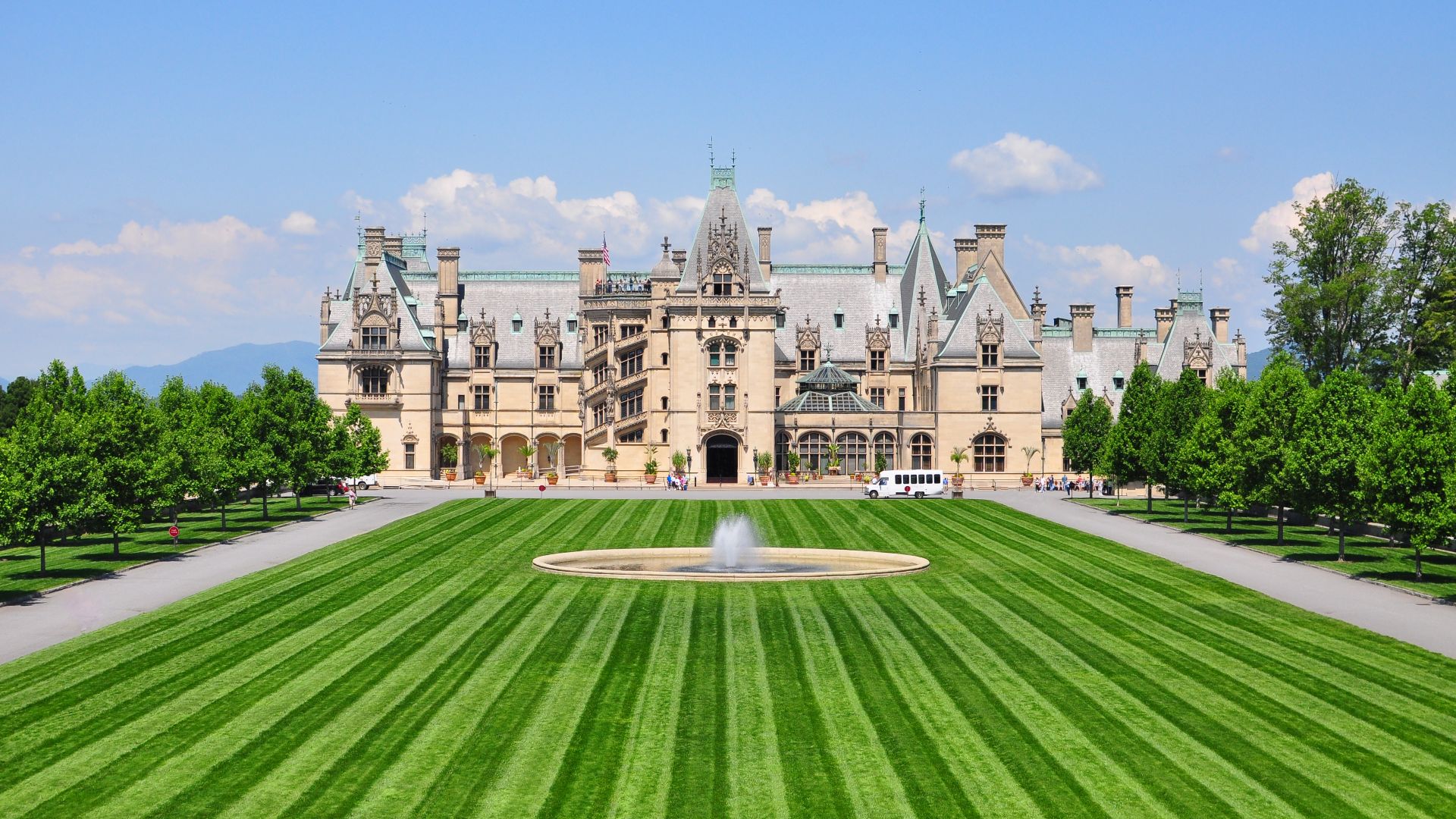
Biltmore Estate – Asheville, North Carolina
America’s largest private home took shape between 1889 and 1895 as George Washington Vanderbilt II planned a 250-room retreat in the mountains. Architect Richard Morris Hunt gave it a Chateauesque style, and the surrounding estate once supported dairies, poultry operations, and an early forestry program.
 Blake Lewis, Wikimedia Commons
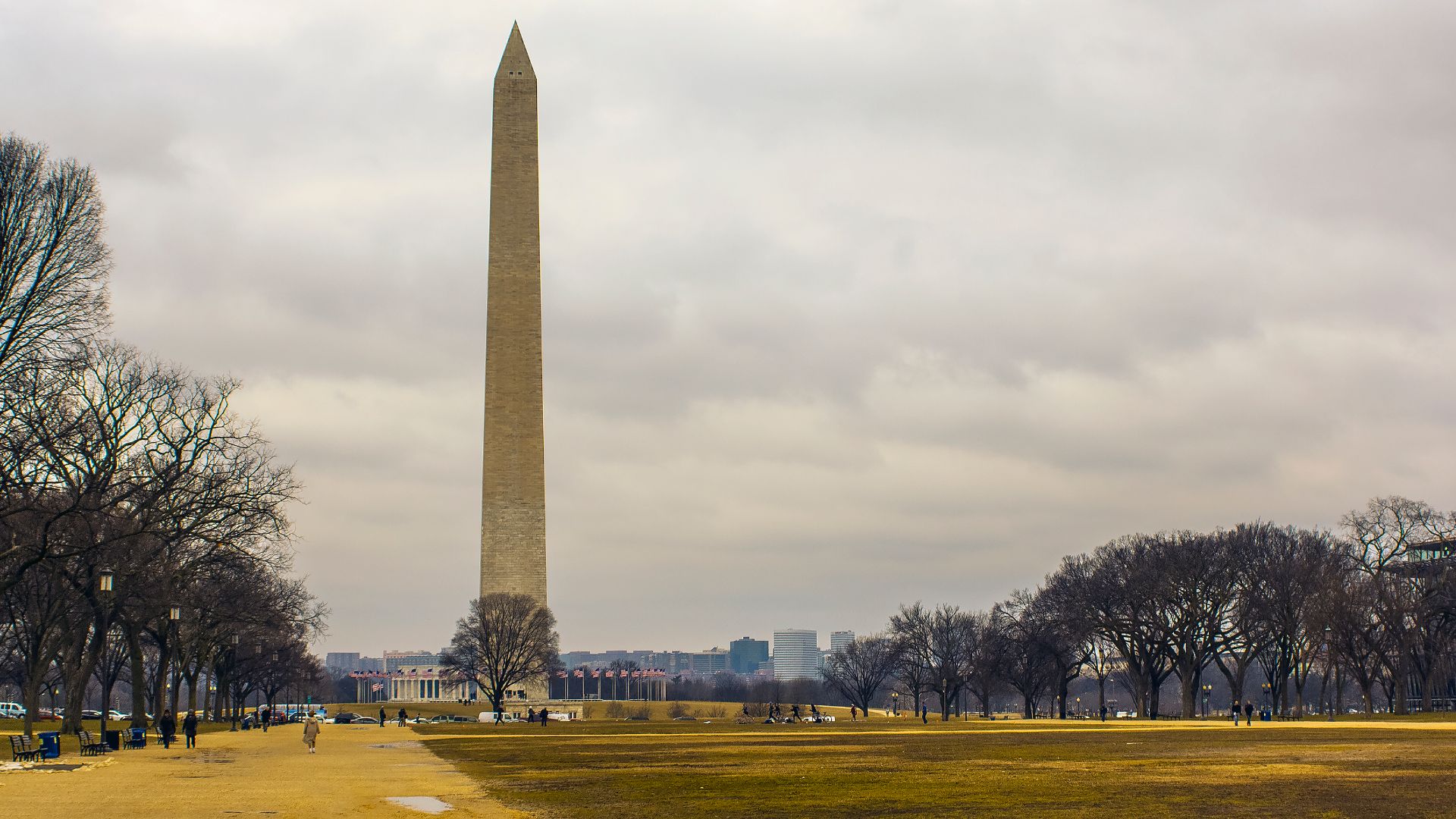
Washington Monument – Washington, D.C.
An obelisk rising 555 feet eventually honored George Washington after construction stretched from 1848 to 1884. A long pause even left a noticeable color change in the marble. Once completed, the structure stood as the tallest stone monument in the world and a central landmark for the capital.
Lincoln Memorial – Washington, D.C.
A Greek Revival design anchored this 1922 memorial, where Henry Bacon’s temple-like structure surrounds a 19-foot statue of Abraham Lincoln. Daniel Chester French created the figure, and decades later, the memorial gained deep significance when Martin Luther King Jr. stood on its steps to share his iconic speech.
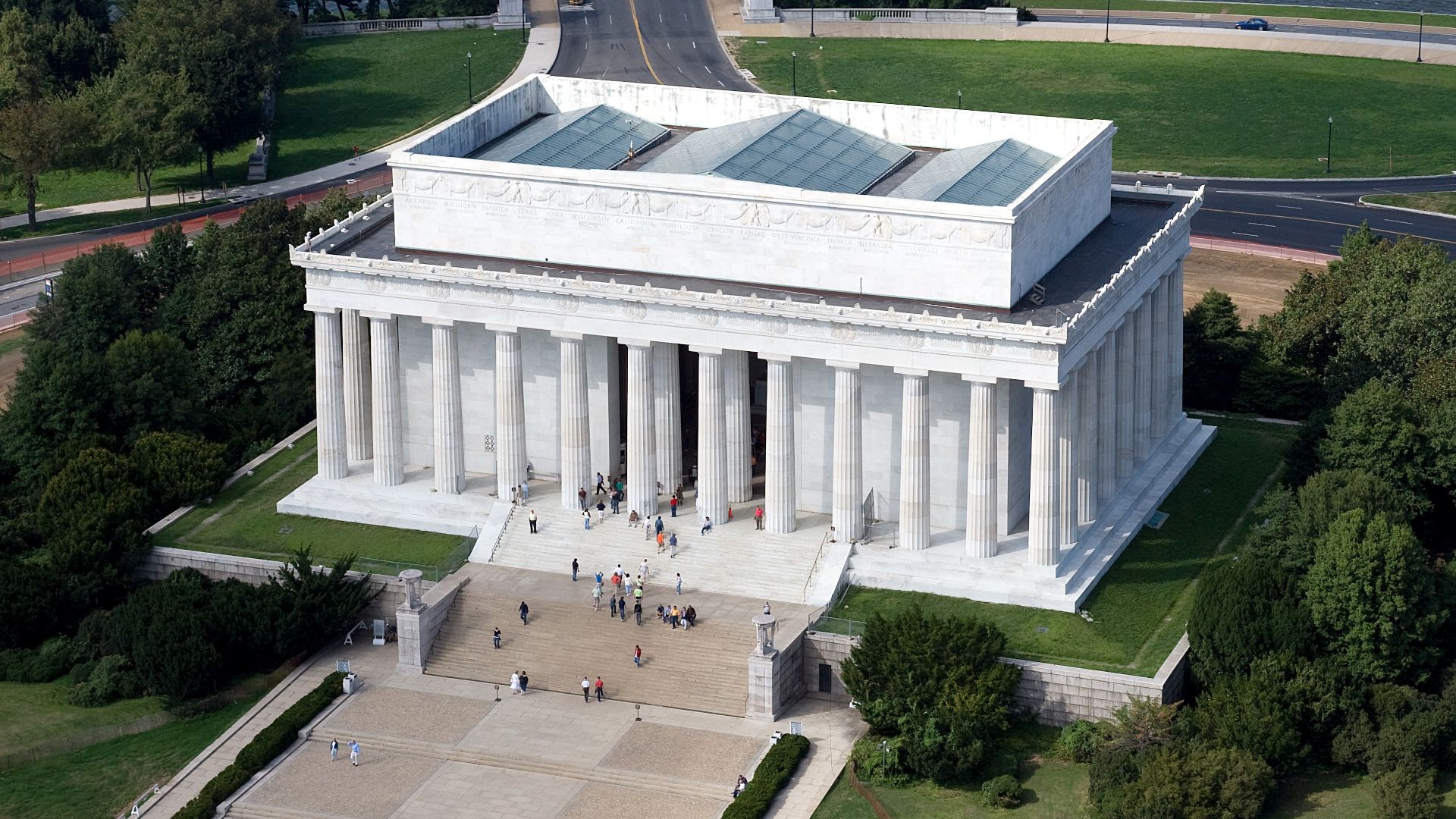 Carol M. Highsmith, Wikimedia Commons
Jefferson Memorial – Washington, D.C.
A calm waterfront setting surrounds this 1943 memorial honoring Thomas Jefferson, designed in a Neoclassical style by John Russell Pope. Inside stands a 19-foot bronze statue, and the building’s circular shape echoes the Pantheon in Rome, reflecting Jefferson’s admiration for classical architecture.
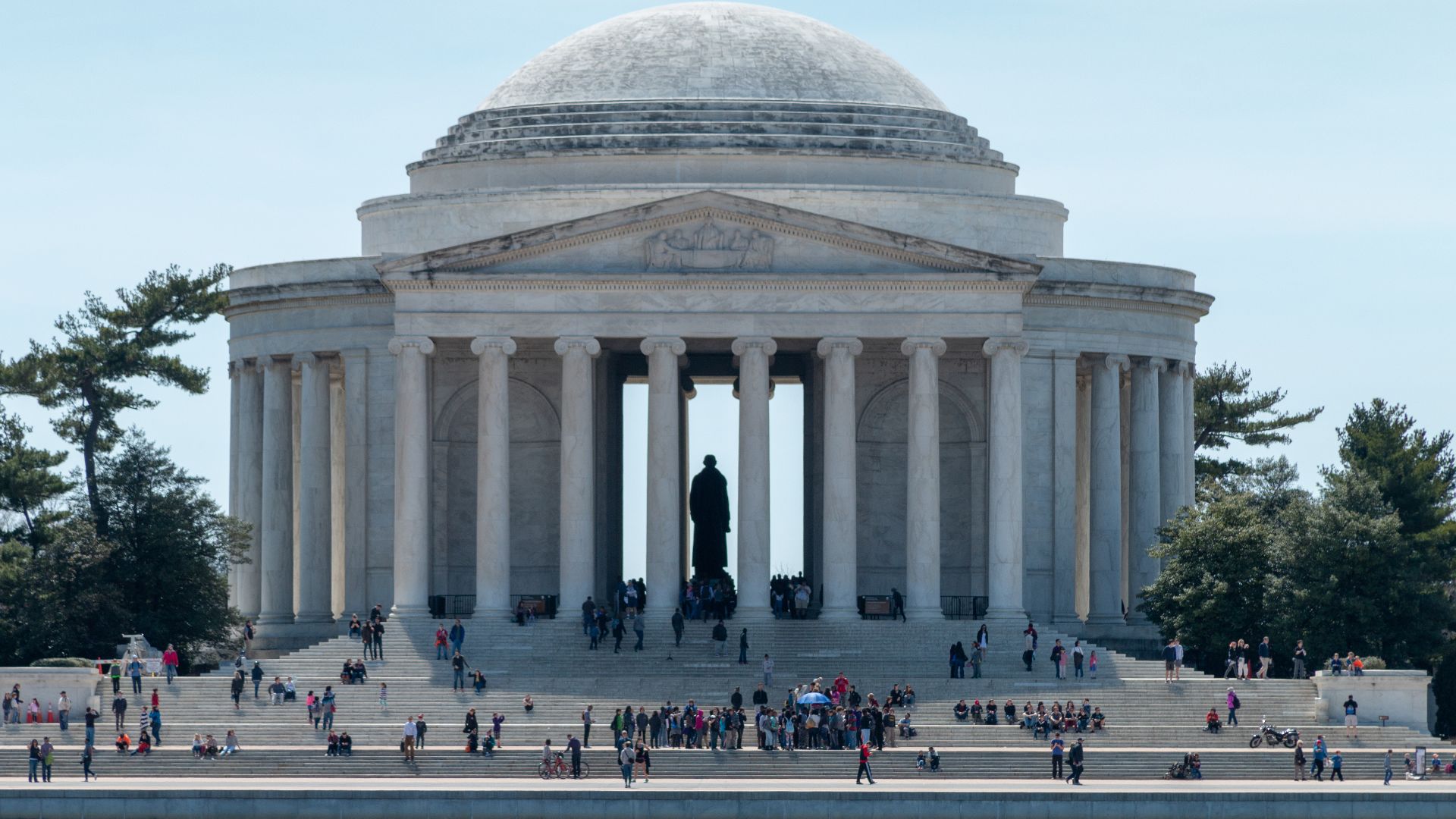 Michael Jimenez , Wikimedia Commons
US Capitol Building – Washington, D.C.
Power in the United States gathers inside this historic building, where construction began in 1793 and continued through the nineteenth century. The cast iron dome, completed in 1866, became its signature feature, painted to resemble stone while Congress met beneath it in both the House and Senate chambers.
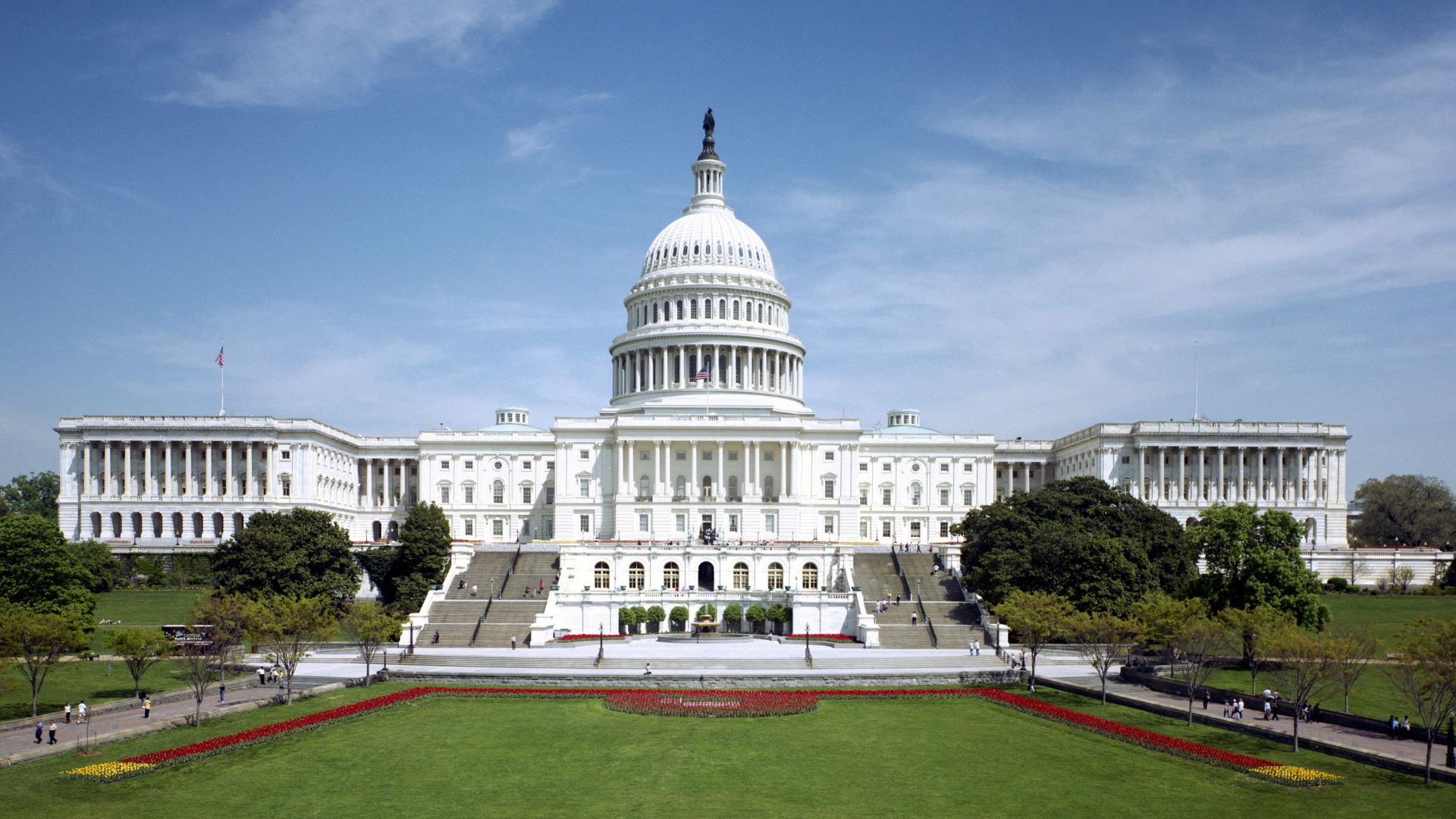 Architect of the Capitol, Wikimedia Commons
Brooklyn Bridge – New York City
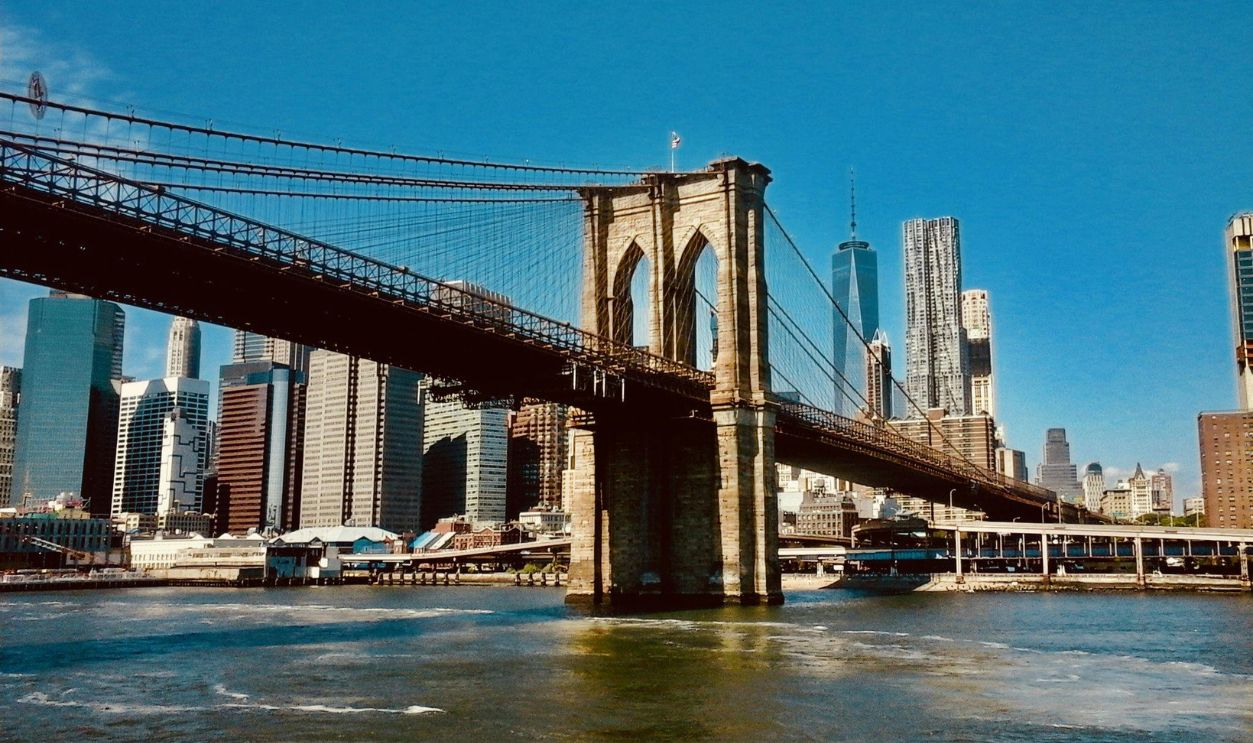
A new connection between Manhattan and Brooklyn arrived in 1883 when this steel wire suspension bridge opened with a 1,595-foot span. John Roebling designed it before his son, Washington, completed the job, and crowds trusted its strength after 21 elephants marched across on opening day.
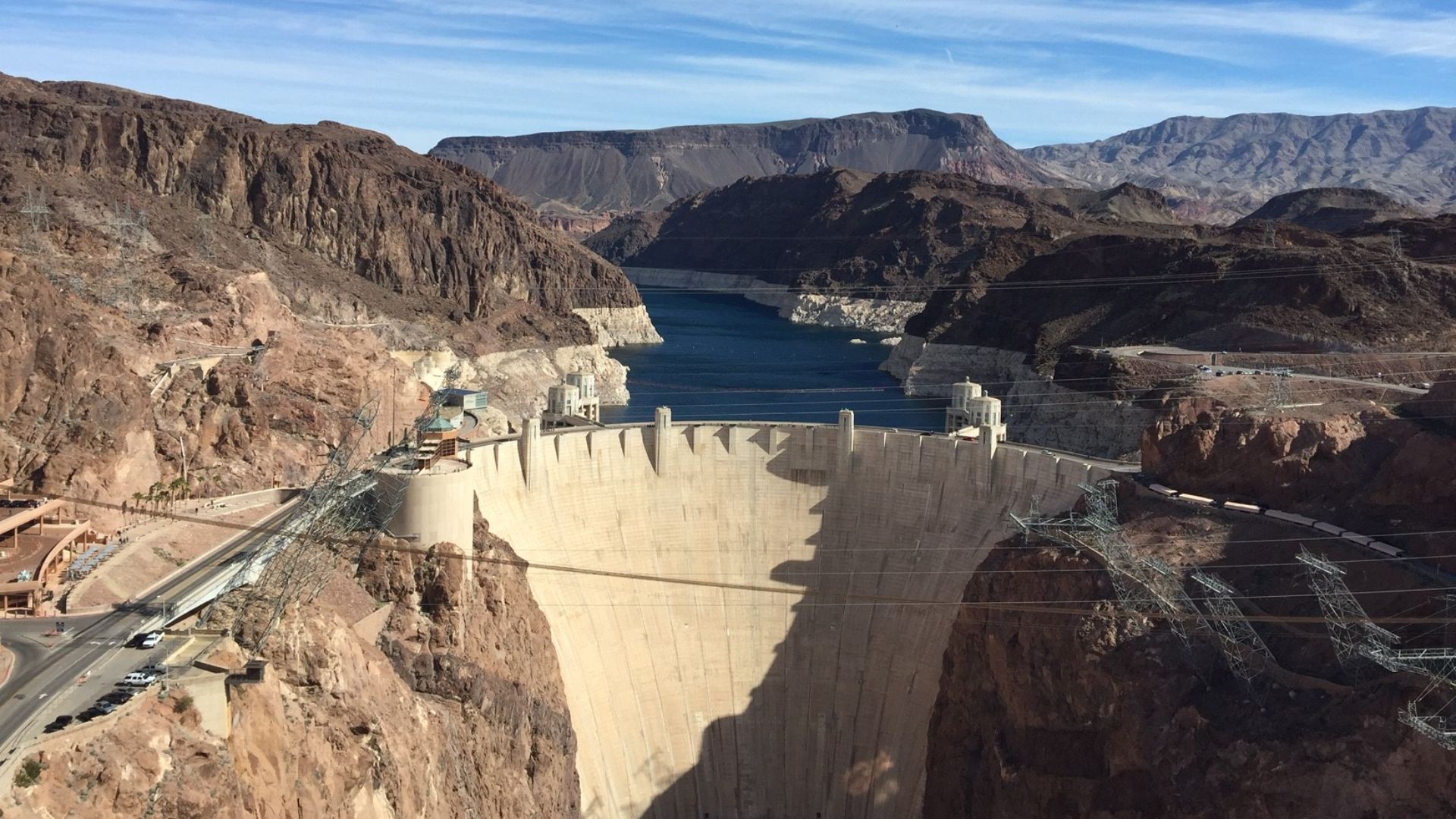
Hoover Dam – Nevada/Arizona
A massive engineering push during the Great Depression created this 1936 dam rising 726 feet above the Colorado River. It stores water for the Southwest and generates hydroelectric power, relying on more than 3 million cubic yards of concrete poured into place to hold back the reservoir.
 Western Area Power, Wikimedia Commons
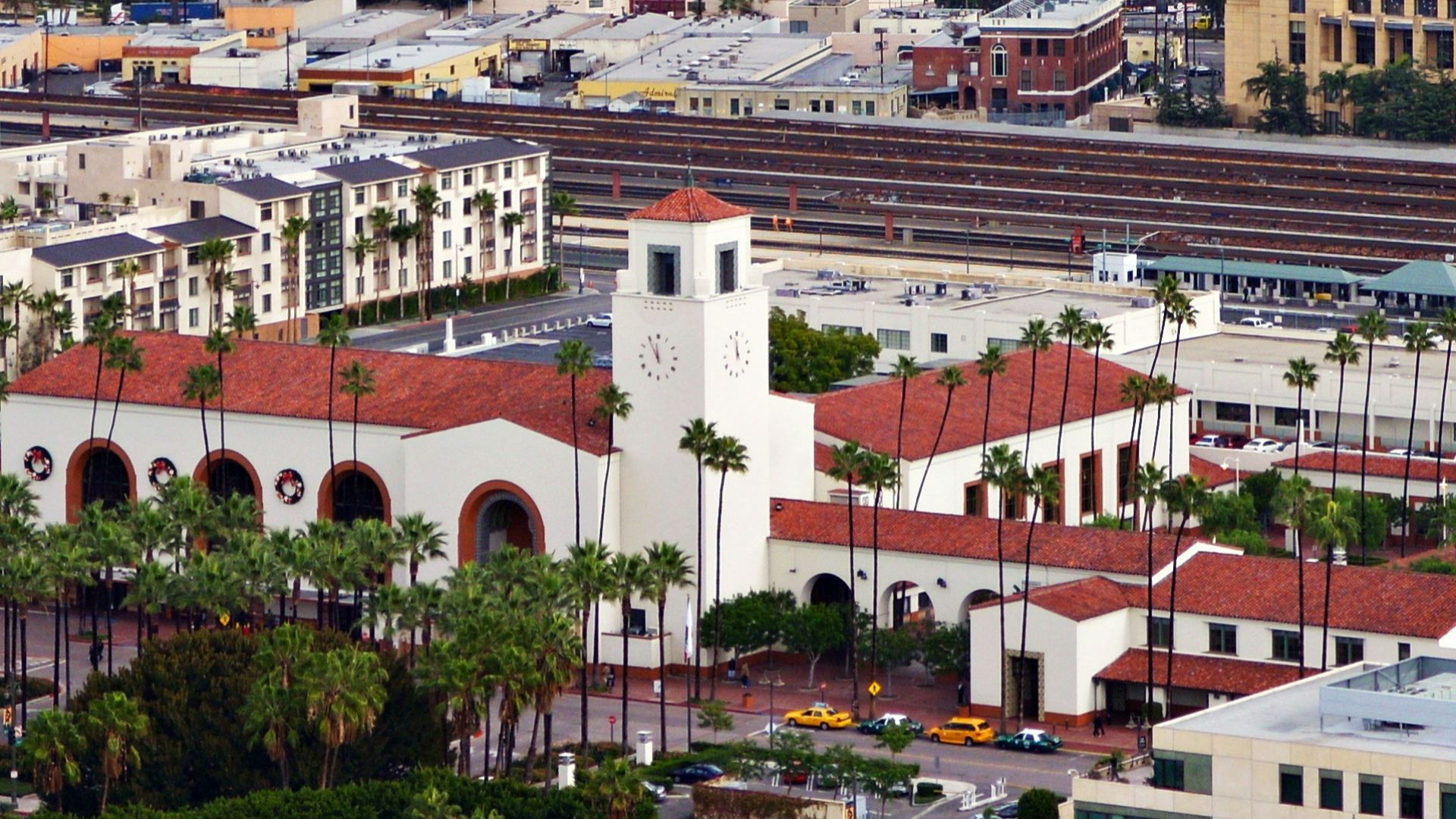
Union Station – Los Angeles
Travelers entering this 1939 terminal step into a blend of Art Deco and Mission Revival design that makes it the West’s largest passenger rail hub. Amtrak and regional lines pass through daily, and Hollywood embraced the station too, using it as a striking backdrop in several films.
 Basil D Soufi, Wikimedia Commons
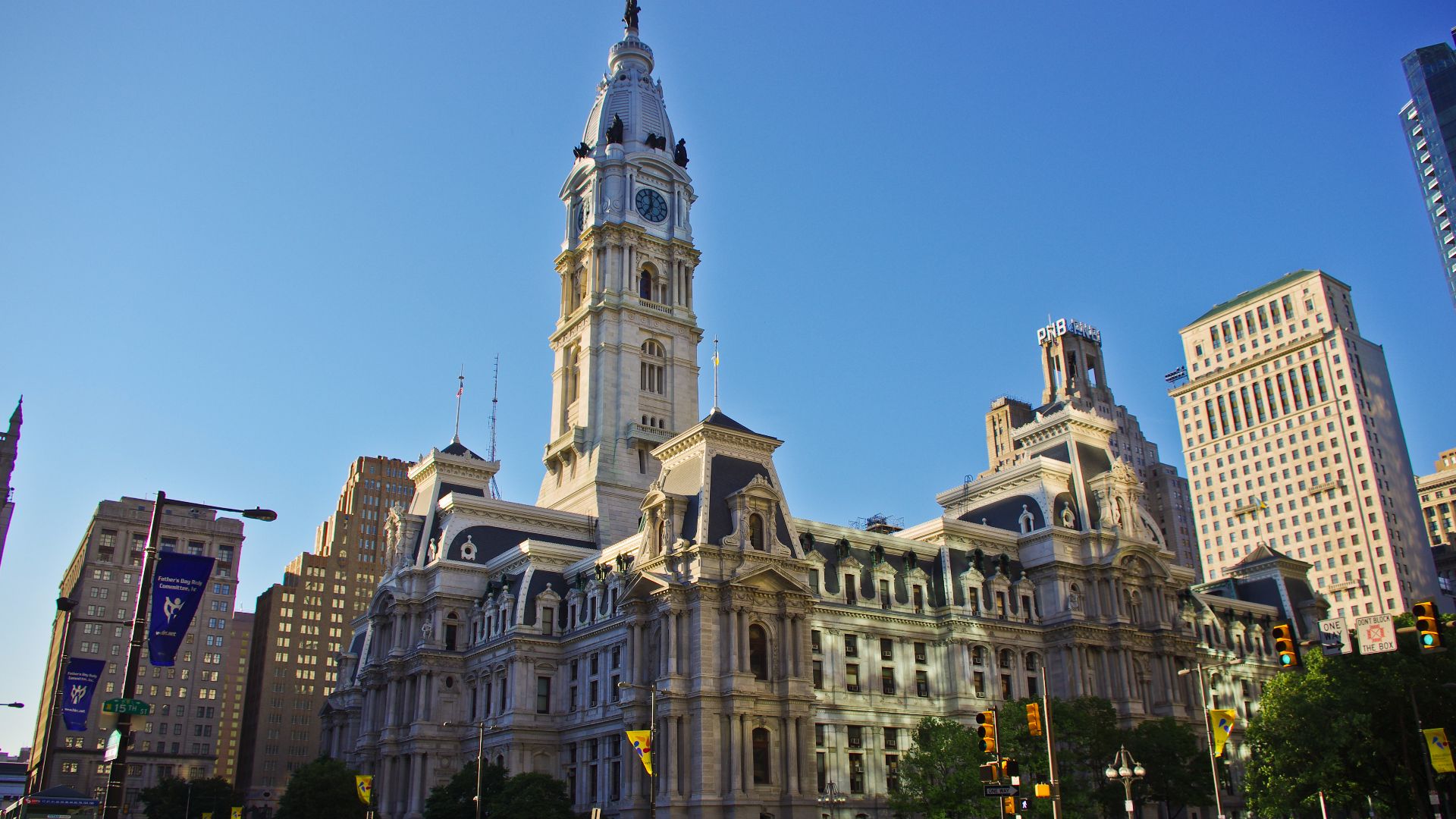
Philadelphia City Hall – Philadelphia
A towering masonry landmark finished in 1901 claimed attention with its 548-foot height and a 37-foot statue of William Penn perched on top. John McArthur Jr. designed the building, and for decades, no structure in the city could legally rise higher than Penn’s statue.
 Antoine Taveneaux, Wikimedia Commons
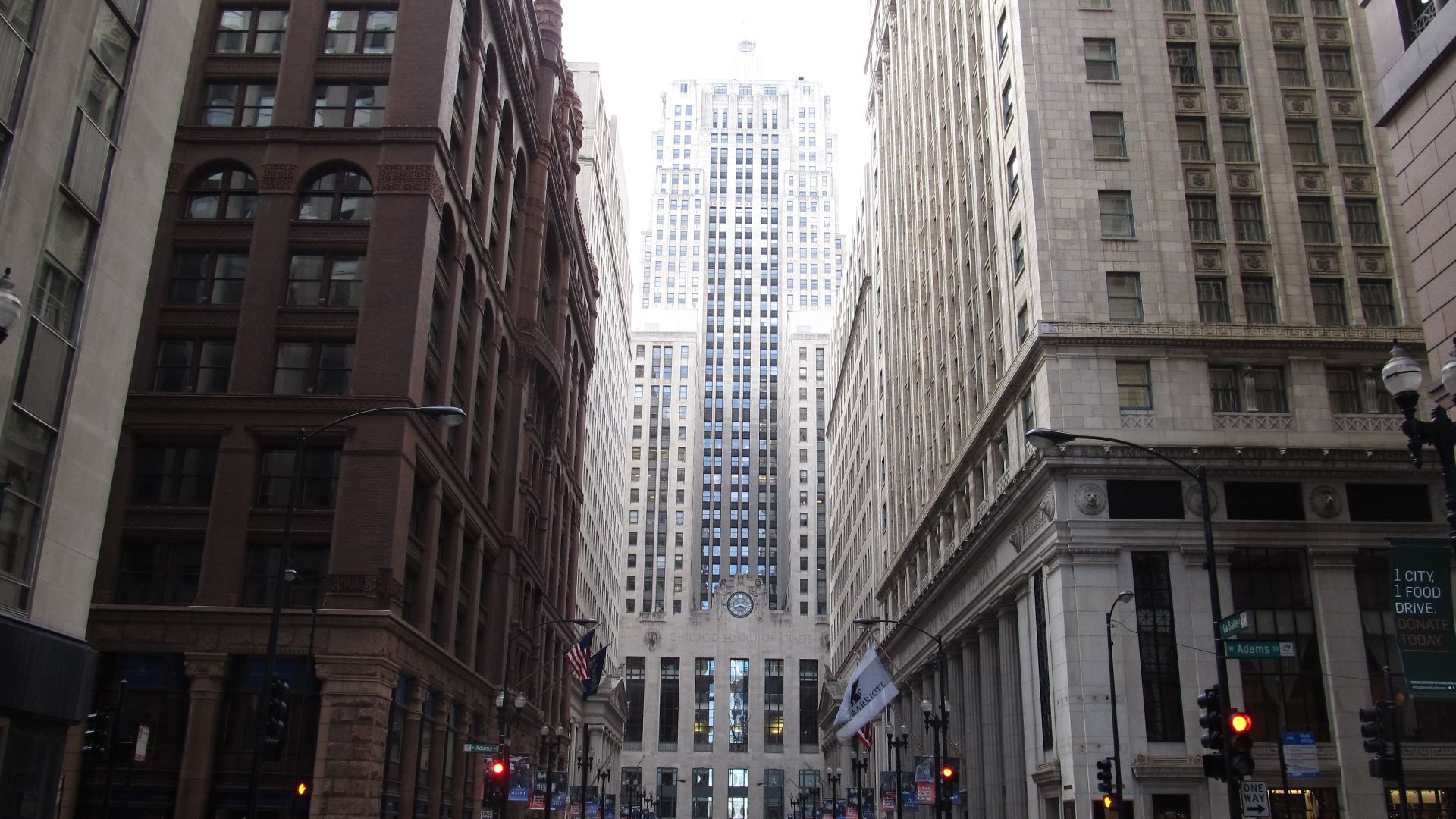
Chicago Board Of Trade Building – Chicago
Art Deco energy defines this 1930 skyscraper, which climbs 605 feet and ends with a statue of Ceres, the Roman goddess of agriculture. Holabird and Root designed the structure, and movie fans later recognized it as Wayne Enterprises headquarters in the film Batman Begins.
 Ken Lund from Reno, Nevada, USA, Wikimedia Commons
Hearst Castle – San Simeon, California
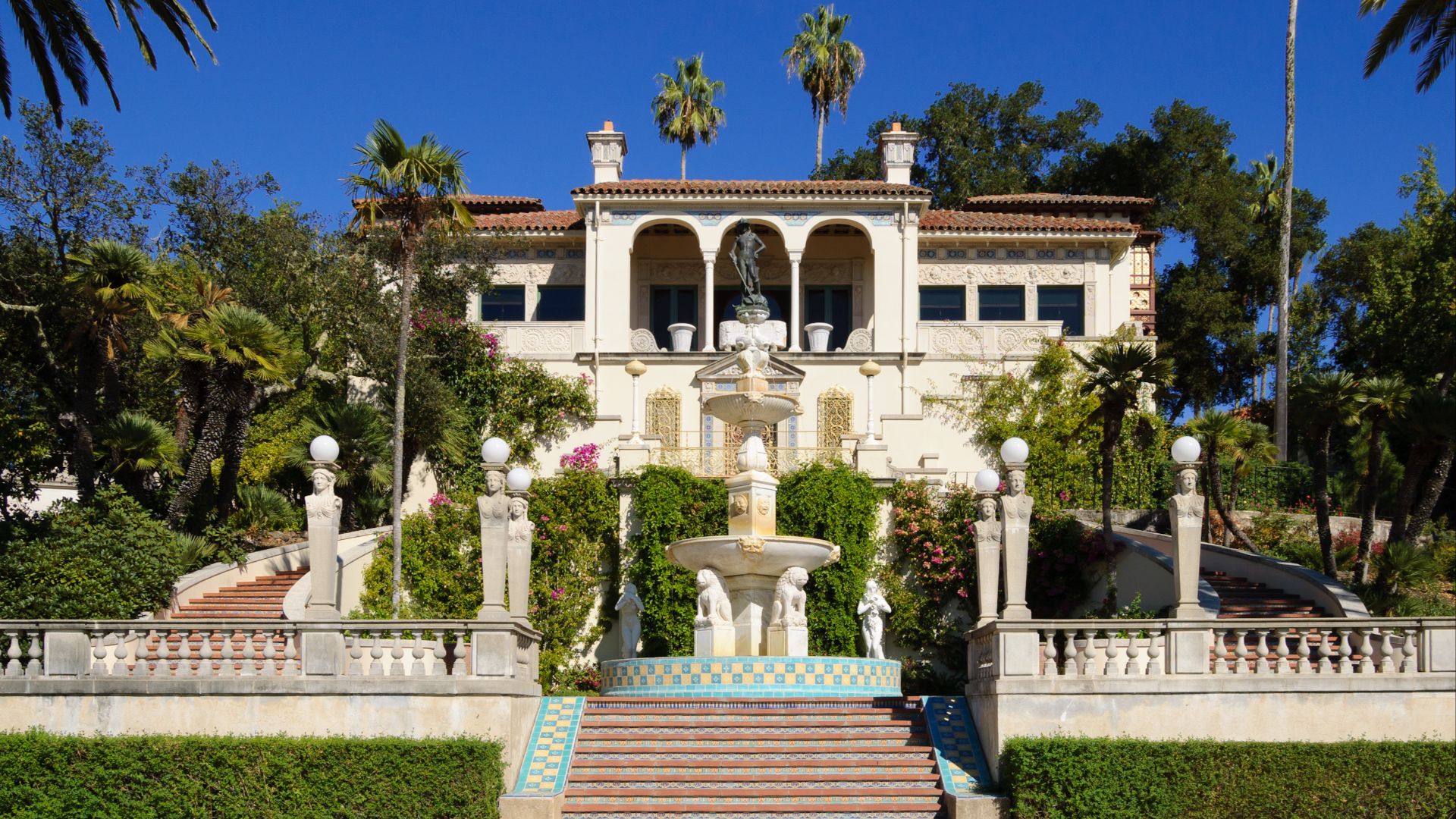
A lavish hillside retreat slowly emerged between 1919 and 1947 under the direction of architect Julia Morgan, who became California’s first woman to earn an architect’s license. William Randolph Hearst filled the estate’s 165 rooms with art, while Hollywood stars visited regularly, turning the property into a social spectacle.
 King of Hearts, Wikimedia Commons
Space Needle – Seattle
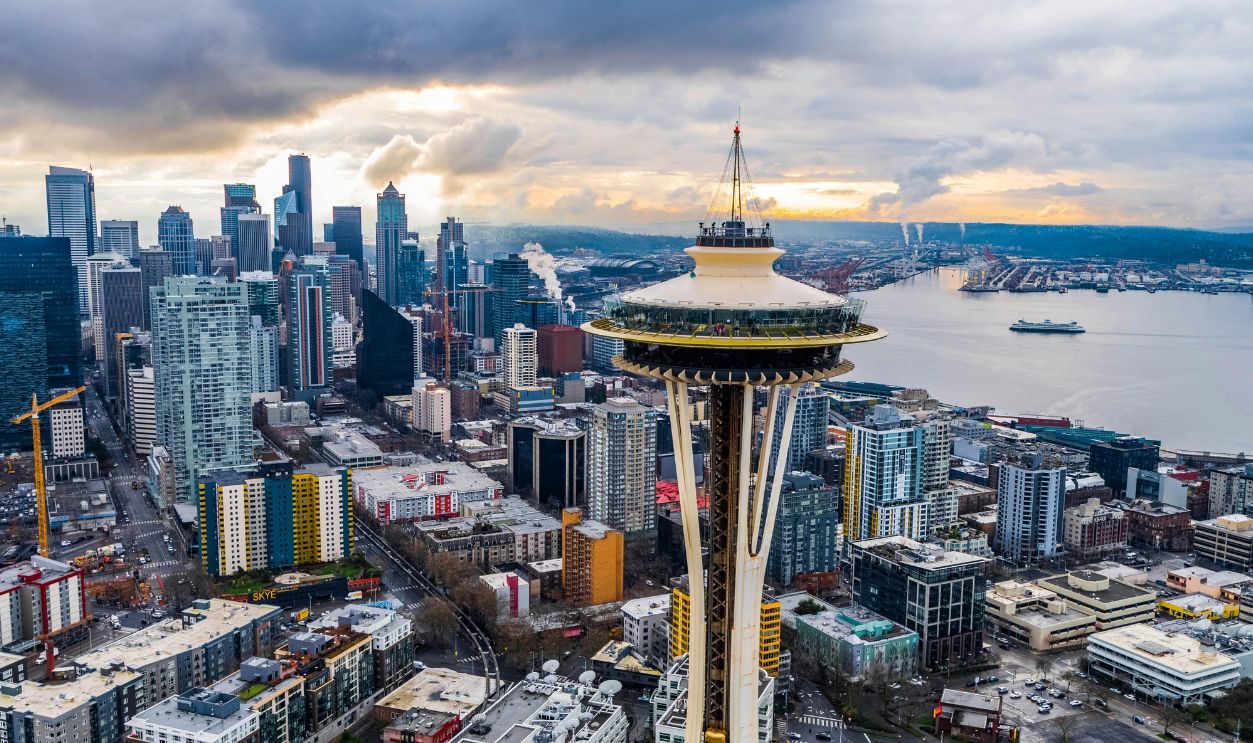
A futuristic silhouette rose over Seattle during the 1962 World’s Fair as the Space Needle climbed 605 feet with an observation deck set at 520 feet. Engineers designed it to withstand powerful winds and major earthquakes, which made the tower both a landmark and a resilient structure.
Walt Disney Concert Hall – Los Angeles
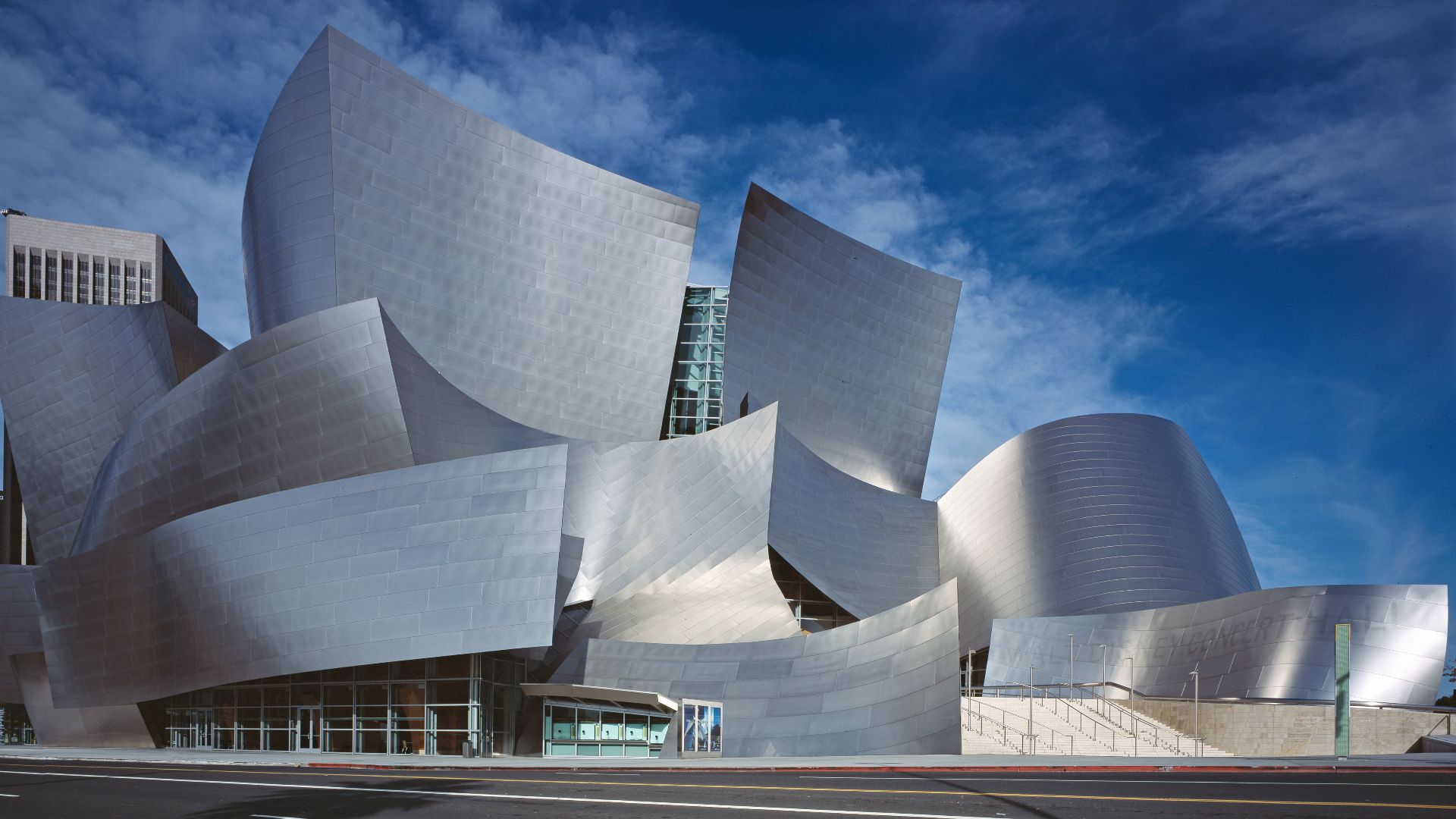
Frank Gehry’s sweeping stainless steel design gave Los Angeles a new cultural icon when the concert hall opened in 2003. It became home to the city’s Philharmonic, though early sunlight glare off the reflective panels surprised neighbors until crews dulled the surfaces to reduce heat.
 Carol M. Highsmith, Wikimedia Commons
Supreme Court Building – Washington, D.C.
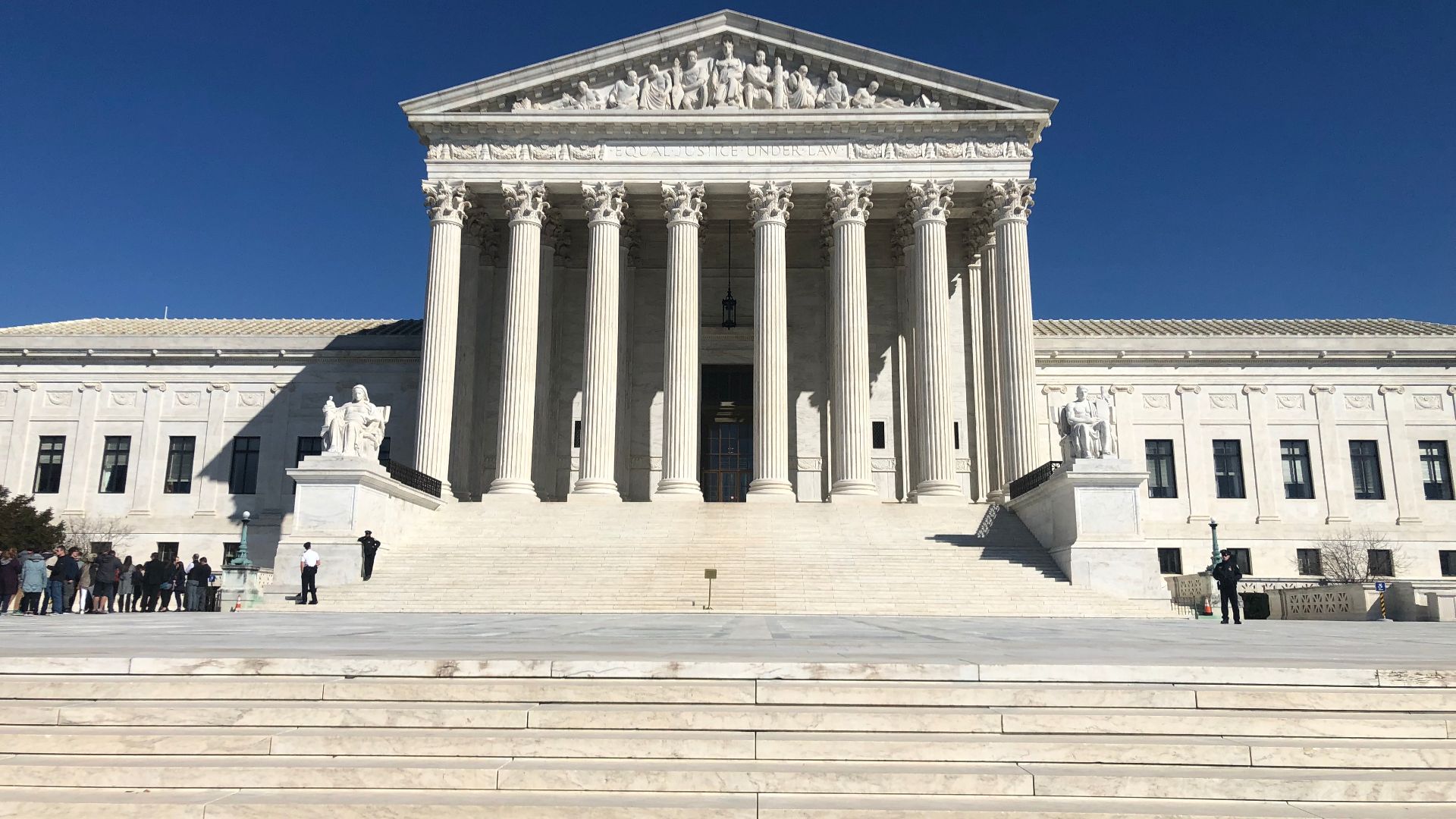
A sense of formality defines this 1935 structure designed by Cass Gilbert, who used Neoclassical architecture to signal stability in the nation’s highest court. Inside, major legal decisions take shape, while the exterior displays the well-known motto “Equal Justice Under Law” above the entrance.
Metropolitan Museum Of Art – New York City
An enormous collection began taking shape in 1870 and grew into the country’s largest art museum after moving to its Fifth Avenue home in 1880. Expansions by architects like Richard Morris Hunt and Calvert Vaux shaped the site, with the front steps evolving into a cultural gathering spot.
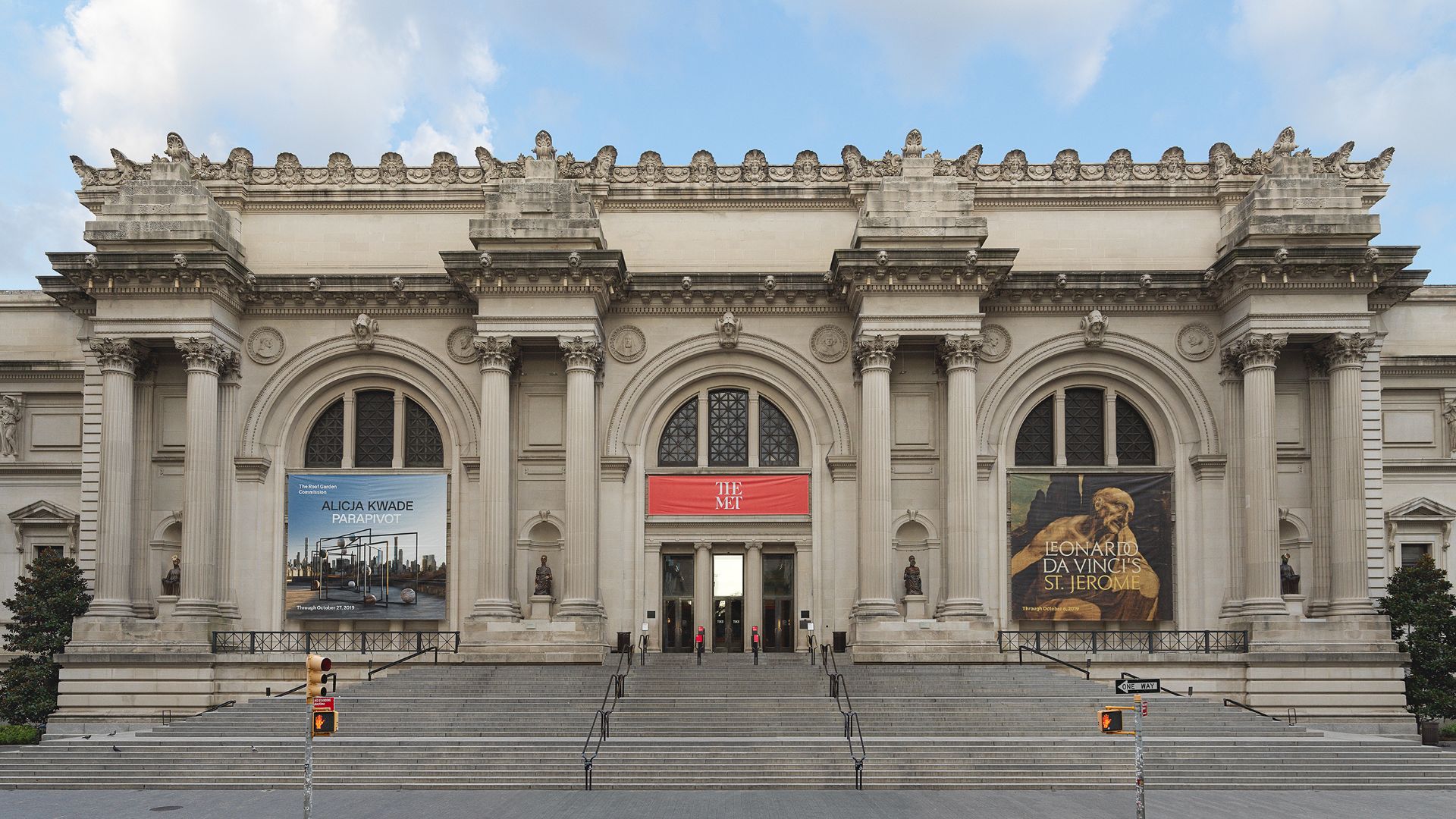 Hugo Schneider, Wikimedia Commons
Library Of Congress – Washington, D.C.
Knowledge sits at an astonishing scale inside this institution founded in 1800, which now preserves more than 170 million items. The Jefferson Building opened in 1897 as a Beaux Arts showpiece and now safeguards rare items, including an early Declaration of Independence draft penned by Thomas Jefferson.
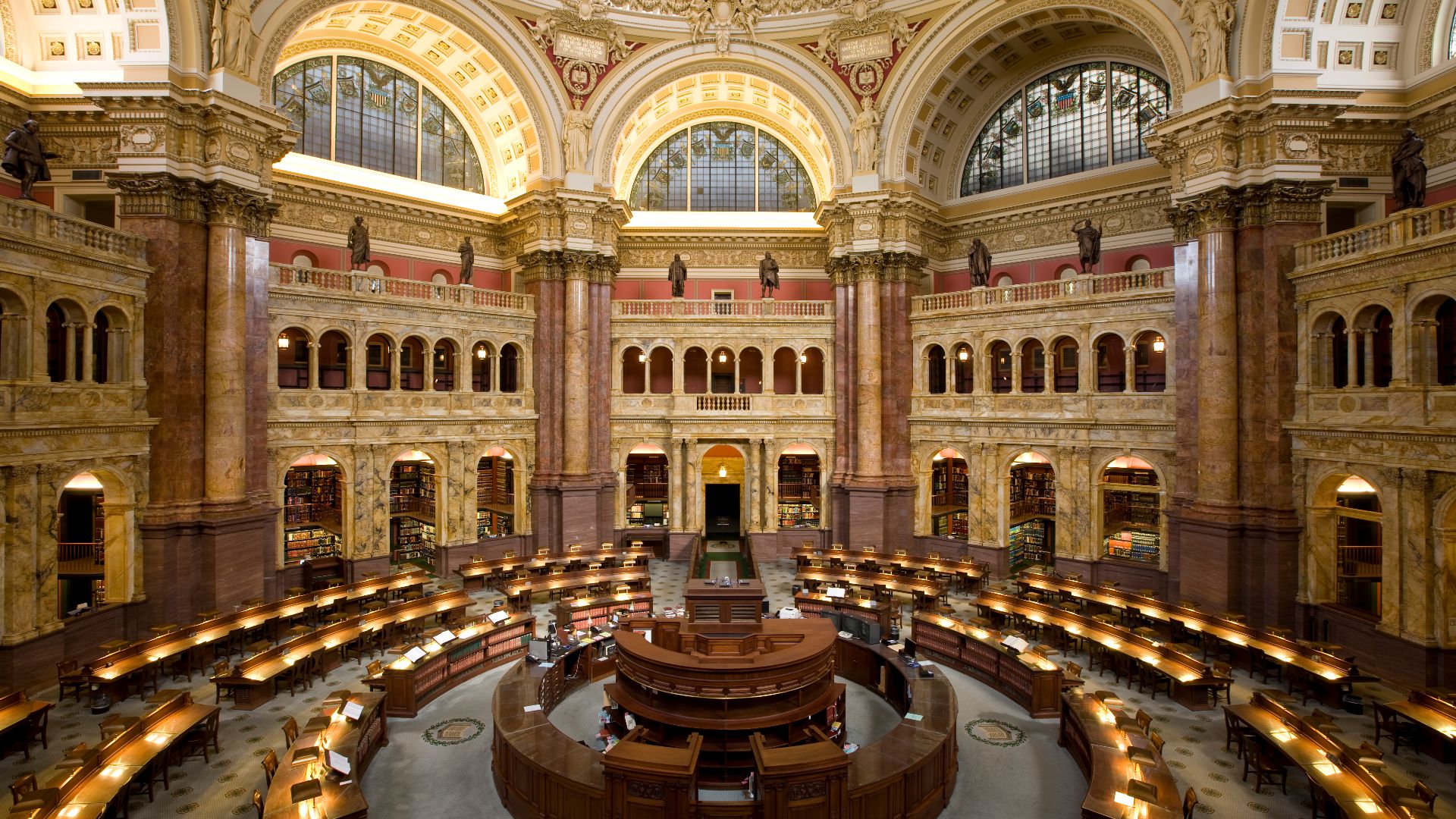 Carol M. Highsmith, Wikimedia Commons
Rockefeller Center – New York City
A sprawling complex of 19 Art Deco buildings rose during the Great Depression and finished in 1939, bringing Radio City Music Hall and a lively plaza to Midtown. Seasonal crowds later made the Christmas tree lighting a global tradition tied closely to the center’s identity.
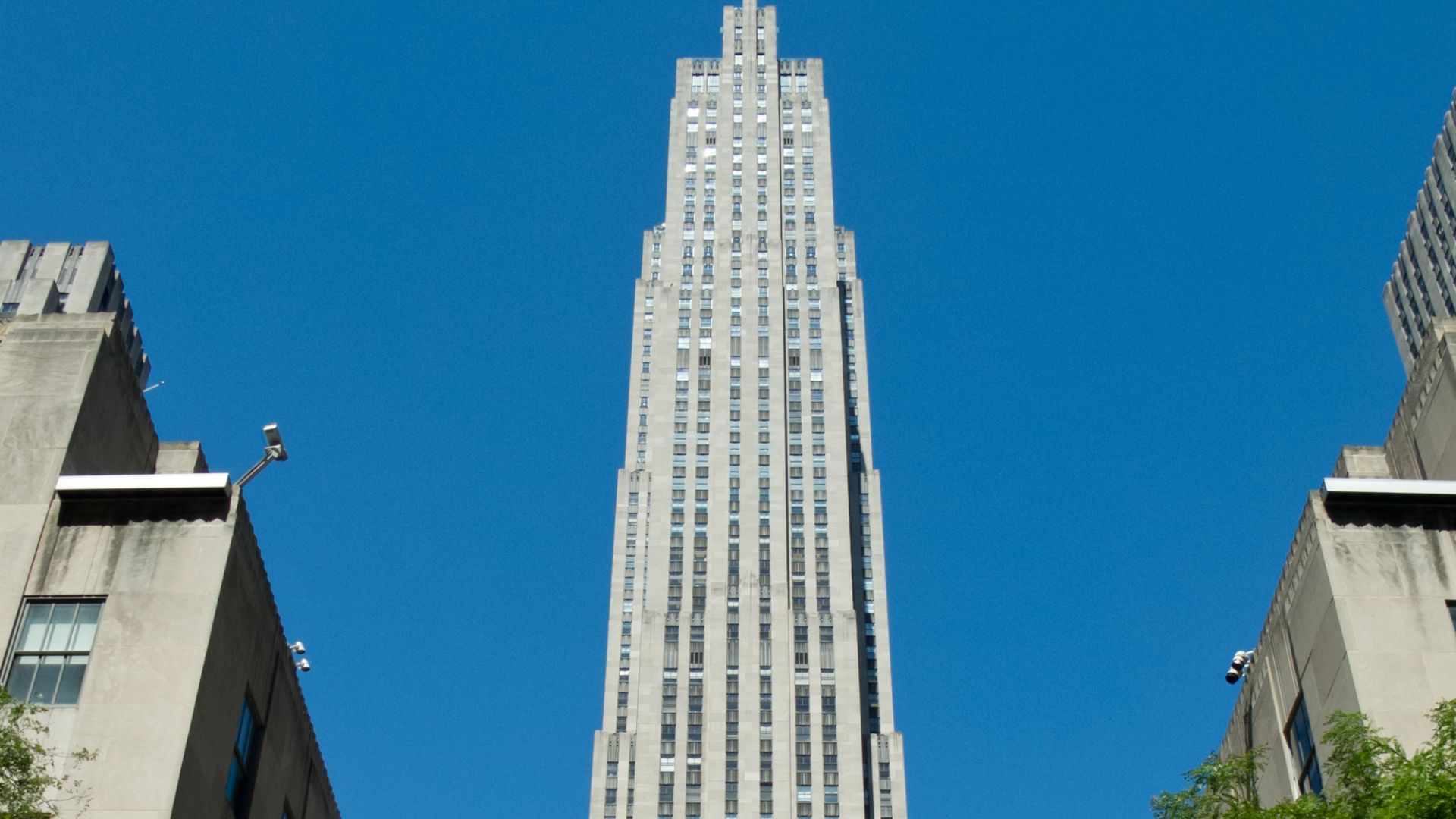 Carlos Delgado, Wikimedia Commons
One World Trade Center – New York City
A new symbol for Lower Manhattan appeared in 2014 when this tower reached 1,776-feet, a height chosen to honor the year of American independence. Architect David Childs shaped the design, and the building now stands on the site once occupied by the Twin Towers.
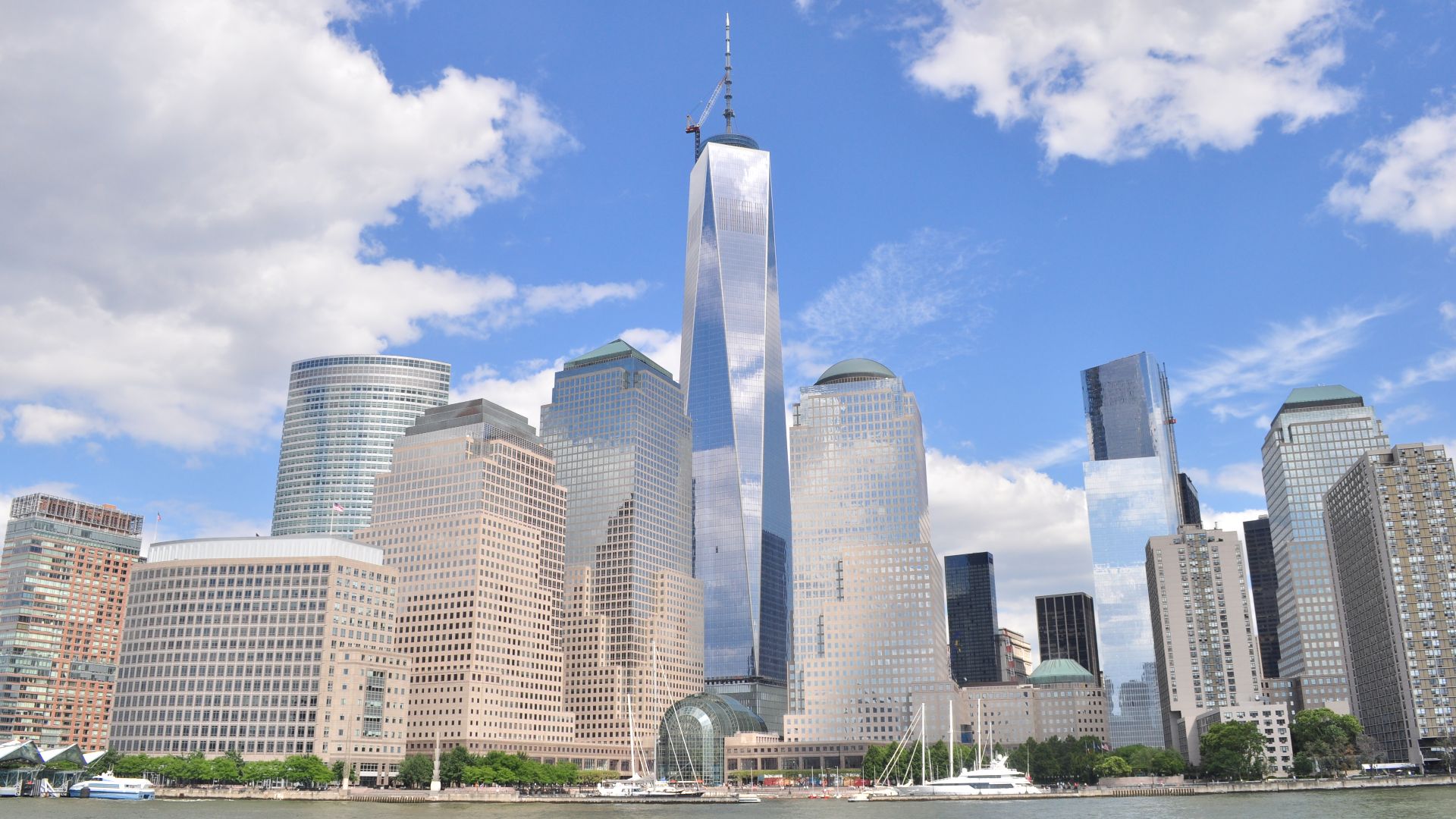 Joe Mabel (on Flickr as Joe Mabel from Seattle, US), Wikimedia Commons
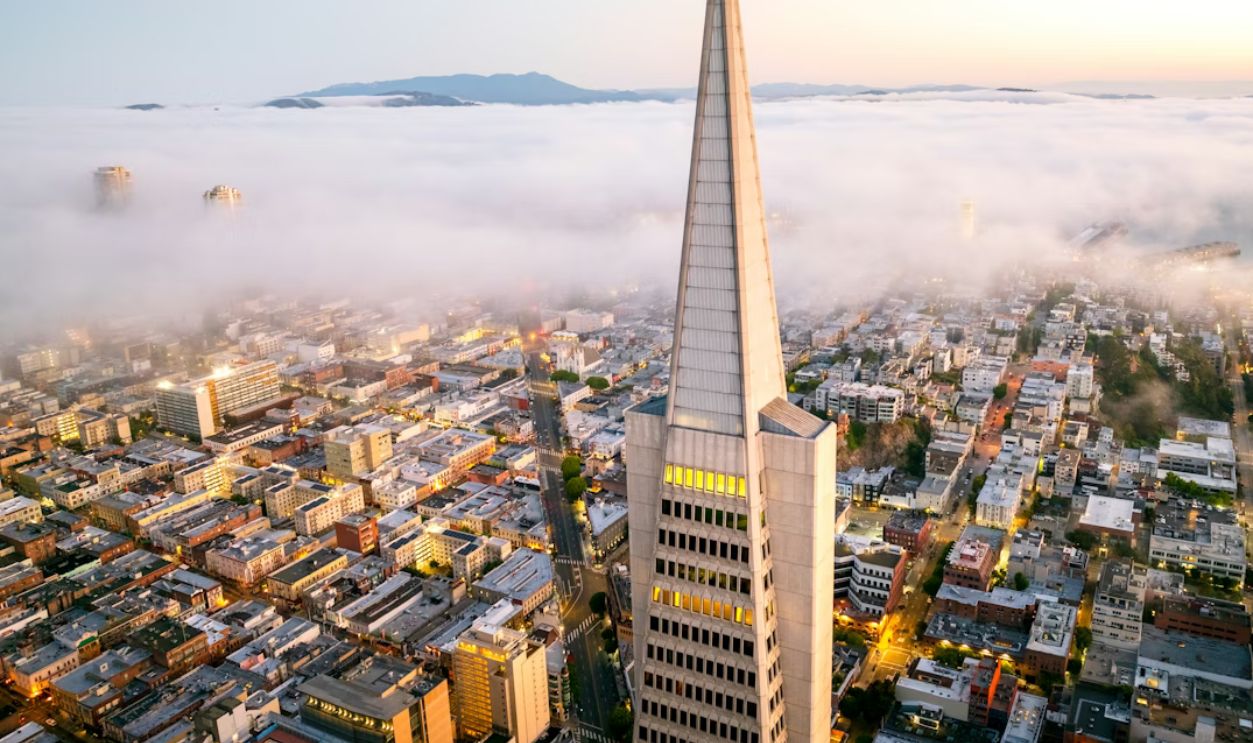
Transamerica Pyramid – San Francisco
Nothing on the skyline looked quite like this 853-foot pyramid as it appeared in 1972, shaped to cast fewer shadows on nearby streets. Architect William Pereira pushed a futuristic vision, and a time capsule placed in 1974 resurfaced during major renovations in 2024.
Kennedy Space Center Vehicle Assembly Building – Florida
Few buildings match the scale of this 1966 NASA facility, tall enough at 525-feet for rockets to stand upright inside. The volume is so massive that humidity can create fog, and its exterior features a 209 foot American flag painted across the facade.
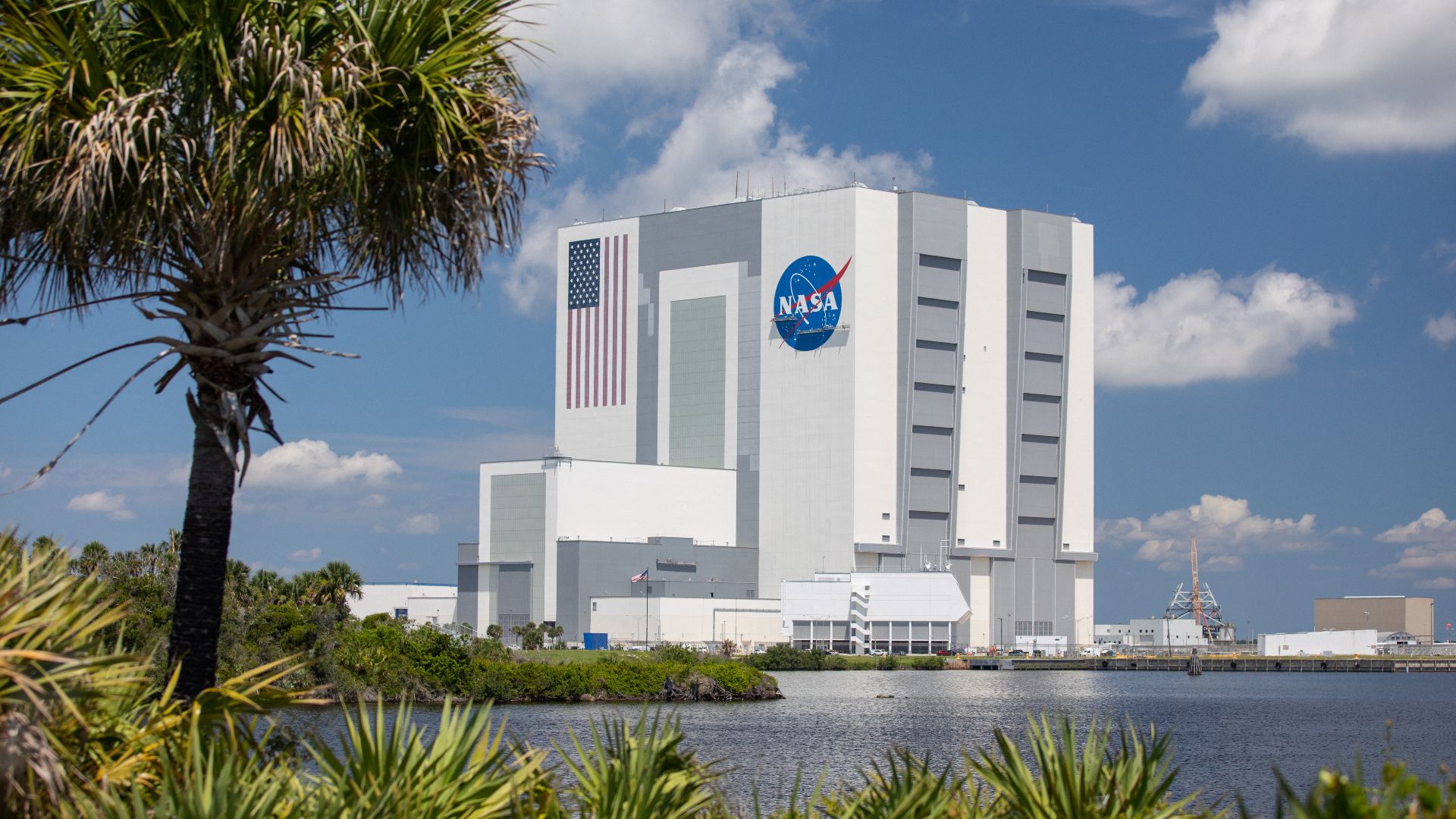 Ben Smegelsky, Wikimedia Commons
San Francisco City Hall – San Francisco
Civic ambition returned in style in 1915 when this Beaux Arts landmark rose with a dome reaching 307 feet. Arthur Brown Jr. shaped the design during the city’s post-earthquake rebuilding era, and the site later became famous for hosting Marilyn Monroe and Joe DiMaggio’s wedding.
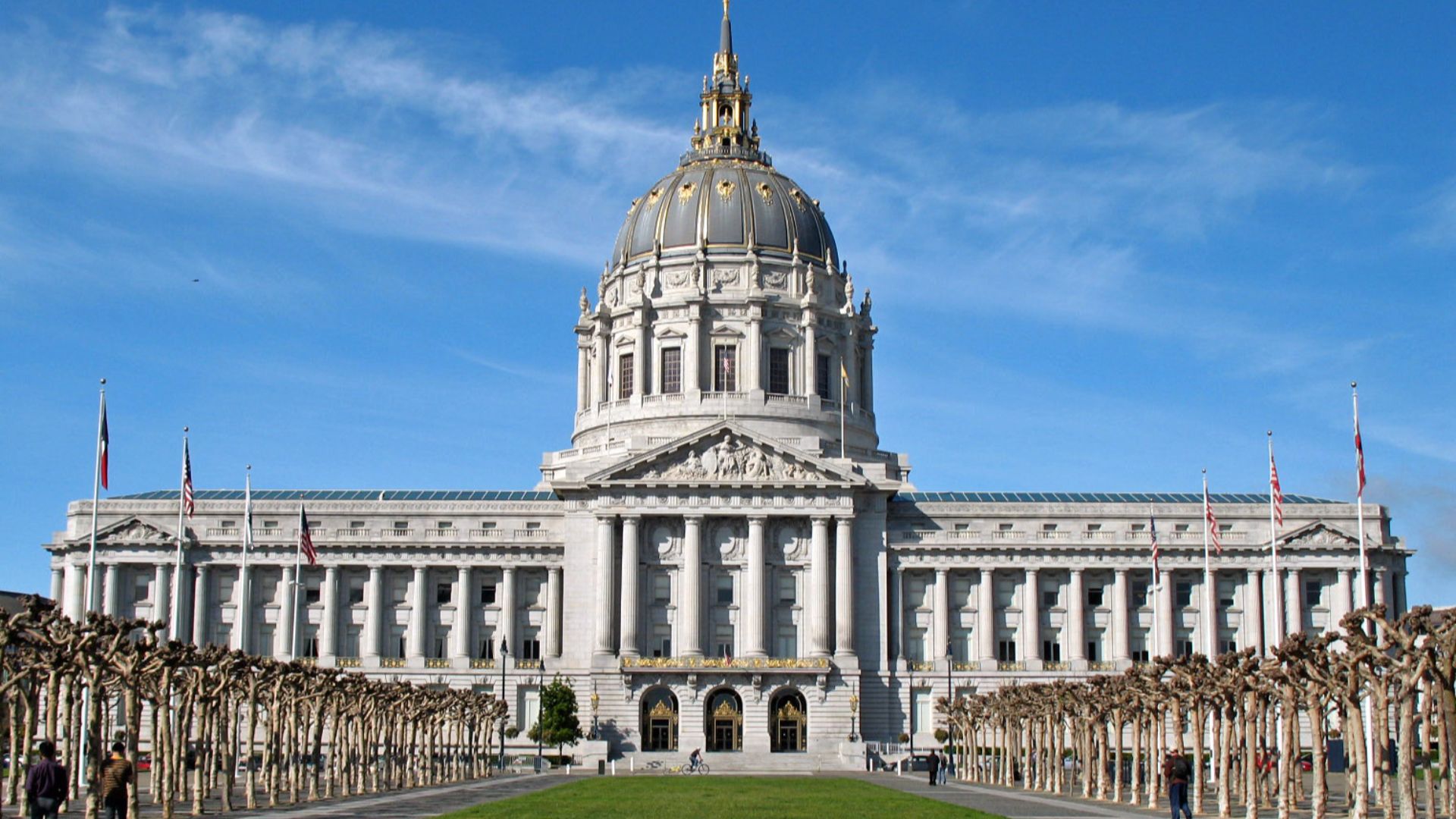 Sanfranman59, Wikimedia Commons
Boston Public Library – Boston
Readers entering the McKim Building encounter a Renaissance Revival masterpiece completed in 1895 as the library grew beyond its 1848 founding. Millions of volumes and rare manuscripts now live inside, while the phrase “Free to All” carved above the doors captures its long standing mission.
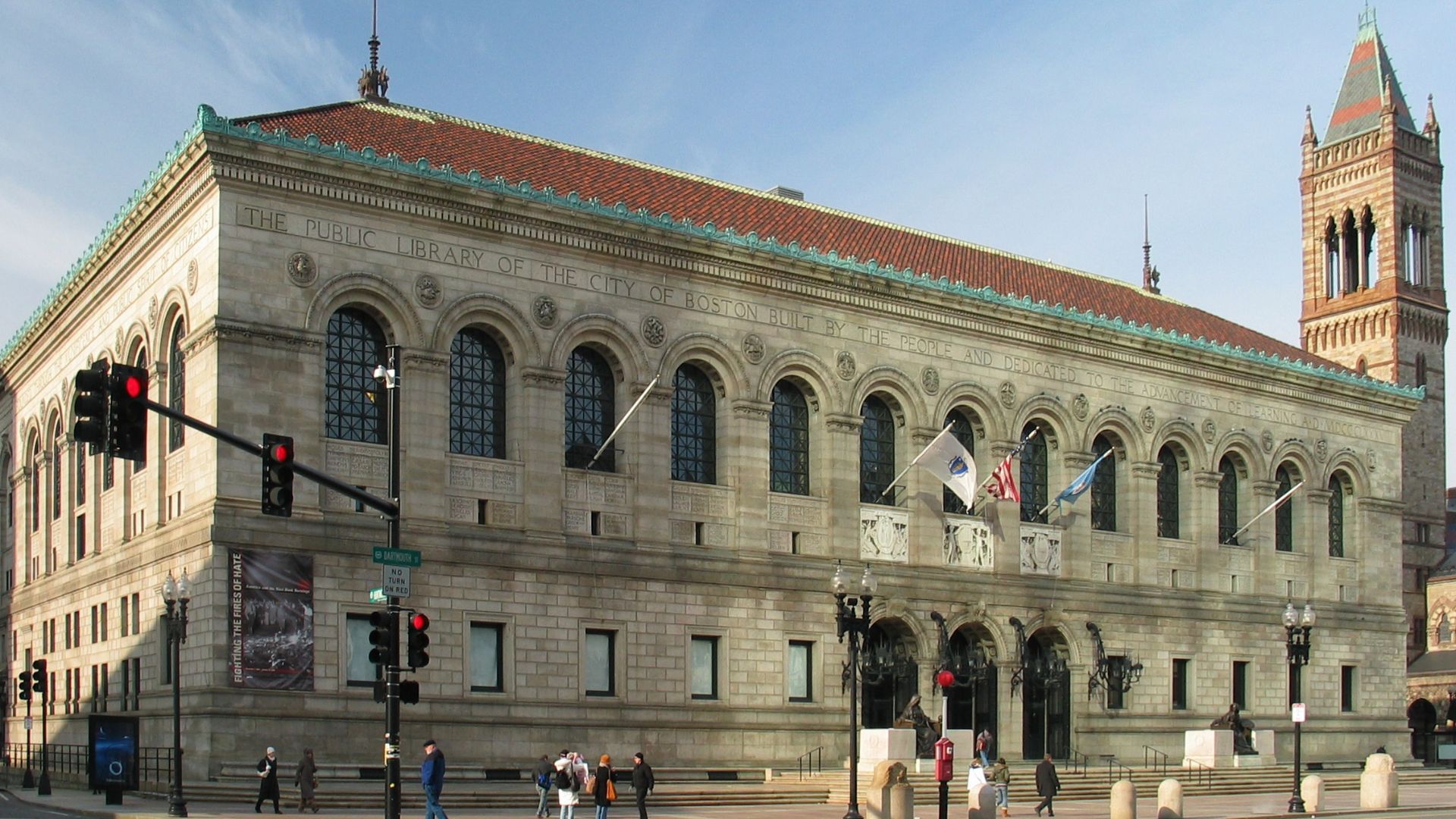 Daniel Schwen, Wikimedia Commons
St. Patrick’s Cathedral – New York City
Visitors approaching Fifth Avenue see twin 330-foot spires rising above the street, a defining feature of this Neo-Gothic cathedral finished in 1878. James Renwick Jr. designed the structure to seat roughly 2,400 people and placed it directly across from bustling Rockefeller Center.
 Jean-Christophe BENOIST, CC BY 3.0, Wikimedia Commons
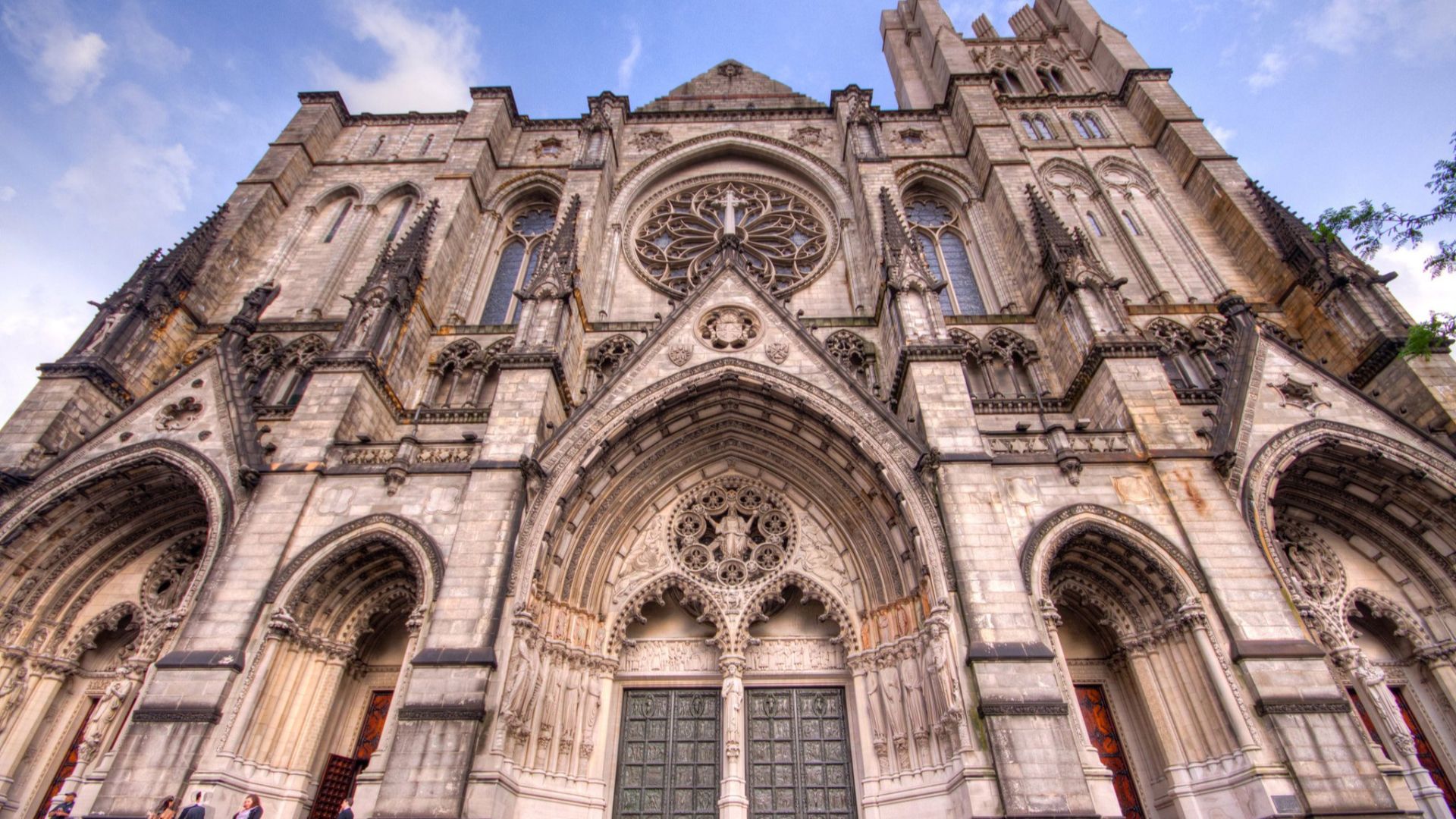
Cathedral Of St. John The Divine – New York City
Work on this enormous cathedral began in 1892 and still hasn’t fully wrapped up, helping it earn the nickname “St. John the Unfinished”. The structure stretches 601 feet in length, seats more than 5,000 people, and blends Gothic Revival ideas with Romanesque and Byzantine influences.
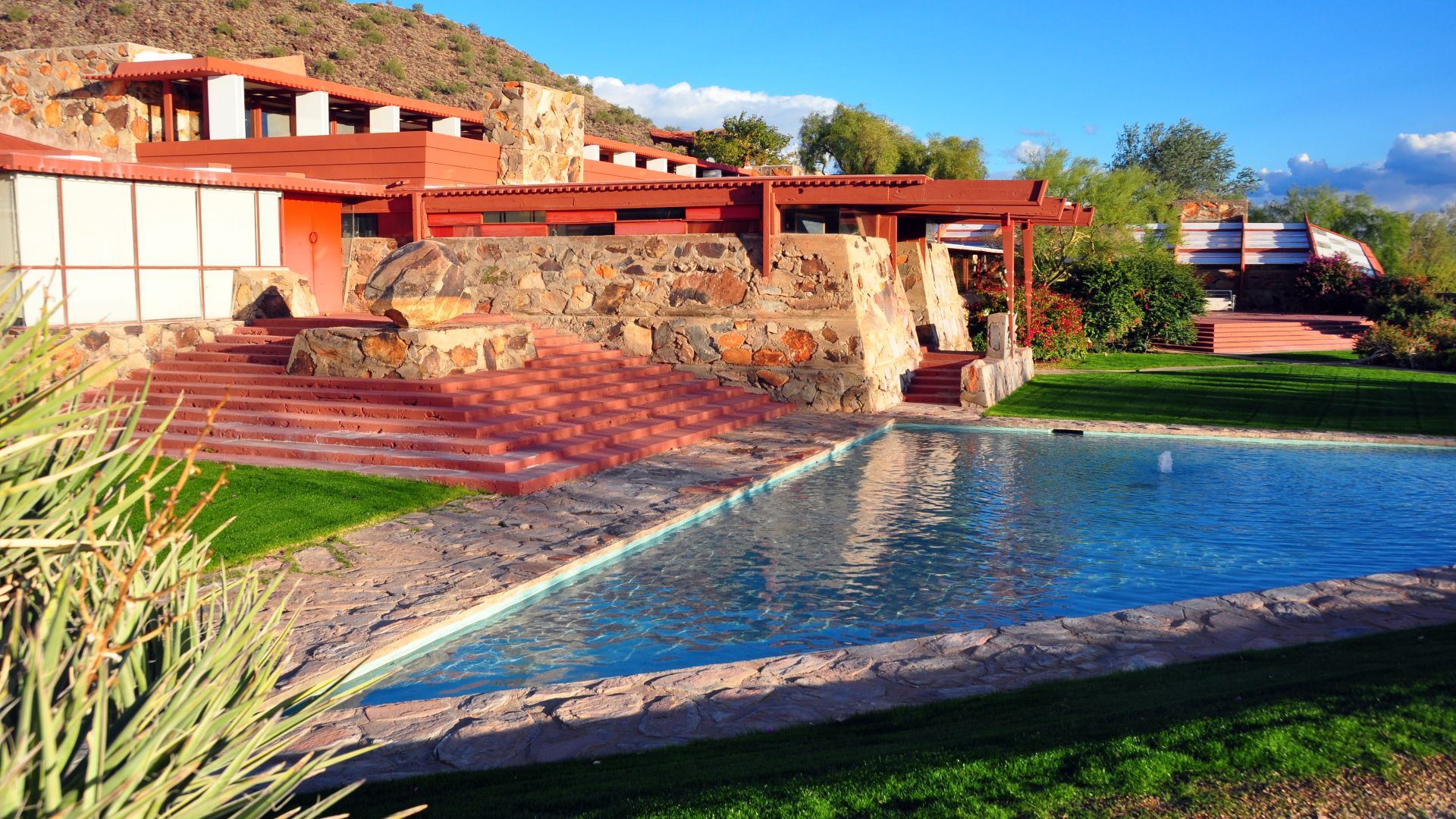
Taliesin West – Scottsdale, Arizona
Frank Lloyd Wright shaped his winter home in 1937 using desert rocks and materials that let the complex merge with the surrounding lands. Students helped build and maintain the site by hand, and the property eventually gained UNESCO recognition in 2019 for its architectural significance.
 AndrewHorne, Wikimedia Commons
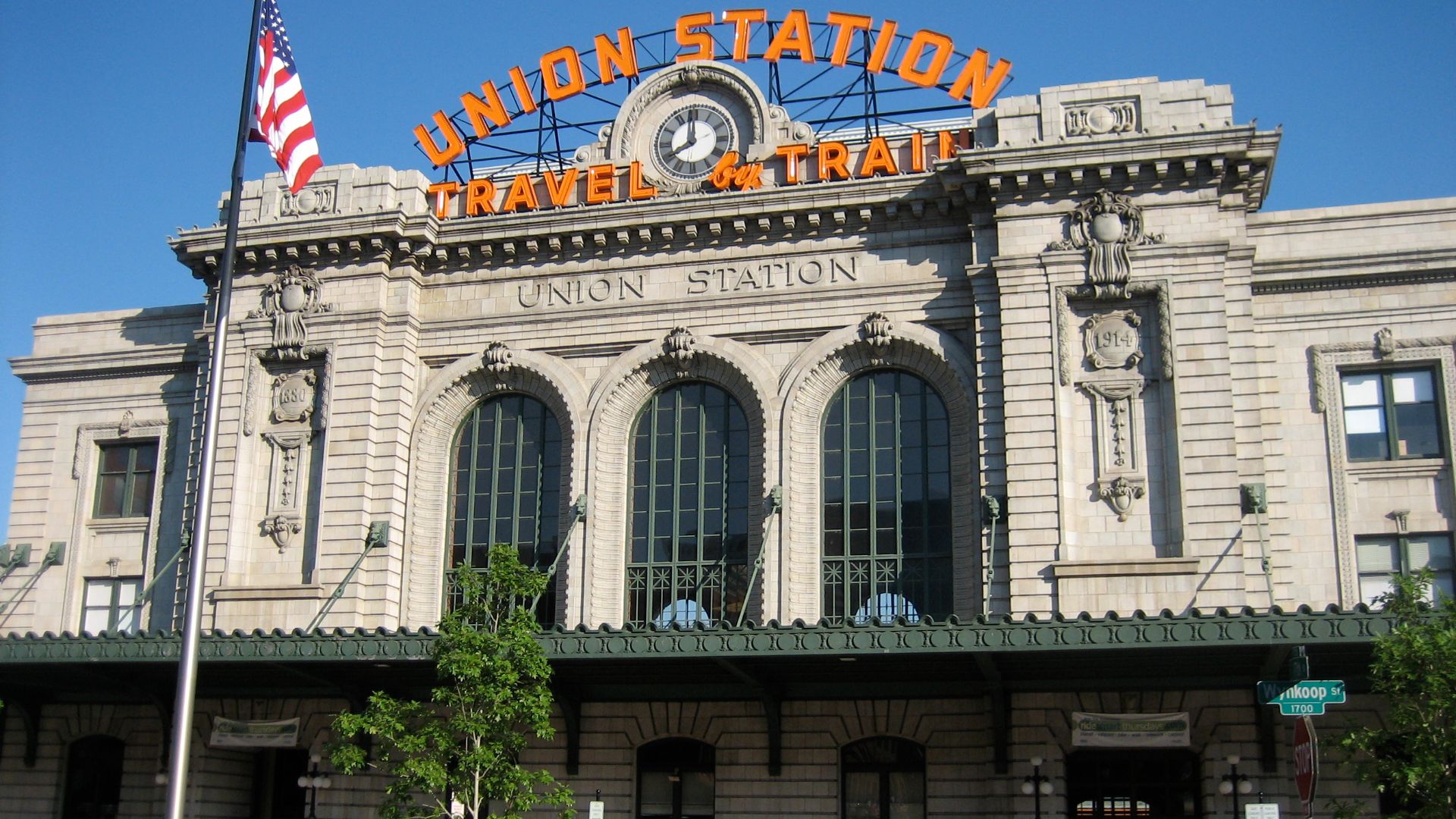
Denver Union Station – Denver, Colorado
Travel through Denver funneled into this grand terminal after its 1914 reconstruction, which brought the Beaux Arts style and a memorable facade to the city center. The station later became a major hub for Amtrak, commuter rail, and local transit, marked by its glowing “Travel by Train” sign.
 Darkshark0159 at English Wikipedia, Wikimedia Commons
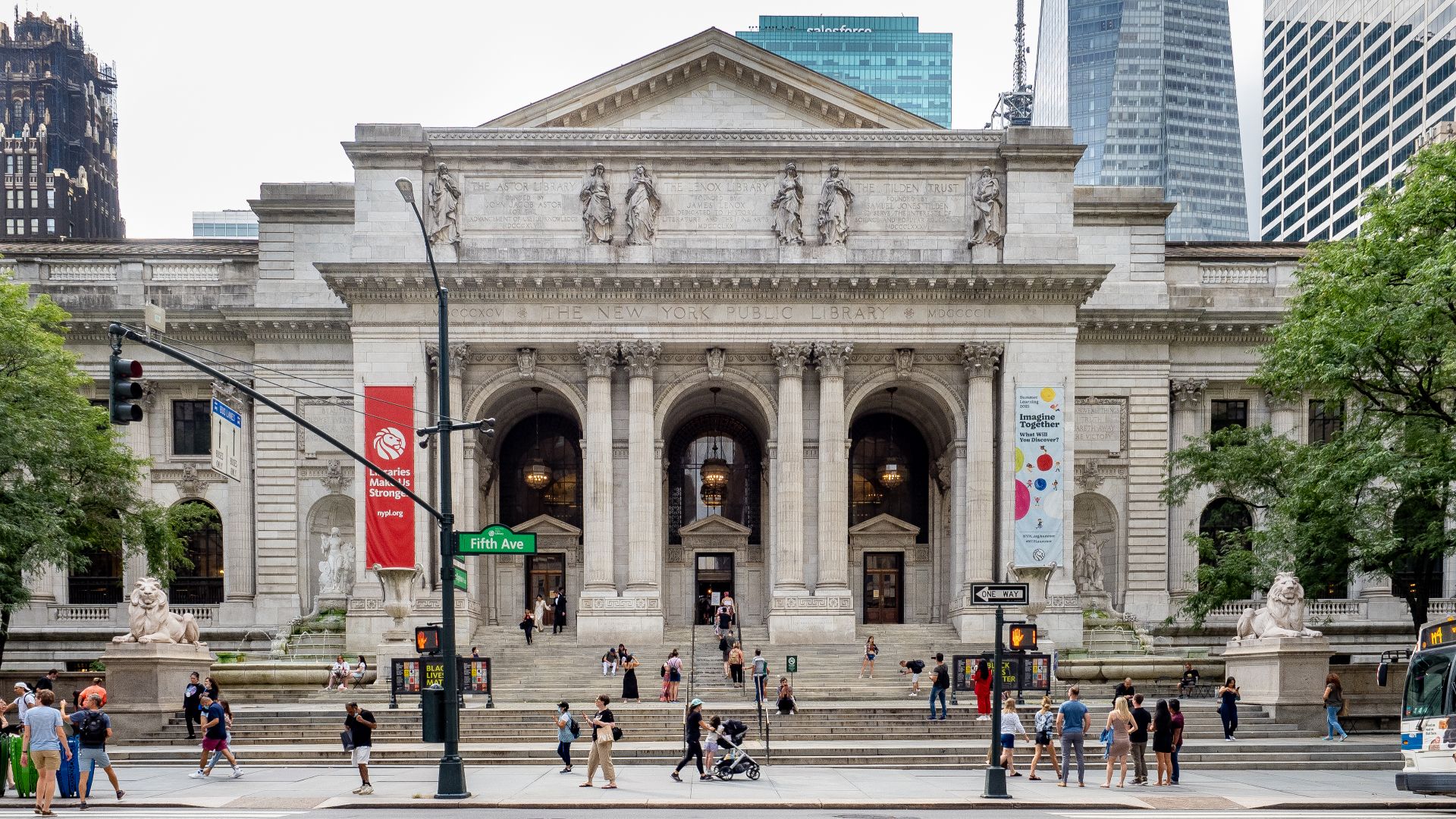
New York Public Library – New York City
A pair of marble lions greet visitors at the main branch, opened in 1911 and designed in the Beaux Arts tradition by Carrere and Hastings. Patience and Fortitude became the lions’ names, while millions of books and rare materials now fill the vast reading rooms inside.
 ajay_suresh, Wikimedia Commons
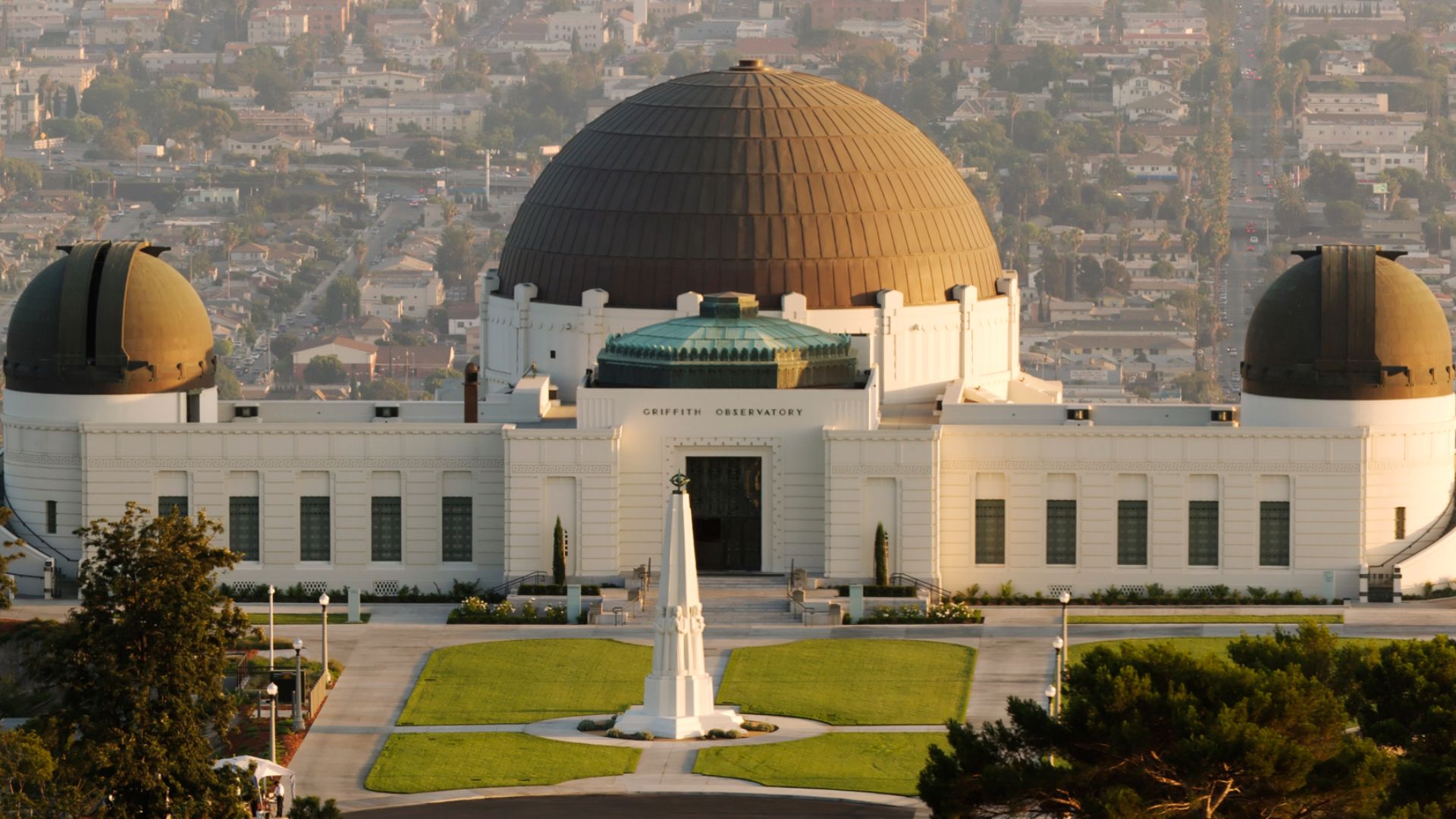
Griffith Observatory – Los Angeles, California
Stargazing in Los Angeles gained a permanent home in 1935 when this hilltop observatory opened with public telescopes and space exhibits. The building overlooks the city from Mount Hollywood and later appeared in well-known films, including Rebel Without a Cause and La La Land.
 Matthew Field, Wikimedia Commons
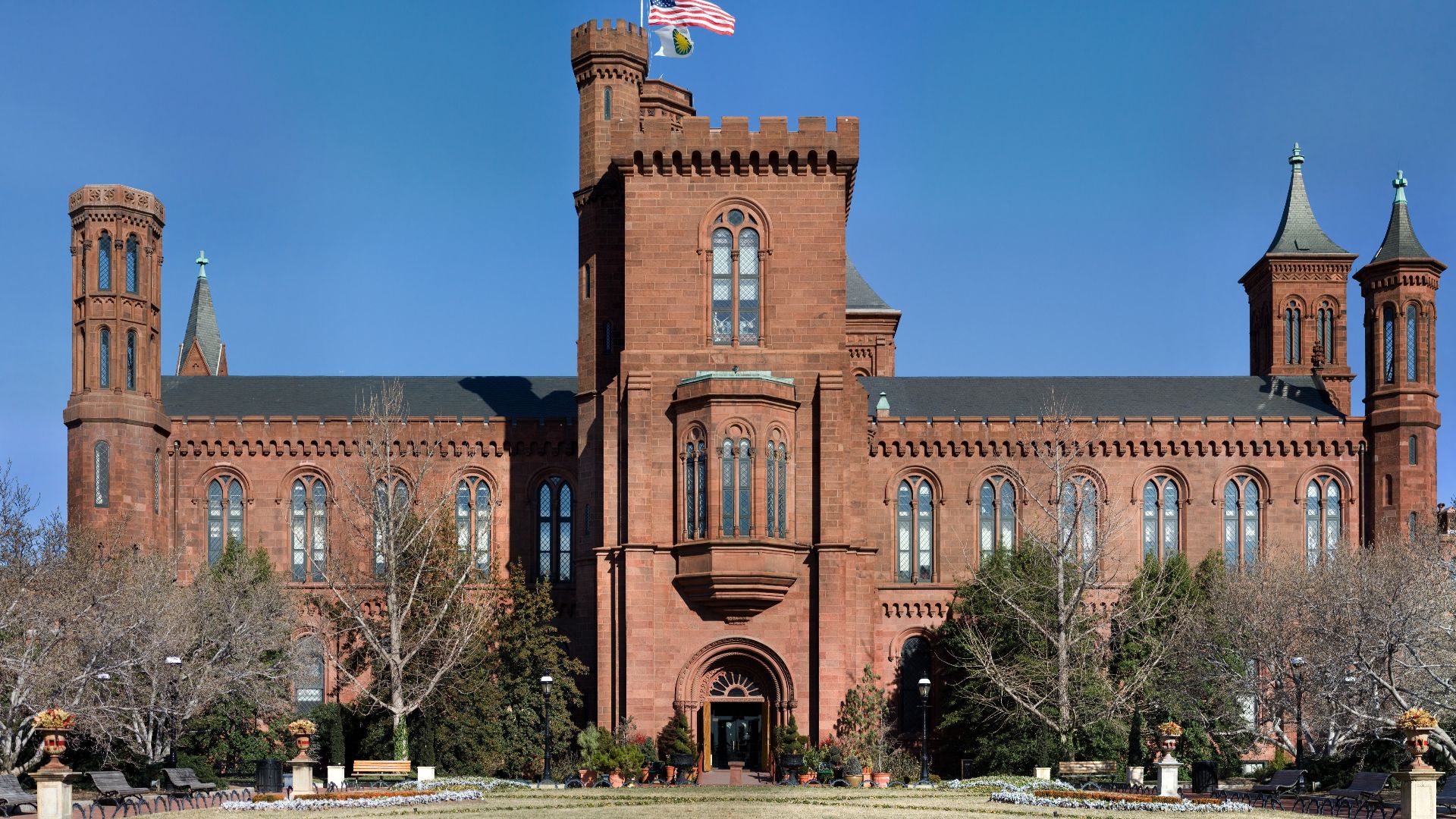
Smithsonian Castle – Washington, D.C.
Red sandstone walls set this 1855 building apart as the earliest home of the Smithsonian Institution. Architect James Renwick Jr. chose a Romanesque Revival style, and inside rests the crypt of James Smithson, the British scientist whose unexpected bequest created the entire institution.
 User:Noclip, Wikimedia Commons
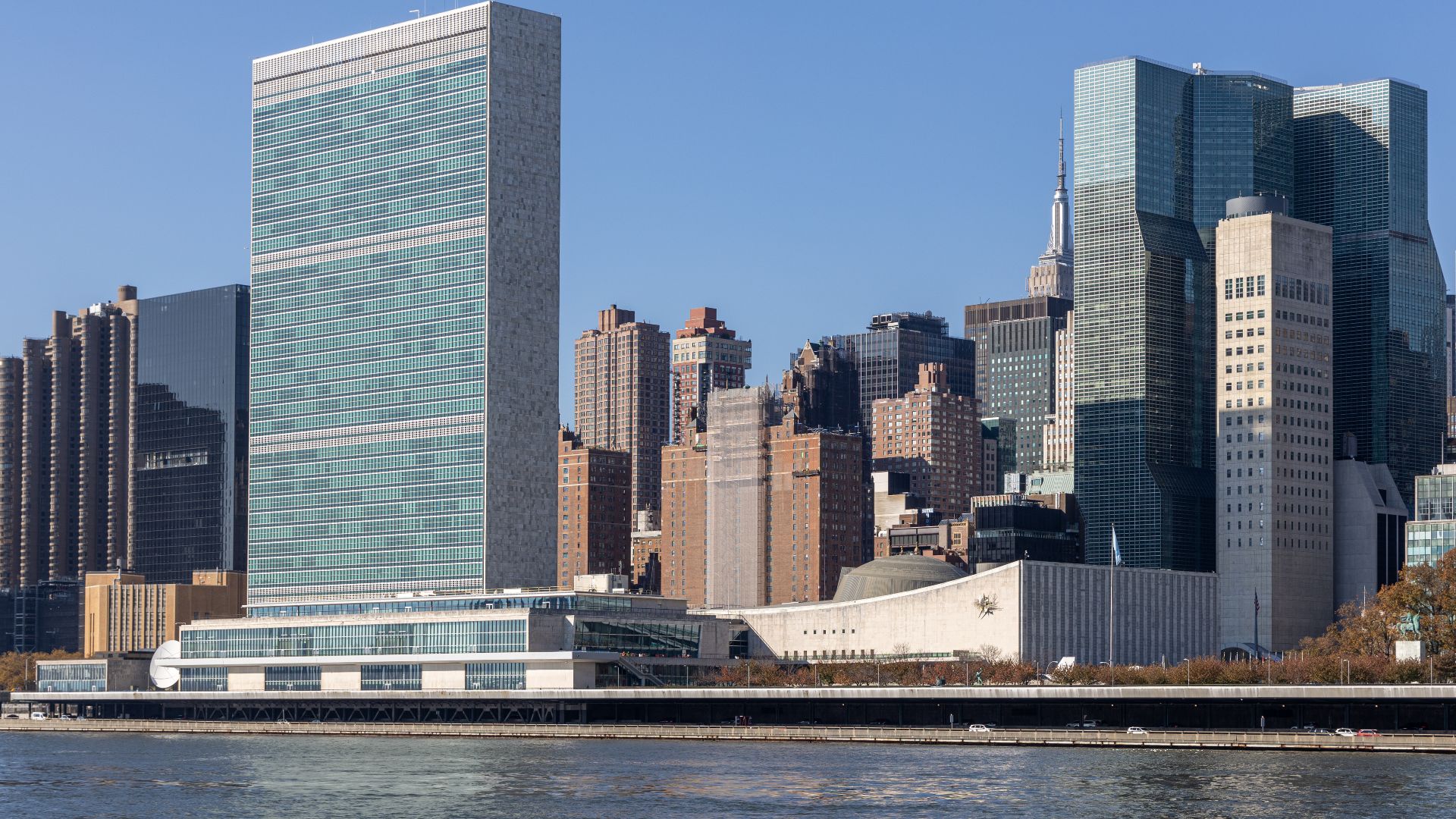
United Nations Headquarters – New York City
Global diplomacy gained a permanent address in 1952 in this riverside complex, which opened with designs shaped by an international team that included Le Corbusier and Oscar Niemeyer. The glass curtain wall of the Secretariat Building became its signature look, built on land purchased with a donation from John D. Rockefeller Jr.
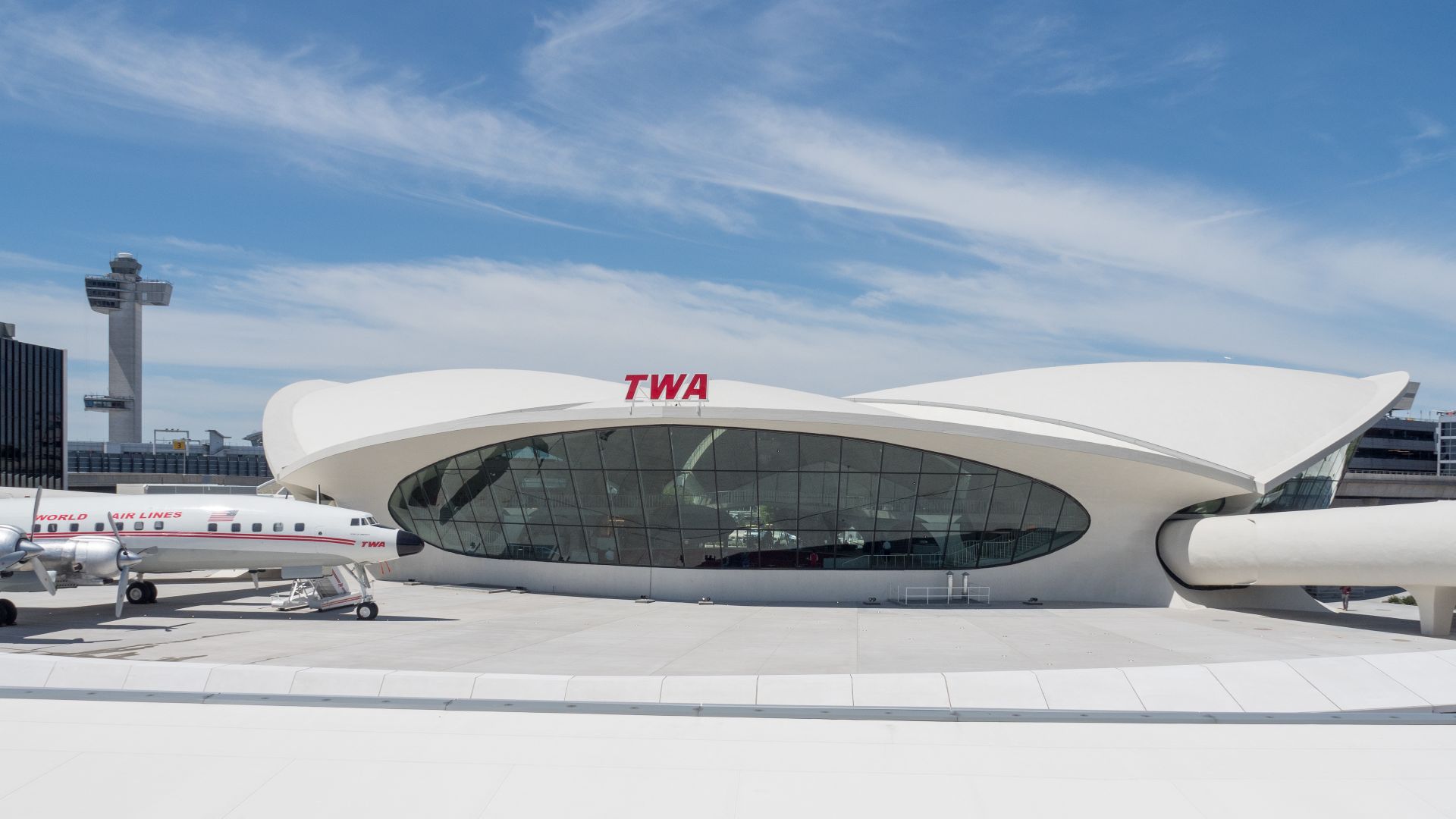
TWA Hotel – New York City (JFK Airport)
Air travel nostalgia returned in 2019 when the 1962 TWA Flight Center became a hotel filled with Mid-Century Modern curves designed by Eero Saarinen. The restored terminal connects to a new complex, and guests now watch planes depart while relaxing beside a rooftop infinity pool.
Marina City Towers – Chicago, Illinois
Chicago’s riverfront changed dramatically in 1964 as Bertrand Goldberg completed these twin 587-foot towers shaped like corn cobs. Apartments, offices, and a marina share the complex, which later appeared on the cover of Wilco’s album Yankee Hotel Foxtrot and became an instantly recognizable landmark.
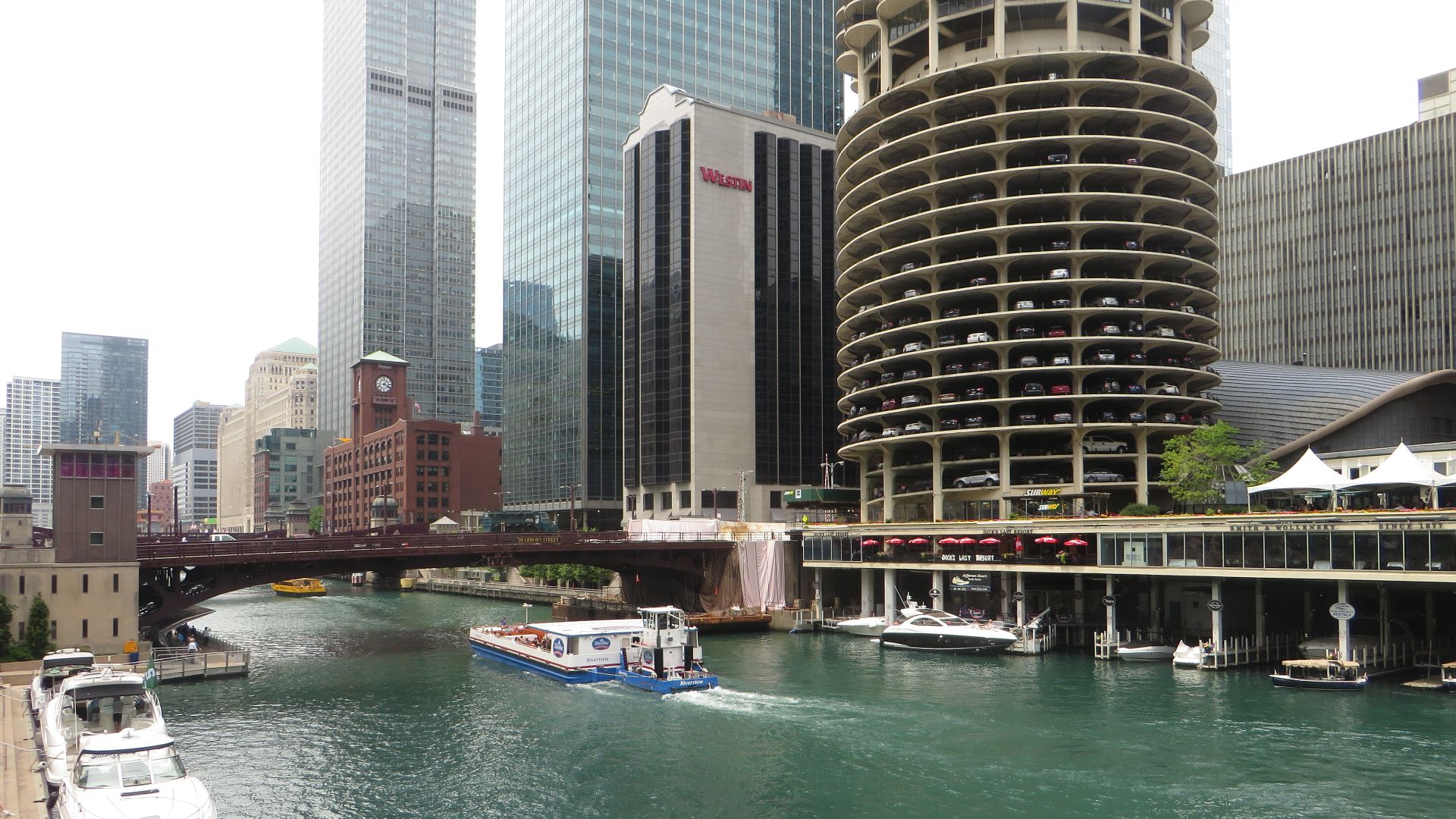 Ken Lund from Reno, Nevada, USA, Wikimedia Commons
Seattle Central Library – Seattle, Washington
Modern geometry took center stage in 2004 when this glass and steel library opened with a design by Rem Koolhaas and Joshua Prince Ramus. Visitors move through a bright interior holding more than a million items, including a continuous Book Spiral that organizes nonfiction without breaks.
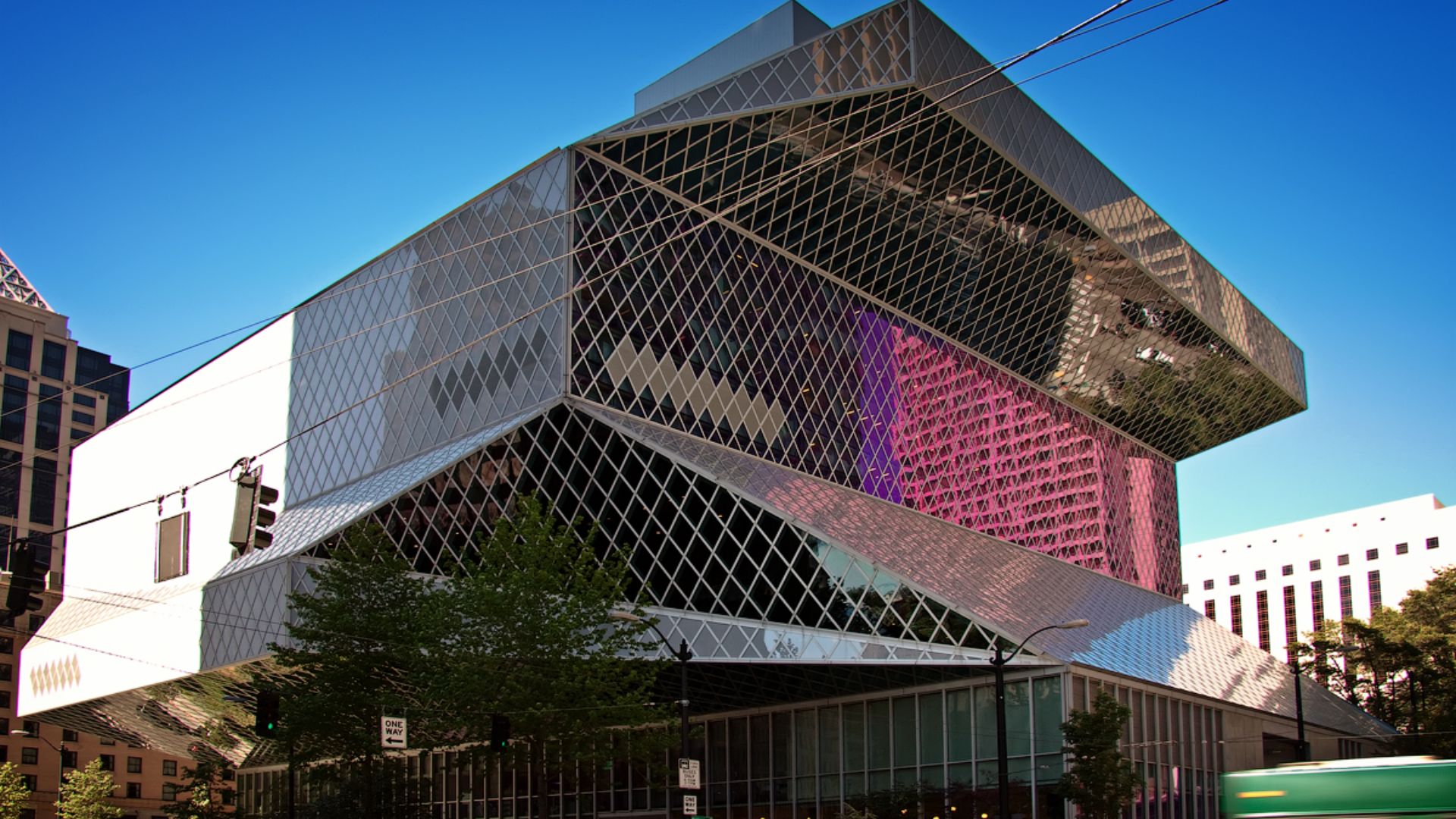 Steven Pavlov , Wikimedia Commons
Kauffman Center – Kansas City, Missouri
Sound and sculpture merge in this 2011 performing arts center, shaped by Moshe Safdie into sweeping shells of glass and steel. Two distinct halls anchor the complex, and the acoustics inside are so finely tuned that performers can fill the space without relying on microphones.
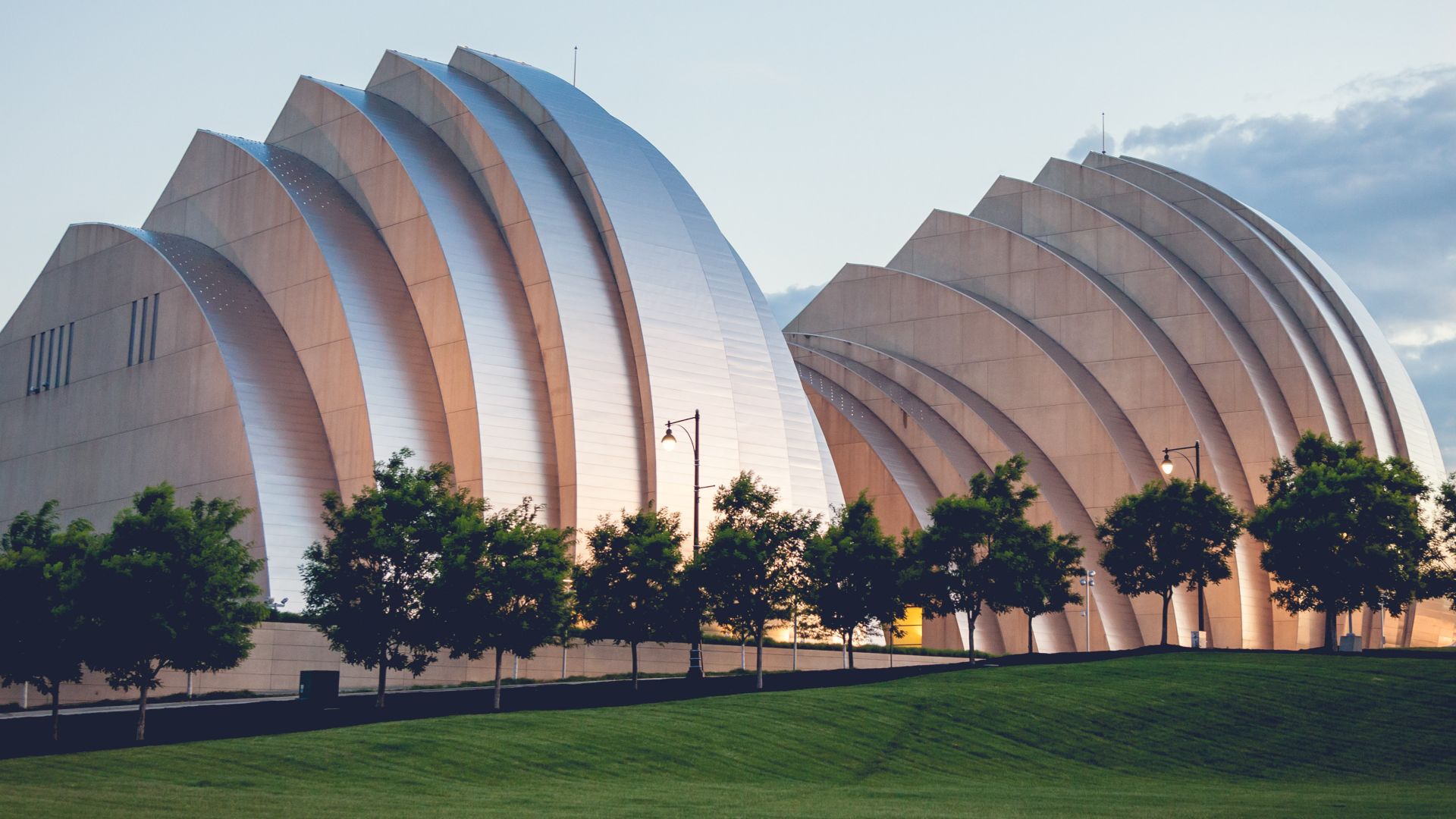 Hayden Gascoigne, Wikimedia Commons
Salt Lake City Mormon Temple – Utah
Granite blocks taken from nearby quarries formed this temple, built over forty years and completed in 1893. Gothic and Romanesque Revival influences shape the exterior, while the 210-foot central spire carries a statue of the Angel Moroni. Walls up to nine feet thick provide stability.
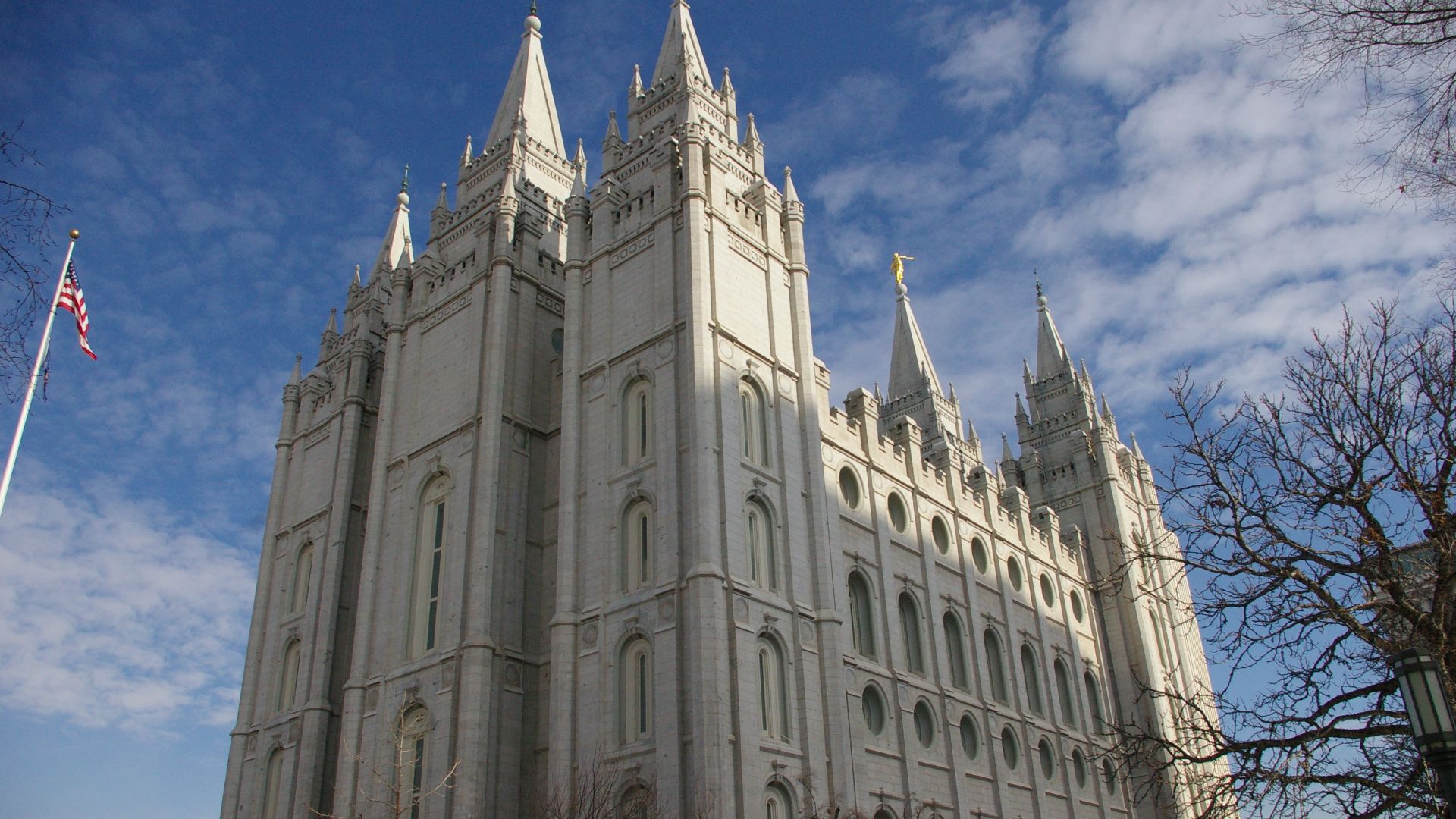 Scott Catron from Sandy, Utah, USA, Wikimedia Commons
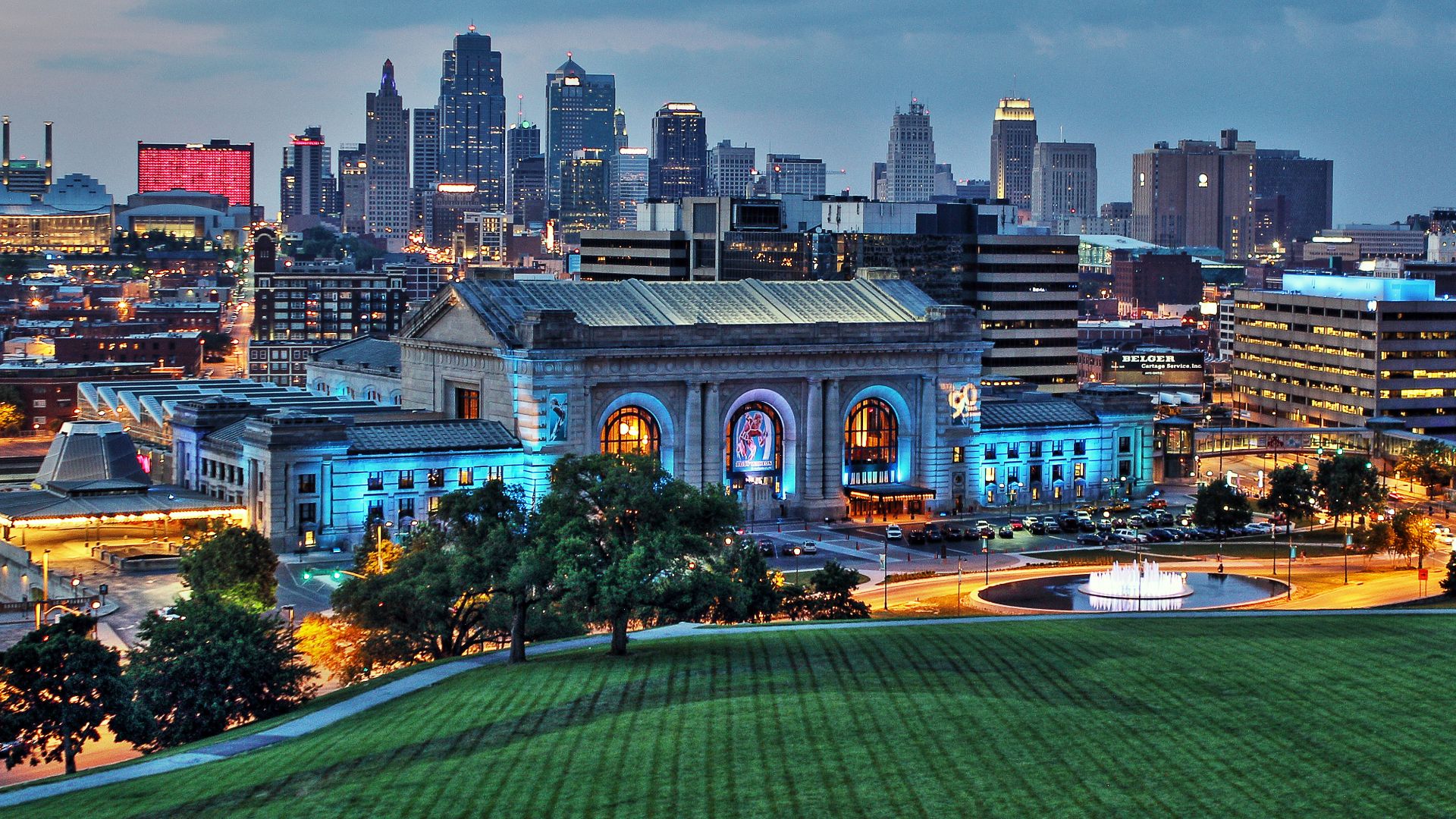
Kansas City Union Station – Missouri
Travelers once poured through this 850,000 square foot station after its 1914 opening, drawn into a grand Beaux Arts interior anchored by a 95-foot central hall. Designed by Jarvis Hunt, the structure later shifted toward exhibitions and events but kept its historic architectural character intact.
Los Angeles City Hall – Los Angeles, California
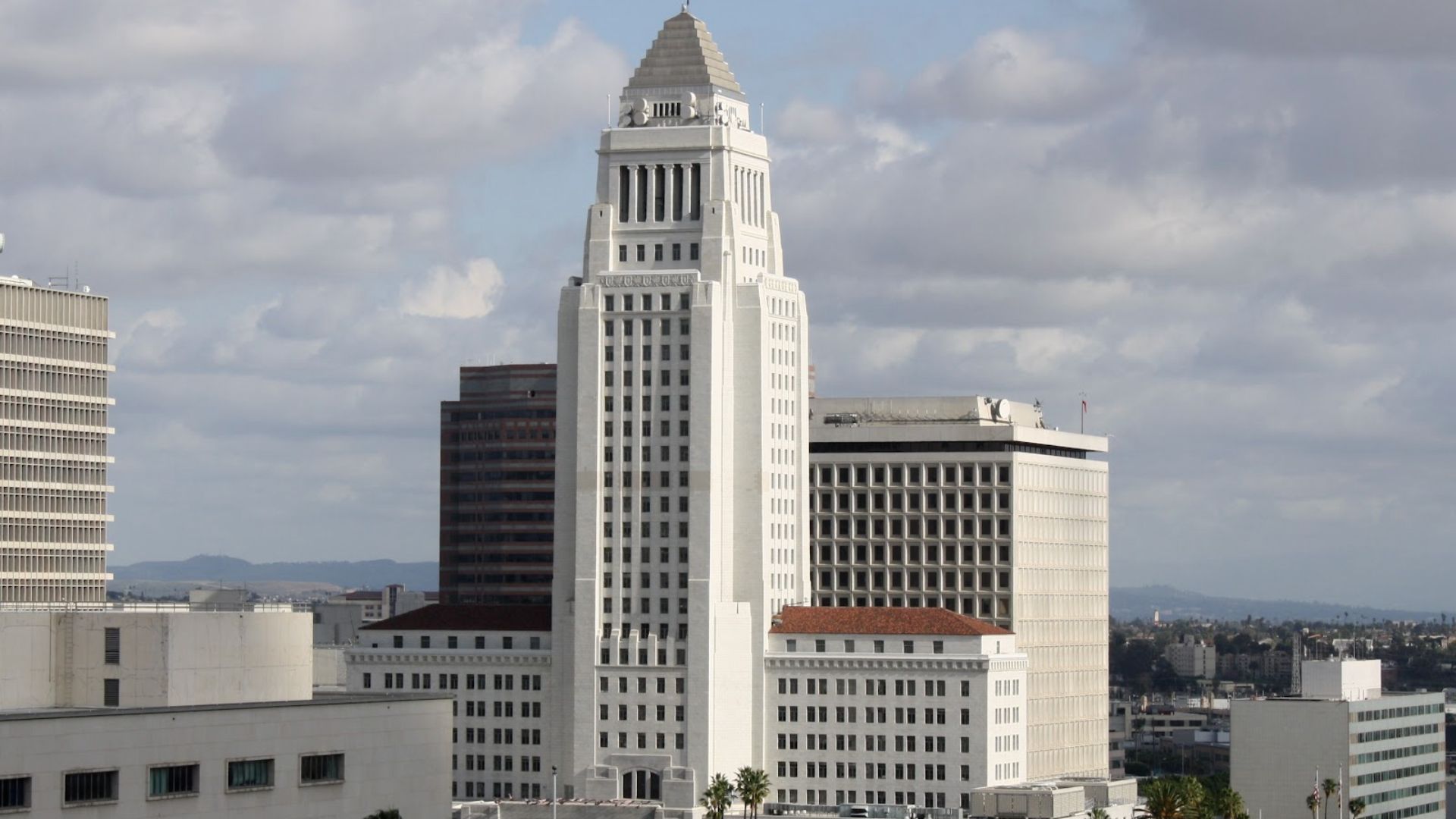
A pyramid-topped tower became a civic marker in 1928 when this building rose 454 feet over downtown. Architects John Parkinson, John C. Austin, and Albert C. Martin Sr. shaped the Art Deco design, and the beacon light once guided airplanes toward the growing city.