
Business travel is very much alive. The Global Business Travel Association expects roughly 1.84 billion work trips worldwide in 2026, with spending reaching a record $1.71 trillion. At the same time, travel costs remain elevated, companies are paying closer attention to sustainability, and years of remote work have proved that plenty of meetings can happen perfectly well without anybody going near an airport.
That leaves business travelers with a deceptively difficult question: when is showing up in person actually worth it? The answer depends less on how important a meeting sounds and more on what needs to happen during it. A routine update with a major client may still belong online, while a seemingly informal first meeting with a new partner could justify a flight.
Start With The Outcome, Not The Calendar
One of the easiest mistakes is treating travel as the default simply because a meeting has always been held in person. Deloitte's corporate travel research shows that companies are taking a closer look at which trips are truly worth the expense. Its 2025 study found that rising costs and sustainability goals were pushing businesses to focus travel spending on trips with a clear purpose and measurable value.
Before booking anything, start with the outcome you need rather than the format you are used to. Ask whether being physically present is likely to change the quality of the discussion, strengthen a relationship, improve collaboration, or provide access to something that cannot be experienced remotely. If the answer is no, the case for travel becomes much weaker.
Deloitte's long-running "Why We Fly" framework reflects that distinction. It found that some types of business activity depend far more heavily on face-to-face interaction than others, particularly when relationships, collaboration, or access to a physical setting are central to the goal.
That makes the decision less about whether a meeting is "important" and more about what being in the room actually adds. Plenty of important work can happen efficiently online. The key is identifying when physical presence changes the outcome enough to justify the extra time, cost, and effort.

Fly When The Room Changes The Result
Relationship-building is one of the clearest arguments for getting on a plane, particularly when people have never worked together before. A 2026 study from researchers at Singapore Management University compared face-to-face, video, audio, and text-based negotiations involving 200 pairs of participants. Face-to-face negotiations produced higher trust than video or audio interactions, although the researchers also found that many other outcomes were broadly comparable across those three formats.
The takeaway is more nuanced. There is little evidence to support a blanket rule that every negotiation belongs in a conference room. But when establishing trust with an unfamiliar customer, partner, investor, or supplier is itself part of the job, the value of being there becomes easier to justify.
Creative work can also benefit from physical proximity. Research published in Nature found that pairs communicating through videoconferencing generated fewer creative ideas than pairs working together in the same physical space. Interestingly, virtual participants were not worse at choosing which idea to pursue, suggesting that different stages of the same project may call for different meeting formats.

That creates a useful split for business travelers. A kickoff session, product workshop, strategy retreat, or open-ended brainstorming meeting may gain something from being in person, especially when participants need to explore ideas together. Once the possibilities have been narrowed and the team is reviewing options, assigning work, or making follow-up decisions, video may be entirely adequate.
Travel can also make sense when the work itself is tied to a location. Inspecting a factory, touring a potential property, examining equipment, visiting a construction site, testing a physical product, or meeting several customers at one conference cannot always be replicated meaningfully through a webcam. In those cases, the destination is not merely where the meeting happens. It is part of what needs to be understood.
Use Video When The Work Is Mostly Information
Routine internal meetings are among the easiest trips to question. Deloitte found that companies learned during the pandemic that collaboration technology could handle many internal team and leadership meetings effectively. More recent corporate travel research continues to show stronger travel demand around client engagement and live events than around activities that are more easily replaced by virtual meetings.
A one-hour status meeting is therefore a weak reason to spend several hours traveling unless something else is attached to the trip. The same applies to recurring budget reviews, project check-ins, standard presentations, and meetings between colleagues who already know each other well. If everyone can identify the agenda in advance and the main goal is exchanging known information, video usually has the stronger case.
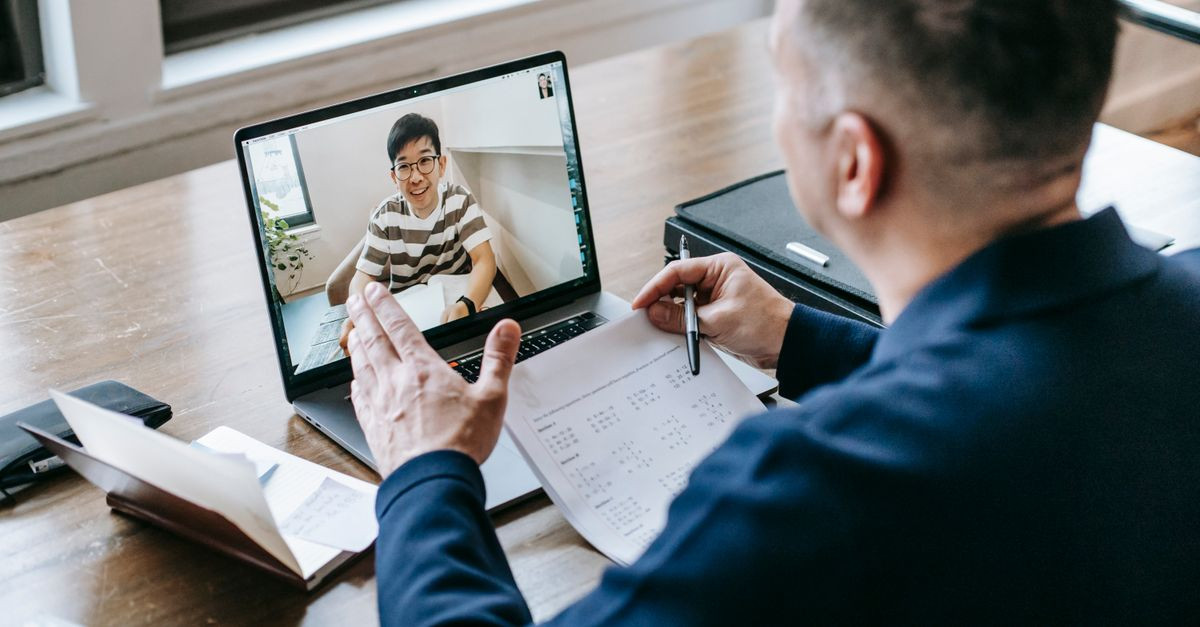
Virtual communication also has advantages that are easy to overlook when discussing what it lacks. A video meeting can include people who would never justify separate trips, can be scheduled more frequently, and can make follow-up easier because another conversation does not require another flight. This can be especially useful for globally distributed teams that need regular coordination rather than occasional ceremonial meetings.
Remote work research does offer a warning, however. A study of more than 61,000 Microsoft employees found that the shift to company-wide remote work made collaboration networks more static and siloed, with fewer connections bridging different groups. That does not mean routine communication requires travel, but it helps explain why organizations may occasionally want distributed teams in the same place even when their weekly work functions perfectly well online.
That can point to a simple rhythm: use video for routine work and reserve travel for the moments when being together adds something meaningful. The flight then has a specific purpose instead of simply recreating a meeting that already works online.
Count The Hidden Cost Of The Trip
The price shown by the airline is only the beginning of a business trip's real cost. Airport transfers, hotels, meals, ground transportation, and other expenses add up quickly, while the employee may also lose productive hours moving through airports or recovering from a long journey. GBTA's 2026 pricing forecast said business travel prices were expected to remain elevated through the end of the year, which makes marginal trips harder to justify.
Long-haul travel also carries a performance cost that is easy to ignore. The CDC says jet lag can cause daytime sleepiness, cognitive impairment, sleep disruption, and other symptoms, particularly after crossing multiple time zones. Sending somebody across an ocean for one short meeting may look very different once the company considers whether that person will arrive ready to perform at their best.

Then there is the environmental calculation. The US Environmental Protection Agency treats employee business travel on commercial airlines, trains, rental cars, and other transportation not owned by the employer as a Scope 3 greenhouse gas emissions source. Deloitte's 2025 survey found that 48% of travel managers listed sustainability commitments among their three biggest factors restricting travel, up from 38% the previous year.
None of those factors means companies should stop flying. They mean the potential return from a trip should rise along with its cost, distance, and disruption. A short direct flight to spend two days meeting a major prospective customer is a very different proposition from crossing eight time zones to sit through a presentation that could have been streamed.
Use A Simple Test Before You Book
A practical decision can begin with one question: what can happen in person that is unlikely to happen on the call? Strong answers include establishing a new relationship, reading a room during a sensitive discussion, brainstorming something genuinely new, experiencing a physical location, solving a problem alongside the people doing the work, or meeting several valuable contacts during the same trip. The weaker the answer, the weaker the argument for flying.
Next, consider whether the trip can be made more valuable. If you are already flying to meet one client, could you visit two others, attend an industry event, spend time with a local team, or tour a relevant facility? Combining several worthwhile interactions into one itinerary changes the economics and can make the time away much easier to defend.
Finally, separate the first meeting from every meeting that follows it. An initial face-to-face meeting may establish the relationship, while routine conversations afterward can often move online. One worthwhile trip does not mean every future meeting needs another flight.
The smartest business travel strategy is therefore neither "always fly" nor "everything can be a video call." Fly when physical presence changes the quality of the relationship, the creativity of the work, or your ability to understand something that cannot be experienced remotely. When the trip merely transports you hundreds or thousands of miles so you can sit down and exchange information, open the laptop instead.