
Business travel used to mean visiting clients, attending conferences, or checking on another office. But nowadays, for some remote workers, the reason to pack is simply to spend time with their own team. Companies are finding ways to bring people together without bringing back the daily commute, and in the process, they’re creating travel arrangements that don’t fit neatly into the usual categories.
Your Own Office Is Becoming A Destination

Atlassian offers a useful picture of this reversal. The company says it brings entire teams together three or four times annually, with a clear purpose and structure for each gathering. It also reports that 40% of its employees live at least two hours from an office, putting a conventional commute out of easy reach for a substantial share of its workforce. For those employees, getting together with coworkers becomes a planned event rather than an everyday routine.
Airbnb builds a similar balance into its published employment policy. It offers eligible employees domestic location flexibility without changing compensation, subject to hiring-location restrictions, and combines that flexibility with regular in-person team meetups. Employees can also request temporary work elsewhere in the world, with company approval and where regulations permit. With this model, location flexibility and face-to-face collaboration aren’t treated as competing choices.
Client visits still anchor corporate travel, but internal relationships are getting attention, too. Deloitte’s 2025 corporate travel research, based on surveys of 151 travel managers and 1,003 business travelers in the United States, found that client connections remained its largest driver. Training was also prominent, with 49% of travelers having traveled or expecting to travel for it that year. Another 20% of travel managers identified training and development as their companies’ biggest driver of travel growth, highlighting demand for trips focused on employees themselves.
The Offsite Is More Than A Perk

Dropbox shows how much organization can sit behind these occasional reunions. In July 2024, it reported that an internal Offsite Planning Team had arranged more than 70 offsites during the year’s first half. That team helped with locations, event spaces, programming, and travel, reducing employees’ planning time by 30%, according to the company. Dropbox also introduced a company-wide calendar so teams could coordinate gatherings, making these trips part of regular operations rather than unrelated employee getaways.
The company has experimented with different formats for different needs. Traditional offsites included planning sessions and team activities, while coworking gatherings focused on specific tasks such as product launches. Its “anchor weeks” brought larger working groups together around urgent deadlines and overlapping projects. These examples explain the business case more clearly than the retreat label does: people travel to solve something together, not simply to sit through presentations they could watch at home.
Atlassian’s internal research offers another reason to get people into the same room. It reported in 2024 that intentional gatherings produced an average 27% increase in team-connection scores, with scores returning to their previous level about four months later. New hires and recent graduates saw particularly strong benefits. Among recent graduates, 96% said they felt connected to their teams in the month after a gathering, compared with 74% beforehand, giving these trips a role in helping newcomers settle in.
AI is entering the planning process, too. In January 2026, Dropbox said it was launching an internal Offsite Design GPT, drawing on its playbooks and resources to help teams shape purposeful gatherings. Its suggested agenda mix is 30% programming, 30% team building, 20% coworking, and 20% unstructured free time, adjustable for the event’s goals. Employees had asked for less time listening to presentations and more collaboration in smaller groups. The interesting development isn’t AI replacing the trip, but more that a remote-first employer is using AI to help design the time employees spend together.
One Trip Can Have Several Different Agendas

Making more of each journey also fits a broader shift in business itineraries. In an October 2025 Global Business Travel Association poll, 39% of travel buyers reported more trips combining meetings or destinations. Another 33% reported longer trips, while 32% saw fewer day trips. For travelers arranging several appointments, it’s worth discussing whether they can share one itinerary instead of requiring separate departures.
Adding personal time creates another layer, often called “bleisure” travel. The same GBTA poll found that 43% of travel programs had defined policies for combining business and leisure. Travel managers also raised concerns about expense tracking, insurance, and their responsibility for traveler safety. Before you commit a weekend to a team gathering, ask which protections and support arrangements continue during the personal portion.
BCD Travel’s guidance offers a practical way to keep the accounting straight. First, establish what the approved business-only flights and accommodation would cost, then calculate the difference created by an earlier arrival or later departure. Its recommended approach makes the traveler responsible for additional costs and separates personal expenses from company expenses. When extending a trip actually lowers the fare, ask whether the company allows those savings to offset extra hotel nights or other expenses. Get the arrangement settled before booking rather than assuming a cheaper flight gives you permission to spend the difference.
Working remotely from a destination is a separate question from taking vacation there. Airbnb’s policy makes that distinction visible by requiring approval for temporary international work, even while promoting location flexibility. When seeking permission for an extended stay, identify the days devoted to business meetings, remote work, and time off. That gives your employer a clearer request to assess than simply promising that you’ll have your laptop with you.
Your Hotel Room Has A Day Job
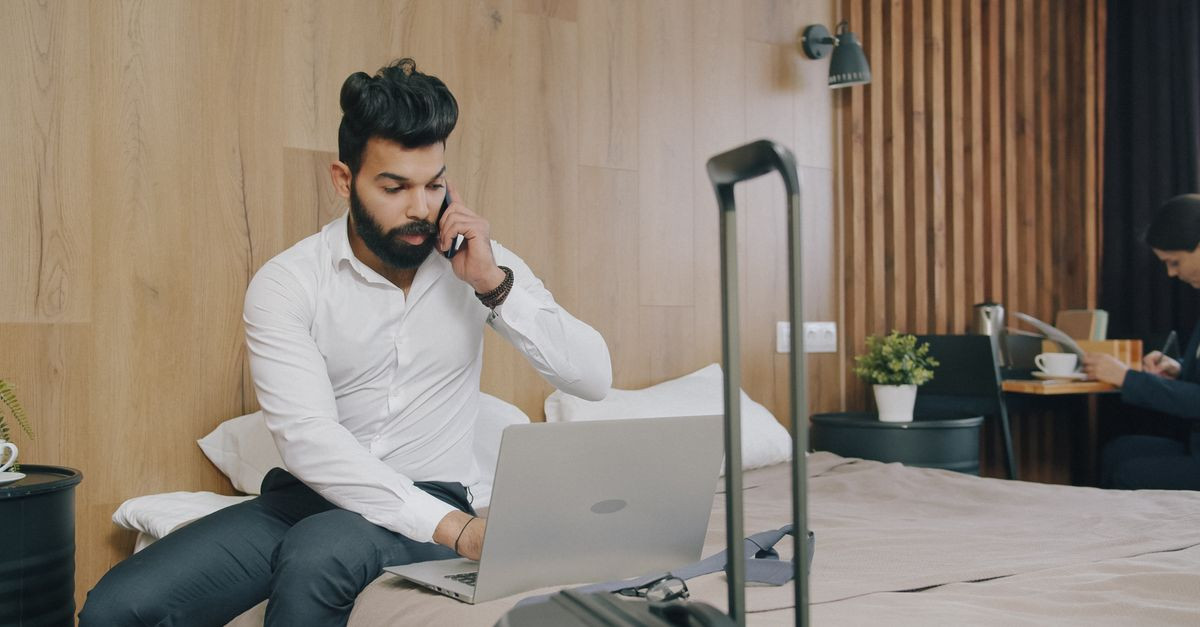 Vitaly Gariev, PexelsA longer stay also deserves a closer look at the accommodation. BCD Travel’s August 2025 hotel research surveyed 1,035 business travelers and found that location, employer policy, and cost were major selection factors. Respondents who sometimes chose apartments valued the extra space, cooking facilities, and laundry options for longer visits. Those preferences help explain why a room suitable for one night might not be the best choice for an extended working stay.
The basics still matter more than the marketing language. In the same research, Wi-Fi and breakfast were the most frequently used hotel services, while slow internet and uncomfortable beds appeared among common complaints. For a stay involving actual work, ask about the workspace and connection before paying for an appealing view. Have the property confirm desk arrangements, quiet working areas, and any charges for the internet service you’ll need.
Convenience also has to fit company rules. GBTA’s October 2025 poll found that 57% of respondents’ corporate travel policies prohibited short-term rental platforms such as Airbnb and Vrbo, while only 8% always allowed them. Check approved accommodation options before planning an extended stay around a rental, particularly when you’ll be switching between company-funded and personal nights.
Security belongs in the accommodation decision as well. The Canadian Centre for Cyber Security advises business travelers to update devices, enable multifactor authentication where available, and avoid unknown or public Wi-Fi when accessing sensitive information. It recommends cellular data where possible and warns about people looking at screens or keyboards. Before international travel, ask your IT department about approved devices and access arrangements, and whether sensitive material should be removed. Choose somewhere private for confidential work rather than treating a busy lobby as an extension of your home office.
The Fine Print Still Travels With You
Crossing a border makes the distinction between travel and work especially important. Under the United Kingdom’s visitor rules, visitors may undertake remote activities connected to overseas employment, provided that isn’t the primary purpose of their visit. The rules separately permit activities such as attending meetings and conferences or negotiating contracts. Check the official requirements against your itinerary, especially when a short meeting is followed by a much longer period of working remotely.
Tax treatment deserves similar attention. For American federal tax purposes, the IRS generally defines your tax home by your main place of business, not necessarily your family residence. It also states that most employees cannot deduct unreimbursed travel expenses, subject to limited exceptions. Before assuming a personally funded office visit is deductible, ask a qualified adviser how the rules apply to your working arrangement, particularly when your home and employer’s office are in different cities.
Even flexible employers are operating within a more expensive travel market. GBTA’s August 2026 forecast projected worldwide business travel spending would increase 7.2% that year, compared with a 1.3% rise in trip numbers. The association identified rising transportation and travel costs as a major factor behind the spending growth. That makes a clear business purpose important when requesting extra nights, a more suitable hotel, or a gathering that requires colleagues to travel.
For travelers, the useful starting point is deciding what the journey needs to accomplish. Establish which activities require everyone’s presence, which expenses are approved, how your travel days will be handled, and where work ends and personal time begins. Companies such as Atlassian and Dropbox show how travel can help sustain a workplace whose employees spend most days apart. The destination may be an office, but the point is what the team can accomplish once everyone arrives.