
Video calls won. They eliminated a remarkable number of business trips that once seemed unavoidable, from routine status meetings to quick conversations between offices on opposite sides of the country.
What they did not eliminate was the need to be somewhere in person when the outcome matters enough. Companies are becoming increasingly selective about business travel, but recent research shows that client meetings, major events, training, and other high-value encounters continue to put employees on airplanes. In 2026, Global Business Travel Association research found that sales and client meetings and conferences were the in-person activities travel buyers considered hardest to shift to virtual alternatives.
The interesting question, then, is no longer whether a meeting can happen online. Almost anything can. The better question is whether something important would be lost if it did.
Meeting A Client For The First Time Is Different
Plenty of existing client relationships now function perfectly well through email, messaging, and video calls. Once people know one another, a 30-minute online conversation can be far more sensible than losing half a day to airports and taxis.
The equation changes when the relationship is new or the stakes are unusually high. McKinsey's research into business-to-business sales found that buyers had embraced remote and digital interactions without abandoning face-to-face contact. Respondents often regarded an in-person visit as evidence that a supplier valued the relationship, and many wanted to have met a supplier face to face at least once.
That makes the first meeting unusually difficult to replace. Sitting across a table gives both sides more time together than a scheduled video slot usually allows, and the conversation can move naturally from the formal presentation into lunch, coffee, or a walk back through the lobby. The trip may also allow the traveler to meet several people at the client's company rather than speaking only with the person whose name appeared on the calendar invite.
Companies appear to recognize the distinction. Deloitte's 2025 corporate travel study found that new business development and face-to-face engagement with clients, partners, and vendors remained major drivers of travel. Client-facing trips also feature prominently in GBTA's travel-spending research.
For the traveler, that means a flight to meet a customer increasingly needs a reason beyond "we always visit them." The trips that survive are more likely to involve a pitch, an important negotiation, a new relationship, or an account important enough that being physically present sends a message of its own.

Some Projects Need Everybody In The Room At The Beginning
Once a project is moving smoothly, video calls can be remarkably effective. Tasks are assigned, everyone knows the players, and a weekly online meeting may be all the team needs.
The beginning can be different. Microsoft's research into its own distributed workforce identified project kickoffs as one of several moments when employees found in-person time particularly valuable. The company points to early planning and initial customer engagements as situations where gathering physically can help people get aligned before the work becomes distributed again.
There is a practical appeal to that approach. A complicated kickoff can involve several departments, competing priorities, technical questions, and decisions that generate follow-up conversations almost immediately. In person, somebody can pull another specialist into the room or continue working through an issue after the formal agenda ends.
Onboarding can benefit for similar reasons. Microsoft's internal research found advantages when employees met managers or onboarding partners in person early in a new role, particularly around feedback, relationships, trust, and understanding how to contribute. Microsoft also cautions that this does not mean every later interaction with a manager needs to happen face to face.
That distinction is useful for companies trying to control travel costs. Bringing a new employee to headquarters once can make more sense than requiring regular commuting or monthly flights indefinitely. A concentrated few days of introductions, training, meals, and working alongside colleagues can establish relationships that later make remote collaboration easier.
Training is emerging as an especially important reason for travel. Deloitte's 2025 survey found learning and development among the fastest-growing drivers of corporate travel, as companies confront new technology and growing pressure to reskill employees.

Conferences Can Do What Twenty Video Calls Cannot
Conferences are perhaps the clearest example of something that can technically be recreated online but changes fundamentally when it is.
The presentations themselves are rarely the whole reason to travel. A keynote can be streamed. A panel discussion can be watched from a desk. Even an exhibition booth can be replaced by a polished website and an online demonstration.
What becomes harder to reproduce is the concentration of people. A traveler can meet an existing customer over breakfast, encounter a potential supplier on the exhibition floor, attend a session with competitors, have lunch with someone introduced by a colleague, and run into an old contact in the hotel lobby before dinner.
Deloitte highlights exactly this advantage. Its 2025 corporate travel study found conferences remained a major driver of business travel and noted that live events give organizations a chance to interact with several stakeholders during one journey. That can be particularly valuable for smaller companies that cannot afford to make separate trips to visit every useful contact.
The same pattern shows up in more recent GBTA data. Its April 2026 research found conferences and trade shows alongside client meetings as the two activities corporate travel buyers found most difficult to move into virtual formats.
For travelers, this helps explain why the modern conference trip can feel packed. Attending the scheduled sessions may only be part of the job. The valuable parts of the itinerary can begin before breakfast and continue through dinners, receptions, and conversations that were never on the official agenda.
That is also why simply comparing the cost of a conference flight with the cost of a video subscription misses something important. The traveler is not flying across the country to watch a presentation. The traveler is going because hundreds or thousands of potentially useful conversations have temporarily moved into the same place.

Some Work Has A Physical Address
There is another category of travel that technology has an even harder time replacing: work connected to something physical.
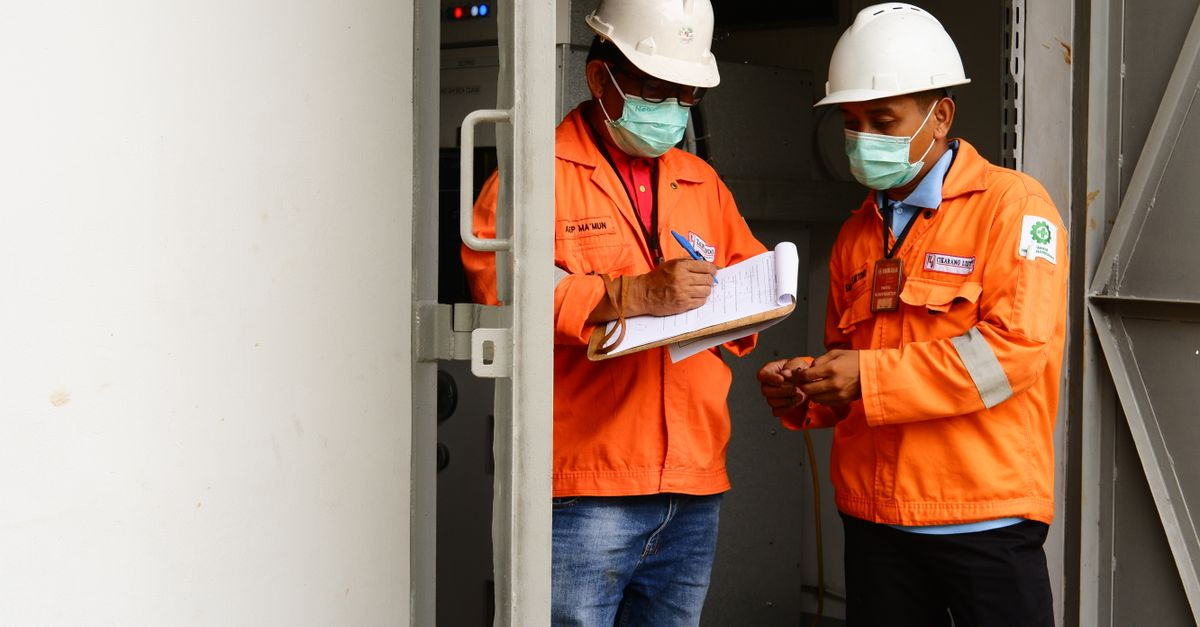
Factories, construction sites, equipment installations, stores, laboratories, data centers, production lines, and customer facilities exist somewhere. A camera can provide a useful view of them, but some jobs still require somebody to inspect an installation, troubleshoot equipment, observe a process, supervise work, or understand a location firsthand.
This kind of trip often receives less attention than sales travel or conferences because it does not fit the classic image of the executive business traveler. Yet service trips remain a recognized category in corporate travel programs. GBTA's travel-buyer research for 2025 estimated that service trips would continue to account for a meaningful share of company travel spending.
McKinsey made a similar distinction when examining which business trips were most resistant to virtual substitution. It identified mission-critical travel, including trips connected with supply chains and operational requirements, separately from internal meetings that technology could replace more easily.
The reason is straightforward. A video call is excellent for talking about a machine. It cannot physically inspect the machine.
Even when remote tools can handle much of the work, visiting the location can change what an employee understands. Walking through a customer's operation may reveal practical problems that never came up in meetings. Seeing how people actually use equipment or move through a facility can create questions nobody thought to ask on a call.
These trips are also less vulnerable to the argument that "this could have been a video meeting." Often, there is something at the destination that simply cannot board the call.
The Flight Now Has To Earn Its Keep
The survival of these trips does not mean companies have rejected virtual meetings. In many ways, the opposite has happened.
Deloitte found that the share of professionals traveling for work declined in its 2025 survey even while many companies continued increasing overall travel budgets. Costs have also become a stronger constraint, giving travel managers another reason to question journeys that can be handled effectively online.
That puts the routine internal meeting in a difficult position. If five colleagues already know one another and simply need to exchange information for an hour, putting all five on airplanes can be hard to justify. Companies now have years of experience proving that plenty of those conversations work remotely.
Travel becomes much easier to defend when physical presence changes the potential outcome. Winning an important customer, beginning a complex project, training employees, seeing an operation firsthand, or meeting dozens of industry contacts in three days all offer something beyond what appears in the meeting invitation.
That is reflected in where travel demand is coming from. Deloitte found external stakeholder engagement, new business development, conferences, and training among the leading forces supporting business travel in 2025. GBTA's 2026 survey likewise found companies becoming more deliberate about travel rather than abandoning it altogether.
The result for business travelers is an odd combination of fewer unnecessary journeys and more pressure on the ones that remain. A trip may come with a fuller agenda because the company wants several useful outcomes from one airfare. A conference might include customer meetings around the edges, while a project kickoff might become an opportunity for training or team building.
That does not necessarily make business travel less valuable. It may make the reason for traveling clearer.
Video calls have become good enough that nobody needs to fly just to prove a meeting is important. That has raised the bar for getting on a plane. But when the relationship is new, the project is complicated, the people are gathered in one place, or the work itself exists at the destination, there are still moments when the most useful button on the screen is "end call."