 rheins, CC BY 3.0, Wikimedia Commons, Modified
Archaeological discoveries often surface as fragments, leaving researchers to reconstruct stories from scattered traces. The Xiatang site in Zhejiang Province offers something far rarer. Excavations revealed continuous cultural layers that preserve daily life across thousands of years. Early rice farming appears alongside later settlement phases, which creates an unusually complete record.
Such continuity matters because it connects food production, social organization, and technological change into a single narrative. Xiatang also allows scholars to observe gradual development rather than isolated moments, providing rare insight into how Neolithic communities adapted while remaining rooted in place. Read on to see how one site turns scattered evidence into a continuous story of early human life.
Origins Of The Xiatang Settlement
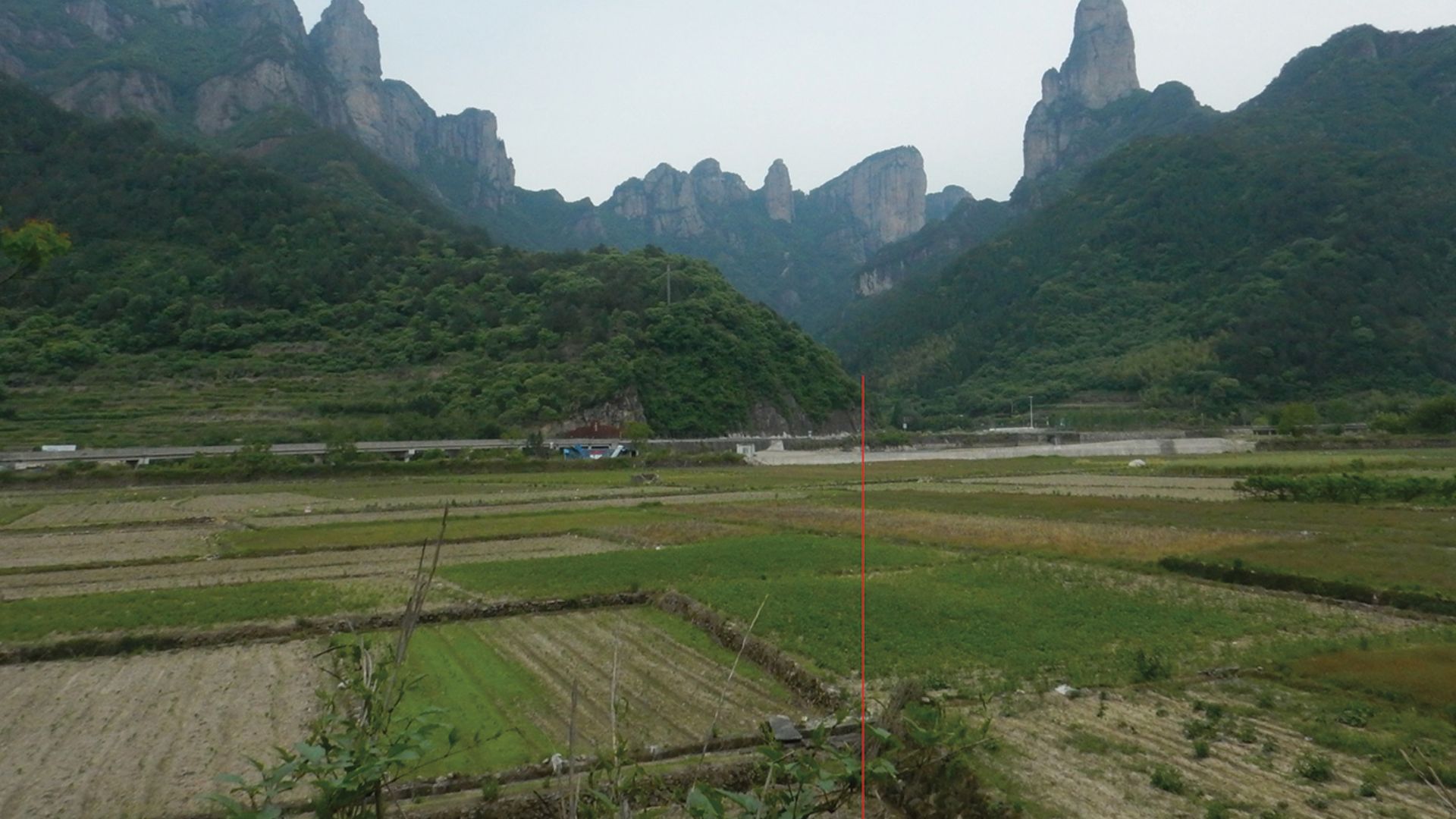
Xiatang lies on the eastern side of a Chinese province called Zhejiang, a region shaped by river systems that supported long-term habitation. Archaeological work began after surveys identified dense underground remains, prompting systematic excavation. Researchers soon uncovered a site spanning nearly three hundred thousand square meters, far exceeding initial expectations. Distinct stratigraphic layers later revealed repeated occupation rather than cycles of abandonment.
Stone foundations outline residential clusters that suggest deliberate settlement planning. That organization extends beyond housing, as pottery kilns appear repeatedly across layers, pointing to long-term craft production. Burial areas also reinforce this sense of continuity through consistent mortuary practices. Roads then tie these elements together, linking homes and work areas into a coordinated community layout.
Continuity defines Xiatang more than any single artifact, where cultural layers build upward without sharp breaks. This preserves both innovation and tradition. Tools evolve gradually, while settlement patterns retain familiar layouts. Instead of cultural replacement, evidence points to adaptation over time. That stability allows researchers to trace how households, labor systems, and technologies changed slowly across millennia.
 Jiangshang Qingfeng 1961, Wikimedia Commons
Evidence Of Early Rice Farming
Agricultural remains provide some of the strongest evidence at Xiatang. Carbonized rice grains recovered from multiple layers even confirm sustained cultivation rather than brief experimentation. Storage pits suggest surplus management, indicating planning beyond immediate consumption. Harvesting tools and grinding implements further reinforce the presence of organized farming.
Rice cultivation also reshaped daily life at Xiatang by tying survival to the land around the settlement. Homes appeared close to fields and storage areas, which shortened daily movement and protected harvests. That spatial focus pushed toolmaking toward greater specialization, since farming demanded precision at each stage. Seasonal rhythms then governed labor and reinforced cooperation within households and nearby groups. Pottery developed in response to these needs, supporting cooking and grain storage across changing cycles.
Compared with other early rice sites in East Asia, Xiatang stands out for this clarity and duration. Many sites even preserve short agricultural phases. Xiatang preserves progression. Researchers can observe how rice farming remained central while methods adjusted across time. This extended record strengthens understanding of how agriculture stabilized and spread across the region.
Later cultural phases continued at Xiatang without erasing earlier foundations. New construction layered itself over older remains, creating a readable sequence of human activity. This depth contributed to the recognition of Xiatang as one of China’s most significant archaeological finds.
How Xiatang Differs From Other Early Rice Sites
Many early rice sites in East Asia preserve only brief agricultural phases or isolated settlement layers. In those locations, evidence often appears fragmented, separated by long gaps or disrupted by later activity. Xiatang presents a different pattern. Here, rice cultivation remains central across successive layers, allowing researchers to observe continuity alongside change.
Where other sites offer single-stage snapshots, Xiatang provides progression. Farming methods adjust over time while remaining essential to survival. Settlement layouts also evolve without abandoning earlier spatial logic. Even tool forms shift gradually rather than abruptly. This long view helps clarify how agriculture stabilized instead of spreading through sudden replacement.
Because of this depth, Xiatang strengthens regional comparisons. It allows scholars to test broader models of agricultural development against a sustained record. Therefore, the site shows how early farming communities balanced innovation with continuity, offering insight that short-lived sites cannot easily provide.