 Xinhua News Agency, Getty Images, Modified
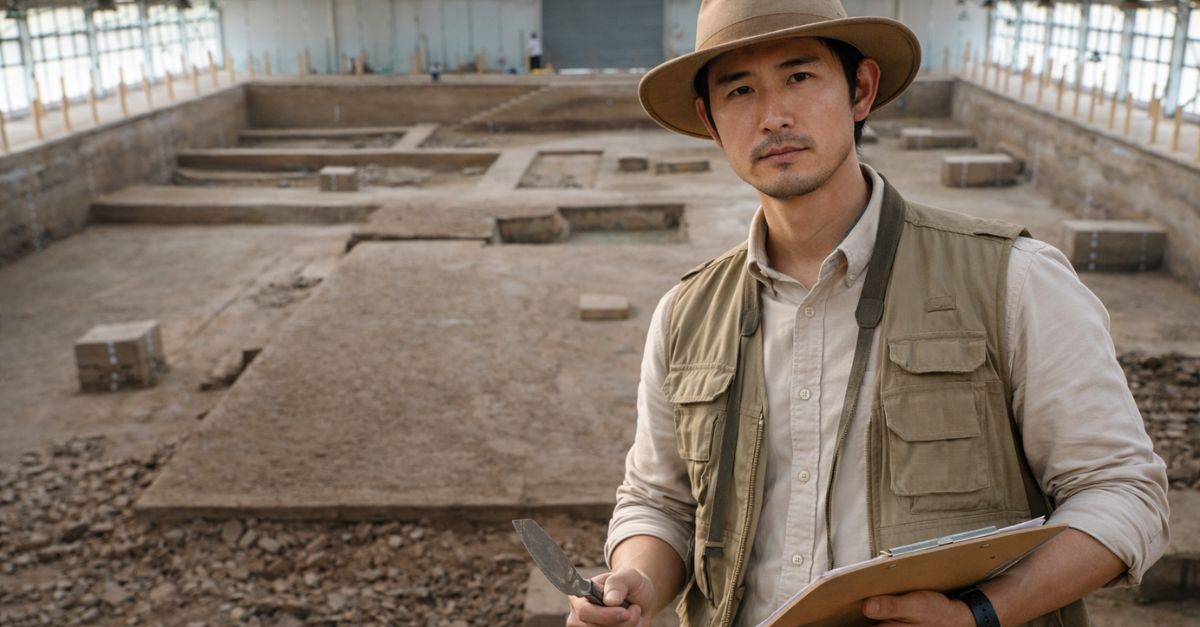
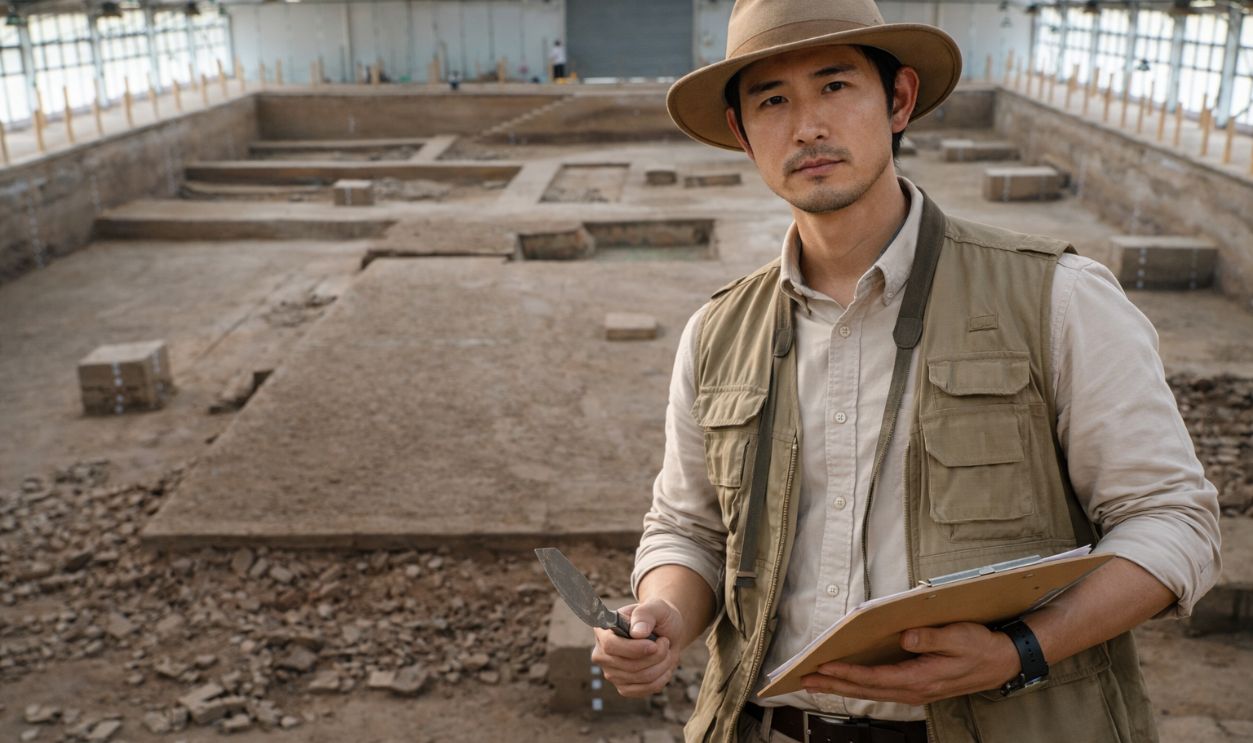
Archaeologist Liu Rui from the Chinese Academy of Social Sciences couldn't believe what his excavation team found last summer among broken palace stones at the Yueyang archaeological site. Buried beneath centuries of sediment sat a working flush toilet dating back 2,400 years—the oldest ever discovered in China. This wasn't some primitive hole dug into the ground, and nothing in the historical record prepared archaeologists for finding advanced plumbing technology from 400 BCE. The discovery rewrites assumptions about ancient Chinese engineering and proves that elite sanitation systems existed two millennia before Europe adopted similar technology.
The toilet belonged to the ancient city of Yueyang, located in what is now Xi'an's Yanliang district in Shaanxi Province. Yueyang served as the capital of the Qin Kingdom for roughly 35 years during the Warring States Period before becoming the first capital of the Han Dynasty. This was a time when seven rival kingdoms battled for dominance across China, driving rapid technological advancement in weapons, architecture, and infrastructure. The palace where the toilet was found likely housed administrative offices rather than royal living quarters, though only the highest-ranking officials enjoyed access to such luxury. Researchers believe the toilet was used by Qin Xiaogong, who ruled from 381–338 BCE, or possibly his father Qin Xian'gong, who governed from 424–362 BCE. Liu Bang, the first Han Dynasty emperor who ruled starting in 206 BCE, may have also used it when Yueyang briefly served as his capital.
Engineering Marvel From The Warring States Era
The toilet system demonstrated a sophisticated understanding of hydraulics and waste management that wouldn't become standard in Europe until the Victorian era. Workers carved the toilet bowl from stone and positioned it indoors for privacy and comfort, a stark contrast to communal outdoor latrines used by common people. The bent pipe discovered during excavation connected the bowl to an outdoor cesspit located several meters away from the palace structure. This separation prevented odors and disease from contaminating living spaces, showing that ancient Chinese engineers understood sanitation risks long before germ theory existed. Servants poured water into the bowl after each use, creating enough flow to push waste through the drainage system into the outdoor pit, where it could be removed periodically or left to decompose away from human activity.
The discovery challenges Western historical narratives that credit Sir John Harington with inventing the flush toilet in 1596 for his godmother Queen Elizabeth I. Harington's design featured an elevated cistern and downpipe similar in concept to the Yueyang toilet but came 2,000 years later. Thomas Crapper popularized indoor plumbing in Victorian England during the late 1800s, making flush toilets accessible to middle-class families rather than just royalty. Yet China had working models during the Iron Age when most European societies still used chamber pots or open trenches. Liu Rui emphasized that the toilet provides concrete evidence of how seriously ancient Chinese civilization took sanitation, despite limited written records about indoor bathroom facilities surviving to modern times.
 Follower of Alessandro Adami, Wikimedia Commons
What The Discovery Reveals About Ancient Society
Only the highest echelons of Warring States society enjoyed flush toilet technology while everyone else squatted over pits or used communal facilities. This stark divide illustrates the extreme wealth inequality between the ruling classes and ordinary farmers, craftsmen, and laborers who built the palaces but never entered them. The toilet functioned as both practical sanitation and status symbol, demonstrating that its user commanded enough resources to dedicate servants solely to pouring water for flushing and maintaining the drainage system. The upper half of the toilet wasn't recovered during excavation, which left researchers uncertain whether users sat on a raised seat or squatted over the bowl in traditional fashion. Either way, the indoor location and waste removal system represented unimaginable luxury for that historical period.
Archaeologists have been conducting large-scale excavations at Yueyang since 2012, uncovering palace foundations and artifacts that reveal how the Qin Kingdom and early Han Dynasty governed. The toilet was found at Site No. 3 within the complex, which spans several hectares of ancient urban area now buried beneath modern Xi'an's outskirts. Liu explained that digging deeper into palace ruins teaches researchers about social reforms and governmental systems beyond what written records preserve. Physical artifacts like the toilet show how elite administrators lived day-to-day, what technologies they accessed, and how they separated themselves from the population they ruled over.
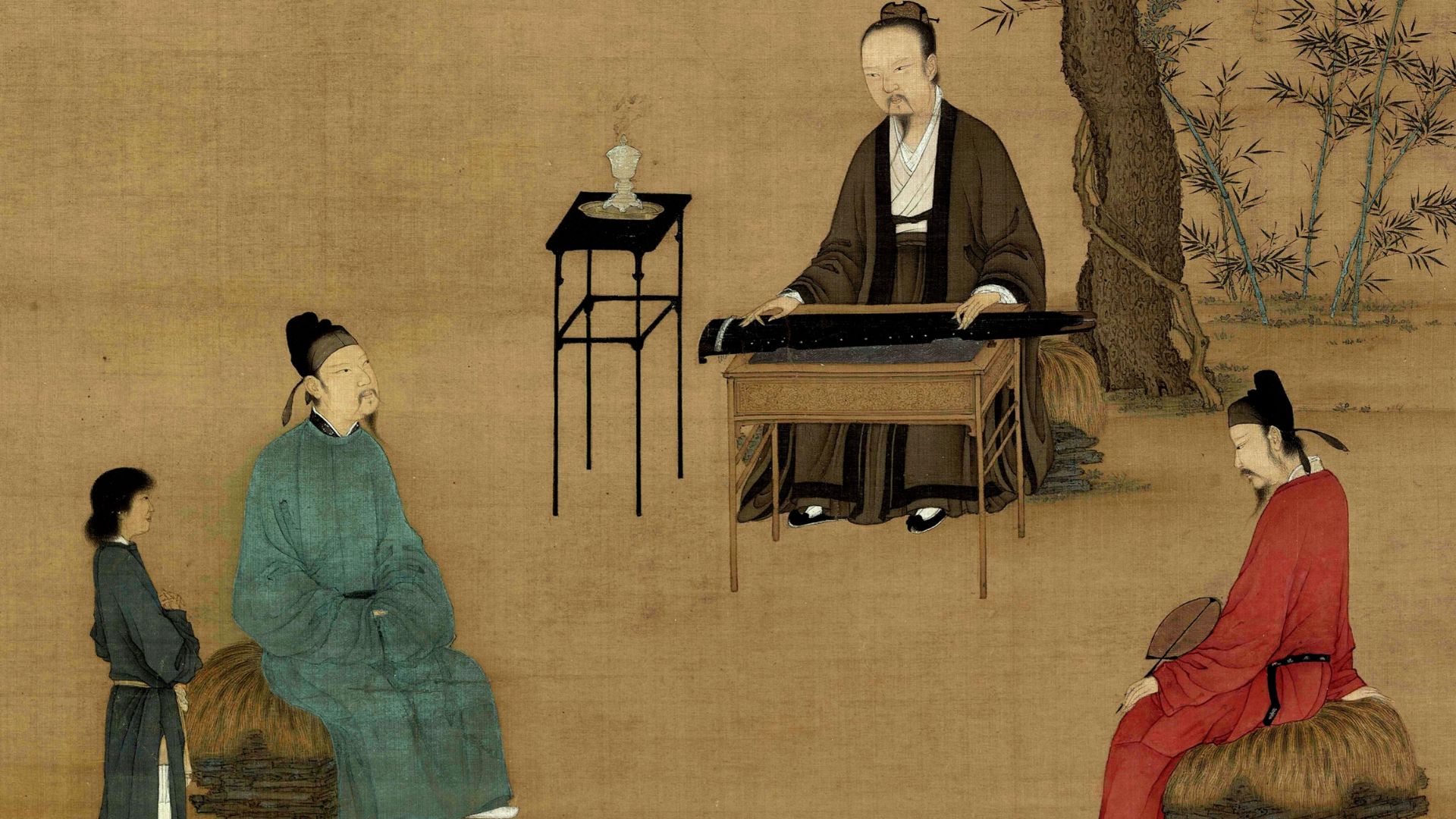 Emperor Huizong of Song, Wikimedia Commons