In 2016, construction crews breaking ground for Rome's new Metro C line at Piazza Venezia expected delays. This is Rome, after all—you can't swing a pickaxe without hitting something ancient. But what emerged from beneath one of the city's most famous squares wasn't another marble emperor or forgotten temple. Instead, workers unearthed something far more intimate and historically precious: an entire neighborhood of ordinary Romans, frozen in time. The discovery revealed a dense warren of working-class homes, shops, and workshops dating back nearly two millennia, complete with the everyday detritus of ancient urban life. Charred beans still sat in cooking pots. Children's toys lay scattered across the floor. The site became an accidental time capsule of common people who history books typically ignore, and it immediately threw the metro project into chaos. What was supposed to be a straightforward transit expansion became one of the most significant archaeological finds in modern Roman history.
The Neighborhood That Wouldn't Stay Buried
The excavation revealed a multi-layered archaeological lasagna spanning from the 2nd century AD through the medieval period, but the most spectacular finds dated to the late Imperial era, around the 3rd and 4th centuries. Archaeologists uncovered a densely packed insula—an ancient Roman apartment complex—alongside ground-floor shops and workshops that would have opened directly onto bustling ancient streets. These weren't the marble palaces of senators or the grand villas of patricians that usually dominate archaeological attention. These were cramped, multi-story wooden and brick structures where craftsmen, merchants, laborers, and their families carved out lives in spaces that might feel familiar to anyone who's lived in a crowded city. The buildings showed clear signs of the city's evolution, with modifications, repairs, and rebuilds stacked on top of each other like geological strata, each layer telling its own story of Roman urban resilience and adaptation.
What made this discovery extraordinary was its completeness and preservation. Fire had swept through the neighborhood, probably during one of Rome's periodic urban conflagrations, but that catastrophe became archaeology's gift. The flames collapsed the wooden upper floors suddenly, essentially sealing the lower levels beneath protective layers of debris and ash. This created preservation conditions archaeologists dream about but rarely encounter. Researchers found intact wooden staircases, original floor tiles still in their Roman-era patterns, and wall frescoes showing that even working-class Romans invested in decorating their modest homes. One workshop contained amphorae still filled with preserved food residues that scientists could analyze to understand ancient Roman diets. Another building revealed evidence of a commercial bakery, complete with milling equipment and carbonized bread loaves. These weren't just structures—they were snapshots of interrupted daily life, preserved at the exact moment ancient Romans dropped everything and fled the flames.
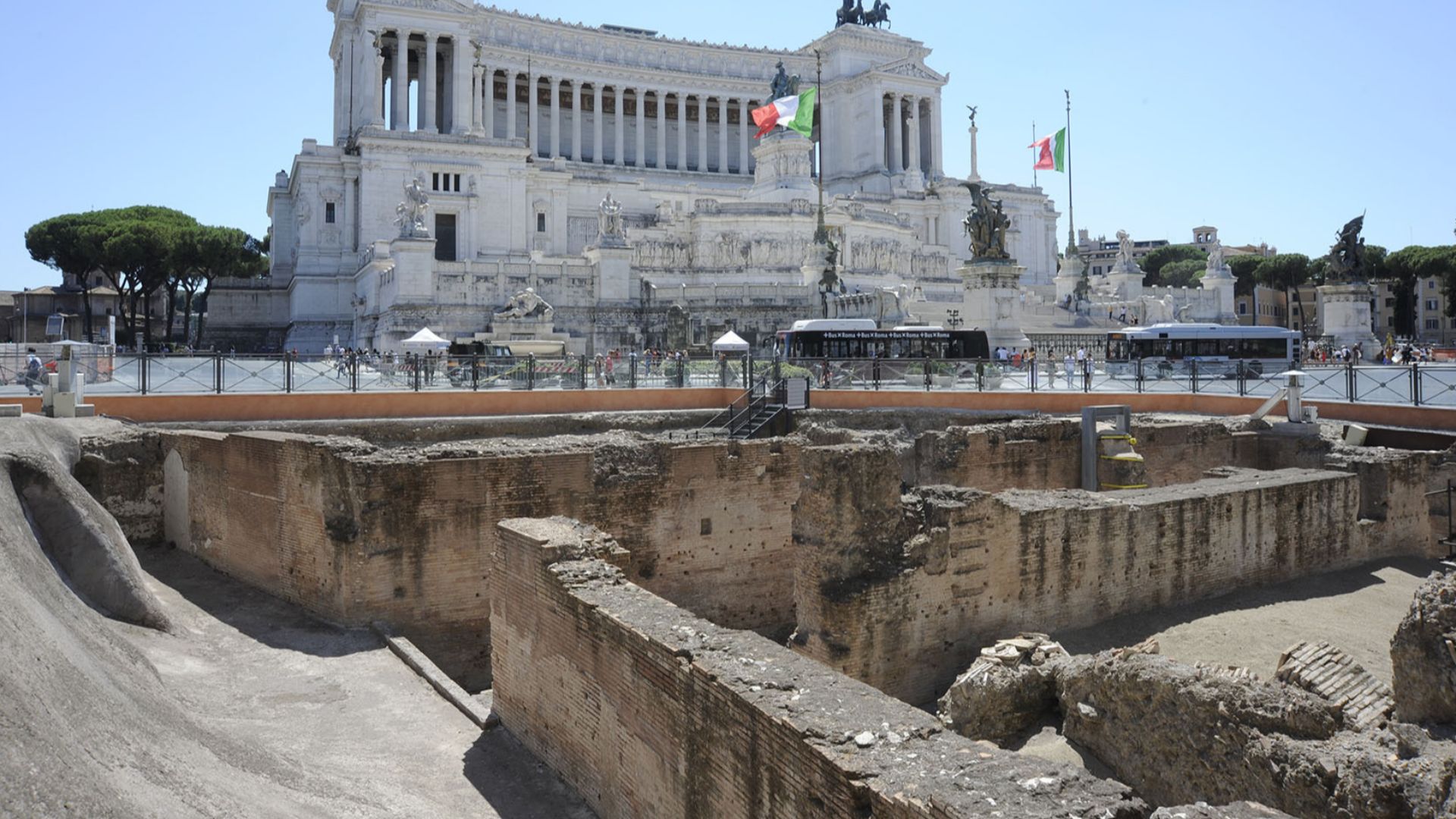 it:indeciso42, Wikimedia Commons
When History Hijacks The Future
The discovery created an immediate infrastructure crisis. The metro line, already years behind schedule and billions over budget, ground to a complete halt. Italian law requires a comprehensive excavation of any significant archaeological find, and this site qualified as monumentally significant. Engineers faced a nightmare scenario: the planned metro station sat directly atop the ancient neighborhood, and simply building over or around it wasn't structurally feasible given the site's instability and historical importance. The Italian Culture Ministry designated the entire area a protected archaeological zone, effectively requiring that any construction preserve the ancient remains for future study and public access. This wasn't some isolated artifact that could be catalogued and removed. It was a massive, fragile, interconnected site requiring years of careful excavation, documentation, and conservation.
The project's costs ballooned as architects redesigned the station to incorporate the ruins, creating an underground museum space where commuters would eventually pass through glass-walled galleries displaying the exact spot where ancient Romans once lived. Nearly a decade later, the metro line still hasn't opened, making it possibly the most expensive archaeological discovery in modern Italian history—and a perfect embodiment of Rome's eternal struggle between preserving its past and building its future. The ancient neighborhood won this battle, ensuring that the forgotten voices of working-class Romans would finally be heard, even if it meant modern Romans would wait a little longer for their train.
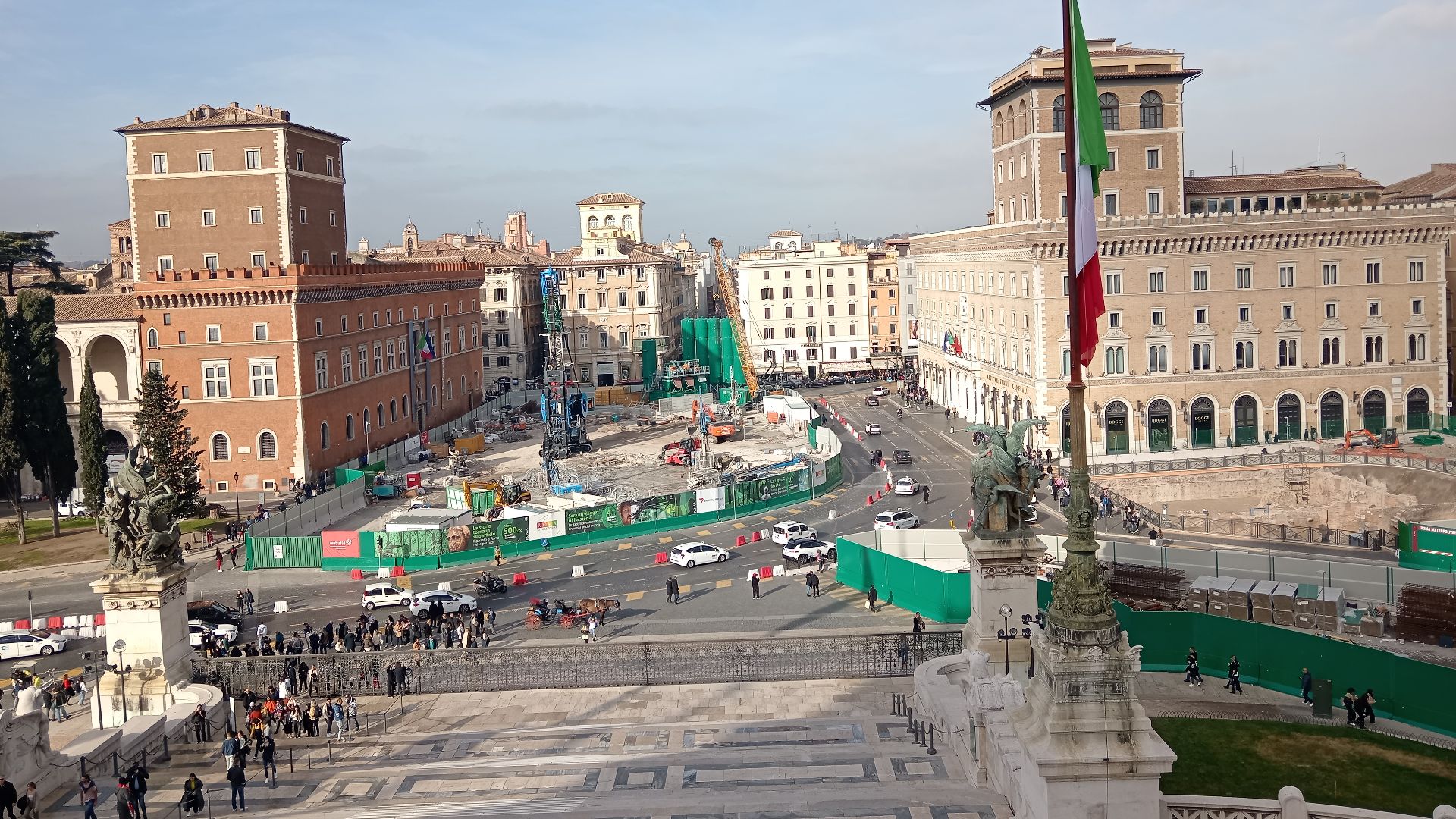 CAPTAIN RAJU, Wikimedia Commons