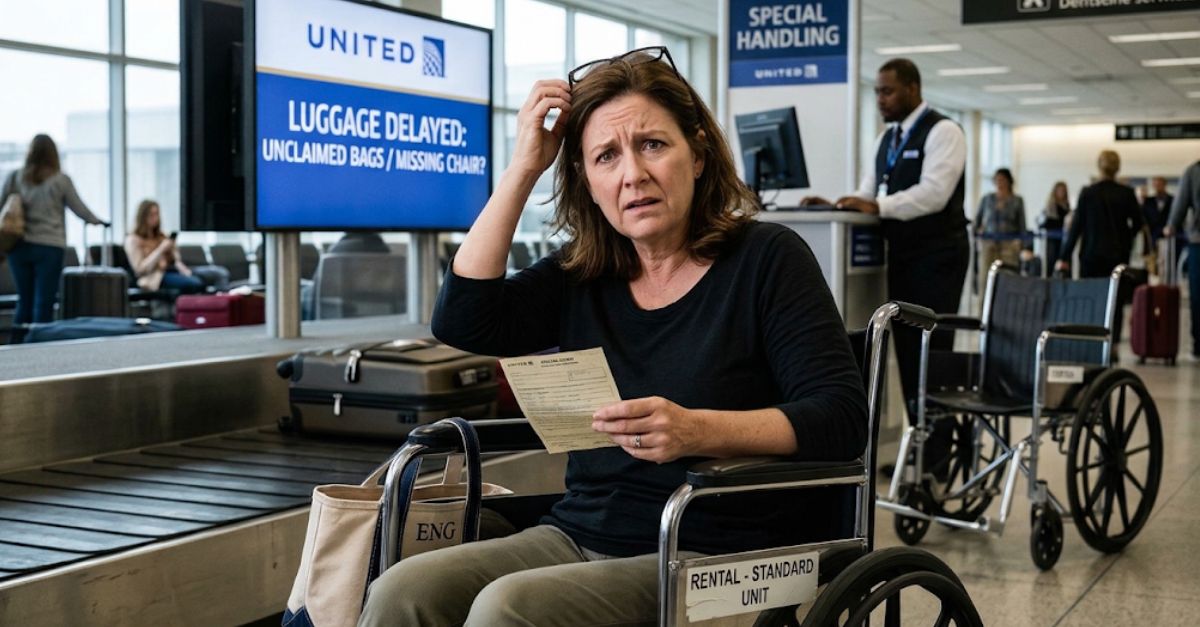
A Missing Wheelchair Can Throw A Trip Into Chaos
When an airline sends a wheelchair to the wrong airport, it is much more than a baggage problem. For many travelers, a personal wheelchair cannot be swapped out for a standard airport or rental chair. That reality is at the center of a major disability rights case involving United Airlines and traveler Engracia Figueroa.

The Real Question Is Whether A Rental Chair Is Good Enough
Often, it is not. Many wheelchairs are customized for posture, movement, pain control, or pressure relief. Federal regulators have said airlines must quickly return delayed wheelchairs and provide suitable temporary replacements when needed. The fight is over what “suitable” really means, and whether a generic chair meets that standard for a specific passenger.

The Case That Brought The Issue Into Focus
In February 2024, the U.S. Department of Transportation announced a consent order against United Airlines. The agency said United violated the Air Carrier Access Act and federal rules that protect airline passengers with disabilities. Part of the case focused on how the airline handled damaged and delayed wheelchairs.
 M J Richardson , Wikimedia Commons
Who Was At The Center Of The Complaint
One of the most well-known cases involved disability rights advocate Engracia Figueroa. According to reports and court filings, her customized wheelchair was damaged during a United flight in 2021. Figueroa later died, and her family said complications linked to losing her chair played a role in her decline.

What Happened To Engracia Figueroa
Figueroa flew from Los Angeles to Washington, D.C., in July 2021 for disability rights advocacy events. After landing, her customized power wheelchair was returned damaged and unusable, according to legal filings and reporting by NPR and the Los Angeles Times. She was then given a standard manual wheelchair that her family and advocates said did not meet her medical or mobility needs.
Why A Standard Chair Can Be The Wrong Fix
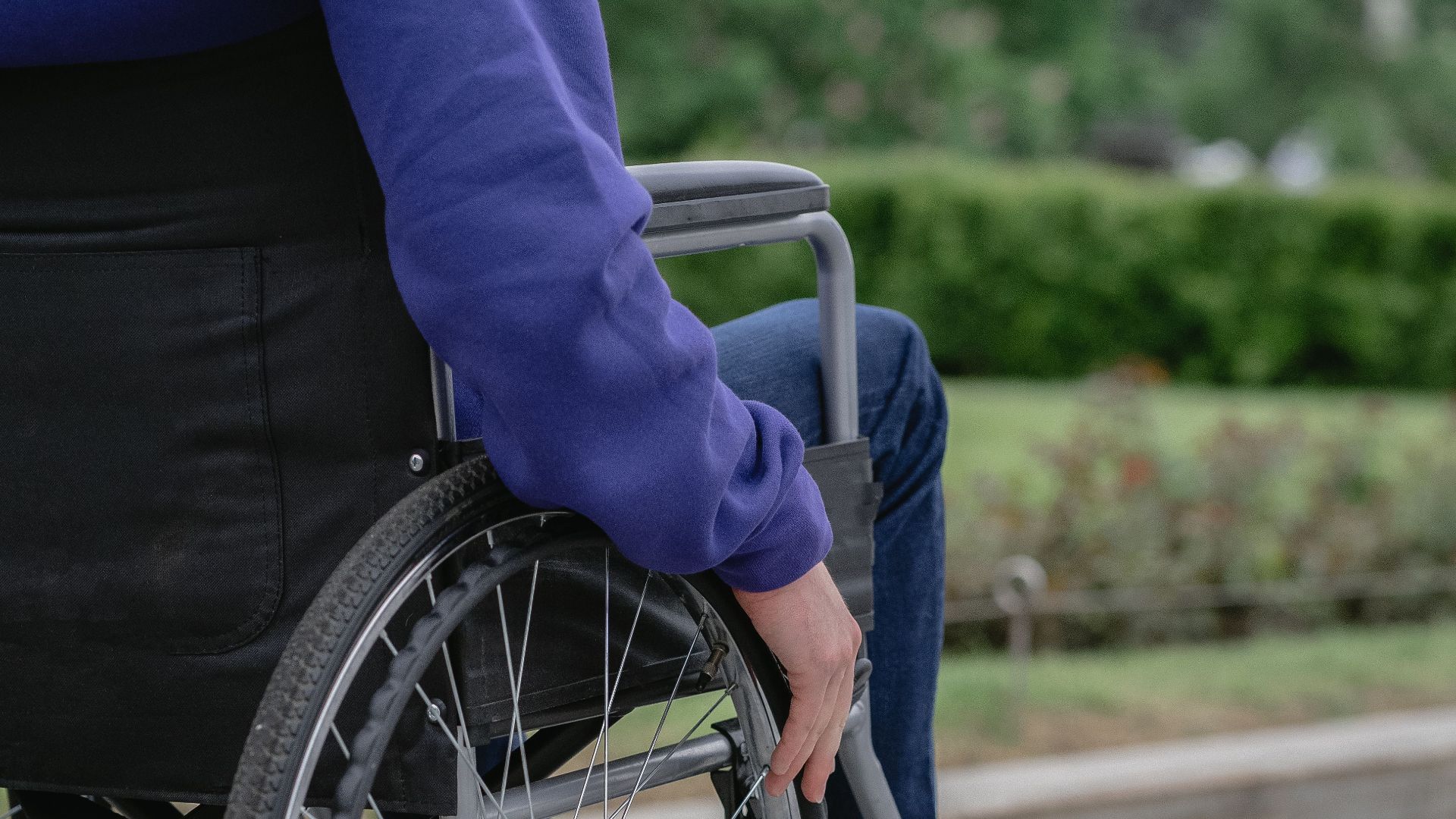
A customized wheelchair can have positioning supports, tilt features, pressure-relief functions, and controls built for one user. A standard rental or airport chair may have none of that. For some passengers, the wrong chair can lead to pain, skin injuries, loss of independence, and serious health problems.

What Federal Rules Actually Say
Under Transportation Department disability rules, airlines must return wheelchairs and other assistive devices in a timely way if they are delayed. If a device is lost, delayed, or damaged, airlines must provide a suitable temporary replacement while the original is repaired, returned, or replaced. That word, “suitable,” is doing a lot of work here. It does not mean an airline can hand over whatever chair is easiest to find.

The Air Carrier Access Act Sets The Ground Rules
The Air Carrier Access Act bars disability discrimination in air travel. DOT rules enforcing that law include specific requirements for handling wheelchairs and mobility aids. Those protections matter because a wheelchair is legally treated as an assistive device, not ordinary luggage.
DOT Said United Fell Short In Several Ways
In its February 2024 order, DOT said United failed in some cases to provide prompt and proper help to passengers with disabilities. The agency also said United failed to return wheelchairs and scooters on time and failed to provide suitable temporary replacements in some situations. United agreed to a $2 million civil penalty as part of the settlement.

The Government Framed It As A Serious Failure
DOT did not describe this as a small customer service mistake. Transportation Secretary Pete Buttigieg said mishandling wheelchairs can have life-altering consequences for travelers with disabilities. That wording showed just how seriously regulators now see these incidents.

Any Chair Is Not The Same As The Right Chair
The rules do not say an airline can roll out a standard wheelchair and call it solved. The replacement has to be suitable for the passenger. In real life, that means the temporary chair should match the traveler’s functional and medical needs as closely as possible.

A New Rule Was Meant To Tighten Enforcement
In 2024, DOT issued a final rule that strengthened protections for passengers who use wheelchairs. The department said mishandling a wheelchair automatically counts as a violation of the Air Carrier Access Act. The rule also spelled out standards for prompt help, repairs, and temporary replacements.

Why This Goes Beyond One Airline
United is hardly the only airline criticized over wheelchair handling. DOT publishes monthly Air Travel Consumer Report data that include reports of mishandled wheelchairs and scooters by airlines. The problem is widespread, ongoing, and easy to track.

The Numbers Show It Keeps Happening
U.S. airlines transport thousands of wheelchairs and scooters every month, and hundreds are mishandled over the course of a year. The rate may seem small on paper, but each case can wreck an entire trip. For someone who depends on a mobility device every waking hour, the stakes are huge.

What Happened Legally After Figueroa’s Death
According to NPR and the Los Angeles Times, Figueroa died in October 2021, months after the airline incident. Her family later filed legal claims tied to what happened. The case became a powerful example for advocates arguing that wheelchair mishandling should be treated as a major safety and civil rights issue.
 https://kaboompics.com/, Pexels
Advocates Have Been Warning About This For Years
Disability rights groups have long said airlines and airports often do not understand what a personal wheelchair really is. It is not just a way to get from gate to gate. It can be a person’s body support system, key to independence, and protection against injury.

What Airlines Are Supposed To Do Right Away
If a wheelchair is sent to the wrong airport, delayed, or damaged, the airline should start tracing it at once and work to get it back. Staff should also ask about the passenger’s actual needs instead of assuming a one-size-fits-all replacement will do. Documentation and escalation matter, especially when the chair is customized.

What Travelers Should Ask For On The Spot
Passengers should ask the airline for written confirmation that the wheelchair was delayed or mishandled. They should also request a temporary replacement that matches their chair’s key features as closely as possible. If the chair offered does not work, the traveler should say so clearly and explain why in plain terms.

The Details Can Make Or Break A Replacement
Useful specifics include seat width, cushion type, power versus manual operation, tilt or recline features, footrest needs, joystick controls, and transfer limits. Those details can mean the difference between a generic offer and a chair someone can actually use. They also create a record if the dispute later reaches regulators.

Take Photos And Save Every Receipt
Travelers should photograph the wheelchair before flying and again if it is damaged or lost. Keep baggage tags, boarding passes, complaint reference numbers, and receipts for any needed expenses. Those records can help support claims to the airline, DOT, or a court if it comes to that.
 https://kaboompics.com/, Pexels
How To File A Federal Complaint
Passengers can file a complaint with the U.S. Department of Transportation’s Office of Aviation Consumer Protection. DOT uses those complaints to look for patterns and possible rule violations. Filing quickly and including detailed records can improve the chances of meaningful follow-up.

Ask For The Airline’s Complaint Resolution Official
Airlines are required to make a Complaint Resolution Official available for disability-related issues. This person should know the Air Carrier Access Act and the airline’s legal duties. Asking for that official can help when front-line staff do not understand why a standard chair is not enough.

An Airport Chair Is Usually Only A Stopgap
An airport chair may work for a short push through the terminal, but it is rarely a real substitute for a personal mobility device. It may not fit the traveler’s body, allow independent movement, or prevent pressure injuries. For many passengers, it is a backup measured in minutes, not days.

Compensation Is Only Part Of The Damage
Money matters, especially when expensive equipment is involved or a trip falls apart. But the bigger issue is often immediate access, health, dignity, and independence. That is why disability advocates push back so hard on the idea that a generic rental wheelchair automatically fixes the problem.
So Is A Standard Rental Chair Enough
Based on DOT rules and recent enforcement, not always. If the replacement is not suitable for the passenger’s needs, the airline may still be failing to meet its legal duties. A standard rental chair is enough only if it truly works for that traveler’s condition and functional needs.
The Bottom Line For Travelers
If your airline sends your wheelchair to the wrong airport, you do not have to assume the first replacement offered is good enough. Ask whether the temporary chair is suitable for your specific needs, and make sure the airline documents the problem. The law gives travelers with disabilities more protection than many people realize, and recent federal action shows regulators are watching more closely.