
Germany Knows How To Do Christmas
Germany has no shortage of Christmas markets, but they’re far from interchangeable. Some of markets feel like they’ve barely changed in centuries. Others are colorful, modern, theatrical, or completely unexpected. Put a few of them together, and you get a very different version of Christmas in every city.
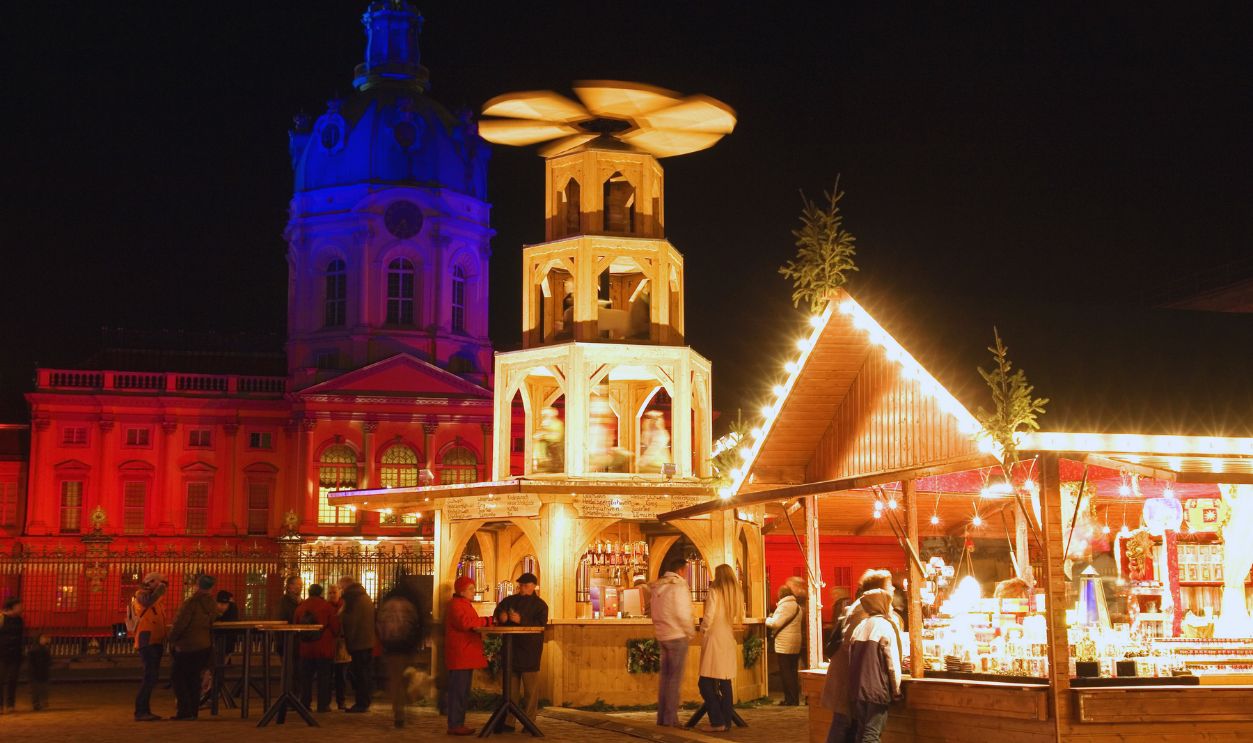
Christmas Market At Charlottenburg Palace — Berlin
Berlin has no shortage of Christmas markets, but few get a backdrop quite like this one. Wooden stalls and lights fill the square in front of Charlottenburg Palace, with the illuminated Baroque residence towering behind everything. Expect crafts, traditional treats, heated dining areas, and a slightly grander atmosphere than your average city market. Weekday afternoons are the best bet if you want to admire the setting without peak crowds. In 2026, the market runs from November 23 through December 27, closing on Christmas Eve.
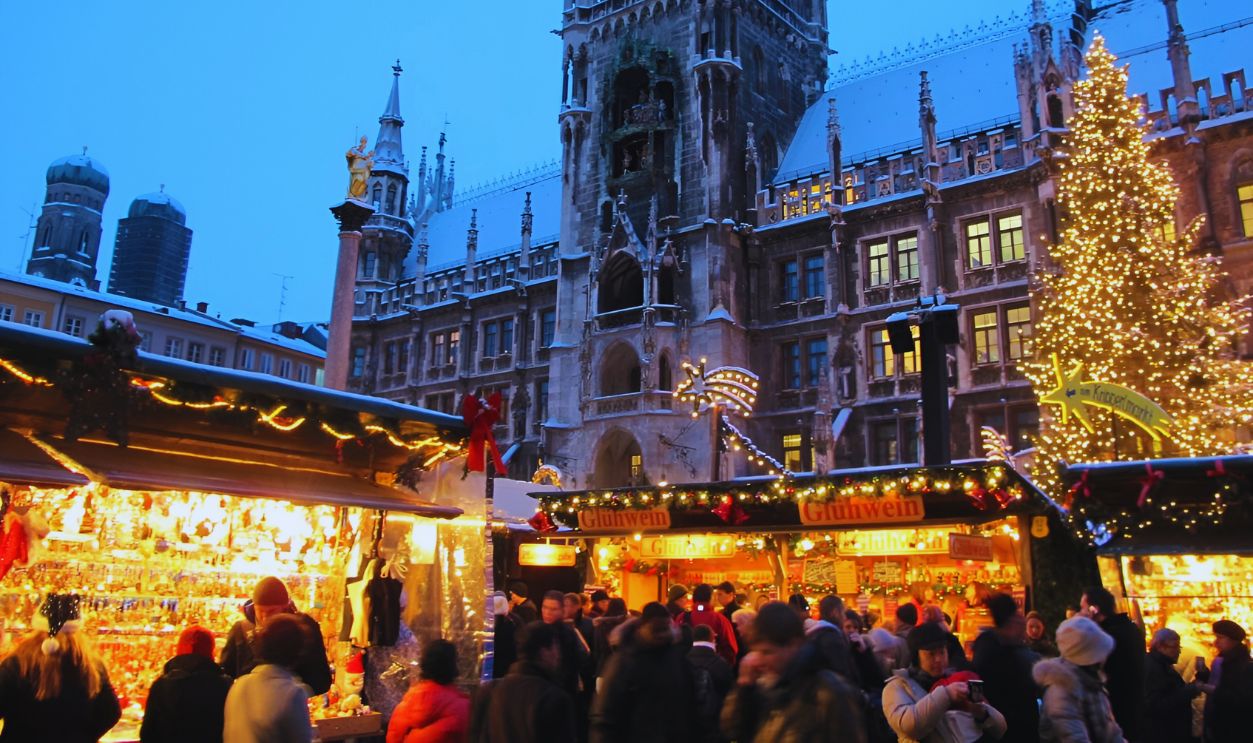
Münchner Christkindlmarkt Am Marienplatz — Munich
Munich’s main Christmas market takes over Marienplatz beneath the ornate New Town Hall, putting you right in the middle of the old city. Its roots stretch back centuries, with a St Nicholas market documented in 1642. Today there are more than 130 stalls, plus the nearby Kripperlmarkt devoted to nativity scenes. Look for Bavarian crafts, sausages, roasted nuts, and plenty of glühwein. The 2026 market runs from November 20 to December 24, although it closes for Totensonntag on November 22.
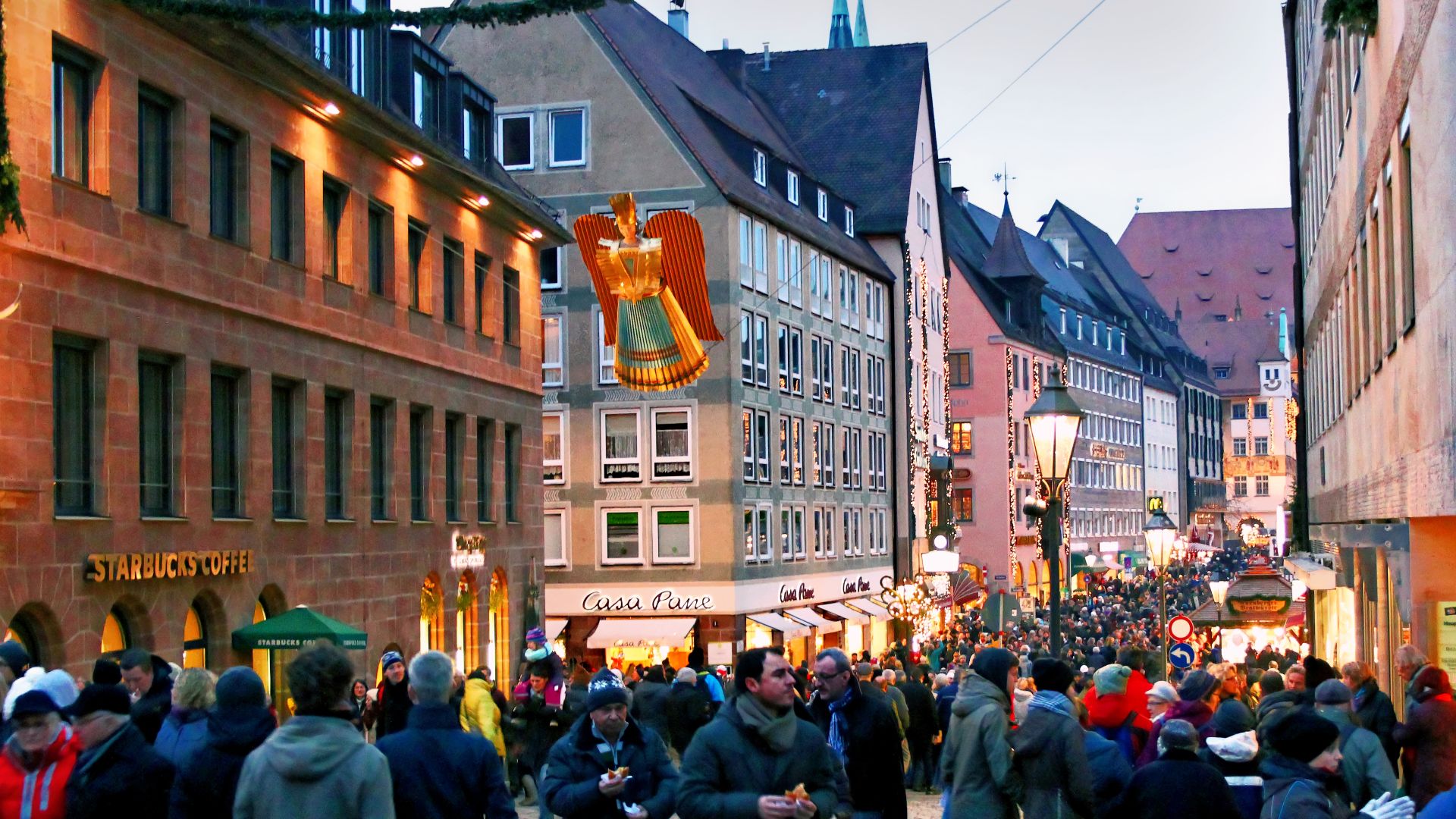
Nürnberger Christkindlesmarkt — Nuremberg
Nuremberg’s Christkindlesmarkt is one of those places that looks exactly the way people imagine a German Christmas market should. Red-and-white roofs cover the Hauptmarkt beneath the Frauenkirche, while stalls sell gingerbread, ornaments, prune figures, and tiny Nürnberger bratwursts. The market’s roots reach deep into the seventeenth century, with the oldest confirmed explicit reference dating to 1678. The Christkind formally opens the market from the church balcony. In 2026, it runs from November 27 through Christmas Eve.
 Photograph: Max Schrader Derivative work MagentaGreen, Wikimedia Commons
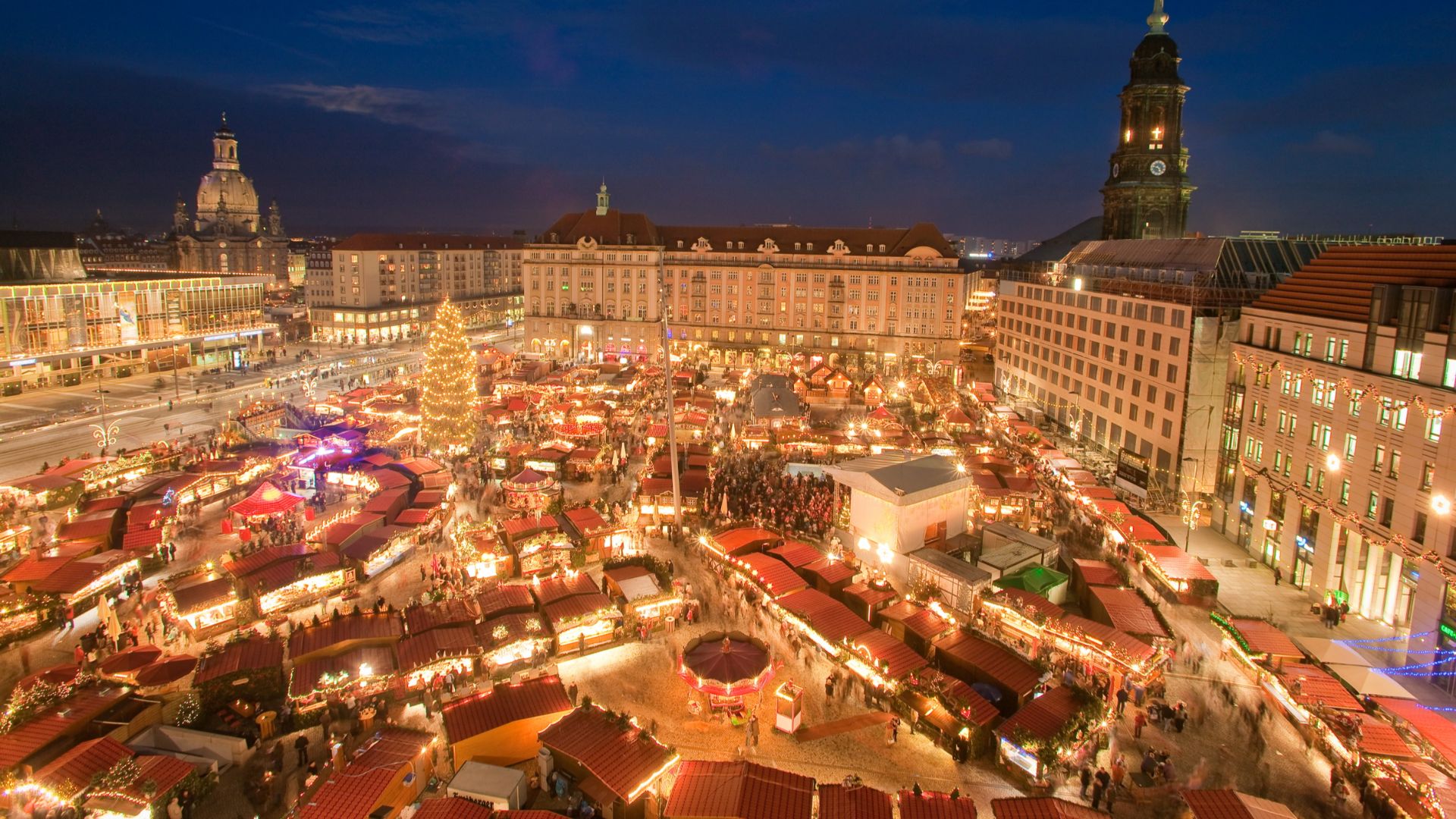
Dresdner Striezelmarkt — Dresden
If history matters to you, Dresden is hard to beat. The Striezelmarkt was first held in 1434 and calls itself Germany’s oldest Christmas market. It takes its name from an old word connected with Stollen, the fruit-filled Christmas bread still strongly associated with Dresden. Erzgebirge woodcarving, enormous Christmas pyramids, nutcrackers, Schwibbogen arches, and the annual Stollenfest give this one a particularly Saxon identity. The 592nd Striezelmarkt runs from November 25 to December 24, 2026, on Dresden’s Altmarkt.
 LH DD/Dittrich, Wikimedia Commons
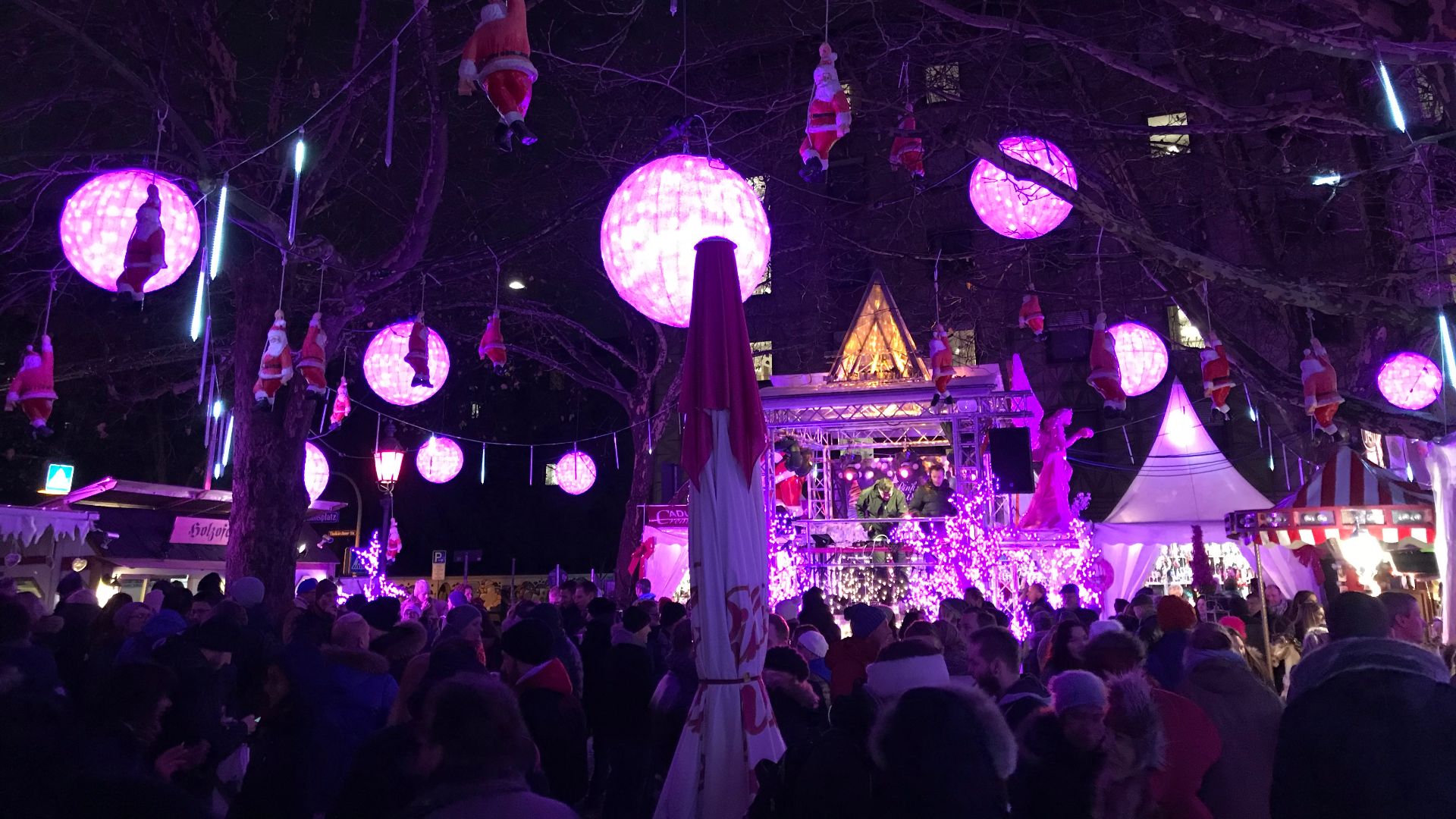
Pink Christmas — Munich
Not every German Christmas market is trying to recreate the Middle Ages. Pink Christmas turns Munich’s Stephansplatz bright pink and fills the evenings with music, drag performances, DJs, glühwein, prosecco, and plenty of glitter. It began in 2005 as a gathering place for the city’s gay community and has grown into an inclusive market welcoming everyone. It’s smaller than Marienplatz and feels much more like a neighborhood party. Pink Christmas runs from November 20 through December 20 in 2026.
 Rob Young from United Kingdom, Wikimedia Commons
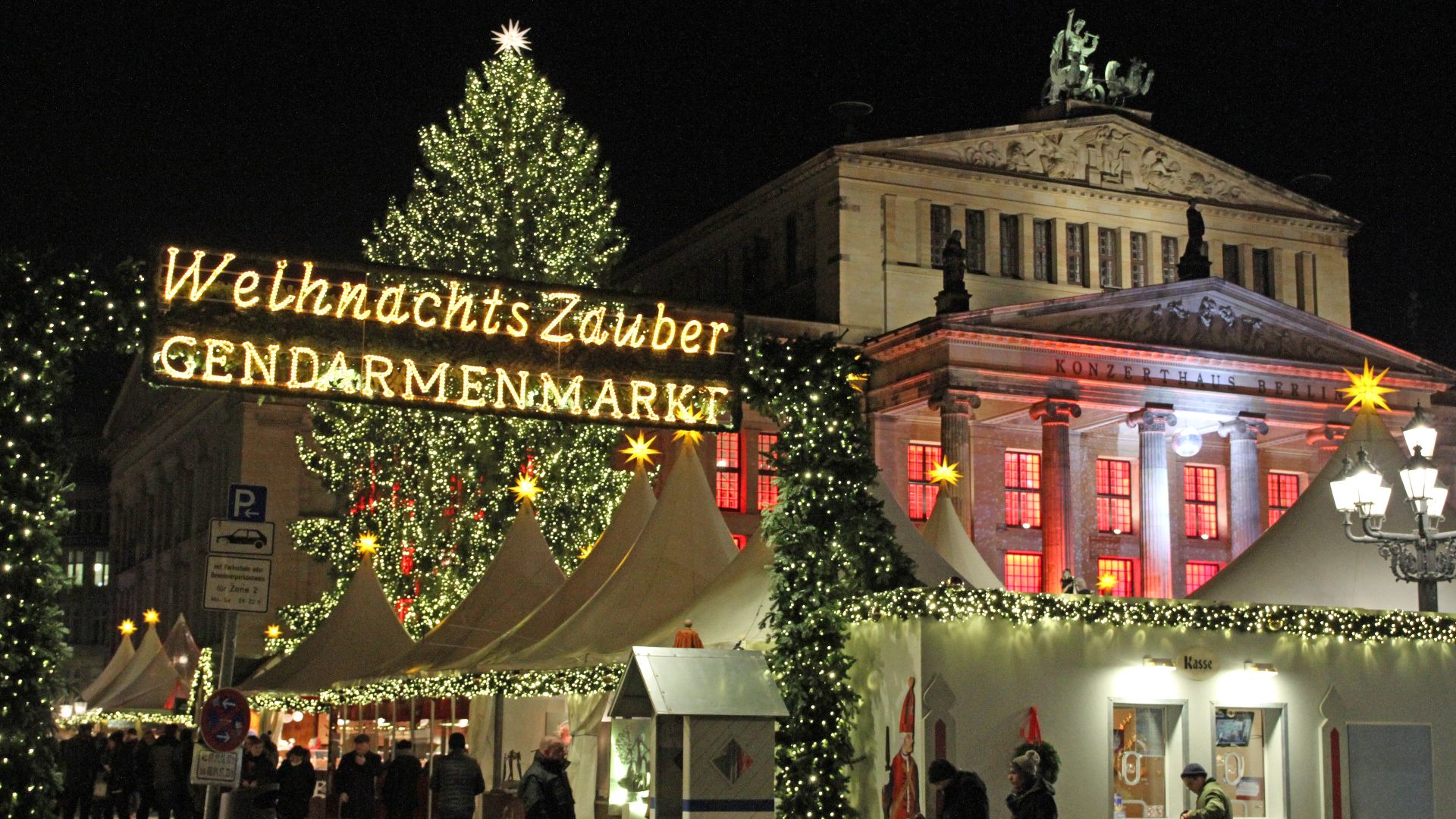
WeihnachtsZauber Am Gendarmenmarkt — Berlin
For a more polished Berlin Christmas market, head to Gendarmenmarkt. WeihnachtsZauber surrounds visitors with elegant white tents, high-end crafts, stage performances, and a much more ambitious food scene than you’ll find at many markets. Heated dining tents are especially appealing when Berlin turns wet and windy. After several seasons away during construction, the market is once again back at its famous historic square between the German Cathedral, French Cathedral, and Konzerthaus. The 2026 season runs from November 23 through December 31.
 Andreas Trojak, Wikimedia Commons
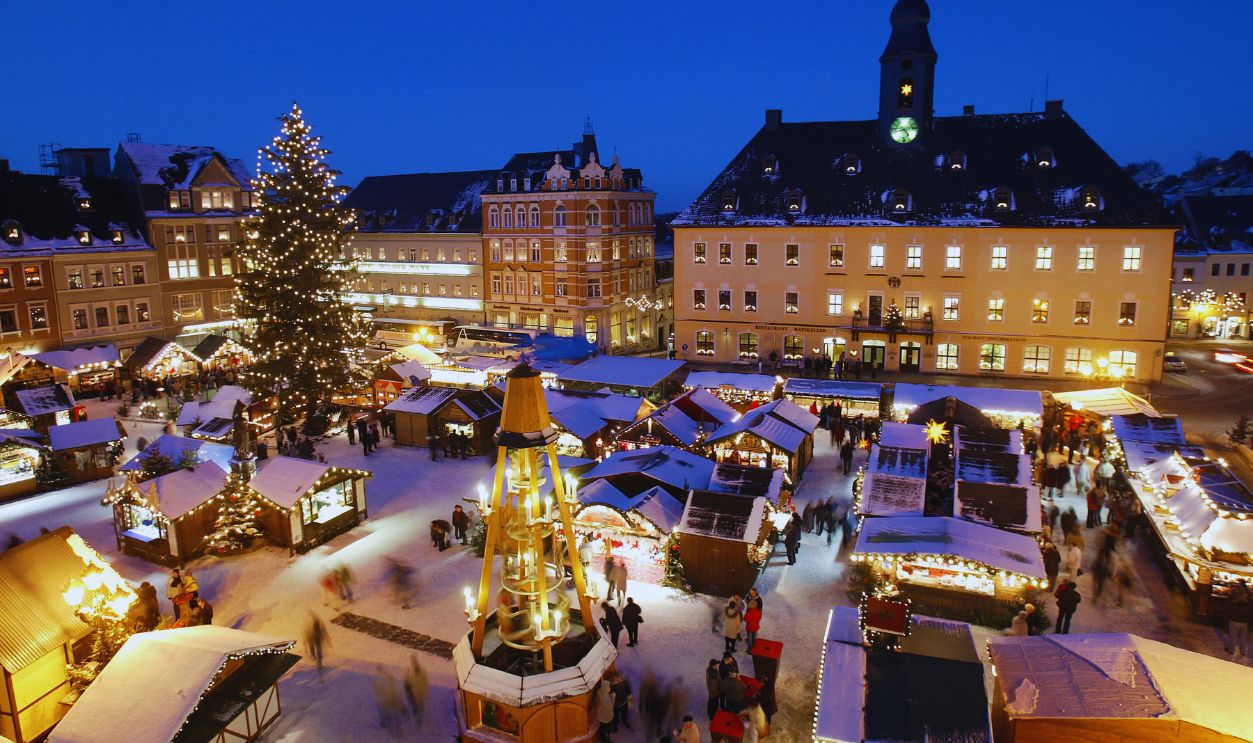
Annaberger Weihnachtsmarkt — Annaberg-Buchholz
Germany’s Erzgebirge, or Ore Mountains, helped create some of the Christmas decorations now associated with the entire country, which makes Annaberg-Buchholz especially rewarding. The market leans heavily into local woodcarving and mining traditions, with pyramids, candle arches, carved figures, and regional food. The huge Bergparade on the fourth Advent weekend brings more than a thousand traditionally dressed participants and musicians into town. For travelers interested in Christmas traditions rather than just shopping, this is a standout. The 2026 market runs November 27 to December 23.
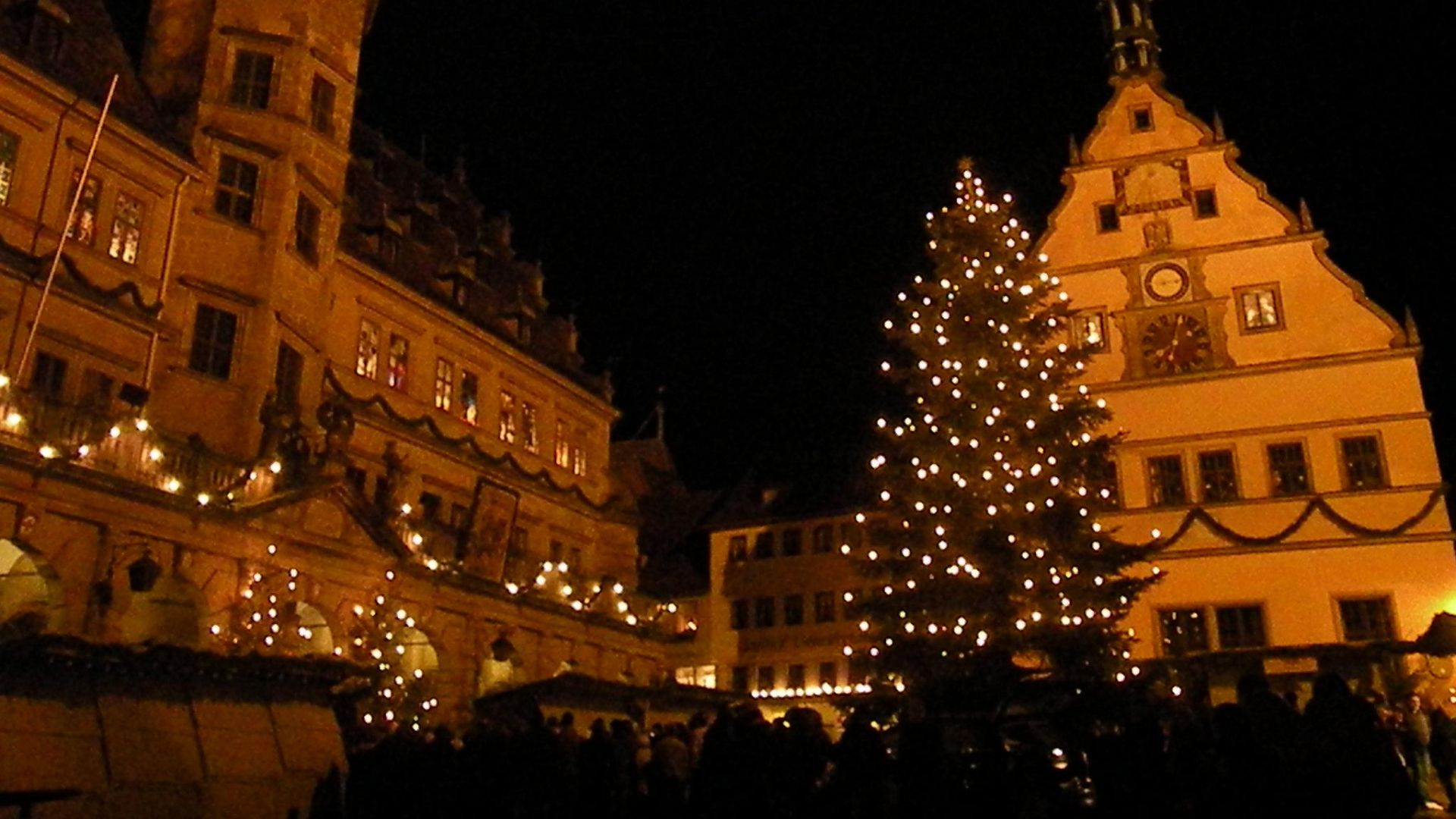
Alt-Rothenburger Reiterlesmarkt — Rothenburg Ob Der Tauber
Rothenburg already looks like someone built a Christmas village and forgot to take it down, so Advent only makes things more dramatic. The Reiterlesmarkt spreads through the medieval center around the Market Square, Green Market, Church Square, and Town Hall courtyard. Its name comes from the Reiterle, a figure rooted in old local folklore who now arrives on horseback to open the festivities. Only about 60 stalls keep the market relatively intimate. In 2026, it runs from November 20 through December 23.
Historischer Weihnachtsmarkt Auf Dem RAW-Gelände — Berlin
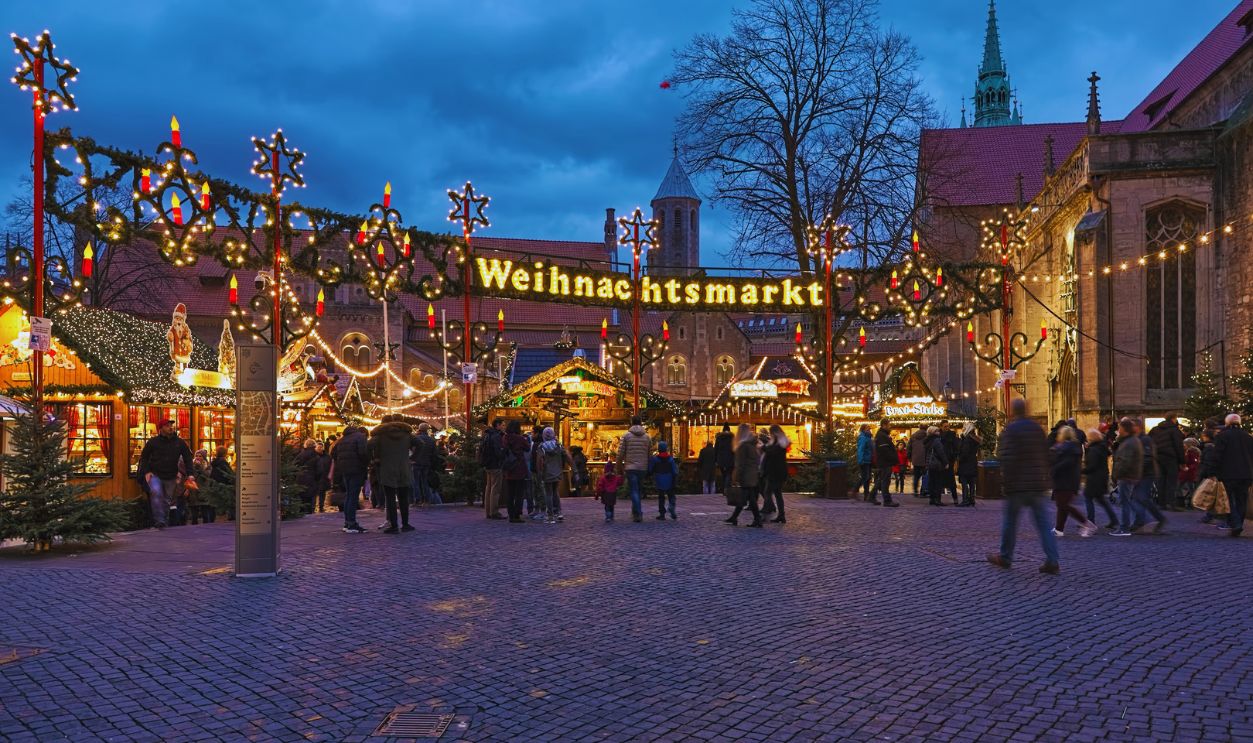
This Berlin market skips polished white tents in favor of torches, fires, blacksmiths, jugglers, medieval musicians, and people throwing axes. It takes place on the former railway-repair complex known as RAW in Friedrichshain, turning an industrial cultural venue into a medieval village. There’s hot mead, flatbread, fire performers, archery, hand-operated wooden rides, and plenty for kids. It feels completely different from Gendarmenmarkt or Charlottenburg. The 2026 Historischer Weihnachtsmarkt runs from November 12 to December 22.
 Mikhail Markovskiy, Shutterstock
Aachener Weihnachtsmarkt — Aachen
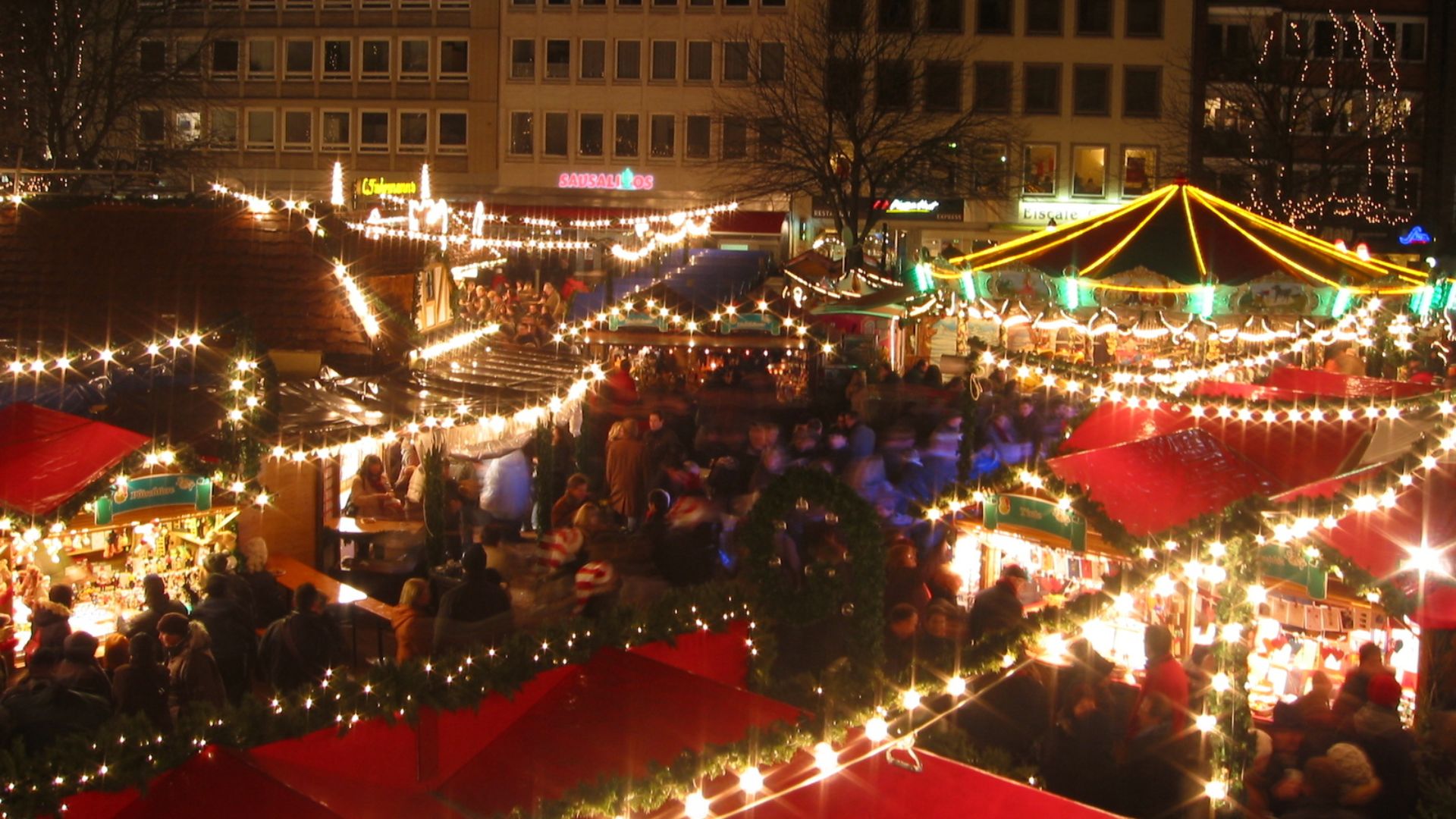
Aachen’s Christmas market wraps around the cathedral and historic town hall, giving it one of the most impressive settings in western Germany. The city is famous for Aachener Printen, a spiced gingerbread-like specialty that becomes almost unavoidable during Advent. You’ll find plenty of it alongside crafts, ornaments, sweets, and mulled wine. Because Aachen sits close to Belgium and the Netherlands, it’s also an easy addition to a cross-border Christmas trip. The 2026 Aachener Weihnachtsmarkt runs from November 20 through December 23.
Bremer Weihnachtsmarkt & Schlachte-Zauber — Bremen
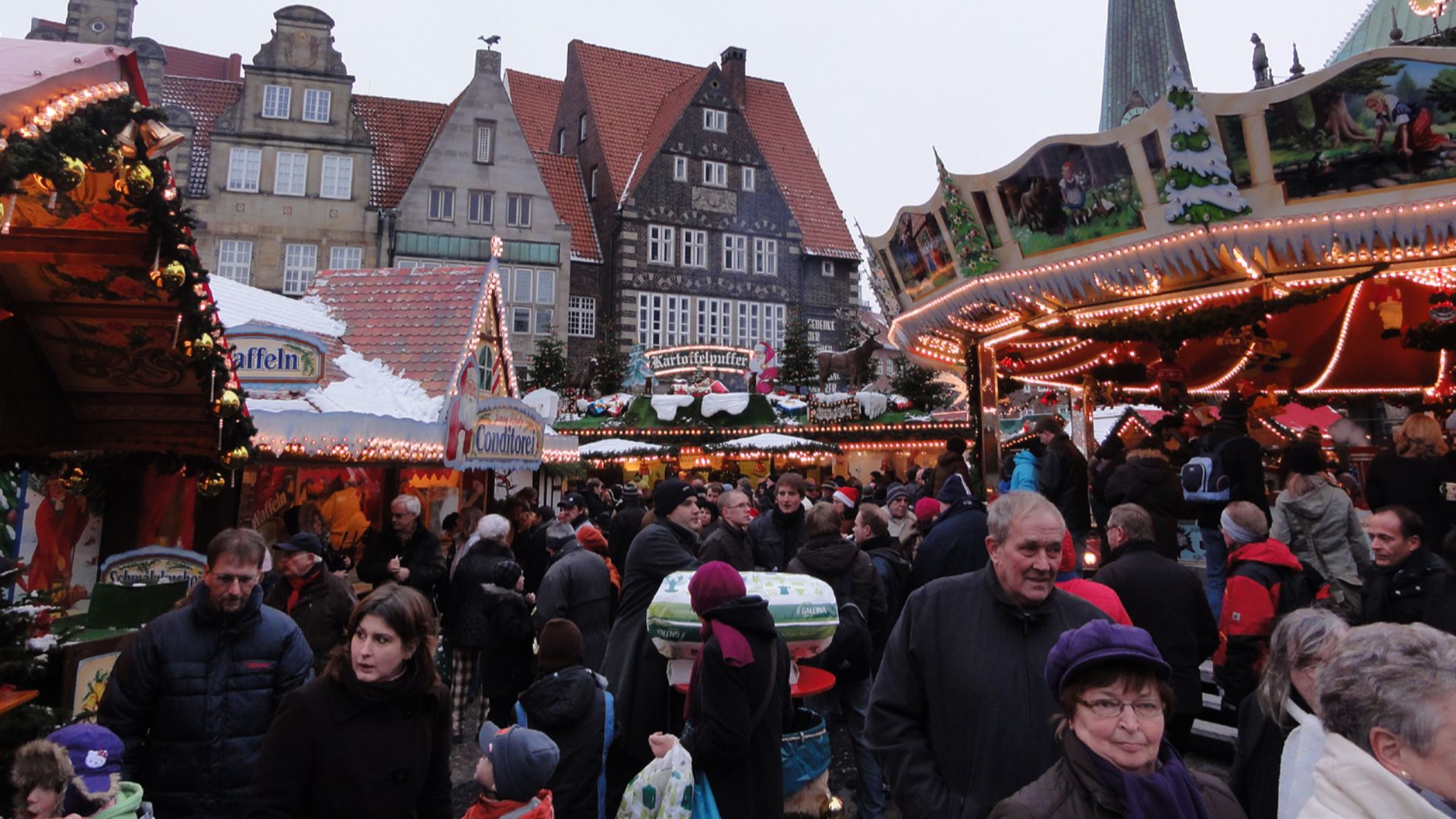
Bremen basically gives you two very different Christmas markets within walking distance. Around the UNESCO-listed Town Hall and Roland statue, the traditional Bremer Weihnachtsmarkt fills the old center with more than 170 decorated stalls. Follow the lights toward the Weser and things get more medieval and maritime at Schlachte-Zauber, where blue-lit ships, wooden taverns, craftspeople, musicians, and hot mead line the riverfront. Together they make Bremen particularly good for an evening of wandering. Both run from November 23 to December 23 in 2026.
 Jürgen Howaldt, Wikimedia Commons
Konstanzer Weihnachtsmarkt Am See — Constance
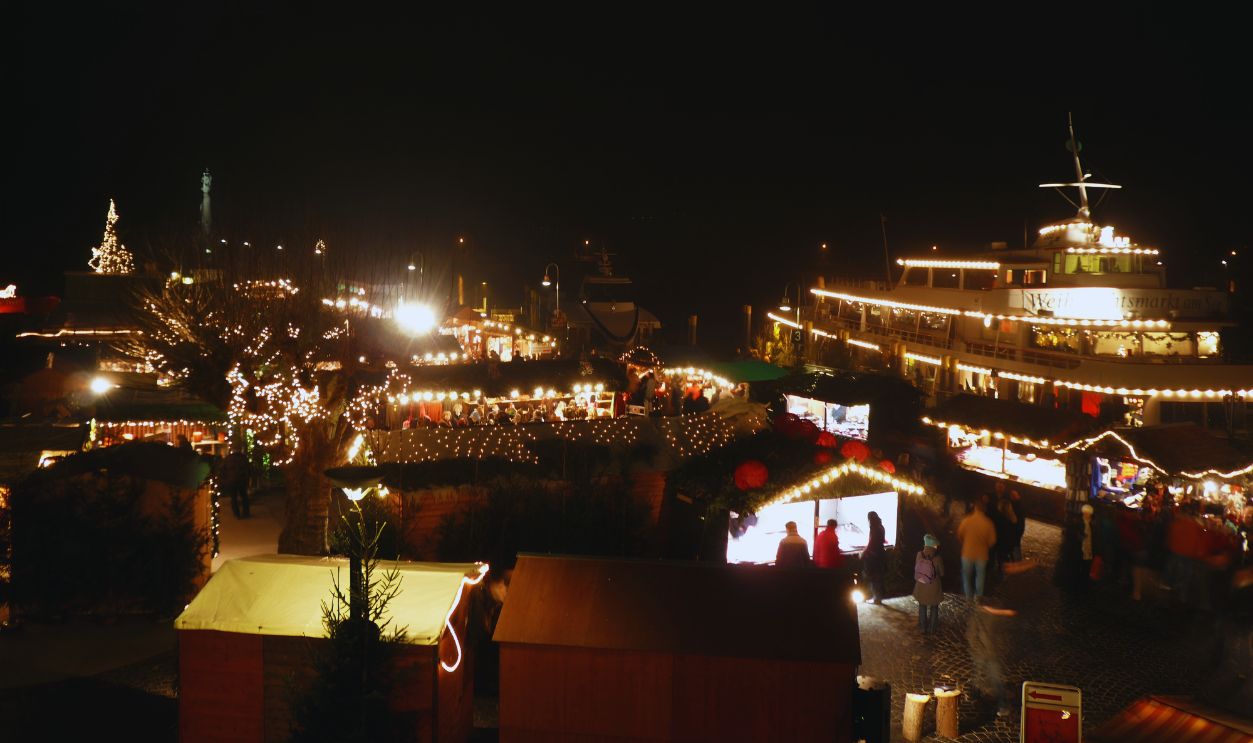
The clue is right in the name. Konstanz puts its Christmas market beside Lake Constance, where roughly 170 huts stretch through the old town and toward the harbor. The unusual centerpiece is the Weihnachtsschiff, a Christmas ship with a panoramic bar overlooking the lake. Regional specialties, handicrafts, and wine give the market a slightly different flavor from northern German destinations. Being right on the Swiss border also makes Konstanz easy to combine with a wider winter trip. The 2026 market runs from November 26 through December 23.
Esslinger Mittelaltermarkt & Weihnachtsmarkt — Esslingen
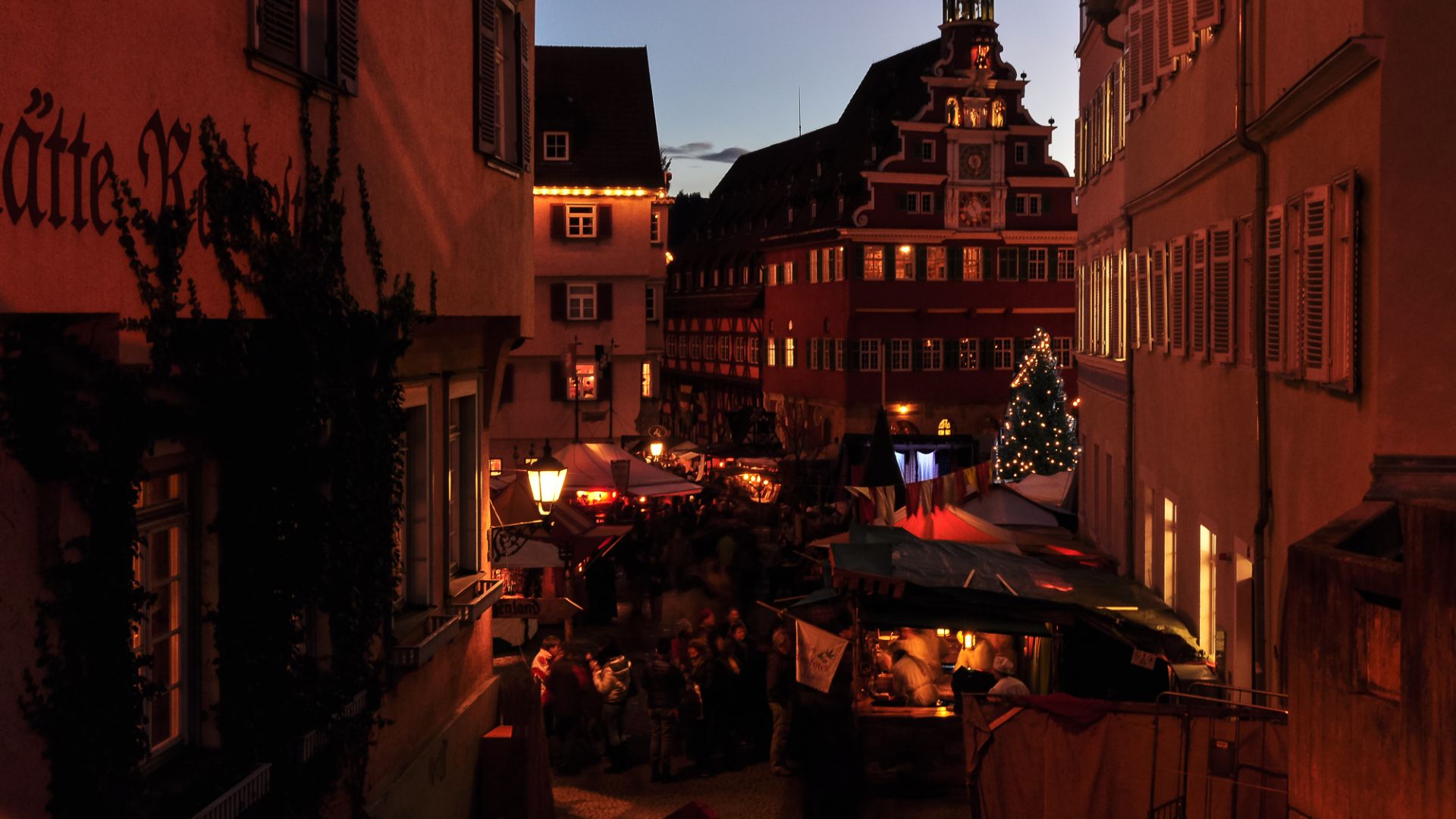
Esslingen doesn’t just put medieval-looking stalls beside its half-timbered buildings. It goes all in. Fire artists, acrobats, musicians, craftspeople, costumed performers, archery, traditional trades, and hundreds of scheduled performances turn the old center into a huge historical festival. Beside it sits a more conventional Christmas market, so you can switch between medieval spectacle and familiar Advent traditions without leaving town. Roughly 180 stalls are spread across the two markets. In 2026, everything runs from November 24 through December 22.
Erfurter Weihnachtsmarkt — Erfurt
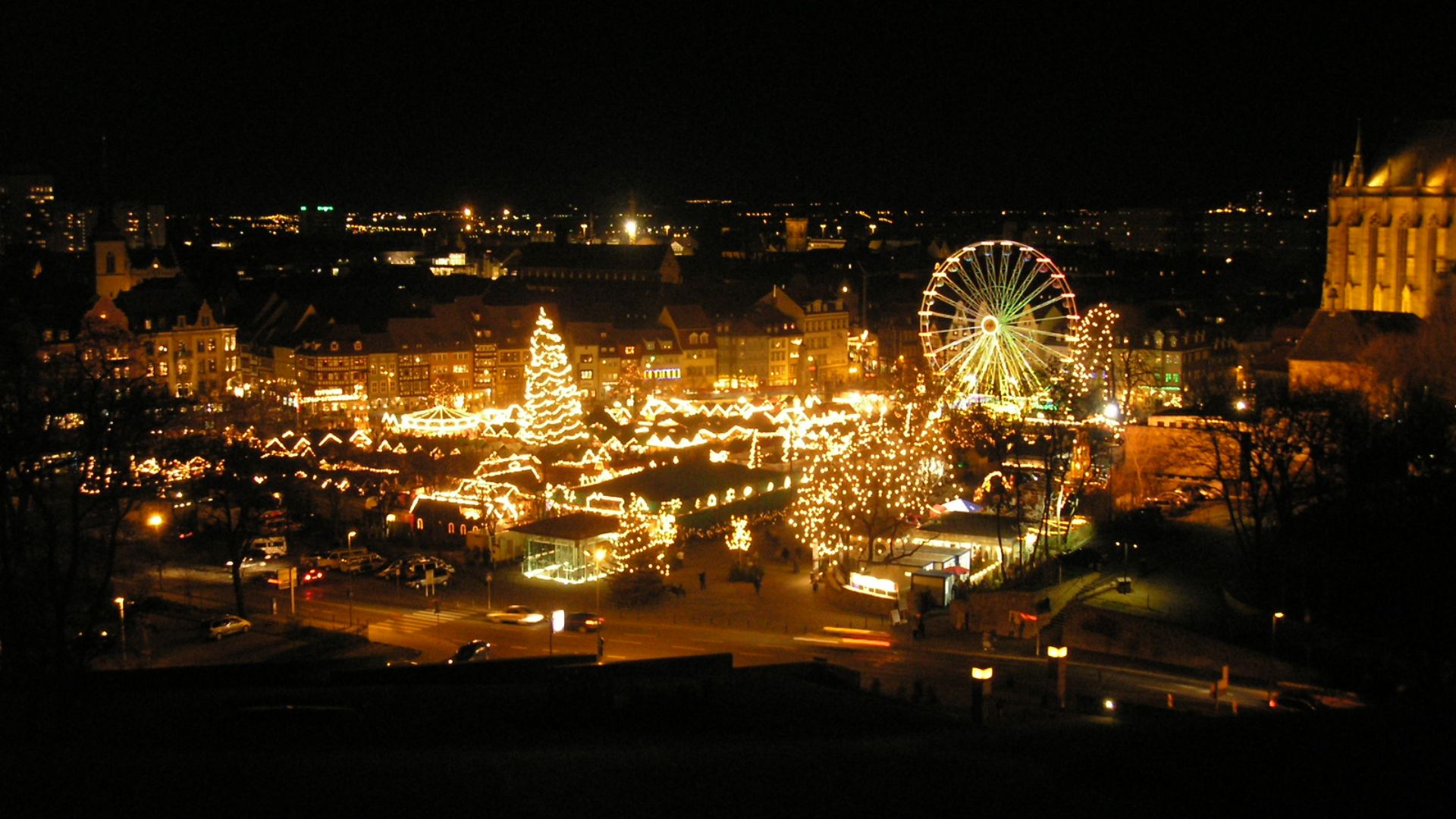
Erfurt’s main Christmas market fills Domplatz beneath the enormous cathedral and Severikirche, and that backdrop does a lot of the work. Add a giant Christmas tree, a roughly 12-meter Christmas pyramid, Thuringian specialties, carved nativity figures, and the medieval streets surrounding the square, and it’s one of central Germany’s strongest Advent destinations. Don’t leave without trying a Thüringer Rostbratwurst. The 176th Erfurter Weihnachtsmarkt takes place from November 24 to December 22, 2026.
 Michael Sander, Wikimedia Commons
Flensburger Weihnachtsmarkt — Flensburg
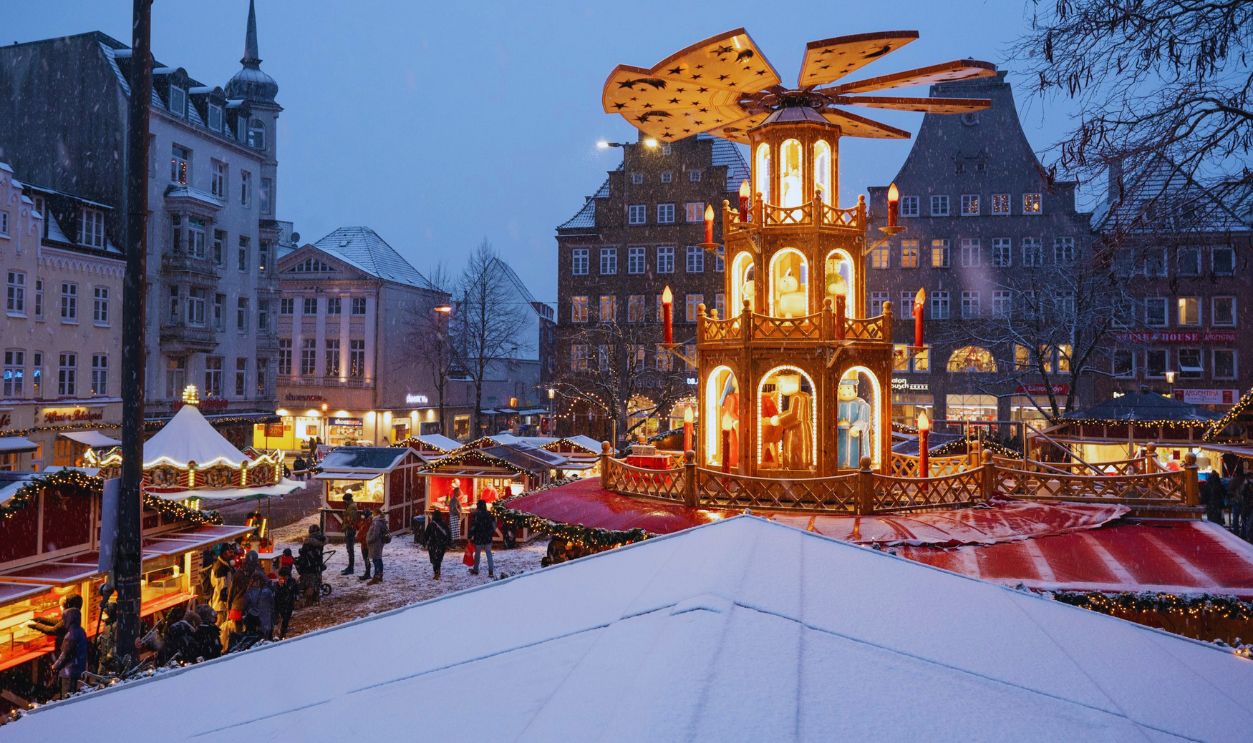
Flensburg sits so close to Denmark that its Christmas season naturally feels a little Scandinavian. The market stretches through the pedestrian center from Südermarkt along Holm and Große Straße, mixing German Christmas traditions with the northern idea of hygge. Warm lights, little courtyards, punch, crafts, and the city’s historic maritime atmosphere make this one especially appealing after dark. It’s also one of the earlier and longer-running options on the list. In 2026, the Flensburger Weihnachtsmarkt runs from November 16 to December 30.
 picture alliance, Getty Images
Frankfurter Weihnachtsmarkt — Frankfurt
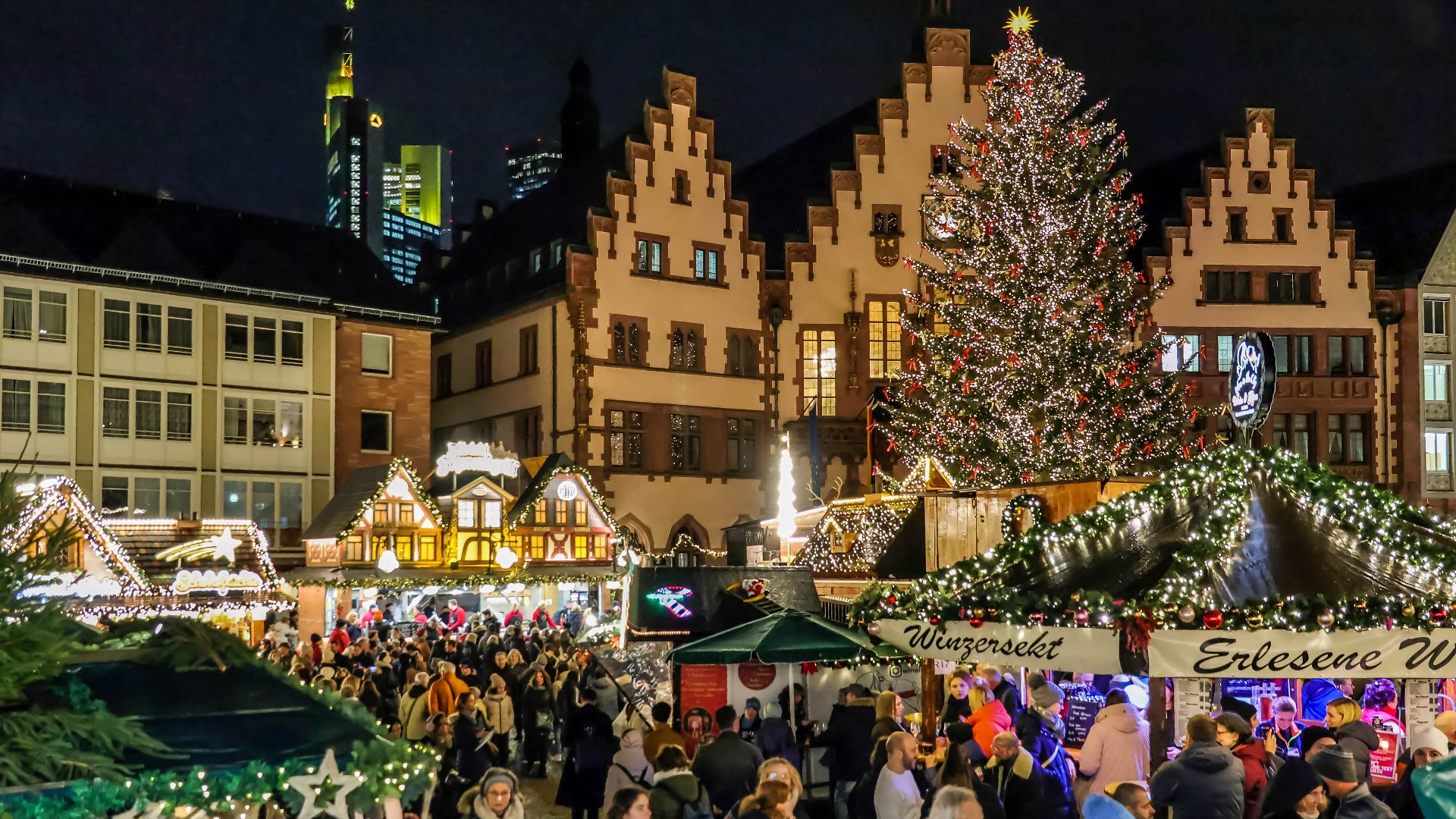
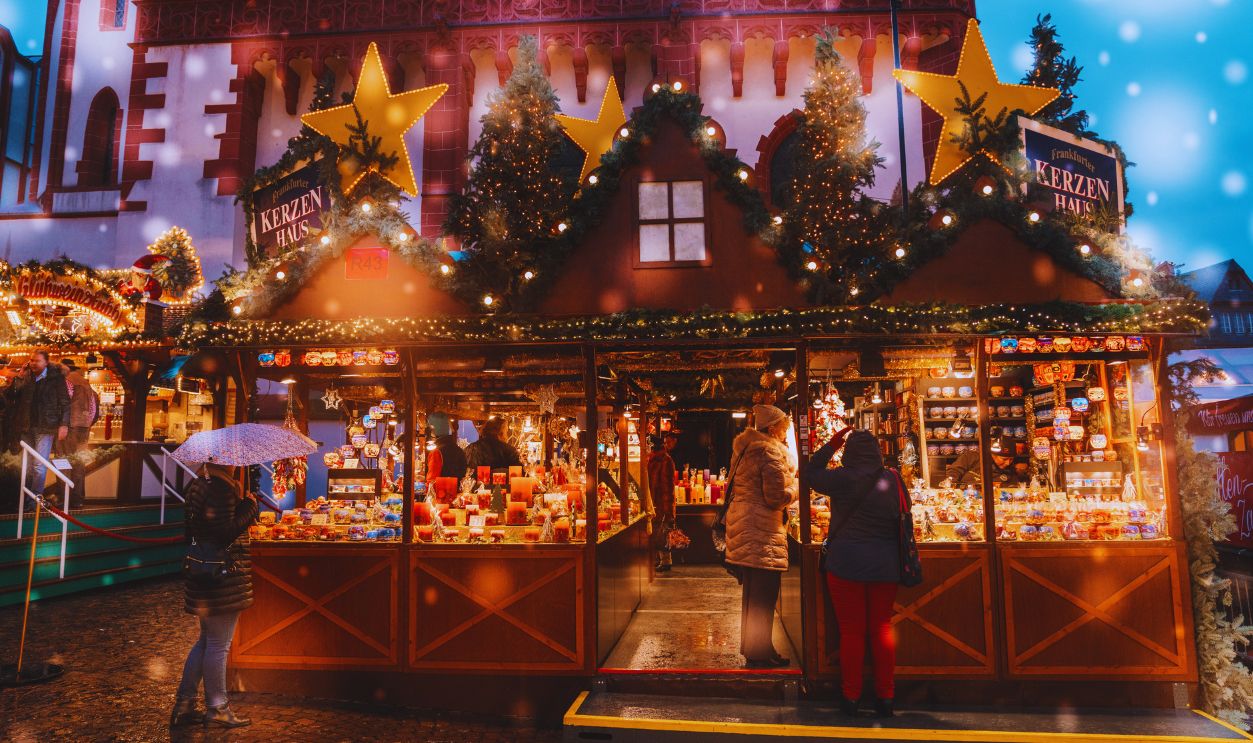
Frankfurt’s skyline might look thoroughly modern, but its Christmas-market tradition goes back a very long way. Seasonal markets here are documented as early as 1393. Today more than 200 stalls stretch through the center from Römerberg toward Paulsplatz, Hauptwache, Roßmarkt, and the Main. The reconstructed medieval façades around Römerberg provide the classic view, while local specialties include Bethmännchen marzipan pastries and hot apple wine. The 2026 Frankfurter Weihnachtsmarkt runs from November 23 through December 22.
 Dr. Thomas Liptak, Wikimedia Commons
Historischer Weihnachtsmarkt Am Rathausmarkt — Hamburg
Hamburg has Christmas markets scattered all over town, but the one in front of its imposing Rathaus is the classic starting point. The Historischer Weihnachtsmarkt uses elaborate nostalgic stalls selling toys, crafts, food, and decorations. Its most famous attraction is less traditional: Santa regularly “flies” above the market in a sleigh. Hamburg’s size means you can easily pair this one with markets around Jungfernstieg, St Pauli, and the shopping streets nearby. The Rathausmarkt market runs from November 23 to December 23 in 2026.
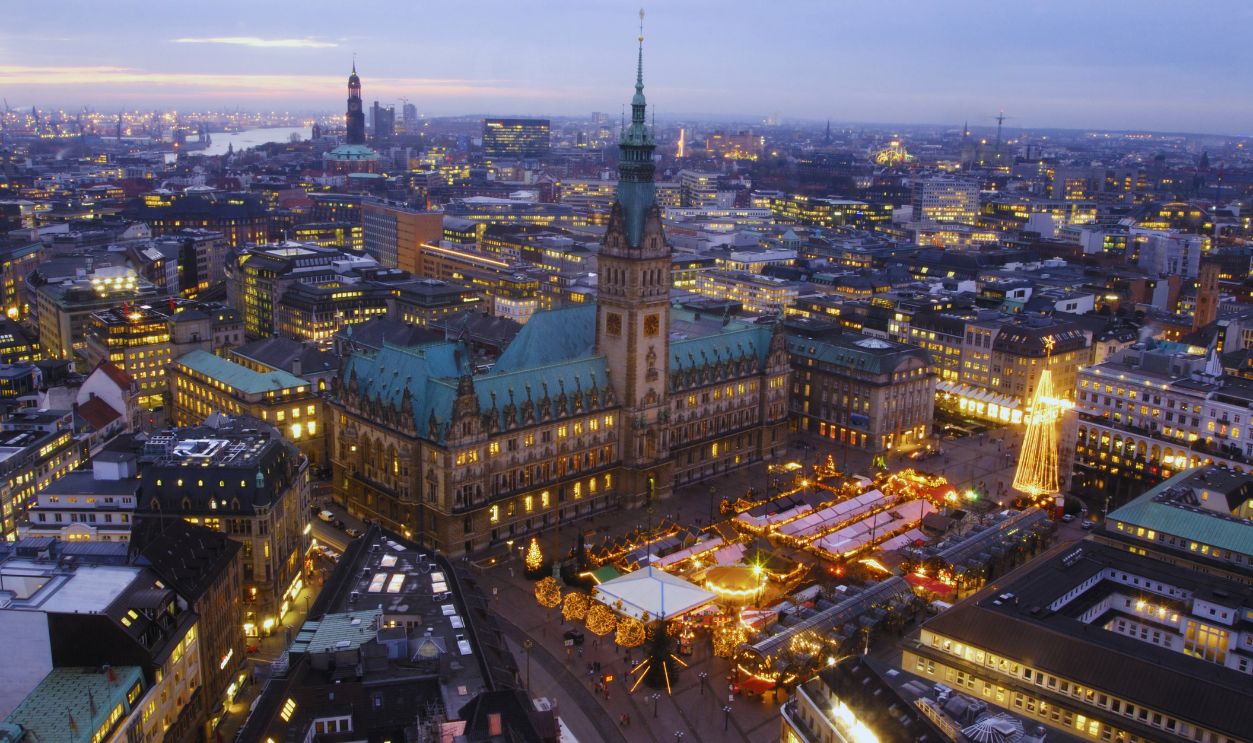
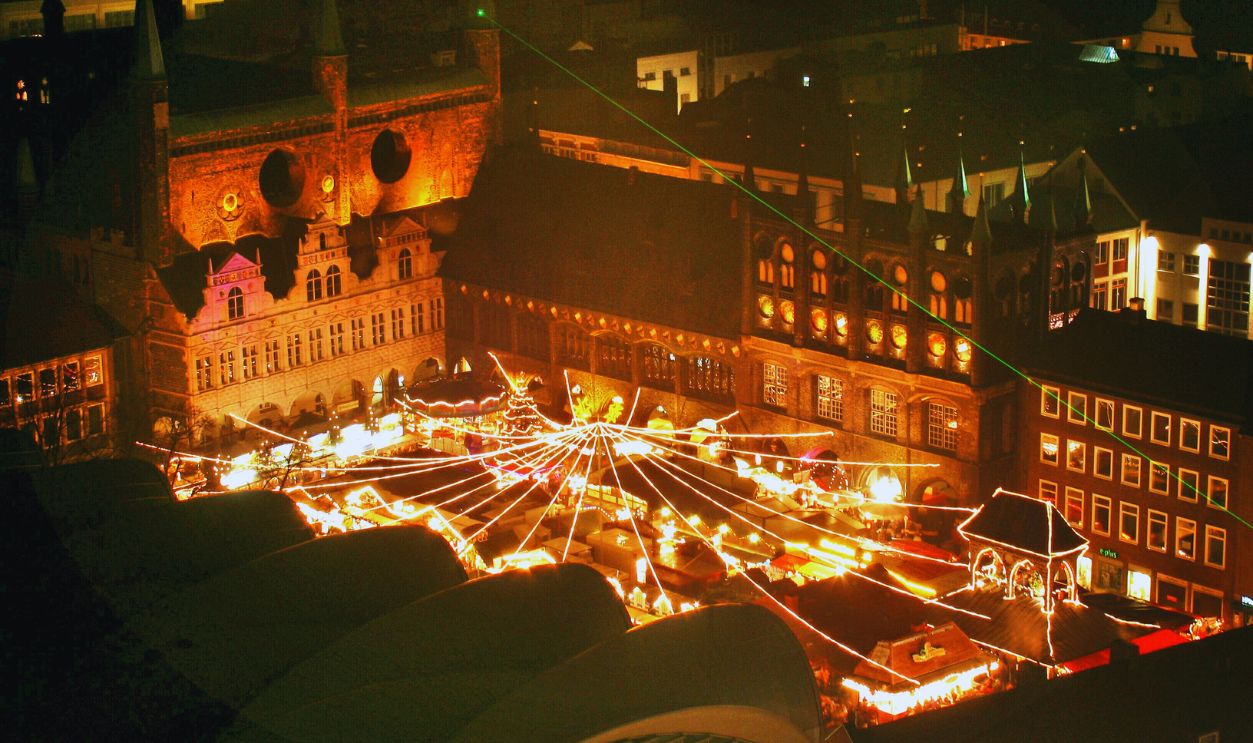
Lübecker Weihnachtsmarkt — Lübeck
Lübeck doesn’t really have one Christmas market. Its UNESCO-listed old town becomes a network of them. The main Lübecker Weihnachtsmarkt is joined by a historical market, craft markets inside St Petri and the Heiligen-Geist-Hospital, a maritime market, a fairy-tale forest, and other themed areas. The Gothic brick churches and narrow streets make simply moving between them part of the fun. Lübeck’s famous marzipan also gives you an obvious souvenir. The main market runs from November 23 through December 30 in 2026.
 Robert Barten (NvG), Wikimedia Commons
Potsdamer Weihnachtszauber — Potsdam
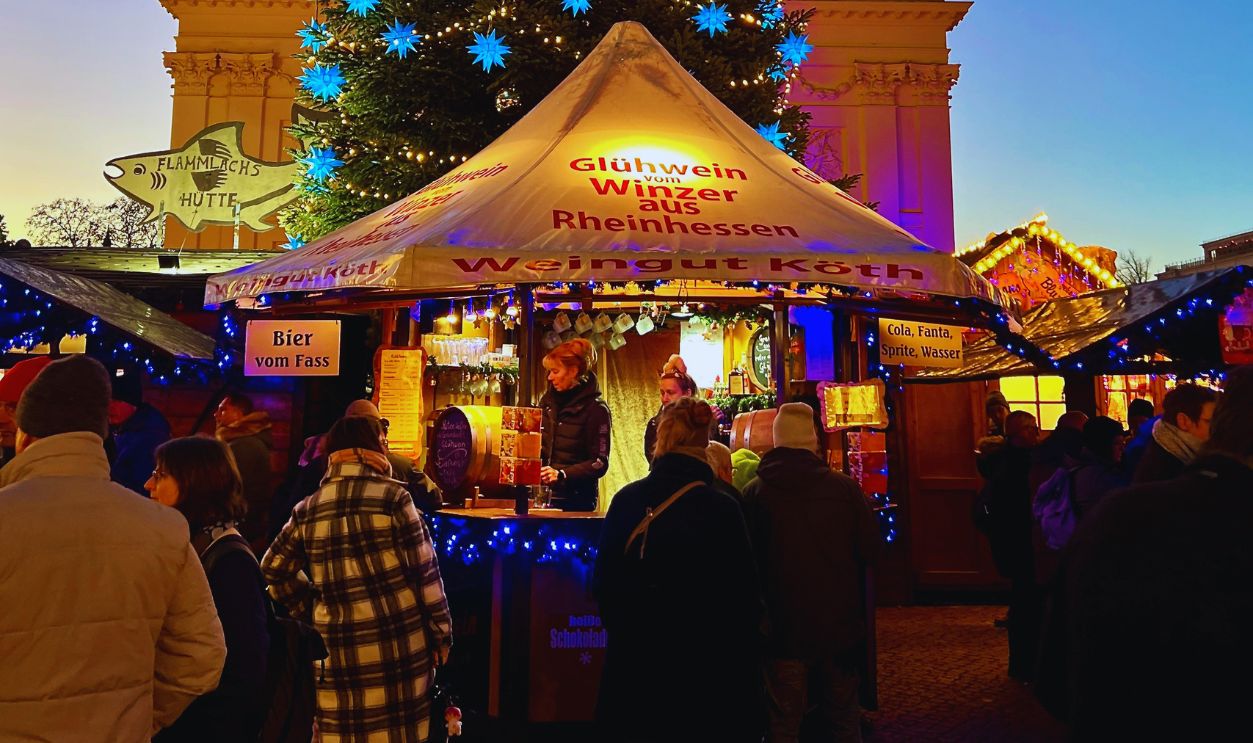
Potsdam’s main Christmas market stretches through the historic center from Luisenplatz past the Brandenburg Gate and along Brandenburger Straße toward Bassinplatz. Around 250 stalls are joined by an ice rink, Ferris wheel, live music, children’s attractions, and the city’s biggest Christmas tree. Potsdam’s elegant architecture gives the whole thing a very different feel from nearby Berlin, despite being an easy train ride away. In 2026, Potsdamer Weihnachtszauber runs from November 23 through December 27, with a break on Christmas Eve.
Rostocker Weihnachtsmarkt — Rostock
Rostock claims the largest Christmas market in northern Germany, and it’s certainly not a tiny gathering around one square. The market stretches for roughly three kilometers through the city center, mixing traditional stalls and crafts with rides, food areas, a fairy-tale world, and bigger fairground attractions. The Hanseatic brick architecture gives it a strong northern character, while the Baltic coast is close enough for a winter side trip to Warnemünde. The 2026 Rostocker Weihnachtsmarkt runs from November 23 to December 22.
 Pandora Pictures, Shutterstock
Weihnachtsdorf — Rothenburg Ob Der Tauber
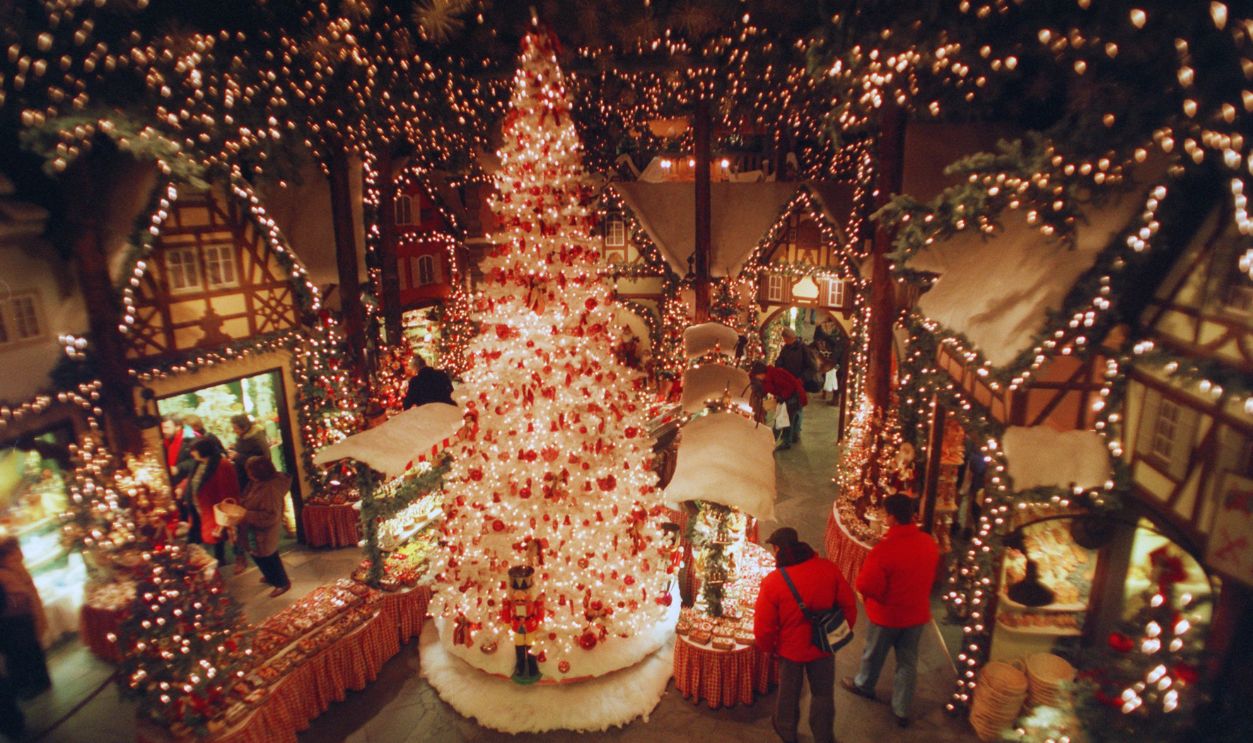
This one technically isn’t a second outdoor Christmas market, but if you’re already visiting Rothenburg, it’s difficult to leave out. Käthe Wohlfahrt’s Weihnachtsdorf is a year-round Christmas attraction covering more than 1,000 square meters in the old town. Inside, you’ll find thousands of ornaments, lights, garlands, traditional decorations, and a huge white Christmas tree. It opened in 1981 and essentially lets visitors step into Christmas regardless of the month. During Reiterlesmarkt season, it makes an obvious indoor addition to the outdoor festivities.
 picture alliance, Getty Images
Stuttgarter Weihnachtsmarkt — Stuttgart
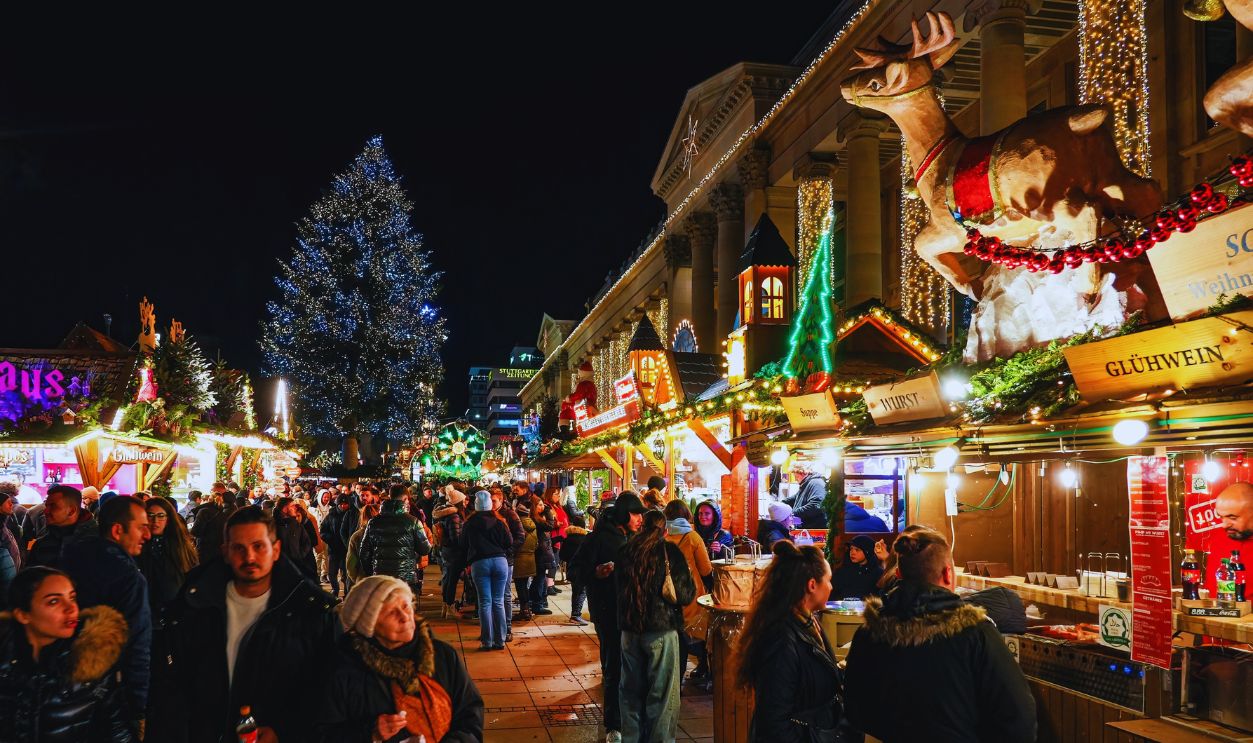
Stuttgart’s Christmas market is enormous, with roughly 300 stalls spreading from the New Palace through Schillerplatz and around the Old Castle, Collegiate Church, and Marktplatz. It was documented in 1692, making it one of Germany’s older major markets. What really sets it apart is the stalls themselves. Vendors decorate their roofs with elaborate winter scenes, angels, nativity figures, and Santas, and the best are judged each year. In 2026, Stuttgarter Weihnachtsmarkt runs from November 25 through December 23.
Düsseldorfer Weihnachtsmarkt — Düsseldorf
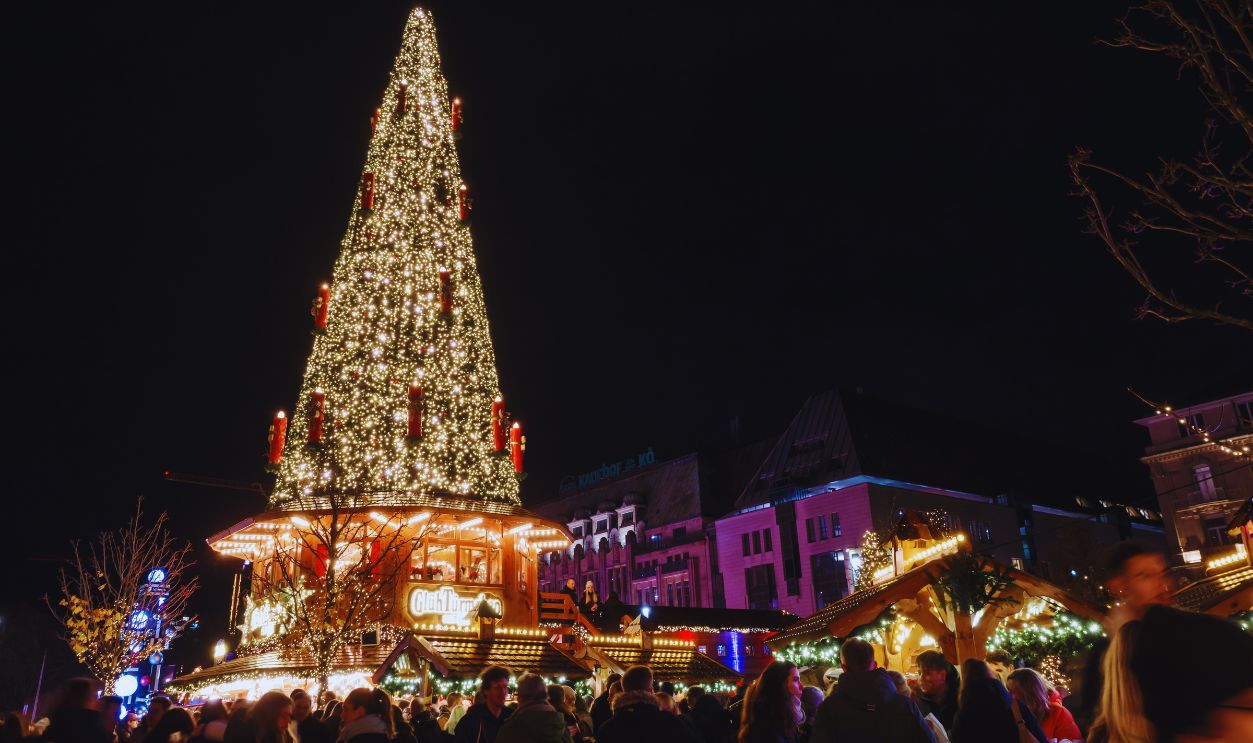
Düsseldorf takes a spread-it-everywhere approach. Rather than concentrating Christmas into one square, themed market areas fill the city center and Old Town, letting visitors wander from one atmosphere to another. There’s an Altstadt market, the famous Dome of Lights, a big Ferris wheel at Burgplatz, and seasonal skating along Königsallee. That makes Düsseldorf particularly good if you like mixing Christmas-market browsing with restaurants and shopping. The city’s 2026 Christmas markets operate from November 19 through December 30, with a few holiday closures.
Baden-Badener Christkindelsmarkt — Baden-Baden
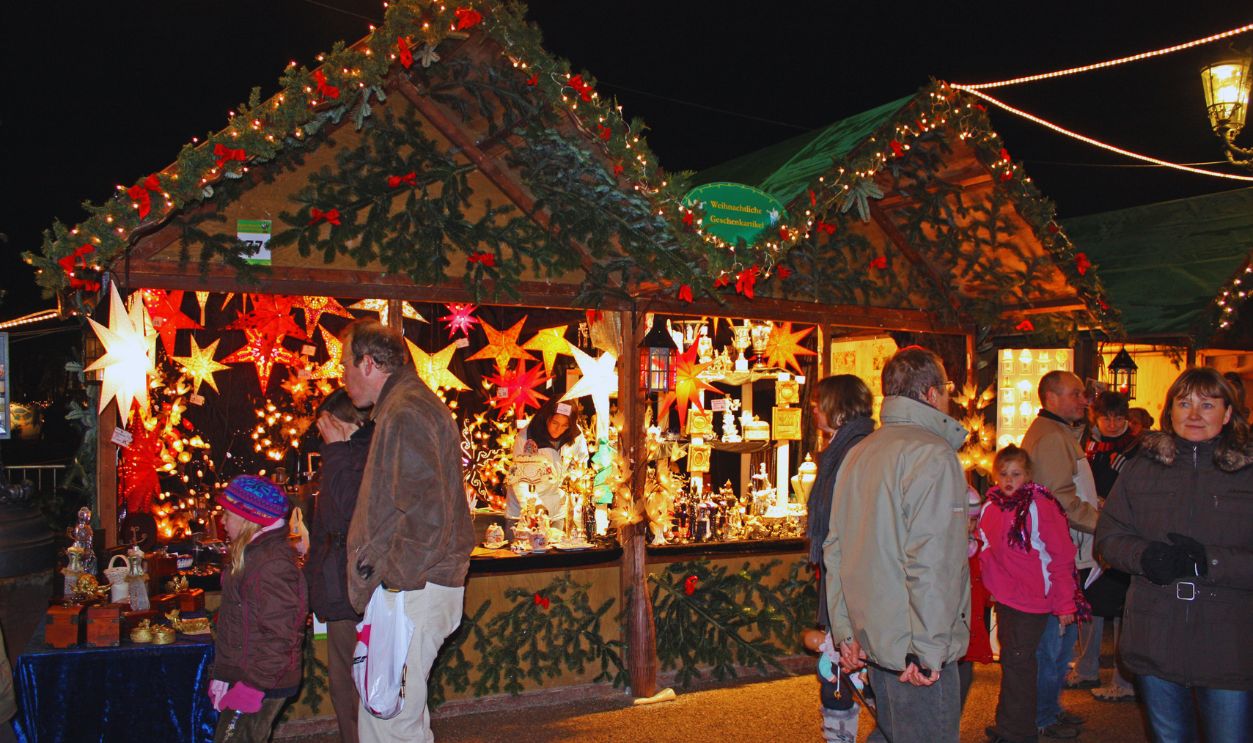
Baden-Baden already feels elegant before anyone hangs a Christmas light. Its Christkindelsmarkt sets up in the Kurgarten directly in front of the grand Kurhaus, with the Black Forest hills framing the city behind it. Crafts, food, concerts, nativity displays, children's attractions, and illuminated decorations give it a more relaxed resort-town feel than Germany’s biggest urban markets. It also sticks around much longer than most. The 2026 market opens November 26 and continues all the way through January 6, 2027.
Heidelberger Weihnachtsmarkt — Heidelberg
Heidelberg spreads its Christmas market over six squares in the old town rather than forcing everything into one crowded space. That means you can wander between historic streets and landmarks while gradually working your way through the stalls. Karlsplatz gets one of the best extras: an outdoor ice rink with Heidelberg Castle looming above it. Kornmarkt becomes the tree-filled Winterwäldchen, which stays open beyond the main market. The 2026 Heidelberger Weihnachtsmarkt runs from November 23 through December 22, with some attractions continuing into January.
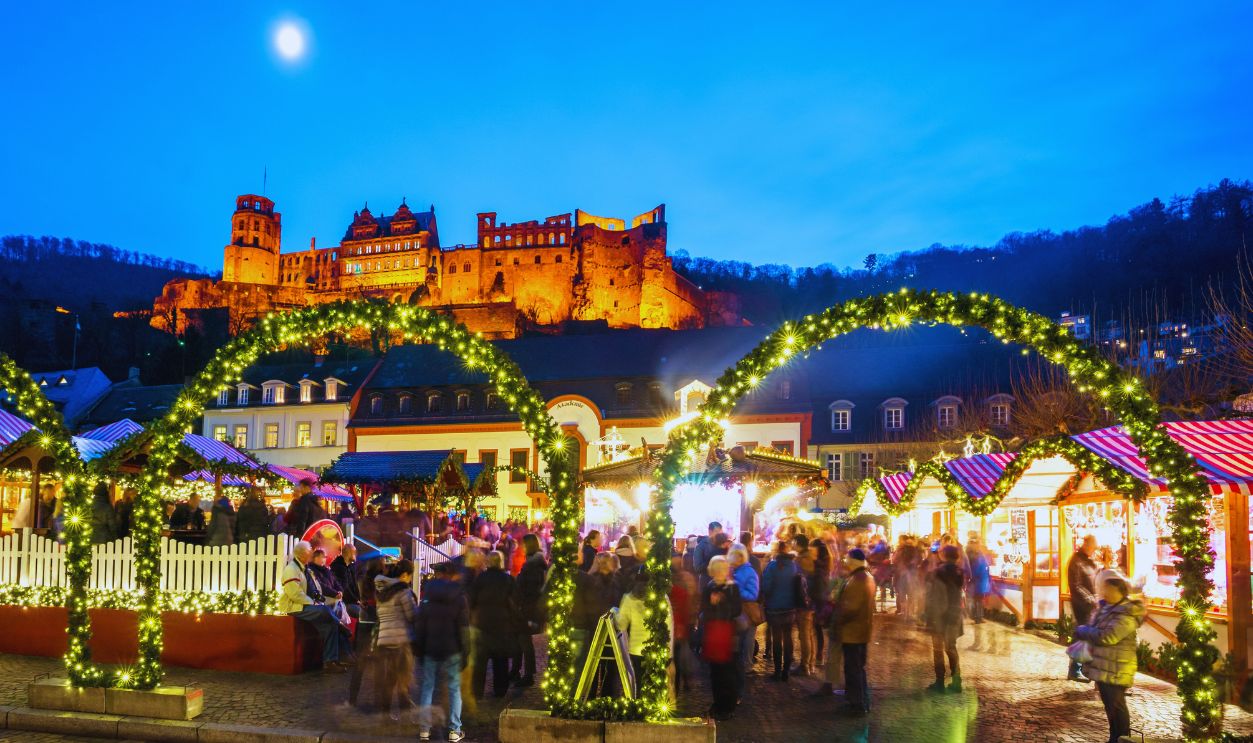 Sina Ettmer Photography, Shutterstock
You May Also Like:
Ranking The Best Cities For Winter Holidays—According To Travelers
Ranking America’s Most Impressive Christmas Tree Displays—Does Your State Make The List?
The Best States For Off-Beat Winter Camping—Ranked According To Travelers