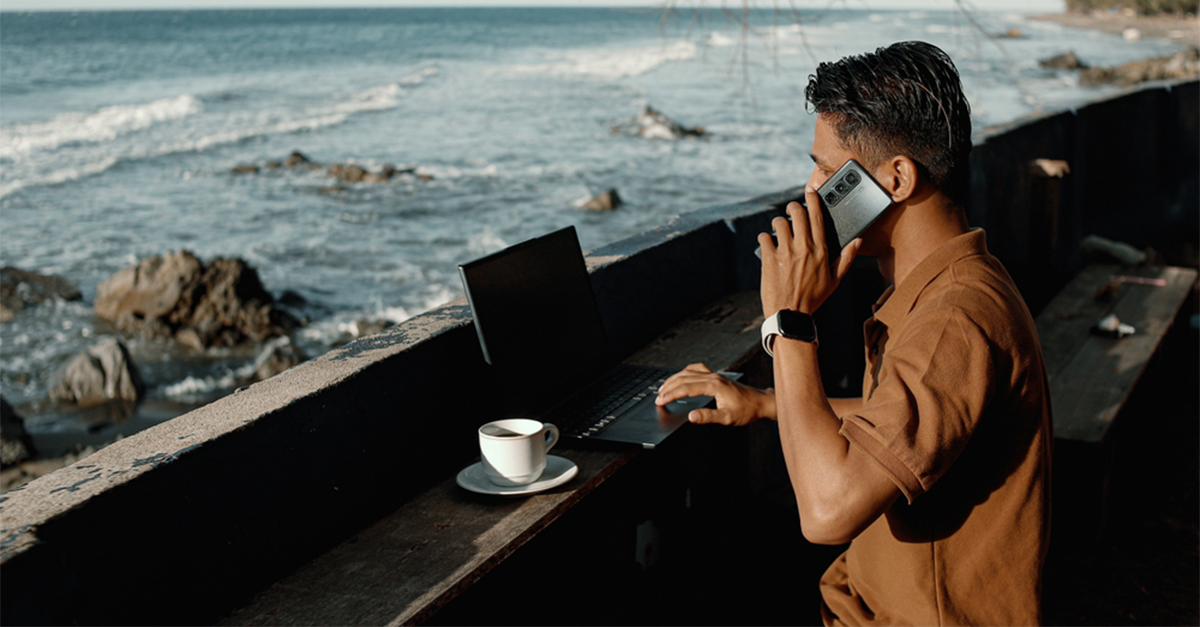
The old stereotype of the business trip was brutally efficient: fly in, sit through the meetings, eat an overpriced airport dinner, and fly home. Increasingly, travelers are rewriting that itinerary. A client visit in London might become a weekend in the city, while a conference in Chicago can turn into two extra days of restaurants, museums, and sightseeing. The practice has acquired an awkward name, “bleisure,” but the behavior behind it is becoming a significant part of modern corporate travel.
Recent research suggests this is much more than a social-media travel trend. Deloitte found that two-thirds of the U.S. corporate travelers it surveyed said they extended at least one business trip for leisure in 2023, and one in seven had done so three or more times. A 2025 BCD Travel survey of 1,035 business travelers in North America, Europe, and Asia Pacific found that six in 10 occasionally combine business and leisure travel.
 Hryshchyshen Serhii, Shutterstock
Bleisure Has Moved Into The Mainstream
The rise of bleisure makes more sense when viewed alongside the wider recovery of business travel. Deloitte's 2024 corporate travel study found that 83% of surveyed business travelers considered work travel enjoyable. Networking was named among the top three benefits by 51%, while 47% pointed to the chance to explore different cities.
That combination is important because a business trip no longer has to be regarded simply as an obligation. If someone is already spending hours getting to Madrid, Tokyo, Boston, or Vancouver, the prospect of leaving immediately after the final meeting can feel like a missed opportunity. Adding Saturday and Sunday may allow a traveler to experience a destination without paying for another long-distance round-trip ticket solely for a vacation.
Younger travelers have been particularly receptive to the idea. Hilton's global 2024 Trends Report found that more than one-third of Gen Z and Millennial business travelers planned to extend a work trip for leisure before or after their professional commitments. Hilton also found that 24% of global business travelers planned to bring a friend or family member on a business trip.
The trend is visible in hotel stays as well. Hilton reported that transient business travelers in Singapore were staying more than 4.2 days on average in 2023, a 15% increase from 2019, with similar lengthening patterns appearing in markets including Atlanta and New York. These figures do not mean every extra night is a vacation night, but Hilton identified blended travel as one factor reshaping business trips.
Why Travelers Want More From The Trip
The basic economics of bleisure are hard to ignore. The employer is generally sending the employee to the destination because there is a legitimate business reason to be there, so the traveler may already have completed the most expensive and inconvenient part of reaching that city. Personal sightseeing still costs money, but a traveler who is permitted to extend the itinerary can turn one journey into two different experiences.
That appeal is particularly strong for international trips or destinations that would otherwise require a substantial investment of vacation time and airfare. It is one reason travelers are looking at business trips less as isolated work assignments and more as opportunities to make better use of time already spent away from home. This does not make the leisure portion free, of course, and company policies determine which costs belong to the employer and which belong to the employee.
There is also a quality-of-life argument. In an October 2025 Global Business Travel Association poll, 71% of corporate travel buyers who were asked about blended travel said improved employee satisfaction and wellbeing was a benefit they saw or anticipated. Sixty-eight percent cited better work-life balance, while 52% said blended travel could increase employees' willingness to travel for work.
Those benefits matter because business travel still has real downsides. Deloitte found that 55% of surveyed corporate travelers identified general fatigue as a drawback, while 41% cited time away from loved ones and 39% mentioned the work that can accumulate while they are traveling. Turning part of the trip into genuine personal time does not eliminate those pressures, but it helps explain why travelers may want something more from a journey than a hotel room and a conference badge.

Flexible Work Changed The Travel Equation
Bleisure has also been helped by the much broader transformation in how professionals work. Video meetings and hybrid schedules have made companies more selective about which interactions justify travel, while remote work has made location less rigid for many jobs. Deloitte noted that new patterns of home-centered and hybrid work have reduced the need for some traditional business trips even as companies continue to value travel for conferences, sales meetings, and client projects.
That can make the trips that survive the budget review feel more consequential. Instead of flying somewhere for every meeting, a traveler might attend a major conference, combine several appointments, or visit colleagues and clients during the same journey. GBTA's October 2025 survey found that 39% of travel buyers reported more linked, multi-meeting or multi-destination trips compared with the previous year, while 33% reported longer business trips.
Employers themselves are responding to the demand for greater flexibility. Research commissioned by American Express and conducted by Forbes Insights among 520 senior executives at large U.S. organizations found that 38% said their organizations had increased flexibility around combining business and leisure travel in 2025. The same research found that 38% had integrated artificial intelligence into travel management, illustrating how new travel behavior is emerging alongside new tools for managing increasingly complicated itineraries and expenses.
Technology could become especially useful as blended trips grow more complex. The American Express and Forbes Insights research found that executives expected AI-powered travel management and expense automation to be among the strongest influences on corporate travel over the next five years. The report also discussed automated approvals, compliance checks, analytics, and AI-driven travel recommendations as ways companies are trying to make travel management less labor intensive.

The Vacation Part Still Needs Some Guardrails
For all its appeal, bleisure creates a deceptively complicated question: when does the business trip end and the vacation begin? Employers have to think about reimbursement, traveler safety, insurance, booking visibility, and the point at which responsibility shifts toward the employee. Travelers, meanwhile, need to understand exactly what the company will and will not pay for before booking the beach resort after the sales conference.
Companies are increasingly putting those rules in writing. GBTA's October 2025 poll found that 43% of travel buyers said their organizations had clearly defined policies or guidelines for blended travel, while another 28% handled it informally or case by case. Nine percent said they were considering a policy, while 18% had no policy and were not considering one at the time of the survey.
There are good reasons for the caution. Among travel buyers surveyed by GBTA, 59% identified duty of care and traveler safety as concerns related to blended travel. Expense tracking and reimbursement boundaries were cited by 55%, insurance coverage by 46%, and taxation, visa, or immigration issues by 30%.
Meanwhile, flexibility is not moving in a straight line. SAP Concur's 2025 Global Business Travel Survey found that a quarter of business travelers said their employers had recently cut back on allowing employees to add personal travel to a business trip. Yet 27% of respondents said they had recently started adding personal travel to work trips as a way to save money, showing the tension between traveler demand and corporate cost or compliance concerns.
How To Make Bleisure Work Without Creating A Headache
For travelers, the safest approach is to treat the personal extension as a separate financial layer attached to a business itinerary. Read the travel policy before making nonrefundable plans, determine whether personal hotel nights can remain on the same reservation, and find out whether changing the return flight alters what the company will reimburse. If a partner or family member is joining, clarify which costs are entirely personal.
It is also worth keeping business and leisure spending easy to distinguish. Expense systems are becoming more sophisticated, but the basic task remains the same: the employer needs to know which charges belong to the company. That separation becomes especially useful when an itinerary includes extra hotel nights, personal transportation, entertainment, upgraded rooms, or other costs that fall outside normal travel policy.
Travelers should also avoid assuming that an approved business destination automatically makes every personal extension uncomplicated. Corporate travel managers are actively concerned about insurance, duty of care, visas, taxation, and visibility into where travelers are during the leisure portion of a trip. The details can vary by employer, destination, citizenship, and the type of work involved, which is why checking the applicable company guidance before extending an international trip matters.
Bleisure ultimately reflects a larger shift in what employees expect from travel. Business trips are still about clients, conferences, projects, and face-to-face relationships, but many travelers no longer see work and leisure as completely separate categories once they are already on the road. Employers are beginning to formalize that reality, and technology is giving travel departments better ways to manage it. The result is likely to be a business trip that looks less like a frantic airport turnaround and more like a carefully divided itinerary, with meetings on Friday and a little room left for Saturday.