 Xinhua News Agency, Getty Images, Modified
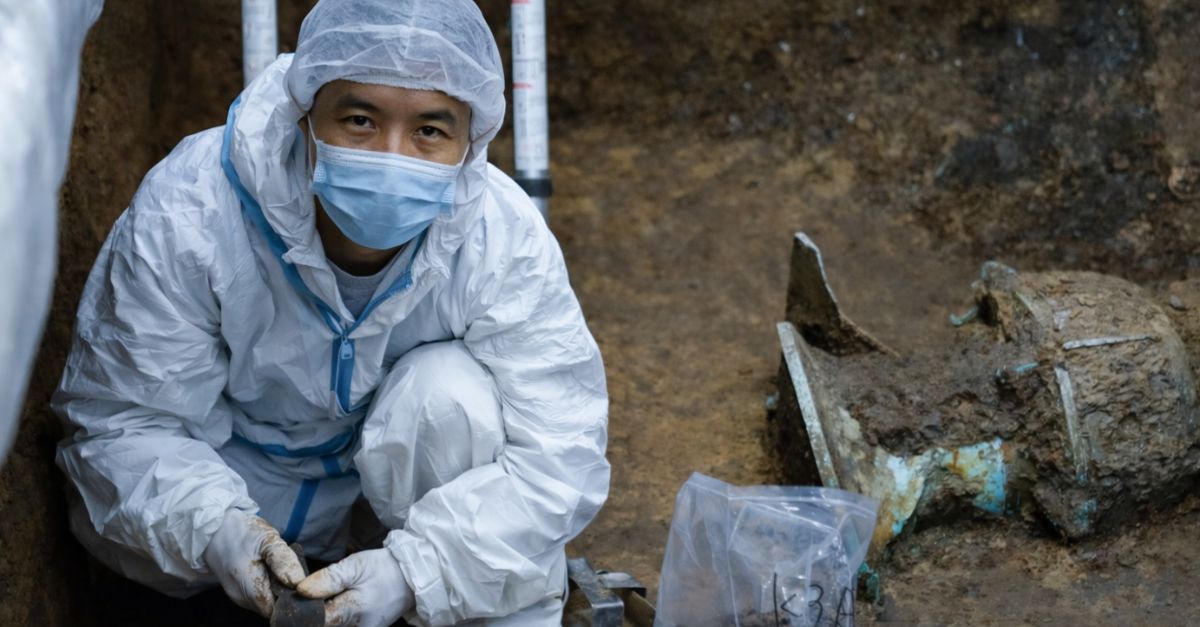
Imagine archaeologists standing at the edge of a pit, brushing away 3,000 years of earth, when suddenly a glint of gold catches the light. Then another. And another. Between 2019 and 2022, teams excavating at Sanxingdui in southwestern China's Sichuan Province uncovered six new sacrificial pits, and what they found didn't just fill museum cases but completely rewrote our understanding of the ancient Shu civilization. Beneath carefully arranged layers of burnt ivory tusks, thousands of bronze and gold artifacts emerged, each one more spectacular than the last. We're talking about a Bronze Age culture that somehow remained hidden from historical records, operating parallel to the famous Yellow River civilizations but developing its own wildly different artistic language. This was a sophisticated society with complex religious beliefs, advanced metalworking techniques, and trade connections that stretched far beyond their mountain-ringed territory.
The Excavation That Changed Everything
The original discovery happened by accident back in 1986 when workers digging at a brick factory stumbled upon two pits crammed with artifacts. Those initial finds were mind-blowing enough—giant bronze masks with bulging eyes, a bronze sacred tree nearly four meters tall, and countless jade pieces. But the site went quiet for decades afterward. Then in 2019, archaeologists returned with modern technology and systematic methods, and they hit the jackpot. The six newly discovered pits, numbered three through eight, were located within a 50-square-meter area near the original finds. What made this excavation revolutionary wasn't just what they found, but how they found it.
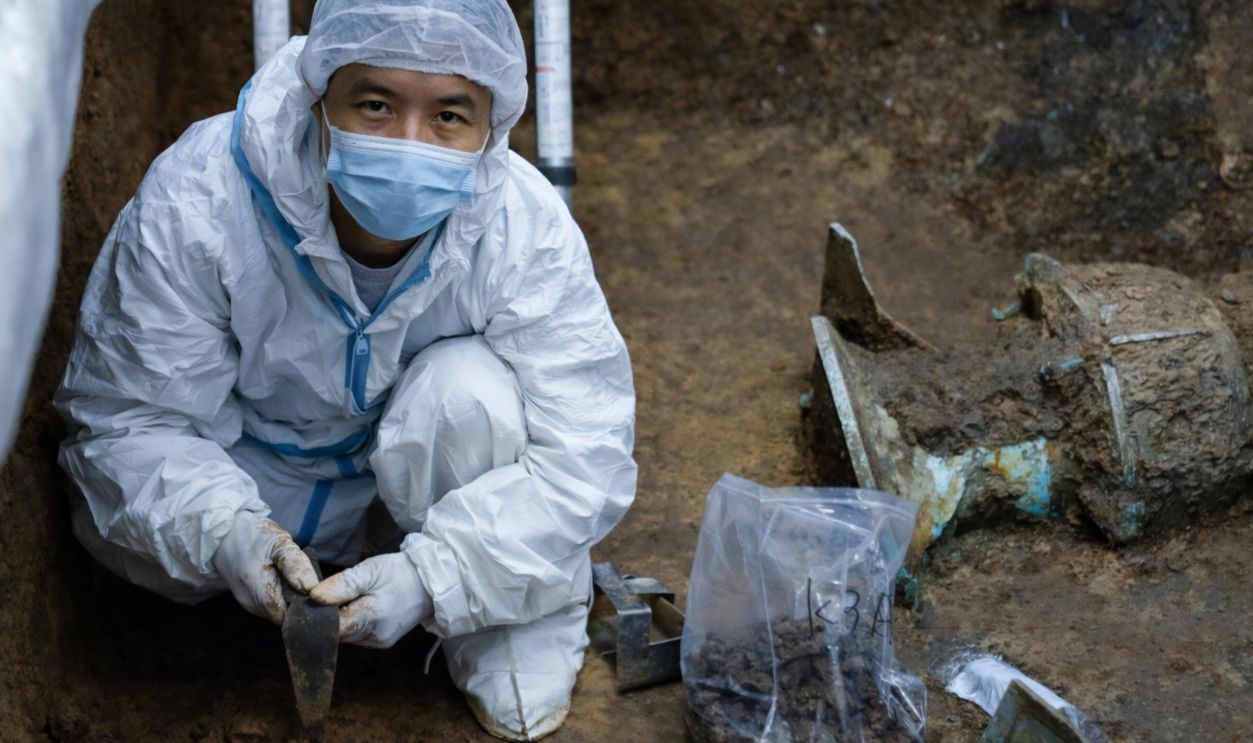
Teams constructed controlled-environment shelters over each pit, maintaining stable temperature and humidity while they worked. They used 3D scanning, multispectral imaging, and real-time chemical analysis to document every layer. The stratification revealed deliberate patterns as the ancient Shu people had arranged their offerings in specific sequences, starting with bronzes at the bottom, then covering everything with burnt ivory, silk fabric (long since disintegrated but detectable), and finally sealing it all with soil. This wasn't random disposal. This was ritual behavior on an industrial scale, suggesting ceremonies so important that they warranted burying fortunes in precious materials.
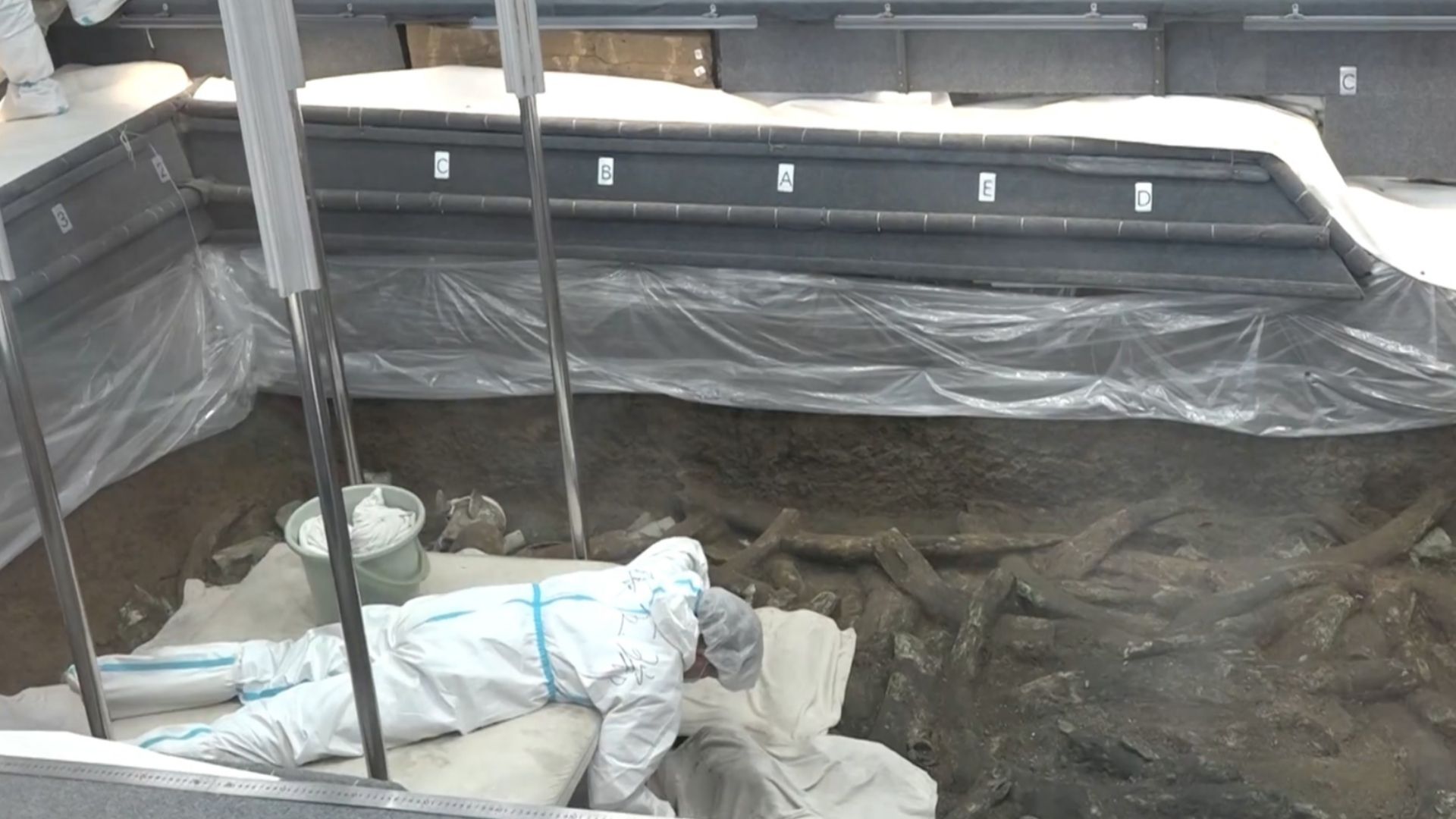 China News Network, Wikimedia Commons
Treasures That Defy Explanation
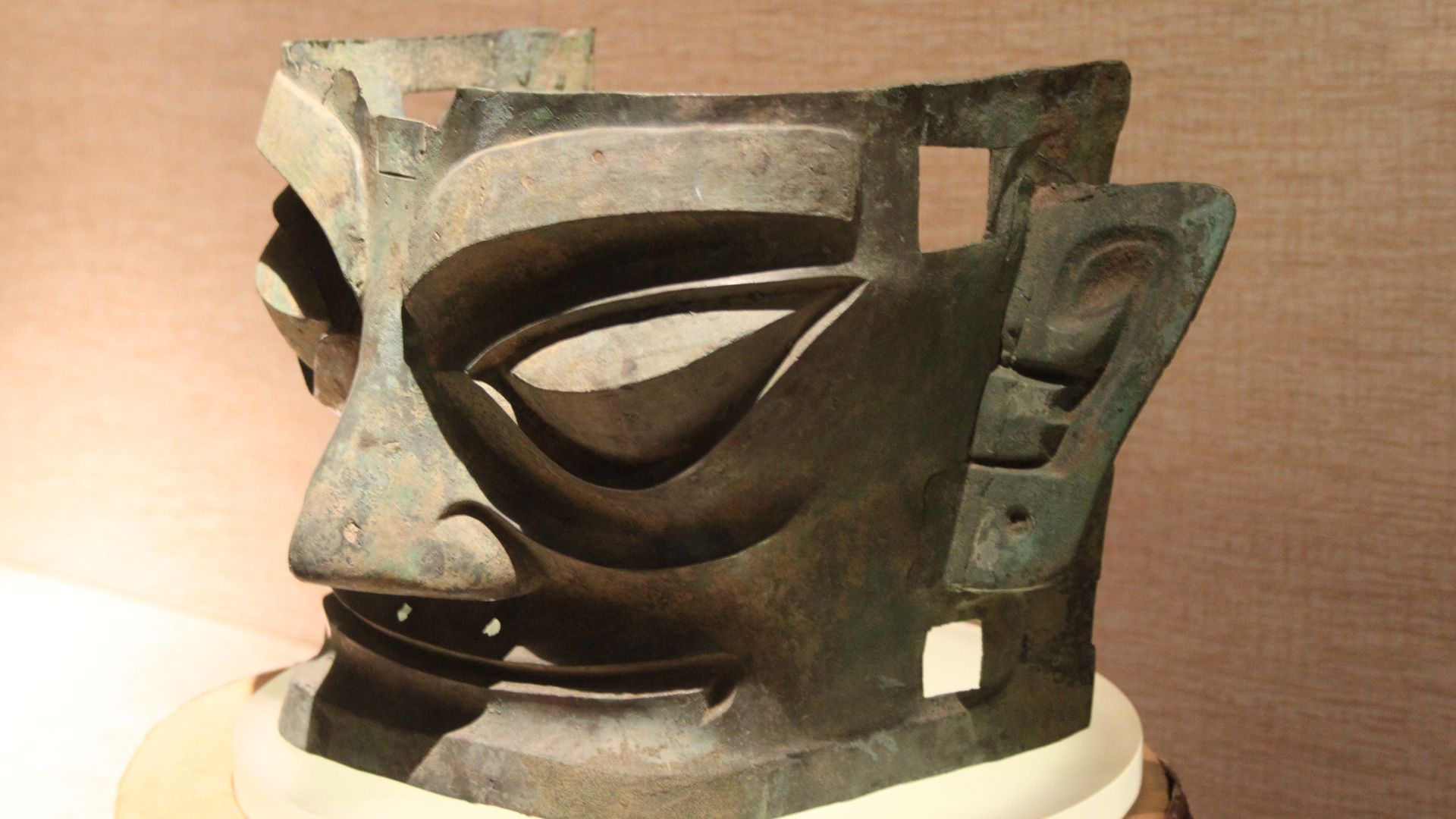
The artifacts themselves are absolutely wild. There's a bronze altar featuring divine figures, mythical animals, and architectural elements all cast as a single piece, demonstrating metalworking skills that rival anything from the same period anywhere in the world. Multiple bronze masks depict faces with exaggerated features, such as eyes protruding from the sockets on stalks and ears stretching outward like wings. One gold mask weighs 280 grams and measures 37 centimeters wide, dated to approximately 1200 BCE. Archaeologists also recovered bronze vessels in shapes never seen before, including some that appear to depict people engaged in ritual activities. The ivory alone tells its own story—over 1,000 tusks, many showing evidence of burning before burial, pointing to sacrifice ceremonies involving precious imported materials since elephants didn't live in that region. Gold foil fragments with intricate designs, jade artifacts carved with unfamiliar symbols, and even silk remnants preserved by bronze corrosion all paint a picture of a culture with resources, artistic vision, and spiritual beliefs.
Rewriting The Ancient Shu Story
Before these discoveries, the ancient Shu Kingdom existed mostly in legend and scattered historical references. The artifacts prove beyond doubt that a major civilization flourished in the Chengdu Plain from roughly 1600 to 1000 BCE, contemporary with China's Shang Dynasty but culturally distinct. The sacrificial pits likely date to when the Shu abandoned Sanxingdui around 1200 BCE, possibly after warfare or environmental disaster forced them to relocate. But why bury such wealth? Researchers believe these weren't standard burials but rather massive religious ceremonies marking the end of an era. The Shu people methodically destroyed some artifacts before interring them, suggesting rituals meant to "kill" the objects so they could serve in another realm. Carbon dating places most deposits between 1200 and 1000 BCE, right when historical records describe upheaval across ancient China. The discoveries have sparked new questions about cultural exchange, too. Some bronze pieces show influences from cultures as far as ancient Egypt and Mesopotamia, while others remain utterly unique.