Fossils That Changed Everything
For more than a century, unexpected discoveries have repeatedly rewritten the human timeline. From controversial fossil finds to ancient footprints preserved in stone, each breakthrough forced science to rethink our evolutionary past.
 Profberger, CC BY-SA 3.0, Wikimedia Commons, Modified
The Moment Everything Changed In 1856
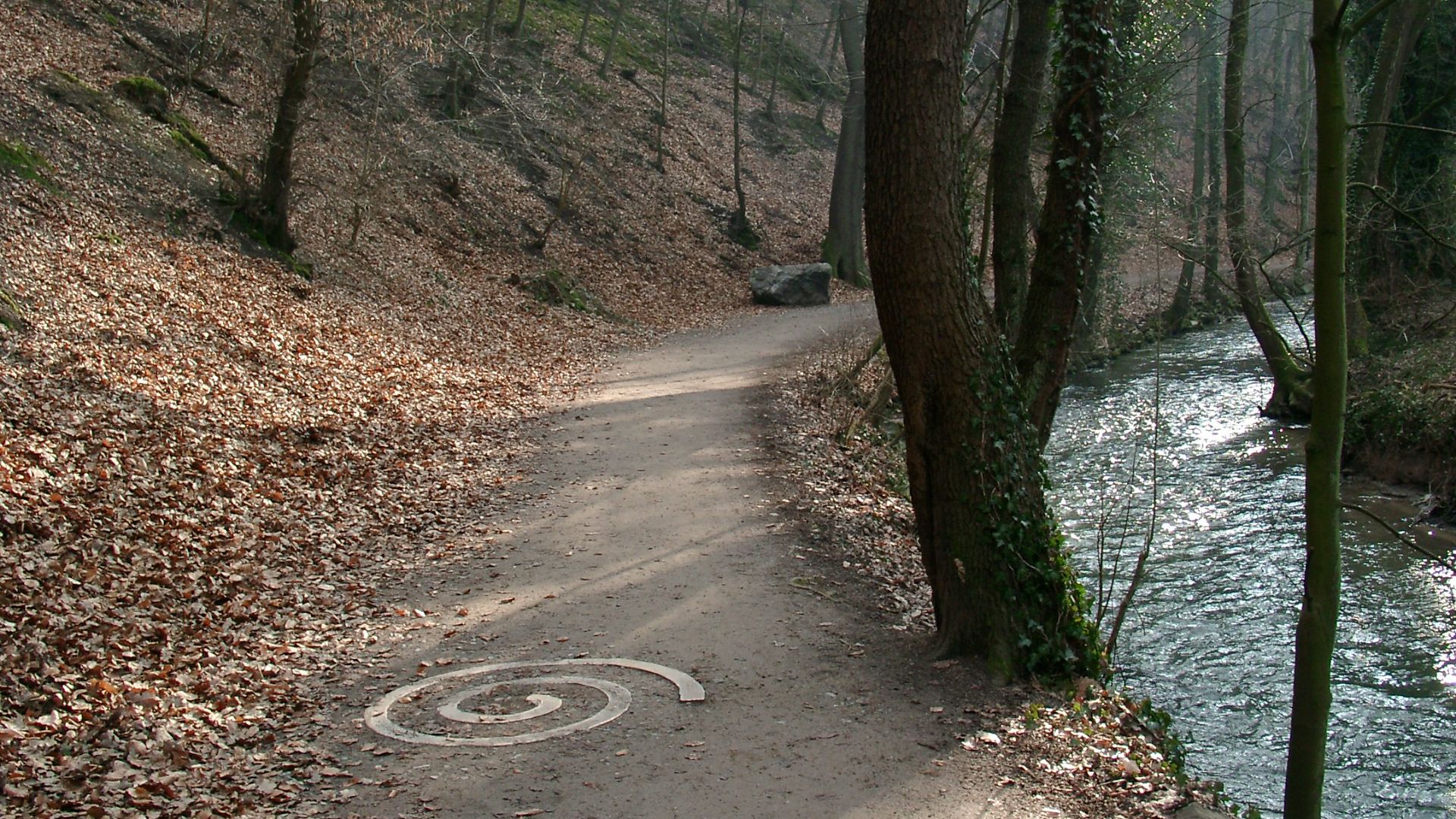
In 1856, workers quarrying limestone in the Neander Valley near Dusseldorf, Germany, unearthed a set of bones. A local teacher named Johann Carl Fuhlrott recognized them as ancient human remains, and the species was later named Neanderthal.
The Valley That Named An Entire Species
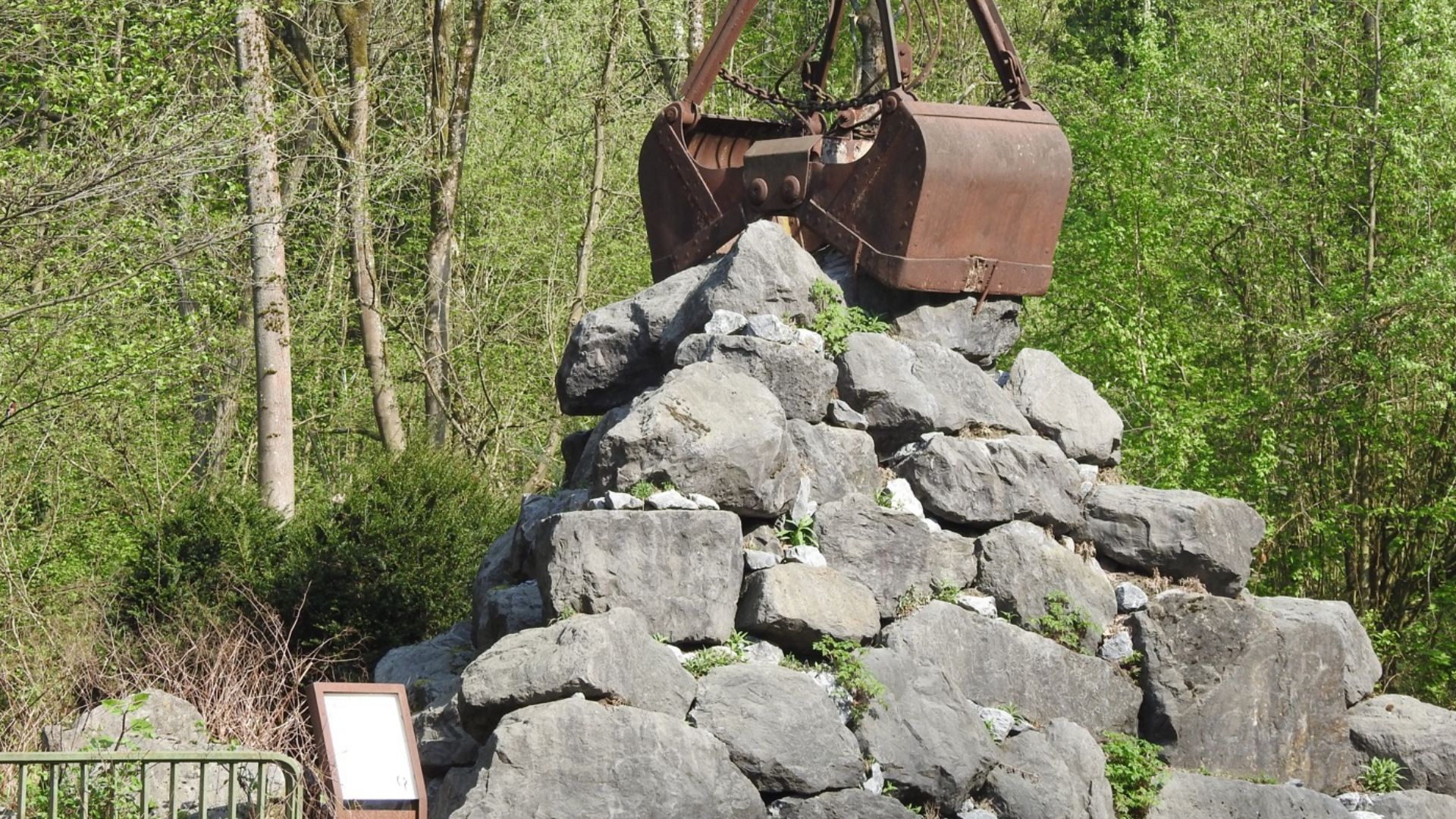
The Neander Valley, Neandertal in German, gave its name to one of the most significant discoveries in scientific history. The 1856 find marked the first recognized discovery of an extinct human species. Before this, the very concept of ancient, non-modern humans didn't exist as an accepted scientific idea.
The Skull That Launched Decades Of Debate
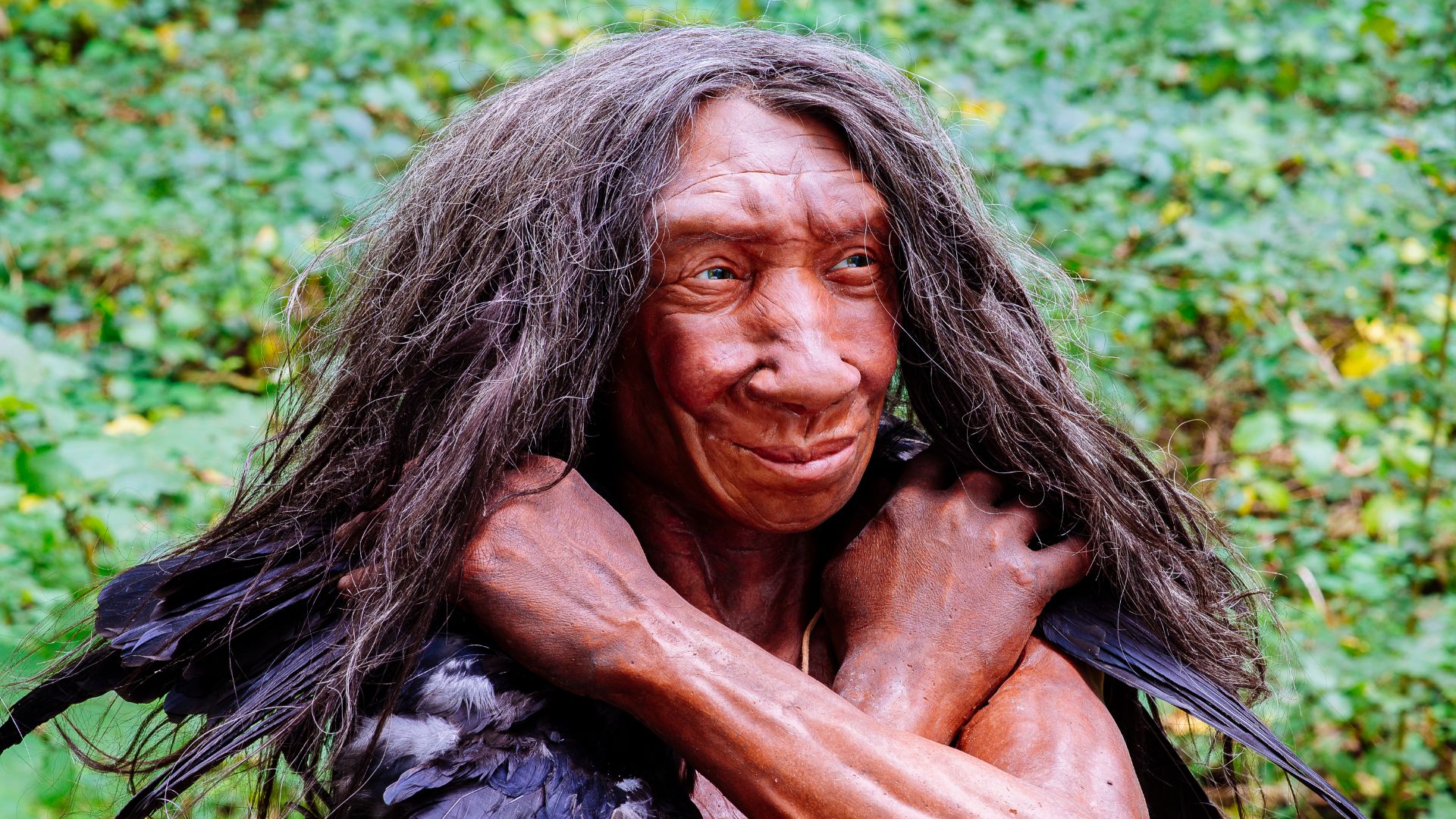
What the quarry workers found included a partial skullcap, ribs, parts of a pelvis, and limb bones. The skull was thick, with pronounced brow ridges and a low, sloping forehead, clearly different from modern human anatomy. Scientists argued for decades about whether the remains represented a diseased modern human, an ancient warrior, or something else entirely.
 Neanderthal-Museum, Mettmann, Wikimedia Commons
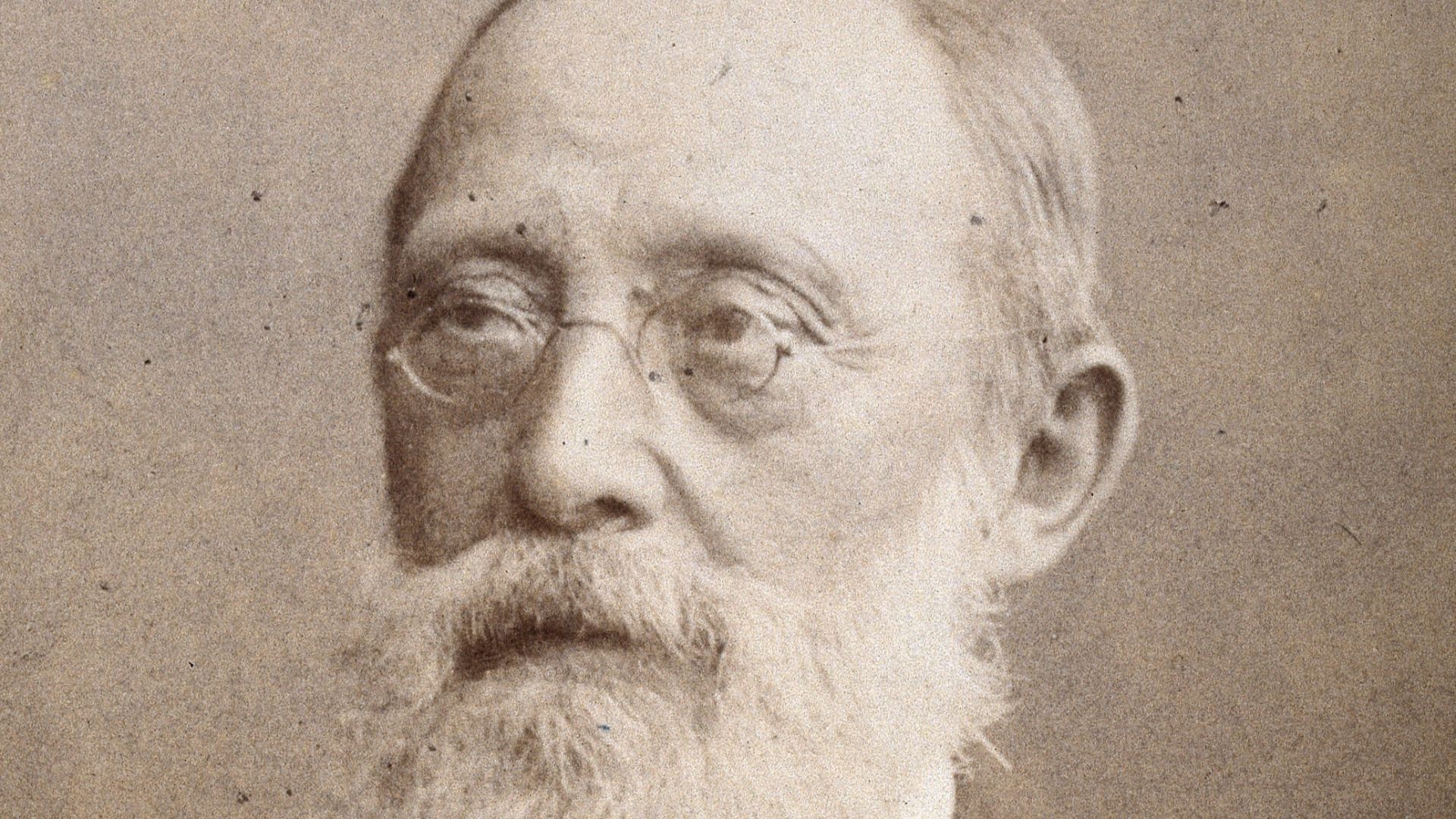
Rudolf Virchow Said It Was Just A Sick Person
Rudolf Virchow was Germany's most prominent pathologist and a deeply influential figure in 19th-century science. He dismissed the Neanderthal remains as the bones of a modern human who had suffered from severe rickets and arthritis. His authority delayed broader scientific acceptance of Neanderthals as a separate species by years.
 Julius Cornelius Schaarwachter, Wikimedia Commons
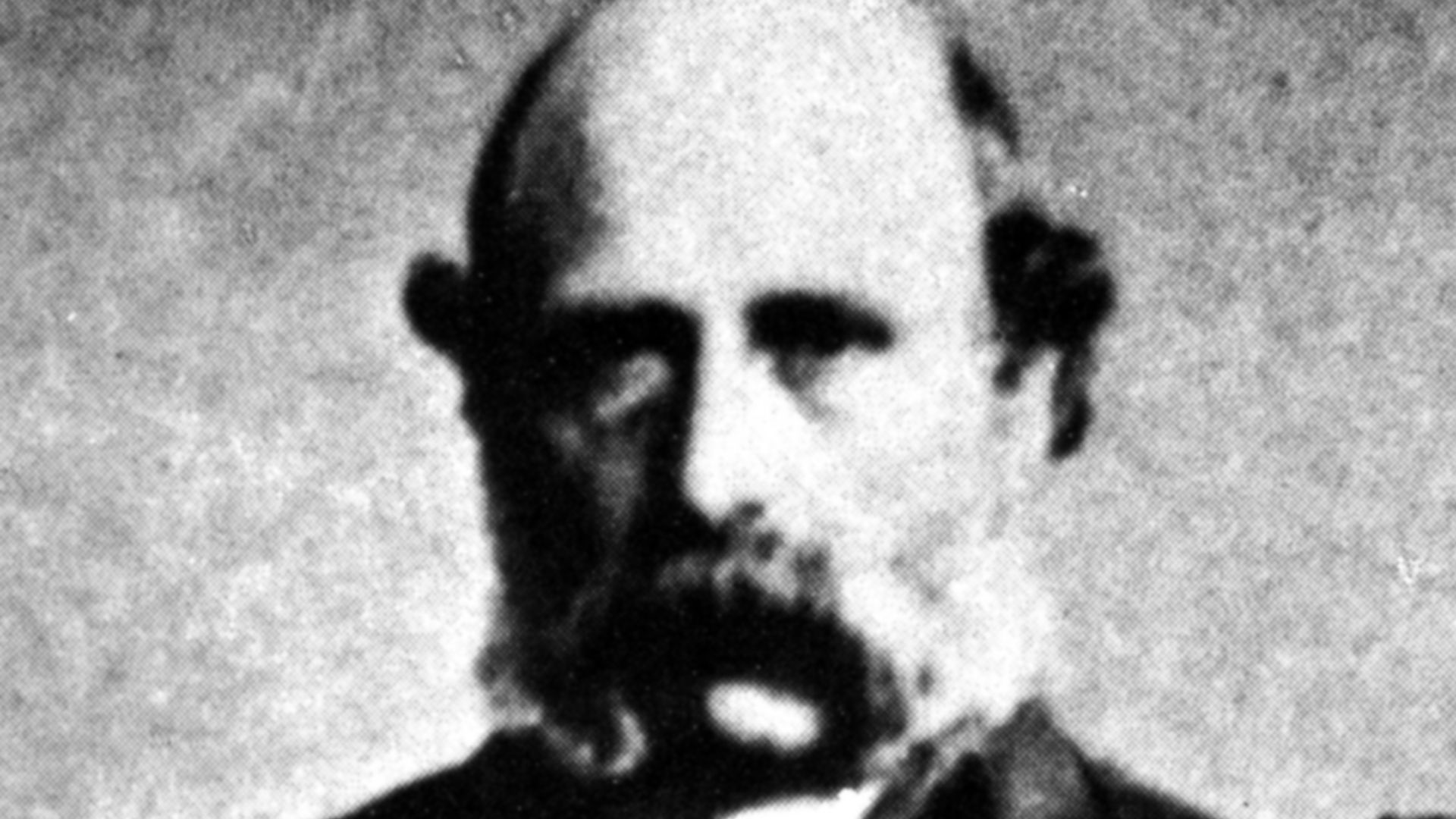
The Scientific Name Came In 1864
It wasn't until 1864 that Irish geologist William King formally named the species Homo neanderthalensis in a published paper. King proposed that Neanderthals were so anatomically different from modern humans that they deserved their own species designation. His paper established the formal scientific record and gave paleoanthropology one of its foundational reference points.
 Unknown authorUnknown author, Wikimedia Commons
A Dutch Doctor Went Looking For The Missing Link
Less than three decades after the Neander Valley find, a Dutch physician named Eugene Dubois made a bold decision. He believed the so-called missing link between apes and humans existed somewhere in Southeast Asia, and in 1887, he enlisted as a military surgeon in the Dutch East Indies specifically to look for it.
 The original uploader was Woudloper at Dutch Wikipedia., Wikimedia Commons
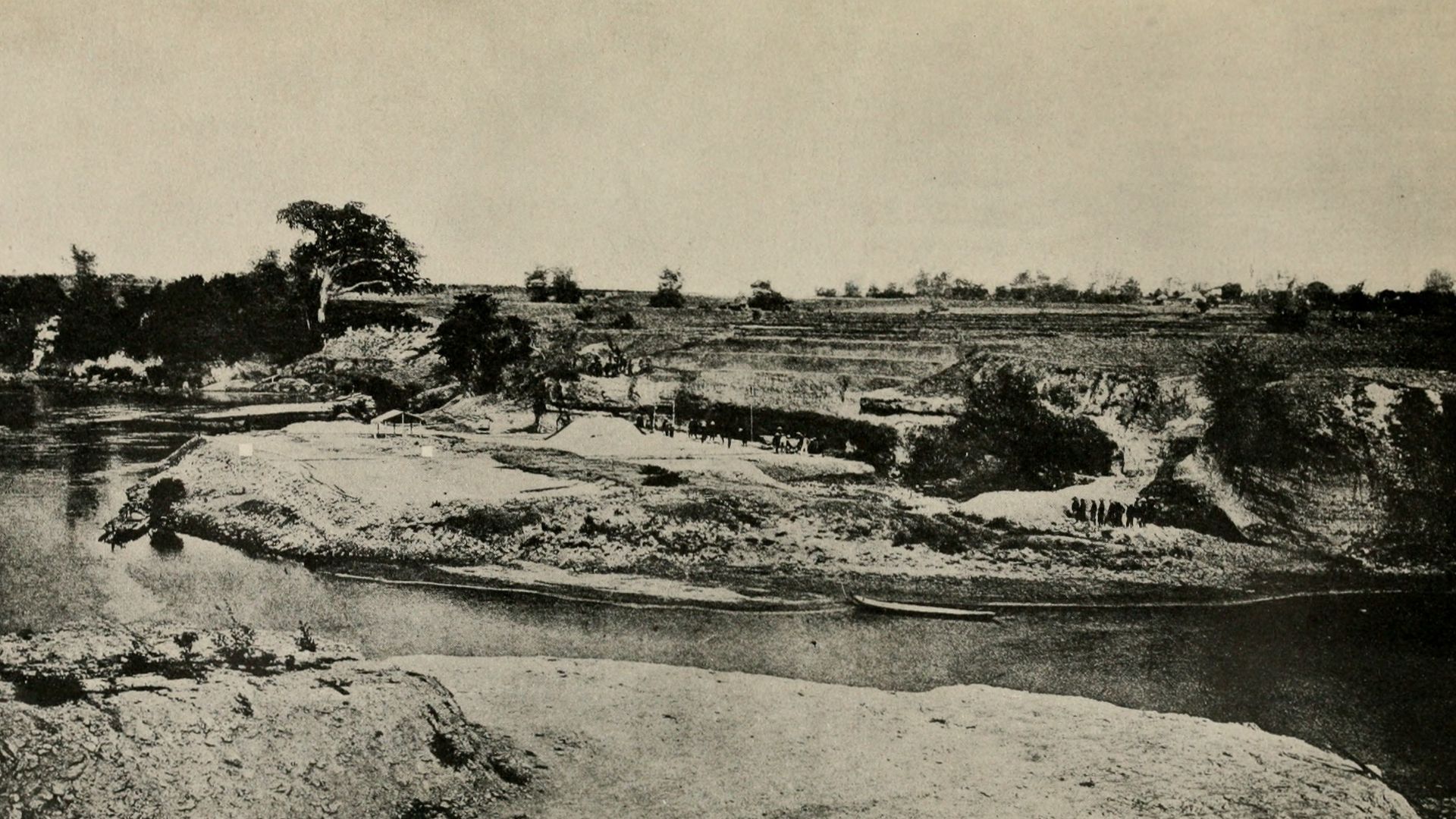
Discovery On Java’s Solo River
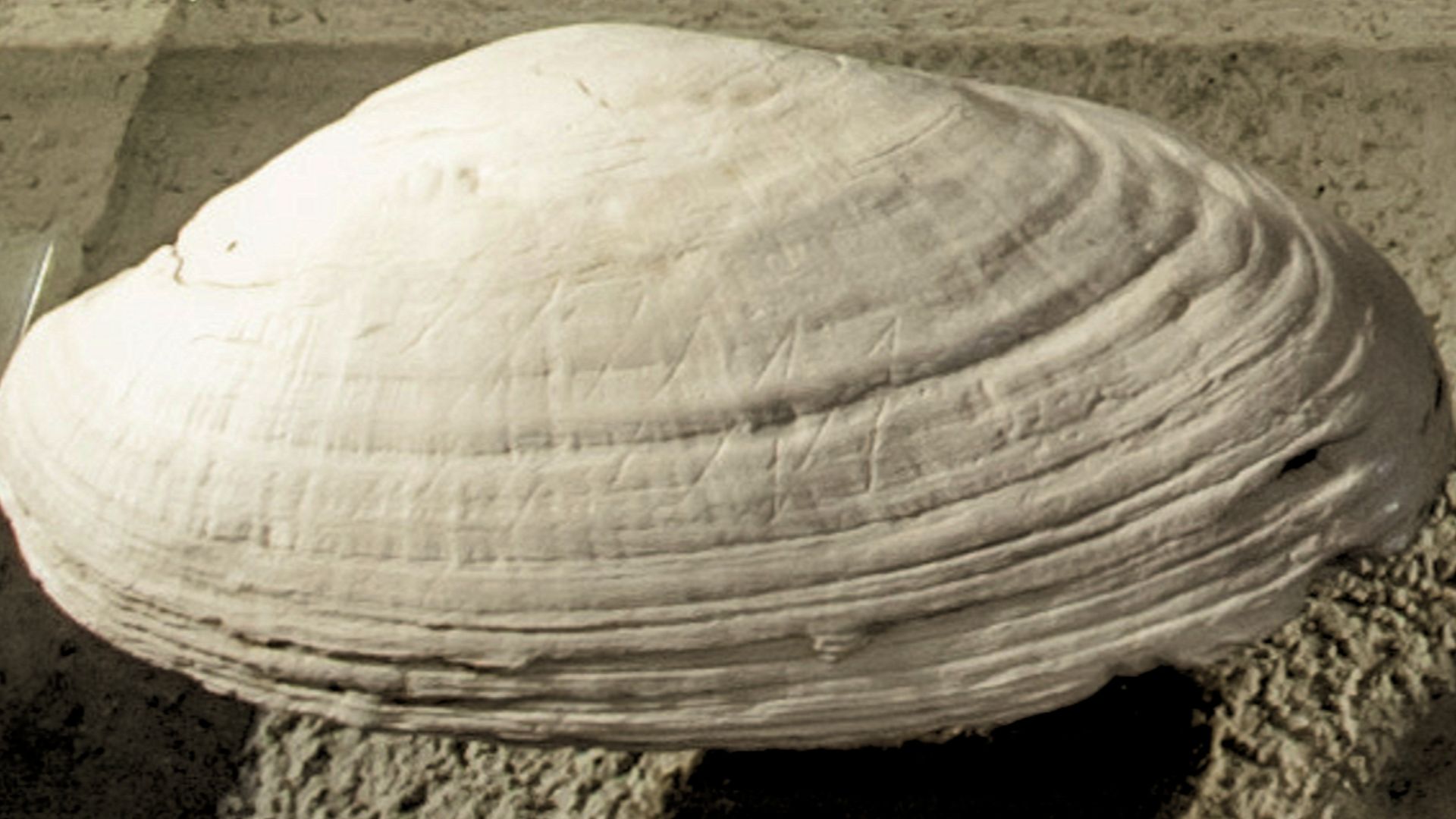
In August 1891, Dubois's team, excavating along the Solo River at Trinil in East Java, uncovered a molar and a skullcap from an ancient hominin. A year later, 50 feet away, they found a thighbone shaped like a modern human's. Dubois named his discovery Pithecanthropus erectus, the upright ape-man, later reclassified as Homo erectus.
 Aleš Hrdlička, 1869-1943., Wikimedia Commons
Java Man Had A Brain Between An Ape's And Ours
The skullcap showed a brain volume of approximately 55 cubic inches, notably smaller than that of modern humans at 73 to 85 cubic inches, but significantly larger than that of a chimpanzee. The thighbone indicated upright walking. Together, those two features gave Dubois what he had come for: a creature anatomically positioned between ape and human.
 Photographer: Henk Caspers/Naturalis, Wikimedia Commons
The Scientific World Refused To Believe Him
Despite compelling evidence, most scientists rejected Dubois’s interpretation. Within a decade, nearly 80 publications debated his findings, many classifying Java Man as either a large ape or a pathological human. Frustrated, Dubois locked the fossils away, denying access to other researchers for more than thirty years.
A Child's Skull Found In A Rock Box In 1924
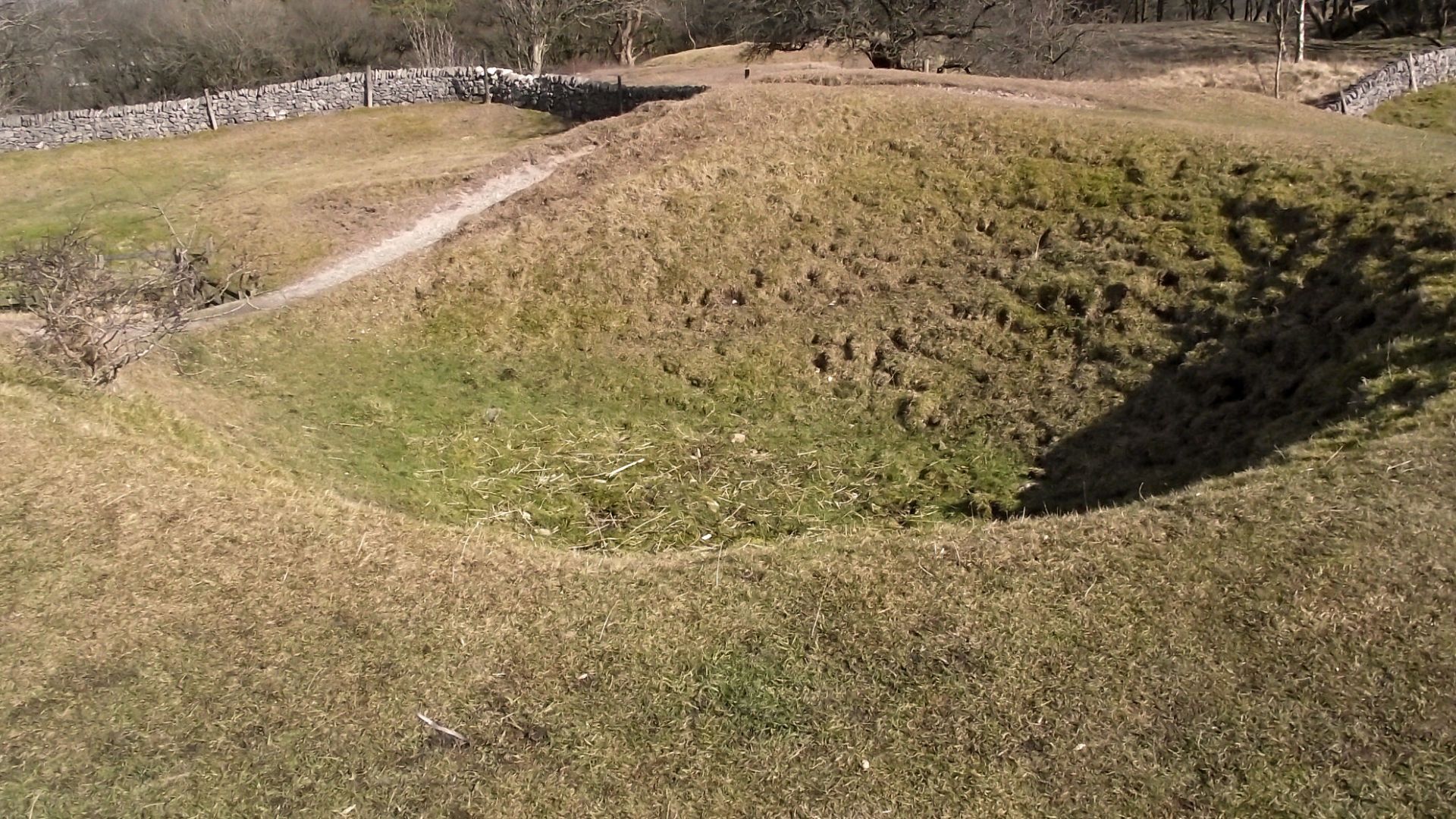
In late November 1924, a quarry worker at the Buxton Limeworks in Taung, South Africa, spotted an unusual brain cast embedded in a piece of rock. It was set aside for geologist Robert Young, who hand-delivered it to Raymond Dart, an Australian anatomist teaching at the University of the Witwatersrand in Johannesburg.
 Jonathan Kington, Wikimedia Commons
Raymond Dart Recognized It Immediately
Raymond Dart spent 73 days freeing a fossil skull from limestone. What emerged was the face of a three‑year‑old child with wide eye sockets, small humanlike teeth, and a brain cavity larger than any ape. He named it Australopithecus africanus and published his landmark discovery in Nature in 1925.
 Smithsonian Institution Archives, Wikimedia Commons
The Establishment Called It A Glorified Chimpanzee
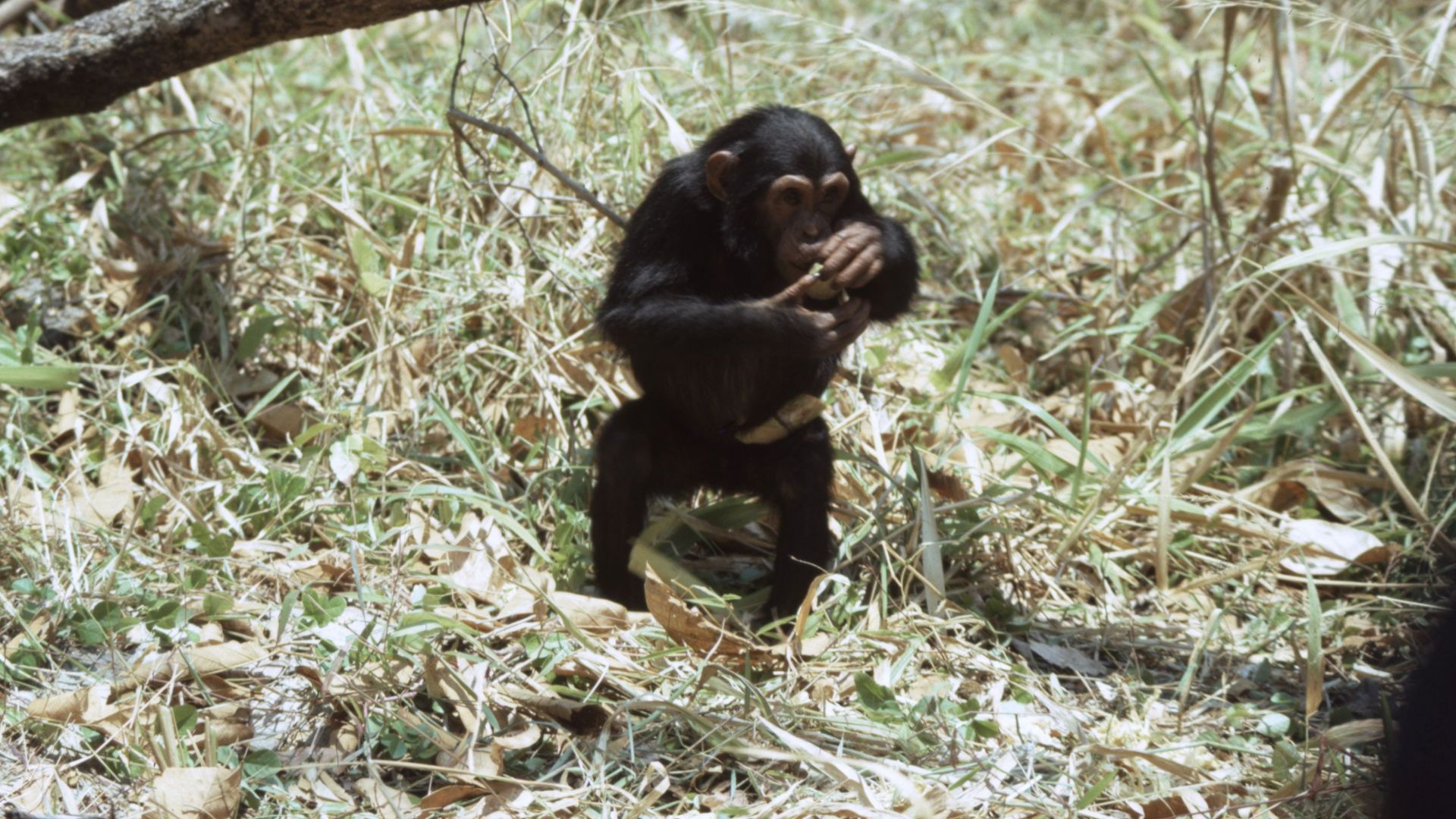
Three members of the Piltdown Man committee—Sir Arthur Keith, Grafton Elliot Smith, and Sir Arthur Smith Woodward—publicly criticized Dart's conclusion and suggested the Taung Child was simply a young chimpanzee or gorilla. At the time, the scientific consensus still held that humanity had originated in Asia or Europe, not Africa.
 Garst, Warren, 1922-2016, photographer, Wikimedia Commons
Piltdown Man Had Corrupted The Entire Field
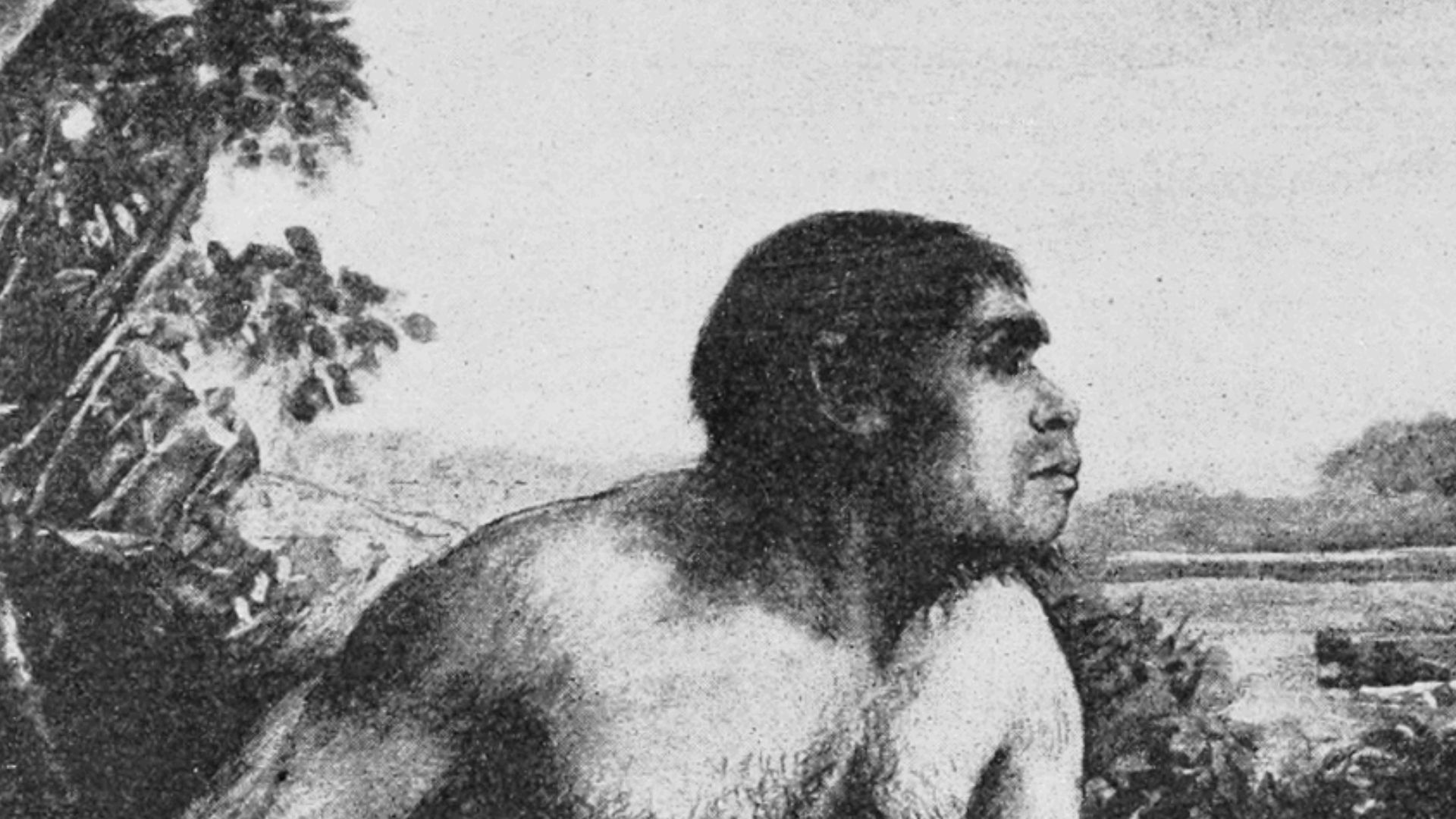
Much skepticism toward Dart stemmed from the Piltdown Man hoax. In 1912, a skull in England was hailed as the missing link, showing a large brain and ape-like jaw. Dart’s Taung Child revealed the opposite: small brain, humanlike teeth. It didn’t fit. Piltdown was exposed as a fraud only in 1953.
 Unknown authorUnknown author, Wikimedia Commons
The Taung Child Was Probably Killed By An Eagle
A remarkable later finding emerged in 2006 when paleoanthropologist Lee Berger noticed puncture marks on the Taung Child's skull and eye sockets. Those marks closely matched the talon and beak damage seen on modern primate skulls killed by large predatory birds. The leading theory today is that the Taung Child was killed by an eagle.

The 1976 Discovery That Started With Elephant Dung
In 1976, Mary Leakey’s team worked at Laetoli in northern Tanzania. During a break, members tossed dried elephant dung at each other. Paleontologist Andrew Hill ducked to avoid being hit and noticed tracks pressed into hardened volcanic ash. That playful moment led to one of paleoanthropology’s most famous discoveries.
 Axel Tschentscher, Wikimedia Commons
Mary Leakey Confirmed Animal Tracks Throughout The Site
Leakey’s team uncovered thousands of animal prints preserved in volcanic ash across 18 locations, including elephants, hippos, rhinos, antelopes, and birds. A second eruption sealed them beneath another layer, creating extraordinary preservation. Then Paul Abell made a discovery that overshadowed everything else found at the site.
 National Institutes of Health, Wikimedia Commons
In 1978, Human Footprints Were Found
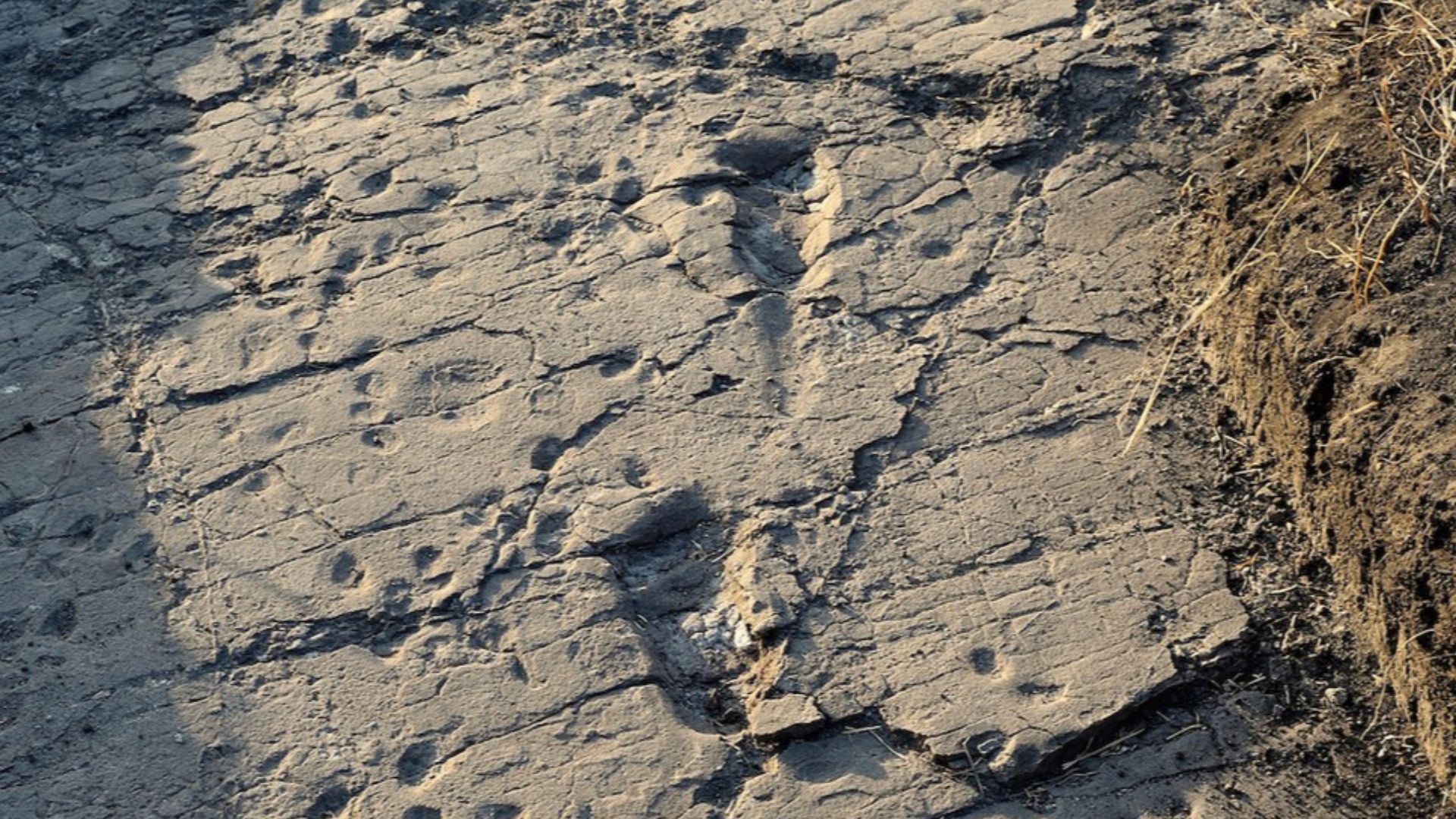
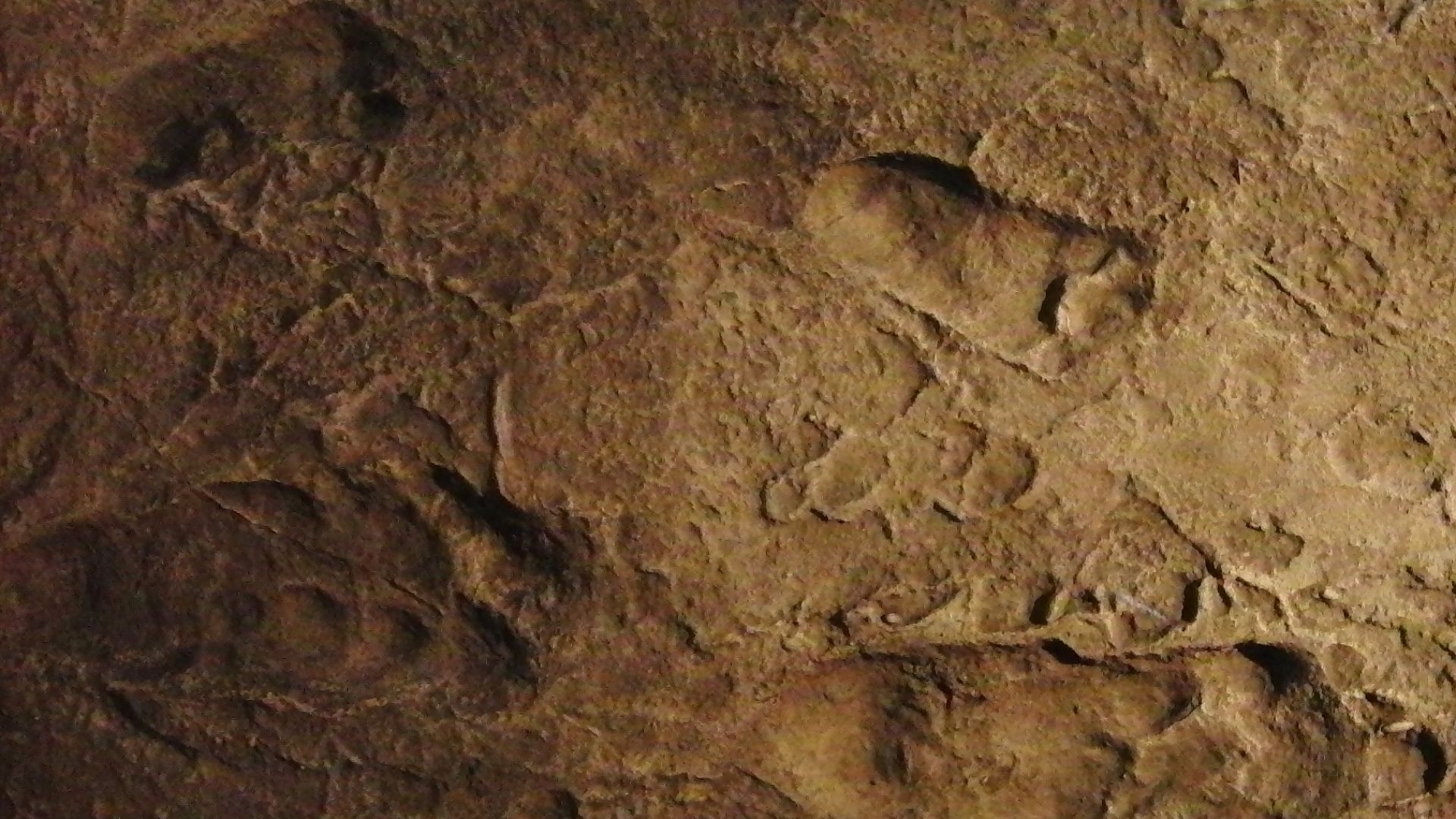
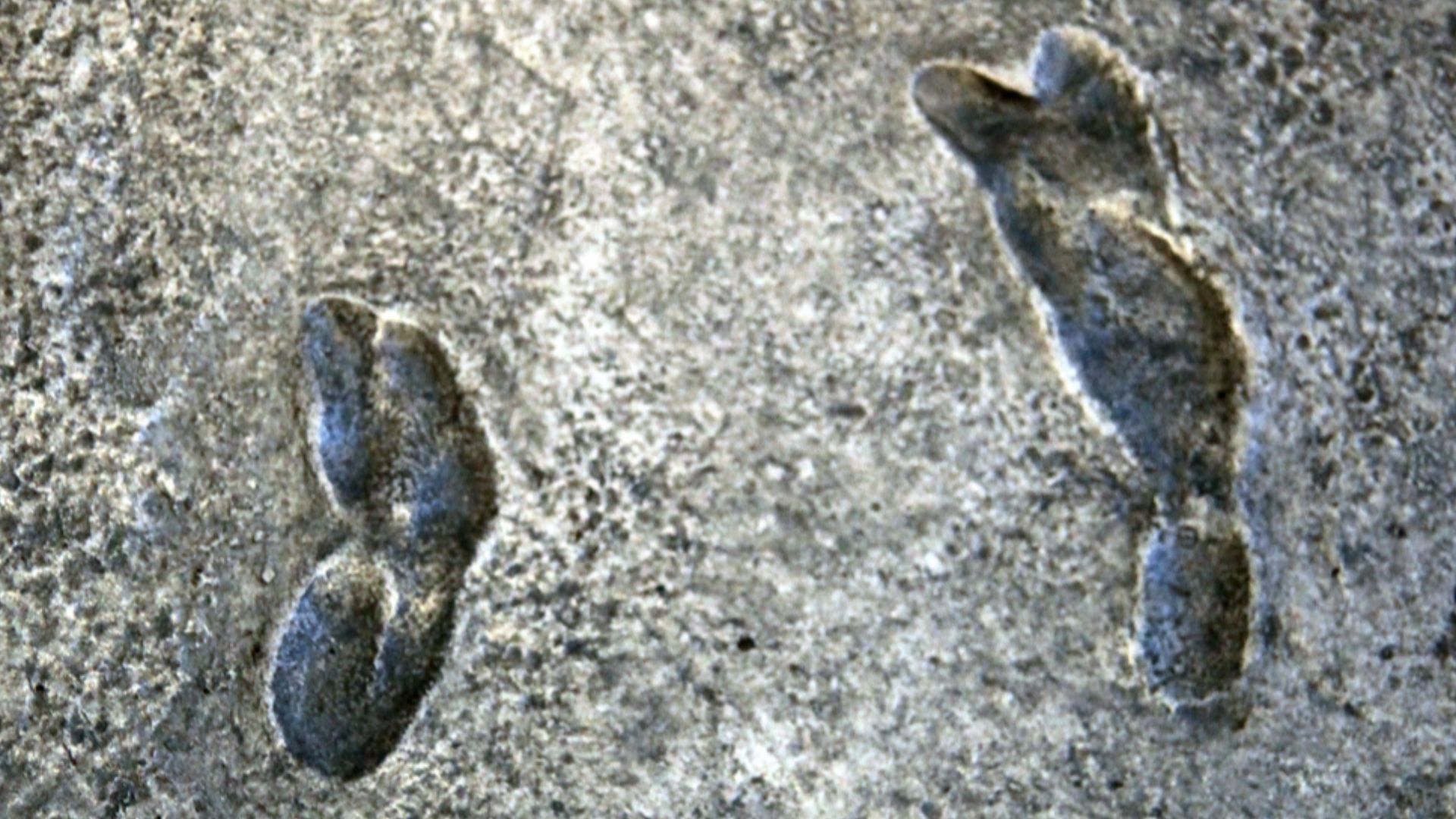
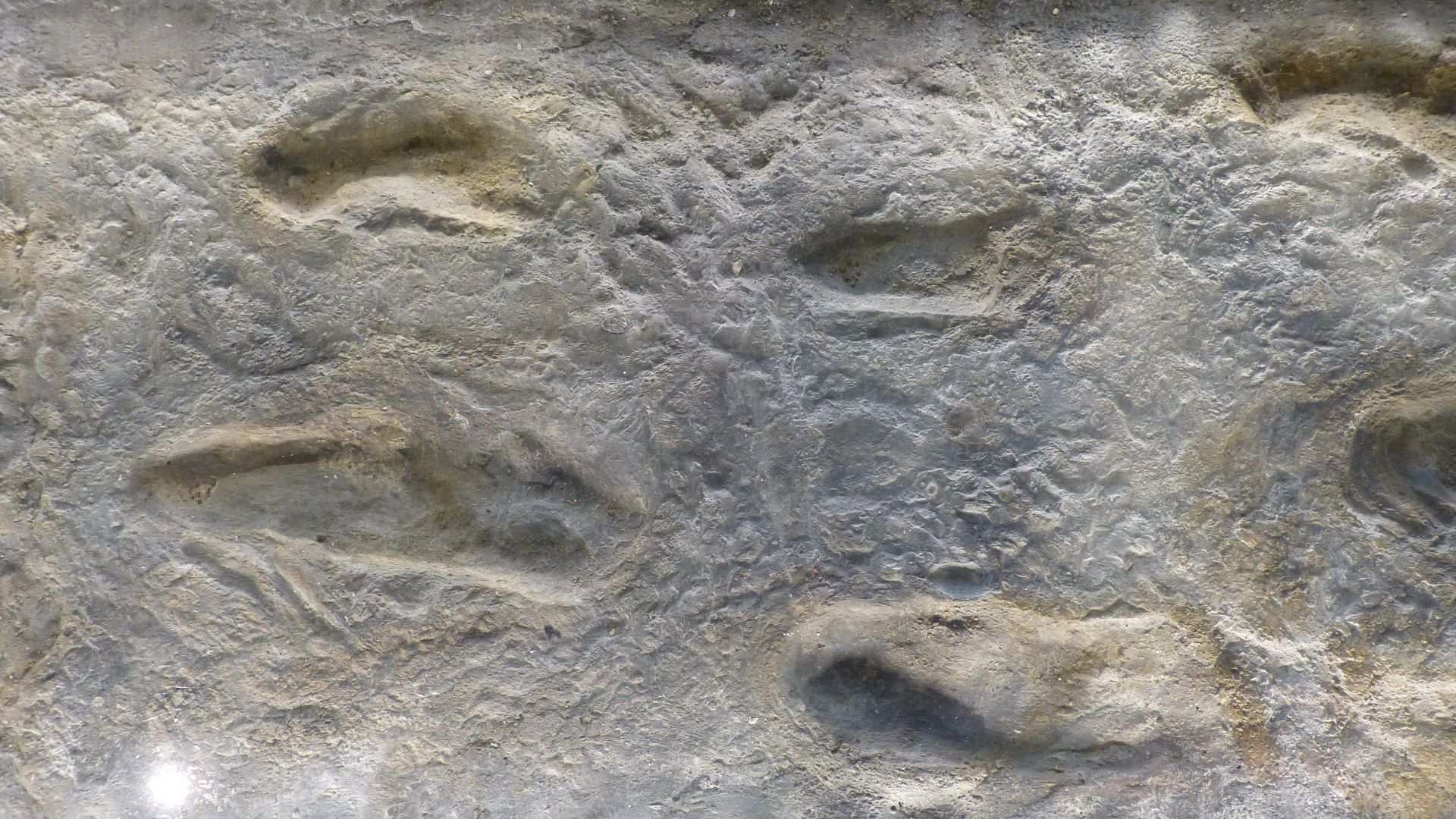
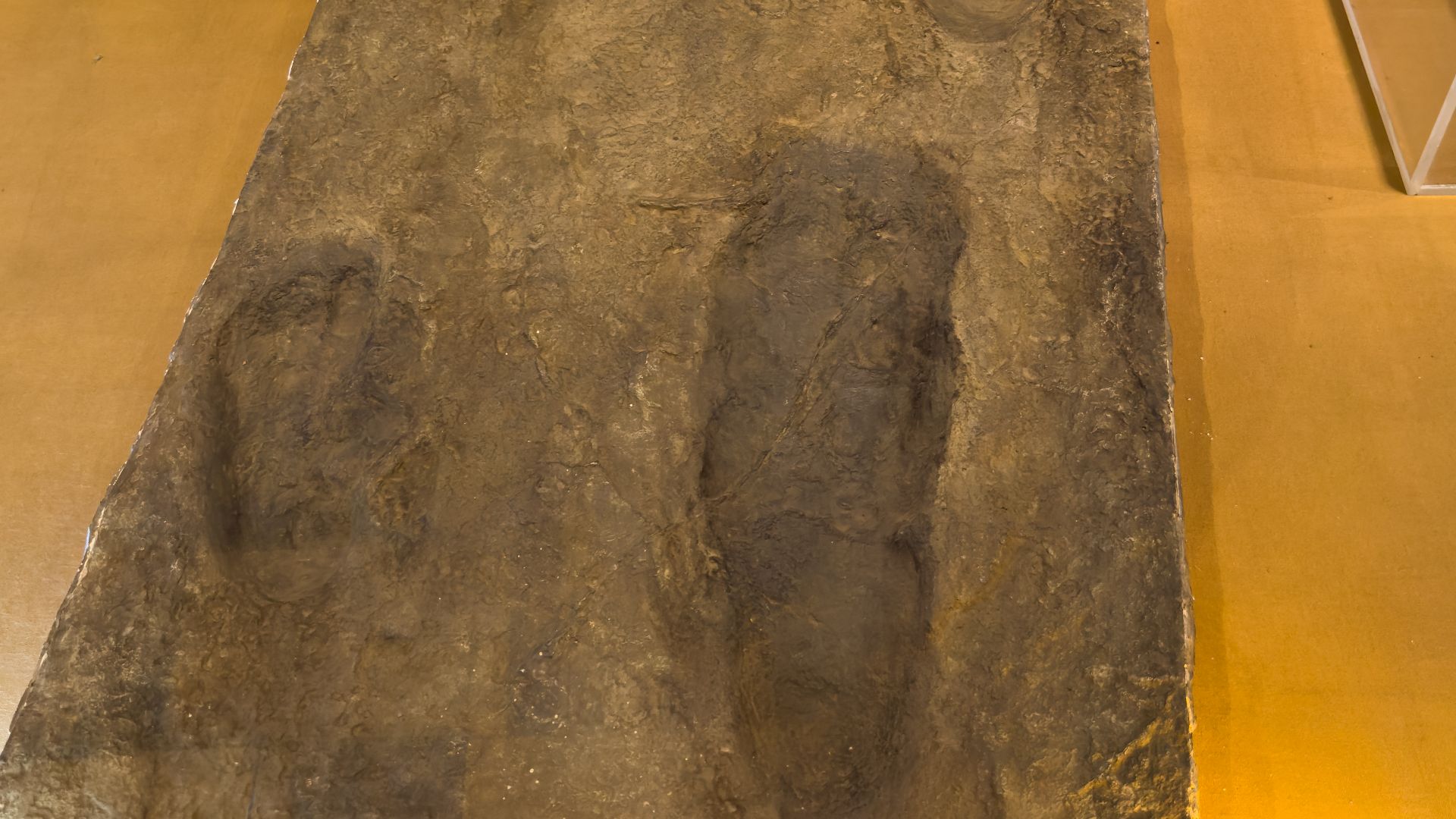
Two years later, team member Paul Abell discovered an 88-foot trail of approximately 70 hominin footprints at what became known as Site G. Dated to 3.66 million years ago, they are the oldest confirmed evidence of upright human walking ever found. The prints showed a heel-strike gait followed by a toe-off push.
 Fidelis T Masao and colleagues, Wikimedia Commons
Three Individuals Walked Through Wet Ash That Day
Analysis of the Site G trackway revealed that three individuals made the prints. Two walked side by side, and a third placed its feet directly inside the footprints left by the largest individual, who stood just over four feet. Their path led in the same direction, suggesting deliberate group movement rather than coincidence.
 Momotarou2012, Wikimedia Commons
A Second Set Of Prints Was Initially Dismissed As A Bear's
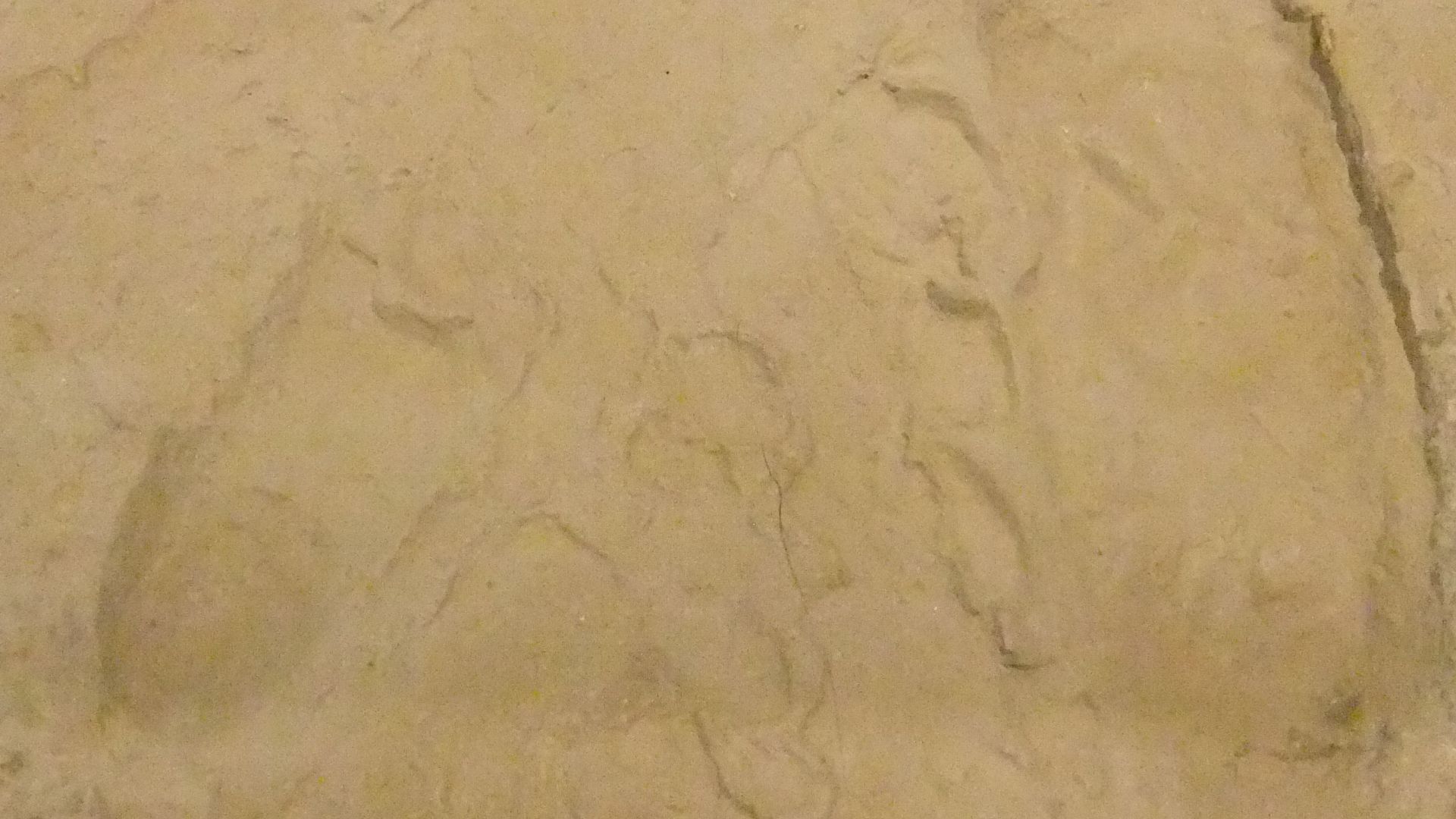
At nearby Site A, five footprints excavated in 1976 were considered too unusual to belong to a hominin. Some researchers suggested they may have been left by a bear moving on its back legs. The prints sat under sediment for over 40 years, until researchers returned to re-examine them in 2019.
 Tim Evanson, Wikimedia Commons
The Bear Theory Was Wrong
A 2021 study led by Ellison McNutt, a medical anatomist at Ohio University, and Jeremy DeSilva, an anthropologist at Dartmouth, confirmed the Site A prints were made by a hominin, not a bear. The prints showed a wide heel, a prominent big toe, and a cross-stepping gait—all inconsistent with bear locomotion.
Two Different Species Were Walking At Laetoli Simultaneously
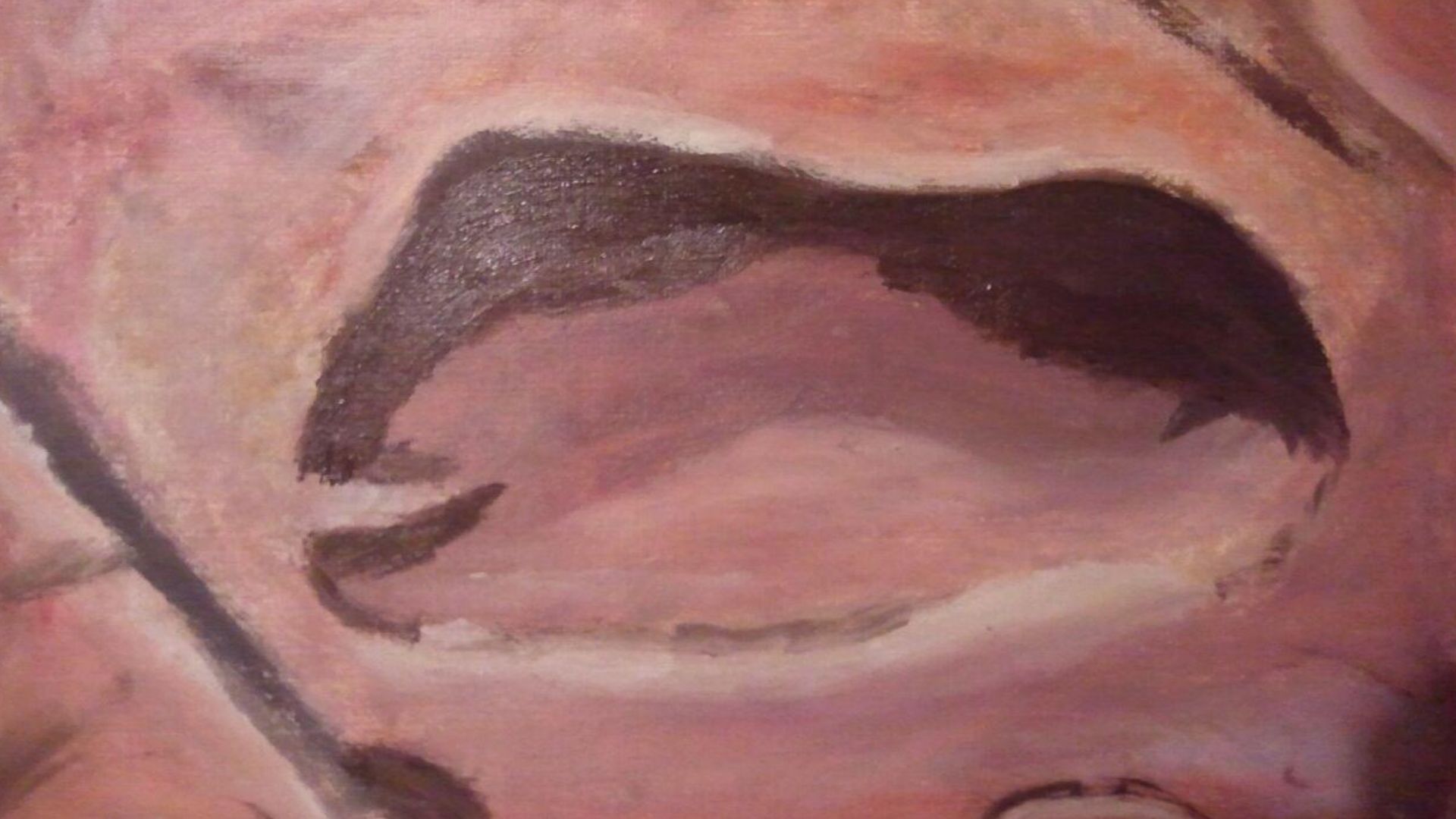
The Site A and Site G footprints sit within the same volcanic ash layer, dated to the same moment in time, 3.66 million years ago. But the prints are structurally different from each other. DeSilva's conclusion was unambiguous: two different species of bipedal hominin were walking across the same landscape at the same time.
Australopithecus Afarensis Made The Site G Prints
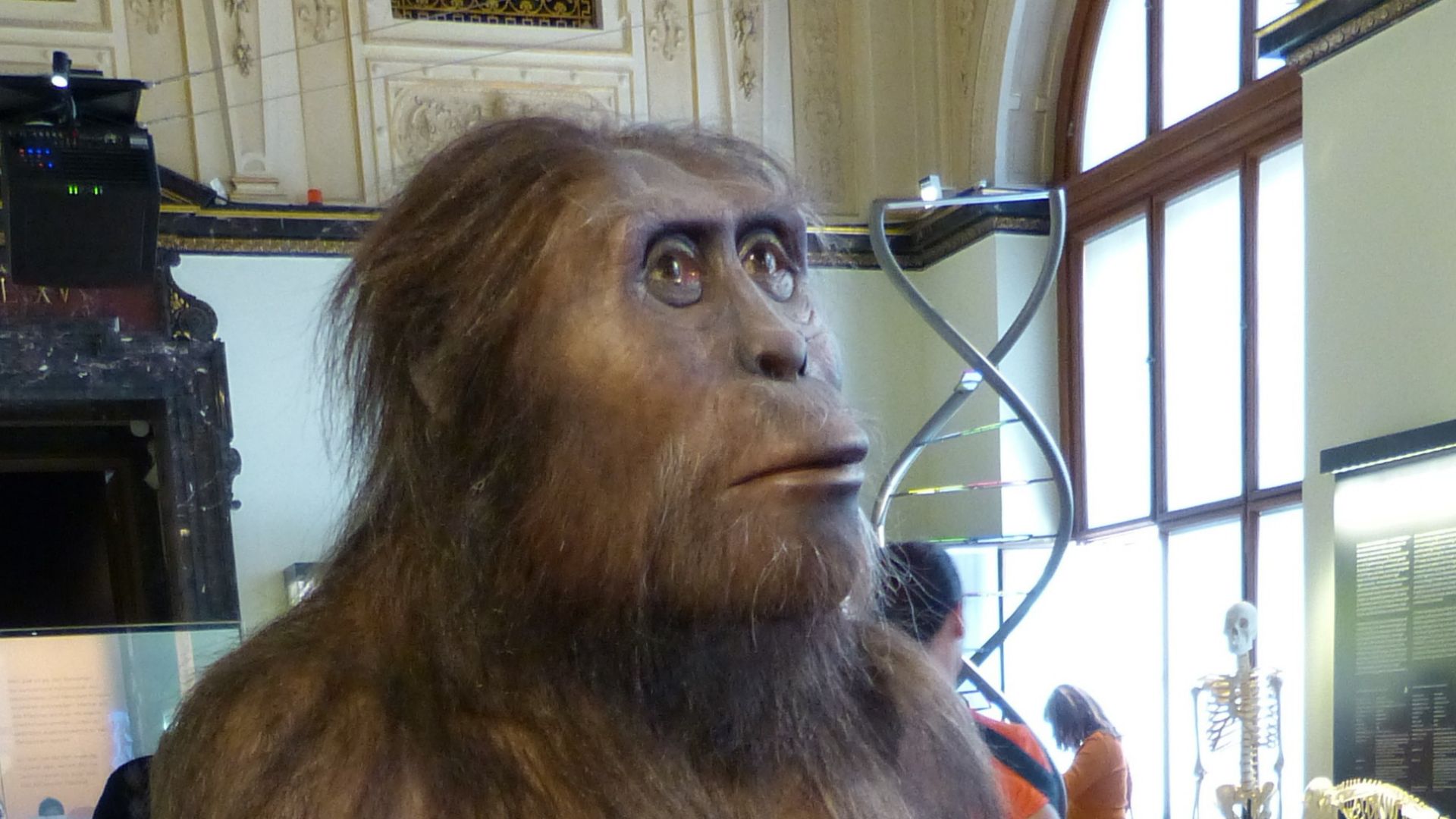
Australopithecus afarensis is the leading candidate for the Site G footprints, the same species as Lucy, discovered in Ethiopia in 1974. Lucy dates to about 3.2 million years ago, while the Laetoli prints, a million years older, show her species had already been walking upright long before her lifetime.
 Wolfgang Sauber, Wikimedia Commons
The Laetoli Prints Proved Upright Walking Came Before Big Brains
Before the Laetoli discovery, many scientists believed large brain size drove the development of bipedalism in human ancestors. The footprints overturned that assumption entirely. The creatures who made them had small, ape-sized brains, yet their walking mechanics were nearly indistinguishable from modern humans. Bipedalism came first. Brain expansion came much later in the evolutionary sequence.
 Wolfgang Sauber, Wikimedia Commons
The Prints Are Still There
The Laetoli footprints were reburied after excavation to protect them from erosion. They remain in the ground at the Ngorongoro Conservation Area in Tanzania, a registered National Historic Site. Preservation has been an ongoing concern since their discovery.
 Photograph by Mike Peel (www.mikepeel.net)., Wikimedia Commons