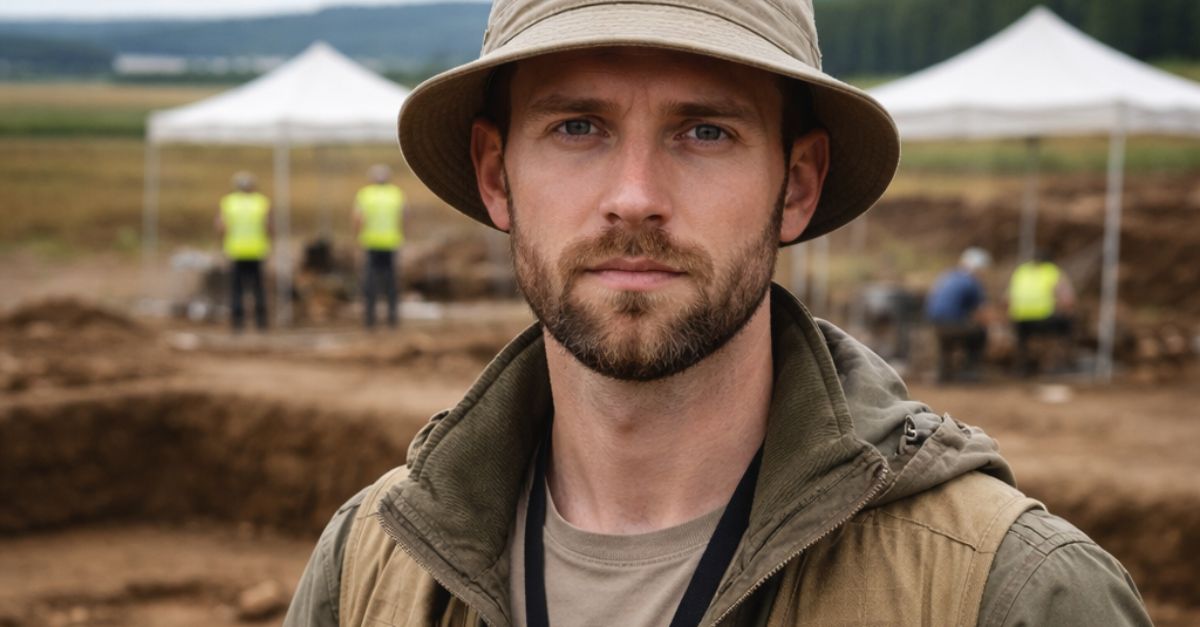
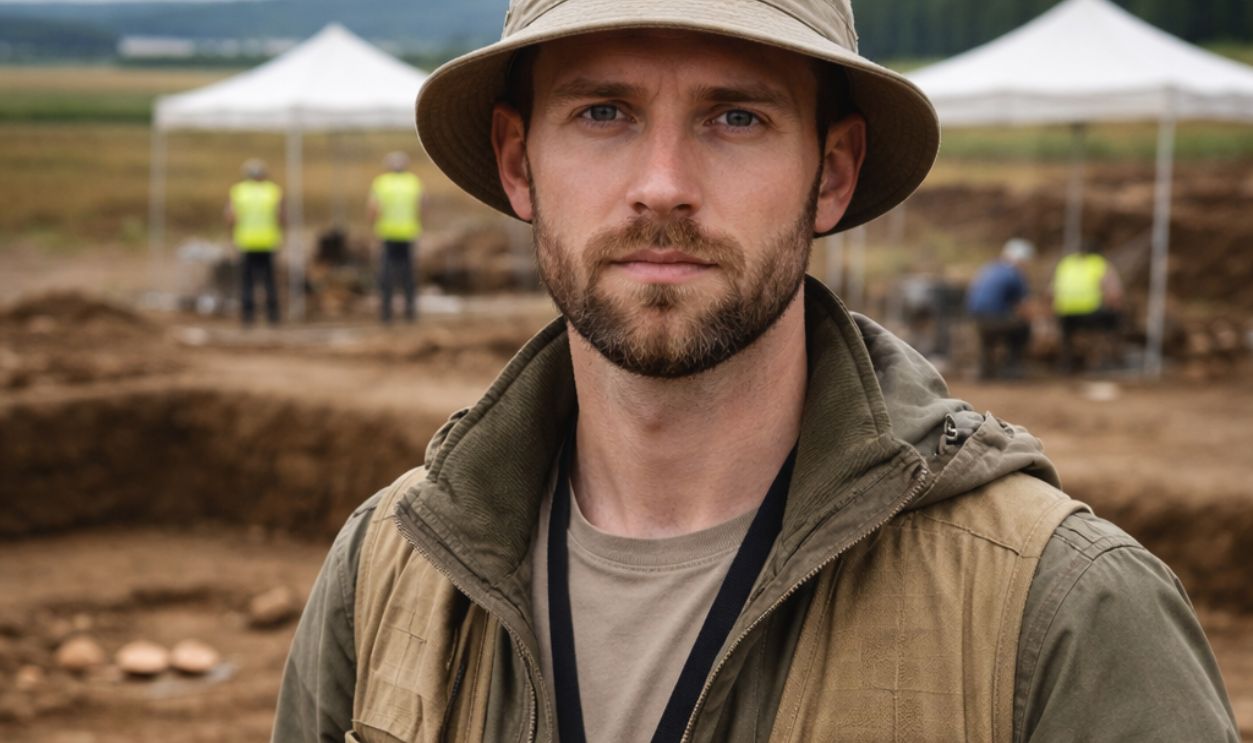
In the summer of 2023, routine archaeological work in the burial site near Nordlingen in southern Bavaria led to an unexpected discovery. As archeologists carefully removed layers of soil from the grave site, a long metallic object began to appear beneath the surface. At first glance, it seemed like another corroded fragment common to burial digs. But as more earth was brushed away, the unmistakable outline of a sword emerged, its surface reflecting a faint green sheen. The sealed burial condition had preserved the bronze so effectively that the blade retained its form almost perfectly after nearly three millennia underground.
The Moment The Blade Emerged
Archaeologists quickly secured the site and shifted from routine excavation to delicate hand tools. The sword lay horizontally with the burial remains of humans. There were no signs of disturbance by later human activity. Unlike many prehistoric weapons found broken or incomplete, this one remained intact from hilt to tip. Its preservation surprised experts, as bronze objects typically degrade over long periods in fluctuating soil conditions. The consistently low oxygen of the burial, however, created an environment that slowed chemical reactions. The metal oxidized evenly rather than crumbling to form the sword’s distinctive green patina.
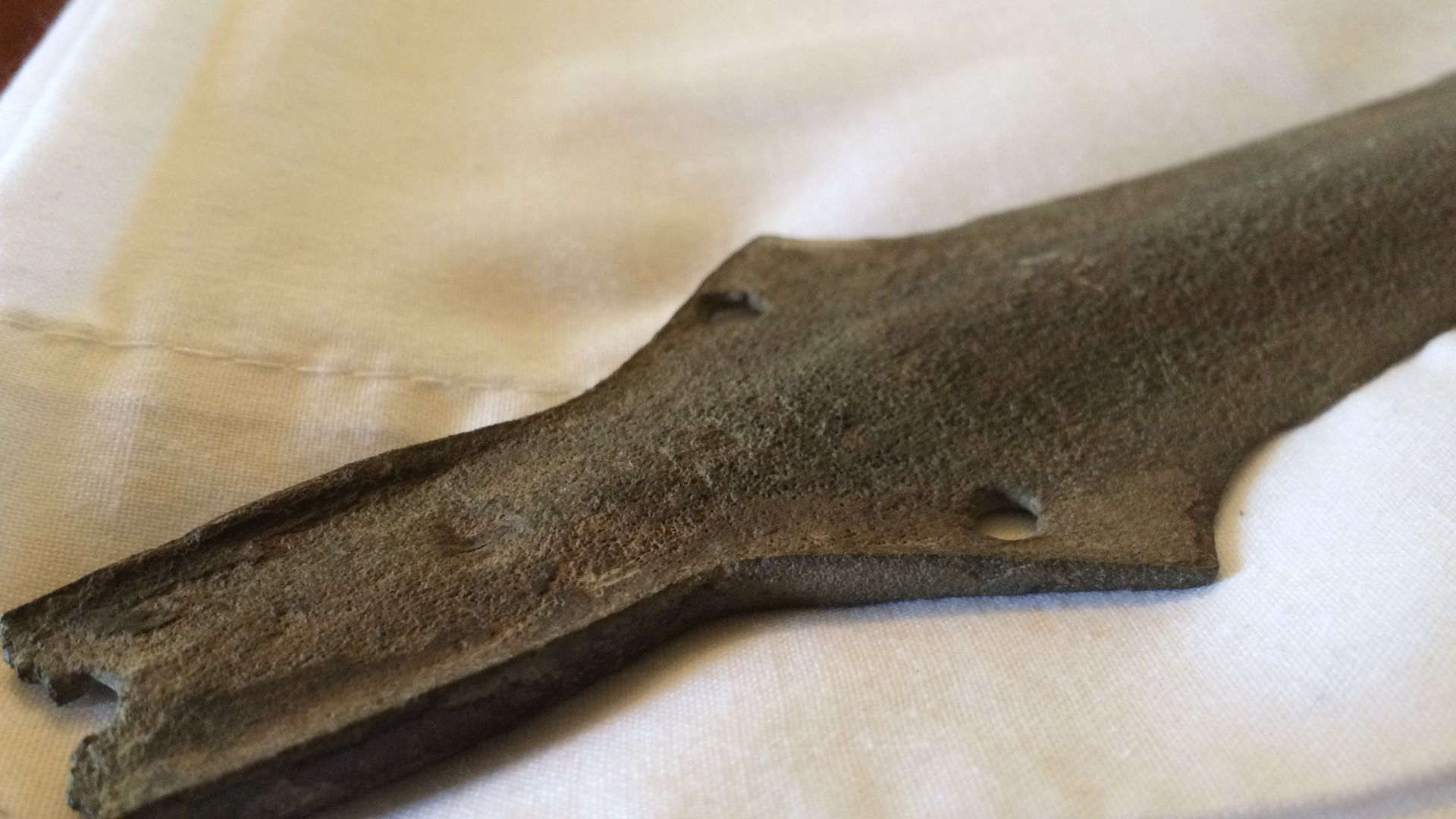
Once fully uncovered, the sword was carefully lifted using supportive padding to prevent stress fractures. Initial visual analysis revealed a finely crafted hilt with an octagonal shape, a design linked to elite weapons of the Middle Bronze Age in Central Europe. Official BLFD analysis states the center of gravity of the sword was toward the front of the blade. This indicated that it was balanced mainly for slashing (cutting). It was a functional weapon. The edges remained sharply defined, with no visible nicks or repair marks. This level of preservation allowed archaeologists to observe manufacturing details rarely seen on objects of this age before in the excavation.
Dating The Past Through Metal And Soil
After recovery, the sword was transported to a conservation laboratory where specialists stabilized the metal and removed surface deposits under controlled conditions. Its age was determined through typological and stylistic analysis of the weapon itself, along with associated grave goods and the broader burial context. These indicators place the sword at the end of the 14th century BCE, roughly between 1400 and 1300 BCE, a late phase of the Middle Bronze Age in southern Germany. Metallurgical testing confirmed the sword was made of bronze, an alloy of copper and tin. Neither metal was naturally abundant in the immediate Bavarian region. It meant that raw materials had been transported over long distances.
Based on broader Bronze Age provenance research, comparable octagonal-hilt swords from Central Europe are known to have been produced using copper sourced from Alpine mining regions, including areas in present-day Austria and northern Italy. Tin often entered these production networks from Western European sources such as Cornwall, the Erzgebirge, or parts of Brittany. No published chemical or lead-isotope analysis has yet definitively traced the raw materials of this specific sword, although its form and composition align closely with these established patterns of long-distance resource movement. The craftsmanship itself offered further clues. Microscopic examination showed the sword was cast in a mold and then hammered and polished, a process that strengthened the blade and refined its shape. The clean casting seams and precise symmetry pointed to highly skilled artisans, likely working within specialized production traditions.
Placed In A Burial Context
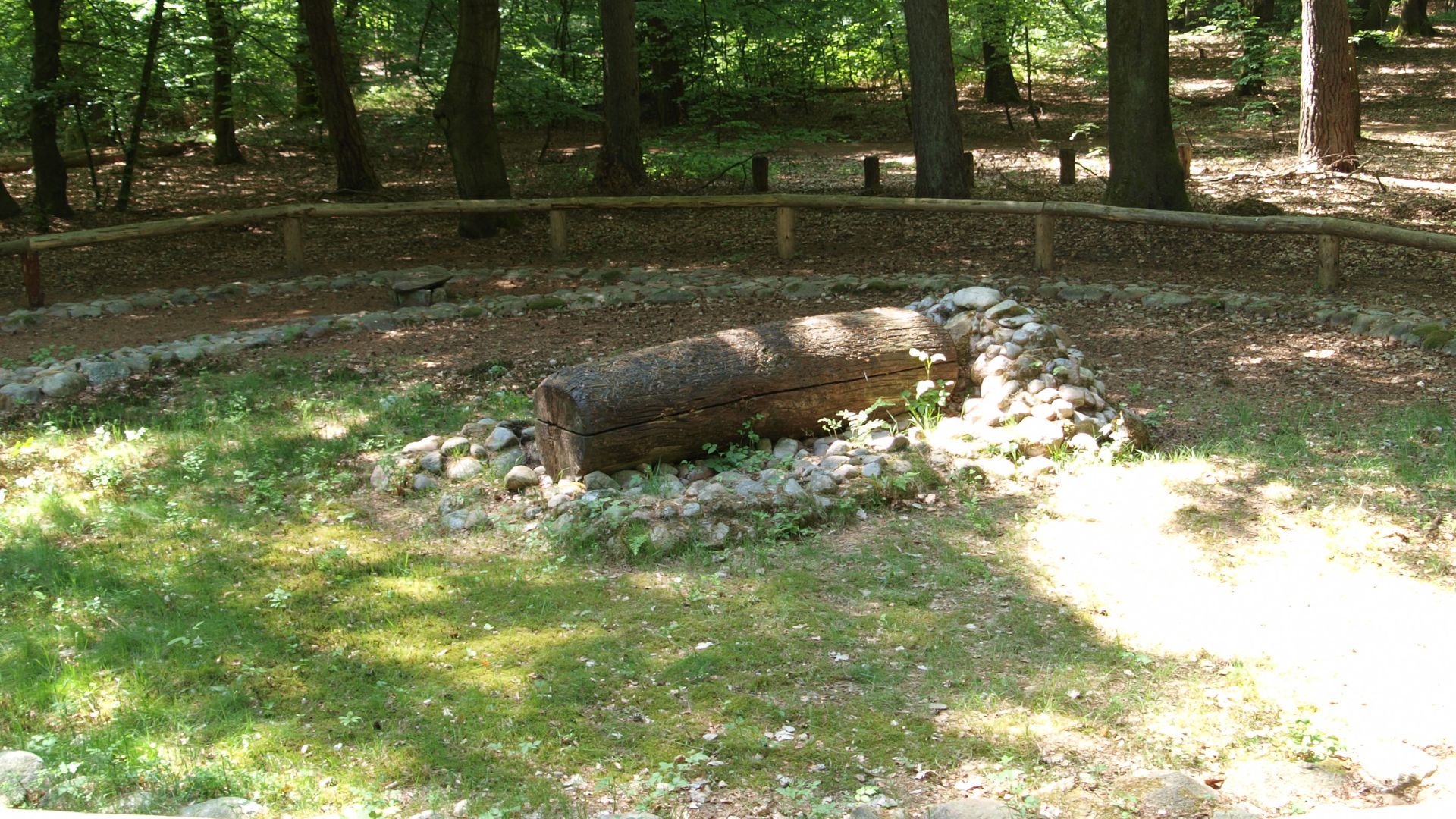
Equally important was the sword’s archaeological context, which clearly identified it as a grave good. The weapon was found inside a burial containing the remains of three individuals—a man, a woman, and a teenage boy—believed to have been interred in quick succession. This arrangement aligns with established Bronze Age burial practices in southern Germany, where high-status individuals were often buried with valuable objects that reflected rank or social role. Swords, in particular, were elite items during this period and rarely placed casually; their inclusion in graves signaled warrior status. The positioning of the sword within the grave indicated deliberate placement. Unlike votive offerings placed in bogs or rivers, which are documented elsewhere in prehistoric Europe, this burial followed a formal funerary pattern.
 Photographed by User:Bullenwächter, Wikimedia Commons