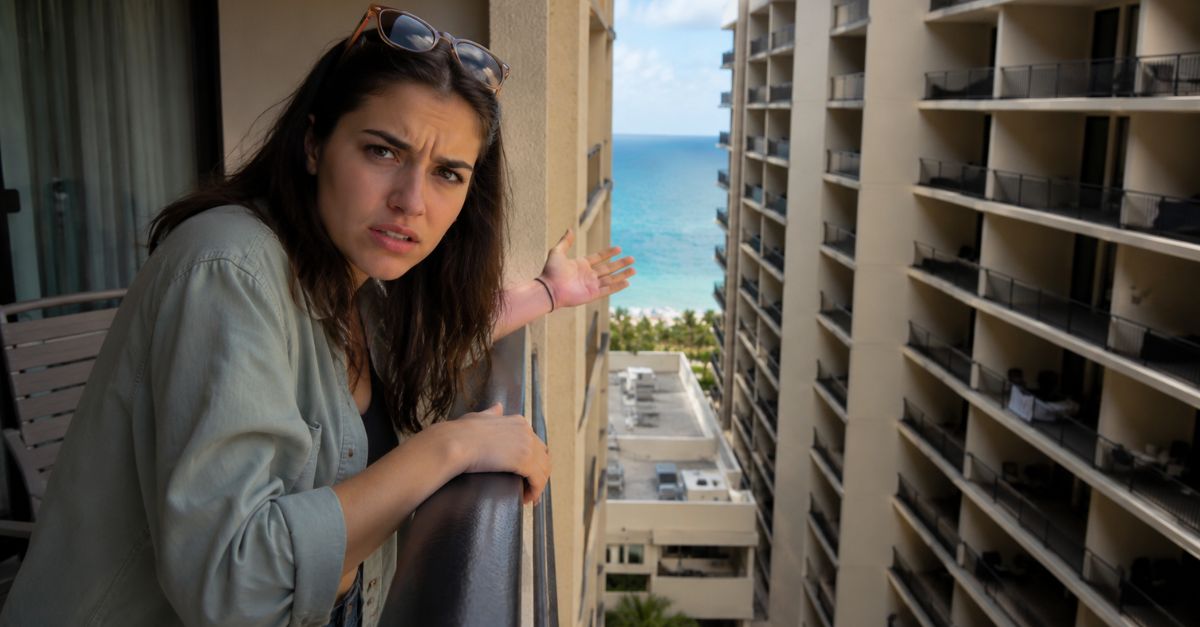
The View That Wasn’t Quite There
You book an “oceanfront” room, you expect a wide-open water view. Leaning over the balcony just to catch a sliver of blue obviously shouldn't count. But can you actually make a case that the hotel crossed the line? Maybe. Whether it counts as false advertising depends on what the listing said, what a reasonable guest would expect, and what evidence you can show.

Why This Happens So Often
Hotels love terms like “oceanfront,” “ocean view,” and “beachfront” because those labels help sell rooms. The trouble is that those phrases do not always have one fixed meaning across every state, hotel brand, or booking site. That gives hotels room to market aggressively while guests end up with a view that is partial, blocked, or visible only from one odd angle.

What “Oceanfront” Usually Means
For most travelers, “oceanfront” means the room faces the ocean and sits on the side of the property closest to the water. In everyday terms, that suggests you should be able to see the ocean from the room or balcony without twisting yourself into position. If the water appears only when you lean way over the railing, many guests would feel the label was stretched too far.

But Marketing Terms Are Often Slippery
Travel ads often mix concrete facts with softer promotional language. The Federal Trade Commission says advertising must be truthful and not misleading, and advertisers need support for objective claims. That matters here because “oceanfront” can sound like a factual claim about location or view, even if the hotel later says it only meant the building sits on oceanfront property.

The FTC’s Basic Rule On Deceptive Ads
The FTC looks at whether an ad is likely to mislead a reasonable consumer and whether the point matters to the purchase. A room description can clearly matter because travelers often pay more for a better view or better location. If the ocean view was a key reason you booked or paid extra, that helps show the wording mattered.

Why Fine Print Can Change Things
Your argument gets weaker if the listing clearly said “partial ocean view,” “obstructed view,” or “view may vary by room.” It gets stronger if “oceanfront” was front and center while any limit was hidden elsewhere, or never mentioned at all. Regulators and courts often look at the overall impression of an ad, not just one word in isolation.

Photos Can Make Or Break The Claim
Pictures are often the most important part of the dispute. If the hotel used broad, clear water-view photos that seemed to match your room category, those images may create a misleading impression. Under FTC guidance, visuals count as part of the claim, not just decoration.

These Labels Get Confusing Fast
Hotels and booking platforms do not always use room labels consistently. “Ocean view” often means you can see the water somehow. “Oceanfront” usually suggests a more direct relationship to the shoreline, while “beachfront” often describes where the property sits, not what every room actually sees.

There Is No Single National Definition
That is part of what makes these disputes so frustrating. There is no federal law that sets one nationwide definition for every hotel view term. Instead, these cases usually come down to general consumer protection law, the booking terms, and the specific facts shown by the listing, the photos, and the room you got.
 AI25.Studio AI GENERATIVE, Pexels
Your Booking Page Is The Starting Point
Your confirmation, room category, screenshots, and pre-arrival emails are the backbone of your evidence. If the reservation promised an “oceanfront king” and the room delivered only a strained side glance at the water, that difference matters. Save everything before the listing changes, because hotel descriptions can be updated later.

State Consumer Protection Laws Can Also Help
On top of the FTC, every state has its own consumer protection laws, often covering unfair or deceptive business practices. State attorneys general and consumer agencies can investigate misleading marketing, and hotel room descriptions fall squarely in that territory. The exact rules vary by state, but misleading travel ads are a familiar issue.

Credit Card Protections May Matter Too
If the room was materially different from what you paid for, you may have dispute rights through your credit card issuer under the Fair Credit Billing Act. The Consumer Financial Protection Bureau explains that consumers can dispute certain charges involving goods or services not delivered as agreed. It is not an automatic win in a hotel view fight, but it can give you leverage if the property refuses to fix the problem.

First Step: Document What You Actually Got
Take photos and video from normal standing positions inside the room and on the balcony. Do not focus only on the one angle where water is technically visible. You want to show what a normal guest sees without leaning, stretching, or taking a risk.

Second Step: Save The Original Listing
Screenshot the room description, rate name, listing photos, map, and any terms about the view. If possible, include timestamps. If you booked through a third-party site, save that version too, because it may differ from the hotel’s own website.

Third Step: Speak Up Right Away
Go to the front desk as soon as you notice the problem. Ask for a room change, a partial refund, or a price adjustment that matches the lower-value view. Hotels are usually more willing to solve the issue while you are still on the property than after checkout.

Keep The Complaint Clear And Simple
Tell staff the room does not match the “oceanfront” description because the ocean is not reasonably visible from the room or balcony under normal use. Keep the focus on the gap between what was advertised and what was delivered. Calm, specific complaints usually land better than emotional ones.

Ask For The Hotel’s Position In Writing
If the property refuses to help, ask for an email or written note explaining why. That can be useful if you later escalate to the hotel brand, booking platform, or card issuer. It also forces the hotel to state whether it claims “oceanfront” referred only to the building’s location rather than your room’s actual view.

Brand Customer Service May Be Another Path
If the hotel belongs to a major chain, contact the brand’s customer care team. Many chain hotels are independently owned, but corporate guest-relations teams can still put pressure on the property to make things right. They may offer points, refunds, or another form of compensation when the proof is strong.

Booking Sites Have Complaint Systems Too
Sites like Expedia and Booking.com usually have ways to report that a property was not as described. Your screenshots matter a lot here because listings can change fast. If the platform’s own page overstated the room, it may step in with the hotel or offer compensation itself.

When It Starts To Look Like False Advertising
The strongest cases usually have the same basic pattern. The listing said “oceanfront,” the photos suggested a direct view, no limitation was clearly disclosed, and the room delivered only a tiny or awkward glimpse of water. The more clearly you can show that a reasonable traveler would expect a real front-facing ocean view, the stronger the argument that the ad was misleading.

When The Hotel May Have A Defense
The hotel may have a better argument if the building really does sit right on the shoreline and the listing warned that views vary by floor, angle, or obstruction. It may also argue that “oceanfront” described the room’s placement on the ocean side of the property, not a full panoramic view. That defense is not unbeatable, but it gets more believable when the disclosures were clear before booking.

The Price Premium Tells A Story
If you paid more for that room than for a city-view, garden-view, or standard room, that supports the idea that the view claim mattered. Price differences often show exactly what the hotel knew guests were paying for. If the extra charge was tied to a scenic promise that did not pan out, your request for compensation looks more reasonable.

Guest Reviews Can Help Your Case
Before you escalate, check whether other guests complained about the same thing. A pattern of reviews describing “oceanfront” rooms with barely visible water can strengthen your credibility with the hotel, booking platform, or card issuer. It does not prove the case by itself, but it helps show this was not just your personal interpretation.

Safety Is Part Of The Problem
If you really had to lean over a balcony to see the water, mention that in practical terms. A view claim that becomes true only when a guest takes an unsafe position probably does not match what most people would reasonably expect. You do not need to overstate it to make the point.

What Compensation Makes Sense
A room move is usually the cleanest fix. If that is not possible, ask for the difference between what you paid and the rate for a lower room category, plus any resort-fee adjustment if the view was a key part of the sale. In some cases, points or a future stay credit may be easier to get than cash, though cash is usually the better outcome.

If You Need To Push Further
If the hotel and booking platform both refuse to help, you can file a complaint with your state attorney general or consumer protection office. You can also submit a complaint to the FTC, which tracks deceptive advertising issues, even though it does not resolve individual disputes. For larger amounts, small claims court may also be an option depending on your state and the evidence you saved.

The Bottom Line For Travelers
Yes, calling a room “oceanfront” when the ocean is visible only if you lean over the balcony can be misleading, and in some situations it may rise to false advertising under general consumer protection rules. But the outcome depends on the exact wording, the images, the disclosures, and what a reasonable traveler would expect from that description. Your best move is to document everything, complain right away, and push for a fix while the facts are still easy to show.